Martin Lillholm is a Professor at the Department of Computer Science , University of Copenhagen, specializing in Image Analysis, Computational Modelling, and Geometry . His research focuses on leveraging machine learning and deep learning for medical imaging , particularly in breast cancer risk stratification and COVID-19 adverse outcome prediction . He has co-authored numerous high-impact journal articles in Radiology , Scientific Reports , and other venues, often collaborating with clinical researchers. Research Trends & Fields Lillholm’s work bridges computer science and healthcare , with recent publications emphasizing: AI-driven mammography screening for early breast cancer detection Texture analysis in medical images to enhance risk prediction Domain adaptation for robust cross-vendor imaging systems Health registry analysis using machine learning for recurrent cancer identification Pandemic risk modeling for COVID-19 outcomes Collaborations & Impact He collaborates across disciplines, including with Department of Clinical Medicine researchers and international partners . His studies have been widely cited, with significant visibility via Mendeley , X , and news outlets . While no formal awards are listed, his research has driven clinical protocol innovations and policy discussions.
Craig Tschautscher, MD, is an Assistant Professor (CHS) in the Department of Emergency Medicine at the University of Wisconsin–Madison School of Medicine and Public Health. He serves as the Director of Prehospital Resident Education and Medical Director for Berlin EMS and Southern Green Lake County Ambulance, focusing on advancing prehospital care and aeromedical transport. Undergraduate: University of Minnesota MS in Clinical Research: University of Minnesota School of Public Health MS in Biology: Minnesota State University-Mankato Medical School: Wayne State University School of Medicine Residency: Mayo Clinic School of Graduate Medical Education Fellowships: Hennepin Healthcare (EMS/Prehospital Research), UW Hospitals and Clinics (Med Flight) Diploma in Retrieval and Transport Medicine (DRTM): Royal College of Surgeons of Edinburgh Dr. Tschautscher’s research centers on prehospital care, critical care transport, and retrieval medicine. He has led studies on simulation-based training, ventilator management, and trauma resuscitation. His work emphasizes improving documentation standards via the GAMUT metric and optimizing care for agitated patients during transport. His recent publications highlight a focus on simulation training, trauma care, and quality improvement in aeromedical transport. Topics include airway management, cardiogenic shock stabilization, and leadership skill development in high-pressure prehospital teams. Diploma in Retrieval and Transport Medicine (DRTM), Royal College of Surgeons of Edinburgh Examiner for the DRTM examination Board of Trustees, Air Medical Physician Association As a Co-investigator for the Wisconsin STARS grant, Dr. Tschautscher contributes to simulation training initiatives aimed at enhancing rural prehospital care for children. His clinical practice involves leading critical care transport teams, dual certification in Emergency Medicine and EMS, and advancing ultrasound applications in prehospital settings.
Anna Weichselbraun is a researcher in the Faculty of History and Cultural Studies at the University of Vienna , specializing in the Institute for European Ethnology . Her work bridges political and legal anthropology , linguistic anthropology , and Science and Technology Studies (STS) , focusing on global technology governance through projects like nuclear regulation and cryptocurrency. Education : PhD in Sociocultural and Linguistic Anthropology (University of Chicago, 2016), Postdoctoral Research (Stanford University, 2016-2018), MA and BA in Interdisciplinary Anthropology, Sociology, and Gender/Media Studies (EHESS/ENS and NYU). Research : Explores knowledge practices in institutions like the IAEA, blockchain verification , and language ideologies in AI regulation . Her book manuscript on the IAEA is under review at Cornell University Press. Her recent work examines Large Language Models (LLMs) through language ideologies, funded by an ERC Consolidator Grant submission. She has held fellowships at Stanford and the Berggruen Institute, with field research in Vienna, SF Bay Area, and UN headquarters. Scientific Awards : ERC Consolidator Grant (submitted) Nuclear Security Postdoctoral Fellowship, Stanford University USC-Berggruen Fellowship Anna actively engages in public discourse via Bluesky, advocating against far-right policies in Austria and critiquing technocratic governance. Her publications appear in Cultural Anthropology , PoLAR , and Signs and Society .
Laura Margarita Merino Hernández serves as a Lecturer and Research Assistant at the Institute of Romance Studies within Humboldt University of Berlin's Faculty of Languages and Literature. Her academic work focuses on Spanish linguistics, specializing in morphosyntactic and pragmatic phenomena through empirical methodologies. She earned her Doctorate (2021) and Magistra Artium (2015) from Indiana University Bloomington. Her educational trajectory reflects strong foundations in both theoretical and applied linguistics. Merino Hernández's research spans Morphosyntax, Semantics, Pragmatics, Corpus Linguistics, Sociolinguistics, Language Change, and Experimental Methods. She investigates syntactic variation in Spanish dialects using mixed-method approaches, with particular expertise in conditional constructions, impersonal structures, and register variation across communicative contexts. Her methodology integrates corpus analysis with experimental techniques to examine language processing and change. Recent publications (2023-2025) reveal concentrated research on conditionality coding in Spanish, impersonal constructions, and Canarian dialect syntax. She actively contributes to the CRC 1412 project on register variation, demonstrating engagement with large-scale collaborative research on situational language use. No scientific awards are documented in available institutional records. Current information indicates no formal student advising responsibilities. Her research participation in CRC 1412 represents institutional grant involvement, though no independent grant leadership is specified. She is an active member of the Collaborative Research Center 1412 (CRC 1412) 'Register Aspects of Language in Situation (REALIS)', contributing to interdisciplinary investigations of functional language variation across contexts and communities.
Pasqualina Farina is a Full Professor in Jurisprudence at the University of Palermo , affiliated with the School of Legal, Economic and Social Sciences . Her office hours are on Wednesdays from 2:00 PM to 3:00 PM at the Teacher's Room. She can be contacted via email at pasqualina.farina@unipa.it . Research Interests : Civil Procedural Law : Analyzing procedural reforms, injunction mechanisms, and judicial coordination in bankruptcy and expropriation cases. Expropriation Law : Focusing on real estate expropriation, forced sales, and protective measures for creditors and buyers. Bankruptcy and Insolvency : Studying judicial liquidation, over-indebtedness proceedings, and legislative impacts on insolvency. Consumer Protection : Investigating procedural safeguards and jurisprudential responses to consumer rights enforcement. Recent Publications : Her 2024–2022 works address evolving procedural laws, including expropriation suspensions, insolvency sales, and technical consultancy defects. These reflect her expertise in harmonizing legal reforms with judicial practices.
Giorgio Mattarella serves as a Researcher in Jurisprudence at the University of Palermo, Italy, based at the Trapani University Campus. He holds office hours every Tuesday from 10:00 to 11:00 and is accessible via Microsoft Teams by email appointment. His primary institutional contact is giorgio.mattarella@unipa.it. His research spans Financial Law, Insurance Law, Consumer Protection, Digital Currencies, Sustainable Finance, and Private Law. Recent work examines regulatory challenges in sustainable investment frameworks, insurance-credit product integration, and digital currency governance. Key themes include addressing regulatory vagueness in emerging financial technologies and strengthening consumer safeguards in digital financial services. Analysis of his 2022-2024 publications reveals concentrated expertise in financial regulation gaps, particularly regarding greenwashing in sustainable finance, digital euro implementation challenges, and unfair practices in agri-food supply chains. His scholarship consistently bridges theoretical legal analysis with practical regulatory solutions for evolving financial markets. No scientific awards or research grants are documented in the provided materials. The absence of student listings or laboratory affiliations suggests a focus on independent scholarly research rather than team-based projects or academic mentoring.
Manish Motwani is an Assistant Professor at the School of Electrical Engineering and Computer Science (EECS) at Oregon State University. His research focuses on improving software quality through automation, including techniques for analyzing code repositories, automated testing, program repair, and natural-language-driven validation. He has active collaborations with Georgia Tech and has developed tools like Swami, RAFL, and SOSRepair to address software maintenance challenges. Education: Ph.D. in Computer Science from University of Massachusetts Amherst Prior research at Tata Research Development and Design Centre (TRDDC) in Pune, India Research Interests: Automated Program Repair to address patch overfitting issues Testing and Debugging of High-Performance Computing (HPC) applications Automated REST API specification generation via static analysis Integrating natural-language artifacts (bug reports, requirements) into repair workflows Ontological modeling for regulatory and product requirements Service and Contributions: PC member for IEEE/ACM ICPC (2025), ACM ISSTA (2025), and multiple tracks at ICSE, FSE, ESEM Reviewer for IEEE Transactions on Software Engineering (TSE) Developed publicly available benchmarks and frameworks (JaRFLy, Swami, SOSRepair) Patents: US Patent 10146762B2 (Dec 2018): Automated Business Rule Classification US Patent 9972016B2 (May 2018): Automated Regulatory Interpretation
Adam Ali is an Assistant Professor of Arabic Language in the Department of Near and Middle Eastern Civilizations at the University of Toronto. His research focuses on warfare, military slavery, and revolts in medieval Islamic societies, utilizing medieval Arabic chronicles and biographical documents. He teaches Arabic language courses at beginner and intermediate levels across multiple campuses and offers specialized courses on Islamic history topics. Education: PhD in Islamic History from the University of Toronto (Department of Near and Middle Eastern Civilizations), with prior M.A. degrees from the University of Western Ontario and the University of Toronto. Research Interests: Medieval Arabic military traditions, military slavery systems, rebellions, and violence dynamics in pre-modern Muslim societies. His work bridges historical analysis with primary sources, examining themes like the Zanj Revolt and Mamluk military structures. Publications include books like Slavery in Egypt under the Mamluks (Oxford UP, 2023) and Zanj Revolt in the Abbasid Caliphate (Oxford UP, 2022). His articles explore topics such as Ottoman military strategies, medieval warfare, and the socio-political role of slavery in Islamic empires. Teaching: Has developed advanced Arabic reading courses at the Mississauga campus and contributed to curriculum design for Islamic history modules. Active in pedagogical innovation for language education and historical content delivery.
Peyman Najafirad is an Associate Professor in the Department of Computer Science at the University of Texas at San Antonio (UTSA), part of the College of Sciences. His academic journey includes a Ph.D. and M.S. in Electrical and Computer Engineering and Computer Science from UTSA, alongside an M.S. in Computer Engineering and Artificial Intelligence from Iran's Polytechnic, and a B.S. in Computer Science from Sharif University of Technology. His research focuses on AI security, knowledge representation, probabilistic decision-making, and reinforcement learning. Notable contributions include work on adversarial machine learning, LLM-driven cybersecurity solutions, and multimodal AI systems for remote sensing and medical imaging. Najafirad's publications address challenges in secure code generation, AI fairness, and real-time decision-making frameworks for IoT systems. His work bridges theoretical advancements with practical applications, such as vulnerability analysis in software systems, automated defense mechanisms, and explainable AI for healthcare and disaster response. Current research trends highlight innovations in AI safety, ethical algorithm design, and cross-disciplinary solutions for complex societal challenges. While no awards or grants are explicitly listed, his prolific publication record reflects sustained engagement with cutting-edge topics in computer science. His advising role and academic leadership contribute to fostering the next generation of researchers in interdisciplinary AI applications.
Zhe Yu is an Assistant Professor in the Department of Software Engineering at Rochester Institute of Technology (RIT), leading the hil-se (Human-in-the-Loop Software Engineering) lab. He holds a Ph.D. in Computer Science from North Carolina State University (NC State), where he worked in the RAISE lab under Dr. Tim Menzies. Prior to his Ph.D., he earned his M.S. and B.S. in Control Science and Engineering and Automation from Shanghai Jiao Tong University in China. His research focuses on enhancing human-AI collaboration to create systems where humans and AI act as complementary partners. Key areas include fairness in AI, ethical software engineering, and leveraging machine learning for code analysis and vulnerability detection. He emphasizes AI's role in augmenting human capabilities rather than replacing them. Teaching responsibilities include courses like Foundations of Data Science (DSCI-633), Research Methods for Artificial Intelligence (IDAI-720), and Software Testing (SWEN-352). He supervises capstone projects (SWEN-780/781), guiding students through research design and conference paper submission processes. Research projects explore topics such as bias mitigation in ML models (FairBalance, Fairway), code search optimization, and human-centered AI ethics. He actively publishes in top-tier software engineering and AI venues, with a focus on practical applications of AI in development workflows and fairness-aware systems.
Cristian-Nicolae Gaşpar is a Lecturer in the Department of Medieval Studies at the Central European University (Vienna). He holds a BA in Classics from the University of Timișoara (1997), and MA and PhD in Medieval Studies from CEU Budapest (1998 and 2006). His research focuses on early medieval hagiography, late antique intellectual history, language evolution in Banat, and annotated translations of ancient texts into Romanian and English. He has contributed extensively to studies on regional varieties of Romanian, particularly in the Psalterium Banaticum project. Key affiliations include Senior Fellow at the Center for Eastern Mediterranean Studies (since 2007) and participation in projects like the 'Sanctity of the Leaders' and 'Communicating Sainthood' initiatives. He has held fellowships at the Collegium Budapest (2010), University of Bologna (2009), and New Europe College (2002/2003). His work bridges disciplines: translating ancient texts (e.g., Minor Prophets into Romanian), analyzing regional linguistic patterns, and exploring themes like male homoeroticism in monastic contexts. Awards include the CEU Third Best Dissertation (2007) and Academic Achievement Award (2005). Active in professional networks such as the Medieval Central Europe Research Network (MECERN) and Romanian Society of Byzantine Studies, he also serves on ethics and advisory boards, including the RESTORY project and Muzeul Banatului Montan.
Assoc. Prof. Dr. Hajnalka Nagy is Head of the Department of Subject Didactics at Alpen-Adria-Universität Klagenfurt. Her research focuses on German didactics, migration literature, cultural memory, and postcolonial pedagogy, emphasizing intercultural and transcultural educational approaches. She leads the Subject Didactics team within the Institute of German Studies, collaborating with scholars like Barbara Neymeyr and Petra Wrann. Her academic work bridges literary analysis with educational practice, addressing topics such as postmigrant identity, anti-racist pedagogy, and global learning strategies. She actively contributes to the Austrian Forum for German Didactics (ÖFDD) and publishes in interdisciplinary journals. Recent projects explore memory work in classrooms, multilingual literature, and critical unlearning frameworks. Nagy's teaching portfolio includes courses on German didactics, cultural studies, and literary education. She co-edits the ide – information on German didactics platform and organizes conferences on postmigrant spaces and transcultural narratives. Current research priorities include global learning strategies, critical race theory in education, and the intersection of migration studies with literary didactics.
Allan Edward Barsky is a Professor of Social Work at Florida Atlantic University's Sandler School of Social Work, where he has served since December 2000. He teaches courses on social work practice, professional ethics, forensic practice, addictions, pedagogy, and conflict resolution. Dr. Barsky also conducts professional continuing education courses for social workers and other mental health professionals. Dr. Barsky earned his PhD from the University of Toronto Faculty of Social Work, his MSW from the Wurzweiler School of Social Work at Yeshiva University, and his Juris Doctor from the University of Toronto Faculty of Law. His extensive educational background bridges social work, law, and ethics. Dr. Barsky's research focuses on social work practice theory, professional ethics, conflict resolution, and gender-affirming care. His recent work examines the intersection of ethics, law, and social work practice, with particular attention to academic freedom, DEI issues, and the ethical challenges facing mental health professionals in increasingly restrictive legal environments. His publications demonstrate a consistent commitment to addressing contemporary ethical dilemmas in social work practice. His recent publications reveal a strong emphasis on ethical challenges related to gender-affirming care, academic freedom restrictions, legal compliance versus ethical obligations, and the role of mental health professionals in navigating complex legal landscapes. Dr. Barsky's work consistently bridges theoretical ethical frameworks with practical applications for social work practitioners. Distinguished Teacher of the Year by CDSI students (2005, 2020) Researcher of the Year – Scholarly and Creative Works by FAU (2007) FAU Scholar of the Year (2020) NASW's Excellence in Ethics Award (2015) Council on Social Work Education's Significant Lifetime Achievement Award (2025) Association of Family and Conciliation Courts Stanley Cohen Distinguished Research Award (2024) Dr. Barsky has served as a forensic consultant for attorneys in malpractice cases and has held leadership positions including Chair of the National Association of Social Workers' Code of Ethics Review Committee (2016-2017) and former President of the Ontario Association for Family Mediation. His mediation practice extends beyond academia, working with community organizations to develop more effective conflict resolution structures and skills. He has authored numerous books including Ethics and Values in Social Work (Oxford University Press), Clinicians in Court (Guilford Press), and Conflict Resolution for the Helping Professions (Oxford University Press).
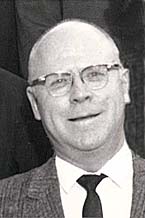
William Charles Bell (1911-1979) was a Professor of Geology at The University of Texas at Austin from 1953 until his retirement in 1972. He earned his PhD from the University of Michigan in 1939 and held prior faculty positions at UT-Austin (1940-41) and the University of Minnesota (1946-1953). Specializing in stratigraphy and paleontology, Bell emphasized proper application of stratigraphic principles and the Stratigraphic Code. He conducted fieldwork in the Llano region of Texas and led annual student field trips to Pennsylvanian outcrops in Mexico. Bell authored/co-authored over 20 articles in journals like the Journal of Paleontology and Geological Society of America Bulletin , and co-published Early Upper Cambrian Faunas of Central Montana . He supervised 16 MA and 7 PhD students, many of whom became leaders in academia and industry. Beyond geology, Bell was skilled in photography, particularly in documenting fossils and candid shots of notable geologists. He remained active post-retirement, critiquing presentations at academic sessions until his death in 1979. Bell was a member of the Paleontological Society and the American Association of Petroleum Geologists. His legacy includes rigorous adherence to stratigraphic standards and fostering student-driven field research. No specific grants or lab affiliations are noted in the records.
Jianing Zheng is a Lecturer at the School of Electronic Engineering and Computer Science, Queen Mary University of London, specializing in postgraduate teaching of Applied Statistics and Interactive Digital Multimedia Techniques. Her research focuses on the intersection of materiality and musical interaction, exploring deformable materials in digital musical interfaces and prototyping tools. Recent publications highlight her work on material-driven design, real-time interactive systems, and sensory feedback mechanisms in digital music. She employs platforms like Arduino, Processing, Max/MSP, and Jitter for teaching and research, emphasizing hands-on development and interdisciplinary approaches. Her contributions include the DeSound toolkit for digital musical instrument prototyping and methodological investigations into non-functional prototypes and material agency. While no formal awards are documented, her work bridges engineering, computer science, and creative arts disciplines. Current affiliations include active participation in Queen Mary's academic staff, with an email contact at jianing.zheng@qmul.ac.uk.