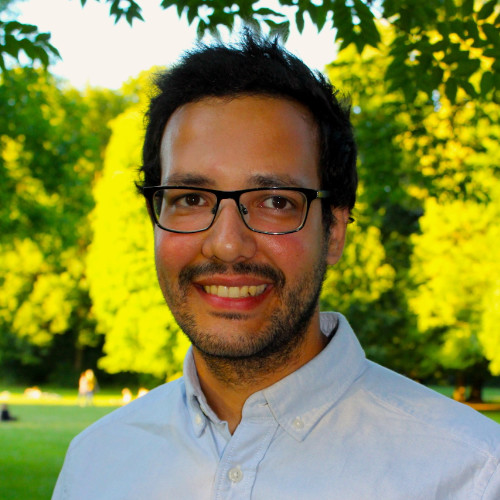
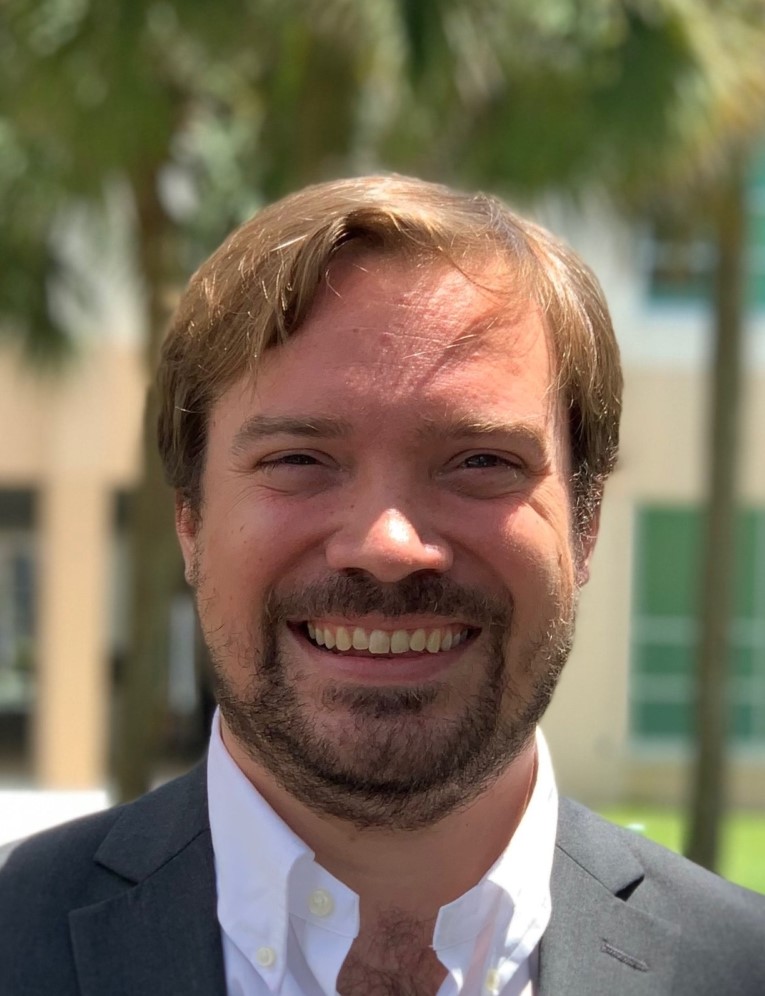
Morgan Ericsson is a professor at Linnaeus University's Faculty of Technology, Department of Computer Science and Media Technology. He has coordinated the Linnaeus University Centre for Data Intensive Sciences and Applications and leads the research group Data Intensive Software Technologies and Applications (DISTA). His work spans software engineering, quality assessment, and machine learning applications in system design. Research coordinator, DISA Faculty member, Linnaeus University His research focuses on defining and measuring software quality through data-driven approaches, including code metrics, documentation evaluation, and machine learning. He develops methods to balance performance, safety, and functionality in complex systems. Recent publications involve generative adversarial networks for log end identification, copula-based metrics aggregation, and graph convolution networks for code-architecture mapping. Key themes include automated classification, density analysis, and educational software tools. Ericsson has led projects like "HPC for SME" and "In-line Visual Inspection Using Unsupervised Learning," while contributing to software infrastructure for quality assessment and mobile learning frameworks.
Dr. Arnoud Visser is a Senior Lecturer at the Informatics Institute within the Faculty of Science at the University of Amsterdam . He holds a PhD in Computer Science (2007) and an MSc in Experimental Physics (1987). His research focuses on artificial intelligence and robotics , particularly cooperative robot teams in real-world environments. He has led projects like Meaningful Control of Autonomous Systems (2020) and developed simulation frameworks for RoboCup Rescue challenges. His 15 most recent publications (2022-2025) span topics including generative AI for military scene understanding , GAN-based nighttime re-identification , soft actor-critic locomotion , and ROS2 simulation environments . These works integrate machine learning with robot navigation and multi-agent coordination . Scientific Awards include: 1th Prize in RoboCup Rescue Simulation League (2018, 2014, 2012) Best Demo Award (Benelux Conference on AI 2016) IEEE RAS Most Active Technical Committee Award (2018) USARsim Development Prize (2010) As a thesis committee member for 27 PhD and 68 Master's theses (2000-2025), he has mentored students in areas like spiking neural networks , soft robotics , and autonomous navigation . He has also served on program committees for major robotics conferences including ICRA, IROS, and RoboCup Symposia (2011-2025).
Mehmet Emre is an Assistant Professor in the Department of Computer Science at the University of San Francisco, where he focuses on programming languages and software engineering. He earned his PhD and MS in Computer Science from UC Santa Barbara (2022, 2021) and a BS in Computer Engineering from Boğaziçi University (2015). PhD, Computer Science, UC Santa Barbara (2022) MS, Computer Science, UC Santa Barbara (2021) BS, Computer Engineering, Boğaziçi University (2015) His research centers on program analysis with a focus on memory and thread safety, formal verification, and compiler design. Key areas include: Automated reasoning about memory safety in C programs Formalizing theoretical computer science in Lean Efficient parsing algorithms Programming language tooling for education His publications reflect work on C-to-Rust translation safety, cross-language clone detection, JavaScript analysis optimization, and compiler-related education tools. Research trends emphasize bridging formal verification with practical software transitions and improving program analysis efficiency. He directs the PL Lab at USF and coordinates the CS Tutoring Center, supporting students in courses like Programming Languages (CS 345) and Automata Theory (CS 411).
Wafa Hasanain is a Contract Instructor at Carleton University's School of Computer Science (SCE), within the Faculty of Engineering and Design. She holds a Ph.D. and focuses on software testing methodologies, real-time embedded systems, and automated testing frameworks. Her research emphasizes clone detection in industrial test code, state-based online testing, and software verification using tools like SPIN Model Checker and RTEdge frameworks. Education: Ph.D. (exact discipline unspecified) Research Interests: Hasanain’s work bridges software engineering and embedded systems. She explores automation in testing complex systems, leveraging clone detection to improve test code maintainability and applying formal verification techniques to real-time software. Her methodologies aim to enhance software reliability through systematic analysis and tool-driven validation. Article Trends: Her publications (2013–2020) concentrate on testing challenges in real-time embedded systems and industrial test code. Key themes include state-based approaches, clone analysis for code maintenance, and integration of model checkers like SPIN with frameworks like RTEdge. These contributions address scalability and accuracy in automated testing environments. Awards & Grants: No scientific awards or grants explicitly mentioned in the text. Advising & Labs: No formal advisees or labs listed, though her research may involve collaborations with teams focused on embedded systems testing.
Jim Buckley is a Professor in the Department of Computer Science & Information Systems at the University of Limerick, and a Principal Investigator at Lero – the Irish Software Research Centre. He holds a BSc in Biochemistry from the National University of Ireland, Galway (1989), followed by an MSc (1994) and PhD in Computer Science (2002) from the University of Limerick. His research focuses on software reengineering, empirical software engineering, and source code analysis, with notable contributions to clone detection, software architecture recovery, and AI-driven code generation. He led the TREES Centre, a €6M industry-funded initiative, and currently oversees three research teams at Lero investigating large-scale clone detection, deep learning architecture recovery, and AI-generated source code. His work intersects technical innovation with societal impact, such as ethical software engineering and pandemic response technologies like contact tracing apps. Key research themes include software architecture consistency, feature location, and developer experience optimization. He has published over 118 peer-reviewed articles and received a Research Impact award from Lero. His contributions span open-source tool development, empirical studies in software practices, and interdisciplinary projects addressing global challenges like public health and cryptocurrency equity. Education: BSc Biochemistry, National University of Ireland, Galway (1989) MSc Computer Science, University of Limerick (1994) PhD Computer Science, University of Limerick (2002) Awards: Research Impact Award, Lero (2021) Labs/Teams: TREES Centre (Trustworthy, Responsible, Efficient Engineering of Software) Three core Lero teams: Clone Detection, Architecture Recovery, and AI-Code Generation
Prof. Jean-Guy Schneider is a Professor and Associate Dean (Education) in the Faculty of IT at Monash University. He holds a PhD in Computer Science from the University of Bern, Switzerland, and has over 20 years of experience in higher education. His research focuses on reliable software technologies, including component-based systems, cloud/mobile computing, quantum software, and agile methodologies. He actively contributes to software engineering education and industry-relevant research. His key research areas include energy-efficient IoT architectures, machine learning model security (e.g., MLGuard project), and quantum computing abstractions. Recent work emphasizes optimizing workflows for energy/performance trade-offs and addressing challenges in open-source ML projects. Prof. Schneider has published extensively on topics like service virtualization, Docker container monitoring, and anomaly detection in cloud systems. He supervises PhD candidates in software engineering for machine learning and quantum computing.
Alexander Ilin is a Visiting Professor and part-time teacher in the Department of Computer Science at Aalto University, specializing in Artificial Intelligence and Machine Learning. He holds roles in both the Computer Science - Artificial Intelligence and Machine Learning (AIML) research area and the Professors of Practice group. His research focuses on Machine Learning, Reinforcement Learning, and Deep Learning applications, with contributions to areas like neural networks, generative models, and healthcare informatics. Dr. Ilin earned a Doctoral degree in Engineering and Technology from Helsinki University of Technology in 2006. His work aligns with UN Sustainable Development Goals, particularly in advancing education and innovation. Key projects include the Finnish Center for Artificial Intelligence (FCAI) and the APPIA project on privacy-aware AI applications. His research explores cutting-edge topics such as diffusion models for dynamical systems, reinforcement learning for robotics, and self-supervised forecasting in healthcare. He has led projects like APPIA (2020–2021) and FCAI (2020–2026), securing grants from the Academy of Finland and Business Finland. His work bridges theory and practice, with applications in autonomous systems, nanotechnology, and medical diagnostics. Notable activities include visiting research at the UK Met Office Hadley Centre and presentations at top conferences like NeurIPS and AAMAS. His lab focuses on scalable AI solutions for real-world challenges, emphasizing ethical AI and privacy-preserving techniques.
Dr. Iftekhar Ahmed is an Associate Professor in the Department of Informatics at the University of California, Irvine’s Donald Bren School of Information & Computer Sciences. His research focuses on software engineering methodologies, emphasizing software testing, analysis, and accessibility. He holds a Ph.D. in Computer Science from Oregon State University (2018) and a B.S. in Computer Science and Engineering from Shahjalal University of Science and Technology, Bangladesh (2007). Education: Ph.D., Computer Science, Oregon State University, 2018 B.S., Computer Science and Engineering, Shahjalal University of Science and Technology, Bangladesh, 2007 His research integrates artificial intelligence, data mining, and empirical software engineering to improve software quality and safety. Key areas include: Automated testing frameworks for large systems Bug prediction models for code vulnerabilities Accessibility testing tools (e.g., Ma11y mutation framework) Safety-critical systems like autonomous vehicles Recent work explores AI-driven code generation, prompt engineering, and mitigating biases in software tools. His team received a $1.2M grant in 2022 to enhance accessibility testing tools. Ahmed also investigates human factors in software development, including developer mental health and tool adoption challenges. His publications address critical issues like code smells in quantum computing, commit message quality, and Jupyter notebook bug patterns. He actively participates in industry-academia collaborations, such as the 2023 Southern California Software Engineering Symposium.
Christof Ferreira Torres is an Assistant Professor at the Department of Computer Science and Engineering (DEI) at Instituto Superior Técnico (IST), University of Lisbon, and a researcher at INESC-ID in the Distributed, Parallel and Secure Systems (DPSS) group. His research focuses on program analysis, software security, and blockchain systems, particularly addressing vulnerabilities in smart contracts and decentralized finance (DeFi). He holds a Ph.D. from the University of Luxembourg and Technical University of Munich under Professors Radu State and Claudia Eckert. Education: Ph.D. in Computer Science, 2022 (University of Luxembourg & TU Munich) Postdoctoral Fellow at ETH Zurich (2022–2023) His research interests include blockchain security, MEV (Maximal Extractable Value) analysis, cross-chain interoperability, and privacy in Web3. Notable contributions include frameworks like Horus for attack detection in smart contracts and Elysium for automatic vulnerability patching. He actively participates in academic service, serving on program committees for major conferences like S&P, CCS, and USENIX. Recent work highlights cross-chain arbitrage dynamics, privacy leaks in web wallets, and centralized risks in blockchain infrastructure. His findings emphasize the need for decentralized solutions to counteract threats to blockchain liveness and finality. Key Awards: TLDR Research Fellowship (2024) Excellent Doctoral Thesis Award (2022) UBRI Impact Award (2022) He teaches courses on information security, dependable systems, and computer science foundations at IST and ETH Zurich. His work bridges theoretical computer science with practical blockchain security challenges, addressing both academic and industry needs.
Michael Pucher is a dedicated researcher affiliated with the Faculty of Computer Science at Vienna University of Technology, where he contributes to the Research Group Security and Privacy. Currently serving as a Visiting Researcher (October 2023 to February 2024), his work bridges academic research and practical security challenges in computing systems. He holds a Diplom-Ingenieur (Dipl.-Ing.) degree, equivalent to a Master of Science in Engineering, and a Bachelor of Science (BSc), reflecting a strong foundation in technical disciplines. Dr. Pucher's research spans the critical domains of computer security and privacy, with a focus on reverse engineering, obfuscation techniques, binary analysis, and the application of machine learning to security problems. His investigations delve into integrated circuit analysis, software protection mechanisms, and the development of resilient methods for identifying semantic functionality in obfuscated programs. Analysis of his 2022 publications reveals a cohesive research trajectory emphasizing innovative solutions for security challenges. Key themes include the integration of machine learning for clone detection in binaries, simulation-based approaches to counter obfuscation, and advanced image processing techniques for hardware reverse engineering, indicating a multidisciplinary approach that merges hardware and software security. Active in the academic community, Dr. Pucher has contributed through teaching engagements, peer review for conferences such as the IEEE Workshop on Offensive Technologies, and presentations at international venues including the IEEE Physical Assurance and Inspection of Electronics (PAINE) workshop.
Massimo La Morgia is an Assistant Professor at the Department of Computer Science, Sapienza University of Rome. He holds a Laurea Degree (summa cum laude) and a Ph.D. in Computer Science from Sapienza University. His research focuses on cybersecurity, blockchain ecosystems, social media analysis, and IoT systems. He has received awards including the 2017 Initio alla Ricerca and 2021 Invio alla Ricerca from Sapienza. His work bridges academia and industry through technology transfer projects in mobile technology, proximity payments, and machine learning applications. Key research areas include cryptocurrency market manipulation (e.g., pump-and-dump schemes), Telegram channel analysis (fake/clone detection), and defensive mechanisms against intellectual property theft. He has developed large-scale datasets like TGDataset for social network studies and pioneered studies on DeFi sniper bots and conspiracy channel economics. His publications span ACM Transactions, IEEE journals, and top conferences like USENIX Security and ACM SIGKDD. Beyond research, he advises on tunnel boring machine risk prediction tools and has pioneered web applications for structural engineering analysis.
Dr. Ana Oprescu is a Visiting Professor at the Informatics Institute of the University of Amsterdam. Her research focuses on the intersection of software engineering, AI, energy efficiency, and data privacy, with particular emphasis on sustainable computing practices. University of Amsterdam, Faculty of Science Key Research Areas: Green software engineering for AI systems, energy-efficient code generation using Large Language Models, privacy-preserving machine learning techniques, and sustainable data processing methods. She actively explores trade-offs between energy consumption, data privacy, and algorithmic accuracy. Her recent publications demonstrate a strong focus on environmentally sustainable computing, with articles covering quantisation effects on AI energy consumption, k-anonymisation impacts on machine learning, and dynamic federated learning approaches. She has also contributed to educational initiatives in green software practices. Scientific Recognition: Recipient of VENI-2014 research grant Dr. Oprescu works at the intersection of software optimization, security, and sustainability, with a particular interest in microservice architectures, model-based testing, and energy-aware system design. She has published extensively on topics like energy-driven software engineering, code clone refactoring, and distributed tracing.
John-Paul Ore is an Assistant Professor in the Department of Computer Science at North Carolina State University's College of Engineering. His research bridges software engineering and field robotics, with a focus on program analysis, system testing, and high-resolution physical simulators for robotics systems, particularly those built with the Robot Operating System (ROS). He develops software engineering methods that improve the dependability of robotics systems through techniques for dimensional analysis without developer annotations, open-source tools like PHYS, and public datasets documenting dimensional inconsistencies in real-world systems. His educational background includes a Ph.D. from the University of Nebraska-Lincoln (2019) and a B.A. in Philosophy from the University of Chicago. His interdisciplinary background informs his approach to combining software engineering with robotics to address challenges in reasoning about full-system behavior across multiple layers of abstraction. Ore's research interests center on applying program analysis techniques to software that controls robots and interacts with the physical world. His work includes abstract type inference of physical unit types (like 'meters-per-second'), probabilistic techniques for combining semantic information in identifiers with code flow inference, and empirical measurements of how developers make decisions about robotic software. He focuses on program analysis and software testing that enhances system safety and reliability while remaining practical and economically efficient. His research has significant applications in environmental monitoring, addressing climate challenges, food production, and liberating people from dangerous, dirty, and dull work. His publication record shows a clear trajectory from foundational work on dimensional analysis in robotics software to increasingly complex applications in environmental monitoring and autonomous systems. The most recent publications demonstrate expansion into Large Language Models for code analysis while maintaining focus on practical robotics applications. His research consistently addresses the critical gap between theoretical program analysis and practical robotics system development. Best Tool Demonstration Award, ISSTA'17 for Phriky-Units ACM SIGSOFT Travel Award ($300) Othmer Fellowship 2014-2018 ($8K/year) UNL CSE Outstanding Master's Thesis Award 2015 RSS 2013 Travel Grant ($500) Ore actively mentors students, having served as research mentor for undergraduates Becca Horzewski (2016-17) and Lambros Karkazis (2018). His research is supported by significant grants including FARM BILL: NRI: INT ($1,018,596 from NSF), SHF: SMALL ($499,994 from NSF), and North Carolina Space Grant ($5,000 from NASA). He is currently recruiting PhD students for his lab focused on robotics and software engineering. His laboratory work combines robotics, software engineering, and environmental monitoring, with projects including autonomous aerial water sampling systems, UAV-based environmental sensing, and tools for improving robotics software reliability. His team develops both theoretical approaches and practical implementations, often creating open-source tools that bridge the gap between academic research and industry applications.
Shichao Liu serves as an Adjunct Professor in the Surgery Department with Urology Division specialization, though his research focuses predominantly on fundamental developmental biology using porcine models. Holding both PhD and BS degrees from Northeast Agricultural University, his academic career bridges veterinary science and embryology despite the clinical departmental affiliation. PhD in Veterinary Science, Northeast Agricultural University BS in Veterinary Science, Northeast Agricultural University Dr. Liu's research centers on mammalian embryogenesis , particularly porcine early development and stem cell pluripotency . His work investigates transcription factor networks (CDX2/OCT4/SOX2), epigenetic regulation through non-coding RNAs, and species-specific trophectoderm lineage specification. Key methodologies include transcriptome analysis, gene manipulation in embryos, and cloning technologies, with significant contributions to understanding non-rodent embryonic models. Analysis of his 15 most recent publications (2014-2021) reveals three dominant research trajectories: (1) Transcriptional regulation of embryonic lineage commitment, (2) Epigenetic mechanisms in intergenerational inheritance via small RNAs, and (3) Technical optimization of porcine embryo culture and cloning. These studies consistently employ pig models to address fundamental questions in developmental biology that have implications for both agricultural biotechnology and comparative embryology.
William Edward Hahn is an Associate Professor in the Department of Mathematics and Statistics at Florida Atlantic University (FAU), where he co-directs the Machine Perception and Cognitive Robotics Laboratory (MPCR) and the FAU AI Sandbox. His research bridges mathematical theory with practical AI applications across diverse domains including finance, healthcare, and robotics. Dr. Hahn's academic foundation: Ph.D. in Complex Systems, Florida Atlantic University (2016) B.S. in Physics and Mathematics, Guilford College (2008) His core research integrates: Compressed Sensing & Sparse Modeling : Developing efficient signal reconstruction algorithms with applications in medical imaging and data analysis. Deep Learning & Machine Learning : Creating neural network architectures for financial forecasting, drug discovery, and autonomous systems. Computer Vision & Computational Neuroscience : Modeling human perception through gait analysis and biomimetic systems. Analysis of his 2018-2022 publications reveals a strategic evolution from theoretical sparse coding to applied deep learning. Key trends include bio-inspired modular architectures for general learning, transformer networks for molecular binding prediction, and GANs for robotic telesurgery. His work consistently addresses real-world challenges in substance abuse monitoring, financial markets, and medical robotics through interdisciplinary approaches. As co-director of the MPCR Lab and FAU AI Sandbox, Dr. Hahn leads initiatives that merge cognitive science with machine perception, providing critical infrastructure for AI experimentation and education while advancing the frontiers of human-robot interaction and computational neuroscience.