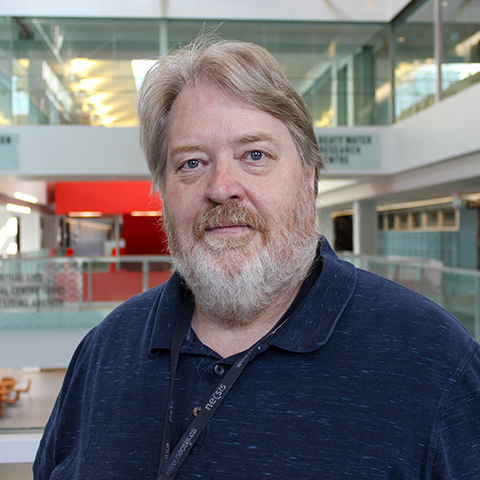
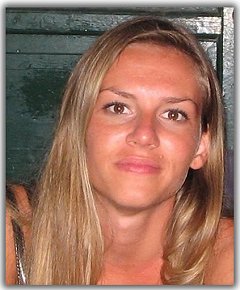
Gabriele Lobaccaro is a Professor at the Department of Civil and Environmental Engineering, NTNU, within the Faculty of Engineering. His primary focus is on sustainable urban development, renewable energy integration, and climate-resilient architectural design. He leads research in solar energy planning through initiatives like the IEA SHC Task 51 and COST Action PEARL PV. Education: MSc from Politecnico di Milano (2008), PhD in Structural Engineering (Politecnico di Milano/UNSW Sydney, 2013) Research interests include Smart Cities, urban solar potential analysis, and building-integrated photovoltaics (BIPV). Key projects involve the HELIOS-NFR FRIPRO program and collaborations with French institutions via the Åsgård Program. Publications emphasize solar irradiance modeling, urban energy systems, and legislative frameworks for solar neighborhoods. He co-leads Subtask C of the IEA SHC Task 51, focusing on case studies and action research. Awards: ISSNAF/CNI Scholarship for MIT collaboration, Åsgård Research+ Program (2019-2020)
James Patten is a Research Fellow at the University of Limerick , affiliated with the Department of Computer Science & Information Systems and the research center Lero – the Irish Software Research Centre . His work focuses on applying machine learning and evolutionary computation to enhance software quality, with a specific emphasis on code duplication detection and refactoring. Primary Affiliation: Department of Computer Science & Information Systems, University of Limerick Research Center: Lero – the Irish Software Research Centre Patten’s research spans two major domains: Software Engineering: Code duplication elimination, clone detection using BERT-based models, evolutionary algorithms for codebase analysis Gender Equity: Active participant in the WiSTEM2D initiative, exploring systemic interventions to improve female representation in STEM fields His publications reflect a dual focus on scalable software analysis techniques (e.g., ensemble inference for clone detection) and social science studies on gender dynamics in technology education. Notably, Patten combines technical rigor with societal impact by addressing both software reliability and diversity challenges.
Prof. Dr. Tobias Glasmachers is a Full Professor at the Institut für Neuroinformatik , Ruhr-Universität Bochum, Germany, specializing in the Theory of Machine Learning . He leads the Optimization of Adaptive Systems group and holds appointments in both Computer Science and Interdisciplinary AI research. Key Research Areas : Optimization algorithms, evolutionary computation, reinforcement learning, supervised learning, and neural networks Technical Focus : Gradient-based methods, support vector machines, and adaptive coordinate descent Applications : Robotics, waste sorting facilities, 3D game environments (e.g., Doom/Minecraft), and human-centered AI design Notable Contributions : Development of LM-MA-ES evolution strategy, Hessian Estimation Evolution Strategy, and tachAId tool for ethical AI design. His work bridges theoretical analysis with practical implementations across diverse domains. Teaching : Offers courses in Informatik 1 - Programmieren, Machine Learning: Supervised Methods, and Evolutionary Algorithms. Supervises numerous Bachelor's and Master's theses on AI/ML applications.
Zhen Ming (Jack) Jiang is an Associate Professor and York Research Chair (Tier II) in Software Engineering for Foundation Model-Powered Systems at the Department of Electrical Engineering & Computer Science, York University, Canada. He earned his Ph.D. (2013) from Queen's University and MMath/BMath degrees from the University of Waterloo. Research Focus: Software Engineering for AI, Performance Engineering, Logging Practices, and Software Visualizations. Education: Ph.D. in Computer Science, Queen's University MMath in Computer Science, University of Waterloo BMath in Computer Science, University of Waterloo His research explores engineering rigor in AI-powered applications, performance optimization in foundation model-driven systems, and efficiency improvements in large-scale software. Recent work analyzes logging practices, code cloning in blockchain, and AIOps models. He has received prestigious awards including the NSERC Discovery Accelerator Supplements (2020) and multiple Best Paper Awards at ICST, ICSE, and MSR. He served on program committees for ICSE, ICSME, and ICPE, and reviewed for top journals like IEEE Transactions on Software Engineering.
David W. Binkley is a Professor in the Department of Computer Science at Loyola University Maryland. His research focuses on Software Engineering and Testing Program Slicing and Clustering Information Retrieval Techniques in Software Engineering Safety-Critical Systems Code Clone Detection Recent work includes dynamic slicing of WebAssembly binaries and adaptive change recommendation systems using association rules. He has contributed extensively to empirical studies on dependence clusters, testability transformations, and observational slicing techniques. Key collaborations include institutions like Simula Research Laboratory (Norway) and NIST (National Institute of Standards and Technology). His publications span top-tier venues such as IEEE Transactions on Software Engineering, ACM TOPLAS, and ICSE.
Shiaoching Gong serves as Associate Professor of Research in Neuroscience at the Brain and Mind Research Institute, Weill Cornell Medical College since 2018. Their work bridges molecular neuroscience, genetic engineering, and neurodegenerative disease mechanisms with continuous National Institute on Aging funding. B.S. from Xiamen University (China, 1983) Ph.D. from State University of New York Health Science Center at Brooklyn (1990) Research focuses on Alzheimer's disease pathogenesis through three interconnected pillars: (1) Microglial responses to tau pathology involving cGAS-STING-IFN pathways and TREM2 variants, (2) Development of BAC transgenic models for neurodegenerative diseases, and (3) Mechanistic studies of tau propagation using human iPSC models. Recent work reveals how APOE3 mutations confer tau resilience and how AD risk alleles drive microglial senescence. Publication analysis shows consistent leadership in BAC engineering methodology since 2002 alongside high-impact disease mechanism studies. The 15 most recent papers demonstrate increasing focus on neuroimmune interactions in tauopathies (2022-2025), with earlier work establishing foundational BAC protocols still heavily cited (>1700 citations for 2003 Nature paper). No scientific awards are explicitly listed in source materials. Gong serves as Co-Investigator on NIA-funded research "Elucidate the Roles of Alzheimer's Disease Variants in Gene Expression and AD Phenotypes" (2022-2027), indicating active grant leadership. While no formal students are named, their extensive publication record with trainee co-authors suggests significant mentoring activity within the Brain and Mind Research Institute. Research occurs within the Brain and Mind Research Institute's neuroscience ecosystem, leveraging Weill Cornell's transgenic core facilities for BAC model development and human iPSC-based disease modeling.
Dr. Thomas R Dean is a Professor in the Department of Electrical and Computer Engineering at Queen's University in Kingston, Ontario, Canada, and holds an additional appointment as an Adjunct Associate Professor at the Royal Military College of Kingston. His academic career spans several decades with consistent publication output through 2020, demonstrating active engagement in research and scholarship. His work bridges theoretical computer science with practical security applications, particularly in network protocols and web applications. Dean's research interests focus on software transformation techniques, web application evolution, and network security. His expertise includes software transformation, web site evolution, security of network applications, air traffic control systems, and language formalization. His work demonstrates a consistent thread connecting software engineering principles with security applications, particularly in developing techniques for intrusion detection systems and secure protocol implementations. His publications reveal a strong emphasis on practical applications of theoretical concepts, with numerous collaborations across academic and industrial settings. Analysis of Dean's recent publication record (2014-2020) shows a clear concentration in three interconnected areas: network security protocols, software transformation techniques, and model-based engineering approaches. His work on intrusion detection systems using constraint satisfaction methods appears consistently across multiple publications, demonstrating this as a core research thread. The publications also reveal growing interest in automotive software systems, particularly AUTOSAR implementations and Simulink model analysis, reflecting adaptation to emerging industry needs. Scientific recognition includes: Best paper award at CASCON'04 for Practical Language-Independent Detection of Near-Miss Clones Dean maintains active research collaborations, particularly with colleagues at Queen's University including M.H. Alalfi, J.R. Cordy, and F.T. Imam, as evidenced by co-authorship across multiple publications. His work spans both theoretical contributions and practical tool development, including parser generators, constraint engines, and intrusion detection systems. His research has been supported by publications in reputable venues including CASCON, IEEE conferences, and journals like Software Practice and Experience. Dean leads The Compass Group research team, focusing on software security and transformation techniques. His lab work emphasizes practical applications of software engineering principles to real-world security challenges, particularly in network protocols and web applications. The research approach combines formal methods with practical implementation, resulting in tools and frameworks that address specific security vulnerabilities in modern software systems.
Alessandra Gorla is an associate researcher professor at IMDEA Software Institute in Madrid, Spain, with a strong background in software engineering research. She previously worked as a postdoctoral researcher with Andreas Zeller at Saarland University in Germany and completed her PhD under Mauro Pezzè at the University of Lugano in Switzerland. Her research bridges theoretical foundations with practical applications in mobile software systems. Her research focuses on malware detection for mobile applications, automatic software repair, software testing and analysis. She has developed techniques for detecting behavior anomalies in graphical user interfaces, identifying third-party libraries in mobile apps, and leveraging intrinsic software redundancy for reliability. Her work spans both Android and iOS ecosystems, with particular attention to permission systems, release practices, and security implications. Analysis of her recent publications reveals a strong trend toward mobile application security and analysis, with increasing focus on iOS systems alongside traditional Android research. Her work combines static and dynamic analysis techniques, often incorporating natural language processing for comment analysis and test generation. There's a clear progression from foundational work on intrinsic software redundancy to more applied research on mobile security and testing. FRITZ-KUTTER AWARD! for PhD thesis on Automatic Workarounds BEST PAPER AWARD! for Search-based Security Testing of Web Applications BEST STUDENT POSTER AWARD! for Automatic Workarounds as Failure Recoveries Dr. Gorla actively mentors students and seeks motivated individuals for internship and PhD opportunities in software engineering. She has served in various organizational roles including Tool Demonstrations co-chair for FSE 2016, Artifact Evaluation co-chair for ESSoS 2016 and ISSTA 2016, and multiple program committee positions at top software engineering conferences. Her work has been supported through collaborations with major research institutions and industry partners. At IMDEA Software Institute, Dr. Gorla leads research on mobile application analysis, particularly focusing on behavioral analysis of Android and iOS applications. Her CHABADA prototype for clustering Android apps by description topics and identifying API usage outliers demonstrates her practical approach to malware detection. She also investigates intrinsic software redundancy for building more resilient systems.
Jemily Rime is a Research Fellow in Creative Technologies and Immersive Storytelling at Anglia Ruskin University's StoryLab within the Faculty of Arts, Humanities, Education and Social Sciences, and concurrently serves as Professor of Electronic and Produced Music at the Guildhall School of Music and Drama. Her interdisciplinary work bridges audio innovation, immersive media, and creative coding through participatory design methodologies. Her academic foundation includes a BSc in Physics from King's College London (2018) where she simultaneously developed her debut album 'Otters Mate For Life', and a 2024 PhD from the University of York focused on AI-driven tools for personalised podcasting developed in partnership with XR Stories and BBC R&D. Rime's research explores audio production, immersive technologies, and storytelling through human-centered approaches. She investigates how digital tools can enhance creative processes, particularly in podcasting and music production, with strong emphasis on user agency and co-creation. Her work consistently integrates technical innovation with artistic expression, examining both practical applications and ethical implications of emerging technologies. Analysis of her publications reveals a cohesive trajectory in redefining audio media through computational methods. Early work established frameworks for podcast production workflows, while recent research expands into VR narratives and AI voice cloning, demonstrating increasing sophistication in human-AI collaboration for creative output. This evolution highlights her commitment to developing tools that empower creators rather than replace human agency. Her scientific recognition includes: Best Paper Award at CHIRA 2024 for 'Interviewing ChatGPT-Generated Personas to Inform Design Decisions' Rime mentors students in creative coding projects showcased through The_Coding_Choir, with notable collaborations including BBC R&D and XR Stories. Current initiatives encompass The Navigator oral history archive for Cambridge's Kite neighborhood and Resonance Kernow's spatial audio exploration in Cornwall, reflecting her dedication to community-engaged research. She leads The_Coding_Choir research group which develops tools like pod-CLIPR for podcast chapterisation while maintaining an active performance career. Her artistic practice as a jazz-pop singer-songwriter directly informs her academic work, creating a virtuous cycle between theoretical research and practical musical innovation.
Dr. Ying Zou is a Professor in the Department of Electrical and Computer Engineering at Queen's University's Smith Engineering faculty in Kingston, Ontario, Canada. With an extensive publication record spanning from 2018 through 2025, Dr. Zou has established herself as a leading researcher in empirical software engineering with a growing focus on AI integration. Dr. Zou's research focuses on Software Engineering , Artificial Intelligence for Software Engineering (AI4SE) , Software Evolution , Software Analytics , and Empirical Software Engineering . Her work bridges theoretical approaches with practical applications, examining developer behavior, code quality improvement, and AI techniques for software engineering tasks. Recent publications demonstrate a clear progression from traditional empirical studies toward more AI-centric approaches, particularly in code refactoring, type inference, and performance analysis. Analysis of Dr. Zou's publication trends reveals a strategic evolution in her research focus. Early work centered on empirical studies of Stack Overflow and GitHub, while recent publications increasingly integrate large language models and AI techniques for software engineering tasks. Her research spans multiple dimensions including code quality, developer productivity, open source community dynamics, and performance optimization, with consistent methodological rigor in empirical validation. Dr. Zou has served in numerous leadership roles across major software engineering conferences including ASE, ICSE, and ESEC/FSE. She has been a Program Committee member for multiple tracks and conferences, and notably served as New Faculty Mentoring Co-Chair for ESEC/FSE 2026. Her service to the community extends to organizing conference tracks, chairing sessions, and mentoring new researchers in the field.
Elena Dubrova is a Professor at the Division of Electronics and Embedded Systems, KTH Royal Institute of Technology. She specializes in hardware security, cryptography, and embedded systems security. Her roles include examiner and course responsible for advanced degree projects in Computer Engineering, Communication Systems, Embedded Systems, and Machine Learning. She also teaches courses such as Design of Fault-Tolerant Systems, Hardware Security, and Internet Security and Privacy. Her research focuses on side-channel attacks, cryptographic algorithm vulnerabilities, and FPGA security. Notable work includes analyzing hardware security flaws in cryptographic implementations (e.g., CRYSTALS-Kyber, AES), RF signal leakage in chips, and mitigating threats in FPGA-based systems. Her contributions span both theoretical advancements and practical countermeasure development. Dr. Dubrova’s articles highlight trends in post-quantum cryptography vulnerabilities, machine learning-assisted security analysis, and the integration of physical unclonable functions (PUFs) for secure authentication. She emphasizes hardware-software co-design for robust security solutions. No scientific awards are explicitly listed in the provided information. Her work involves collaborative projects on cryptographic protocol design and secure embedded system architecture, though specific grants or lab affiliations are not detailed here.
James R. Cordy is a Professor in the School of Computing at Queen's University, Faculty of Engineering and Applied Science, Kingston, Canada. He is a leading researcher in software engineering, with a focus on source code analysis, software clone detection, model-driven engineering, and program transformation. He has been actively publishing since 1977, with a sustained record of contributions in top-tier venues such as ICSE, MoDELS, and WCRE. His research interests include software clone detection, model transformation, Simulink models, source transformation, software maintenance, and grammatical inference. He has developed and contributed to influential tools such as TXL and NiCad, and his work often involves empirical studies and tool evaluation in real-world software systems. The most recent articles highlight trends in model transformation, clone detection, verification of state machines, and migration of legacy systems. His work increasingly integrates formal methods and empirical validation, particularly in automotive and safety-critical domains. He has also explored applications in healthcare software, such as artificial pancreas systems. Most Influential Paper Award, SCAM 2001 (awarded in 2019) He has advised numerous students, including Manar H. Alalfi, Matthew Stephan, and Chanchal K. Roy, who have co-authored multiple publications with him. His research is often collaborative, involving teams from Queen's University and other institutions. He has also contributed to workshops and special issues, demonstrating leadership in the software engineering community.
Prof. Dr.-Ing. Thomas Leich holds the Volkswagen Financial Services Endowed Professorship for Business Informatics, specifically Requirements Engineering, at Harz University of Applied Sciences. He is affiliated with the Faculty of Automation and Information, focusing on software variability and configurable systems. University: Harz University of Applied Sciences School: Faculty of Automation and Information Academic Rank: Professor Research Interests span software product line engineering, IT security, Industry 4.0, and feature-oriented programming. His work bridges academic innovation with industrial applications, particularly in secure and scalable systems for automotive and enterprise contexts. Recent Publications emphasize security in configurable systems, empirical software engineering studies, and automotive platform management. Articles often involve collaborations with teams at Otto von Guericke University and international institutions. Scientific Awards include the Hugo Junkers Research Award (2013), the Wissenschaftspreis der Wernigeröder Stadtwerkestiftung (2017), and the 2012 Faculty Research Award from the University of Magdeburg. Supervision of over 20 theses since 2008, spanning topics in ERP security, program comprehension, and embedded systems. He leads the EXPLANT project, funded by DFG, and contributes to FeatureIDE , an extensible framework for feature-oriented development.
Nathan Dahlin is an Assistant Professor in the Department of Electrical and Computer Engineering at the University at Albany's College of Nanotechnology, Science, and Engineering. He holds a BS, MS, and PhD in Electrical Engineering and an MA in Applied Mathematics from the University of Southern California. Prior to joining UAlbany, he was a Postdoctoral Research Associate at the University of Illinois Urbana-Champaign and a senior audio DSP research engineer at Audyssey Laboratories. Dr. Dahlin's research focuses on fundamental problems in machine learning, stochastic control, optimization, and microeconomics, with applications in developing computationally efficient decision-making approaches for smart energy systems. His work emphasizes reliability in uncertain environments and risk management. His recent publications demonstrate strong focus on machine learning applications in control systems, energy management, and algorithm design. Articles frequently address topics like imitation learning, economic dispatch optimization, neural network transformation, and kernel-based learning methods, often with practical implementations in energy systems and smart grids. Dr. Dahlin is active in professional organizations including the Institute of Electrical and Electronics Engineers (IEEE) and the Association for the Advancement of Artificial Intelligence (AAAI). He serves as a reviewer for leading conferences and journals including AAAI Conference on Artificial Intelligence, IEEE Transactions on Control of Network Systems, IEEE Transactions on Power Systems, and IEEE Transactions on Smart Grid.
Dr. Daqing Hou is a Professor at Clarkson University's Coulter School of Engineering & Applied Sciences, affiliated with the Department of Electrical & Computer Engineering and Computer Science. His research bridges software engineering, cybersecurity, behavioral biometrics, and education research. He earned his Ph.D. in Computing Science from the University of Alberta, and M.S./B.S. in Computer Science from Peking University. Research focuses on improving software development efficiency through project-based learning (PjBL), empirical studies, and human factors. Key areas include behavioral biometrics (keystroke/mouse dynamics), smart housing/energy systems, and cybersecurity solutions. He has pioneered tools like CReN for managing code clones and has contributed to Eclipse/UIMA frameworks. Recent publications emphasize behavioral authentication methods, mobile biometrics evaluation, and framework design recommendations. His work has been recognized with awards including IEEE ICSME 2014 Best Paper Nomination and IBM Innovation Awards (2005/2007). Teaching spans software engineering, GUI design, databases, machine learning, and compilers. He advises students on topics like API usability, security systems, and programming language tools.