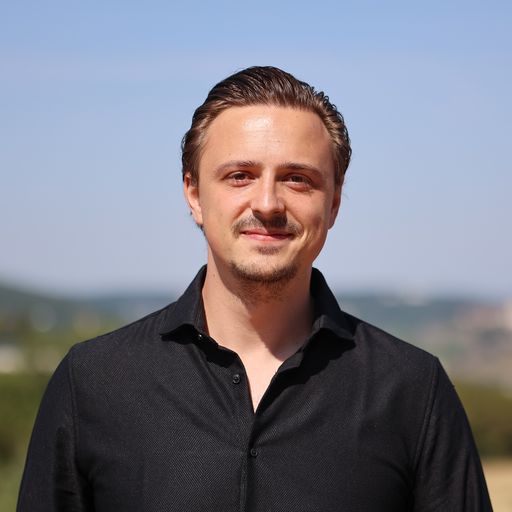
Dr.-Ing. Christiane Antweiler is a Researcher at the Institute of Communication Systems (IKS) , part of RWTH Aachen University 's Faculty of Electrical Engineering and Information Technology. Her work focuses on algorithms for digital speech/audio processing, multi-channel system identification, head-related transfer functions (HRTFs), and acoustic/echo cancellation in medical and teleconferencing applications. Research topics: Medical diagnostics signal processing , time-variant system identification , HRTF measurement , and real-time audio implementation . Current projects: Connected Visual Reality (CoVR) , Acoustic Tube Endoscopy , and Spatial Rendering with quasi-continuous HRTFs. Her 15 most recent publications (2025–2011) span adaptive filtering , acoustic system identification , and 3D audio rendering , with a strong emphasis on perfect sequence excitation and medical applications . She received the Best Paper Award at ICMCIS 2022 for her work on spectrum monitoring. Teaching roles include Information Theory and Source Coding (since 2009) and Digital Speech Processing 1 (2014–2015). Tools used: Matlab , C/C++ , and RT Proc for real-time audio processing.
PD Dr. Josef Weidendorfer is a qualified private lecturer at Technische Universität München (TUM) and leads the Future Computing Group at the Leibniz Computing Centre (LRZ). He holds a dual affiliation with TUM's Department of Informatics, Chair of Computer Architecture and Parallel Systems (Prof. Schulz), and the Leibniz Rechenzentrum der Bayerischen Akademie der Wissenschaften. His work focuses on developing smooth migration strategies for future HPC systems and evaluating novel technologies to improve system-level and workload analysis tools. Weidendorfer's research interests encompass Parallel Computer Architectures, High Performance Computing, Multi-/Manycore architectures, GPGPU, Performance analysis and optimization, Cache Simulation, Virtual Machines, and dynamic code generation. He is particularly interested in strategies for improving computational efficiency across various hardware structures, including specialized accelerator hardware for HPC codes. He regularly organizes the UCHPC workshop (since 2010 with Euro-Par) about unconventional hardware for HPC computing and is co-organizer of the PSTI workshop series. His recent publications reveal a strong focus on HPC system optimization, with particular emphasis on load balancing techniques, cache partitioning, application malleability, and performance monitoring. The research trajectory shows increasing attention to practical implementation challenges in modern heterogeneous computing environments, especially regarding GPU utilization, resource partitioning under power constraints, and phase-aware system monitoring. Weidendorfer maintains the open-source tools Callgrind/KCachegrind for cache simulation and has supervised numerous student projects across bachelor's, master's, and guided research programs. He teaches courses including Virtualization Techniques, Parallel Programming Systems, and Advanced Computer Architecture, demonstrating strong commitment to both research and education in computer architecture and parallel systems. As principal investigator for multiple large-scale projects including EU Project SEANERGYS (2025-2028) and BMBF Project ScalNext (2022-2025), he leads significant research initiatives focused on future computing technologies and HPC system development.
Jan-Willem van de Meent is an Associate Professor at the University of Amsterdam where he co-directs the AMLab with Max Welling. He also maintains an Assistant Professor position at Northeastern University, though currently on leave while continuing to advise students and collaborate. His research develops AI models by combining probabilistic programming and deep learning, focusing on understanding inductive biases that enable models to generalize from limited data. His research spans multiple domains: Probabilistic programming frameworks and inference methods Inductive biases for generalization from limited data Physical system simulators incorporating domain knowledge Causal structure and symmetries in AI models Applications in robotics, NLP, healthcare, and physical sciences Van de Meent is one of the creators of Anglican, a probabilistic programming language based on Clojure, and currently develops Probabilistic Torch, a library for deep generative models extending PyTorch. He is writing a book on probabilistic programming (draft available on arXiv) and serves as co-chair of the international conference on probabilistic programming (PROBPROG). His recent publications show a strong trend toward developing more efficient inference methods for probabilistic models, exploring disentangled representations across vision and language domains, and applying these techniques to healthcare, robotics, and neuroscience. His work on nested variational inference, energy-based models, and state abstraction in reinforcement learning has been particularly influential. Awards and Recognition NSF CAREER award (2021) Van de Meent actively advises multiple PhD students and postdocs across interdisciplinary projects. His lab maintains strong collaborations with researchers in robotics, healthcare, neuroscience, and other scientific domains, applying advanced probabilistic modeling to challenging real-world problems. He also develops practical tools for the research community, making advanced inference techniques more accessible to practitioners.
Jona Ballé is an Associate Professor in the Electrical and Computer Engineering department at New York University's Tandon School of Engineering. His research focuses on developing efficient representations of visual media through machine learning and end-to-end optimization techniques. Dr. Ballé's research interests center on visual media compression, spanning still images, video, augmented reality, virtual reality, plenoptic imaging, and holographic imaging. His work bridges information theory, computer vision, and machine learning to develop perceptually optimized compression algorithms. He has made significant contributions to understanding the relationship between human visual perception and image statistics, which has led to improved compression results and ultimately contributed to the JPEG AI standard finalized in 2025. His recent publications demonstrate a strong trend toward Wasserstein distortion metrics, neural compression architectures, and rate-distortion optimization. These works span computer vision, information theory, and signal processing domains, with applications in both traditional and emerging visual media formats. His research shows consistent innovation in developing perceptually relevant metrics that balance fidelity and realism in compressed media. Contributed to JPEG AI standard (2025) Co-organizer of Challenge on Learned Image Compression (CLIC) since 2018 Program committee member of Data Compression Conference (DCC) since 2022 Reviewer for top-tier publications including NeurIPS, ICLR, ICML, and IEEE Transactions journals Dr. Ballé has advised numerous graduate students who have co-authored significant publications with him, particularly in the areas of neural compression and perceptual metrics. His research has been supported by institutions including the Simons Foundation. He maintains active collaborations across academia and industry, with his work at Google (2017-2024) directly informing his current academic research. His laboratory focuses on developing open-source implementations of advanced compression techniques, with notable GitHub repositories including Wasserstein Distortion implementation in PyTorch and CoDeX (Learned data compression in JAX), demonstrating his commitment to reproducible research and community engagement.
Christoph Schuster is a Faculty member at the Technische Universität Dresden under the Institute of Process Engineering and Environmental Technology , specifically in the Chair of Hydrogen and Nuclear Energy . He serves as Head of the Thermohydraulics Research Area and has led the Thermohydraulics Working Group from 2008 to 2020. His academic role as a Researcher focuses on Thermal Hydraulics and Nuclear Reactor Safety . PhD in Nuclear Energy Technology (1992) Studies in Energy System Technology (1982-1987) Research Interests include: Thermal Hydraulics of nuclear reactors Passive safety system effectiveness Spent fuel pool safety analysis Two-phase flow in natural circulation loops Reactor accident scenario modeling Article Trends show a consistent focus on Thermal Hydraulics , Nuclear Safety , and Two-Phase Flow , with recent work emphasizing Spent Fuel Pool Dynamics and Passive Safety Systems . Teaching Activities include courses on: Basics of nuclear energy technology Thermohydraulics of nuclear reactors Nuclear safety methods Transient power output in nuclear plants
Prof. Dr. Anna-Lena Lamprecht is a Chair of Software Engineering at the University of Potsdam, Institute of Computer Science. Her work focuses on interdisciplinary research software engineering, scientific workflows, and FAIR principles for computational materials science and bioinformatics. University of Potsdam Department of Software Engineering Research Interests Lamprecht explores the intersection of domain-specific languages, automated workflow composition, and agile methodologies for scientific computing. She emphasizes reproducibility, sustainability, and semantic validation in research software, particularly through projects like Workflomics and TopoToolbox3. Publications Her recent work spans multi-dimensional software categorization, workflow modeling patterns, and FAIR adoption in GitHub repositories. She also investigates benchmarks for bioinformatics workflows and semantic constraints in geospatial service composition. Projects Current projects include VERSECLOUD, Workflomics, and TopoToolbox3. She leads initiatives in automated workflow composition and has contributed to the FAIR4RS principles. Teaching and Supervision Supervised student works Full-semester RSE courses Computational thinking education Contact anna-lena.lamprecht@uni-potsdam.de | +49 331 977-3040 | Campus Golm, Building 70, Room 1.35
Alexander May is a Professor at Ruhr-University Bochum, affiliated with the Faculty of Mathematics and the Horst Görtz Institute for IT-Security. His research focuses on cryptanalysis, post-quantum cryptography, and lattice-based security, with extensive work on cryptographic attacks targeting schemes like LWE, NTRU, McEliece, and RSA. Research Interests: May specializes in: Developing optimized attacks on lattice-based cryptosystems (e.g., Kyber, Dilithium) Side-channel vulnerability analysis in post-quantum schemes Quantum algorithm applications in cryptanalysis Efficient decoding attacks for code-based cryptography His recent publications (2021-2025) demonstrate consistent focus on: Practical cryptanalysis with reduced computational resources Novel approaches to breaking NIST post-quantum candidates Quantum-speedup techniques for key recovery Side-channel attacks on hardware implementations PhD Supervision: May has supervised over 15 doctoral students including recent graduates like Carl Schneider (2024), Önder Askin (2024), and Floyd Zweydinger (2023). Their work spans lattice cryptography, coding theory, and quantum cryptanalysis.
Dr. Manuel Hoder is an academic researcher at the Chair of German Philology, Senior Department, within the Institute for German Philology at Julius-Maximilians-Universität Würzburg. He holds a doctorate summa cum laude (2023) for his work on 'Wortgewandte Wappen. Inszenierungsformen des Heraldischen in der mittelalterlichen Literatur' and specializes in medieval German epic literature, particularly Arthurian romances and Konrad von Würzburg's works. His research integrates cultural semiotics, focusing on heraldic codes, intermediality, and medieval-future literary translation dynamics. Education: German Studies, Philosophy, and History at Goethe-Universität Frankfurt am Main (2010-2016) Current projects: Critical edition of Konrad von Würzburg's Turnier von Nantes with first-time translation Interdisciplinary conference co-organizer: 'Wigalois in Text und Bild' (Leidener Codex, 2023) His publications explore heraldic aesthetics , intermediality in medieval manuscripts, and textual compilation strategies . Recent work examines spatial translation in Matthias Ringmann's Caesar-Übersetzung and Arthurian narrative structures. Awards include the Mediävistikverband's 2nd Prize Dissertation Award (2025) and University of Würzburg's joint dissertation award (2024). Scientific affiliations include: Deutsche Gesellschaft für Ästhetik Deutscher Germanistenverband Internationale Artusgesellschaft Mediävistenverband Oswald von Wolkenstein-Gesellschaft Wolfram von Eschenbach-Gesellschaft
Hans-Martin von Gaudecker is a Professor of Applied Microeconomics at the University of Bonn's Department of Economics. He holds multiple significant academic positions including Cluster Faculty Member at ECONtribute, Principal Investigator of the Collaborative Research Center TR/224, Speaker of the Transdisciplinary Research Area 'Individuals, Institutions and Societies', and research fellow at the IZA Institute of Labor Economics, Reinhard Selten Institute, CESifo, and Netspar. His research focuses on modeling life-cycle behavior of households and informing public policy to reduce inequality. His work spans household finance and preferences, labor economics, health economics, and the economic impacts of the COVID-19 pandemic. He combines innovative data with economic models and up-to-date econometric methods to address questions about risk management over life cycles, labor market consequences of ill health, disability scheme design, and retirement decisions. His publication record shows a strong focus on empirical microeconomics with recent work increasingly addressing pandemic-related economic issues. His research employs sophisticated econometric techniques and emphasizes reproducibility, with many publications including replication code. His work appears in leading journals including Journal of Finance, American Economic Review, Journal of Labor Economics, and Journal of Econometrics. As an educator, Professor von Gaudecker teaches Applied Microeconomics for PhD and MSc students, Applied Data Analytics for BSc students, and Effective Programming Practices for Economists. His teaching emphasizes computational methods, reproducible research, and the integration of economic theory with data analysis skills. He has developed templates for reproducible research projects that are widely used by students and collaborators. He leads the C01 project within the Collaborative Research Center TR/224 and has been instrumental in developing software tools to enhance research reproducibility. His work with CentERdata on Dutch LISS panel data during the pandemic demonstrates his commitment to timely, policy-relevant research. His interdisciplinary approach bridges economics, public health, and computational science to address complex societal challenges.
Dr. Olga Kellert serves as a Lecturer in the Department of Romance Philology within the Faculty of Humanities at the University of Göttingen, where she conducts interdisciplinary research at the intersection of sociolinguistics, computational linguistics, and historical Romance linguistics. Her work bridges traditional linguistic analysis with cutting-edge digital methodologies, particularly focusing on language variation in social media contexts and diachronic syntactic change. Her research encompasses three primary domains: (1) Sociolinguistic analysis of code-switching and language variation using geolocated social media data, particularly examining Spanish-French interactions in Quebec and Spanish-Italian dynamics in South America; (2) Computational approaches to sentiment analysis and linguistic modeling, with emphasis on syntax-aware NLP systems; (3) Historical evolution of quantificational structures in Romance languages, especially indefinites and free choice items across Old and Modern Italian, Spanish, and Catalan. Current projects include the sociocomputational assessment of belief states among vulnerable indigenous groups in Latin American crises (funded through international collaboration with Mexico, Ecuador, Peru, and Austria) and geospatial analysis of urban linguistic variation using Twitter data. Her publication trajectory reveals a strategic evolution from foundational work in Romance syntax and prosody toward increasingly computational methodologies, with recent publications heavily featuring NLP applications, geotagged linguistic analysis, and interdisciplinary crisis communication research. This shift reflects broader trends in digital humanities while maintaining deep roots in Romance linguistic theory. Habilitation Completion Grant from the Faculty of Humanities, University of Göttingen Dr. Kellert actively supervises student project work on language mixing in social media contexts and collaborates extensively through the University of Göttingen's CRC 'Textstrukturen' research center. Her grant portfolio demonstrates significant international collaboration, particularly with Latin American institutions on crisis communication projects and European partners on historical linguistics initiatives. Current funding includes DFG support for 'Quantification in Old Italian' and international partnerships for sociolinguistic crisis response research. Her research operates within the Collaborative Research Center 'Textstrukturen' at the University of Göttingen, where she contributes to interdisciplinary teams combining linguistic theory, computational methods, and sociocultural analysis. Recent projects involve cross-institutional teams spanning Mexico, Ecuador, Peru, Austria, France, and Italy, with particular emphasis on community-engaged research with indigenous populations in Latin America.
Benoit Baudry is a Professor in Software Technology at Université de Montréal, Canada, with previous affiliation at KTH Royal Institute of Technology in Sweden. His research focuses on automated software engineering with emphasis on practical execution-based approaches. Baudry's core research interests include: Software testing : Automated test generation, mocking, and improvement techniques Software diversity : Runtime protection through variant execution and WebAssembly transformations Randomization : Fuzzing and chaos engineering for robustness validation DevOps : Supply chain analysis and dependency management in Maven ecosystems Analysis of his 15 most recent publications (2022-2025) reveals strong emphasis on: Software supply chain security and dependency management (6 publications) Test automation and mock generation techniques (4 publications) WebAssembly compilation and security (3 publications) Software-art interdisciplinary research (2 publications) His work consistently combines empirical analysis with tool development across Java and WebAssembly ecosystems. Baudry actively contributes to the academic community through program committees (ASE, ESEC/FSE, ICSE, ICST) and keynote presentations. He leads research in software diversity through his Software Diversity Lab .
Prem Devanbu is a Research Professor of Computer Science at the University of California, Davis, where he has been a faculty member since transitioning from his industrial R&D position at Bell Labs in New Jersey. He holds a distinguished position in the Department of Computer Science within the College of Engineering, focusing on cutting-edge research at the intersection of software engineering and artificial intelligence. Dr. Devanbu earned his B.Tech from the Indian Institute of Technology (IIT) Madras and completed his Ph.D at Rutgers University under the supervision of Alex Borgida. His career path from industry to academia has shaped his practical yet research-oriented approach to software engineering problems. Devanbu's research primarily centers on Empirical Software Engineering , the Naturalness of Software , and Software Engineering education . His groundbreaking work on the naturalness hypothesis—that software exhibits statistical properties similar to natural language—has profoundly influenced the field. This research has expanded to explore bimodality in software (its dual nature as both machine-executable code and human-readable text), opening new avenues for analysis and tool development. His recent work heavily focuses on the application of Large Language Models to software engineering tasks, particularly in code summarization, program repair, and type inference. Analysis of Dr. Devanbu's recent publications reveals a clear trend toward leveraging Large Language Models for software engineering tasks. His research demonstrates how statistical properties of code can be exploited to improve software development processes, with particular emphasis on program understanding, documentation generation, and automated repair. The work bridges theoretical insights about code naturalness with practical applications that address real-world software maintenance challenges. Dr. Devanbu has received numerous prestigious awards recognizing his contributions to the field: ACM SIGSOFT Outstanding Research Award (2021) - "for profoundly changing the way researchers think about software by exploring connections between source code and natural language" Alexander von Humboldt Research Award (2022) IEEE Computer Society Harlan Mills Award (2024) ACM Fellow Six "test-of-time" or "10 year most influential paper" awards (MSR 2006, MSR 2009, ESEC/FSE 2008, ESEC/FSE 2009, ESEC/FSE 2011, ICSE 2012) Throughout his career, Dr. Devanbu has been actively involved in mentoring the next generation of software engineering researchers, serving on doctoral committees, and participating in New Faculty Symposia to support early-career academics. His research has been supported by significant grants that have enabled his team to explore innovative approaches at the intersection of empirical methods and software tool development. At UC Davis, he has contributed to building a strong software engineering research group that bridges theoretical insights with practical applications. Dr. Devanbu leads research efforts focused on understanding the statistical properties of software and leveraging these insights to build practical tools. His work on the naturalness and bimodality of code has established a framework that continues to influence how researchers approach program analysis and software development. His current team is at the forefront of exploring how Large Language Models can be effectively applied to software engineering tasks while accounting for the unique characteristics of code as a specialized form of human communication.
Gordon Fraser is a Professor at the University of Passau, where he leads the Chair of Software Engineering II. His research focuses on software testing, automated test generation, and software engineering education, with particular emphasis on gamification techniques to improve testing practices and educational approaches for novice programmers. His research interests span multiple areas of software engineering, with a strong focus on practical testing solutions. He has made significant contributions to automated test generation, particularly for Android applications and block-based programming environments like Scratch. His work on gamification in software testing has led to innovative educational tools that engage students and professional developers alike. Fraser's research also addresses challenges in continuous integration, mutation testing, and flaky test detection, contributing to more reliable software development processes. Fraser has received recognition through his extensive publication record in top software engineering venues including ASE, ICSE, ISSTA, and ESEC/FSE. His work on tools like Pynguin (for Python test generation), Gamekins (for gamifying testing in Jenkins), and Code Critters (for teaching testing through games) demonstrates his commitment to bridging research and practical applications. Extensive research on automated test generation techniques Pioneering work in gamification of software testing education Significant contributions to testing block-based programming environments Active development of practical testing tools used by researchers and practitioners As an educator, Fraser has developed innovative approaches to teaching software testing concepts, particularly to young learners and novice programmers. His work integrates game design principles with software engineering education to create engaging learning experiences that improve comprehension and retention of testing concepts.
Alessandra Gorla is an associate researcher professor at IMDEA Software Institute in Madrid, Spain, with a strong background in software engineering research. She previously worked as a postdoctoral researcher with Andreas Zeller at Saarland University in Germany and completed her PhD under Mauro Pezzè at the University of Lugano in Switzerland. Her research bridges theoretical foundations with practical applications in mobile software systems. Her research focuses on malware detection for mobile applications, automatic software repair, software testing and analysis. She has developed techniques for detecting behavior anomalies in graphical user interfaces, identifying third-party libraries in mobile apps, and leveraging intrinsic software redundancy for reliability. Her work spans both Android and iOS ecosystems, with particular attention to permission systems, release practices, and security implications. Analysis of her recent publications reveals a strong trend toward mobile application security and analysis, with increasing focus on iOS systems alongside traditional Android research. Her work combines static and dynamic analysis techniques, often incorporating natural language processing for comment analysis and test generation. There's a clear progression from foundational work on intrinsic software redundancy to more applied research on mobile security and testing. FRITZ-KUTTER AWARD! for PhD thesis on Automatic Workarounds BEST PAPER AWARD! for Search-based Security Testing of Web Applications BEST STUDENT POSTER AWARD! for Automatic Workarounds as Failure Recoveries Dr. Gorla actively mentors students and seeks motivated individuals for internship and PhD opportunities in software engineering. She has served in various organizational roles including Tool Demonstrations co-chair for FSE 2016, Artifact Evaluation co-chair for ESSoS 2016 and ISSTA 2016, and multiple program committee positions at top software engineering conferences. Her work has been supported through collaborations with major research institutions and industry partners. At IMDEA Software Institute, Dr. Gorla leads research on mobile application analysis, particularly focusing on behavioral analysis of Android and iOS applications. Her CHABADA prototype for clustering Android apps by description topics and identifying API usage outliers demonstrates her practical approach to malware detection. She also investigates intrinsic software redundancy for building more resilient systems.
Chuanyi Li is an Assistant Professor at the Software Institute, Nanjing University, affiliated with the State Key Laboratory for Novel Software and Technology. His office is located in Room 917, Fei Yimin Building, 22 Hankou Road, Gulou District, Nanjing, China. Education: Ph.D. in Computer Science, Nanjing University (2012-2017), supervised by Professor Bin Luo Visiting Scholar at Southern Methodist University, Dallas, Texas (2016-2017), collaborating with Associate Professor Liguo Huang B.Sc. from Nanjing University (2008-2012) Research Focus: Dr. Li's work bridges Software Engineering, Natural Language Processing, and Business Process Management. He specializes in applying NLP and machine learning techniques to software engineering challenges including code summarization, program repair, code completion, and software maintenance. His research emphasizes empirical validation and practical tool development for real-world software systems. Publication Trends: Recent work (2021-2025) demonstrates strong focus on large language model applications in software engineering, including code generation, program repair, and benchmarking. Publications frequently involve empirical comparisons, dataset creation, and efficiency optimization techniques for code-related tasks. Professional Service: Active contributor to top software engineering venues (ASE, ICSE, ESEC/FSE) as author and committee member. Recent roles include Program Committee membership for ICSE 2025 Research Track and SANER 2025 Research Papers track.