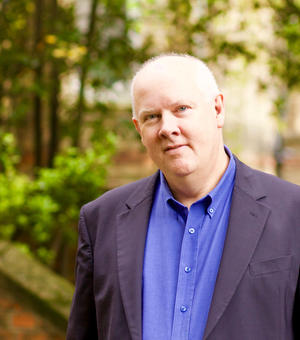
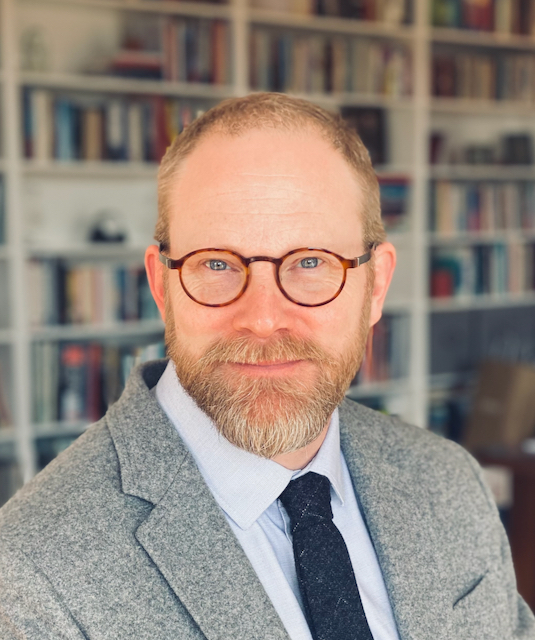
Professor Timothy J. Power is Head of the Social Sciences Division and Professor of Latin American Politics at the University of Oxford, affiliated with the Oxford School of Global and Area Studies (OSGA) and the Department of Politics. He previously directed the Latin American Centre from 2008 to 2012 and has been a leading scholar in comparative politics since 2005. Research Interests: Democratization, political institutions (parties, legislatures, elections), coalitional presidentialism, Brazil, Latin America, new democracies. Awards: None listed in provided text. Advising: No specific students mentioned. Grants: No explicit grants listed, but research involves long-term projects like the Brazilian Legislative Surveys. Labs/Teams: Co-directs the Brazilian Legislative Surveys with Fundação Getúlio Vargas and contributes to cross-regional comparative studies at OSGA. His work analyzes democratization in Latin America, particularly Brazil, focusing on legislative dynamics, coalition governments, and political institutions. Recent articles explore cabinet proportionality, portfolio allocation, and ideological shifts in post-authoritarian settings.
London School of Economics and Political Science (LSE)United Kingdom
Professor Torun Dewan is a Professor of Political Science and Deputy Head of Department for Research in the Department of Government at the London School of Economics and Political Science (LSE). Her expertise lies in Political Economy, Political Parties, and Coalitions. She holds a position in CBG 4.22 and can be contacted at t.dewan@lse.ac.uk. Her work spans historical and contemporary political analysis, including studies on Victorian voting patterns, electoral competition dynamics, and ministerial tenure in the UK. Key research interests include the origins of party orientation, class alignment, and coalition formation. Her research also explores topics such as refugee protection policies and implicit burden-sharing mechanisms. She has contributed to edited volumes on rational choice theory and political behavior. No scientific awards or grants are explicitly mentioned in the provided texts. Her advising record is not detailed here. She is affiliated with the LSE's Department of Government, contributing to both research and administrative leadership roles.
Ian Greer is a Research Fellow at Cornell University's School of Industrial and Labour Relations , with a career focused on marketisation , industrial relations , and transnational solidarity . He holds a PhD from Cornell University and has previously studied at Bard College. His work examines labor dynamics in globalised industries , welfare states , and multinational corporations , often through qualitative comparative methods . Education : BSc (Bard College), MSc/PhD (Cornell University) Greer's research spans marketisation of employment services , social movement unionism , and labour policy in crisis situations . His publications include studies on European welfare-to-work schemes , healthcare privatisation , and labour migration . He is associated with the Centre for Employment Relations, Innovation and Change (CERIC) at the University of Leeds. Greer's recent work analyses precarious labor and project-based employment in social services across Slovenia and France. He also contributes to debates on social dumping , work-first welfare states , and activist labor strategies in sectors like healthcare and automotive manufacturing. He has no listed scientific awards. His work often involves collaboration with scholars like Marco Hauptmeier , Charles Umney , and Nathan Lillie , though no formal advisees are named in the provided text. His email is icg2@cornell.edu .
Professor Christopher Carman is the Stevenson Professor of Citizenship at the University of Glasgow, holding a PhD from the University of Houston. He has served in leadership roles including Head of Subject (Politics & International Relations), Head of the School of Social and Political Sciences, and Deputy Head of the School. His research focuses on political representation, electoral processes, public opinion, and Scottish politics, with notable contributions to studies on the Scottish Parliament and rural-urban political divides. Carman has led the Scottish Election Study (SES) since 2011 and co-leads the NORFACE-funded RUDE project on European rural-urban dynamics. He also contributes to the Glasgow-Nankai Joint Graduate School and the Stevenson Trust, fostering citizenship education and democratic research. Education: PhD in Political Science, University of Houston (2000). Previous academic roles include professorships at the Universities of Strathclyde and Pittsburgh. Research Interests: Political representation alternatives (e.g., public petitions systems), electoral behavior, Scottish and UK politics, direct democracy, and comparative legislative politics. Recent work addresses rural-urban divides in Europe and political compromise in democratic systems. Key Projects: Scottish Election Study (SES), Rural and Urban Divide in Europe (RUDE), and studies on political scandals and multilevel governance. His publications span electoral studies, comparative politics, and political behavior, with a focus on institutional trust and democratic engagement. Grants and Funding: ESRC and NORFACE grants support his research. The Stevenson Trust supports his work on citizenship education and public lectures.
London School of Economics and Political Science (LSE)United Kingdom
John T. Sidel Summary Professor John T. Sidel is the Sir Patrick Gillam Chair in International and Comparative Politics at the London School of Economics and Political Science (LSE), holding joint appointments in the Government and International Relations Departments. He is also Director of the Saw Swee Hock Southeast Asia Centre. His career spans over three decades of research on Southeast Asia, with a focus on the Philippines, Indonesia, and Vietnam. Education B.A. and M.A. in Political Science from Yale University Ph.D. in Government from Cornell University Research Interests Sidel specializes in Southeast Asian politics, including local power dynamics, comparative historical sociology, Islam in politics, reform advocacy campaigns, and infrastructure politics. Key themes include: Local Politics: Analysis of political bossism, dynasties, and subnational governance in the Philippines and beyond. Comparative History: Long-term patterns of state-building, nationalism, and colonial legacies in Southeast Asia. Islam & Politics: Study of religious violence, political mobilization, and transnational Islam in Indonesia. Reform Advocacy: Advising development initiatives like the Philippines' Coalitions for Change program. Infrastructure Politics: Urban transport reforms and their socio-political implications in Metro Manila. Key Publications Major works include Republicanism, Communism, Islam: Cosmopolitan Origins of Revolution in Southeast Asia (2021), Riots, Pogroms, Jihad (2006), and Capital, Coercion, and Crime (1999). His recent research explores transport policy reforms and the political economy of development in the Philippines. Teaching Sidel teaches courses on Southeast Asian politics, comparative historical sociology, and Islam in world politics at LSE. Notable courses include GV4D3 (Local Power in Globalization) and IR461 (Islam in International Relations). Public Engagement He advises international organizations such as The Asia Foundation and UNHCR, contributing reports on Indonesia's refugee policies and Philippine development initiatives. Active in public lectures and podcasts, he promotes Southeast Asian studies through platforms like the LSE's 'Dialogues on Southeast Asia' series.
Tarik Abou-Chadi is a Professor in European Union and Comparative European Politics at the University of Oxford's Department of Politics and International Relations, and a Professorial Fellow at Nuffield College. He holds a PhD from Humboldt University Berlin (2015). His research focuses on elections, political parties, and the transformation of democratic representation in post-industrial societies. Key affiliations include the Government and Politics Network, Comparative Politics and Government, and leadership of the Swiss National Science Foundation-funded project on 'Social Status and the Transformation of Electoral Behavior in Western Europe'. He previously served as Assistant Professor at the University of Zurich before joining Oxford. His work appears in top journals like the American Political Science Review and World Politics. Awards include the Henrik Enderlein Prize (2022) and inclusion in Capital magazine's 'Top 40 under 40' (2022). He advises four doctoral students and actively contributes to media commentary on European political trends through outlets like The Economist. Research interests emphasize far-right dynamics, voter behavior, and party strategy in Western Europe. His recent analyses address gendered political preferences among youth, climate policy acceptance, and the electoral consequences of mainstream parties adopting radical-right policies.
Dr. Anna Bernard is a Senior Lecturer in Comparative Literature and English at King’s College London, part of the Faculty of Arts & Humanities. She holds a BA from UC Berkeley and a PhD from the University of Cambridge. Her research focuses on postcolonial and world literature, decolonization, and solidarity movements, particularly Palestinian activism and international solidarity campaigns. Bernard has held significant fellowships and grants, including the Leverhulme Research Fellowship and an AHRC Research Network Grant. Her recent works include Decolonizing Comparative Literature (2023) and Decolonizing Literature (2023), which explore decolonial methodologies in academia and literature. She currently researches solidarity movements in Nicaragua, South Africa, and Palestine (1975–1990), emphasizing archival activism and transnational cultural networks. Bernard supervises PhD students in anti-colonial literature and cultural activism, and her teaching spans postcolonial theory and solidarity movements in literature. Education: Bachelor of Arts (UC Berkeley) Doctor of Philosophy (University of Cambridge) Research Interests: Postcolonial and world literature Decolonization and cultural activism Palestinian national movement Solidarity movements and internationalism Literature and human rights Recent Articles: Bernard’s work critiques humanitarian frameworks and emphasizes solidarity-based political action. Her 2023 articles Decolonizing Comparative Literature and Decolonizing Literature challenge Eurocentric academic paradigms. Earlier works include analyses of Palestinian solidarity in 1980s literature and critiques of empathy-driven humanitarianism. Awards: Leverhulme Research Fellowship (2016–17) AHRC Research Network Grant (2013–16) University of York Anniversary Lectureship (2010–11) Grants and Projects: Bernard’s research includes collaborations with Algerian universities and involvement in the International Solidarity Action Research Network (ISARN). She organizes events on solidarity, such as Building Usable Pasts and Decolonizing Higher Education . Lab/Team: Bernard contributes to King’s Critical Economic and Political Thought research group, which examines politics and economics through cultural lenses.
Wilfried Swenden is a Professor of South Asian and Comparative Politics at the University of Edinburgh , School of Social and Political Science . He hails from Belgium, having earned a D.Phil in Politics from the University of Oxford and prior academic qualifications from KULeuven and ULBruxelles. Research Focus : Comparative federalism, territorial party politics, majoritarian nationalism in South Asia, intergovernmental relations, and governance in divided societies. Active Grants : Recent British Academy-GRCF collaborative grant (2021-2023) on COVID-19 and the South Asian State , Leverhulme International Network (2014-2017) on Indian federalism, and support from the Economic and Social Research Council, Edinburgh Global Innovation Fund, and Hayter Fund. Supervision : Accepts PhD proposals on territorial party politics in India, constitutional reform in multi-level states, and conflict regulation via federalism/regionalism in South Asia. Recent Publications (2021-2025) address federalism's resilience during crises, majoritarian nationalism in India/Pakistan/Sri Lanka, and intergovernmental relations. Key journals include Publius: The Journal of Federalism , Contemporary South Asia , and Regional & Federal Studies . Scientific Awards : Flemish Fund for Scientific Research (FWO) postdoctoral fellowship
Emiliya Lazarova is a Professor of Economics and Head of the School of Economics at the University of East Anglia (UEA). She chairs the Royal Economics Society’s Conference of Heads of Departments of Economics. Her research focuses on coalition formation, matching theory, and applied economics, with recent projects analyzing technological innovation via patent data, biodiversity market measurements, and international environmental agreements. She has held academic roles at the University of Birmingham and Queen’s University Belfast, teaching quantitative courses like Applied Econometrics and topics in applied microeconomics. Her research interests include coalition dynamics, social housing allocation, and the political economy of environmental policies. Current projects with Dr. Yuan Gao include developing an ex-ante novelty index for inventions and studying biodiversity valuation mechanisms. Lazarova has secured grants from the Royal Economic Society and British Academy, focusing on property rights and economic development in emerging economies. Her work bridges theoretical models and empirical applications, addressing issues like firm behavior under political pressure, patent innovation cycles, and disability discrimination impacts. Collaborations span institutions globally, reflecting her interdisciplinary approach to economic challenges. Advisory roles include supervising PhD students on topics such as status-seeking in matching markets and conflict resolution via coalition theory. Her teaching expertise complements her research, emphasizing quantitative methods and policy analysis.
Amrita Dhillon is a Professor of Economics at King's College London, affiliated with the Department of Political Economy within the School of Politics & Economics. She leads the Quantitative Political Economy research group and contributes to the Global South Research Group and the Centre for British Democracy. Her PhD from SUNY Stony Brook (1994) laid the foundation for her expertise in theoretical modeling, particularly in political economy, public economics, and game theory. Her research focuses on political economy applications including voter behavior, sovereign debt dynamics, corruption, and development. Recent work explores social networks' impact on labor productivity and the gendered effects of the pandemic in India. She has organized workshops on topics like governance and sovereign debt, emphasizing interdisciplinary approaches. Key themes in her articles include electoral competition, corruption's moral costs, and institutional monitoring strategies in developing countries. Her contributions span journals like the Journal of Economic Behavior and Organization and the Review of Financial Studies. She actively engages in policy-relevant research, such as ranking Indian states' performance and analyzing fiscal federalism. Dr. Dhillon is a Digital Futures Institute Fellow (2025-26) and collaborates on projects involving blockchain applications for shareholder rights. Her teaching includes advanced economic analysis and development economics. Office hours are held at Bush House and the Franklin Wilkins Building.
Peg Rawes is Professor of Architecture and Philosophy at University College London's Bartlett School of Architecture , where she directs research and leads the MA Architectural History program. Her work bridges architectural theory with philosophy, focusing on relational architectural ecologies through three intersecting areas: human/nonhuman life practices, planetary poetics, and housing ecologies. Director of Research, UCL Bartlett School of Architecture (2023-present) REF2029 Lead for Bartlett School EDICPI for EU TACK project (2020) BAUHOW5 PI for European architecture schools partnership (2016-20) Research explores biophilic design , decolonial architecture , and feminist spatial practices across three streams: Architectural ecologies : Human/nonhuman relations in 'Bioprotopia' (2023), vulnerability visualization (2021) Planetary poetics : Climate emergency dialogues (2021), Irigarayan aesthetics (2020) Housing biopolitics : Care frameworks (2017), Spinozist ethical ratios (2015) Key funded collaborations include EU TACK's Communities of Tacit Knowledge (2020) and AHRC's Equal by Design (2016). She contributes to architectural peer review for journals and international research councils while maintaining global partnerships with institutions like Cornell , ETH Zurich , and University of Minnesota .
Ben Rampton is a Professor of Applied and Socio-Linguistics at King's College London, affiliated with the School of Education, Communication & Society and the Centre for Language, Discourse & Communication. He previously directed the Centre for Language Discourse & Communication (founded by him) and the King’s Interdisciplinary Social Science Doctoral Training Centre (2011-2014). He is an Honorary Doctorate recipient from the University of Copenhagen and a Fellow of the Academy of Social Sciences and Royal Anthropological Institute. His research focuses on ethnographic and interactional discourse analysis, addressing topics such as urban multilingualism, youth culture, securitisation, language education, and research methodology. He has held editorial roles in journals like Journal of Sociolinguistics and Applied Linguistics , and edits the Working Papers in Urban Language & Literacies series. His work frequently intersects with anthropology, sociology, and cultural studies. Rampton supervises PhD students in areas including multilingualism, language policy, and sociolinguistic citizenship. His recent publications explore linguistic citizenship in England, securitisation discourse, and interdisciplinary approaches to memory studies. He has contributed to projects on language education coalitions and the methodological challenges of linguistic ethnography. Education: PhD (1987), MA (1978), and BA (1976) from the University of London, University of London, and University of York, respectively. Grants/Projects: Includes research on memory politics, language socialization in diasporas, and sociolinguistics and security funded by the British Academy and Leverhulme Trust. Rampton leads initiatives like the Hub for Education and Language Diversity (HELD), collaborating with academic and third-sector organizations. His teaching spans undergraduate and postgraduate courses in sociolinguistics, language and power, and research methodology.
Dr. Ralf Emmers is a faculty member at the Department of Politics and International Studies , SOAS University of London. His research focuses on regional order, security dynamics, and power transitions in the Indo-Pacific and Southeast Asia. Department of Politics and International Studies (SOAS University of London) Research Interests include: Indo-Pacific geopolitics and US-China competition ASEAN's role in regional security Maritime territorial disputes and conflict management Coalition-building and strategic ambiguity Peaceful power transitions and institutional frameworks Publication Trends show a concentration on: Indo-Pacific security architecture (2025-2023) ASEAN's relevance amid great power rivalry (2023-2020) Maritime disputes and securitization (2022-2013) Regional cooperation and conflict resolution (2020-2014)
Professor Myrto Tsakatika is a distinguished academic in the Department of Politics at the University of Glasgow's College of Social Sciences, where she has been employed since 2007. She holds the position of Professor in Political & International Studies and serves as Undergraduate Programme Director. Her office is located in the Adam Smith Building (R1311 Level 13), a prominent building housing the university's social sciences disciplines. Dr. Tsakatika earned her PhD from the University of Essex and previously taught at the Athens University of Economics. She has held prestigious visiting positions at the University of Trieste, the Juan March Foundation in Madrid, and the Centre Emile Durkheim at SciencesPo Bordeaux, establishing her as a scholar with significant international connections. Professor Tsakatika's research spans several interconnected domains within political science. Her primary focus lies in European Union politics and governance, particularly examining the democratic deficit, new governance modes, and evolving public attitudes toward European integration. More recently, she has developed expertise in radical left parties and populism, with special attention to Southern European cases including Greece, Portugal, Italy, and Spain. Her work often bridges comparative politics with European studies, analyzing how domestic political developments interact with broader European integration processes. She has made significant contributions to understanding SYRIZA's rise and governance in Greece as well as similar phenomena across Southern Europe. Analysis of Professor Tsakatika's recent publications reveals a consistent scholarly trajectory focused on the intersection of European integration, radical left politics, and populism in Southern Europe. Her work demonstrates increasing specialization in comparative analysis of radical left parties, particularly examining their organizational structures, electoral strategies, and governance challenges. The geographical focus remains firmly rooted in Southern Europe while maintaining connections to broader European political dynamics. Her publications appear in high-impact journals and prestigious academic presses, indicating recognition within the political science community. Professor Tsakatika has successfully supervised numerous PhD students whose research aligns with her expertise, including projects on populism's impact on foreign policy, EU peacebuilding, and the democratic deficit in the European Union. Her grant portfolio reflects sustained research activity, including projects funded by the Carnegie Trust, Caledonian Research Foundation, Royal Society of Edinburgh, and European Commission programs such as PADEMIA (2013-2016) and EUROSUD (2018-2024). These grants have supported comparative research on Southern European politics, European integration, and radical left parties. Within the academic community, Professor Tsakatika serves as Associate Editor for South European Society and Politics and as Editor for Politics Politics and International Relations. She teaches undergraduate courses on the Politics of the European Union (POLITIC4020) and postgraduate courses on Global Social Movements (POLITIC 5111), directly connecting her research expertise to her teaching responsibilities.
London School of Economics and Political Science (LSE)United Kingdom
Professor Karen E. Smith is a leading scholar in European Union foreign policy studies at the London School of Economics and Political Science (LSE). She serves as a Professor in the Department of International Relations and directs the European Foreign Policy Unit. Her research focuses on EU foreign policy formulation, ethical foreign policy goals (human rights advocacy), genocide policy-making, and EU-UN relations. Notable contributions include work on feminist foreign policy frameworks, emotions in EU diplomacy, and mass atrocity prevention. She has held leadership roles including Head of the International Relations Department (2019–2022). Awards include the 2020 ACUNS Award for best UN-related book and Royal Society of Arts Fellowship (2016). Education: PhD in International Relations (LSE, 1996), MA from Johns Hopkins SAIS (1998), BA from Wellesley College (1987). Academic leadership includes co-editing the Palgrave Macmillan Global Foreign Policy Studies series and directing the LSE IDEAS Women in Diplomacy project. Recent projects analyze gender representation in diplomacy and EU responses to humanitarian crises. Teaching includes courses on EU global engagement and supervision of doctoral students in EU foreign policy areas. Key publications address EU-UN coalition politics, feminist policy impacts, and genocide designation strategies. Grants include EU-funded research networks on EU-UN relations (2012–2019) and contributions to the UN Prevention of Mass Atrocities Task Force (2012–2013). Her work bridges theoretical insights with policy-relevant analysis for global governance challenges.