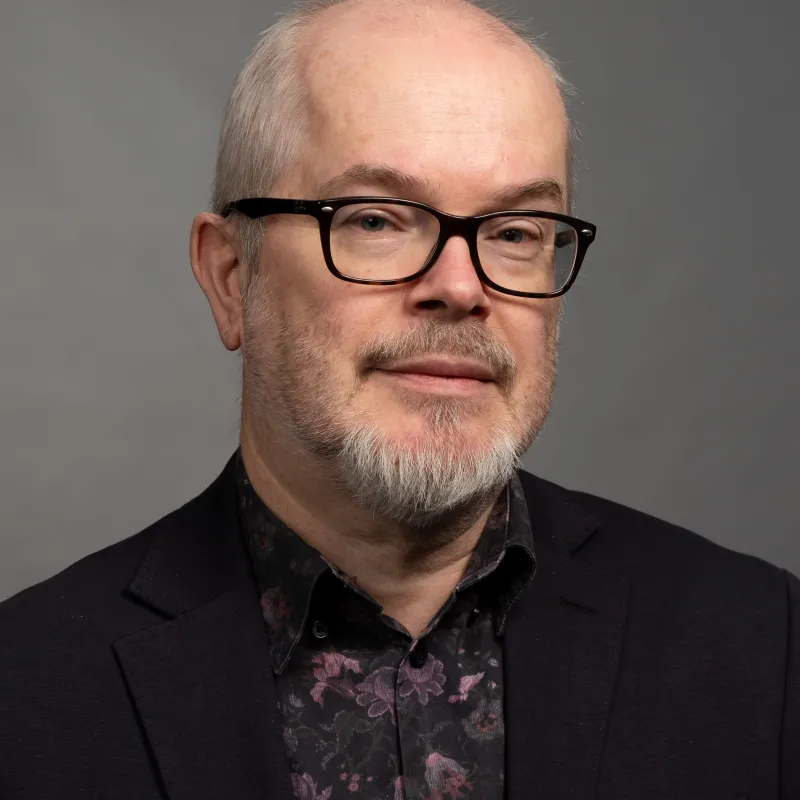
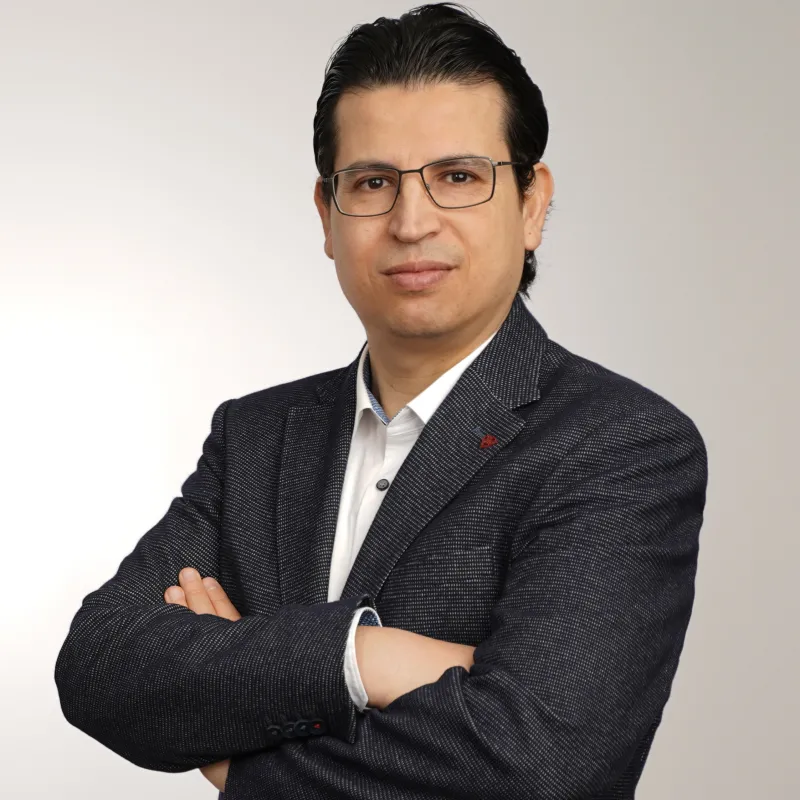
Christian Grönroos is Professor of Marketing at Hanken School of Economics, recognized among the top marketing researchers globally. His pioneering work established service marketing theory and the service logic paradigm. Research focuses on value co-creation frameworks, relationship marketing evolution, and service-driven business model innovation. Publications have transformed understanding of customer management and service productivity. Awards include the Don Schultz Award (2025) and AMS-Parasuraman Best Paper Award. Recent work examines service-informed marketing reform and employee alignment in brand promise co-creation.
Timo Vesala is Professor of Meteorology and Academy Professor at the University of Helsinki’s Faculty of Agriculture and Forestry, Institute for Atmospheric and Earth System Research (INAR). He is also affiliated with the Viikki Plant Science Centre (ViPS) and serves as a supervisor in the Doctoral Programme in Atmospheric Sciences. Research Interests: Micrometeorology and biogeochemical cycles Ecosystem–atmosphere exchanges of greenhouse gases Eddy-covariance methodology and flux networks Boreal lakes, wetlands, and forests as components of the climate system Development of long-term observational infrastructures such as ICOS-Finland Recent research output (2023–2025) is dominated by high-impact articles in Advances in Atmospheric Sciences , Biogeosciences , Agricultural and Forest Meteorology , and Geophysical Research Letters , reflecting a balanced portfolio of process understanding, methodological advances, and large-scale synthesis studies. Scientific Awards: Academy Professor (Akatemiaprofessori) – awarded by the Academy of Finland Doctoral Advising & Grants: Supervised or co-supervised doctoral theses of Sheila Wachiye, E. Lopez-Blanco, and X. Li Principal Investigator on Academy of Finland project “The Hidden Role of Gases in Trees” (2021–2025) Project leader for “Kasvihuonekaasujen maa-ilmakehävaihto järvi- ja suoekosysteemeille” (2024–2026) Co-leader of the art-science initiative “Periferia – Metsätaiteeellinen asema” (2021–2031) Participant in EU flagship EMME-CARE (2017–2026) Labs & Teams: Timo Vesala heads the Micrometeorology Group at INAR and leads the Finnish ICOS (Integrated Carbon Observation System) network node. His team operates multiple eddy-covariance towers across boreal lakes, wetlands, and forests, integrating field observations with modeling and remote-sensing data.
Raed Ahmed Mahmood Al-Juboori serves as an Assistant Professor in the Department of Built Environment at Aalto University's School of Engineering, specializing in advanced water and wastewater treatment technologies through the Water and Environmental Engineering research group. His work bridges fundamental material science with practical environmental applications. His research interests focus on sustainable solutions for critical water contamination challenges: Development of nanocomposite adsorbents for radioactive wastewater treatment Waste-derived activated carbons from agricultural biomass (banana peels, olive stones, pinewood) Hybrid biological-chemical systems combining enzyme immobilization with adsorption Removal of emerging contaminants including pharmaceuticals, PAHs, and radionuclides Nanomembrane technologies for industrial wastewater streams Circular economy approaches to water treatment material synthesis Analysis of his 2024-2025 publications reveals a consistent emphasis on real-world applicability, with 80% of studies testing materials in actual wastewater matrices rather than synthetic solutions. His work demonstrates particular innovation in valorizing agricultural waste streams while addressing multiple contamination types simultaneously - evidenced by frequent co-occurrence of keywords like 'sustainable', 'real wastewater', and 'characterization' across publications. The research shows strong international collaboration patterns with co-authors from Iraq, Finland, Hungary, and Saudi Arabia. Dr. Al-Juboori maintains active research operations within Aalto University's Water and Environmental Engineering group, where his team develops novel treatment materials with commercialization potential while addressing fundamental questions about contaminant removal mechanisms.
Professor Jaana Kaarina Bäck is affiliated with the University of Helsinki, serving in the Faculty of Agriculture and Forestry's Department of Forest Sciences. She leads the 'Ecosystem processes' research group and oversees ecosystem research at the SMEAR measurement network. Her work bridges forest ecology, atmospheric science, and climate change mitigation, focusing on forest-atmosphere interactions and biogenic volatile organic compounds (BVOCs). PhD in Physiological Plant Ecology (University of Oulu, 1994) Docentship in Forest-Atmosphere Interactions (University of Helsinki, 2010) Docentship in Plant Ecophysiology (University of Oulu, 1998) Bäck's research explores how boreal forests influence atmospheric composition, carbon cycling, and climate dynamics. She investigates BVOC emissions, ecosystem responses to climate change, and feedback mechanisms between vegetation and the atmosphere. Her recent publications (277 total) analyze carbon dynamics after forest thinning, aerosol production in boreal ecosystems, and harmonized environmental observations via eLTER. These works span soil functions, air quality, and climate risk research. Knight, First Class, Order of the White Rose of Finland (2021) Open Science Award (University of Helsinki, 2018) Pro Scientia Award (Finnish Academy of Sciences and Letters, 2017) Bäck supervises 3 postdoctoral researchers, 4 doctoral students as main supervisor, and 12 as co-supervisor. She has secured over 6 M€ in research funding, including EU Horizon grants and Academy of Finland projects.
Inigo Flores Ituarte is a Research Professor at Tampere University's Faculty of Engineering and Natural Sciences, affiliated with the Automation Technology and Mechanical Engineering department. He leads the Digital Design and Manufacturing (D2M) research lab, focusing on sustainable manufacturing and twin-transition strategies integrating digital and green technologies. His work emphasizes optimization-driven design, additive manufacturing innovations, and AI-driven expert systems to enhance energy efficiency and reduce environmental impacts. Key research pillars include: Pillar 1: Twin-transition in Engineering Design and Manufacturing Processes, addressing sustainable manufacturing and intelligent systems Pillar 2: Development of open D2M systems and Process-Structure-Property-Performance (PSPP) linkages in advanced materials His research explores multi-disciplinary optimization combining model-based simulations and data-driven techniques. Notable contributions include generative AI integration in CAD systems, cognitive manufacturing systems, and cost-effective process monitoring using CNN-based methods. Inigo's work emphasizes environmental sustainability, with a focus on reducing manufacturing's energy consumption (54% of global use) and CO2 emissions. He advocates for interconnected material systems, smart manufacturing processes, and AI-assisted decision-making to achieve cognitive intelligence in industrial operations. His D2M lab's overarching goal is to maximize product/process performance while improving cost-effectiveness and minimizing environmental footprints. Recent projects include railway bogie demonstrators via multi-material deposition and sensor systems leveraging IoT and ChatGPT integration.
Hannele Mäkelä serves as an Associate Professor in the Department of Accounting within the Faculty of Management and Business at Tampere University. Her academic profile centers on critical examinations of accounting practices through the lens of sustainability, corporate social responsibility, and stakeholder engagement, with particular emphasis on socio-political dynamics and environmental considerations. Her primary research interests include Sustainability Accounting, Corporate Social Responsibility, Social Enterprises, Stakeholder Engagement, Environmental Accounting, and Sustainability Reporting. She investigates how traditional accounting frameworks can be expanded to address complex sustainability challenges, employing discourse analysis to critique the objectivity of materiality disclosures and exploring nature-inclusive stakeholder relationships in urban ecosystems. Her work consistently challenges ideological assumptions in corporate reporting while advocating for more inclusive and environmentally responsive accounting practices. Analysis of her 15 most recent publications (2018-2023) reveals a cohesive focus on urban ecosystem services, mining operations, and sustainability integration in accounting education. Key trends include the deconstruction of materiality illusions in sustainability reporting, critical assessments of responsible mining practices (notably at Talvivaara), and the exploration of accounting's role in social enterprises. Her research demonstrates a methodological preference for qualitative discourse analysis to uncover power dynamics in stakeholder engagement, with recurring themes of cultural sustainability in heritage sites and the socio-political nature of environmental accountability. While specific awards, grants, or student supervision details are absent from the provided materials, her extensive publication record in specialized journals like the Social and Environmental Accounting Journal underscores her active contribution to advancing critical perspectives in sustainability accounting. Her work shows strong institutional engagement through Tampere University's City Centre Campus, with practical implications for municipal reporting, mining industry accountability, and accounting curriculum development.
Lappeenranta-Lahti University of Technology LUTFinland
Heikki Handroos is a Full Professor of Mechanical Engineering at LUT University, leading the Laboratory of Intelligent Machines since 1993. He holds a DSc (Technology) from Tampere University of Technology and has served as Vice-Dean of the Faculty of Technology (2007-2009) and currently chairs the Collegiate Body of LUT University. His research focuses on mechatronics, robotics, control systems, and fluid power, with over 300 publications and 2,400+ citations. He has supervised 34 doctoral theses and 150+ MSc projects, managed R&D projects exceeding €20M, and co-founded four tech startups. His work spans industrial collaborations, digital twin applications, and innovative robotics for nuclear energy (e.g., DEMO reactor maintenance systems). He has held visiting professorships in the U.S., Japan, and Russia, and actively contributes to academic editorial roles and professional societies like ASME and IEEE.
Mikko Joronen is an Associate Professor of Regional Studies at Tampere University, affiliated with the Faculty of Management and Business and the Department of Environmental Policy and Regional Studies. His research focuses on political geography, particularly examining everyday violence, coloniality, and materiality in Palestine and the Middle East. He holds a doctoral degree from the University of Turku (2011) and has held prestigious fellowships including the Academy of Finland Research Fellowship (2017–2022) and the Tampere Institute for Advanced Study Senior Fellowship (2022–2024). Joronen leads the Geographies of Coloniality and Everyday Violence Research Group (GOCEP) and co-leads the Palestine Research Group with Newcastle University. His research explores themes such as atmospheric violence, politics of vulnerability, and temporalities of colonialism. Notable projects include the ERC-funded 'Dwelling with Crisis: Home at Spaces of Chronic Violence' (2023–2028) and the Academy of Finland-funded 'Present-Futures in/of Palestine' (2019–2023). He has published extensively on topics like weaponized breathing, olfactory durations, and decolonial geographies in Palestine. Educations: PhD in Human Geography (University of Turku, 2011) Grants: ERC Consolidator Grant (2023–2028), RELATE Center of Excellence (2014–2019) Joronen’s work bridges theory and practice, analyzing the intersections of ontology, politics, and space. His recent publications emphasize atmospheric materialities and colonial rhythms in Palestinian territories, reflecting his commitment to critical spatial analysis and decolonial thought. Awards: Docent in Political Geography (2017) Academy of Finland Research Fellowship (2017–2022) ERC Consolidator Grant (2023–2028) Research Groups: Leads GOCEP and co-leads the Palestine Research Group. Previously part of SPARG (Space and Political Agency Research Group) and RELATE Center of Excellence.
Lappeenranta-Lahti University of Technology LUTFinland
Ari Jantunen is a Professor in Strategy Research at the LUT Business School, LUT University, Lappeenranta, Finland. He is affiliated with the Department of Business Studies and has been actively contributing to academic research in strategic management and organizational behavior. University: LUT University School: LUT Business School Department: Business Studies Position: Professor, Strategy Research Email: Ari.Jantunen@lut.fi He earned his D.Sc. (Econ.) from Lappeenranta University of Technology in 2005, establishing a long-standing academic career focused on strategic change and innovation. Ari Jantunen’s research centers on strategic change and renewal, organizational cognition, dynamic capabilities, dominant logic, and industry dynamics . His work explores how managerial cognition influences strategic decisions and organizational performance, particularly in industries undergoing transformation such as media, energy, and forest sectors. He also investigates sustainability strategies, the circular bioeconomy, and corporate social performance. His recent publications reflect a strong trend in using cognitive mapping, qualitative comparative analysis (fsQCA), and simulation modeling to understand strategic phenomena. Articles on dominant logic, strategic renewal, and cognitive diversity highlight his focus on the cognitive underpinnings of strategic management. Among his notable works are studies on the bioeconomy transition in the pulp and paper industry, innovation races in high-tech sectors, and the interplay between corporate social and financial performance. Jantunen has collaborated extensively with researchers such as Anni Tuppura, Satu Pätäri, Kalevi Kyläheiko, and Anssi Tarkiainen, often co-authoring studies in journals like European Management Journal , Journal of Business Research , and Futures . Ari Jantunen is actively engaged in research and supervision, though no specific students are listed in the provided sources. He does not appear to have received any explicitly mentioned scientific awards, but his consistent publication record in high-impact journals underscores his academic contributions. He has been involved in interdisciplinary research projects, particularly those examining the interface between the energy and forest sectors, the diffusion of energy services, and innovation in cleantech firms. His work often combines theoretical rigor with practical insights, contributing to both academic discourse and industry applications.
Lappeenranta-Lahti University of Technology LUTFinland
Falah Alobaid is a Full Professor (Tenured) at LUT School of Energy Systems, LUT University, specializing in energy systems engineering. He holds a Ph.D. from the Technical University of Darmstadt (2013), recognized with the university's Energy Special Prize (2014), and completed habilitation in Energy Systems (2018) with the title of Privatdozent (2019). His research focuses on power plant technologies, including combustion, gasification, and CO₂ capture, with expertise in modeling, simulation, and pilot-scale experimentation. Education: Ph.D. (Energy Systems), Technical University of Darmstadt, Germany (2013) Habilitation (Energy Systems), Technical University of Darmstadt, Germany (2018) Research interests emphasize sustainable energy solutions: Fluidized bed combustion and gasification CO₂ capture and storage technologies Renewable energy integration Process simulation and dynamic modeling of power systems Thermal energy storage systems His work bridges experimental and computational approaches, with contributions to EU projects such as SCARLET and OptiMaDyn. Publications reflect advancements in fluidized bed systems, CFD-DEM modeling, and operational flexibility of thermal power plants. Recent trends include integrating artificial intelligence for process optimization and exploring novel materials for carbon capture. Awards include the Energy Special Prize (2014) and recognition for his habilitation work. He leads the Institute of Energy Systems and Technology research group, focusing on bioenergy, waste-to-energy systems, and low-carbon technologies. Grants and collaborations span EU-funded initiatives and national projects. Advising focuses on graduate students in energy systems, though no specific names are listed. Laboratory work includes managing the Institute of Energy Systems and Technology, where experimental setups for fluidized beds and solar thermal systems are developed. Future research targets net-negative CO₂ emissions via chemical looping gasification and enhanced renewable energy storage.
Tero Päivärinta is a Professor at the University of Oulu, Faculty of Information Technology and Electrical Engineering. His work focuses on software engineering, digital ecosystems, and cybersecurity. He specializes in empirical studies of software systems, digital twins, and autonomous driving technologies. His research explores hybrid intelligence systems, data-centric decision-making, and governance of collective ambidexterity in digital initiatives. Education: PhD holder with extensive experience in academic and industry collaborations. Key research domains include cyber-physical systems, DevSecOps automation, and IT governance in public sectors. He co-leads projects such as the NUVE Lab’s vehicle testing frameworks and contributes to initiatives like the Software-Defined Vehicle project. Research highlights include advancing knowledge graphs for manufacturing, cybersecurity compliance in DevOps pipelines, and evaluating data-driven decisions. His articles emphasize interoperability challenges, adaptive systems design, and sustainable digital transformation in public utilities. Professional contributions include organizing the TKTP Annual Symposium and co-editing volumes celebrating academic peers like Markku Oivo. His work bridges theoretical software engineering with practical applications in mobility, governance, and industrial systems.
Bogdan Iancu is a University Lecturer in the Department of Information Technology at the Faculty of Science and Engineering, Åbo Akademi University. He holds a PhD and Docent qualification in Computer Science, with extensive expertise in artificial intelligence and computer vision applications, particularly in the maritime domain. His academic career spans numerous research projects and publications that bridge theoretical AI concepts with practical industry applications. Dr. Iancu's research focuses on AI applications in maritime technology, with special emphasis on object detection systems, security challenges in AI models, and sustainable technological solutions. He has developed benchmark datasets like ABOships and ABOships-PLUS that have become valuable resources for researchers in maritime computer vision. His work addresses critical challenges including adversarial attacks on object detection systems, as evidenced by his 2025 publication on TOG Adversarial Attacks in YOLO Models. The analysis of his recent publications reveals a clear progression from foundational dataset creation to advanced security analysis and neurosymbolic approaches that combine neural networks with symbolic reasoning. His research shows increasing sophistication in addressing real-world challenges in maritime AI systems, with particular attention to robustness, security, and practical implementation. Dr. Iancu actively participates in numerous research projects including EDISS (Engineering of Data-intensive Intelligent Software Systems), SMARTER (Sea4Value Smart Terminals), and DECATRIP (Decarbonizing Transport Corridors). These projects involve collaboration with industry partners across Finland and Europe, focusing on applying AI to solve real-world challenges in maritime transport, digitalization, and sustainability. He has contributed to the academic community through teaching courses in Artificial Intelligence, Data Science, and Graph Algorithms, and through active participation in the Finnish Artificial Intelligence Society. His work aligns with UN Sustainable Development Goals, particularly those related to industry innovation, infrastructure, and climate action through projects like DECATRIP that focus on decarbonizing transport corridors.
Hannu Juusola is a Professor at the Department of Cultures within the Faculty of Humanities at the University of Helsinki. He serves as a supervisor in multiple doctoral programs including Middle Eastern and Islamic Studies, Linguistics, and Political, Social and Regional Change. With over 110 publications to his name spanning from 2005 to 2025, Professor Juusola maintains an active research profile with recent projects extending through 2025. His research focuses on Modern Middle Eastern societies and politics, citizenship & ethnicity, identity, Israeli-Palestinian conflict, Lebanon, Syria, and the relationship between religion and politics . His scholarly work falls within the scientific fields of Political Science (517) and History and Archaeology (615). Professor Juusola has established himself as a leading expert on Middle Eastern affairs, particularly regarding the Israeli-Palestinian conflict, as evidenced by his extensive media presence with 441 documented media appearances where he provides expert commentary on current events in the region. Analysis of his recent publications (2023-2025) reveals a consistent focus on contemporary Middle Eastern conflicts, particularly the Israeli-Palestinian situation, with increasing media engagement as geopolitical tensions have escalated. His work demonstrates interdisciplinary approaches combining historical analysis, political science, and cultural studies to examine complex identity and conflict issues in the region. The temporal pattern of his publications shows sustained scholarly output with particular intensification around key geopolitical events. Professor Juusola has been actively involved in research supervision, serving as a dissertation supervisor or co-supervisor as indicated in his activities. His current research projects include T-Bone Slim and the Transnational Poetics of the Migrant Left in North America (2022-2025, funded by Kone Foundation) and Multinational Migrants (2023-2024, funded by Nordic Council of Ministers). These projects reflect his expanding research interests beyond the Middle East into transnational migration studies while maintaining his core expertise in Middle Eastern politics. With 79 documented academic activities including conference presentations, public talks, and academic visits, Professor Juusola maintains an active presence in both academic and public discourse. His recent activities include presentations on Alternative Orientalist Perspectives on Palestine and Israel (November 2024) and Orientalism in Finland (April 2024), demonstrating his continued scholarly engagement with critical theoretical frameworks in Middle Eastern studies.
Anu Puusa is a Professor in Management at the Business School, University of Eastern Finland , with a focus on cooperatives, organizational identity, change, and work-community skills. Her research bridges theory and practice, emphasizing democratic governance, the dual nature of cooperatives, and qualitative methodologies. She serves on boards such as Cooperatives Europe and Pellervo Coop Center , reflecting her commitment to cooperative principles. Research Interests : Co-operatives, Organizational Identity, Change Management, Work-Community Skills, Trust Dynamics, Knowledge Sharing, Innovation Processes Education : Doctor of Philosophy (KTT), with expertise in interpretative paradigm research Recent Publications highlight trends in cooperative governance, resilience in business contexts, and the interplay of trust and member commitment. Her work spans journal articles, book chapters, and conference proceedings in Journal of Co-operative Organization and Management , Nordic Journal of Business , and Deusto, Estudios Cooperativos . Scientific Awards : Recognized as an awarded teacher Collaborations include partnerships with scholars like Juha Kinnunen, Sami Karhu, and Pasi Tuominen, as well as contributions to projects like the WoCuE Final Report and Elgar Encyclopedia of Innovation Management .
Mikko T. Huttunen holds the position of University Lecturer at the Faculty of Law, University of Lapland, specializing in Law, Technology and Sustainability Transitions. His research focuses on public international law, aviation law, and international criminal law with particular emphasis on unmanned aircraft systems regulation and sovereignty issues. He has participated in multiple co-funded projects including 'UAV-MEMO: Unmanned Aerial Vehicles in Mineral Exploration' (2015-2016) and 'LappiSat Satellite Centre' (2021-2023). Key projects include 'Inclusion: Indigenous Cultures in Evolution' (2022-2024) addressing sustainable governance and 'Education network for automated and connected transport' (2021-2023) focusing on smart mobility. His work bridges legal frameworks with emerging technologies, emphasizing Nordic and Arctic contexts. Notable publications include a legal handbook on satellite operations in Finland (2023) and contributions to European aviation law encyclopedias. He has received five awards including the March 25th Fund Grant (2020) and Outstanding Master's Thesis (2015). As an active scholar, he reviews for journals like Brill and presents at international conferences on topics like 'Civil Liability Pursuant to Finnish Aviation Law' (2022). His research demonstrates interdisciplinary engagement with technology governance and international legal challenges.