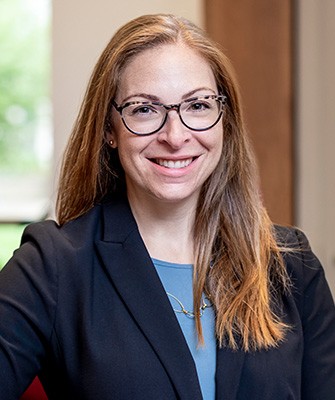
Cheryl Bratt is an Associate Professor of the Practice at Boston College Law School where she teaches Law Practice I & II and co-developed the Critical Perspectives course. Her scholarly interests focus on law school pedagogy, teaching methodologies, and children's rights advocacy. In 2022, she received BC Law's Emil Slizewski Award for Excellence in Teaching. Before joining Boston College, Professor Bratt was a lecturer at Harvard Law School and Assistant Director of Harvard's Child Advocacy Program. Her professional background includes litigation experience as a senior associate at WilmerHale, where she represented clients at trial, appellate, and Supreme Court levels. Professor Bratt clerked for Judge Norman H. Stahl on the U.S. Court of Appeals for the First Circuit and Judge Mary A. McLaughlin on the U.S. District Court for the Eastern District of Pennsylvania. She holds a J.D. and B.A. with high honors from the University of Michigan and an MBA from Dominican University.
Christopher Piech is an Assistant Professor (Teaching) in the Department of Computer Science at Stanford University, with a courtesy appointment in the Graduate School of Education. He serves as a Faculty Affiliate at the Institute for Human-Centered Artificial Intelligence (HAI) and is affiliated with the Symbolic Systems Program. Current courses: AI for Social Good (CS 21SI), Introduction to Probability for Computer Scientists (CS 109), Researching Presenting and Publishing Work in AI & Education (CS 220/EDUC 481) Advises 11 Master's students and co-advises 3 Doctoral students His research focuses on computational education, leveraging artificial intelligence to enhance learning analytics, student collaboration detection, and knowledge tracing in programming education. Publications span ACM Technical Symposium on Computer Science Education (SIGCSE) and NeurIPS conferences. Key article trends include: (1) AI-driven educational tools for code analysis, (2) collaboration monitoring in large classes, and (3) probabilistic models for student learning trajectories.
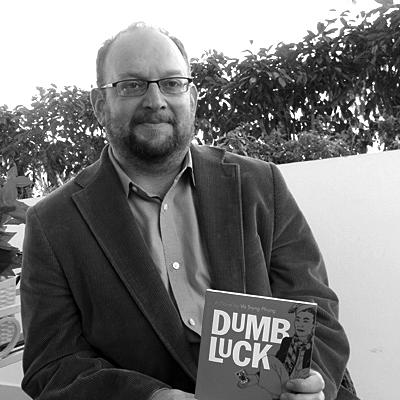
Peter B. Zinoman is a Professor of History at the University of California, Berkeley specializing in Southeast Asian history with primary focus on Vietnam. His academic career spans over two decades with significant contributions to colonial and revolutionary Vietnamese history. His educational background includes a PhD from Cornell University and a BA from Tufts University, establishing foundational expertise in historical methodology and Southeast Asian studies. Zinoman's research centers on Vietnamese colonial history, prison systems, literary history, and Cold War-era political movements. His work critically examines French colonial structures, revolutionary intellectual networks, and the interplay between literature and political dissent. He is renowned for his revisionist interpretations of key historical events including land reform movements and intellectual purges. His publication record spanning 1995-2016 reveals persistent engagement with primary source analysis and interdisciplinary methodology. Articles consistently explore themes of colonial incarceration, literary resistance, and political transformation, with increasing focus on Cold War dynamics and memory politics in later works. His scholarly recognition includes: Association of Asian Studies, Harry J. Benda Prize for Southeast Asia Studies (2003) American Historical Association, John King Fairbank Award for East Asian History (2001) Professional service demonstrates deep institutional commitment through co-editing the Journal of Vietnamese Studies since 2005, co-directing the UC Berkeley History-Social Science Project since 2003, and former leadership roles including Chair of the Center for Southeast Asia Studies (2003-2008) and Resident Director of the UC Education Abroad Program in Vietnam (2001). No public records indicate graduate student advising or grant-funded research projects. His work operates primarily through editorial and institutional frameworks rather than laboratory settings, with significant influence through academic journals and Southeast Asia research centers.
Glen Searle is an Associate Professor at the Faculty of Architecture, Design and Planning at The University of Sydney, specializing in urban planning and metropolitan governance. His academic career demonstrates a strong focus on strategic planning, infrastructure governance, and urban policy development, particularly within the Australian context. Professor Searle's research interests span urban planning, strategic planning, metropolitan governance, infrastructure governance, land use planning, urban sustainability, and city development. His work critically examines planning systems, governance structures, and policy implementation challenges in metropolitan areas, with particular attention to Sydney's urban development strategies and infrastructure projects. He has made significant contributions to understanding the complexities of metropolitan governance, the public interest in mega infrastructure planning, and the challenges of population growth management. Analysis of Professor Searle's recent publications reveals a consistent focus on governance frameworks for urban infrastructure, metropolitan strategic planning, and the intersection of planning policy with population dynamics. His work demonstrates a methodological diversity, employing systematic literature reviews, case studies, and network analysis to examine urban phenomena. A notable trend is his increasing focus on infrastructure governance, particularly how governance structures respond to crises and changing urban conditions. His research bridges theoretical planning concepts with practical policy applications, often drawing on Australian case studies while connecting to international planning discourse. Professor Searle has secured significant research funding, including the 2020 Infrastructure Governance Incubator grant from The Henry Halloran Trust and the 2019 Population Growth and Regional Connectivity research grant from the Australian Housing and Urban Research Institute. His collaborative approach is evident in his extensive co-authorship patterns across multiple institutions and disciplines. His scholarly contributions include numerous journal articles in leading planning and urban studies publications, book chapters, and edited volumes such as Global Planning Innovations for Urban Sustainability (2019). Professor Searle's work has appeared in high-impact journals including Urban Studies , Journal of Planning Literature , Urban Policy and Research , and Planning Theory and Practice .
Dr. Bhavna Sharma is an Associate Professor and Director of the Chase L. Leavitt Master of Building Science Program at the USC School of Architecture. Her work focuses on decarbonization, bio-based materials innovation, and sustainable healthcare infrastructure. She leads the Keck USC Sustainable Healthcare Initiative (KUSHI) to advance environmentally conscious healthcare systems. Dr. Sharma holds a Ph.D. in Civil and Environmental Engineering from the University of Pittsburgh, with additional degrees in Art History and Architecture. Her research spans structural systems optimization from material harvesting to building-scale applications, emphasizing bio-composites like bamboo and timber. She co-chairs USC's Presidential Working Group on Sustainability, contributing to Assignment: Earth climate goals. Courses taught include seismic design, structural systems, and building science integration. Key research areas include lifecycle assessment in healthcare, seismic-resistant designs, and interdisciplinary standards for non-conventional materials. Her work bridges material science, architectural practice, and policy to address global sustainability challenges.
Gillian Hayes is the Vice Provost for Academic Personnel and a Chancellor’s Professor at the University of California, Irvine (UCI). She holds joint appointments in the Department of Informatics (Donald Bren School of Information and Computer Sciences), School of Education, and School of Medicine. Her research focuses on human-computer interaction, assistive technologies, and digital health interventions for children with ADHD and autism. She leads the STAR Group, which designs technologies to address real-world challenges in healthcare and education. Education: PhD in Computing from Georgia Tech, and degrees from Vanderbilt University. Professional roles include Vice Provost for Graduate Education, Dean of the Graduate Division, and faculty director of multiple programs, including the Master of Human Computer Interaction and Design. Research interests include child development, health informatics, and ethical technology deployment. Notable projects include the CERES initiative and work on smartwatch interventions for ADHD. Over 100 peer-reviewed publications and 6 books/chapters highlight her contributions. Scientific awards include NSF CAREER Award, ACM SIGCHI Academy, and recognition for teaching and innovation in accessibility. Advises graduate students in informatics, computer science, and education. Active in leadership roles at UCI and the Computing Research Association (CRA Board member). Labs/Teams: STAR Group, Intel Science and Technology Center (ISTC) collaborator, and co-founder of AVIAA and Tiwahe Technology. Focuses on interdisciplinary research with global collaborators.
Professor Daniel McCarthy is a Professor in Criminology at the University of Surrey's Department of Sociology, serving as Co-Director of the Centre for Criminology and Director of Impact. He holds a BSc, MSc, and PhD. His research focuses on policing, inter-agency collaboration, and the impact of incarceration on families, particularly mothers of incarcerated youth. He explores cross-national public attitudes toward policing and punishment, including death penalty perspectives. Research interests include penal legitimacy, prisoner-family relationships, and the societal effects of imprisonment. His work emphasizes marginalized populations, such as women in prisons and families of incarcerated individuals. He has supervised PhD students on topics like prison-family dynamics and youth justice systems. McCarthy’s publications span academic books, articles, and policy-oriented research, with recent work addressing food policies in women’s prisons and post-release desistance. Teaching includes courses on youth crime, criminal investigation, and law-society relations at both undergraduate and master’s levels. He collaborates with initiatives like the Doing Porridge project, which amplifies women’s voices in criminal justice contexts. His research bridges theoretical criminology with practical policy implications, emphasizing equity and systemic reform.
Dr. Holly Doel-Mackaway is an Associate Professor at Macquarie Law School and a leading expert in children's rights, Indigenous studies, and international law. She co-leads the Children’s Rights, Participation and Protection Research Stream in Macquarie’s Faculty of Arts and serves as Co-Editor-In-Chief of the Australian Journal of Human Rights. Her interdisciplinary research focuses on advancing children’s rights globally, with a particular emphasis on Indigenous children’s participation in law and policy development. Dr. Doel-Mackaway holds a PhD in Law from Macquarie University and has extensive international experience with organizations like UNICEF and Save the Children. She teaches courses on Child and Elder Law, International Human Rights Law, and Research Methodologies. Recognized for her teaching excellence, she won the Vice-Chancellor's Learning & Teaching Award in 2021 and was nominated again in 2024. Her research includes groundbreaking work such as the 2022 book Indigenous Children's Right to Participate in Law and Policy Development , which provides a framework for involving Indigenous youth in policy decisions. She leads major grants like the 2024 ARC Linkage Grant on child-centered evidence for social change and collaborates with NGOs and governments across five continents. Key awards include the Macquarie University Executive Dean’s Higher Degree Research Excellence Award (2017) and the Erasmus+ Mobility Grant (2023). She actively participates in international committees like LAWASIA’s Human Rights Committee and advises on child rights in Australia, the Pacific, and beyond. Current research projects include exploring intergenerational policymaking, child protection in the Pacific, and the impact of the Voice to Parliament referendum on Indigenous rights.
Elisa Morgera is a Professor of Global Environmental Law at the University of Strathclyde and the UN Special Rapporteur on Climate Change and Human Rights (2024–present). She previously directed the UKRI GCRF One Ocean Hub (2019–2024), a transformative ocean governance initiative spanning 22 institutions globally. Her research focuses on international environmental law, human rights, equity, and oceans governance, with particular attention to Indigenous peoples, small-scale fishers, and climate justice. Education includes a PhD in International Law from the European University Institute and an LLM in Environmental Law from University College London. She also holds an adjunct professorship at the University of Eastern Finland. Research interests integrate environmental law with human rights, equity, and sustainability, addressing topics like benefit-sharing in natural resources, marine biodiversity, and corporate accountability. She has advised UN agencies, governments, and NGOs, and contributed to Scottish human rights frameworks, including recommendations for a legal right to a healthy environment. Key awards include election to the Royal Society of Edinburgh (2022). Her work spans over 180 publications, including articles on climate governance, ocean defenders' rights, and BBNJ Agreements. She leads interdisciplinary projects funded by UKRI, the EU, and global partnerships. Elisa has advised on over 30 international initiatives, including contributions to the UN Special Rapporteur on Human Rights and the Environment. Her advisory roles include the Scottish Government’s Human Rights Leadership Task Force (2018–2020), shaping national human rights legislation. Her One Ocean Hub and other collaborations emphasize equity and inclusion in ocean policy, involving communities in decision-making processes.
Jennifer Gibbs is a Professor and Graduate Director in the Department of Communication at the University of California, Santa Barbara. Her research focuses on collaboration in global teams, distributed work arrangements, and the impact of technologies like AI and digital media on organizational practices. She holds affiliated appointments in TMP and CITS. Education: Ph.D. (2002) in Organizational Communication from the University of Southern California; B.A. (1992) in Philosophy from Pomona College. Research interests include distributed work dynamics, global team management, remote work challenges, and technology's role in organizational transformation. Her work combines qualitative and quantitative methods, emphasizing real-world field studies to explore communication processes and technological impact. Recent studies address boundary management in remote work, well-being in virtual teams, and AI's role in legal and organizational contexts. Her articles highlight trends in global work dynamics, technological affordances, and equity perceptions among remote workers. Gibbs has served as Editor of Communication Research and on editorial boards of top-tier journals. She teaches Organizational Communication, Communication Technology, and Qualitative Research at both undergraduate and graduate levels. Her contributions bridge theory and practice, addressing critical issues like work-life balance in digital environments and the future of hybrid workplaces.
Cameron L. Bentley is a Senior Lecturer in the School of Chemistry at Monash University, Australia. He holds a PhD in Chemistry from Monash University (2015), focusing on electroanalysis in ionic liquids. After completing his doctorate, he worked at the University of Warwick (UK) through prestigious fellowships including Endeavour, Marie Skłodowska-Curie, and Ramsay Memorial. In November 2020, he returned to Monash to lead an independent research group funded by a DECRA Fellowship. Affiliations: School of Chemistry (Monash University), Warwick Electrochemistry and Interfaces Group (former) Research Focus: Nanoscale electrochemistry, electrocatalyst design for renewable energy (water splitting, CO₂ reduction), and single nanoparticle electrochemistry. Bentley’s research innovatively combines scanning electrochemical cell microscopy (SECCM) with correlative microscopy/spectroscopy to study structure-activity relationships in electrochemical materials. Key projects include nanoscale imaging of water-splitting electrodes and developing platforms to probe individual nanoparticles for battery materials. Research Outputs: Over 77 publications since 2013, with recent focus on SECCM advancements, electrocatalyst optimization, and nanoscale reaction imaging. His work addresses pressing challenges in renewable energy storage and nanomaterials. Awards: A.M. Bond Medal (2023), Early Career Analytical Electrochemistry Prize (ISE Division 1, 2020) Grants: ARC DECRA Fellowship, CSIRO collaboration (2023–2027) He supervises PhD students in nanoscale reaction imaging and single nanoparticle electrochemistry, requiring competitive scholarships for international candidates.
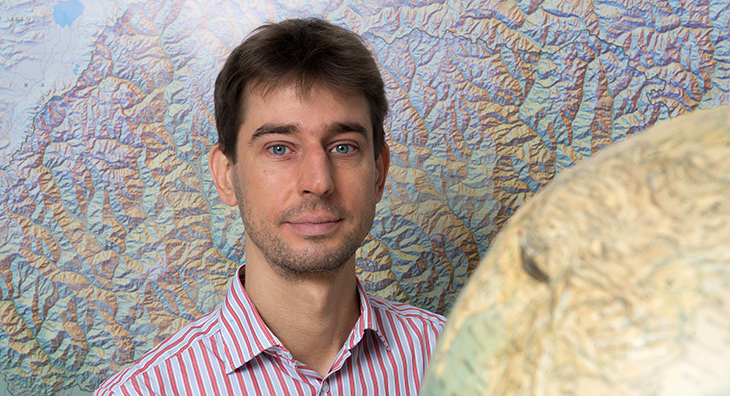
György Hetényi is an Associate Professor at the Institute of Earth Sciences, University of Lausanne, specializing in large-scale geophysics. His research focuses on mountain-building processes, earthquake dynamics, and tectonic deformation of the Himalayas and Alps. He leads the AlpArray project, deploying the largest academic seismic network in Europe. Since 2015, he has held an SNSF Assistant Professorship, advancing to his current role in 2020. Education: Bachelor's in Geophysics at Eötvös University (Budapest) Master's and PhD at École Normale Supérieure (Paris), studying Himalayan deformation Research Interests: Combining seismic and gravity data to model crustal structures, numerical modeling of orogenic processes, and educational seismology initiatives in Nepal. Active in field campaigns across Bhutan, Nepal, and the Ivrea-Verbano Zone. Publications: Over 48 peer-reviewed articles since 2007, emphasizing crustal imaging, seismic tomography, and Himalayan tectonics. Recent work includes participatory gravity modeling challenges and pan-Alpine gravity database development. Awards: Prize of the Chancellery of the Universities of Paris (2007) for doctoral research on Himalayan deformation. Teaching & Outreach: Developed the 'Geophysics Across Scales for Geologists' module in the UNIL-UNIGE program. Co-leads the Nepal School Seismology Network, integrating low-cost seismic education tools. Grants & Projects: AlpArray, DIVE (scientific drilling in Ivrea Zone), and seismic hazard assessments in Bhutan. Collaborates with international networks like ICDP and European seismic consortia. Labs/Teams: Part of the Institute of Earth Sciences (UNIL) and leads the OROG3NY project on mountain-building dynamics.
Holger Straßheim is Professor of Political Sociology at Bielefeld University, affiliated with the Faculty of Sociology, Department 4 – Politics and Society. He also holds leadership roles as co-director of the Institute for Interdisciplinary Studies of Science (ISOS) and the Institute for World Society Studies, and is an elected member of the university’s Senate. He coordinates the MA program in Political Communication and serves on multiple examination and ethics committees. University: Bielefeld University School: Faculty of Sociology Department: Department 4 – Politics and Society Research Institutes: ISOS, Institute for World Society Studies Administrative Roles: Program Coordinator MA Political Communication, Member of BA/MA Examination Boards, Habilitation Committee His research centers on the interplay between science and politics, particularly the role of expertise and evidence in public policy. Key areas include behavioral public policy, climate and consumer policy, Arctic geopolitics, and the temporal dimensions of governance. He investigates how knowledge is produced, legitimized, and used in policy-making across transnational contexts. The most recent publications reflect a strong focus on evidence cultures, ethical expertise in crises, and the global spread of behavioral governance. These works analyze how expert advice functions under uncertainty, the paradoxes of evidence-based policy, and the institutionalization of ethical guidance during emergencies like the COVID-19 pandemic. The research often employs comparative and interdisciplinary methods, engaging with science and technology studies, political sociology, and policy analysis. Best Dissertation Award, University of Tübingen (2011) Visiting Fellow, Harvard Kennedy School (2014) Visiting Research Fellow, Collège d’études mondiales, Paris (2018) Visiting Research Fellow, University of Bologna (2022) Straßheim has supervised and advised in various research projects and PhD initiatives, particularly through his leadership in DFG and ESRC-funded programs. He has secured significant third-party funding, including projects on Arctic knowledge co-production and ethics in crisis governance. He is actively involved in academic service, reviewing for major journals and research councils, and shaping policy discourse through editorial roles in Critical Policy Studies and the Advances in Critical Policy Analysis book series. He leads the Straßheim Research Group, fostering interdisciplinary collaboration on science-policy interfaces. He is a key figure in research networks such as the Science and Democracy Network (Harvard) and the International Arctic Science Committee. His work bridges academic inquiry with real-world policy challenges, emphasizing democratic accountability, epistemic pluralism, and the ethical dimensions of expertise.
Dr. Rishita Nandagiri is a feminist researcher and academic currently serving as a Lecturer (Assistant Professor) in the Department of Global Health & Social Medicine at King's College London. She previously held research and teaching positions at the London School of Economics (LSE), including an ESRC Postdoctoral Fellowship and an LSE Fellow in Health and International Development. Her work is deeply rooted in reproductive justice, gender, and global health, with a focus on the Global South. PhD in Social Policy, London School of Economics (2019) ESRC Postdoctoral Fellow, LSE Department of Methodology (2020-2021) LSE Fellow in Health and International Development (2019-2020) Research Assistant, LSE Department of Media and Communications (2018-2019) Dr. Nandagiri’s research centers on reproductive (in)justices, interrogating how power and politics shape abortion access, self-managed abortion, care trajectories, and reproductive governance. Her work is interdisciplinary, drawing on feminist theory, qualitative and participatory methods, policy analysis, and co-production with communities and organizations. She has extended her research to examine the impact of the COVID-19 pandemic on abortion and the role of lay health providers in care delivery. Her methodological interests include multi-method designs that integrate interviews, archival research, and community engagement. The 15 most recent articles reflect a strong trajectory in reproductive justice, with increasing engagement with feminist economics, carceral systems, and global policy. Themes include structural violence, legal pluralism, care ethics, and transnational advocacy. Her publications span high-impact journals in public health, social policy, gender studies, and media, indicating a broad interdisciplinary reach. Scientific awards and recognitions include: ESRC Postdoctoral Fellowship (2020-2021) LSE Class Teacher Award (2020) LSE Research Investment and Infrastructure Funds (2020) Best PhD Poster Prize, British Society for Population Studies (2018) LSE PhD Studentship (2015-2019) Dr. Nandagiri has advised on and contributed to numerous research grants, particularly those related to reproductive health, digital privacy, and pandemic response. She has collaborated with major institutions such as UNFPA, the Women’s Global Network for Reproductive Rights, and FRIDA. She co-founded the Abortion Book Club and serves on editorial and advisory boards, including BMJ Sexual & Reproductive Health and the International Union for the Scientific Study of Population’s Abortion Research panel. She also co-convenes the Development Studies Association’s Women and Development Study Group, demonstrating strong leadership in academic and advocacy networks. She is actively involved in public engagement, contributing to LSE blogs, media outlets like Women's Health Magazine UK, and platforms such as the Oxford Human Rights Hub and Harvard’s Bill of Health. Her lab and team affiliations are not explicitly named, but her collaborative projects suggest strong ties to interdisciplinary research groups focused on global health, reproductive justice, and digital rights.
Professor Stephen Taylor is a leading historian specializing in early modern British history, particularly the religious and political history of seventeenth- and eighteenth-century England. He is affiliated with the Department of History at Durham University, where he holds the rank of Professor in Early Modern British History. His scholarly work spans topics such as Anglicanism, court culture, party politics, and the relationship between church and state. Professor (Early Modern British History), Department of History, Durham University Co-Director, The Clergy of the Church of England Database 1540–1835 Co-Founder, Durham University IMEMS Press His research interests include the identity of Anglicanism, religious conformity during the English Revolution, the Hanoverian monarchy and court culture (especially Queen Caroline of Ansbach), the Church of England from the 16th to 19th centuries, the Revolution of 1688, and news culture in the later seventeenth century. He has also studied figures such as John, Lord Hervey, and Edmund Gibson. Professor Taylor’s recent publications reflect a consistent focus on ecclesiastical history, political theology, and archival scholarship. His work often analyzes religious identity, state formation, and the interplay between monarchy and church. He has contributed to major scholarly editions and databases, demonstrating a commitment to both interpretive and infrastructural academic work. His editorial roles in volumes like The Nature of the English Revolution Revisited and National Prayers underscore his leadership in the field. His scholarly recognition includes multiple visiting fellowships at prestigious institutions such as the Huntington Library, Folger Shakespeare Library, and the Harry Ransom Center. These awards reflect the high esteem in which his work is held internationally. 2024: Visiting Fellow, The Huntington Library, California 2012: Woodward and Bernstein Endowment Fellow, Harry Ransom Humanities Research Center 2011: Visiting Fellow, Peterhouse, Cambridge 2009: Visiting Fellow, Folger Shakespeare Library 2007: Pforzheimer Fellow, Harry Ransom Humanities Research Center 2007: Visiting Fellow, Folger Shakespeare Library Professor Taylor actively supervises postgraduate research, with students working on topics such as the Earl of Danby, the transmission of taste, John Pearson, obedience and subversion under the late Stuarts, and William Laud’s economic thought. He has been involved in significant grant-funded projects, including the AHRC-supported Cultural Heritage 360 report and the long-term Clergy of the Church of England Database . His editorial and collaborative work indicates strong leadership in shaping future directions in arts and humanities research. He is a key figure in the Institute of Medieval and Early Modern Studies (IMEMS) and has helped establish Durham University IMEMS Press, further cementing his role in advancing scholarship in medieval and early modern studies.