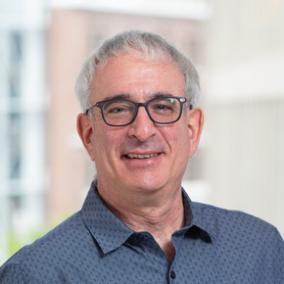
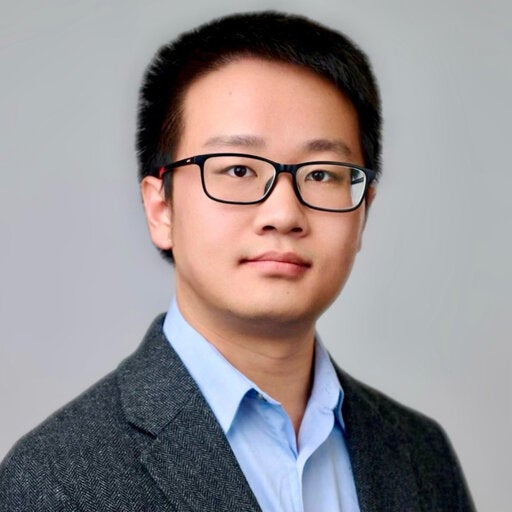
Professor Michael Ben-Gad is a Professor of Economics at City, University of London, where he has served since 2009. He previously held roles as Head of the Department of Economics (2010–2013) and Deputy Head (2008–2010). His research focuses on dynamic macroeconomics, taxation, public debt, immigration economics, and national security, with notable contributions to endogenous growth models and compositional data econometrics. He holds a PhD from the University of Chicago (1996) and has taught at institutions including the University of Houston and University of Haifa. Ben-Gad served on the U.S. National Academy of Sciences panel on immigration's economic and fiscal impacts (2014–2016) and received a 2017 Fellowship from the Royal Society of Arts (FRSA). His work spans academic journals (Economic Modelling, Journal of Economic Dynamics and Control) and media outlets (BBC, CNBC, Al Jazeera), addressing topics like Brexit economics, fiscal policy, and geopolitical challenges. He co-convenes the City Branch of Academics for Academic Freedom and is a founding member of London Universities' Council for Academic Freedom. His research grants include funding from HM Treasury/ESRC on fiscal policy and immigration (2011), the Israel Science Foundation (2007–2008), and the Samuel Ne'eman Foundation (2004). Professional roles include editorial board membership for Economic Affairs and membership of the ESRC Grant Assessment Panel (2021). He is proficient in Hebrew and contributes to policy debates on taxation, macroprudential frameworks, and defense economics.
Tianqi Chen is an Assistant Professor at the Machine Learning Department and Computer Science Department of Carnegie Mellon University (CMU), with a courtesy appointment as a Professor in the Electrical and Computer Engineering Department within the College of Engineering. His research focuses on scalable machine learning systems, compiler optimization, and efficient deep learning frameworks. He holds a PhD from the Paul G. Allen School of Computer Science & Engineering at the University of Washington. Key contributions include the creation of XGBoost, Apache TVM, and MLC-LLM—widely adopted systems for machine learning and large language models. His work bridges algorithmic innovation with high-performance computing, emphasizing efficient deployment, quantization, and edge computing. Recent publications highlight advancements in LLM serving (e.g., WebLLM, Flashinfer), compiler-driven optimizations (e.g., TVM, Relax), and low-latency inference techniques (e.g., Magicdec, Tilus). These efforts address scalability, energy efficiency, and cross-platform compatibility in modern AI systems. Chen’s research has been applied to diverse domains, including music AI, browser-based inference, and microservice architectures for LLMs. His work underscores the importance of system-level thinking in advancing AI capabilities.
Joseph A. November is an Associate Professor in the Department of History at the University of South Carolina, affiliated with the McCausland College of Arts and Sciences. His research focuses on the history of biomedical computing, distributed computing, and the intersection of technology and medicine. He holds a Ph.D. from Princeton University (2006), an M.A. from the University of Chicago (2002), and a B.A. from Hamilton College (1997). His work includes the award-winning book Biomedical Computing: Digitizing Life in the United States (2012), which explores the co-development of biomedicine and computing technologies. Current projects include Revolutions@home , examining distributed computing in protein folding research, and a biography of computing pioneer Robert S. Ledley. He has received grants from the NSF, NIH, and the Charles Babbage Institute. Teaching interests span the history of science and technology, including courses on the history of medicine, digital humanities, and the role of games in historical education. He actively contributes to professional organizations like SHOT and the History of Science Society. Awards include the Computer History Museum Prize (2013) and the National Institutes of Health DeWitt Stetten Fellowship (2007-2008). His research bridges historical analysis with contemporary issues in technology and biomedical ethics.
Ruben Juanes is a Professor of Civil and Environmental Engineering and Earth, Atmospheric, and Planetary Sciences at MIT. His research focuses on multiphase flow in porous media, energy resources, and CO₂ sequestration. He holds appointments in both departments and has a strong interdisciplinary focus on geosciences and environmental engineering. His work bridges theory, simulation, and experimentation to address energy and environmental challenges. Education: Ingeniero de Caminos (Civil Engineering), University of La Coruña, Spain (1997) MS in Civil Engineering, UC Berkeley (1999) PhD in Civil Engineering, UC Berkeley (2003) Research interests emphasize fluid dynamics in geologic media, especially CO₂ storage, methane hydrates, and ecohydrology. His group develops computational models to predict large-scale Earth processes, with applications to carbon capture and storage, energy resource management, and subsurface engineering. Notable contributions include advancing understanding of fluid displacement mechanisms, capillary trapping in aquifers, and induced seismicity risks during CO₂ injection. His work has been recognized through awards like the APS Fellowship (2024), DOE Early Career Award (2010), and ARCO Energy Professorship (2008). Advising and Grants: Juanes advises graduate students in CEE and EAPS, focusing on thesis research in multiphase flow and geomechanics. His grants include NSF and DOE funding for projects on subsurface energy systems and induced seismicity. His lab, the Juanes Research Group, collaborates on experimental facilities like the FluidFlower CO₂ storage simulator. Labs/Teams: Active in MIT's Carbon Capture, Utilization, and Storage (CCUS) initiatives and the MIT Energy Initiative (MITEI). Collaborates with industry partners on field-scale CO₂ storage validation and subsurface monitoring technologies.
Stephen Licht is an Associate Professor of Ocean Engineering and Graduate Director at the University of Rhode Island's College of Engineering, where he directs the Robotics Laboratory for Complex Underwater Environments (R-CUE). His research focuses on developing maritime robots capable of operating in dynamic and unpredictable environments through biologically inspired propulsion, distributed pressure sensing, model-based optimal control, and compliant underwater manipulation technologies. Ph.D. in Oceanographic and Mechanical Engineering from MIT/WHOI Joint Program (2008) B.S. in Mechanical Engineering from Yale University (1998) Former Senior Research Scientist at iRobot and Senior Robotics Engineer at Vecna Robotics Current Research Affiliate with MIT Department of Mechanical Engineering Former Visiting Faculty at Libera Università di Bolzano (2019-2020) Dr. Licht's research spans marine robotics with emphasis on biologically inspired propulsion systems that provide high authority and bandwidth thrust, nonlinear attitude control for maneuvering in dynamic conditions, compliant underwater manipulation technologies, and unmanned aerial monitoring of coastal structures. His work bridges mechanical engineering principles with oceanographic applications to create more capable underwater robotic systems that can operate in complex marine environments. His recent publications demonstrate a strong trend toward soft robotics applications for deep-sea exploration, with particular focus on jamming grippers and neutrally buoyant manipulation systems. The research also shows increasing integration of additive manufacturing techniques for field-deployable solutions and computational methods for autonomous systems operating in challenging marine environments. His work spans fundamental control theory, mechanical design, and practical field applications. Dr. Licht has secured significant research funding as both Principal Investigator and Co-Principal Investigator from major organizations including the Office of Naval Research, NOAA, NSF, and various university collaborations. His grants focus on advancing unmanned underwater vehicle technology, soft robotics for deep-sea applications, and coastal monitoring systems. Active mentor to numerous graduate and undergraduate students in Ocean Engineering Successful track record of student placements at organizations including Jaia Robotics, Scripps Institution of Oceanography, FORSSEA Robotics, and government research labs Collaborates with researchers at MIT, WHOI, University of Connecticut, University of Maine, and international institutions Licht leads the R-CUE lab which develops innovative solutions for underwater robotics challenges, with particular expertise in biomimetic propulsion, soft robotics for deep-sea applications, and autonomous systems for environmental monitoring. The lab maintains strong industry connections with OceanGate Inc. and FabNewport, and engages with local educational institutions through outreach programs with Roger Williams Middle School.
Kevin Jamieson is an Associate Professor at the Paul G. Allen School of Computer Science & Engineering and an Adjunct Professor in the Department of Statistics at the University of Washington . His academic journey includes a B.S. (2009) , M.S. (2010) , and Ph.D. (2015) in electrical engineering from the University of Washington, Columbia University, and University of Wisconsin–Madison respectively. He completed a postdoc at UC Berkeley's AMP Lab before joining UW in 2017. Ph.D., Electrical Engineering, University of Wisconsin–Madison (2015) M.S., Electrical Engineering, Columbia University (2010) B.S., Electrical Engineering, University of Washington (2009) Jamieson's research lies at the intersection of interactive machine learning , active learning , and sequential decision making . His work focuses on: Adaptive sampling strategies in multi-armed bandits and reinforcement learning (RL) Developing instance-dependent optimal algorithms that adapt to problem difficulty Applications in robotics , human perception studies , and hyperparameter optimization Representation learning for large models and experimental design frameworks His 15 most recent publications (2025-2022) demonstrate expertise in bandit theory , contextual RL , and game-theoretic learning . Notable trends include sample-efficient optimization , adaptive A/B testing , and sim-to-real transfer in robotics. Jamieson has received: NSF CAREER award for foundational contributions Amazon Faculty Research award for innovation in learning systems He actively recruits graduate students and postdocs , emphasizing collaboration in areas like: Multi-agent RL and strategic actor learning Empirical process suprema and adaptive sampling theory Applications in robotics , large language model finetuning , and biomedical data analysis Jamieson leads the Washington AI Lab (WAIL) and develops open-source learning systems like the NEXT framework for real-world adaptive data collection. He serves as co-PI for the Institute for the Foundations of Data Science (IFDS) and co-organizes the Distinguished Seminar in Optimization & Data .
Amanda Phillips is an Associate Professor at Georgetown University, affiliated with the Departments of English, Film and Media Studies, Women’s and Gender Studies, and American Studies. Their research focuses on feminist and queer theory in digital media, with a particular emphasis on critical game studies and digital humanities. Selected publications include Gamer Trouble: Feminist Confrontations in Digital Culture and co-editing the Queer/Trans/Digital book series. Their scholarship appears in journals such as ROMchip , Feminist Media Histories , and Games and Culture . Research Interests: Digital media and gender politics Queer theory in gaming contexts Decolonial and anti-racist digital humanities Critical analysis of game mechanics Digital labor and precarity Affective histories of gaming Scientific Awards: Mellon/ACLS Dissertation Completion Fellow Academic Leadership: Former chair of the American Studies Association Digital Humanities Caucus Co-founder of the #transformDH Collective Editorial work on special issues of Game Studies and Antares: Letras e Humanidades Previous Institutions: IMMERSe Postdoctoral Fellow at University of California, Davis Ph.D. recipient from University of California, Santa Barbara with emphasis in Feminist Studies
Professor Hutan Ashrafian is a clinician-scientist and surgeon at the University of Leeds Business School, holding dual roles as Professor of Research Impact and Senior Research Fellow at Imperial College London. His expertise spans AI in healthcare, metabolic surgery, and ancient history. He pioneered STARD-AI and QUADAS-AI guidelines for AI diagnostics, collaborated on AI-driven breast cancer screening with Google and NHS, and led global health policy initiatives. Ashrafian’s work bridges medicine, history, and philosophy, including his contributions to understanding historical figures’ medical conditions, such as King Tutankhamun’s epilepsy. He has authored over 550 publications, 12 books, and holds a PhD in computational physiology and an MBA with distinction. Awards include the Hunterian Prize and Wellcome Trust Fellowship. His research also explores AI ethics, quantum physics paradoxes, and art-based medical diagnostics. Education: PhD in Computational Physiology (Imperial College London) MBA (Warwick Business School) MD (University College London) Bachelor of Science in Immunology (University College London) Research Interests: Ashrafian’s work spans: AI in Medicine: Diagnostic algorithms, guideline development (STARD-AI/QUADAS-AI), and ethical frameworks. Metabolic Surgery: Bariatric interventions, gut microbiome, and obesity treatments. Ancient History: Medical analyses of historical figures (e.g., Tutankhamun, Julius Caesar) and art-based pathology identification. Philosophy: AI rights (AIONAI law), temporal paradoxes, and the Simulation Argument. Awards: Royal College of Surgeons Arris and Gale Lectureship Hunterian Prize Wellcome Trust Research Fellowship Advising & Innovation: Supervised >50 PhD students, co-founded Oxford Medical Products (weight loss tech), and serves as CSO at Flagship Pioneering’s Preemptive Health division. He advises on NHS digital transformation and global health policy. Labs/Teams: Leads AI initiatives at Imperial’s Institute of Global Health Innovation and collaborates with Google, NICE, and international institutions on health tech solutions.
Dr. Diyi Yang is an Assistant Professor in the Computer Science Department at Stanford University. She leads the Social and Language Technologies (SALT) Lab, affiliated with the Stanford NLP Group, Stanford HCI Group, Stanford AI Lab (SAIL), and Stanford Human-Centered Artificial Intelligence (HAI). Her research focuses on socially aware natural language processing, large language models (LLMs), and human-AI interaction, aiming to improve human-human and human-computer communication through socially grounded AI systems. Education: Ph.D. in Language Technologies Institute, Carnegie Mellon University (2013–2019) B.S. in ACM Honored Class, Shanghai Jiao Tong University (2009–2013) Research Interests: Dr. Yang’s work bridges computational social science and NLP. She explores how AI can understand social contexts in language use and develop systems that respect cultural norms, ethical standards, and human values. Her lab’s projects include AI companions for skill training (e.g., Rehearsal Dialects), norm-aware LLMs (NormBank), and frameworks for human-AI collaboration (Co-Gym). Recent efforts address bias in AI, societal impacts of LLMs, and ethical evaluation of human-AI systems. Awards & Honors: 2024: Sloan Research Fellowship, ONR Young Investigator Award 2023: Adamic-Glance Young Distinguished Award (ICWSM), Kavli Fellow (NAS) 2022: NSF CAREER Award, Microsoft Research Faculty Fellow 2020: IEEE AI’s 10 to Watch Advising & Grants: Dr. Yang advises over 10 PhD students and postdocs, co-leading projects on LLM evaluation (SWE-bench/SWE-smith), human-AI ethics, and culturally aware NLP. Her research is supported by NSF, Amazon, DARPA, Google, and Stanford’s HAI initiative. Labs & Teams: The SALT Lab collaborates across disciplines, with projects spanning computer science, linguistics, and social sciences. Current initiatives include developing AI tools for mental health support (AI Partner & Mentor) and auditing societal impacts of LLMs.
Laurel MacKenzie is an Associate Professor in the Department of Linguistics at New York University (NYU), affiliated with the Faculty of Arts and Science. She specializes in variationist sociolinguistics, dialectology, and language change, with a focus on English and French varieties. Her work integrates quantitative analysis of speech data to explore intra-speaker variation and language evolution. She co-directs the NYU Sociolinguistics Lab and leads the NSF-funded NYC Individual Differences Corpus project, alongside the Our Dialects initiative, an online atlas of British English dialects. Education: PhD in Linguistics, University of Pennsylvania (2012) BA in Linguistics and French, University of California, Berkeley (2006) Research Interests: Morphological and syntactic variation Regional dialects of English and French Linguistic pedagogy and public engagement Recent Projects: Recent work includes publications on participle leveling in English, sociolinguistic replication studies, and grammatical variation analysis. She has also collaborated on dialect mapping tools and consulted for media projects on language change and accents. Awards: No awards explicitly listed in provided texts. Labs/Teams: NYU Sociolinguistics Lab (Co-Director) Our Dialects Project (Academic Lead)
Joshua D. Angrist is the Ford Professor of Economics at the Massachusetts Institute of Technology, where he has been a faculty member since 1996. He is also a co-founder and director of MIT's Blueprint Labs and a Research Associate at the National Bureau of Economic Research. Angrist shares the 2021 Nobel Prize in Economic Sciences with David Card and Guido Imbens for their methodological contributions to the analysis of causal relationships. Angrist received his B.A. from Oberlin College in 1982 and completed his Ph.D. in Economics at Princeton University in 1989. Prior to joining MIT, he taught at Harvard University and the Hebrew University of Jerusalem. His academic journey began somewhat unconventionally, as he left high school early after 11th grade, worked for over a year, and only later discovered his passion for economics through an inspiring teacher at Oberlin. Angrist's research focuses on developing and applying innovative econometric methods to answer important economic questions using natural experiments. His work spans labor economics, education economics, and causal inference methodology. He is particularly known for his contributions to instrumental variables methods and the Local Average Treatment Effect (LATE) framework developed with Guido Imbens. His research explores the economics of education and school reform, the impact of social programs on labor markets, and the effects of immigration and regulation. His recent publications reveal a continued focus on causal inference methods applied to education policy questions, labor market issues, and health economics. The trend shows increasing sophistication in research design, with particular attention to addressing selection bias and developing methods for external validity. His work spans theoretical econometric contributions alongside empirical applications in education, labor markets, and health. Sveriges Riksbank Prize in Economic Sciences in Memory of Alfred Nobel (2021) Fama Prize for Graduate Education (2018) Fellow of the American Academy of Arts and Sciences Fellow of the Econometric Society Angrist is deeply committed to teaching and mentoring. He has developed influential econometrics textbooks including 'Mostly Harmless Econometrics' and 'Mastering Metrics' with Jörn-Steffen Pischke. At MIT, he teaches courses including Labor Economics I (14.661), Econometric Data Science (14.32), and Labor Economics and Public Policy (14.64). He emphasizes selecting UROP students who have mastered foundational economics through courses like 14.64 and 14.32. Beyond MIT, Angrist co-founded Avela, a software startup using cutting-edge research to help schools improve enrollment and operations. Angrist co-founded and directs MIT's Blueprint Labs, which brings together researchers from economics, computer science, and education to develop innovative solutions for educational challenges. Through Blueprint Labs and Avela, his work bridges academic research with practical applications in education policy and technology.
Chua Tat Seng is a Professor at the School of Computing, National University of Singapore (NUS), holding the KITHCT Chair Professorship since 2009. He serves as co-Director of the NExT++ Center, a joint research center between NUS and Tsinghua University focused on Extreme Search. His academic career spans over three decades at NUS, where he has held various leadership positions including Acting Dean of the School of Computing (1998-2000) and Acting Head of the Department of Information Systems & Computer Science (1996-1998). Professor Chua's research spans unstructured data analytics , multimedia information retrieval , recommendation and conversation systems , and emerging applications in e-commerce and fintech . He established the Lab for Media Search (LMS) at the School of Computing and has been instrumental in advancing multimodal learning and search technologies. His work bridges theoretical foundations with practical applications, particularly in developing trustable AI systems for real-world deployment. His recent publications demonstrate a strong focus on large language models for recommendation systems , multimodal learning , and generative AI applications . The research trends show increasing emphasis on LLM-based recommendation, multimodal understanding, and addressing fundamental challenges in AI reliability, fairness, and efficiency. His work spans theoretical advancements in representation learning to practical applications in e-commerce, finance, and healthcare domains. ACM SIGMM Technical Achievement Award 2015 Multiple Best Paper Awards across ACM Multimedia, IEEE Transactions, and MMM conferences (2007-2020) Professor Chua has supervised 37 PhD students since 2004, establishing himself as a dedicated mentor in the academic community. His research has been supported by substantial grants including NExT++ ($12 million), Base Metals Price Forecasting ($200,000), and Multilingual Multimodal Knowledge Graph ($500,000). He maintains active collaborations with Tsinghua University, University of Southampton, and industry partners like Four Elements Capital and Singapore Press Holdings. As co-Director of the NExT++ Center, he leads a major research initiative focused on Web Intelligence and User Empowerment. His visiting professorships at Tsinghua University (2017-present) and Zhejiang University (2021-present) reflect his international impact in the field of multimedia and AI research.
Amir Zamir is a tenure-track Assistant Professor of Computer Science at the Swiss Federal Institute of Technology Lausanne (EPFL) in the School of Computer & Communication Sciences. Previously, he worked at UC Berkeley, Stanford, and UCF with prominent researchers including Silvio Savarese, Jitendra Malik, Mubarak Shah, Rahul Sukthankar, and Leonidas Guibas. He currently leads the Visual Intelligence & Learning Lab at EPFL and serves as chief scientist of Duranta, having previously been the CVML chief scientist of Aurora Solar (a Forbes AI 50 company valued at $4B in 2022) from 2015 to 2022. Dr. Zamir's research spans computer vision, machine learning, and artificial intelligence, with a focus on developing general multi-modal/multi-task vision systems that operate as active agents in the real world. His work emphasizes slow science principles, seeking fundamental understanding over quick publications. Key research areas include embodied vision, multimodal foundation models, computational imaging, and vision-language integration. His notable projects include 4M, Taskonomy, Gibson Environment, Omnidata, and MultiMAE, which have significantly influenced the field of computer vision and embodied AI. Zamir has made substantial contributions to the computer vision community through numerous high-impact publications and leadership roles. His work demonstrates a consistent focus on creating vision systems that go beyond narrow and passive methods toward more general, active, and embodied approaches. The trajectory of his research shows increasing sophistication in handling multiple modalities and tasks within unified frameworks, culminating in recent work on multimodal foundation models that can handle diverse vision tasks. Dr. Zamir has received numerous prestigious awards including the Young Researcher Award 2022 from ECCV, the PAMI Mark Everingham Prize 2022, SIGGRAPH 2022 Best Paper Award for CLIPasso, CVPR 2018 Best Paper Award for Taskonomy, and CVPR 2016 Best Student Paper Award. He is also an ELLIS Faculty Scholar and received the NVIDIA Pioneering Research Award in 2018 for the Gibson Environment. As an advisor, Dr. Zamir has mentored numerous PhD students including Roman Bachmann, Andrei Atanov, Rishubh Singh, Jason Toskov, Kunal Pratap Singh, Zhitong Gao, Mingqiao Ye, and Muhammad Uzair Khattak. His former PhD students include Oguzhan Kar (now at Apple), Alexander Sasha Sax (co-advised with Jitendra Malik, now at Meta FAIR), and Teresa Yeo (now at MIT-Singapore Alliance). Dr. Zamir teaches several advanced courses including CS-503 Visual Intelligence, CS-500 AI Product Management, COM-304 Intelligent Systems, and ENG-615 Topics in Autonomous Robotics. Dr. Zamir leads the Visual Intelligence & Learning Lab at EPFL, which focuses on developing fundamental methods for visual intelligence that can operate effectively in real-world environments. The lab takes an interdisciplinary approach combining computer vision, machine learning, robotics, and cognitive science to create systems that can perceive, understand, and interact with the world. Current research directions include multimodal foundation models, computational imaging, embodied vision, and personalization of generative models.
Dr. Peichen Zhong is an Assistant Professor in the Department of Materials Science and Engineering at the National University of Singapore (NUS). He leads the Applied Machine Learning and Materials Modeling (AM³) Group, focused on advancing computational methods for clean energy technologies. His research integrates machine learning with atomistic simulations to tackle challenges in battery materials, disordered materials, and sustainable energy systems. Education: B.S. in Physics from University of Science and Technology of China (2018); Ph.D. in Materials Science from UC Berkeley (2023, advised by Prof. Gerbrand Ceder); Postdoctoral training at Lawrence Berkeley National Lab and BIDMaP, co-advised by Persson, Cheng, and Krishnapriyan. Research Interests: Computational modeling of battery cathodes/electrolytes, AI-driven interatomic potentials, statistical mechanics in disordered materials, and generative models for scientific discovery. Key areas include Li/Na-ion batteries, solid-state reactions, and sustainable energy materials. Awards: BIDMaP Emerging Scholar Fellowship (UC Berkeley CDSS, 202?), 2023 Rising Stars in Materials Science (CMU/MIT/Stanford). Labs/Teams: The AM³ Group at NUS MSE focuses on interdisciplinary research combining theory, computation, and AI4Science. Current openings include PhD students and postdoctoral researchers.
Herman Barkema is a Professor in Epidemiology of Infectious Diseases at the Faculty of Veterinary Medicine, University of Calgary, with a joint appointment in the Department of Community Health Sciences, Cumming School of Medicine. His research focuses on preventing infectious diseases in cattle herds (e.g., mastitis, Johne’s disease) and antimicrobial resistance, integrating animal and public health perspectives under the One Health framework. He founded the Department of Production Animal Health and leads the AMR – One Health Consortium and CAN-AMR-Net. DVM, Veterinary Medicine, Utrecht University (1988) PhD, Veterinary Science, Utrecht University (1998) His work spans clinical veterinary epidemiology, antimicrobial resistance mechanisms, and zoonotic disease control. He has over 425 publications and collaborates globally, including as a Foreign Expert at China Agricultural University. Recent research trends highlight his focus on multi-omics approaches, ceRNA networks, and antimicrobial stewardship in dairy systems, with significant contributions to Johne’s disease diagnostics and mastitis prevention. Roger Morris ISVEE Award (2024) Plowright Prize (2022) Killam Annual Professorship (2019) Multiple Journal of Dairy Science Most Cited Awards (2011–2024) Fellow, Canadian Academy of Health Sciences (2014) Dr. Barkema supervises graduate students and postdoctoral fellows, emphasizing interdisciplinary mentorship. He co-developed the Veterinary DialogueTrainer for clinical communication training and participates in public engagement initiatives like Breakfast on the Farm. He leads the AMR – One Health Consortium and CAN-AMR-Net, integrating stakeholders across Canada and internationally. His affiliations include the Snyder Institute for Chronic Diseases and strategic initiatives on Infectious Diseases and One Health (2015–2025).