Jason Smith is a Postdoctoral Scholar at Northwestern University , affiliated with the Interactive Audio Lab . He earned his PhD in Music Technology from the Georgia Institute of Technology . Research Focus Human-AI collaboration in creative domains Interactive music systems AI-driven accessibility solutions Creative autonomy and neural audio generation Recommender systems for music libraries Publication Trends His work spans 2019–2025, emphasizing AI applications in music education, accessibility (especially for blind/visually impaired users), and immersive environments like AI holodecks. Key methodologies include co-design, hybrid recommendation algorithms, and automated creativity assessment. Lab Affiliation He contributes to the Interactive Audio Lab, exploring intersections of sound, code, and AI.
Signy Lynch is an Assistant Professor in English and Drama at the University of Toronto Mississauga (UTM) and a graduate faculty member at the Centre for Drama, Theatre and Performance Studies. Her research focuses on contemporary intercultural/diasporic performance, Black theatre, participatory performance, audience research, and critical theatre criticism in Canada. Education : PhD and MA from York University, Hon. BA from Queen’s University Her work explores the intersections of digital media and intercultural performance, including immersive theatre practices and audience dynamics in pandemic-era performances. She co-edits Canadian Theatre Review and investigates epistemic violence in traditional criticism frameworks. In the 15 most recent publications , Lynch examines topics like racial dynamics in theatre criticism, intermedial performance technologies, audience complicity in Indigenous storytelling, and pandemic-era performance adaptations. Her articles appear in Theatre Research in Canada , Contemporary Theatre Review , and New Theatre Quarterly . Awards : Barbara Godard Prize (2021), Governor General’s Gold Medal (2022), CTCA Outstanding Critical Essay runner-up (2022) Lynch co-directs the Centre for Spectatorship and Audience Research and serves on Cahoots Theatre’s board. Her SSHRC-funded research addresses hiring equity in Canadian theatre academia and reimagines critical dramaturgy for digital futures.
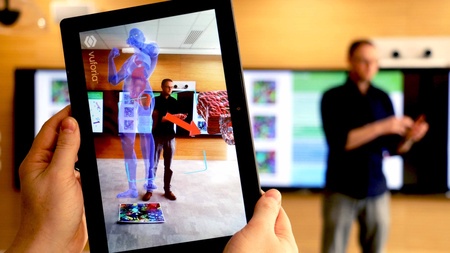
Professor John Barrow is a Professor of Biochemistry & Molecular Biology at the University of Aberdeen, where he also serves as Dean for Employability and Entrepreneurship since 2020. He is affiliated with the School of Medicine, Medical Sciences and Nutrition, based at the Institute of Medical Sciences on the Foresterhill Campus with office address at Ashgrove Road West, AB25 2ZD. Barrow earned his academic qualifications entirely from the University of Aberdeen: a BSc(Hons) in Biochemistry (2002), PhD in Molecular Biology (2005), and PGCert in Higher Education (2011). He was awarded Senior Fellow status with the Higher Education Academy in 2015. His academic career at Aberdeen has progressed from Postdoctoral research scientist (2005-2009), through Teaching Fellow (2009-2013) and Senior Teaching Fellow (2013-2015), to Senior Lecturer (Scholarship) (2015-2021), before becoming Professor in 2021. Professor Barrow's research primarily focuses on innovative approaches to biochemistry education, with particular emphasis on virtual reality and immersive learning technologies. His work bridges traditional biochemical knowledge with cutting-edge educational methodologies, creating engaging learning experiences for students. He has pioneered the use of virtual reality for teaching complex biochemical concepts such as the citric acid cycle and molecular structures. Additionally, his research extends to graduate attributes development, employability skills, and entrepreneurship education, reflecting his dual role as both educator and Dean for Employability and Entrepreneurship. Analysis of his recent publications reveals a strong trend toward educational technology and innovative teaching methods, particularly virtual and augmented reality applications in biochemistry education. His work spans molecular biology education, skills development, and the integration of enterprise and entrepreneurship into the academic curriculum. While his earlier career included more traditional molecular biology research on topics like gene promoters and receptor pathways, his recent focus has shifted predominantly toward educational innovation. His professional recognition includes: Senior Fellow of the Higher Education Academy (2015) As Dean for Employability and Entrepreneurship, Professor Barrow oversees initiatives that connect academic learning with real-world applications, including the ABDN Grad Challenge and Hack 2040 ideathon events. His work focuses on developing students' enterprise skills and preparing them for diverse career paths. He has been instrumental in creating programs like the Employability Boost Award, designed to enhance students' career readiness through structured skill development. Professor Barrow is actively involved in curriculum development at the University of Aberdeen, particularly in transforming and embedding graduate attributes across programs. His leadership extends to external examiner roles for institutions in Pakistan and reviewing for major academic publishers and journals. His innovative approach to education has positioned him as a leader in educational technology within the medical and biochemical sciences.
Luciano Lavagno is a Full Professor at the Department of Electronics and Telecommunications, Polytechnic University of Turin, with over two decades of academic and research contributions. His work bridges hardware acceleration, low-power electronics, and intelligent system design. Research Focus: Hardware-accelerated machine learning, high-level synthesis (HLS) for FPGA/ASIC, heterogeneous CPU/GPU/FPGA platforms Key Projects: SPACE (predictable acceleration), REBECCA (secure AI acceleration), HPC-National Center (quantum computing), and oral history preservation via "Ti racconto una storia" initiative His recent publications analyze CNN inference optimization, subgraph isomorphism, and superword-level parallelism exploitation. Lavagno supervises multiple PhD students working on FPGA acceleration, neural network hardware, and embedded systems. As Principal Investigator for national and EU-funded projects (PRIN, JTI-ECSEL, PNRR), he drives advancements in sustainable computing infrastructure. His patented technologies include MIx&Latch timing methodology, capacitive sensing innovations, and 5G acceleration frameworks.
Yoon Jung Choi serves as Assistant Professor in Industrial Design within the School of Design at Virginia Tech, where she bridges sustainable design, behavioral science, and technology to advance circular economy principles through interdisciplinary research and industry collaboration. Her academic credentials include: Ph.D. in Innovation Design Engineering from the Royal College of Art, UK M.A. in Graphic Communication Design from Kingston University, UK B.A. in Product Design from Central Saint Martins, University of the Arts London, UK Choi's research centers on accelerating sustainability in industrial design through behavioral interventions and technological innovation. She investigates how design influences consumer behavior to reduce waste, extend product lifecycles, and enable circular material flows, with particular emphasis on children's products, packaging systems, and community-driven co-design approaches. Her work integrates participatory methods with AI applications to develop practical solutions for real-world sustainability challenges. Analysis of her publication portfolio reveals consistent focus on circular economy implementation, with recurring themes in product hibernation, care practices for material longevity, and systemic approaches to waste reduction. Her research demonstrates growing integration of AI-driven methodologies and community engagement strategies across diverse contexts including food waste transformation and toy reuse systems. Her scientific recognition includes: New Faculty Teaching Award, School of Design, Virginia Tech (2023) College Scholarship, Royal College of Art, UK (2015) Toshiba Hard Disc Drive Revolution Design Competition Highly Commended Award (2005) ICI Dulux Student Design Award Runner-up Prize (2001) Choi has secured significant research funding including VT Engage Development funds for community collaboration with SustainFloyd, Center for Human-Computer Interaction matching funds, and multiple ICAT SEAD grants supporting projects like ToySphere (focusing on toy reuse systems) and Sustainable Art Painting initiatives. Her ten years of industry experience at major design consultancies including Samsung Design Europe informs her practical approach to academic research. She leads the ToySphere project employing co-design methods to transform food waste into natural pigments and develop community-based reuse systems, demonstrating her commitment to translating research into tangible environmental solutions through interdisciplinary team collaboration.
Claudia Lang serves as Associate Professor for Anthropology and Health at both Leipzig University and Maastricht University, with her primary institutional base at Leipzig's Institute of Ethnology. Her academic journey includes a Heisenberg Fellowship at Leipzig University (2019-2024), multiple visiting professorships, and extensive research positions focused on mental health anthropology. Lang's research centers on the interface between mental health and social life, with particular emphasis on India. Her work examines how mental health concepts are localized and transformed within different cultural contexts, especially regarding depression in Kerala. She explores the intersection of traditional medicine (particularly Ayurveda) with biomedical mental health practices, digital innovations in mental healthcare, and the emerging field of ecological grief in climate-changed environments. Her research methodology is primarily ethnographic, involving deep fieldwork with designers, users, and practitioners. Lang's publications reveal consistent themes across medical anthropology, global mental health, and digital health innovations. Her work shows increasing attention to how digital tools are reshaping mental healthcare practices in non-Western contexts, while simultaneously examining how environmental changes affect mental wellbeing through frameworks of ecological grief. This dual focus represents a significant contribution to expanding mental health discourse beyond anthropocentric frameworks. Heisenberg Fellowship (2019-2024) Author of 'Depression in Kerala. Ayurveda and mental health care in the 21st century' (Routledge, 2018) Co-author of 'Global Health for All: Knowledge, Politics, and Practices' (Rutgers, 2022) Co-author of 'The Movement for Global Mental Health: Critical Views from South and Southeast Asia' (Amsterdam University Press, 2021) Lang actively supervises students and has developed courses on medical anthropology of South Asia, research methods, and anthropology of mental health. Her current research projects investigate digital mental health innovations in India and the experience of ecological grief in climate-changed environments, aiming to develop a concept of environmental mental health that moves beyond anthropocentric notions.
Benjamin Day is a Senior Lecturer in the Department of International Relations at the Coral Bell School of Asia Pacific Affairs, Australian National University (ANU). His research focuses on leaders' roles in foreign policy decision-making, particularly how leaders drive policy change. He co-authored *Foreign Policy Analysis: Classic and Contemporary Theory* (3rd ed., 2019), a leading textbook in the field. His recent work explores leaders' 'thinking practices' about global order, informed by elite interviews with over 100 politicians and policymakers. Education: BA (University of Queensland) BEcon (University of Queensland) MIS (University of Queensland) PhD (ANU, 2018) Research Interests: Political Decision Making and Foreign Aid Leaders and World Order Aid Policy Dynamics Elite Influence in Policymaking Academia-Policymaker Bridging Affiliations and Fellowships: Partners around the Globe Fellow, NATO Defence College (2025) Visiting Fellow, University of Edinburgh (2023) Australian National Fellow, King’s College London (2019) Centre Associate, ANU Development Policy Centre (since 2016) Contributions: Regularly publishes in platforms like *The Strategist*, *Devpolicy Blog*, and *The Conversation*. Designs courses for diplomats and public servants via the ANU Diplomacy Forum. Previously worked in international development for a decade, including health sector reform in Papua New Guinea. Labs/Teams: Active in the ANU’s Development Policy Centre and collaborates with institutions globally to advance policy-relevant research on foreign aid and leadership.
Dr Wasim Ahmad is a Lecturer in Marketing at the Department of Marketing, Lancaster University Management School (LUMS), having joined the institution in January 2024. His prior academic appointments include Monash University, Florida State University, Teesside University, and Fujian University of Technology, where he conducted research, taught undergraduate/postgraduate modules, and led curriculum development. Education: Ph.D. in Marketing, University of International Business and Economics PostDoc, Florida State University Research Interests: Dr Ahmad investigates consumer behaviour with emphasis on negative emotions (brand hate, betrayal) and extreme responses to brands across cultural contexts. His work spans sustainability-oriented innovation in B2B firms, eco-brand strategy, and cross-cultural CSR implementation—particularly during crises like the pandemic. He employs quantitative methodologies including experimental designs and meta-analysis, frequently examining digital marketing phenomena such as virtual influencers, travel apps, and dark patterns in online interfaces. Publication Trends: His 2023-2025 output reveals concentrated research on brand hate consequences in B2B relationships, sustainability innovation linked to triple-bottom-line performance, and cross-cultural digital behaviour (e.g., social media addiction, travel app usage). Key journals include Journal of Business Research , Industrial Marketing Management , and Annals of Tourism Research , demonstrating interdisciplinary reach across marketing, sustainability, and tourism. Scientific Awards: No specific awards, prizes, or fellowships mentioned in source materials Advising and Grants: Dr Ahmad actively supervises PhD candidates in green marketing topics (product sustainability, eco-brand orientation) using quantitative approaches. He teaches core modules including International Marketing (MKTG101), Strategic Marketing (MKTG301), and Marketing Research (MKTG212). No grant funding details were provided in the directory. Labs and Teams: No dedicated research labs or teams specified in current affiliation Collaborative work evident in B2B sustainability studies with international co-authors
Dr. Michiel Kamp is Assistant Professor of Musicology at Utrecht University's Department of Media and Culture Studies within the Faculty of Humanities. He holds a PhD from the University of Cambridge (2015) and co-founded the Ludomusicology research group. His research employs hermeneutic and semiotic approaches to analyze video game music and related audiovisual media. Key interests include musical transmediality, ubiquitous music, phenomenologies of listening, participatory culture, sound synchronization, ecological psychology, musical affordances, ludomusicality, and the aesthetics of background music. Publications focus on phenomenological approaches to game music, hermeneutic analyses of interactive soundtracks, and theoretical frameworks for understanding musical meaning across media platforms. Recent work explores VR audio experiences and historical perspectives on musical interfaces. Dr. Kamp has organized numerous international conferences on video game music and edited foundational publications in ludomusicology. His monograph Four Ways of Hearing Video Game Music presents a comprehensive theoretical framework for game music analysis.
Courtney N. Reed is a Lecturer in Digital Technologies at Loughborough University London, where she joined in November 2023. She maintains a dual role as a visiting research fellow at the Max Planck Institute for Informatics. Her academic journey includes a BMus in Electronic Production and Design from Berklee College of Music (2016), followed by an MSc (2018) and PhD (2023) in Computer Science from Queen Mary University of London. Prior to her current position, she completed postdoctoral research at both the Max Planck Institute for Informatics and King's College London. Bachelor of Music: Electronic Production and Design, Berklee College of Music (2016) Master of Science: Computer Science, Queen Mary University of London (2018) Doctor of Philosophy: Computer Science, Queen Mary University of London (2023) Dr. Reed's research explores the entangled relationships between humans, bodies, instruments, and technology in music interaction, with particular focus on vocal electromyography (VoxEMG) and the vocalist-voice relationship. Her work incorporates feminist and post-human theories to examine sociopolitical contexts within arts technology, aiming to design for creativity while acknowledging individual, messy bodies in artistic practice. She has developed an open-source platform for vocal electromyography to investigate how biosignal feedback changes understanding and perception of the body in vocal performance. Her interdisciplinary approach bridges music technology, human-computer interaction, and embodied interaction studies. Analysis of Dr. Reed's recent publications (2023-2025) reveals a strong thematic focus on embodied interaction in music technology, with particular emphasis on vocal performance, biosignal feedback, and the philosophical underpinnings of digital instrument design. Her work consistently integrates theoretical frameworks like Karen Barad's agential realism with practical applications in digital musical instruments. Key trends include the exploration of ambiguity in data representation, the sociocultural dimensions of timbre in instrument design, and the development of novel methodologies for understanding embodied musical experiences through micro-phenomenology and ethnographic approaches. ACM SIGCHI Outstanding Dissertation Award (2024) for her thesis 'Imagining & Sensing: Understanding and Extending the Vocalist-Voice Relationship Through Biosignal Feedback' Best Newcomer Award at Loughborough University London's Community Awards Celebration (2024) Dr. Reed actively contributes to the academic community through conference organization and leadership roles. She serves as Member-at-Large on the NIME Board, previously chaired papers for NIME 2024, and co-organized the IBM SkillsBuild Sprint at Loughborough London. She has also chaired sessions at the ACM TEI Conference and co-chaired the Student Design Competition. Her collaborative work spans multiple institutions and includes significant contributions to interdisciplinary projects that bridge music, technology, and human experience. She has been instrumental in developing the senSInt research group and the RaveNET wearable network project. Dr. Reed leads the senSInt research group which focuses on sensorimotor interaction in music and performance contexts. The group develops innovative technologies including the VoxEMG platform for vocal electromyography, the Bones anti-corset for vocal performance, and the RaveNET network of wearable biosensing nodes. These projects explore the intersection of biosignals, embodied interaction, and musical expression, creating novel frameworks for understanding how technology mediates human creativity and performance. The group frequently collaborates with musicians, technologists, and theorists to develop and test these systems in real-world performance contexts.
Morten Søndergaard is an Associate Professor at Aalborg University’s Department of Communication and Psychology, affiliated with the Faculty of Social Sciences and Humanities. He is part of the Art, Aesthetics & Health Research Laboratory and the MASSHINE initiative. His research focuses on sound art, media art curation, and transdisciplinary practices, emphasizing the exclusion mechanisms in 20th-century art systems and unarchived avant-garde movements. Søndergaard has curated exhibitions globally, including at Kiasma and ZKM, and co-founded the POM conference series and ISACS symposia. He leads the Erasmus Master of Excellence in Media Arts Cultures, collaborating with institutions in Austria, Poland, and Hong Kong. His work bridges art, science, and technology, with recent projects exploring sonic archives and participatory curatorial frameworks. Key collaborations include roles with the European NeMe network, SUNY College New York, and the Momentum Biennial. He has organized over 20 projects since 2008, including the 2025 Momentum Biennial as head curator. His teaching spans media art theory, sound art practices, and curatorial methodologies at both bachelor and master levels. Søndergaard’s research outputs include over 145 publications, with a focus on sound art’s theoretical and practical dimensions. His current projects emphasize ‘uncurating’ methodologies and the reactivation of marginalized avant-garde practices. Notable activities include editorial roles, international conference organization, and advisory roles in art and science networks. His work has been featured in media outlets like Artdaily and the Biennial Foundation, highlighting his contributions to contemporary art discourse and curatorial innovation.
Trevor E. Carlson is an Assistant Professor at the School of Computing, National University of Singapore (NUS), focusing on high-efficiency microarchitectures, hardware/software co-design, and secure chip design for IoT and server applications. He earned his Ph.D. in Computer Science from Ghent University (2014) and B.Sc./M.Sc. in Electrical & Computer Engineering from Carnegie Mellon University (2002/2003). Research Interests include energy-efficient processors, secure computing platforms, neuromorphic accelerators, and fast simulation methodologies. He co-developed the Sniper Multi-Core Simulator used globally for performance/power evaluation. Scientific Awards : Best Paper Award, International Conference on Embedded Computer Systems (2016) Best Paper Award, International Symposium on Performance Analysis of Systems and Software (2013) Heidelberg Laureate Forum participation (2015) HiPEAC Technology Transfer Award for Sniper Simulator (2013) Current Research involves secure Systems-on-Chip (SOCure project), hardware security for IoT, and simulation methodologies. He leads a lab with researchers working on topics like Capstone for trustless secure memory access and LABS for laser fault injection benchmarks.
Carita Paradis is a Professor Emerita at Lund University's Centre for Languages and Literature, specializing in English Linguistics. She holds a PhD from Lund University (1997) and has held leadership roles including Chair of the Swedish Research Council's Linguistics panel (2010–2015). She coordinates the Language, Cognition and Discourse@Lund (LCD@L) research group, focusing on discourse meaning, language acquisition, and sociocultural variation. Her research spans cognitive linguistics, discourse analysis, semantics, and sensory language. She has authored/co-authored over 100 refereed publications, 5 books, and edited 10 journal volumes. Awards include membership in Academia Europaea (2016) and leadership roles in Scandinavian linguistic associations. She has supervised 14 PhD students and 8 postdocs, taught at all academic levels, and participated in numerous national/international research projects. Her editorial roles include serving on Cognitive Semantics, Languages, and Human Cognitive Processing series.
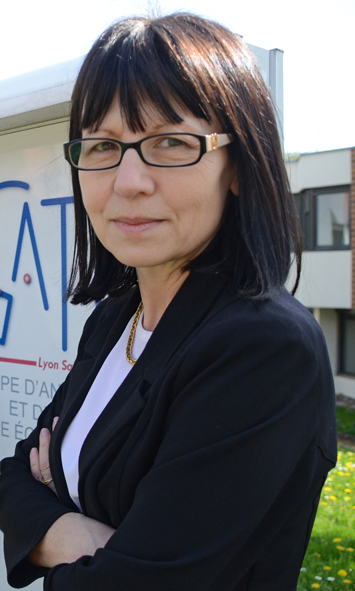
Marie Claire Villeval is a Research Professor (Directeur de Recherche de Classe Exceptionnelle) at the CNRS and the University of Lyon, affiliated with the GATE research institute. She holds leadership roles including Head of the GATE-Lab experimental platform (2015–present) and President of the Economic Science Association (2021–2023). Her academic career spans over three decades, with positions at CNRS since 1982. Villeval specializes in experimental and behavioral economics, focusing on topics like dishonesty, social preferences, and labor market dynamics. Education: HDR (Habilitation) in Economics (1996), PhD (1983), and M.S. from University Paris X – Nanterre. Awards: Chevalier de la Légion d'Honneur (2017), Silver Medal of CNRS (2017), and membership in Academia Europaea (2015). Editorial Roles: Department Editor at Management Science, Co-Editor of Experimental Economics (2017–2021), and multiple journal roles. Research Interests: Experimental economics explores human behavior in controlled settings, with emphasis on dishonesty, social norms, and public policy implications. Recent work examines collective-risk dilemmas and AI ethics. Her 15 most recent articles (2020–2023) reflect interdisciplinary approaches, blending economics with psychology and neuroscience to address societal challenges like fraud deterrence and pandemic behavior adjustments. Key themes include cognitive effects of feedback, unethical memory suppression, and testosterone’s role in prosocial choices. Grants and advising are integral to her work, though specific details aren’t listed. She leads international collaborations, including visiting professorships at Shandong University (China), New York University (Abu Dhabi), and Queensland University of Technology (Australia). Her labs and teams focus on experimental methodologies to inform public policy and organizational design.
Methi Wecharatana is a Professor in the Department of Civil and Environmental Engineering at New Jersey Institute of Technology (NJIT). Their research focuses on advanced construction materials, particularly fiber-reinforced concrete and high-performance composites. Key areas include mechanical strength analysis, fracture mechanics, and sustainable material applications such as plastic waste utilization in concrete. Notable projects include an NSF-funded initiative (1994-1997) on high-performance cementitious composites and an earlier NSF grant (1989-1991) exploring toughness data in fiber-reinforced cement systems. These projects highlight expertise in material science and infrastructure durability. Publications span from foundational work on concrete fracture energy (1999) to modern applications like low thermal conductivity concrete using plastic waste (2018). Research emphasizes both theoretical advancements and practical industrial applications. No scientific awards are explicitly mentioned, though their extensive citation record (h-index 585) underscores impactful contributions to the field. Advising and grants reflect collaborative industry-academic partnerships in material innovation.