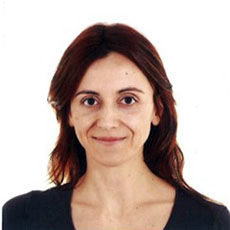
Zheng (Tracy) Ke is an Associate Professor of Statistics at Harvard University. She holds a Ph.D. from Princeton University (2014) and a B.S. from Tsinghua University (2009). Her research focuses on high-dimensional statistics, machine learning, social network analysis, text mining, and bioinformatics. Notable contributions include advancements in network data analysis (e.g., SCORE normalization), text analysis methodologies, and statistical genetics pipelines. Dr. Ke has received prestigious awards such as the COPSS Emerging Leader Award (2024) and the Sloan Research Fellowship (2023). She has organized major conferences like the Workshop on Statistical Network Analysis and Beyond (2024) and contributed to the MADStat dataset analyzing statisticians' co-authorship networks. Her research interests span theoretical and applied domains, with a focus on developing scalable algorithms and rigorous statistical frameworks for complex data. Recent work emphasizes challenges like severe degree heterogeneity in networks and rare/weak signal detection in high-dimensional settings. Dr. Ke is an Associate Editor for the Journal of the American Statistical Association and actively collaborates on interdisciplinary projects.
Naratip Santitissadeekorn is a Senior Lecturer in Data Assimilation at the School of Mathematics and Physics, University of Surrey, where he is affiliated with the Mathematics at the Interface Group. His work bridges mathematics, data science, and real-world applications in urban planning, crime analysis, and geophysical fluid dynamics. Dr. Santitissadeekorn received his PhD from Clarkson University in 2008, with a dissertation titled "Transport Analysis and Motion Estimation of Dynamical Systems of Time-Series data." His doctoral research was supervised by Professor Erik Bollt. Following his PhD, he completed two significant postdoctoral positions: from 2008-2011 at the University of New South Wales, Sydney, Australia, working with Professor Gary Froyland on numerical techniques for finite-time Lagrangian coherent set identification, with applications to delimiting the polar vortex and Agulhas rings; and from 2011-2014 at the University of North Carolina-Chapel Hill, working with Professor Chris Jones on data assimilation projects. Dr. Santitissadeekorn's research focuses on inverse problems and data assimilation in geophysical fluid dynamics, the applications of Lagrangian Coherent Structures (LCS), and computational ergodic theory. His work combines theoretical mathematics with practical applications, particularly in urban growth modeling and crime analysis. He has developed innovative methods for identifying coherent structures in fluid flows, estimating transition probabilities from spatiotemporal data, and creating data-driven frameworks for urban expansion scenarios. His research demonstrates how mathematical techniques can be applied to solve real-world problems in environmental science, urban planning, and public safety. An analysis of Dr. Santitissadeekorn's recent publications (2020-2023) reveals a strong focus on urban expansion modeling and network analysis. His work on urban growth has evolved from basic cellular automata models to sophisticated frameworks that manage uncertainty through parameter clustering and growth mode identification. His research on Hawkes processes has advanced ensemble-based filtering techniques for analyzing count data in large networks. These publications demonstrate a consistent pattern of applying mathematical rigor to complex spatiotemporal phenomena, with increasing emphasis on data-driven approaches and practical applications. Dr. Santitissadeekorn has made significant contributions to data assimilation methods, particularly through the development of the extended Poisson-Kalman filter (ExPKF) for urban crime modeling. His teaching includes courses in Algebra and Bayesian Statistics, reflecting his expertise in both theoretical and applied mathematics. While specific awards are not mentioned in the available information, his extensive publication record in high-impact journals demonstrates recognition within his field. Dr. Santitissadeekorn's research has practical implications for urban planning and law enforcement. His work on urban expansion models helps planners understand different growth trajectories, while his crime modeling research contributes to improved police patrolling strategies. His interdisciplinary approach, combining mathematics, computer science, and domain-specific knowledge, positions him at the forefront of applying data science to societal challenges.
Prof. Dr. Sjoerd Beugelsdijk is a Professor of International Business at the Faculty of Economics and Business, University of Groningen. He also serves as Research Director and holds a visiting professorship at KU Leuven. His expertise spans globalization, cultural differences, and national identity, with a focus on their economic implications. He earned his PhD from Tilburg University in 2003, focusing on cultural diversity and regional development. Research Interests: Beugelsdijk’s work explores cultural diversity’s impact on economic globalization, firm internationalization, and national identity. He has published over 70 refereed articles in top journals like the Journal of International Business Studies and Journal of Economic Geography. His recent projects include a government advisory report on Dutch national identity (SCP 2019) and the JIBS Silver Medal (2019) for contributions to international business research. Education: PhD (Tilburg University, 2003), MSc (Tilburg University, 1999) Grants: Over €1 million in funding from NWO (Rubicon, Veni, Vidi) and others Editorial Roles: Editor of Journal of International Business Studies (2016–present) Advising: Supervised 11 PhD students and served on numerous doctoral committees Key Achievements: Awarded the JIBS Silver Medal (2019), top teacher awards (2016–2018), and recognition for best papers in Academy of Management and Academy of International Business conferences. His research bridges economic geography, management, and sociology, addressing global value chains, cultural distance, and institutional hazards. Labs/Teams: Leads the Global Economics & Management research group at Groningen, collaborating internationally with scholars from Copenhagen Business School, Bocconi University, and others.
Dr. Tom Boot is an Associate Professor at the Department of Economics, Econometrics & Finance at the University of Groningen. He holds a PhD in Econometrics from Erasmus University Rotterdam (2017) and an MSc in Econometrics from the same institution (2012), along with an MSc in Physics from the University of Groningen (2010). His research focuses on econometric theory applied to macroeconomic forecasting, high-dimensional data analysis, and causal inference. He has been recognized with the Veni grant (2021–2024) for his work on forecasting methodologies. Boot’s research interests include improving forecast accuracy through methods like subspace projections, structural break modeling, and privacy-aware marketing analytics. His recent work explores privacy-utility trade-offs in data-driven marketing and unbiased estimation techniques for clustered errors. He has supervised PhD students including Jhordano Aguilar Loyo and Gilian Ponte, whose theses addressed panel data heterogeneity and differential privacy applications. Boot is also a program director for the MSc Econometrics, Operations Research, and Actuarial Studies (since 2024). His contributions to econometrics span over a dozen peer-reviewed publications, with a focus on advanced statistical techniques for economic forecasting and policy analysis. Collaborations include work with institutions like Harvard/MIT and the organization of workshops on causal inference and machine learning.
Dr. Jia Wu is an Associate Professor and Research Director of the Centre for Applied Artificial Intelligence at Macquarie University. He holds a PhD in Computer Science from the University of Technology Sydney (2009) and is an IEEE Senior Member. His research focuses on artificial intelligence, data mining, graph neural networks, and anomaly detection, with over 200 publications in top-tier journals/conferences like IEEE TPAMI, TKDE, and conferences like KDD, IJCAI, and NeurIPS. He has received awards including the Heidelberg Laureate Forum Fellowship (2019) and multiple best paper awards. Education: PhD in Computer Science (UTS, 2009). Current roles include Director of HDR (Higher Degree Research) and Associate Editor for IEEE TNNLS and ACM TKDD. He leads projects in AI-driven cybersecurity, personalized banking solutions, and disaster response systems. Research interests emphasize graph-based learning, fake news detection, and deep learning applications. His recent work explores hypergraph neural networks for fraud detection and brain graph analysis for neurological disorders. He has pioneered scalable semi-supervised clustering techniques and transformer-based hypergraph models for anomaly detection. Awards include CIKM'22 Best Paper Runner-Up, ICDM'21 Best Student Paper, and the 2023 Faculty of Science and Engineering Collaboration Award. His work spans 13 active research projects, including mitigating AI deepfakes in identity systems and enhancing disaster response networks through graph-based simulations. Labs/Teams: Leads teams in the Data Horizons Research Centre, Future Communications Research Centre, and Hearing Research Centre. Collaborates internationally in AI, data mining, and social network analysis.
Tarsis Brito is an IRD Fellow at the Department of International Relations at the London School of Economics and Political Science (LSE). Originally from Teresina, Brazil, he holds a BA in International Relations from the University of Brasilia (UnB), an MSc (distinction) and PhD in International Relations from LSE. His editorial roles include Co-Editor and Associate Editor of Millennium: Journal of International Studies (vols. 50-51) and Coordinator of the Doing International Political Sociology PhD Series (2022-23). He specializes in critical theoretical approaches to international security, borders, migration, and colonialism. His education path reflects a deep engagement with critical theory: BA: International Relations (University of Brasilia) MSc: International Relations Theory (LSE, distinction) PhD: International Relations (LSE) Research interests span International Relations Theory, Security Studies, Border and Migration Studies, Postcolonialism, Race and Empire, International Political Sociology, Gender Studies, Political Geography, and Posthumanism. His work interrogates the colonial and racial underpinnings of modern border regimes, particularly in Europe, arguing that contemporary security practices are afterlives of colonial violence. He advocates for interdisciplinary dialogue between postcolonialism, race studies, and new materialism. His recent articles collectively address themes such as racialized border policing, the colonial genealogies of security methods, and theoretical frameworks linking materialism and postcolonialism. Earlier works explore sovereignty, hauntology, and feminist undecidabilities in global policy contexts. Brito has no explicitly listed scientific awards but his doctoral work was noted as award-winning. His advising record is not detailed here, though he teaches advanced courses at LSE including International Security (BSc), Critical Perspectives in IR (MSc), and Global Applications (MSc). He is affiliated with the Theory/Area/History Research Cluster at LSE. No specific lab or team affiliations are mentioned, but his research engages with comparative analyses of migration security in Britain, Australia, and the Global South/Global North divide.
Srijan Sengupta is an Associate Professor of Statistics at North Carolina State University (NC State) since 2020. Previously, he served as an Assistant Professor at Virginia Tech from 2016 to 2020. He holds a Ph.D. in Statistics from the University of Illinois at Urbana-Champaign (2016) and degrees from the Indian Statistical Institute (B.Stat and M.Stat with Distinction). His research focuses on statistical methodology for network data, anomaly detection, bootstrap methods, and scalable inference, with applications in healthcare analytics, epidemiology, and cybersecurity. Education: Ph.D. in Statistics, University of Illinois at Urbana-Champaign (2011–2016) M.Stat (1st Division with Distinction), Indian Statistical Institute (2007–2009) B.Stat (1st Division with Distinction), Indian Statistical Institute (2004–2007) Research Interests: His methodological work includes statistical inference in networks, anomaly detection, bootstrap techniques, and scalable algorithms for big data. Applications span social determinants of health, healthcare analytics, space physics, epidemiology, and cybersecurity. He emphasizes interdisciplinary collaborations, particularly in patient safety event analysis and medical device safety. Awards and Grants: Norton Prize for Outstanding PhD Thesis (2015) NIH R01 Grant ($890,055, Principal Investigator) for statistical algorithms in patient safety (2019–2022) Multiple grants for network inference and anomaly detection (NSF, Socially Determined Inc., Virginia Tech Foundation) Advising and Service: Advises over 20 students across PhD, master’s, and undergraduate research programs. Serves as an Associate Editor for Sankhya, Series B and peer reviewer for top journals. Active in university service roles at NC State and Virginia Tech, including faculty hiring committees and curriculum development. Labs and Collaborations: Leads research on statistical network analysis, including projects funded by NIH and NSF. Collaborates with institutions globally on topics like epidemic thresholds, cybersecurity defenses (e.g., phishing detection), and healthcare analytics.
Valen E. Johnson is a University Distinguished Professor and Dean Emeritus of the College of Science at Texas A&M University, where he has been a faculty member since 2012. He previously held professorships at the University of Texas M. D. Anderson Cancer Center (2004–2012), the University of Michigan (2002–2004), and Duke University (1989–2001). He also served as a Technical Staff Member at Los Alamos National Laboratory (2001–2002). Johnson earned his Ph.D. in Statistics from the University of Chicago (1989), M.A. in Applied Mathematics from the University of Texas at Austin (1985), and B.S. in Mathematics from Rensselaer Polytechnic Institute (1981). His research focuses on Bayesian methodology, including hypothesis testing, variable selection in high-dimensional spaces, latent variable models, and applications in medical imaging, clinical trials, and educational assessment. He has contributed to the development of non-local prior densities and Bayesian diagnostics for MCMC convergence. His work bridges Bayesian and classical statistical approaches, emphasizing reproducibility and rigorous evidence assessment in scientific research. Johnson has held editorial roles, including Co-Editor of Bayesian Analysis (2010–2014) and Associate Editor of the Journal of the American Statistical Association (2011–present). He is a Fellow of the American Statistical Association and the Royal Statistical Society and has served on the Board of Directors of the International Society for Bayesian Analysis. His advocacy for revised statistical significance standards has sparked major debates in scientific methodology. Johnson has supervised numerous doctoral students, including those whose theses won prestigious awards like the Savage Award. He has collaborated on grants addressing medical imaging, system reliability, and cancer symptom management, reflecting his interdisciplinary impact in biostatistics and public health.
Suhasini Subba Rao is a Professor of Statistics at Texas A&M University, affiliated with the Department of Statistics within the College of Arts & Sciences. Her research focuses on time series analysis, nonstationary processes, nonlinear processes, and spatio-temporal models. She holds a prominent academic position and contributes to both theoretical and applied statistical methodologies. Education details are not explicitly provided in the text, but her academic career includes extensive work in statistical theory and methodology. Her research interests emphasize developing robust statistical techniques for analyzing nonstationary and complex time series data, with applications in spatio-temporal modeling and recursive algorithms. Her recent articles highlight advancements in inverse covariance estimation, graphical models for nonstationary time series, and spectral methods for small sample data. She has also explored reconciliation of Gaussian and Whittle likelihoods, enhancing estimation accuracy in frequency domains. No scientific awards are explicitly mentioned. Her advising and grants are not detailed, but her prolific publication record suggests active research collaborations and funding. She maintains a lab/team focused on time series analysis, though specific team names are not provided.
Konstadinos (Kostas) Goulias is a Professor of Transportation in the Department of Geography at the University of California, Santa Barbara (UCSB), where he has served since 2004. Previously, he held academic positions at Penn State University from 1991 to 2004, including roles as Associate and Full Professor of Transportation Engineering. His research focuses on transportation systems planning, travel behavior dynamics, activity-based modeling, GIScience, and spatial analysis of transportation data. **Education**: Ph.D. in Civil Engineering (Transportation), University of California, Davis, 1991 M.S. in Civil Engineering, University of Michigan, Ann Arbor, 1987 Laurea Magistrale in Engineering, University of Calabria, Italy, 1986 **Research Interests**: Transportation demand modeling and microsimulation Activity-travel behavior analysis Spatiotemporal analysis of mobility using big data GIScience applications in transportation Policy implications of emerging technologies (e.g., autonomous vehicles) **Key Contributions**: Co-founder and Editor-in-Chief of Transportation Letters Principal Investigator of $6.5M in research projects Authored/edited three books and over 350 peer-reviewed publications Led the development of the SimAGENT microsimulation framework Directed the GeoTrans Laboratory at UCSB since 2007 **Awards**: Pyke Johnson Award (2021, 2016) Best Paper Award (2021) Chair of TRB committees on traveler behavior and activity-based approaches **Grants/Students**: Supervised multiple graduate students in transportation and geography Managed projects with sponsors including USDOT, state agencies, and international organizations **Labs/Teams**: GeoTrans Laboratory: Focused on smart city planning and transportation innovation Collaborations with institutions globally, including Australia, Europe, and Qatar
Xiuping Su is Senior Lecturer in the Department of Mathematical Sciences at the University of Bath, specializing in quiver representation theory and its connections to cluster algebras, Lie theory, and algebraic geometry. Her research explores combinatorial structures underlying abstract algebraic systems with applications to mathematical physics. Research Focus: Degeneration orders in derived categories Combinatorial aspects of Grassmannian cluster algebras Tame behavior in wild quiver representations Interactions between Schur algebras and quantum groups Recent work resolves conjectures by Geiss-Leclerc-Schröer regarding affine root systems and string algebra components. Current projects investigate categorification approaches to mirror symmetry and combinatorial foundations of quantum flag varieties.
Dr. John D. Boy is an Assistant Professor of Sociology at Leiden University, affiliated with the Institute of Cultural Anthropology and Development Sociology (CADS) and the Urban Studies programme in The Hague. His research focuses on digital society, urban studies, and qualitative computational methods. He coordinates the d12n Research Cluster and chairs CADS's Programme Committee. Notable awards include the KIEM grant (2024) and NIAS Fellowship (2024). His work explores topics like Instagram's societal impact, collaborative theorizing, and ethics in digital ethnography. Teaching responsibilities include courses on urban studies, digital society, and research ethics. Recent publications include On Display: Instagram, the Self, and the City (2024) and articles on computational methods and urban digital landscapes. He actively engages with grants and public outreach, emphasizing open science and interdisciplinary collaboration.
Professor Elena Giovannoni is a full-time faculty member at the University of Birmingham , where she holds the position of Professor of Accounting and serves as Head of the Department of Accounting within the Birmingham Business School . She is an active researcher and academic leader with a strong international presence. Research Interests: Elena Giovannoni's research bridges critical and historical perspectives in accounting and organization studies. She investigates performance measurement and management control systems across diverse sectors—including the space industry, food industry, knowledge-intensive organizations, and the arts—with a focus on organizational change and sustainable development. Her work explores how calculative practices shape responses to climate change, often through a temporal lens. Methodologically, she employs case studies , archival research , and multimodal approaches . Recent Publications Trends: Her recent scholarly output (2018–2025) reveals a consistent focus on the interplay between accounting, history, and visuality. She examines accountability in cultural contexts (e.g., music, art), the materiality of organizational objects, and the future of sustainability reporting. Her editorial work on the Handbook of Historical Methods for Management underscores her leadership in advancing historical methodologies in management research. Scientific Recognition: Higher Education Academy Fellowship (2017) Editorial Board Member, Accounting Forum Editorial Board Member, Accounting, Auditing & Accountability Journal Editorial Board Member, Accounting History Editorial Board Member, Family Business Review Editorial Board Member, Organization Studies Advising and Grants: She has led multiple projects funded by international bodies, resulting in publications in top-tier journals. While no specific advisees are listed, her role as department head and PhD supervisor implies significant mentoring responsibilities. She contributes to academic knowledge dissemination through editorial leadership and collaborative research. Labs and Research Groups: While no formal lab is mentioned, her research is closely tied to the Department of Accounting and its research clusters, particularly those focused on critical accounting, sustainability, and historical methods. Her collaborative work with scholars across Europe indicates strong international research networks.
Rainer Schuhmacher is a Full Professor for Plant and Microbe Metabolomics at the University of Natural Resources and Life Sciences, Vienna (BOKU), affiliated with the Department of Agricultural Sciences and the Institute of Bioanalytics and Agro-Metabolomics in Tulln an der Donau. His research focuses on metabolomics, analytical chemistry, and plant-microbe interactions, with emphasis on fungal secondary metabolites, mycotoxin resistance, and environmental stress responses in crops. He leads projects funded by the Austrian Science Fund (FWF), European Commission, and national agencies. Research interests span: Metabolomic profiling of plant-pathogen interactions (e.g., Fusarium -wheat systems) Stable isotope-assisted techniques for metabolic pathway analysis Cold stress mitigation in plants using Antarctic bacteria Development of computational tools for untargeted metabolomics data processing His work integrates analytical chemistry, bioinformatics, and molecular biology to study metabolic crosstalk in agricultural systems. Awards include the Fritz-Feigl-Preis (2012) and Dr.-Wolfgang-Houska-Preis (2005). He has supervised multiple PhD projects and leads the Plant-Microbe Metabolomics group, managing core metabolomics platforms and international collaborations. Key projects: Chemical crosstalk in mycoparasitic interactions (FWF) Metabolomics of cold stress tolerance mediated by psychrotolerant bacteria Extension of metabolomics platforms for plant-pathogen studies
Isabella Di Lenardo is a Lecturer and Scientist at the Digital Humanities Institute (DHI) at École Polytechnique Fédérale de Lausanne (EPFL), where she also serves as the coordinator of the EPFL Time Machine Unit and the European Local Time Machines. She holds affiliations across multiple departments, including DHI-GE, SAR-ENS, SHS-ENS, and EDDH-ENS, reflecting her interdisciplinary role in teaching and research. Her educational background includes a PhD in Theories and Art History, with postdoctoral and faculty experience at institutions such as INHA (Paris), EPFL, and IUAV (Venice). Her research spans Digital Humanities, Art History, Urban History, and GIS , with a focus on digital urban reconstruction, historical cadastres, and AI applications in cultural heritage. She employs advanced computational methods including machine learning, 4D modeling, and semantic segmentation to analyze historical maps, cadastral records, and art archives. Her work bridges humanities scholarship with computer science, particularly in reconstructing urban evolution and analyzing visual patterns. The recent publications reveal a consistent trend in AI-powered historical data analysis , especially in processing non-standardized historical documents, reconstructing urban spaces, and developing open-source tools for digital heritage. Her work frequently involves large-scale datasets from Venice, Lausanne, Paris, and Jerusalem, demonstrating a transnational and interdisciplinary approach. She has contributed to significant collaborative projects such as the Venice Time Machine , Parcels of Venice , and Time Machine Organization , often acting as a principal investigator or project leader. Her role involves coordinating diverse teams of researchers, engineers, and cultural institutions. Scientific contributions include: Development of the Morphograph tool for visual pattern recognition in art archives Automatic vectorization and analysis of Napoleonic cadastres Creation of 4D models for historical cities AI-driven text and pattern extraction from historical maps Building discovery engines for digital art history She actively teaches ex cathedra courses in Digital Urban History and Art History at EPFL and internationally. Her work in grants and projects emphasizes open data, reproducibility, and interdisciplinary collaboration. She has led research funded by organizations supporting digital heritage innovation. She is a key member of the Digital Humanities Laboratory at EPFL and the Time Machine Organization , where she fosters collaboration between computer scientists, historians, and cultural institutions. Her work in the Replica Project and ARCHiVe center highlights her leadership in digitizing and making accessible large art historical archives.