Cicek Cavdar is an Associate Professor at the School of Electrical Engineering and Computer Science (EECS) at KTH Royal Institute of Technology , Sweden. She leads the Intelligent Network Systems research group and specializes in Telecommunication Networks , with a focus on Beyond 5G/6G Mobile Networks , Energy Efficiency , and AI-Assisted Network Management . PhD in Computer Science (2009) from University of California, Davis and Istanbul Technical University Her research spans Cell-Free Massive MIMO , Reconfigurable Intelligent Surfaces (RIS) , UAV Communication Systems , and Green Network Technologies . She actively contributes to 6G Network Architecture and Non-Terrestrial Networks , including satellite and aerial systems. Recent publications highlight AI-driven network optimization for handover management, energy-aware resource allocation , and multi-agent reinforcement learning in complex communication environments. She teaches advanced courses in Communication Systems , Machine Learning , and Software Engineering at KTH.
Matteo Sonza Reorda is a Full Professor at the Polytechnic University of Turin, affiliated with the Department of Automatic Control and Computer Science (DAUIN). He holds roles such as Partnership Agreement Coordinator with SMAT and has served as Vice-Rector for Research (2021–2024). His research focuses on fault tolerance, hardware reliability, and AI acceleration, with contributions to GPU/CNN reliability, self-test libraries, and defect-oriented testing. Education: M.S. in Electronics Engineering, Politecnico di Torino (1986) Ph.D. in Computer Engineering, Politecnico di Torino (1990) Research Interests: His work spans automatic test equipment, circuit reliability, GPU fault tolerance, neural network hardening, and embedded systems safety . He leads the Electronic CAD & Reliability Group and collaborates with institutions like the ISI Foundation and the National Research Council (CNR). Publications & Impact: With over 180 publications, his recent work emphasizes AI accelerator reliability, fault injection techniques, and safety-critical systems. Key trends include GPU resilience for CNNs, self-test library optimization, and radiation fault modeling in neural networks. Awards & Recognition: IEEE Fellow (2016–) Multiple best-paper awards at IEEE conferences (DDECS, DATE, etc.) Grants & Collaborations: Coordinator of EU projects (RESCUE, TUTORIAL) Partnerships with EDF, Marelli Europe, and SMAT Lead on National HPC/Quantum Computing Spoke 1 (2022–2025) Labs/Teams: Leads the CAD Group and collaborates with the French-Italian LIA LAFISI lab on hardware-software integration.
Professor Haijiang Li is a Chair in BIM for Smart Engineering at Cardiff University's School of Engineering. His roles include leading the Computational Mechanics and Engineering AI Research Group, directing the BIM for Smart Engineering Centre, and overseeing the BIM MSc programme. He holds editorial roles for journals like Construction Innovation and Automation in Construction , and chairs the European Group of Intelligent Computing in Engineering (EG-ICE). Research focuses on smart computational engineering platforms integrating BIM, AI, and big data for sustainable infrastructure. Key areas include digital twins, disaster management, and resilient urban systems. He has secured £40M in research funding, including £9M as PI, and led over 70 research staff and students. Prof. Li is a Standards Committee Technical Executive at buildingSMART, driving international BIM standards. His work includes co-authoring a book on BIM standards across China, the US, and the UK. Awards include Fellowships from the British Computer Society (FBCS) and the Higher Education Academy (FHEA). His research outputs span over 250 publications, covering topics like AI-driven bridge maintenance, ontology-based decision-making, and energy-efficient urban systems. Collaborations with industry and global partners emphasize practical applications of BIM and smart technologies.
Massimo Piccardi is a Professor of Natural Language Processing (NLP), Computer Vision, and Machine Learning at the University of Technology Sydney (UTS) , where he has been since 2002. He currently serves as the Head of the School of Electrical and Data Engineering and leads the Big Data Analytics program at the Global Big Data Technologies Centre. His research focuses on advancing NLP, machine learning applications in healthcare, and cybersecurity in IoT systems. He has authored over 200 journal papers and conference proceedings, secured significant ARC and CRC grants, and holds the IEEE Computer Society Distinguished Contributor Award (2022). Education & Professional Roles: Joined UTS in 2002, progressing from Associate Professor (2002–2007) to Professor (2008–present). Serves as Associate Editor for IEEE Transactions on Big Data and Editor for Artificial Intelligence in Medicine. Active in professional societies including IEEE, ACL, and ALTA (President, 2023–2024). Research Interests: Core areas include NLP (translation, summarization, adversarial attacks), healthcare informatics (clinical NLP, health service analysis), and cybersecurity (IoT security, privacy-preserving systems). Cross-cutting themes include generative models, cross-lingual systems, and ethical AI. Grants & Projects: Principal Investigator on ARC Discovery/Linkage projects and CRC grants. Recent projects include controllable machine translation (Amazon), privacy-preserving digital agriculture, and STEM innovation (ASTRID project with NBN Co). Labs & Collaborations: Leads the UTS Global Big Data Technologies Centre, collaborating on projects like adversarial NLP attacks, medical machine translation, and secure IoT frameworks.
Katja Hose is a Full Professor of Data Management at TU Wien's DBAI research unit, heading the Data Management and Knowledge-Driven AI Lab. She previously held a Poul Due Jensen Foundation Professorship at Aalborg University. Her research focuses on data and knowledge engineering, including graph databases, knowledge graphs, querying, analytics, and machine learning, with interdisciplinary applications in bioscience, healthcare, and environmental assessment. Education: PhD in Computer Science (Ilmenau University of Technology, 2009), Postdoc at Max Planck Institute for Informatics (2009–2012). Academic roles include Program Co-Chair for ISWC 2024 and EDBT 2023, and editorial board membership at VLDBJ and TGDK. She leads projects like TARGET (health virtual twins) and ARMADA (data management). Research Interests: Knowledge Graphs, Semantic Web, Big Data, Machine Learning, Data Integration, and Provenance Systems. Key contributions include SHACL shape extraction, conversational data analytics, and environmental knowledge graphs. Awards include the 2025 Distinguished Meta-Reviewer Award and 2024 Manfred Paul Award. Advising and Grants: Supervised students including E. Pürmayr (Diploma Thesis 2025). Active in EU projects (TARGET, ARMADA) and grant coordination. Labs/Teams: DMKI Lab at TU Wien, collaborating with interdisciplinary teams in healthcare and environmental science.
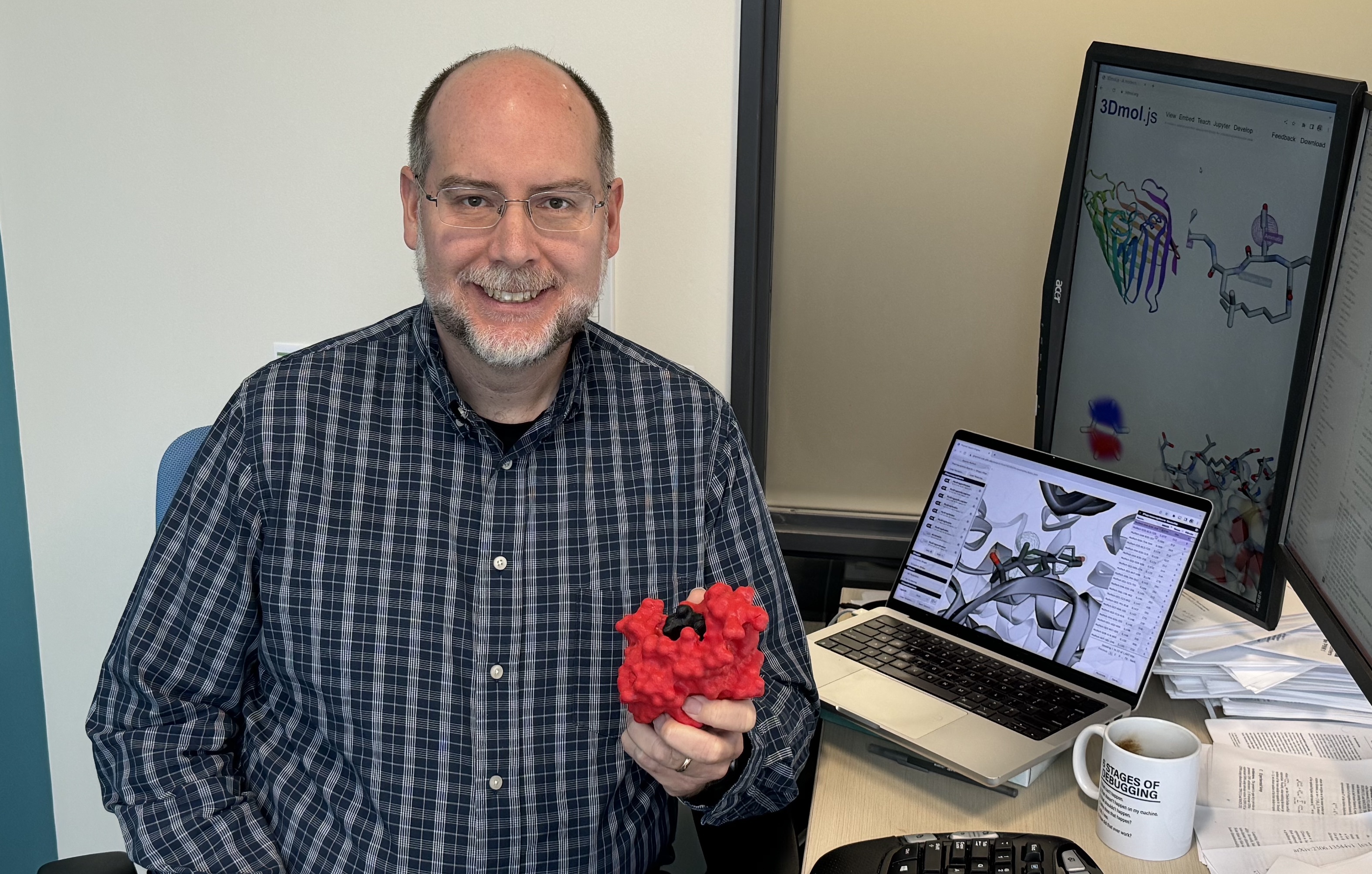
David R. Koes is an Associate Professor in the Department of Computational and Systems Biology at the University of Pittsburgh, affiliated with the School of Medicine. He holds roles such as Associate Director of the Joint CMU-Pitt Computational Biology PhD Program (CPCB) and is involved in multiple graduate programs including Intelligent Systems and Computational Biomedicine. His research focuses on developing computational algorithms and systems for drug discovery, emphasizing open-source software and machine learning applications in biomedical data. Koes teaches courses like MSCBIO2025 (Bioinformatics Programming in Python) and MSCBIO2065 (Scalable Machine Learning for Big Data Biology). He has secured NIH funding (R35GM140753) and collaborated on projects with institutions like NVIDIA and Google Cloud. His lab develops tools such as GNINA, Pharmit, and 3Dmol.js, and actively contributes to open drug discovery initiatives. Education: PhD in Computer Science from Carnegie Mellon University (CMU). Research Interests: Leveraging computation and AI for drug design, molecular docking, pharmacophore modeling, and open science. Specific areas include developing scalable machine learning pipelines, virtual screening systems, and tools for 3D molecular analysis. Grants and Funding: Current NIH R35 grant and prior support from NSF, Relay Therapeutics, and others. His work emphasizes translating computational methods into practical drug discovery solutions. Lab and Teams: Directs a lab focused on computational drug discovery, collaborating with multiple academic and industry partners. Supervises graduate students and postdocs in projects spanning AI-driven drug design, molecular modeling, and software development.
Chen Li is a Professor in the Department of Computer Science at the University of California, Irvine (UCI), affiliated with the Donald Bren School of Information and Computer Sciences (ICS). He holds a Ph.D. from Stanford University and bachelor's and master's degrees from Tsinghua University. His research focuses on data management, including databases, query optimization, machine learning systems, and open-source tools like AsterixDB and Texera. He has received prestigious awards such as the NSF CAREER Award and IEEE Fellow recognition. Li is also a board member of the VLDB Endowment and the former Faculty Director of UCI's ICS Master of Computer Science Program. Education: Ph.D., Computer Science, Stanford University M.S. and B.S., Computer Science, Tsinghua University Research interests span next-generation databases, approximate query processing, and AI-driven data analytics. Notable contributions include the Texera system for collaborative data science workflows and the Apache AsterixDB project. He has led NIH-funded initiatives in diabetes research and pandemic prediction, emphasizing real-world applications of data science. Professional roles include PC co-chair of VLDB 2015, General Co-chair of SIGMOD 2027, and a visiting research scientist at Google. His awards highlight his impact in both academia and industry. Advising and mentoring are central to his career, with a focus on graduate education. He has pioneered outreach programs like DS4ALL to teach high-school students data science using Texera.
Dr. Jeewanie Jayasinghe Arachchige is a Lecturer in the Department of Computer Science at Vrije Universiteit Amsterdam, Faculty of Science. She teaches undergraduate courses including Bachelor Project Computer Science, Professional Development, and Software Engineering Processes for the academic year 2024–2025. Her research focuses on process mining , healthcare informatics , and data security . She applies process mining to analyze healthcare pathways and subpopulation treatment variations, develops explainable AI frameworks for predictive analytics, and examines data governance in emerging architectures like Data Lakehouses. Her work intersects legal informatics, particularly formalizing Sri Lankan civil court processes using ontology engineering. Recent publications highlight trends in balancing simplicity and complexity in process modeling, Industry 4.0 healthcare applications, and cybersecurity in model-driven web development. She has contributed to over 20 peer-reviewed articles since 2006, spanning topics from service-oriented architectures to value network analysis. Her teaching and research emphasize practical applications of IT in healthcare, legal systems, and enterprise environments. No ancillary activities are currently recorded.
Cao Jiannong is currently a Chair Professor and Director of the University Research Facility in Big Data Analytics at Hong Kong Polytechnic University . He has held academic roles including Assistant Professor at City University of Hong Kong and University Lecturer at the University of Adelaide and James Cook University. His research spans Cloud and Edge Computing , Parallel and Distributed Systems , Big Data Analytics , and Wireless Sensing . Ph.D. in Computer Science, Washington State University (1990) MSc in Computer Science, Washington State University (1986) BSc in Computer Science, Nanjing University, China (1982) His work focuses on solving theoretical and practical challenges in distributed computing , mobile cloud systems , and wireless sensor networks . Recent projects include coupled network embedding models for heterogeneous networks and SDN architectures for vehicular communication. His research also pioneers WiFi-based non-invasive health monitoring and fault-tolerant sensor deployment for structural health applications. Dr. Cao's publications highlight advancements in network embedding , edge computing , and WSN optimization . Key papers address multi-user computation partitioning , energy-efficient SHM systems , and consensus protocols for mobile networks. These works have been cited over 15,000 times, with an h-index of 60. Ministry of Education (China) Natural Science Award (2018) Distinguished Member, ACM (2017) Fellow, IEEE (2014) Best Paper Awards at IEEE DSAA, SMARTCOMP, and WCNC Dr. Cao has advised multiple PhD students, including Linchuan Xu and Weigang Wu , whose research on WSN-based SHM and coupled network embedding has practical impact. His leadership includes directing Hong Kong Polytechnic University's Big Data Research Facility and serving on technical committees for IEEE INFOCOM and ACM/IEEE conferences.
Yannis Chronis is an incoming Assistant Professor at the Department of Computer Science , ETH Zurich (starting August 2025), where he will join the ETH Systems Group . Prior to this, he spent 3 years as a Systems Researcher at Google's Systems Research Group in Sunnyvale, USA. He holds a Ph.D. in Computer Science from the University of Wisconsin-Madison (advised by Prof. Jignesh Patel) and a Bachelor's/Master's from the University of Athens, Greece (advised by Prof. Yannis Ioannidis). His research focuses on optimizing databases and data processing for modern hardware through software-hardware co-design. Key areas include database efficiency in memory-centric architectures, learned query optimizers, and cloud resource management. His work is supported by a Facebook Fellowship and has been recognized with the EDBT 2016 Medal for best paper. Teaching: Taught CS 564 - Database Management Systems at UW-Madison (Spring 2022). Service: Served on program committees for SIGMOD, VLDB, CIDR, and others, and chairs the CIDR Proceedings Committee. Key Publications: His recent work includes studies on memory-centric computing for databases, cardinality estimation benchmarks, and adaptive query processing techniques.
Peter Pietzuch is a Professor in the Department of Computing at Imperial College London, where he leads the Large-Scale Data & Systems (LSDS) group. He also serves as the Director of Research and is a Visiting Researcher at Microsoft Research Cambridge. Pietzuch holds a Ph.D. from the University of Cambridge and a B.A. from Girton College. His research spans distributed systems, cloud computing, big data processing, and systems security. Key interests include: Scalable architectures for cloud-native applications Efficient stream processing and machine learning systems Trusted execution environments and secure cloud infrastructure Optimization of serverless computing and distributed databases His recent publications focus on adaptive machine learning frameworks, secure cloud resource management, and high-performance stream processing systems. Trends show strong emphasis on hardware-software co-design, confidential computing, and fault-tolerant architectures. Awards include: Best Paper Award at Middleware'03 He actively advises PhD students and secures grants for projects like Faasm (serverless computing) and Teechain (blockchain security). His LSDS group collaborates with industry partners including Microsoft Research. Pietzuch teaches undergraduate and graduate courses including Scalable Systems for the Cloud and Operating Systems . He co-founded the ACM DEBS conference and serves on steering committees for EuroSys and Middleware.
Dr. Feng Cheng is a Senior Researcher and head of the IT Security Engineering (Sec-Eng) Team at the Hasso Plattner Institute (HPI), Germany, and serves as the Representative of the Chair "Internet Technologies and Systems" at the Digital Engineering Faculty, University of Potsdam. He holds a PhD from the University of Potsdam, an MEng from Beijing University of Technology, and a BEng from Beijing University of Aeronautics and Astronautics. His research is centered on data-driven security engineering, security analytics, network security, cloud security, firewall, IDS/IPS, attack modeling, and penetration testing. Dr. Cheng's research interests span a broad range of cybersecurity domains, with a strong emphasis on security analytics , data-driven threat detection , cloud and network security , and authentication . His work integrates advanced data engineering and machine learning techniques to enhance security operations, including intrusion detection, threat intelligence, and security information and event management (SIEM). Key application areas include IoT security, mobile security, and web security. The recent publications of Dr. Cheng and his team reflect a significant trend towards leveraging big data analytics , machine learning , and graph-based methods for cybersecurity. Their work focuses on developing frameworks for blockchain-based public key infrastructures, advanced SIEM analytics, malware detection using NLP, and chaos engineering for cloud security. This demonstrates a strong commitment to creating practical, scalable, and intelligent solutions for modern security challenges in complex, distributed environments. Dr. Cheng is actively involved in the academic community as a member of ACM and IEEE, a program committee member for numerous international conferences, and an organizer of workshops on cloud computing and cybersecurity. He has also served on editorial boards for international journals. He supervises a large group of PhD, master's, and bachelor's students, guiding research on topics such as security analytics, cyber threat intelligence, digital credentials, and behavioral authentication. He leads the Sec-Eng team, which conducts research on a diverse portfolio including the Security Analytics Lab, HPI-VDB (vulnerability database), Lock-Keeper (physical separation technology), and the Security Lab Generator for scenario-driven security training.
Richard MA Tianbai is an Associate Professor at the School of Computing, National University of Singapore (NUS), and serves as IT Coordinator for Computing Facilities. He holds a B.Sc. (First-Class Honors) and M.Phil. from the Chinese University of Hong Kong, followed by an M.Sc. and Ph.D. from Columbia University, USA. His research focuses on systems & networking, distributed computing, and internet economics, with projects addressing cloud-based big data systems and internet peering agreements. Richard has received multiple awards, including the Best Paper Award Runners-up at ACM Mobihoc 2020 and the Teaching Excellence Award from NUS School of Computing in 2019. His work bridges theoretical models with practical applications in network economics and distributed systems. Education: B.Sc. (First-Class Honors), Computer Science & Engineering, Chinese University of Hong Kong (2002) M.Phil., Computer Science & Engineering, Chinese University of Hong Kong (2004) M.Sc., Columbia University (2008) Ph.D., Columbia University (2010) Research Interests: Cloud-Based Big Data Systems: Innovating serverless paradigms for real-time analytics (e.g., Stream as a Service). Internet Economics: Modeling peering agreements, premium peering dynamics, and regulatory alternatives to net neutrality. Distributed Computing: Auto-scaling frameworks (e.g., Elasticutor, DRS) for real-time stream processing. His research emphasizes performance guarantees and resource optimization in dynamic networked systems. Awards: Best Paper Award Runners-up (ACM Mobihoc 2020) Teaching Excellence Award (School of Computing 2019) Bell Labs Best Paper Award (IEEE SDP 2015) Best Paper Awards at ICNP 2014 and IC2E 2013 Grants & Advising: Recipient of research grants supporting projects like “Testbed for Innovative Inter-Networking Research.” Advises on doctoral projects related to stream processing and network economics. His work is funded by industry collaborations and institutional grants. Labs & Teams: Part of the Distributed Network Analysis (DNA) Research Group and Advanced Networking & Systems Research Group, fostering interdisciplinary collaborations in networking and distributed systems.
Prof. Alexander Pretschner is a Professor of Software & Systems Engineering at the Technical University of Munich (TUM) and Founding Director of the Bavarian Research Institute for Digital Transformation (bidt). He also serves as Scientific Director of fortiss, a Bavarian research institute for software-intensive systems. His research focuses on software engineering, testing, information security, and ethical software development. Pretschner holds a PhD from TUM and has held academic positions at Karlsruhe Institute of Technology (KIT) and TU Kaiserslautern. He is a co-editor of several prestigious journals, including IEEE Transactions on Reliability and the Journal of Software Testing, Verification and Reliability. Education: PhD in Computer Science, Technical University of Munich MSc in Computer Science, University of Kansas (on Fulbright Scholarship) Diplom in Computer Science, RWTH Aachen University Research Interests: His work spans testing methodologies, secure software design, and ethical considerations in agile development. Notable contributions include frameworks for metamorphic testing, distributed data usage control, and accountability mechanisms for cyber-physical systems. Awards: IBM Faculty Award (2012, 2013) Google Focused Research Award (2011, 2012) EARTO Innovation Prize (2014) 2nd Platz Supervisory Award (2020) Advising & Grants: Pretschner has supervised numerous PhD and Master’s students, contributing to over 200 publications. He leads projects like EDAP (Ethical Deliberation in Agile Processes) and collaborates with industry partners on cybersecurity and AI ethics initiatives. Labs & Teams: His work is anchored in bidt, fortiss, and TUM’s Chair of Software & Systems Engineering, focusing on societal impacts of digitalization and trustworthy AI systems.
Dr. Jing Li is an Associate Professor and Eduardo D. Glandt Faculty Fellow at the University of Pennsylvania , holding dual appointments in the Electrical and Systems Engineering and Computer and Information Science departments. As co-director of the CyberSavvy nationwide security research center and director of the Penn Computational Intelligence Lab (PennCIL) , she pioneers innovations in non-von Neumann computing paradigms. Her research spans post-CMOS technologies, in-memory computing, and hardware-software co-design for security and AI applications. PhD in Computer Engineering, Purdue University (2009) BSc in Electrical Engineering, Shanghai Jiaotong University (2004) Research Focus: Dr. Li's work addresses fundamental challenges in computer systems across the stack. Key areas include: In-Memory Computing: Liquid Silicon architecture combining RRAM with silicon CMOS through monolithic 3D integration Security Engineering: Transforming computer security from "Art" to formal "Engineering" discipline within CyberSavvy Virtualization: Cloud FPGA abstraction layers decoupling compilation from runtime resource management Graph Analytics: Degree-aware optimization techniques for massive-scale graph processing Deep Learning Systems: Roofline model extensions for FPGA-based CNN acceleration Scientific Impact: Awarded DARPA Young Faculty Award , NSF CAREER Award , and IBM CEO Milestone Award , her team has achieved world records in energy-efficient computing (ENIAD supercomputer). With 46 U.S. patents and over 80 publications, she leads ecosystem development for emerging computing architectures through initiatives like the open-source MEG simulation platform . Community Leadership: Dr. Li serves on program committees for flagship conferences ( ISCA , FPGA Symposium ), chairs the International Memory Workshop , and contributes to the MLsys conference's inaugural committee. She actively mentors through multiple PhD openings and industry collaborations.