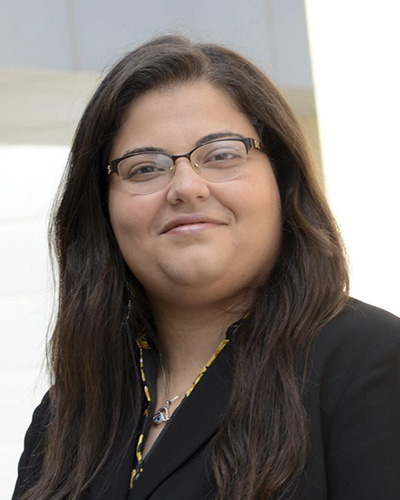
Miguel Angel Fernandez Granero is a Professor at the University of Cádiz, specializing in Systems Engineering and Automation within the Department of Automation, Electronics, Architecture and Computer Networks Engineering. As a member of the TIC212 Bioengineering, Automation and Robotics research group under the Institute for Research and Innovation in Biomedical Sciences (INiBICA), he bridges biomedical applications with technological innovation. His research focuses on predictive modeling for respiratory diseases , particularly COPD exacerbations, using telemonitoring and machine learning . Key areas include intelligent oxygen therapy systems , medical image analysis , and wearable sensor development . His 2016 PhD thesis on COPD exacerbation detection established a foundation for subsequent work in AI-driven healthcare technologies . Recent publications highlight his expertise in deep learning for histopathology , activity recognition in portable oxygen devices , and automated retinal imaging diagnostics . While no formal awards are documented, his interdisciplinary approach integrates educational technology in biomedical engineering curricula. He leads projects like AMICA, focusing on wearable sensors , and collaborates on Spanish-Portuguese cultural studies, demonstrating broad academic engagement.
Sara Ahmed serves as an Associate Professor in the Department of Electrical and Computer Engineering at the Margie and Bill Klesse College of Engineering and Integrated Design, The University of Texas at San Antonio (UTSA). Her work bridges power systems engineering with transportation electrification, focusing on grid integration challenges posed by emerging technologies. With a Ph.D. from Virginia Tech (2011), she maintains active research in electric vehicle infrastructure and smart grid resilience. Education Ph.D., Electrical Engineering, Virginia Tech, 2011 Dr. Ahmed's research program confronts critical gaps in modern energy infrastructure through three interconnected pillars: electric vehicle charging ecosystems, inverter-based resource integration, and novel sensing technologies. Her methodology combines stochastic programming for fleet operations, deep reinforcement learning for dynamic control systems, and hardware-in-the-loop validation for grid protection schemes. Key innovations include self-powered weigh-in-motion systems using piezoelectric harvesting and adaptive inverter control for weak grid conditions, addressing both urban and rural infrastructure needs through cross-disciplinary approaches spanning power electronics, transportation engineering, and machine learning. Analysis of her 15 most recent publications (2023-2025) reveals a strategic concentration on commercial fleet electrification challenges, with 60% of works addressing depot charging optimization and grid impacts. A parallel theme explores protection coordination in inverter-dominated distribution systems, where 40% of recent papers develop solutions for sympathetic tripping and fault ride-through. Her methodology consistently integrates AI-driven approaches (35% of publications) with physical system validation, demonstrating a commitment to practical implementation through hardware-in-the-loop testing and roadway-embedded prototypes. Scientific Awards No specific awards were documented in the provided materials. Advising and Grants Dr. Ahmed's 2022 publication 'Closing the Loop: A 10-year Follow-up Survey for Evaluation of an NSF REU Site' confirms sustained mentorship of undergraduate researchers through National Science Foundation funding. While specific grant amounts remain undisclosed, her research trajectory indicates continuous federal support for electric vehicle-grid integration studies. Her advising extends to REU participants across electrical engineering disciplines, with emphasis on power systems and transportation electrification projects. Current work shows progression toward larger-scale infrastructure implementation, particularly in medium/heavy-duty fleet electrification and rural roadway monitoring systems.
Patric Jannasch is a Professor of Polymer Technology at Lund University , with a visiting professor appointment at the University of Tartu (2017). His research bridges polymer chemistry and energy sustainability , focusing on macromolecular design, synthesis, and characterization of polymers for energy conversion, storage, and sustainable materials. Education : PhD in Chemical Engineering (1996) from Lund University; Postdoctoral Fellow at Risø National Laboratory (1996–1998). Key research areas include: Ionic polymers for proton/anion-exchange membranes in fuel cells, electrolyzers, and flow batteries Solid polymer electrolytes for lithium-polymer batteries Bio-based monomers and plastics from renewable resources Structure-property relationships in multifunctional polymers Recent publications highlight advancements in closed-loop recyclable polyesters from lignocellulose, imidazole-tethered polymers for redox flow batteries, and citric acid-derived polyurethanes with electrospinnable properties. His work aligns with UN Sustainable Development Goals for affordable clean energy and climate action . Scientific Distinctions : Guest Professor at University of Tartu (2017) Jannasch supervises PhD students across institutions, including Pegah Mansouri Bakvand (Lund) and Rauno Sedrik (University of Tartu). He leads projects funded by organizations like the Swedish Energy Agency and FORMAS , and serves on editorial boards for polymer and sustainable chemistry journals.
Kasia Gorniak is a Doctoral Researcher at Aalto University's Department of Design, focusing on sustainable fashion and circular economy initiatives. She is affiliated with the Fashion/Textile Futures research group. Current role: Doctoral Researcher Key research areas: Circular textiles, consumer engagement, material innovation Collaborations: Kirsi Niinimäki, Elina Onkinen, and interdisciplinary teams Research Focus : Her work explores systemic transitions in fashion through skill-sharing platforms, textile recycling technologies, and EU policy frameworks. Key projects include cotton fiber regeneration and wardrobe system redesigns. Recent Publications : 2025 studies on consumer engagement in circular economies; 2024 research on postconsumer cotton recycling; 2023 artistic contributions to textile futures. Projects : Active in the TADaCollective costume design and REPAIR exhibition curation, emphasizing sustainable practices.
Essi Karell is a Staff Scientist at Aalto University's Department of Design, focusing on sustainable and circular fashion practices. Since 2017, she has contributed to projects like Trash-2-Cash, Crops4Luxury, Finix, New Cotton, and T-REX. Her research explores closed-loop textile recycling and design practices aligning with circular economy principles. Karell completed her doctoral thesis in 2021: Closing the Loop through Clothing Design: Wishful Thinking or Achievable Practice? She actively participates in multi-faceted research through the Fashion/Textile Futures group. Recent publications address design processes for circularity, consumer repair services, and industry stakeholder dialogues. Karell has presented at conferences including the European Academy of Design and European Roundtable on Sustainable Consumption and Production, while contributing to media discussions on cotton's environmental impact and circular economy strategies.
Professor Aris Matopoulos is Chair of Supply Chain Design at Cranfield School of Management (Cranfield University) and Director of the Agile Supply Chain Research Club. He previously served as Head of Engineering Systems and Supply Chain Management at Aston University. His interdisciplinary research focuses on optimizing supply chain resilience, sustainability, and technology integration, with applications in manufacturing, defense, retail, and humanitarian sectors. Research interests center on: Design for Supply Chain/Logistics : Developing tools like the Supply Chain Readiness Levels framework to assess manufacturing capabilities. Resource Efficiency : Strategies for circular economy implementation and waste-to-energy conversion. Supplier Relationships : Collaborative models for retail, automotive, and healthcare sectors. His publications demonstrate strong focus on: Mathematical optimization of sustainable supply chains Impact of policy incentives on renewable energy systems Disruption recovery in multi-tier logistics networks Technology integration in healthcare and manufacturing operations Awards and recognition include: Senior Fellow, Advance UK Higher Education Academy Fellow, Chartered Institute of Logistics and Transport Royal Society Short Industry Fellowship He leads the £2M+ Agile Supply Chain Research Club, collaborating with Rolls-Royce, Jaguar Land Rover, and SMEs. Supervised multiple PhD students in supply chain design and readiness assessment. Holds visiting professorships at University of Lille and Vietnam Maritime University. Serves as Associate Editor for Journal of Purchasing & Supply Management and editorial board member for leading logistics journals.
Julia Berezutskaya serves as an Assistant Professor at Utrecht University within the Brain strategic program, leading the Utrecht-BCI lab dedicated to developing neurotechnology for individuals with motor impairments. Her research focuses on creating brain-computer interfaces (BCIs) to enable communication and computer control for people with severe movement disabilities, emphasizing patient-centered artificial intelligence applications in medical care. Her primary research areas include decoding neural signals for BCI applications, developing specialized BCI software and interactive games, and integrating functional electrical stimulation to reanimate paralyzed muscles. This work bridges fundamental neuroscience with clinical neurotechnology, targeting neurological and psychiatric disorders through innovative neuroengineering solutions that translate brain activity into actionable outputs for rehabilitation. Recent publication trends reveal a strong emphasis on electrode optimization for sensorimotor cortex recordings (2024), hybrid BCI-FES systems for motor restoration (2023), and advanced deep learning models for speech reconstruction from neural data (2023). These contributions demonstrate consistent progress in making BCIs more reliable, clinically applicable, and responsive to user needs across neurorehabilitation contexts. The Utrecht-BCI lab operates at the intersection of neuroscience, engineering, and AI, with a mission to elucidate neuronal mechanisms underlying healthy brain function to develop transformative neurotechnologies. Current projects focus on enhancing BCI accessibility through user-centered design while addressing ethical considerations in patient-centered AI deployment for neurological care.
Zahra Mesbahi serves as a Junior Researcher at the Institute for Innovation Systems within the Department of Digital Business and Innovation at St. Pölten University of Applied Sciences, Austria. Her work bridges digital business strategies and sustainability transitions, focusing on European circular economy implementation through institutional and technological innovation. She holds BSc and MSc qualifications with research expertise spanning sustainable consumption patterns, digital product passports, and urban waste management systems. Her methodological approach combines cross-national comparative analysis with socio-technical systems thinking across six European case studies. Mesbahi's publication trends reveal concentrated exploration of resistance factors in circular economy adoption, emphasizing social engagement mechanisms and digital enablers. Her work consistently addresses policy-practice gaps through frameworks like the Circular Economy Cube and DPP4ALL, targeting measurable sustainability transitions in business contexts. She actively contributes to eight major research initiatives including DPP4ALL (Digital Product Passport ecosystem), Circular Economy for All (incentive structures), EINS (European innovation networks), and Knowledge-hub.eco. These projects span applied domains from regional mobility laboratories to comfort:zone behavioral interventions, demonstrating her commitment to translating research into operational sustainability solutions.
Laura Lema Perez is a Postdoctoral Fellow at the Department of Technical Cybernetics, Norwegian University of Science and Technology (NTNU). Her research focuses on mathematical modeling and systems biology applied to biotechnological processes and diabetes management. Research Interests: Laura specializes in developing phenomenological-based models for metabolic systems, particularly glucose dynamics and insulin action. Her work addresses model interpretability, sensitivity analysis, and control systems for artificial pancreas technologies, bridging biomedical engineering and computational physiology. Publications Trends: Her recent articles (2022-2024) span journals like Ecological Modelling , PLOS ONE , and Computers in Biology and Medicine , alongside IEEE and IFAC conference proceedings. Topics include meal onset detection, glycemic trend prediction, and nonlinear control systems. Dissemination: She has presented posters and oral presentations at international conferences such as ATTD (Advanced Technologies & Treatments for Diabetes) and EMBC (IEEE Engineering in Medicine & Biology Society), often collaborating with multidisciplinary teams.
Paola Galoppi is a Researcher at Sapienza University of Rome's Department of Maternal, Infant and Urological Sciences, teaching Pathological Obstetrics for Midwifery and Gynecology/Obstetrics courses for Medicine and Surgery students. Her clinical-academic role bridges obstetric practice with maternal-fetal research, focusing on high-risk pregnancy management within Rome's public healthcare system. Her research centers on gestational diabetes pathophysiology, autoimmune disorders (particularly systemic lupus erythematosus) in pregnancy, and complications including thrombocytopenia, hypertension, and fetal growth abnormalities. She investigates metabolic-immunological interactions in adipose tissue, viral transmissions like SARS-CoV-2, and rare conditions such as homozygous familial hypercholesterolemia during gestation. Her methodology emphasizes clinical case reports, systematic reviews, and case-control studies to address evidence gaps in obstetric practice. Analysis of her 2022-2025 publications reveals emerging trends: innovative management of dyslipidemias via lipoprotein apheresis, hybrid closed-loop insulin systems for diabetic pregnancies, and critical reappraisal of fetal monitoring protocols. She actively documents SARS-CoV-2 vertical transmission mechanisms while exploring pharmacological safety (e.g., elexacaftor/tezacaftor/ivacaftor) and hematological interventions for alloimmunization. No scientific awards were documented in the provided institutional records. No information regarding student supervision or research grant acquisition was specified in the source materials, though her clinical case reports suggest collaboration with obstetric teams at Rome's public hospitals. Dr. Galoppi contributes to the institutional research group focused on Gestational diabetes; Risk Factors; Outcomes , indicating active participation in multi-center studies examining metabolic predictors of adverse pregnancy events within Italy's universal healthcare framework.
Kerstin Bach is a Professor in Artificial Intelligence at the Norwegian University of Science and Technology (NTNU), where she serves as Director of the Norwegian Open AI Lab and Research Director of the Norwegian Research Center for AI Innovation (NorwAI). She also holds the position of Deputy Head of the Data and Artificial Intelligence group within NTNU's Department of Computer Science. Her leadership extends to multiple national AI initiatives that bridge industry and academia in Norway. Dr. Bach earned her Dr. rer. nat. (summa cum laude) in Computer Science from the University of Hildesheim, Germany in 2012. Prior to joining NTNU in 2015, she worked as a researcher at the German Research Center for AI (DFKI) and as both a research scientist and software engineer at Verdande Technology, an AI startup developing case-based reasoning technology for various industries. Her research focuses on developing AI methods that combine reasoning, context-awareness, and interpretability to support complex, knowledge-intensive decisions. She specializes in case-based reasoning, explainable AI, and human-AI interaction, with particular emphasis on healthcare applications. Her work explores how to build transparent AI systems that work across domains and are grounded in real-world use cases, especially in medical decision support and patient-centered care. Analysis of her recent publications reveals a strong focus on applying AI to healthcare challenges, particularly musculoskeletal pain management through the selfBACK project. Her research spans human activity recognition, explainable AI methods, clinical decision support systems, and reinforcement learning applications. A consistent theme is the development of trustworthy AI systems that maintain interpretability while addressing complex healthcare problems. Dr. Bach actively mentors students and has established FEMAIS, a mentorship program for aspiring female AI students. She serves on the boards of both the Norwegian AI Society and the German AI Society, demonstrating her commitment to advancing the field and promoting diversity in AI. She leads multiple interdisciplinary projects funded by the Norwegian Research Council and NTNU, focusing on AI-driven healthcare services. Her leadership in the Norwegian Open AI Lab involves organizing events, giving talks, and participating in panels to discuss AI research with both professionals and the public.
Olga Battaïa is Senior Professor in the Department of Operations Management and Information Systems at KEDGE Business School, where she also serves as Associate Dean for Research. Her academic journey includes a PhD in Industrial Engineering from École nationale supérieure des mines de Saint-Étienne (2007) and accreditation to supervise research (HDR, 2014). Education PhD in Industrial Engineering, École nationale supérieure des mines de Saint-Étienne, 2007 HDR (Accreditation to Supervise Research), 2014 Research Focus Professor Battaïa’s research lies at the intersection of operations management , supply-chain optimization , and decision-science methods . She develops mathematical models and algorithms that improve the design and performance of production systems, reconfigurable manufacturing lines, closed-loop supply chains, and collaborative human-robot systems. Her work embraces sustainability challenges, ergonomic considerations, and uncertainty management. Recent investigations include: Dynamic vaccine-allocation models responding to pandemic realities Ergonomic integration in human-robot collaborative workstations Electric-bus charging-network design for sustainable urban mobility Robust resource-leveling techniques under project uncertainty Publication Impact Across 200+ refereed publications, her 2023–2025 output alone spans International Journal of Production Economics , IJPR , Computers & Industrial Engineering , Transportation Research Part E , and flagship conferences such as CIRP ANNALS. Thematic trends reveal deepening emphasis on (i) sustainable and resilient supply-chain design, (ii) advanced exact and heuristic optimization for reconfigurable manufacturing, and (iii) human-centric production systems. Editorial & Professional Service Associate Editor, Journal of Manufacturing Systems (Elsevier) Associate Editor, IISE Transactions Associate Editor, Omega—The International Journal of Management Science Associate Member, International Academy for Production Engineering (CIRP) Member, IFAC Technical Committee on “Manufacturing Modelling for Management and Control” Doctoral Advising & Research Leadership Professor Battaïa has co-supervised 11 PhD thestrong>ses to completion and delivered more than 15 invited lectures worldwide. She coordinates multi-partner research projects with industry and academic institutions, securing sustained funding for large-scale optimization and sustainability initiatives. Laboratories & Teams She leads research activities within KEDGE’s Operations, Supply Chain and Information Management group, collaborating closely with the Reconfigurable Manufacturing Systems and Sustainable Supply Chain Design research teams.
Miguel Angel Lopez Manchado is a Research Professor at the Institute of Polymer Science and Technology, Spanish National Research Council (CSIC), Madrid, Spain. His work focuses on advanced composite materials, particularly self-healing elastomers and sustainable polymer design. PhD : Chemistry Sciences, Universidad Complutense de Madrid (1997) Postdoctoral : University of Perugia (1998-2000) CSIC Affiliation : Ramon y Cajal Contract (2002), Tenured Researcher (2006), Research Scientist (2011), Research Professor (2016) His research centers on composite materials , self-healing polymers , and elastomer sustainability , with a focus on structure-property relationships and recycling. Recent articles highlight innovations in physically unclonable labels , bio-based vitrimers , and gamma radiation shielding composites . Scientific achievements include the IX Talgo Award for Technological Innovations (2009) and patents on: Thermoset Conductive Foams Electrochemically Active Nanoparticulated Polymers Physically Unclonable Labels He pioneers self-healing composites for automotive and packaging applications, with expertise in polymer synthesis, nanocomposite characterization, and circular economy strategies.
Evren Sahin is a researcher specializing in Operations Management with a focus on Supply Chain Optimization , Healthcare Logistics , and Inventory Management . He is affiliated with the Industrial Engineering Laboratory, where his work integrates optimization , discrete event simulation , and production systems . His research explores the intersection of emergency vehicle logistics , home healthcare operations , and agri-food supply chains . Recent publications highlight applications of machine learning in demand forecasting and digital twin technology for supply chain agility. Collaborations with Zied Jemai, Yves Dallery, and Andrea Matta span theoretical and applied projects. Key methodologies include integer programming , inventory control models , and human-robot kitting systems . His work addresses closed-loop supply chains , perishable product management , and emergency medical service improvements through simulation and optimization.
Daniel Benjamin Aharoni is an Associate Professor in the University of California, Los Angeles (UCLA) Department of Neurology, with affiliations in both the School of Medicine and interdisciplinary neuroscience research groups. His work bridges engineering, physics, and neuroscience to develop open-source neurotechnologies like the Miniscope system, now used in over 450 laboratories worldwide. Research interests include: Optical Imaging: Miniature microscopes for freely behaving animals Neural Dynamics: Single-cell and multi-region neural activity analysis Behavioral Neuroscience: Social behavior, spatial coding, and aversive memory studies Biomedical Hardware: FPGA-based real-time decoding systems His publications span high-speed volumetric imaging (2018), Miniscope-LFOV (2023), and BehaviorDEPOT (2022), focusing on hardware-software integration for neuroscience. The lab emphasizes democratizing access to neurotechnology and bridging tool design with biological complexity.