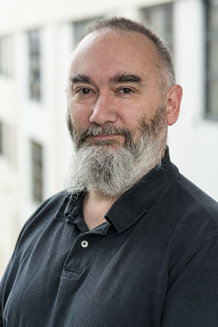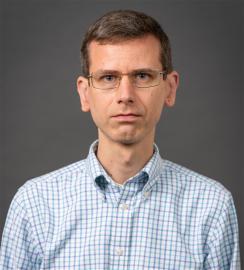
Jason SchweinsbergView profile
Professor
Jason Schweinsberg is a Professor in the Department of Mathematics at the University of California, San Diego (UCSD), where he has been a faculty member since Fall 2004. His academic journey began with a Ph.D. in Statistics from the University of California, Berkeley in 2001, followed by a three-year NSF Postdoctoral Fellowship at Cornell University. His research focuses on probability theory with applications to evolutionary biology and population genetics. Schweinsberg's work centers on stochastic processes involving coalescence, branching Brownian motion, and their connections to biological phenomena. He has made significant contributions to understanding population models undergoing selection, cancer evolution, and spatial mutation processes. Recent publications reveal a strong emphasis on coalescent theory (particularly Λ-coalescents and nested coalescents), branching processes with absorption, and spatial evolutionary models. His work often bridges rigorous mathematical analysis with biological applications, especially in population genetics and cancer modeling. The 15 most recent articles demonstrate consistent focus on asymptotic analysis of stochastic processes, genealogical structures, and mutation dynamics in evolving populations. Scientific Awards: Fellow of the Institute of Mathematical Statistics NSF Postdoctoral Research Fellowship While specific student names aren't listed in the source material, Schweinsberg has delivered numerous lecture series at international institutions including the Indian Institute of Science (Bangalore), Centre de Recherches Mathématiques (Montreal), and the Isaac Newton Institute (Cambridge), indicating active mentorship and academic leadership. His collaborations span multiple institutions, with frequent co-authorship with researchers like Julien Berestycki, Nathanaël Berestycki, and Rick Durrett. Though no formal lab structure is mentioned, Schweinsberg participates in interdisciplinary research communities through workshops at institutions like BIRS (Banff International Research Station), where he presented on mutation patterns in spatially structured populations in May 2025. His work connects probability theory with biological applications through sustained collaborations across mathematics, statistics, and computational biology fields.