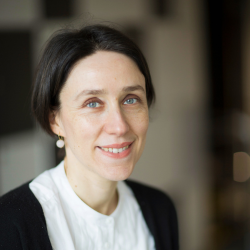
María Rodríguez MartínezView profile
Associate Professor
María Rodríguez Martínez is an Associate Professor of Biomedical Informatics and Data Science at Yale School of Medicine, where she leads research at the intersection of computational biology, immunology, and artificial intelligence. Her work focuses on understanding T and B cell function in complex diseases like cancer and autoimmune disorders through integrated computational approaches. Her primary research interests involve developing interpretable deep learning methods to uncover biological mechanisms behind immune responses. Rodríguez Martínez's lab integrates mechanistic models with AI to predict T cell receptor binding, investigate B cell development, and analyze complex disease mechanisms. Her work emphasizes model interpretability to extract biological insights from computational predictions rather than treating AI as a black box. Her recent publications demonstrate strong focus on immunoinformatics, with significant contributions to TCR-epitope prediction challenges, cell-specific gene network analysis in autoimmune diseases, and domain-specific protein language models for immunological applications. The research consistently bridges computational methodology development with biological discovery in immunology and cancer. Prof. Rodríguez Martínez serves as editor for multiple journals including ImmunoInformatics, Frontiers in Systems Biology, BMC Bioinformatics, and IEEE Transactions on Molecular, Biological, and Multi-Scale Communications. She is a frequent speaker and organizing committee member at major conferences such as ISMB, the Society for Mathematical Biology, and ECCB. Prior to Yale, she was Technical Leader of Systems Biology at IBM Research Europe (Switzerland), where she established the computational systems biology team and led EU-funded consortia on prostate and pediatric cancers. Her background spans physics (PhD in Gravitation and Cosmology from Institut d'Astrophysique de Paris, 2003), postdoctoral work at Weizmann Institute of Science and Columbia University, and extensive industry research experience at IBM.