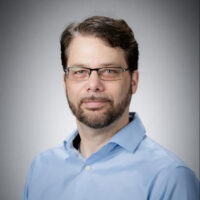
Fabian-Xosé Fernandez serves as Associate Professor in the Department of Psychology within the College of Science at the University of Arizona, where he directs the Circadian Trends Laboratory. His research program bridges neuroscience, clinical psychology, and public health through investigations of circadian biology and sleep-wake patterns. His primary research interests focus on circadian fluctuations in real-world data , psychology of nighttime wakefulness , and suicide risk mechanisms . Key investigations explore how nocturnal wakefulness correlates with suicidal ideation, homicide risk, and metabolic dysregulation. His work employs National Violent Death Reporting System analyses Controlled circadian phase-shifting experiments Population-level sleep surveys Translational rodent models Recent publications reveal strong temporal patterns in behavioral health outcomes, with suicide risk peaking during circadian night across diverse populations. His lab develops chronotherapeutic interventions including spectral filtering devices and lighting protocols to optimize circadian alignment. Current work examines how blue-light modifiers affect phase-shifting responses and how sleep disruption mediates psychiatric outcomes in bipolar disorder. Fernandez teaches graduate and undergraduate courses including PSY 350 (Sleep/Wake, Time Cycles, & Life) and PSY 578 (Sleep & Sleep Disorders), with recent instruction through 2025. His academic service includes editorial review for journals like Clocks & Sleep and Neuropsychopharmacology.
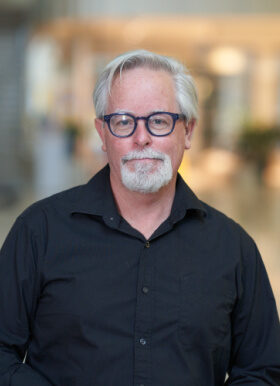
Gérard Berry (born December 25, 1948) is a distinguished French computer scientist currently serving as Professor at the Collège de France, holding the permanent chair Algorithmes, machines et langages (Algorithms, Machines, and Languages) since 2012. He previously held the Informatique et sciences numériques chair (2009-2010) and the Technological Innovation Liliane Bettencourt chair (2007-2008) at the same institution. Before joining Collège de France full-time, he served as Director of Research at INRIA Sophia Antipolis (2009-2012) and at École des Mines de Paris (1977-2001). His research spans over 30 years in three main fields: lambda calculus and functional programming, parallel and real-time programming languages, and design automation for synchronous digital circuits. He is particularly renowned for developing the Esterel programming language. His work bridges theoretical computer science with practical industrial applications. Berry's research has evolved to include current work in Hop and HipHop for Web programming, formal verification of compilers, and languages for computer music. His publications demonstrate consistent contributions to programming language theory, formal methods, and their applications in hardware and software systems. Gold Medal of CNRS (2014) Chevalier de l'Ordre de la Légion d'Honneur (2012) Member of French Academy of Sciences (2002) Member of Academia Europaea (1993) Monpetit Prize of Académie des sciences (1990) Berry has advised 17 PhD students and reviewed numerous theses. His industrial experience includes serving as Chief Scientist Officer of Esterel Technologies (2000-2009), where he directed the implementation of the Esterel v7 compiler. He has also held significant leadership roles including President of the Scientific Council of IRCAM and membership on the Scientific Council of the National Education. His teaching at Collège de France has covered topics ranging from the foundations of computation to the societal impact of digital technology, with courses including The Informatics of Time and Events and Proving Programs: Why? When? How? His laboratory work has focused on developing practical applications of theoretical computer science concepts.
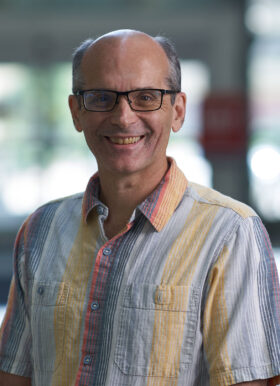
Dr. Ryan Leduc is an Associate Professor at the Department of Computing and Software within McMaster University's Faculty of Engineering . He holds degrees of B.Eng (Victoria) , M.A.Sc. (Toronto) , and Ph.D. (Toronto) . His research focuses on Discrete-Event Systems (DES) , particularly in Supervisory Control , Hierarchical Structures , Concurrency , and Formal Verification of software and hardware. He has developed the DESpot software tool for hierarchical DES research.
Ulrich Schmid is a Full Professor and Head of the Research Unit for Embedded Computing Systems at TU Wien. He holds a position in the Faculty of Informatics and leads the department of Embedded Computing Systems (E191-02). His roles include Curriculum Coordinator for the Bachelor and Master programs in Computer Engineering, as well as the Excellence Program Bachelor with Honors. He is also the Chair of the Curriculum Commission for Computer Engineering and a Substitute Member of the Informatics Commission. His research focuses on fault-tolerant distributed algorithms, digital integrated circuits, and topology-based approaches to distributed systems. He coordinates major projects such as the FWF-funded DMAC (2019–2024) and ByzDEL (2020–2025), which integrate topological semantics and hybrid delay models for robust hardware design and distributed system analysis. Schmid has contributed to groundbreaking work in Byzantine fault tolerance, epistemic logic for system recovery, and real-time scheduling through collaborations with researchers like Chatterjee, Függer, and Rajsbaum. Notable awards include the 2018 Edsger W. Dijkstra Prize and the 2021 Principles of Distributed Computing Doctoral Dissertation Award. His research also bridges formal verification techniques with physical hardware implementations, exemplified by projects like HEX (a Byzantine-tolerant clock distribution system) and the Involution tool for timing analysis. Schmid actively contributes to academic governance, advancing rigorous education and research standards in computer engineering. His advising and grant work involve mentoring on fault-tolerant architectures and securing funding from agencies like FWF and the European Commission. Labs and teams under his leadership include the Embedded Computing Systems group, specializing in hardware-software co-design for dependable systems-on-chip, and collaborations with institutions like GSI Helmholtzzentrum and the University of Amsterdam.
Paul Shaw is a Professor of Neuroscience in the Department of Neuroscience at Washington University School of Medicine. He leads the Shaw Lab, which focuses on understanding the fundamental mechanisms of sleep and its relationship to cognitive function and neurological disorders using Drosophila melanogaster as a model organism. Dr. Shaw's research has demonstrated that enhancing sleep can fully restore cognitive functioning in various memory mutants and even reverse cognitive deficits in models of Alzheimer's disease. His work suggests sleep plays a vital role in neuronal plasticity beyond simple memory consolidation, including improving creative thinking and problem-solving abilities. Dr. Shaw's educational background includes a BA in Psychology & Criminal Justice from Niagara University (1985), an MA in Psychology from San Jose State University (1990), and a PhD in Biopsychology from the University of Chicago (1996). His recent research has focused on the molecular mechanisms that allow sleep to initiate extreme forms of neuronal plasticity capable of reversing cognitive deficits caused by genetic and structural lesions. In 2021, Dr. Shaw received a one-year $2.3 million grant from the National Institute on Aging of the NIH for research titled "Bidirectional interactions between sleep and Alzheimer's disease: Functional dissection of the brain transcriptome in humans and Drosophila." Dr. Shaw's publications reveal consistent research trends in sleep neuroscience, with particular emphasis on: The relationship between sleep and memory consolidation Mechanisms of sleep homeostasis and regulation The role of sleep in cognitive resilience and recovery from neurological damage Using Drosophila models to understand fundamental sleep mechanisms relevant to humans The connection between sleep disruption and neurodegenerative diseases Dr. Shaw actively mentors students and researchers in the Shaw Lab and has numerous ongoing research projects exploring the fundamental biological purpose of sleep. His work has significant implications for understanding and potentially treating sleep disorders and neurodegenerative conditions.
Timothy Holy, PhD is the Alan A. & Edith L. Wolff Professor of Neuroscience and Vice Chair of Research at Washington University School of Medicine. He leads the Holy Lab, which focuses on the neural mechanisms of olfactory coding and the development of innovative imaging technologies for neuroscience research. His educational background includes a BA in Mathematics and Physics (summa cum laude) from Rice University (1991), an MA in Physics from Princeton University (1992), and a PhD in Physics from Princeton University (1997) under thesis advisor Stanislas Leibler. Dr. Holy's research spans multiple domains of neuroscience with particular emphasis on the olfactory system of mice. His lab has pioneered light sheet microscopy for calcium imaging, enabling simultaneous recording from tens of thousands of neurons. More recently, they developed PhOTseq, a technique for optically tagging neurons for later sequencing. His work bridges physics, neuroscience, and computational approaches to understand how sensory systems process information. He is also among the world's foremost creators of the Julia programming language, which has gained exponential adoption in scientific computing. Analysis of his recent publications reveals a strong focus on neural coding in decision-making circuits, olfactory processing, and the development of computational tools for biological research. His work increasingly integrates machine learning approaches with traditional neuroscience techniques. Distinguished Teaching Service Award (2005, 2008, 2014) McKnight Technological Innovation in Neuroscience Award (2007) St. Louis Academy of Sciences Innovation Award (2009) NIH Director's Pioneer Award (2009) Society for Neuroscience Research Award for Innovation in Neuroscience (RAIN) (2009) Dr. Holy has mentored numerous students and postdoctoral researchers who have gone on to establish their own research programs. His lab has secured significant grant funding supporting technology development and fundamental neuroscience research. Current projects include investigating cellular mechanisms of individuality and plasticity, navigation using olfactory cues, and developing new mathematical tools for optimization and machine learning. The Holy Lab combines a focus on understanding neural circuits and behavior with a willingness to pioneer new technologies. It maintains strong collaborations across disciplines, particularly in the development and application of the Julia programming language for biological research.
Prof. E.K.A. Gill is a faculty member at the Faculty of Aerospace Engineering , Delft University of Technology (TU Delft) , specializing in Space Systems Engineering . His work focuses on satellite systems, spacecraft autonomy, and space debris mitigation. Academic Rank: Professor Key Affiliation: TU Delft Research Focus: Dr. Gill's research spans satellite communication systems, autonomous space robotics, and space debris risk analysis. He actively explores neural network applications for fault detection and multi-layer optimization strategies for space missions. Recent Trends: GNSS-assisted clock systems for small satellites Key Domains: RF engineering, spacecraft attitude control, debris removal mechanics Scientific Recognition: INCOSE Fellow (2021) - Recognized for contributions to systems engineering in aerospace Collaborations: Maintains extensive international collaborations in space systems research, with a recent focus on miniaturized spacecraft technologies and heterogeneous clock synchronization.
Anthony Kelly serves as a Postdoctoral Research Fellow in the Department of Electronic and Computer Engineering within the Faculty of Science and Engineering at the University of Limerick, Ireland, with his office located in E2-006. His affiliation spans both engineering and healthcare domains through interdisciplinary research initiatives. His research demonstrates dual expertise in artificial intelligence applications for healthcare and advanced power electronics. In healthcare AI, he develops interpretable mental health models, diabetes management chatbots, and comorbid condition interventions with emphasis on clinician trust and safety evaluation. In power systems, he pioneers digital control techniques for DC-DC converters, FPGA power management, and machine learning-integrated circuit designs. This bifurcated focus reveals a strategic transition from hardware-centric research (2005-2019) toward AI-health convergence (2024-2025). Analysis of his 15 most recent publications shows a pronounced shift toward healthcare AI since 2024, with 80% of current work addressing mental health modeling, diabetes chatbots, and comorbid condition management. Earlier publications (2009-2019) consistently focused on power electronics innovations including current-sharing algorithms, adaptive controllers, and FPGA-based systems, establishing foundational expertise later applied to healthcare technology development.
Alexander R.H. Smith, Ph.D., is an Assistant Professor of Physics at Saint Anselm College and holds an adjunct appointment at Dartmouth College. His research employs information-theoretic methods to investigate quantum theory and gravitational physics, focusing on quantum time dilation, relational quantum mechanics, and quantum field theory in curved spacetimes. Education Ph.D. in Theoretical Physics, University of Waterloo, Canada (2017) Ph.D. in Theoretical Physics, Macquarie University, Australia (2017) M.Sc. in Theoretical Physics, University of Toronto, Canada (2012) B.Sc. in Physics, University of Waterloo, Canada (2011) Academic Appointments Assistant Professor of Physics, Saint Anselm College (2020–present) Adjunct Assistant Professor, Dartmouth College (2020–present) Junior Fellow, Society of Fellows, Dartmouth College (2017–2020) Postdoctoral Fellow, National Science and Engineering Research Council of Canada (2017–2019) Research Interests Smith's research adopts John Wheeler's 'radically conservative' approach, pushing quantum theory and general relativity to their extremes. Key areas include: Quantum Time Dilation : Exploring quantum corrections to relativistic time dilation using superposed clocks. Relational Quantum Physics : Developing frameworks for quantum reference frames to eliminate classical dependencies. Quantum Field Theory in Curved Spacetime : Studying operational probes like Unruh-DeWitt detectors to analyze spacetime effects. Satellite-Based Tests : Leveraging quantum technologies for experimental tests of general relativity. Publication Trends Recent articles (2019–2021) concentrate on quantum time dilation, relational dynamics, and entanglement in curved spacetimes, with experimental implications for fundamental physics. Earlier work (2016–2018) established foundations in quantum reference frames and relativistic quantum information. Awards and Fellowships Junior Fellow, Society of Fellows, Dartmouth College (2017–2020) Postdoctoral Fellowship, NSERC Canada (2017–2019) Smith teaches undergraduate physics courses including Calculus-Based Physics, Classical Mechanics, and Quantum Mechanics.
Philippas Tsigas is a Professor at the Department of Computer Science and Engineering at Chalmers University of Technology. He leads the Distributed Computing and Systems Research Group and has held roles as co-leader of research initiatives such as the PEPPHER project. His research spans distributed/parallel computing, information visualization, and fault-tolerant communication mechanisms. He has supervised numerous PhD students, including Yi Zhang, Håkan Sundell, and Farnaz Moradi. Research interests include lock-free data structures, multicore algorithms, secure network services, and visualization tools like Lydian and DataMeadow. Notable awards include Best Paper Awards at IPDPS 2003 and SNS 2012. His work has been published in top venues like IEEE Transactions on Parallel and Distributed Systems and ACM Journal of Experimental Algorithmics. Awards highlight contributions to lock-free algorithms and network modeling. Students have contributed to projects like NBmalloc (memory reclamation) and GPU Quicksort. Collaborations with institutions like SSF and VR have supported his research. Tsigas is also involved in teaching distributed systems and mentoring early-career researchers.
Rodrigo Miragaia Rodrigues is a full professor at the Instituto Superior Técnico (ULisboa) and a researcher at INESC-ID since 2015. He previously held roles as an associate professor at Universidade Nova de Lisboa, tenure-track faculty at MPI-SWS, and completed his PhD at MIT in 2005 under Barbara Liskov. Education: PhD in Computer Science, MIT, 2005 Research Interests: Focuses on distributed systems, fault-tolerant computing, cloud infrastructure, and consistency models. His work bridges theoretical foundations and practical implementations, addressing challenges in geo-replication, secure analytics, and resource allocation in serverless environments. He emphasizes scalable systems and resilient data management. Awards: Best Paper Award at SOSP ERC Starting Grant Google Faculty Research Award Advising & Grants: Has advised 7 PhD students as main advisor, with graduates in top institutions like Purdue, TU Munich, and USTC. Secured funding from the European Research Council (ERC) and Google, focusing on projects like DependableCloud (ERC Grant 307732). Labs & Teams: Leads research at INESC-ID and previously directed the Dependable Systems Group at MPI-SWS. Active in academic leadership roles, including President of the Scientific Council at IST.
John O'Neill is a Research Fellow at the MRC Laboratory of Molecular Biology, University of Cambridge. His work investigates circadian rhythms and cellular timekeeping, focusing on how metabolic signals like insulin synchronize biological clocks with feeding schedules. Current research explores intracellular mechanisms of circadian regulation through molecular biology, proteomics, and metabolomics approaches. Specializes in molecular circadian biology Develops fluorescent/bioluminescent reporters for clock mechanisms Studies clock gene transcription factors (Period1-3) Investigates post-translational regulation of clock proteins His publications reveal consistent focus on biological timekeeping across multiple disciplines: molecular biology (protein homeostasis), biochemistry (ion transport), and systems physiology (metabolic entrainment). Key techniques include real-time cellular monitoring and advanced omics analysis. Ongoing work addresses circadian regulation of cellular physiology, with implications for disease prevention, chrono-pharmacology, and wound healing optimization. The research has potential applications in combating chronic illnesses associated with clock disruption (type II diabetes, cardiovascular disease, cancer).
Dr. Naeha Sharif is a Lecturer in Computer Science & Software Engineering at The University of Western Australia (UWA), specializing in Computer Vision (CV) and Natural Language Processing (NLP). She holds a PhD from UWA (2021) focused on AI-driven image captioning and received the prestigious ACS 1962 Medal for outstanding IT/CS research. Her work bridges AI with healthcare, including automated medical assessment via spine scans (DXA) for abdominal aortic calcification analysis and AI-driven medical report generation for fundus imaging. Education: PhD in Computer Science (UWA 2021), Master of Engineering in Biomedical Engineering (Kyung Hee University, 2013). Previous roles include Postdoctoral Fellow at Edith Cowan University (2021–2022). Research Interests: Vision-language models, medical image analysis, captioning metrics, multimodal learning, and AI applications in healthcare. Active in UN SDGs related to health and innovation. Teaching: Unit Coordinator for Computer Graphics & Animation (CITS3003, 2022–2023) Computational Thinking with Python (CITS1401, 2023) Grants: Lead investigator on the 'Generative AI for Screening of Depressive Disorders' project (2024). Awards: Recognized for student learning contributions (2025), best paper awards (2024/2020), and academic excellence honors (2021/2020). Labs/Teams: Member of UWA Natural & Technical Language Processing Group and IEEE Signal Processing Society.
Mitchell A. Lazar is the Willard and Rhoda Ware Professor in Diabetes and Metabolic Diseases at the Perelman School of Medicine, University of Pennsylvania. He serves as Director of the Penn Diabetes Research Center and Founding Director of the Institute for Diabetes, Obesity and Metabolism. Dr. Lazar is also Medical Staff at the Hospital of the University of Pennsylvania, Chair of the Center and Institute Directors Forum, and Director of the Cox Institute for Medical Research. His work bridges clinical medicine and basic science in the field of metabolic diseases. Dr. Lazar's educational background includes: S.B. in Chemistry from Massachusetts Institute of Technology (1976) Ph.D. in Neuroscience from Stanford University (1981) M.D. from Stanford University (1982) His post-graduate training included an Internal Medicine internship and residency at Brigham and Women's Hospital (1982-1985), followed by Clinical and Research Fellowships in Endocrinology at Massachusetts General Hospital (1985-1986). He completed additional research training as a Research Associate at the Howard Hughes Medical Institute, Harvard Medical School (1986-1988). He is board certified in Internal Medicine (1985) and Endocrinology and Metabolism (1987). Dr. Lazar's research focuses on the epigenomic regulation of transcription and metabolism by nuclear receptors, mechanisms of obesity-associated insulin resistance and diabetes, and circadian regulation of metabolism. His laboratory studies transcriptional regulation of metabolism, with particular emphasis on nuclear receptors such as Rev-erb alpha (a key component of the circadian clock) and PPAR gamma (a master regulator of adipocyte differentiation). His team combines genomic, genetic, proteomic, bioinformatic, and metabolic phenotyping approaches to understand how these factors function in mice and humans. The lab also discovered resistin, a hormone linking metabolism to inflammation in metabolic diseases. Dr. Lazar's recent publications demonstrate a strong focus on circadian biology and metabolism, with particular emphasis on how nuclear receptors regulate metabolic processes across different tissues. His work spans multiple disciplines including molecular biology, endocrinology, neuroscience, and immunology, revealing intricate connections between circadian rhythms and metabolic health. Key themes in his recent work include brain-liver communication, adipose tissue biology, epigenetic memory in metabolic tissues, and the role of nuclear receptors in coordinating metabolic responses across the body. Dr. Lazar has received significant recognition including the named professorship as the Willard and Rhoda Ware Professor in Diabetes and Metabolic Diseases, reflecting his substantial contributions to the field. Dr. Lazar actively mentors the next generation of scientists through his laboratory at the University of Pennsylvania. His current lab team includes multiple post-doctoral fellows across various disciplines, graduate students, research specialists, and a lab manager. His lab provides rotation projects for students interested in metabolic research. Dr. Lazar has secured substantial grant funding to support his research program investigating the molecular mechanisms underlying metabolic diseases. The Lazar Lab is a vibrant research environment with a team of scientists working collaboratively on various aspects of metabolic regulation. The lab employs state-of-the-art "omics" approaches combined with genetic and environmental manipulations and detailed metabolic phenotyping. This systems approach has significantly advanced understanding of obesity and diabetes pathophysiology, linking the epigenome to metabolism and stimulating novel translational approaches for treatment and prevention of metabolic diseases.
Christoph Handschin is a Full Professor in Pharmacology at the Biozentrum, University of Basel, Switzerland , with a research focus on skeletal muscle plasticity, aging, and metabolic diseases since 2015. He leads a research group investigating molecular mechanisms of muscle adaptation to physiological and pathophysiological conditions. Education: PhD in Biochemistry (summa cum laude, 2001), MSc in Molecular Biology (1996), Voluntary training at Novartis (1992) Research Interests span skeletal muscle biology, aging, exercise physiology, neuromuscular diseases, and metabolic disorders. His work emphasizes PGC-1α signaling, mitochondrial dynamics, and chromatin remodeling in muscle adaptation. Recent studies explore exercise-induced chromatin changes, biomarkers of aging, and dysferlinopathy mechanisms. Key Scientific Awards include the ERC Consolidator Grant (2013) , SNSF Professorship (2006) , and MDA Scientist Career Development Award (2004) . He is a member of the American Physiological Society and European Association for the Study of Diabetes. Recent Articles highlight breakthroughs in chromatin accessibility , functional aging biomarkers , dysferlinopathy metabolism , and PGC-1α-driven muscle adaptations . His research bridges molecular mechanisms (e.g., Klf5, PER2) with systemic physiology (e.g., exercise performance, sarcopenia).