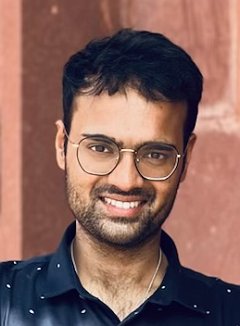
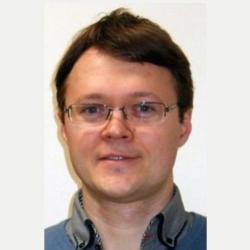
Umang Mathur is an Assistant Professor at the National University of Singapore's School of Computing, where he leads the FOCS Lab and is affiliated with PLSE@NUS. His research focuses on Formal Methods , Concurrency , and Decidability in Programming Languages and Software Engineering . PhD in Computer Science from the University of Illinois at Urbana-Champaign (advisor: Prof. Mahesh Viswanathan) Former Research Scientist at Facebook Inc. and Research Fellow at the Simons Institute Recipient of Google PhD Fellowship, 2024 CPP Distinguished Paper Award, 2023 ACM SIGPLAN Award, and ASPLOS 2022 Best Paper Award His recent work explores algorithmic techniques for detecting concurrency bugs , decidable program verification , and synthesis , with a focus on weak memory models, predictive monitoring, and automata-theoretic approaches. Articles span topics like causal concurrency, tree clock data structures, and probabilistic counting algorithms, reflecting interdisciplinary intersections of logic and systems research. Scientific Awards Google PhD Fellowship 2024 CPP Distinguished Paper 2023 ACM SIGPLAN Distinguished Paper 2022 ASPLOS Best Paper 2018 ESEC/FSE Distinguished Paper He advises PhD students in Formal Methods and supervises teams in the FOCS Lab. Teaching includes advanced modules on Automata Theory, Logic, and Verification at NUS.
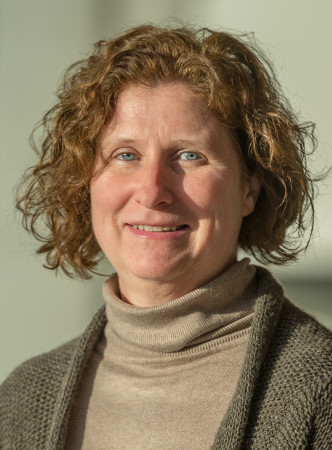
Teresa E. Pawlowska is a Professor in the Plant Pathology and Plant-Microbe Biology Section of Cornell University's School of Integrative Plant Science. Her research focuses on fungal-bacterial symbioses and evolutionary mechanisms in early-divergent fungi. Her research interests span Fungal evolutionary biology Evolutionary and population genomics Innate immunity in fungi Arbuscular mycorrhizae systems Fungal-bacterial interactions with particular emphasis on symbiotic associations between Mucoromycota fungi and their bacterial endosymbionts. Analysis of her 15 most recent publications reveals dominant trends in microbial symbiosis evolution, with strong focus on genomic adaptations in bacterial endosymbionts (particularly 'Candidatus Moeniiplasma' ), metabolic integration mechanisms, and evolutionary consequences of host-symbiont coevolution. Key research areas include lipid metabolic changes governing mutualism establishment, defense mechanisms against antagonistic bacteria, and the role of mobile genetic elements in symbiont longevity. Scientific recognition includes Donald C. Burgett Distinguished Advisor Award (2018) NSF-funded REU program leadership for underrepresented minorities Multiple student awards at international conferences USDA pre-doctoral fellowship for lab members Professor Pawlowska actively mentors PhD students including Meg Branine, Delia Tota, and Nicole Reynolds, with research supported by NSF and USDA grants. She directs the "Microbial Friends & Foes" REU program and maintains active collaborations with international institutions including North-West University (South Africa) and Oregon State University. Her lab, located in Plant Science Building, focuses on experimental evolution, genomics, and ecological studies of fungal-bacterial systems.
Pedro Miguel Sanchez Sanchez is a researcher affiliated with the University of Murcia , specializing in Machine Learning , Cybersecurity , and IoT . He earned his doctorate in 2024 with the thesis Identical IoT device identification via hardware performance fingerprinting and Machine Learning , supervised by Dr. Alberto Huertas Celdrán and Dr. Gregorio Martínez Pérez. Research Interests Pedro's work focuses on applying Machine Learning and Federated Learning to solve critical challenges in Cybersecurity and IoT environments. His research includes: Developing decentralized federated learning frameworks (e.g., Flighter, ProFe) for secure and efficient model training. Designing malware detection systems using system call data and large language models . Enhancing IoT device authentication via hardware fingerprinting techniques. Exploring moving target defense strategies to counter zero-day attacks on IoT networks. Building knowledge graphs for cyber defense applications. Recent Publications Pedro's 2025–2024 publications demonstrate a strong focus on decentralized federated learning , malware mitigation , and hardware-based security . Key trends include: Advancements in zero-shot learning for multilingual tasks on edge devices. Security frameworks (e.g., Cyberforce, Sentinel) for military reconnaissance and industrial IoT . Behavioral analysis techniques for ransomware detection and continuous authentication . Robustness studies on federated learning architectures under adversarial conditions. Creation of benchmarks like LwHBench for hardware performance evaluation. Collaborations He has collaborated with researchers in the Intelligent Systems and Telematics group, contributing to projects in 5G security , crowdsensing platforms , and trusted execution environments .
Ingrid Moerman is a part-time Professor at Ghent University and a staff member at the Internet Technology and Data Science Lab (IDLab), a core research group of imec embedded within Ghent University and the University of Antwerp. She coordinates mobile and wireless networking research and leads a team of over 30 researchers at Ghent University, with extensive involvement in European and national funding initiatives. She received her Electrical Engineering degree (1987) and Ph.D. (1992) from Ghent University. Her research spans collaborative networks, cognitive radio, software-defined radio, IoT, LPWAN, and high-density wireless access, emphasizing experimentally-supported development of next-generation wireless systems with practical implementations in spectrum management and real-time control. Recent publications (2024-2025) reveal a strong pivot toward AI-integrated wireless networking, featuring OFDMA scheduling innovations, Wi-Fi 6/7 interference mitigation, and time-sensitive networking for industrial applications. Key trends include 5G/6G convergence, vehicular communication enhancements, and digital twin frameworks for network observability, reflecting her focus on mission-critical industrial use cases. Her accolades include: 9 Best Paper Awards 2 FWO Prizes (Research Foundation - Flanders) IMEC Prize of Excellence 2001 MSc Thesis Award (as promoter) Best Demo/Exhibit Award at ICT 2013 DARPA Spectrum Collaboration Challenge Prize ($750,000) She has coordinated major EU projects (FP7/H2020: CREW, WiSHFUL, eWINE, ORCA) with industry partners, securing substantial funding for experimental wireless research. Her grant portfolio emphasizes collaborative innovation in spectrum sharing and neutral-host architectures for multi-operator environments. At IDLab, she directs advanced wireless testbeds supporting real-world validation of technologies like openwifi and White Rabbit, with active experimentation in time-sensitive networking and spectrum collaboration for industrial IoT deployments.
Josie Clowney is an Associate Professor in the Department of Molecular, Cellular, and Developmental Biology at the University of Michigan, where she has held faculty position since 2017. Her research investigates the genomic algorithms that construct neural circuits during development, using Drosophila as a model to study how chemosensory systems drive both instinctual behaviors and learning. She teaches Bio 172 and an upper-level seminar on cellular diversity and scientific writing, and mentors graduate students through MCDB, CMB, NGP, and BIOINF PhD programs. Her educational background includes: Ph.D. in Biomedical Sciences (2012) from the University of California, San Francisco B.S. in Cellular and Molecular Biology (2005) from the University of Michigan, where she conducted research with Cunming Duan Clowney's research centers on understanding how definitive neuronal parameters are encoded in genomic information and translated into cellular architectures. Her lab hypothesizes that developmental algorithms for learning circuits versus instinctual circuits differ fundamentally in their genomic requirements, with chemosensory circuits serving as key models. Using fruit flies for their tractable brain organization, her work bridges computational principles and biological implementation to uncover universal brain organization rules. Analysis of her 15 most recent publications (2016-2025) reveals consistent focus on Drosophila mushroom body development, neural sexual differentiation, and spatial constraints in circuit formation. Key themes include non-deterministic mechanisms diversifying cell surface expression, chromatin dynamics in circadian regulation, and how input density tunes sensory responses. Her work integrates genomics, neuroanatomy, and behavior to model how compact genomic information generates complex neural architectures. No scientific awards were mentioned in the provided text. Dr. Clowney advises graduate students through multiple PhD programs at the University of Michigan, though specific student names and grant details are not provided in the source material. Her teaching includes foundational undergraduate coursework and advanced seminars emphasizing scientific writing. The active publication record spanning 2016-2025 indicates sustained research funding supporting her lab's investigations into neural circuit development. The Clowney Lab, housed in the Biological Sciences Building (4218 BSB), employs Drosophila genetics and neuroanatomical techniques to dissect developmental algorithms of brain wiring. Current projects explore how spatial constraints structure learning circuits, mechanisms of neural sexual differentiation, and the genomic encoding of circuit diversity. The lab collaborates within Michigan's neuroscience community through the Program in Biology and participates in interdisciplinary initiatives studying brain evolution and function.
Christoph H. Keitel is a Professor and Director at the Max Planck Institute for Nuclear Physics, with an honorary professorship at Heidelberg University. His research spans quantum electrodynamics, laser-matter interactions, and precision atomic physics. He leads investigations into radiation reaction, particle acceleration, and fundamental symmetries using high-intensity lasers and atomic spectroscopy. Keitel has received the Willis E. Lamb Award and Gustav Hertz Prize for pioneering contributions to laser science and quantum optics. His group develops advanced theoretical frameworks for testing QED and particle physics through high-precision experiments.
Jacob Paul Covey serves as an Assistant Professor in the Department of Physics and the Materials Research Lab at the University of Illinois Urbana-Champaign. His academic role involves conducting cutting-edge research in quantum information science and mentoring students in atomic physics and quantum computing. Research interests span quantum computing, atomic physics, quantum information science, quantum simulation, Rydberg atoms, and optical lattices. Covey specializes in neutral-atom platforms using ytterbium-171 for quantum information processing, investigating Dicke superradiance, quantum walks, and flat-band physics in Rydberg lattices to overcome scalability challenges in quantum computers. Analysis of recent publications reveals a concentrated focus on neutral-atom quantum computing architectures. Key contributions include two-qubit encoding schemes for ytterbium atoms, quantum network designs with atom processing nodes, and studies of correlated dynamics in synthetic Rydberg lattices, advancing qubit connectivity, error correction, and quantum simulation capabilities. Dr. Covey has received prestigious recognition: NSF CAREER Award (2024) ONR Young Investigator Award (2022) U.S. DOE Early Career Research Program Award (2024) While specific students aren't listed in the provided text, his active research program funded by major federal grants supports graduate students and postdoctoral researchers. These NSF, ONR, and DOE grants provide substantial resources for experimental quantum computing development. Prof. Covey's laboratory operates within the Materials Research Lab, an interdisciplinary research center at UIUC. His team collaborates extensively with quantum information and atomic physics experts, as evidenced by multi-institutional co-authorships, focusing on ytterbium-based quantum processors and many-body quantum phenomena.
Marek Miśkowicz serves as a Professor at the Department of Metrology and Electronics within the Faculty of Electrical Engineering, Automatics, Computer Science and Biomedical Engineering at AGH University of Science and Technology in Kraków, Poland. His primary institutional contact is miskow@agh.edu.pl, with physical location in building B-1, room 212. His research spans signal processing, biomedical engineering, and electronics, specializing in event-based sampling methodologies, time-to-digital conversion techniques, and reconstruction of bandlimited signals from nonuniform samples. Key contributions include QRS detection algorithms for ECG monitoring, POCS-based reconstruction frameworks, and event-driven control systems for industrial IoT applications. His work emphasizes resource efficiency in embedded systems and mobile health monitoring through approximate computing and adaptive sampling strategies. Recent publications (2022-2025) demonstrate consistent focus on signal reconstruction from irregular samples, with growing emphasis on spiking neural networks for event classification and industrial IoT optimization. Biomedical applications (particularly ECG analysis) and industrial control systems represent dominant application domains, while methodological innovations center on iterative reconstruction algorithms and temporal accuracy evaluation in noisy environments. No scientific awards were referenced in the source materials. No information regarding student advising or research grants was available in the provided documentation. The source texts contained no details about laboratory facilities, research teams, or collaborative groups associated with Professor Miśkowicz.
Fabian-Xosé Fernandez serves as Associate Professor in the Department of Psychology within the College of Science at the University of Arizona, where he directs the Circadian Trends Laboratory. His research program bridges neuroscience, clinical psychology, and public health through investigations of circadian biology and sleep-wake patterns. His primary research interests focus on circadian fluctuations in real-world data , psychology of nighttime wakefulness , and suicide risk mechanisms . Key investigations explore how nocturnal wakefulness correlates with suicidal ideation, homicide risk, and metabolic dysregulation. His work employs National Violent Death Reporting System analyses Controlled circadian phase-shifting experiments Population-level sleep surveys Translational rodent models Recent publications reveal strong temporal patterns in behavioral health outcomes, with suicide risk peaking during circadian night across diverse populations. His lab develops chronotherapeutic interventions including spectral filtering devices and lighting protocols to optimize circadian alignment. Current work examines how blue-light modifiers affect phase-shifting responses and how sleep disruption mediates psychiatric outcomes in bipolar disorder. Fernandez teaches graduate and undergraduate courses including PSY 350 (Sleep/Wake, Time Cycles, & Life) and PSY 578 (Sleep & Sleep Disorders), with recent instruction through 2025. His academic service includes editorial review for journals like Clocks & Sleep and Neuropsychopharmacology.
Gérard Berry (born December 25, 1948) is a distinguished French computer scientist currently serving as Professor at the Collège de France, holding the permanent chair Algorithmes, machines et langages (Algorithms, Machines, and Languages) since 2012. He previously held the Informatique et sciences numériques chair (2009-2010) and the Technological Innovation Liliane Bettencourt chair (2007-2008) at the same institution. Before joining Collège de France full-time, he served as Director of Research at INRIA Sophia Antipolis (2009-2012) and at École des Mines de Paris (1977-2001). His research spans over 30 years in three main fields: lambda calculus and functional programming, parallel and real-time programming languages, and design automation for synchronous digital circuits. He is particularly renowned for developing the Esterel programming language. His work bridges theoretical computer science with practical industrial applications. Berry's research has evolved to include current work in Hop and HipHop for Web programming, formal verification of compilers, and languages for computer music. His publications demonstrate consistent contributions to programming language theory, formal methods, and their applications in hardware and software systems. Gold Medal of CNRS (2014) Chevalier de l'Ordre de la Légion d'Honneur (2012) Member of French Academy of Sciences (2002) Member of Academia Europaea (1993) Monpetit Prize of Académie des sciences (1990) Berry has advised 17 PhD students and reviewed numerous theses. His industrial experience includes serving as Chief Scientist Officer of Esterel Technologies (2000-2009), where he directed the implementation of the Esterel v7 compiler. He has also held significant leadership roles including President of the Scientific Council of IRCAM and membership on the Scientific Council of the National Education. His teaching at Collège de France has covered topics ranging from the foundations of computation to the societal impact of digital technology, with courses including The Informatics of Time and Events and Proving Programs: Why? When? How? His laboratory work has focused on developing practical applications of theoretical computer science concepts.
Ulrich Schmid is a Full Professor and Head of the Research Unit for Embedded Computing Systems at TU Wien. He holds a position in the Faculty of Informatics and leads the department of Embedded Computing Systems (E191-02). His roles include Curriculum Coordinator for the Bachelor and Master programs in Computer Engineering, as well as the Excellence Program Bachelor with Honors. He is also the Chair of the Curriculum Commission for Computer Engineering and a Substitute Member of the Informatics Commission. His research focuses on fault-tolerant distributed algorithms, digital integrated circuits, and topology-based approaches to distributed systems. He coordinates major projects such as the FWF-funded DMAC (2019–2024) and ByzDEL (2020–2025), which integrate topological semantics and hybrid delay models for robust hardware design and distributed system analysis. Schmid has contributed to groundbreaking work in Byzantine fault tolerance, epistemic logic for system recovery, and real-time scheduling through collaborations with researchers like Chatterjee, Függer, and Rajsbaum. Notable awards include the 2018 Edsger W. Dijkstra Prize and the 2021 Principles of Distributed Computing Doctoral Dissertation Award. His research also bridges formal verification techniques with physical hardware implementations, exemplified by projects like HEX (a Byzantine-tolerant clock distribution system) and the Involution tool for timing analysis. Schmid actively contributes to academic governance, advancing rigorous education and research standards in computer engineering. His advising and grant work involve mentoring on fault-tolerant architectures and securing funding from agencies like FWF and the European Commission. Labs and teams under his leadership include the Embedded Computing Systems group, specializing in hardware-software co-design for dependable systems-on-chip, and collaborations with institutions like GSI Helmholtzzentrum and the University of Amsterdam.
R Ravi is the Vasantrao Dempo Professor of Operations Research and Computer Science at Carnegie Mellon University's Tepper School of Business. He holds a B.E. from IIT Madras and M.S./Ph.D. from Brown University. Active since 1995, he served as Associate Dean for Intellectual Strategy and Chair of the Future Educational Delivery Committee. He currently directs Analytics Strategy and leads the Center for Intelligent Business. His research focuses on discrete optimization, network optimization, and applications in supply chain logistics and online advertising, supported by NSF, Google, and others. He has advised over two dozen doctoral students and developed graduate courses like Network Optimization. He received the 30-year Test of Time Award (2023) and is an INFORMS Fellow. His academic roles include editorial leadership in Operations Research and FOCS chairmanship.
Dr. Yevhen Suprunenko is a Visiting Researcher in the Department of Plant Sciences at the University of Cambridge, actively contributing to the Epidemiology and Modelling research group. His work bridges theoretical physics and plant pathology to address critical challenges in agricultural sustainability and global food security through advanced spatial modeling of disease dynamics. He holds a PhD in Theoretical Physics (Condensed Matter) from Lancaster University, UK, which provides the mathematical foundation for his interdisciplinary research in plant disease epidemiology. This unique background enables innovative approaches to complex biological systems. Suprunenko's research centers on mathematical modeling of spatial epidemic spread in agricultural systems, focusing on intrinsic scales of epidemics, cropping patterns, and host landscape structure. He investigates how spatially explicit dynamics, stochasticity, and time-variability influence pest/pathogen distribution, epidemic severity, and optimal control strategies for threats like oak processionary moth and cassava brown streak disease. His work integrates computational methods with field data to develop practical solutions for crop protection. Analysis of his publication trajectory reveals a distinct evolution from chronotaxic systems in physics (2012-2017) to advanced spatial epidemiology in plant sciences (2019-2025). Recent work demonstrates increasing sophistication in modeling landscape-pathogen interactions, with strong emphasis on analytical approximations for invasion thresholds, individual-based model frameworks, and real-world applications in crop disease management. Key thematic areas include spatial scaling effects, infection rate optimization, and data refinement techniques for improved predictive accuracy. No scientific awards were explicitly documented in the provided materials. While specific student supervision details are absent from available records, Suprunenko's collaborative publications indicate active mentorship within the Epidemiology and Modelling group. Grant funding specifics are not disclosed, though his research aligns with major initiatives in agricultural security and environmental sustainability at Cambridge. As a core member of the Epidemiology and Modelling research group, Suprunenko collaborates on projects addressing plant-pathogen interactions within the Department of Plant Sciences. His work interfaces with Cambridge's broader environmental research ecosystem including the Centre for Global Wood Security and Global Food Security IRC, contributing to interdisciplinary efforts in ecosystem conservation and agricultural resilience.
Anthony Kelly serves as a Postdoctoral Research Fellow in the Department of Electronic and Computer Engineering within the Faculty of Science and Engineering at the University of Limerick, Ireland, with his office located in E2-006. His affiliation spans both engineering and healthcare domains through interdisciplinary research initiatives. His research demonstrates dual expertise in artificial intelligence applications for healthcare and advanced power electronics. In healthcare AI, he develops interpretable mental health models, diabetes management chatbots, and comorbid condition interventions with emphasis on clinician trust and safety evaluation. In power systems, he pioneers digital control techniques for DC-DC converters, FPGA power management, and machine learning-integrated circuit designs. This bifurcated focus reveals a strategic transition from hardware-centric research (2005-2019) toward AI-health convergence (2024-2025). Analysis of his 15 most recent publications shows a pronounced shift toward healthcare AI since 2024, with 80% of current work addressing mental health modeling, diabetes chatbots, and comorbid condition management. Earlier publications (2009-2019) consistently focused on power electronics innovations including current-sharing algorithms, adaptive controllers, and FPGA-based systems, establishing foundational expertise later applied to healthcare technology development.
Shankar Mukherji is an Assistant Professor of Physics at Washington University in St. Louis, affiliated with the Department of Physics and the Center for Quantum Leaps. His research integrates theoretical and experimental approaches to understand the design principles governing cellular function, with a focus on organelle biogenesis, spatial organization, and systems-level coordination. He holds a PhD in Biomedical Engineering from the Harvard-MIT Division of Health Science and Technology, and completed postdoctoral training at Harvard’s FAS Center for Systems Biology under Erin O’Shea. Key research themes include: (1) how cells regulate organelle abundance, size, and spatial distribution under developmental/environmental cues, (2) the interplay between organelle biogenesis and cellular physiology, and (3) engineering cellular decision-making to control organelle properties. His group employs advanced imaging, synthetic biology, and computational modeling techniques. Recent work emphasizes systems-level analysis of organelle networks, uncovering principles linking cellular growth to organelle allocation. Notable contributions include studies on stochastic fluctuations in organelle abundance, resource competition models, and the biophysical limits governing organelle formation. Courses taught include Biophysics Laboratory (Physics 360) and Calculus-based Physics (Physics 191). His research has been highlighted in high-impact journals like Cell Systems, Nature, and Science. Current projects explore nanodiamond-based quantum sensing for organelle detection and synthetic biology approaches to reprogram organelle biogenesis pathways.