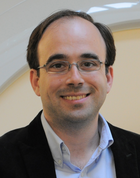
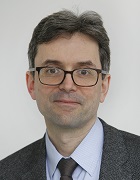
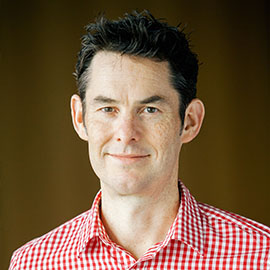
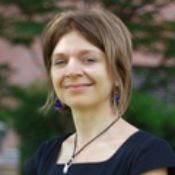
Katharina Kaiser is affiliated with TU Wien's Fachbereich Software Services. She specializes in medical informatics with a focus on computerized clinical guidelines and healthcare system optimization. Her work bridges temporal data analysis, information extraction from clinical texts, and workflow modeling in medical contexts. Key areas: Clinical decision support systems, guideline implementation frameworks, temporal logic in healthcare processes Notable contributions: Development of TimeML-based clinical guideline modeling, heuristic methods for condition-action sentence identification Her research emphasizes semantic enrichment of medical documents and interactive visualization tools for therapy planning and patient data correlation. Collaborations include the PROTOCOL project and ReMINE deliverables in adverse risk management.
**Dr. Bahar Candas Altınbaş** is an Assistant Professor in the Nursing Department at Karadeniz Technical University's Faculty of Health Sciences, specializing in Surgical Nursing. She holds a PhD from Karadeniz Technical University (2019) and has extensive academic and clinical experience in surgical nursing, patient safety, and perioperative care. Her research focuses on reducing patient anxiety through innovative education methods, surgical nursing practices, and enhancing recovery protocols. Education: PhD: Karadeniz Technical University (2019), Surgical Nursing MSc: Karadeniz Technical University (2014), Surgical Nursing BSc: Karadeniz Technical University (2010), Nursing Research Interests: Patient safety in surgical environments Perioperative anxiety management Enhanced recovery after surgery (ERAS) protocols Evidence-based nursing practices Web-based patient education Health literacy and vaccination hesitancy Key Contributions: Developed a web-based education program reducing thyroidectomy patients' anxiety (randomized controlled trial) Authored studies on surgical nurses' compassion satisfaction/ fatigue and spiritual care practices Contributed to global patient safety initiatives through WHO surgical checklist research Published 113+ papers in indexed journals like Journal of PeriAnesthesia Nursing and Pakistan Journal of Medical Sciences Awards & Recognition: Doctoral Thesis Award (2019, Surgical Nursing Congress) Onursal Başkan Mansiyon Award (2015) Recipient of prestigious research fellowships at University of Oslo (2017, 2019) Professional Roles: Member of Turkish Surgical and Operating Room Nurses Association Member of KTÜ Nursing Alumni Board Vice President of Professional Education Development Commission
Prof. Dimitrios Karampinos is a Professor at the Technical University of Munich (TUM), leading the Experimental Magnetic Resonance Imaging group within the TUM School of Medicine and Health. He specializes in developing novel MRI techniques for quantitative biomarker discovery, focusing on musculoskeletal, metabolic, and oncological applications. His career includes a PhD from the University of Illinois (2008), postdoctoral research at UCSF (2009–2012), and leadership roles at TUM since 2012. Prof. Karampinos has pioneered advancements in MRI reconstruction, signal modulation, and biomarker validation for clinical translation. Educations: BSc in Mechanical Engineering (National Technical University of Athens, Greece), PhD in Biomedical Engineering (University of Illinois, Urbana-Champaign, 2008). Research Interests: Development of MRI measurement techniques, quantitative biomarkers for disease diagnosis, and improving therapy monitoring. Key areas include musculoskeletal disease imaging, metabolic disorder assessment, and oncology applications. His work emphasizes translating research into clinical practice through innovations like accelerated imaging, artifact correction, and AI-driven analysis. Awards: ERC Starting and Proof of Concept Grants (2015, 2019), TUM Supervisory Award (2020), ISMRM Junior Fellow (2011). Grants: Multiple ERC grants for MRI method development. Labs/Teams: Leads the Experimental Magnetic Resonance Imaging group at TUM, collaborating on clinical and technical MRI advancements.
Prof. Wolfgang Weber is a Professor and Director of the Department of Nuclear Medicine at the Klinikum rechts der Isar, Technical University of Munich (TUM). His academic career includes roles such as Associate Professor at UCLA (2003–2007) and Chair of Nuclear Medicine at Albert Ludwig University of Freiburg (2007–2013). He specializes in molecular imaging and targeted radionuclide therapy, with a focus on cancer theranostics. His research addresses precision oncology through advanced imaging techniques for diagnosis and treatment monitoring. Education: Doctorate in Medicine from TUM (1995). Key prior appointments include Director of the Molecular Imaging and Therapy Service at Memorial Sloan Kettering Cancer Center (2013–2017) and Professor at Weill-Cornell Medical College. His work spans prostate cancer imaging, neuroendocrine tumors, and radiopharmaceutical development. Research interests emphasize integrating imaging modalities like PET/CT and SPECT for cancer staging, therapy response prediction, and novel radiotracer development. Notable contributions include PSMA-ligand PET imaging for prostate cancer recurrence detection and PARP inhibitor engagement studies in lung cancer. Publications highlight innovations in theranostic agents, such as 18F-rhPSMA-7 and Ga-68-based tracers. His work frequently addresses clinical trial validation of imaging biomarkers and dosimetry safety in radiolabeled therapies.
Professor Paul Hodges is a leading academic and researcher in motor control, pain, and rehabilitation at The University of Queensland (UQ). He holds the title of NHMRC Leadership Fellow (Level 3) and serves as Director of the Centre for Innovation in Pain and Health Research (CIPHeR). His interdisciplinary work spans molecular biology to human function, with a focus on understanding pain mechanisms and developing evidence-based treatments. Hodges is a Fellow of the Australian Academy of Science and multiple professional bodies, reflecting his significant contributions to musculoskeletal and clinical science. Education: Doctor of Philosophy (The University of Queensland) Doctor of Philosophy (Karolinska Mediko Kirurgiska Institutet) Doctoral Diploma of Science (Advanced, UQ) Honorary Doctorate in Medicine (Ghent University) Research Interests: Pain mechanisms and targeted therapies Motor control adaptations in musculoskeletal disorders Rehabilitation strategies for chronic pain Pelvic floor dysfunction and continence Low back pain pathophysiology and flares Neuroimmune interactions in chronic pain Awards & Leadership: Five-time ISSLS Prize recipient (Basic and Clinical Science) Fellowships from the Australian Academy of Science and Health and Medical Science Chair of international task forces (e.g., IASP Terminology Task Force) Recipient of national awards including Young Australian of the Year (1997) Research Impact: Hodges' work has transformed understanding of pain-induced motor adaptations, leading to clinical innovations in back pain management, pelvic floor rehabilitation, and continence treatments. His research integrates biomechanical, neurophysiological, and molecular approaches to bridge basic science and clinical practice.
Goodarz Danaei is the Bernard Lown Professor of Cardiovascular Health at the Harvard T.H. Chan School of Public Health, affiliated with the Department of Global Health and Population and the Department of Epidemiology. He holds a medical degree from Tehran University and advanced degrees in epidemiology from Harvard. His research focuses on quantifying population-level impacts of risk factors and interventions on cardiovascular disease, especially in low- and middle-income countries. He leads global consortia analyzing cardiometabolic risk factors (NCD Risk Collaboration) and developed the GLOBO RISK cardiovascular prediction model used worldwide. His methodological work applies causal inference techniques like Marginal Structural Models and parametric G-formula to observational health data. He directs the Bernard Lown Scholars Program training global health leaders in cardiovascular disease prevention. Recent grants include NIH-funded studies on diabetes disparities and CVD training programs. Key achievements include: Developed first country-level CVD risk prediction tool Validated WHO risk models for Middle East Advanced causal inference methods for chronic disease research Trained over 100 mid-career professionals through Lown Scholars Research focuses on applying epidemiological methods to: Health disparities analysis Clinical preventive strategies Global CVD prevention policies Mediation analysis in chronic disease pathways Recent work emphasizes: Aspirin self-administration for acute cardiac events Statin therapy risks/benefits in aging populations Cardiometabolic risk modeling in diverse populations
Dr. Nicole Paraskeva is a Senior Research Fellow at the Centre for Appearance Research (CAR) within the Faculty of Health and Applied Sciences at the University of the West of England. She holds a Professional Doctorate in Health Psychology from UWE (2016) and an MSc in Health Psychology from the University of Bath (2011). Her research specializes in body image dynamics across clinical and community settings, with a focus on vulnerable populations including adolescents, cancer survivors, and individuals considering cosmetic procedures. She leads a multinational project evaluating body acceptance interventions in partnership with the World Association for Girl Guides and Girl Scouts and Unilever's Dove Self-Esteem Project. Methodologically, she employs: Randomized controlled trials Systematic reviews Qualitative analysis of patient experiences Shared decision-making tool development Her work integrates partnerships with NHS England, Breast Cancer Now, British Association of Aesthetic Plastic Surgeons, and Department of Health. She frequently presents on body image, psychosocial oncology, and cosmetic surgery ethics.
Roman Vangoitsenhoven serves as an Assistant Professor at KU Leuven's Faculty of Medicine within the Department of Chronic Diseases and Metabolism. He leads the Subdivision Metabolic unit at the Clinical and Experimental Endocrinology research group (UZ Herestraat 49, box 7003, 3000 Leuven) and holds membership in both the Council of the Faculty of Medicine and the Council of the Department of Chronic Diseases and Metabolism. His research focuses on obesity and diabetes, with particular emphasis on GLP-1 based pharmacotherapy , bariatric surgery outcomes , and cardiometabolic health optimization . Current projects investigate neuropsychobiological approaches to patient selection for weight management therapies, de novo serine biosynthesis in obesity-related cardiac dysfunction, and data-driven interventions for type 2 diabetes management in diverse populations including low-income settings and urban Uganda. Analysis of his 2025 publications reveals a strong thematic concentration on translational obesity research , with recurring subfields spanning pharmacotherapy mechanisms, surgical outcomes, nutritional interventions, and metabolic monitoring technologies. His work demonstrates consistent collaboration across European institutions with significant contributions to clinical guidelines development. Member of Faculty of Medicine Council Member of Department of Chronic Diseases and Metabolism Council Dr. Vangoitsenhoven actively supervises multiple major research projects including a €2.3M ERC-funded study on GLP-1 pharmacotherapy optimization (2025-2029) and international collaborations on diabetes management in low-resource settings. His teaching portfolio includes advanced courses in clinical nutrition, disease mechanisms, and evidence-based medicine within KU Leuven's medical curriculum. He leads the Clinical and Experimental Endocrinology unit's metabolic research subdivision, directing a multidisciplinary team of 12 researchers focused on obesity-diabetes pathophysiology and therapeutic interventions. Current initiatives include the SABO cohort study on post-bariatric sarcopenia in elderly patients and development of digital health tools for personalized diabetes management.
Natalia Shcherbakova is an Associate Professor of Pharmacoeconomics at Western New England University's College of Pharmacy, Department of Pharmaceutical & Administrative Sciences. Her career bridges academic research with industry experience from pharmaceutical companies like Novartis Pharma and Biogen Idec, as well as health policy consulting at Avalere Health. Doctor of Philosophy - University of Texas at Austin College of Pharmacy Master of Science - University of Texas at Austin College of Pharmacy Specialist (Pharmacy) - Perm State Pharmaceutical Academy, Russia Dr. Shcherbakova specializes in real-world population-based studies of medication outcomes, including effectiveness, safety, pharmacoeconomics, and adherence to chronic therapies. Her research also explores the transformative role of social media and participatory medicine in healthcare delivery systems. She has conducted extensive evaluations of pharmacist-delivered interventions in managed care programs and has contributed to understanding medication use patterns in epilepsy and opioid use disorder treatments. Her scholarly work spans pharmacoeconomic analyses of cardiovascular medications, critical care sedation protocols, and medication therapy management delivery methods. She has investigated healthcare cost reduction strategies and evaluated pharmaceutical education curricula, particularly focusing on global industry training. Her publications and conference presentations demonstrate a commitment to advancing evidence-based pharmacy practice through empirical research. Dr. Shcherbakova teaches courses in healthcare policy, pharmacy outcomes research, literature evaluation, and global pharmaceutical industry contexts. Her work combines academic rigor with practical industry insights, making significant contributions to pharmacoeconomics and healthcare policy domains.
Laura Wherry is an Associate Professor at NYU Wagner Graduate School of Public Service and a Research Associate at the National Bureau of Economic Research in the Economics of Health program. During the 2024-2025 academic year, she served as the Senior Economist for health care on the President's Council of Economic Advisers. Her academic journey includes previous positions as an assistant professor at the David Geffen School of Medicine at UCLA and a Robert Wood Johnson Foundation Health & Society Scholar at the University of Michigan. Dr. Wherry received her Ph.D. in Public Policy from the University of Chicago's Harris School and her B.A. from the College of William and Mary. Her educational background has prepared her for impactful research at the intersection of health economics and public policy. Dr. Wherry's research focuses on the role of public programs and policies on the health and economic well-being of individuals in the US, with a particular interest in policies affecting access to health care for women and children in lower income families. Her work spans several critical areas including health economics , public policy , Medicaid policy , and maternal and child health . She has made significant contributions to understanding how insurance coverage affects birth outcomes, the economic consequences of abortion access, and the long-term impacts of public health programs. Her recent research has examined state public coverage policies for pregnant undocumented immigrants, the labor market and health impacts of reducing cesarean deliveries, and public coverage of postpartum services for immigrants. Dr. Wherry's work often utilizes large-scale administrative data to provide rigorous evidence for policy decisions, with a focus on health disparities and economic inequality in health outcomes. Equity, Diversity, and Inclusion Research Prize Winner (2024) Dr. Wherry has received significant recognition for her work, with multiple papers cited in White House economic reports and featured in major media outlets including NPR, STAT, and PBS. Her research on immigrant postpartum health was highlighted on NPR's Academic Minute, and her work on state restrictions affecting postpartum immigrant health has been covered by major news outlets. Her research bridges academic scholarship and practical policy applications, making significant contributions to evidence-based health policy development.
Tyler Bold, MD, PhD serves as Associate Professor in the Division of Infectious Diseases and International Medicine within the Department of Medicine at the University of Minnesota Medical School. He concurrently holds faculty appointments in the Microbiology, Immunology and Cancer Biology (MICaB) Ph.D. Graduate Program and the Department of Medicine, establishing a multidisciplinary research presence spanning infectious disease pathogenesis, immunology, and host-pathogen interactions. His research program integrates clinical infectious disease expertise with fundamental immunological investigation, focusing on tuberculosis host-directed immunotherapy, SARS-CoV-2 pathogenesis mechanisms, and macrophage biology in atherosclerosis. Key interests include T cell costimulation in granulomatous diseases, viral-microbiome interactions during respiratory infections, and diagnostic innovations for resource-limited settings. His work bridges basic science discovery with translational clinical applications, particularly in immunocompromised populations and complex infectious syndromes. Analysis of his 15 most recent publications reveals dominant research trajectories in tuberculosis immunology (40% of articles), SARS-CoV-2 pathogenesis and therapeutics (35%), and atherosclerosis immunometabolism (15%), with emerging work on fungal infections in hematologic malignancies. The publications demonstrate consistent use of advanced techniques including single-cell resolution analysis, structural biology, and randomized clinical trials, reflecting both mechanistic depth and clinical relevance across infectious disease subspecialties.
Professor Lynda Wyld is a leading academic and clinician in surgical oncology at the University of Sheffield, affiliated with the School of Medicine and Population Health. She serves as Professor of Surgical Oncology and is an Honorary Consultant Breast Surgeon at the Jasmine Breast Centre, Doncaster. Her extensive clinical and research work focuses on improving outcomes for older women with breast cancer. Lynda Wyld earned her medical degree (MBChB) and PhD from the University of Sheffield in 1990. She completed basic surgical training in Leeds and higher surgical training across Sheffield, Nottingham, and Manchester. She was appointed Consultant and Senior Lecturer at the University of Sheffield in 2002. Her research interests center on surgical oncology, particularly breast cancer in older women, treatment decision-making, quality of life, and de-escalation of therapy. She leads the multicentre 'Age Gap' trial, which investigates optimal care pathways and decision support tools for older women with breast cancer. Her work also spans psychosocial outcomes in familial breast cancer, epigenetic modifiers of BRCA, and axillary surgery trends. Her recent publications (2023–2025) reflect a strong focus on geriatric oncology, patient-reported outcomes, and surgical decision-making. Key themes include frailty assessment, long-term outcomes of breast reconstruction, patient satisfaction with mastectomy without reconstruction, and global trends in axillary surgery de-escalation. Her research combines clinical trials, cohort studies, and qualitative methods. Chief Investigator, Age Gap Trial Collaborator with University of Cardiff, SCHARR, and Sheffield Hallam University Active contributor to European guidelines in breast cancer surgery Professor Wyld has supervised and collaborated with numerous researchers and clinicians, including J. Morgan, M. Reed, K. Collins, and others. She has no listed scientific awards in the provided text. She leads a multidisciplinary research group focused on improving cancer care for older and vulnerable populations.
Lei Zhang is a Professor (Research) and Head of the Artificial Intelligence and Modelling in Epidemiology Program at the School of Translational Medicine, Monash University, Australia. He holds adjunct roles at institutions like Tsinghua University and is a consultant to the WHO Western Pacific Region. His expertise spans HIV/STI epidemiology, mathematical modelling, and AI-driven healthcare solutions. Education: Bachelor of Advanced Science in Mathematics (University of Sydney, 2001) Master of Science in Applied Mathematics (University of Sydney, 2003) PhD in Medicine (UNSW, 2006) Master of Public Health (Hamburg University of Applied Sciences, 2009) Research Interests: Prof. Zhang focuses on cross-disciplinary research in HIV/STI epidemiology, AI applications for disease modeling and diagnostics, health economics, and global health policy. His work integrates mathematical models with clinical data to optimize interventions and inform policy. Key Projects: HOPE: Optimizing HIV Pre-Exposure Prophylaxis (PrEP) in East Asia WHO Collaborations: Supporting global STI programs and policy development China-Australia Joint Research Center for Infectious Diseases Awards: 2021 ASRHA Innovation Award for HIV/STI research contributions Advising & Grants: Supervised 21 students (6 PhD, 15 MSc) and currently co-supervises 24 students (11 PhD, 13 MSc). Leader of 5+ major research grants, including NHMRC-funded projects on STI control and diabetes research. Labs/Teams: Leads the AI & Modelling in Epidemiology Program and collaborates with global networks like UNAIDS, the World Bank, and ministries of health across the Western Pacific region.
Nicole Magaldi is a Professor in the Department of Communication Sciences and Disorders at Long Island University, School of Health Professions. With over 20 years of clinical experience in hospitals, early intervention, schools, and private practice, she brings a strong applied perspective to her academic work. Her expertise centers on child language disorders, particularly Developmental Language Disorder and Autism Spectrum Disorder. Educational Background: B.S., Cortland University M.A., Kean University Ph.D., New York University Dr. Magaldi's research focuses on evidence-based practice in child language disorders, clinical education methods, and the impact of reproductive factors on neurodevelopmental outcomes. She has published extensively on terminology navigation, pedagogical tools like problem-based learning, and early identification of autism. Her work bridges clinical practice and academic training, emphasizing practical solutions for clinicians and educators. The recent publications highlight a growing interest in integrating educational strategies with clinical rigor, particularly in training future speech-language pathologists. Her research also explores environmental and reproductive risk factors associated with Autism Spectrum Disorder, contributing to broader public health understanding. Scientific Awards: Dissertation of the Year, New York University Dr. Magaldi is actively involved in professional development through her membership in the American Speech-Language-Hearing Association (ASHA) and service on the Professional Development Committee for ASHA’s Special Interest Group 1 (SIG 1). While specific grant details are not listed, her sustained research output suggests ongoing scholarly and possibly funded activity. She mentors graduate students through research collaboration and clinical supervision, though no named advisees are listed. She is affiliated with the Department of Communication Sciences and Disorders, which operates under the School of Health Professions at LIU. Her work contributes to both clinical innovation and academic advancement in speech-language pathology.
Dr Juliana Souza de Oliveira is a Postdoctoral Research Fellow at the Institute for Musculoskeletal Health , a partnership between the University of Sydney and Sydney Local Health District. She holds an Adjunct Senior Lecturer position at the Sydney School of Public Health , Faculty of Medicine and Health. Her research focuses on physical activity interventions to promote healthy ageing and prevent falls in older populations, particularly through yoga and digital health (teleyoga) programs. Primary Affiliation: University of Sydney Sub-Affiliation: Sydney School of Public Health Research Partners: Sydney Local Health District, WHO, NHMRC Research Themes include fall prevention , healthy ageing , digital health interventions , and physical activity promotion . Her work spans clinical trials, systematic reviews, and meta-analyses, with a focus on community-dwelling older adults. Recent Publications (2024-2015) address topics such as fall risk factors , yoga-based interventions , sarcopenia in chronic kidney disease , cost-effectiveness of exercise programs , and teleyoga adoption during pandemics . These studies employ methodologies like randomised controlled trials , systematic reviews , and realist evaluations . Scientific Awards and Grants include funding from the Physiotherapy Research Foundation , NHMRC , and AHRA Women's Health Research Network . Her work also intersects with organisations like the Australian Association of Gerontology and International Society of Behavioral Nutrition & Physical Activity (ISBNPA) . Advisory and Collaborative Efforts extend to Charlotte KILMARTIN and Ima STRKLJEVIC , with whom she explores inpatient fall reduction and physiotherapist-led activity promotion . She collaborates extensively on NHMRC-funded trials and WHO guideline development .