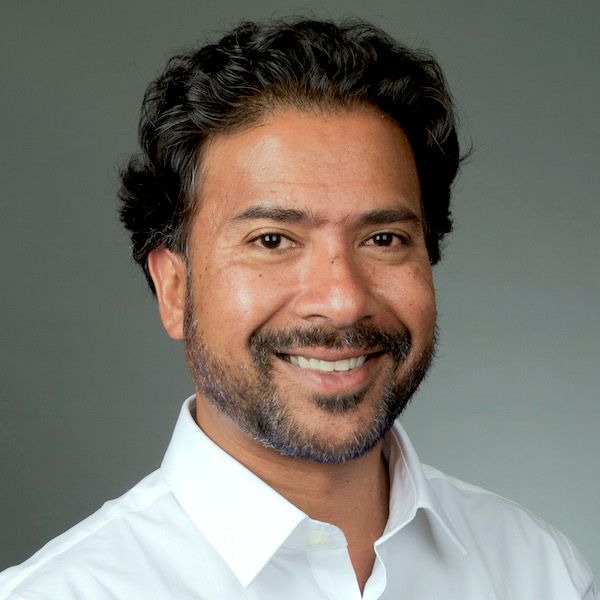
Joé T. Martineau is an Associate Professor in the Department of Management at HEC Montréal, holding the Chair in Organizational Ethics and AI Governance. He also co-leads IVADO's R3 AI research program and is a regular member of OBVIA. His expertise spans organizational ethics, neuroethics, healthcare administration, and AI governance. He earned a joint PhD and M.Sc. in Management from HEC Montréal. His research focuses on the ethics and governance of AI, outcomes of ethics programs, and developing ethical competence in organizations. Recent work includes studies on AI in healthcare, crisis management in sports, and patient engagement in cancer care. Dr. Martineau has been recognized with the 2024 Best Practical Solutions Award (with Audrey-Anne Cyr), the 2022 HEC Montréal Pedagogical Innovation Award, and the 2020 Excellence in Teaching Award. He teaches courses on organizational ethics and responsible research conduct. He has supervised 13 graduate students and contributed to over 30 peer-reviewed articles, books, and case studies. His work bridges ethical theory with practical applications in management and AI development.
Mark W. Newman is an Associate Professor in the School of Information at the University of Michigan, with a joint appointment in the EECS Department. His research focuses on human-computer interaction, ubiquitous computing, and health informatics, emphasizing the design of technologies that integrate seamlessly into everyday life. He teaches courses on user experience research, programming, and application development, contributing to curriculum design efforts such as the User Experience Design track and programming curricula for undergraduate and graduate programs. His work spans smart home technologies, mobile health interventions, and collaborative health management systems. Notably, he collaborates across disciplines to address challenges in healthcare technology, including patient-generated data integration and sustainable energy solutions. Newman actively mentors students and leads design projects that prioritize user-centered approaches, such as the UX Research & Design Specialization on Coursera. His recent scholarship explores adaptive mHealth interventions, context-aware systems, and participatory design methods to enhance health equity.
Aida Maria de Oliveira Cruz Mendes is a distinguished academic and researcher at the Coimbra School of Nursing, where she has maintained a continuous appointment since 1987. With over three decades of academic service, she has established herself as a leading expert in nursing science with particular specialization in mental health, occupational health, and sleep quality among healthcare professionals. She currently serves on the Scientific Council for Life and Health Sciences at the Foundation for Science and Technology, demonstrating her significant contribution to Portuguese scientific policy. Education background: PhD from University of Minho (1996-2000) Master's in Occupational Health and Hygiene from University of Coimbra Medical School (1992-1995) License in Mental Health and Psychiatric Nursing (1990-1991) Bachelor's degree in Nursing (1977-1980) Multiple specialized certifications in psycho-oncology, cognitive therapy, and qualitative research Dr. Mendes' research program demonstrates remarkable consistency in addressing critical issues in nursing practice and healthcare delivery. Her work spans mental health services evaluation, occupational health challenges faced by nursing staff, sleep quality determinants in healthcare settings, and innovative programs for healthy aging and retirement transition. She has developed expertise in both qualitative and quantitative methodologies, with numerous systematic reviews and intervention studies to her credit. Her research bridges clinical practice with health promotion initiatives, creating tangible impacts on nursing education and healthcare policy. Analysis of her recent publication trajectory reveals a sophisticated evolution in research focus. While maintaining consistent attention to nursing staff wellbeing (particularly regarding sleep quality and stress biomarkers), she has expanded into developing and evaluating health promotion programs, most notably the REATIVA program for retirement transition. Her work increasingly incorporates international collaborations and demonstrates methodological sophistication, with publications appearing in multiple languages (Portuguese, English, and Spanish) across diverse healthcare contexts. Research funding highlights: Active Retirement: study of a healthy ageing promotor program (2013-2015) funded by Foundation for Science and Technology Mental Health Education and Sensibilization: A School-based Intervention Program for Adolescents and Young (2011-2014) funded by Foundation for Science and Technology Dr. Mendes has supervised numerous graduate students and collaborated extensively with international research teams, particularly in European nursing education contexts. Her work on nurse professional competence assessment among newly graduated nurses demonstrates her commitment to advancing nursing education standards. She maintains active research partnerships with institutions across Portugal and internationally, contributing to both clinical practice improvements and healthcare policy development.
Raquel E. Aldana is the Martin Luther King Jr. Professor of Law at UC Davis School of Law, where she rejoined as a full-time faculty member in 2020 after serving as Associate Vice Chancellor for Academic Diversity (2017–2020). She holds a J.D. from Harvard Law School and B.A. degrees in English and Spanish from Arizona State University (summa cum laude). Her academic career includes prior roles at the McGeorge School of Law and the University of Nevada, Las Vegas, as well as a Fulbright Scholarship in Guatemala (2006–2007). Her research focuses on transitional justice, criminal justice reform, sustainable development in Latin America, and immigrant rights. Aldana has authored or edited five books and over thirty law review articles, earning recognition through grants such as the UC Davis Academic Senate Interdisciplinary Grant for the project Building Bridges: Narrowing the Legal-Scientific Divide in Immigration Forensic Assessments . She teaches courses on immigration law, asylum, comparative forced displacement, and critical race theory. Aldana leads the Aoki Center for Critical Race and Nation Studies, co-directing its mission to advance interdisciplinary scholarship on race, ethnicity, and law. She co-founded the Critical Race Theory Book Series with UC Press, aiming to globalize and diversify critical race discourse. Her awards include the ABA’s Margaret Brent Women Lawyers of Achievement Award and the UC Davis Chancellor’s Achievement Award for Diversity. Her service includes roles on the American Law Institute, American Bar Foundation, and the Council on Foreign Relations. She chairs the ABA’s Latin America and Caribbean Council and co-chaired the UC Davis taskforce to achieve Hispanic Serving Institution (HSI) status, realized in 2024. Her work integrates legal education, policy reform, and grassroots advocacy to address systemic inequities in migration, criminal justice, and global development.
Mick Cooper is a Professor of Counselling Psychology at the University of Roehampton, leading the School of Psychology's Centre for Research in Psychological Wellbeing (CREW). He holds qualifications including a DPhil and is a chartered psychologist with fellowships from the British Association for Counselling and Psychotherapy (BACP) and the Academy of Social Sciences (AcSS). His work focuses on humanistic, existential, and pluralistic therapies, emphasizing shared decision-making, therapy personalization, and youth mental health. Education: DPhil in Psychology. Professional Affiliations: BACP Fellow, Associate Fellow of the British Psychological Society (BPS), and member of the Society for Humanistic Psychology (APA). Research Interests Cooper's research explores preferences in therapy, relational depth, goals in therapy, and the interface between psychological practice and social change. His projects include school-based counselling trials and evaluations of humanistic therapy efficacy. Key contributions include co-developing the pluralistic therapy approach with John McLeod and validating tools like the Relational Depth Frequency Scale (RDFS). Awards & Recognition 2023: BACP Outstanding Research Award for the ETHOS Project. 2014: Carmi Harari Mid-Career Award from APA's Division 32. 2005: Recognised Achievement in Counselling and Psychotherapy. Grants & Projects Current projects include randomized trials on school-based humanistic counselling and nutrition's role in mental health. He leads the CREST Research Clinic and collaborates on studies like 'Puzzle Therapy and Mental Health.' Labs & Teams As Acting Director of CREW, Cooper oversees research on psychological wellbeing, therapy personalization, and youth mental health interventions. His team includes postgraduate researchers like Sally-Ann Adams and Charlotte Jakson.
Dr. Prerna Arora is Associate Professor of Psychology and Education at Teachers College, Columbia University, within the Graduate School of Education, Health & Psychology and the Department of Health Studies & Applied Educational Psychology. She directs the School Mental Health for Minoritized Youth and Families (SMILE) Research Lab, where she leads innovative research on mental health equity for immigrant-origin, racial and ethnic minoritized, and historically marginalized youth. Ph.D. in School Psychology – University of Texas at Austin M.A. in Educational Psychology – University of Texas at Austin B.S. in Biology – Arizona State University Predoctoral Internship – Children’s Hospital of Philadelphia Postdoctoral Training – University of Maryland School of Medicine Dr. Arora’s research focuses on culturally tailored mental health interventions, school-based services, barriers to care, and trauma-informed, equity-driven practices. Her work is grounded in participatory action research and mixed methods, aiming to bridge research-practice gaps and empower communities. She has led major funded projects from the Spencer Foundation, National Institute of Mental Health (NIMH), and the U.S. Department of Education, including a $4.9 million grant to train clinicians in culturally responsive services. Her recent publications reflect a strong thematic focus on mental health disparities, cultural adaptation of interventions, school climate, and help-seeking behaviors among AAPI, Latino/a, and immigrant youth. The body of work demonstrates a commitment to advancing equity, social justice, and measurement-based care in school psychology. American Psychological Association Minority Fellowship Program Spencer Foundation Research Grant NIMH Funding U.S. Department of Education OSEP Grant ($4.9 million) Dr. Arora actively mentors PhD and graduate students, many of whom co-author her publications. She has secured major grants that support training, research, and community partnerships. Her leadership extends to editorial roles as Associate Editor of School Mental Health and Consulting Editor of School Psychology Review , and she is a vocal advocate for diversity, equity, and inclusion in academic training and practice. She collaborates extensively with NYC-based organizations, building community-driven research models through the SMILE Lab.
Jana Cason, DHSc, OTR/L is a Professor in the Department of Occupational Therapy at the Graduate College of Health Sciences, Hawai'i Pacific University. With a career spanning diverse practice settings—including hand therapy, outpatient rehabilitation, and telehealth—she has significantly advanced the use of telehealth in occupational therapy through research, policy development, and international collaboration. Doctorate in Health Science (DHSc) from the University of Indianapolis MHS and BS in Occupational Therapy from the University of Indianapolis and University of Alabama at Birmingham Her research focuses on telehealth implementation, compassionate care, and early intervention. She has authored peer-reviewed articles, book chapters, and standards for telehealth practice, and serves as Senior Associate Editor for the International Journal of Telerehabilitation . Dr. Cason has presented globally and contributed to resolving licensure portability challenges for telerehabilitation professionals. Fellow of the American Occupational Therapy Association (FAOTA) Developer of telehealth protocols and frameworks Advocate for uniform state licensure requirements She integrates clinical practice, research, and education, emphasizing cultural competence in Hawaiian and Pacific Asian contexts while maintaining three rescue dogs and cats with her family.
Eric Y. Drogin is an Adjunct Professor and Honorary Professor with dual expertise in clinical psychology and law. He is affiliated with Harvard Medical School, serving on the staff of the Forensic Psychiatry Service at Beth Israel Deaconess Medical Center, and is involved in the Harvard Longwood Psychiatry Residency Training Program. He also teaches at the University of New Hampshire School of Law and lectures internationally at Prifysgol Aberystwyth (formerly University of Wales) in both Psychology and Law. His work integrates mental health and legal systems through research, education, and practice. Education: Doctor of Philosophy (Ph.D.) in Clinical Psychology – Hahnemann University Juris Doctor (J.D.) – Villanova University School of Law Dr. Drogin's research interests center on the intersection of psychology, psychiatry, and law, particularly in forensic assessment, expert testimony, ethics, and mental disability law. His work emphasizes multidisciplinary approaches to legal and clinical challenges, supporting both mental health professionals and attorneys. He regularly presents continuing education seminars across North America, Europe, Asia, and Australia. His scholarly publications span criminal and civil law applications of psychological evidence, guardianship evaluation, forensic assessment standards, and the role of mental health professionals in court. These works reflect a consistent focus on improving legal processes through scientific rigor and ethical practice. Scientific Honors and Professional Recognition: Fellow of the American Psychological Association Fellow of the American Academy of Forensic Psychology Diplomate, American Board of Forensic Psychology Diplomate, American Board of Professional Psychology Life Fellow, American Bar Foundation Dr. Drogin has held leadership roles in major professional organizations, including President of the American Board of Forensic Psychology, Chair of APA committees on Legal Issues and Professional Practice, and Co-Chair of the ABA’s Behavioral & Neuroscience Law Committee. He serves as Editor-in-Chief of The Journal of Psychiatry & Law and has co-authored over 250 publications. While formal student advising is not detailed, his instructional roles in residency programs and trial workshops indicate active mentorship. He is a key figure in advancing forensic psychology through education, policy, and interdisciplinary collaboration.
Professor Juliet Foster is Dean of Education at the Institute of Psychiatry, Psychology & Neuroscience (IoPPN), King's College London. Previously, she served as Deputy Dean of Education at the Psychology Department since 2018 and held academic roles at the University of Cambridge as Senior Tutor and Senior Lecturer. King's College London (2018–present) University of Cambridge (prior to 2018) Her research focuses on public understandings of mental health, student wellbeing, and sociocultural psychology. She employs qualitative and mixed-methods approaches, contributing to the development of the 'whole university' mental health strategy. Juliet collaborates with Student Minds, the UK student mental health charity, and serves as an Assessor for the University Mental Health Charter. Key projects include evaluating peer support systems, studying loneliness in students, and analyzing media representations of mental health and homelessness. Her work aligns with the UN Sustainable Development Goal of Quality Education. Scientific Awards: British Psychological Society Social Psychology Section Award for the Most Outstanding PhD She co-chairs King's College London's Steering Committee on Student Mental Health and Wellbeing and has served on the British Psychological Society's Education and Training Board. Her research has been funded by ESRC, AHRC, and NIHR.
Urban Johnson is a Professor at Halmstad University's School of Health and Welfare, specializing in sports psychology with a focus on sustainable participation in sports, health, and physical activity. His research examines psychological aspects of sports injury (pre- and post-injury) and healthy athletic engagement, particularly through pandemic-era studies of Swedish upper secondary sport students. Johnson's research interests center on: Psychological mechanisms in sports injury rehabilitation and prevention Adolescent athlete mental health and dropout dynamics Pandemic impacts on sport education systems Gender-specific responses to athletic challenges Longitudinal behavioral patterns in youth sports His work integrates qualitative analysis of student-athlete experiences with clinical psychology frameworks. His publication trends reveal intense focus on pandemic-related disruptions (2020-2025), with 12 of 15 recent articles examining COVID-19's impact on student-athletes, teachers, and sports systems. Key thematic clusters include: Sport injury psychology (ACL re-ruptures, prevention) Adolescent mental health during crises Fun/motivation dynamics in youth sports Cross-contextual leadership challenges Johnson actively supervises students at basic, advanced, and doctoral levels while teaching methodology courses. His collaborative projects include the Karolinska Football Injury Cohort Study and consensus statements on sport injury psychology. Current work emphasizes cocreation of injury prevention programs and psychological support services for elite handball.
Kay James is an Associate Professor of Neuroscience and Education at Teachers College, Columbia University, and serves as Director of the Graduate Program in Neuroscience and Education and the Neurocognition of Language Lab. Their work focuses on neural mechanisms underlying language disorders, second language acquisition, and cognitive processes in schizophrenia. Key affiliations include Biobehavioral Sciences, Neuroscience and Education, Human Development, and Cognitive Science in Education. Research interests emphasize the neural basis of language processing in pathological contexts such as developmental speech disorders and schizophrenia, alongside second language acquisition in adults. Their interdisciplinary approach bridges cognitive neuroscience with clinical and educational interventions. Publications span studies on mismatch negativity in speech disorders, syntactic development in Arabic diglossia, and brain-behavior asymmetry in schizophrenia. Ongoing work explores voice-related cortical potentials and emotional face processing through electrophysiological methods. Labs and teams include the Neurocognition of Language Lab, focusing on language neurobiology and clinical applications. Grants and advising roles are not explicitly detailed in the provided materials.
Julia Kurz is a Researcher at TU Dortmund University's Department of Sociology of Science and Technology, Faculty of Social Sciences. She leads the 'Visually Integrated Clinical Collaboration' project within the Collaborative Research Center (SFB) Media of Cooperation. Her work spans healthcare informatics, educational research, and disability studies. Education: M.A. in Sociology from the University of Siegen (2011), with prior studies at Philipps-University Marburg. Professional experience includes research roles at the University of Siegen (2012–2023) and support work with disabled populations (since 2001). Research focuses on information workflows in hospitals, collaborative data practices, and participatory technology design. Recent talks address topics like disempowerment in participation frameworks and challenges in transdisciplinary research. Her publications explore medical visualization tools, mentoring impacts, and role-playing pedagogy. Award recognition details are not explicitly listed, but her grants include SFB funding for the Media of Cooperation project. Advising activity is not documented here. She contributes to seminars on competence, knowledge theory, and educational innovation.
Ahmed Ferhadi is a Clinical Professor of Middle Eastern & Islamic Studies at New York University (NYU), specializing in linguistics with a focus on Second Language Acquisition, Sociolinguistics, and Language Testing. He holds a PhD in Linguistics from the University of Michigan (1990), an MA in Teaching Arabic as a Foreign Language (TAFL) from the same institution, and an M.S. in Applied Linguistics from the University of Edinburgh. His teaching career spans institutions like Princeton University, Columbia University, and Kurdish universities such as Salahuddin and Suleimaniyya Universities. He pioneered video-based language performance evaluation methods during his tenure at Middlebury College in 1991, which became a standard practice. Ferhadi has also served in high-level advisory roles, including President of the Association of American Teachers of Arabic (AATA) since 2017 and Distinguished Global Scholar of Kurdish Studies at American University (2010). Research interests include Kurdish language standardization, advanced Arabic pedagogy, and the sociopolitical dimensions of language. His projects include a Kurdish standardization initiative and curriculum development for advanced Arabic learners. Ferhadi has received numerous accolades, including the Golden Teaching Award (NYU 2000) and Top Language Award (U.S. Department of State 2006). His publications span linguistic theory, pedagogical techniques, and cultural studies, with recent works addressing Arabic dialect dynamics and Kurdish language policy. Ferhadi’s work bridges academic rigor with practical applications, emphasizing technology’s role in modern language education.
Kamal Sen is an Associate Professor in the Department of Biomedical Engineering at Boston University, serving as Director of the Natural Sounds and Neural Coding Laboratory and Director of Admissions and Recruitment for Master’s Programs. He holds a PhD and MA in Physics from Brandeis University and a BA in Physics from Bates College. His research focuses on understanding how neurons encode natural sounds, particularly in the auditory cortex. Key areas include neural coding efficiency, hierarchical auditory processing, and the role of learning in shaping receptive fields. He developed the BOSSA algorithm to address sound segregation challenges in noisy environments, with applications for hearing aid technology. Sen’s work integrates electrophysiological techniques with theoretical approaches from signal processing, information theory, and systems theory. His lab explores neural discrimination of behaviorally relevant sounds and models cortical processing dynamics using computational frameworks. Recent studies investigate parvalbumin neuron contributions to temporal coding and cortical noise reduction in complex auditory scenes. His publications span neural circuit modeling, fNIRS applications in BCI, and biomimetic algorithms for auditory scene analysis. Research highlights include exploring schizophrenia-related gene effects on neural circuits and developing 3D neurosphere models for Parkinson’s disease.
Cristian Danescu-Niculescu-Mizil is an Associate Professor at the Department of Information Science , Cornell University . His research focuses on computational frameworks for social behavior analysis through large-scale natural language data , particularly in online communities and crisis counseling contexts. Recipient of WWW Best Paper Award (2013) and Yahoo! Key Scientific Challenges Award Co-developer of ConvoKit , a comprehensive conversational analysis toolkit Principal investigator in NLP for mental health , antisocial behavior detection , and linguistic coordination studies His work spans computational social science and human-centered AI , with recent publications in EMNLP 2025 , ACL 2025 , and CSCW 2025 focusing on conversation dynamics modeling , pivotal moment detection , and talk-time equity analysis . He has advised multiple PhD students who became faculty at Harvey Mudd , University of Michigan , and Thompson Reuters . Key scientific contributions : 2013 : WWW Best Paper - Power dynamics through linguistic coordination 2016 : IJCAI NLP & Journalism Best Paper - Gender bias quantification 2017 : ICWSM Best Paper - Trolling behavior analysis He teaches NLP and Social Interaction (INFO/CS 6742) and Language and Information (INFO/CS 4300) , with teaching resources including the Politeness Web App and ConvoWizard interactive tool featured in NPR's Weekend Edition . His work has been covered by New Scientist , NBC Today Show , and New York Times .