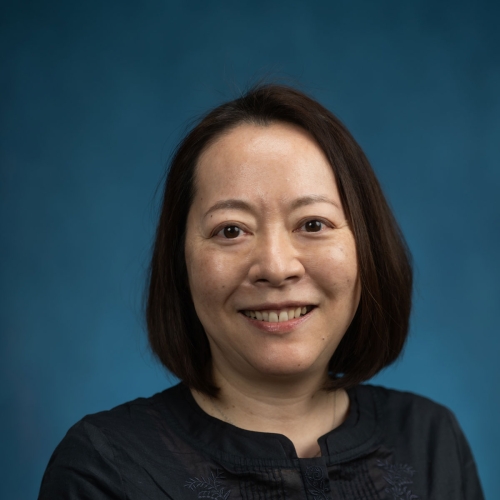
Professor Lynn Monrouxe is an Academic Lead for Health Professions Education Research and Convenor of Waranara, the University of Sydney's Health Professions Education Research Network. Her roles include Specialty Chief Editor in Healthcare Professions Education for Frontiers in Medicine . She holds affiliations with the Sydney Southeast Asia Centre and has global experience in the UK, Taiwan, and Australia. Her research focuses on healthcare professionalism, curriculum design, clinical education, and the societal responsibilities of healthcare professionals. Key themes include ethical dimensions of professionalism, ecological crisis implications for health, and innovative educational practices. She has led major initiatives like the Chang Gung Medical Education Research Centre in Taiwan and mentors HDR students. Recent work includes studies on diversity/equity in occupational therapy, dietetics graduates' employability, and emergency physicians' professional identities. She has contributed to foundational texts like Healthcare Professionalism and Foundations of Health Professions Education Research . Grants include the PRECISE Genomics Project (2023) and collaborations on rural medical education (Murray-Darling Network). Her work emphasizes interprofessional learning, workplace dignity, and global health challenges. Lynn's labs/teams include Waranara and the multidisciplinary Murray-Darling Medical Schools Network. Future work addresses planetary health, healthcare workforce preparedness, and inclusive education practices.
Professor Leila Karimi is the Assistant Associate Dean of Applied Health at RMIT University's Health and Biomedical Sciences department. She specializes in mental health, healthcare workforce wellbeing, and addictive behaviors. Her research bridges psychology, public health, and clinical interventions, with a focus on meditation's cardiometabolic effects and digital addiction analysis using machine learning. She supervises projects addressing pharmacist well-being, ADHD screening tools, and technology-driven mental health solutions. Key roles: Professor & Assistant Associate Dean (Applied Health) Affiliations: RMIT University, College of Health and Biomedical Sciences Research Themes: Mental Health, Healthcare Workforce Resilience, Digital Behavioral Interventions Her work emphasizes crisis management strategies for healthcare workers and validating tools like the Mediterranean Lifestyle Consensus. Recent studies explore clozapine safety in pregnancy and emotional intelligence training efficacy. She collaborates internationally on projects ranging from Parkinson's stem cell therapies to global obesity epidemiology. Publications span behavioral addictions, clinical psychology, and health systems innovation. She is actively involved in supervising doctoral students exploring meditation, workplace well-being, and digital transformation in healthcare.
Ayano Kiyota, MD, PhD, is a Clinical Assistant Professor in the Department of Family Medicine and Internal Medicine at the University of Michigan Medical School. She holds affiliations with the Center for Japanese Studies as a Faculty Associate. Her expertise spans geriatrics, palliative care, and healthcare communication, with a focus on dementia management and disparities in healthcare access. Education: MD, St. Marianna University School of Medicine, Kawasaki, Japan (1998) PhD, St. Marianna University School of Medicine, Kawasaki, Japan (2004) Research Interests: Dr. Kiyota’s work addresses advance care planning for elderly populations, particularly those with dementia, and explores geographic disparities in palliative care access. She has developed culturally adapted clinical tools for primary care providers and focuses on improving end-of-life outcomes through nurse practitioner care and interprofessional education. Awards: Fellow of the American Academy of Hospice and Palliative Medicine (FAAHPM) Fellow of the American Academy of Family Physicians (FAAFP) Grants & Mentorship: Available to mentor students and researchers in palliative care, geriatrics, and cross-cultural healthcare. Active in securing grants for projects related to healthcare disparities and clinical communication training. Labs & Teams: Collaborates with interdisciplinary teams at the Center for Japanese Studies and the International Institute to advance global health initiatives and cultural competency programs.
Chyrell D. Bellamy, PhD, MSW is Professor of Psychiatry at Yale University's Department of Psychiatry and Director of the Yale Program for Recovery and Community Health (PRCH). She also serves as Director of Peer Support Services & Research and Director of the Yale Lived Experience Transformational Leadership Academy (LET(s)Lead). Additionally, Dr. Bellamy functions as a Senior Policy Adviser for the Office of the Commissioner for the State of Connecticut Department of Mental Health and Addiction Services (DMHAS). Yale School of Medicine, Department of Psychiatry Yale Program for Recovery and Community Health (PRCH) Yale Lived Experience Transformational Leadership Academy (LET(s)Lead) Connecticut Mental Health Center Center for Brain & Mind Health Dr. Bellamy's research expertise centers on community-based participatory research and co-design with communities of color and individuals living with psychiatric illness, substance use disorders, HIV, homelessness, and incarceration histories. Her work focuses on healthcare disparities, sociocultural pathways of recovery, development of culturally responsive interventions, qualitative research methods, and community/clinic-based psychosocial and wellness interventions. She brings personal and professional expertise as a frontline service provider, clinician, social worker, and community organizer, openly identifying as a person with lived experience of multiple marginalized identities including mental illness, trauma, and addictions. Dr. Bellamy's publication record demonstrates significant contributions to mental health equity, with a focus on culturally responsive interventions for marginalized populations. Her research trends show a consistent emphasis on community-driven approaches, particularly through initiatives like Harambee (a wellness intervention for serious mental illness) and Imani Breakthrough (a faith-based opioid recovery program). Her recent publications increasingly incorporate technology and AI considerations in mental healthcare while maintaining strong community engagement principles. The breadth of her work spans from local Connecticut implementations to international collaborations in Brazil. PCORI award for co-located primary care for people with mental illness NIMH R34 award for whole health intervention mechanisms CT DMHAS/SAMHSA State Opioid Recovery funds for Imani Breakthrough program NIH Common Fund/NIDA grant for culturally responsive substance use recovery NIH R34 grant for peer support implementation in Brazil NIH NIMHD grant for Recovery Finance study Dr. Bellamy actively mentors researchers through her leadership roles and directs multiple federally funded research initiatives. Her work with the Yale Program for Recovery and Community Health has secured substantial grant funding from NIH, PCORI, NIMH, and state agencies, focusing on innovative approaches to mental health and substance use recovery. Her research portfolio demonstrates strong community partnerships and a commitment to translating research into practice through programs like LET(s)LEAD, which provides leadership training for people with lived experiences. Dr. Bellamy leads the Yale Program for Recovery and Community Health, which operates through a collaborative network of researchers, community members, and practitioners. Her work with the Lived Experience Transformational Leadership Academy (LET(s)LEAD) represents a significant team-based approach that centers lived experience in research and service delivery. She collaborates extensively with community organizations, particularly faith-based institutions serving Black and Latinx communities, and maintains international partnerships in Brazil for mental health system transformation.
Susan Bers is an Assistant Clinical Professor in the Department of Psychiatry at Yale University School of Medicine. Her academic career spans several decades with significant contributions to clinical psychology, psychoanalysis, and eating disorders research. Education: B.A. from University of Chicago (1966) Ph.D. in Clinical Psychology from Yale University (1987) Training: Post-doctoral Fellowship, Yale University School of Medicine, Department of Psychiatry (1989) Western New England Institute for Psychoanalysis (1999) Dr. Bers's research primarily focuses on psychoanalysis, eating disorders, self-representation, and schizophrenia. Her work explores the intersection of psychological theory and clinical practice, with particular attention to how self and object representations influence mental health conditions. She has made significant contributions to understanding anorexia nervosa, schizophrenia, and adolescent psychology through both empirical research and theoretical developments. Her publication record spans from 1984 to 2025, demonstrating a long-standing commitment to advancing knowledge in clinical psychology. Her most recent work continues to explore eating disorders through the lens of psychoanalytic theory, while her earlier publications established important connections between self-representation, family dynamics, and mental health conditions. Her research shows a consistent trajectory from social psychology foundations to specialized clinical applications in eating disorders and psychoanalytic theory. Dr. Bers has collaborated with notable researchers including Ilan Harpaz-Rotem, Sidney Blatt, and Alan Besser in the field of clinical psychology and psychiatry. Her work appears in prestigious journals such as Psychoanalytic Inquiry, Journal of the American Psychoanalytic Association, and Psychoanalytic Psychology.
Shykina Brown, PsyD, is an Assistant Professor of Clinical Psychiatry at the Yale University School of Medicine and Program Director of the Yale Behavioral Health-Juvenile Justice Mental Health Program. She provides clinical oversight for mental health services across Hartford and Bridgeport Residential Centers and community REGIONS Programs. Her expertise spans psychotherapy for individuals with serious mental illness, trauma-informed care, and culturally competent service delivery for marginalized populations. Education & Training: PsyD, University of Hartford (2017) Postdoctoral Fellowship, Yale University School of Medicine (2018) Pre-doctoral Fellowship, Yale University School of Medicine (2017) Clinical Psychology Internship, Connecticut Valley Hospital (2016) Research & Clinical Focus: Dr. Brown’s work emphasizes multicultural approaches to cognitive behavioral therapy (CBT), advocacy for Spanish-speaking clients, and reducing disparities in mental health outcomes for minority groups. Her dissertation proposed guidelines for mental health professionals working with men of color, presented to psychiatry residents and colleagues. Professional Activities: Member, American Psychological Association Member, Connecticut Psychological Association Member, National Commission on Correctional Health Care Reviewer, American Psychological Association's Psychological Services Journal Key Contributions: Co-developed trauma-focused treatment programs in federal prisons, including DBT and CPT interventions. Leads interdisciplinary teams in juvenile justice settings to improve academic and behavioral outcomes for youth in state care.
Dr. Allison Ponce is a Professor of Psychiatry at Yale School of Medicine and holds roles as Director of Education and Co-Chief Wellness Officer at the Connecticut Mental Health Center. Her expertise spans public mental health, serious mental illness, homelessness, and training of mental health professionals. She earned her Ph.D. in clinical psychology from the University of Connecticut and completed postdoctoral training at Yale. Education: Ph.D., Clinical Psychology, University of Connecticut (2003) Postdoctoral Fellowship, Yale School of Medicine (2004) Predoctoral Internship, Boston Consortium in Clinical Psychology (2003) B.A., University of Vermont (1998) Research Interests: Dr. Ponce focuses on improving public mental health systems, addressing homelessness among individuals with mental illness, and advancing education/training in clinical psychology. Her work emphasizes structural barriers to citizenship, healthcare access, and innovative leadership in community-based care. Professional Contributions: She chairs APA's BEA/BPA Task Force on Doctoral Competencies and co-chairs APPIC's Standards and Review Committee. As an Associate Editor of Psychological Services , she promotes evidence-based practices. Recent publications highlight systemic changes in mental health care delivery and accreditation readiness for training programs. Awards: Fellow, American Psychological Association (2022) Distinguished Contribution to Psychology in the Public Interest (2018) Paul Nelson Award (2018) Advising & Leadership: Supervises psychology fellows and leads initiatives like the APPIC Accreditation Readiness Project. Her grants and collaborations address workforce development and community-based interventions.
Anthony Montgomery is a Full Professor of Occupational and Organizational Psychology at Northumbria University, UK, appointed in 2022. His research focuses on job burnout, organizational culture, and healthy workplaces. Previously, he held academic positions at the Royal College of Surgeons in Ireland-Medical University of Bahrain, University College Cork (Ireland), and the University of Macedonia (Greece). He has secured £8.4 million in research funding as a Principal Investigator or collaborator. Education: PhD in Psychology from Utrecht University (1999–2003). Research interests include burnout mechanisms in healthcare and non-clinical settings, workplace well-being interventions, and organizational change strategies. His work addresses employee silence, leadership roles, and systemic approaches to improving care quality. Recent studies highlight interdisciplinary collaborations analyzing burnout's cognitive impacts, healthcare organizational dynamics, and psychological safety's role in patient outcomes. He has published over 90 peer-reviewed articles and contributes to public discourse via blogs, podcasts, and magazines. Notable achievements include Stanford/Elsevier's Top 2% Scientist rankings (2019-2023). Current projects include the National Institute for Health Research-funded 'Partnership for Workforce Sustainability in Underserved Areas.'
Dr. Abenaa Jones is an Assistant Professor in the Department of Human Development and Family Studies at Pennsylvania State University, where she holds the Ann Atherton Hertzler Early Career Professorship. As director of the Addiction, Sex, and Infectious Diseases (ASID) Lab, her research focuses on the syndemic of substance use disorders, violence, sexual risk behaviors, and HIV/STIs, particularly among marginalized and criminal justice-involved women. B.S., 2012, Public and Community Health, University of Maryland Ph.D., 2016, Epidemiology, University of Florida Her work examines racial disparities in opioid overdose training, naloxone administration, and treatment access, with a focus on gender-specific interventions for criminal justice-involved women. She evaluates structural and behavioral strategies to reduce substance use harms, including medication-assisted treatment (MAT) and trauma-informed care integration. Dr. Jones’ research emphasizes multidisciplinary approaches to addiction, intersecting with social determinants like housing instability and incarceration stigma. She has secured significant funding, including an NIDA K01 Career Development Award and NIH T32 training grant, to develop interventions that address systemic barriers to recovery. Scientific awards include: Ronald E. McNair Scholar’s Program (2009) McKnight Doctoral Fellowship (2012) NIDA Diversity Scholar (2019) Bloomberg American Health Initiative Travel Award (2019) She mentors PhD students in Human Development and Family Studies and collaborates across institutions, including the Consortium to Combat Substance Abuse and the Edna Bennett Pierce Prevention Research Center. Her lab integrates expertise from epidemiology, demography, and clinical practice to address addiction and infectious disease intersections.
Georges Louis Baron is a University Professor at Paris Cité University, specializing in digital technologies in education. His work spans educational informatics, digital literacy, programming in primary education, and the didactics of computer science. He is actively involved in research networks such as GTnum and projects like Adjectif.net, SUPERE-RCF, and RéVEA. His research interests include the integration of digital tools in teaching and learning, teacher training, and the evolution of ICT in education, particularly in the Global South. He has contributed extensively to academic discourse through publications, editorial roles, and collaborative research. The recent articles highlight a strong focus on digital transformation in education, the use of ScratchJr and Bee-Bot in early programming education, digital assessment tools, and equity in digital learning. His work bridges theory and practice, emphasizing pedagogical innovation and teacher collaboration. Notable scientific contributions include studies on student data literacy, digital humanities in education, and the socio-political dimensions of educational research. He has also contributed to understanding how mobile technologies are adopted in schools and how digital resources are co-created by teachers. While no formal list of students or awards is provided, his editorial roles and leadership in research projects suggest a significant mentoring and advisory role. He is actively engaged in shaping the future of digital education through scenario-based research and curriculum development.
Dr. Pei-Chun Tsai is an Associate Professor in the Doctoral Program in Clinical Psychology at Palo Alto University. She previously served as an assistant and later associate professor at Radford University, where she advanced her research and teaching in counseling psychology. She holds a PhD in Counseling Psychology from Iowa State University and a master’s in Counseling and Counselor Education from Indiana University-Bloomington. PhD in Counseling Psychology – Iowa State University M.S.Ed. in Counseling and Counselor Education – Indiana University Bloomington Bachelor’s Degree – National Taipei University of Education, Taiwan Dr. Tsai’s research centers on strength-based approaches to coping with adversity, particularly among racial and ethnic minorities, international students, and counseling trainees. She investigates how culturally relevant resources such as bicultural competence, collective self-esteem, and supervisory alliances moderate the impact of discrimination and stress on mental health outcomes. Her recent publications reflect a consistent focus on identity, discrimination, and resilience. Across her work, themes of language barriers, racial microaggressions, and acculturative stress emerge, analyzed through the lens of protective coping mechanisms. Her research often employs both quantitative and qualitative methods, with a strong emphasis on culturally sensitive assessment and intervention. Dr. Tsai has been recognized with several awards, including: Outstanding Counseling Psychology Graduate Student Award University Teaching Excellence Award Diversity in Psychological Science Graduate Research Award She is actively involved in mentoring future psychologists and has collaborated on national and international research projects. Currently, she is leading a qualitative study with colleagues from San Francisco University on non-native English-speaking faculty in the U.S., exploring their developmental trajectories and coping strategies. Her teaching philosophy emphasizes empowering students by helping them identify and utilize their personal strengths in clinical practice. Dr. Tsai also maintains strong ties to her cultural roots, often integrating insights from Taiwanese traditions, particularly around food and care, into her personal and professional life.
Tina Malti is a Professor of Psychology at the University of Toronto Mississauga and Founding Director of the Laboratory for Social-Emotional Development and Intervention ( www.tinamalti.com ). She also established and leads the multi-disciplinary Centre for Child Development, Mental Health, and Policy at UTM and the Humboldt Science Center for Child Development at Leipzig University. As a registered clinical psychologist in Ontario and President of the International Society for the Study of Behavioural Development (ISSBD), she bridges research, intervention design, and policy advocacy. Key Affiliations: University of Toronto Mississauga (Professor), Leipzig University (Alexander von Humboldt Professorship), ISSBD (President) Research Themes: Social-emotional development, moral emotions, prosocial behavior promotion, and trauma-informed interventions for children facing adversity. Scientific Trends: Recent work spans developmental science, clinical psychology, and Edtech, with a focus on kindness cultivation, refugee mental health, digital well-being, and physiological correlates of emotional responses. She emphasizes interdisciplinary collaboration and policy translation. Scientific Leadership: Alexander von Humboldt Professorship, ISSBD Presidency, and founding roles in two research centers.
Dr. Sylwia Gwiazdowska-Stańczak is an Assistant Professor at the Department of Educational Psychology and Family, Institute of Psychology, Faculty of Social Sciences, John Paul II Catholic University of Lublin. Her work bridges school psychology, occupational health, and family dynamics, focusing on educational engagement, psychotechnical assessments, and stress management. Specializes in gifted education and family-school collaboration Expert in driver psychological evaluations and technostress research Conducted studies on adolescent family perceptions and overqualification in employment Research Trends: Recent publications analyze mindfulness in occupational settings, family influences on academic performance, and technology-induced stress. She emphasizes practical psychological applications in education and workplace environments. Scientific Contributions: 2024: Developed a model for gifted student development 2023: Explored mindfulness mediation in driver stress 2022: Authored school climate guides and driver assessment frameworks 2021: Investigated technostress and parental attitude correlations 2019: Studied family impacts on career overqualification decisions 2018: Examined family dynamics of gifted students Projects: Managed a family perception study for gifted students (2011) and contributed to international psychological assistance programs. Active in science popularization, including participation in the Lublin Science Festival.
Susan A. Nolan, Ph.D., is a Professor in the Department of Psychology at Seton Hall University, affiliated with the College of Arts and Sciences. She holds leadership roles as co-founder and co-lead of the International Collaboration on Undergraduate Psychology Outcomes (ICUPO), focusing on global psychology education standards. Her research emphasizes mental health stigma, scientific literacy, and international psychology curriculum development. Nolan has authored/co-authored influential textbooks such as Discovering Psychology and Essentials of Statistics for the Behavioral Sciences , and maintains a Psychology Today blog, Misinformation Desk . Dr. Nolan’s education includes a Ph.D. and M.S. in Clinical Psychology from Northwestern University (1998, 1996) and a B.A. in Psychology from College of the Holy Cross (1990). She has served as President of the Society for the Teaching of Psychology and the Eastern Psychological Association, and was a U.S. Fulbright Scholar in Bosnia and Herzegovina and Australia. Her work spans international psychology advocacy, including roles as a UN representative for the APA and leadership in global educational frameworks like the ICUP Model. Awards include the Fukuhara Award for International Research and Service (2020), and multiple teaching/research recognitions from Seton Hall. Nolan’s research also addresses misinformation in education, media literacy, and the intersection of psychology with global sustainable development goals. She actively involves students in research through ICUPO initiatives and study abroad programs.
Hanne Strømme is an Associate Professor in Clinical Psychology at the University of Oslo's Department of Psychology. Her research focuses on dynamic psychotherapy, therapist development, and qualitative methods informed by psychoanalytic theory. She holds memberships in several international psychoanalytic associations and collaborates on projects like the Nordic Psychotherapy Training Study and the e-Infrastructure for video research (eVIR). Education: Cand. psychol., University of Oslo (1999) Cand. mag., University of Oslo (1982, subjects: Nordic Language/Literature, History, Political Science) PhD in Clinical Psychology (University of Oslo, 2010) Research Interests: Dynamic psychotherapy and psychoanalysis Competence acquisition in therapy Qualitative research methods Therapist supervision and evaluation Awards: Imre Szecsödy Award for Outstanding Publication (2010) Professional Activities: Member of International Psychoanalytic Association's Research Methodologies Subcommittee Collaborator on the Training in Different Psychoanalytic Settings project with Gábor Szönyi and Sverre Varvin Research involvement in the Nordic Psychotherapy Training Study (NORTRAS) and DRIVE Work Package 1