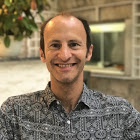
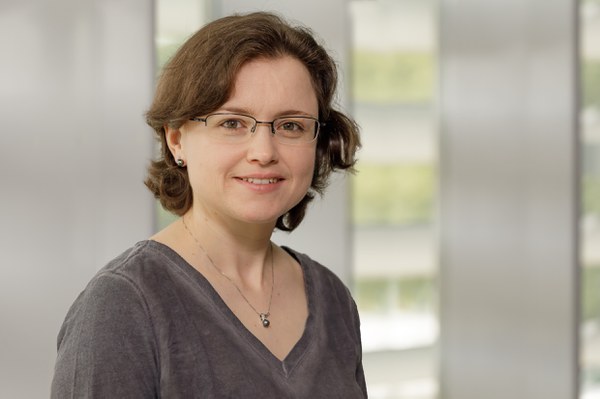
Yangyang Zhao is a Research Fellow at Princeton University, affiliated with the Resplandy Research Group. His work focuses on climate science and ocean biogeochemistry, particularly coastal hypoxia and nitrous oxide dynamics in the Northern Indian Ocean. Research Interests Interactive marine carbon, nitrogen, and oxygen biogeochemistry Coastal and ocean deoxygenation processes Impact of climate change and human activities on oceanic oxygen dynamics Regional biophysical ocean modeling for nitrous oxide variability Publications Overview Yangyang’s publications span 2012–2025, emphasizing coastal hypoxia, nitrous oxide dynamics, CO2 fluxes, and marine environmental changes. His work integrates observational data with high-resolution physical-biogeochemical models, addressing climate-ocean interactions and anthropogenic impacts. Laboratory Affiliation Yangyang is part of the Resplandy Research Group at Princeton University, which investigates climate science and ocean biogeochemistry through multidisciplinary approaches.
Malgorzata Agnieszka Cyndecka is a Professor at the Faculty of Law, University of Bergen (UiB) , where she specializes in EU/EEA state aid law and data protection/GDPR. She is affiliated with SLATE (Centre for the Science of Learning & Technology) and serves as a member of the Norwegian Data Protection Board. Since 2019, she has been Associate Editor of the European State Aid Law Quarterly . She also holds an Associate Professor II position at the University of Oslo and contributes to interdisciplinary research on AI, privacy, and education. University: University of Bergen School: Faculty of Law Academic Rank: Professor Email: malgorzata.cyndecka@uib.no Affiliations: SLATE, Norwegian Data Protection Board, Council of Europe Expert Group on AI and Education Her research centers on EU/EEA state aid rules —particularly their application in tax, energy, and education sectors—and data protection law , with a focus on GDPR compliance in AI-driven educational technologies. She has led and contributed to major projects such as the Norwegian Data Protection Authority’s Sandbox for Responsible AI (AVT project), where she provided legal guidance on processing student data, and UiB’s DIGI courses, where she co-developed DIGI113 on Privacy and GDPR. Her work bridges legal theory with practical policy, influencing national and international frameworks on digital rights and public aid. The analysis of her recent publications reveals a strong focus on the evolution of state aid jurisprudence , especially the Market Economy Operator Principle (MEOP), burden of proof in aid cases, and sustainability in public support. Concurrently, her interdisciplinary work explores AI and privacy challenges in education , anonymization of unstructured data under GDPR, and ethical implications of algorithmic decision-making. Her contributions span legal doctrine, policy recommendations, and public commentary. Scientific Awards: European State Aid Law Quarterly PhD Award (2012–2016) for best doctoral dissertation in state aid law Advising and Grants: She supervises master’s students in EU/EEA law, data protection, and GDPR. She has been involved in externally funded projects including the Norwegian Data Protection Authority’s Sandbox for Responsible AI, the ENDO4P project (aimed at personalized endocrinology treatment via EU Horizon funding), and the Clean Up Project (Machine Learning for Anonymisation of Unstructured Personal Data) at the University of Oslo. She has also coordinated collaborations with Media City Bergen for law and technology education. Her teaching includes course leadership in JUS2302, JUS3502, JUS2303, JUS3503, and DIGI113. Labs and Teams: She is a key member of SLATE (Centre for the Science of Learning & Technology) at UiB and participates in multiple research groups including the Research Group for Information and Innovation Law. She contributes to interdisciplinary teams working on digital competence, AI ethics, and data governance in education and health. She is also active in the Academy for Young Researchers (AYF) and leads the EU and EEA Law Issues Committee in the Norwegian branch of the International Commission of Jurists (ICJ).
Richard P. Allan is a Professor of Climate Science in the Department of Meteorology at the University of Reading, United Kingdom. He is affiliated with the National Centre for Earth Observation (NCEO) and the Walker Institute, and has previously worked at NCAS Climate and the Met Office. He served as a lead author for the Intergovernmental Panel on Climate Change (IPCC) Sixth Assessment Report. His research focuses on Earth's energy budget, climate change, and the global water cycle, utilizing Earth Observation data to assess climate models and understand atmospheric processes. Key areas include radiative forcing, cloud dynamics, precipitation extremes, and ocean warming. He has led significant projects such as the NERC DEEP-C consortium. The 15 most recent publications highlight sustained contributions to understanding climate system responses, particularly in energy imbalance, water vapor trends, aerosol-cloud interactions, and precipitation variability. Articles appear in high-impact journals like Nature , Science , and Geophysical Research Letters , reflecting broad expertise in climate modeling, satellite remote sensing, and hydrological impacts. Lead Author, Intergovernmental Panel on Climate Change (IPCC) Sixth Assessment Report Richard P. Allan has supervised numerous PhD and Master’s students, though specific names are not listed in the provided texts. He has secured major research grants, including from NERC, and leads collaborative projects involving climate modeling and satellite data analysis. His work is instrumental in linking observations to climate predictions and policy-relevant science. He is affiliated with the National Centre for Earth Observation, the Walker Institute, and has been Principal Investigator on projects including NERC DEEP-C, DACCIWA, SMURPHS, and SINATRA, focusing on climate extremes, African weather systems, and Earth’s energy budget.
Dr. Michael Philben is an Associate Professor of Chemistry and Geological and Environmental Science at Hope College, where he joined in 2019 after postdoctoral positions at Memorial University (Canada) and Oak Ridge National Laboratory. His research focuses on climate-carbon cycle feedbacks in vulnerable ecosystems, particularly peatlands and Arctic tundra. His educational background includes a Ph.D. in Marine Science from the University of South Carolina (2014) and a B.A. in Earth and Planetary Science from Northwestern University (2010). At Hope College, he teaches Environmental Science courses and contributes to the Day1: Watershed program. Philben's research centers on carbon and nitrogen cycling in ecosystems containing vast organic carbon stocks. He leads an NSF CAREER-funded project investigating Michigan peat bogs as natural laboratories for climate change impacts, using a north-south transect from Portage to Newberry as a 'space-for-time' experiment. His work examines methane emissions, nitrogen availability, and net carbon balance under warming conditions, with particular attention to Sphagnum-dominated peatlands at the southern edge of their climate range. His 15 most recent publications (2020-2024) reveal a strong focus on peatland biogeochemistry, with increasing emphasis on methane dynamics, nitrogen cycling, and the role of specific biochemical compounds like sphagnan. The research combines field measurements across climate gradients with laboratory experiments, often involving Hope College students in all project phases. NSF CAREER Award for peatland climate research Philben actively mentors undergraduate researchers through the Philben Research Group, which investigates how warming impacts carbon cycling in peatlands. His projects involve interdisciplinary work spanning analytical chemistry, geology, and ecology. The group maintains a network of seven Michigan peat bog field sites and collaborates on international research, including Arctic studies in Alaska and Canada. His laboratory focuses on using analytical chemistry tools to predict climate-carbon cycle feedbacks, with particular attention to southern Michigan peatlands as sentinels for larger northern peatland complexes. The research group employs techniques including greenhouse gas flux measurements, radiometric dating of peat cores, and analysis of organic matter composition.
Eva Cantoni is a Full Professor at the Research Center for Statistics within the Geneva School of Economics and Management , University of Geneva. Her expertise spans robust statistical methodology, model selection, and applications in ecology and medicine. Ph.D. from University of Geneva Accredited European Statistician (FENStatS) Research Interests : She specializes in Robust statistics for real-world data Variable/model selection in high-dimensional settings Nonparametric and semi-parametric regression Zero-inflated and overdispersed count models Longitudinal and spatiotemporal data analysis Her work addresses ecological challenges (fish stock assessment), medical applications (hospital congestion modeling), and housing market analysis. Recent Trends in Publications : Recent articles focus on Confidence intervals for robust mixed models Editorial leadership in robust statistics Applications to fisheries science and public health Flexible modeling frameworks for complex data Comparative studies of statistical measures Extremes modeling in healthcare Leadership & Grants : She has served as: Vice-Dean for Teaching (2020-2023) Director of Master's in Statistics (2012-2019) Director of Applied Statistics Certificate (2015-2019) President, Swiss Federal Statistics Committee (2024-2027) Specialty Chief Editor, Frontiers in Applied Mathematics (2024) Grants include projects on Robust solutions for modern data (2023-2025) Sustainable fisheries modeling (2018-2021) Advancements in state-space models (2014-2017) Software Contributions : Developed R packages for robust statistical methods: confintROB (bootstrap confidence intervals) RobSSM (robust state-space models) R2_LMM (explained variation measures)
Thierry Badard is an Associate Professor at the Department of Geomatics Sciences , Université Laval, where he also serves as Director of the Center for Research in Geospatial Data and Intelligence (CRDIG) . With over 28 years of experience in geospatial science, he leads research initiatives at the intersection of GeoAI , LiDAR processing , and smart city technologies . Director, CRDIG (2016-2022) Steering Committee Member, Big Data Research Centre (CRDM) Researcher, Institute for Intelligence and Data (IID) Research Expertise spans geospatial big data, GeoNLP, and IoT applications for digital twins. His work addresses flood risk modeling , 3D urban analytics , and environmental monitoring through AI-driven solutions. Recent publications focus on contrastive learning for LiDAR segmentation and geospatial ontologies for early warning systems. Grant Leadership includes collaborative projects on smart insurance analytics (2018-2025), Arctic bioaerosol research (2019-2025), and Quebec-Morocco digital twin partnerships (2022-2023). He has advised 15+ graduate students in geomatics and related fields.
Alison Liebling is Professor of Criminology and Criminal Justice at the University of Cambridge and Director of the Institute of Criminology’s Prisons Research Centre. Her work focuses on prison quality, moral performance, and staff-prisoner dynamics. Current Leverhulme Major Research Fellowship (2020-2023) on moral rules in prison Fellow of the British Academy Research Interests: Prison moral climate and legitimacy Comparative studies of public/private sector prisons Trauma-informed practices and rehabilitation programs Prison officer roles and professional discretion Key Publications: Prisons and their Moral Performance (2004, OUP) The Effects of Imprisonment (2005, Willan Publishing) Legitimacy and Criminal Justice (2013, OUP) Crime, Justice and Social Order (2022, OUP) Scientific Contributions: Developed international moral climate survey tool Co-editor of the Oxford Handbook of Criminology Evaluated therapeutic interventions like music and reading programs
Markéta Zandlová, Ph.D. is an Assistant Professor and researcher at the Department of Social and Cultural Anthropology, Faculty of Humanities, Charles University in Prague. She serves as Chair of the Czech Association for Social Anthropology (CASA) and is a founding member of the EASA Environment and Anthropology network. Additionally, she holds membership on the Academic Senate of FHS UK and provides climate communication consultations for NGO People in Need o.p.s. PhD in Anthropology (2015), Faculty of Humanities, Charles University M.A. in General Anthropology (2006), Faculty of Humanities, Charles University M.A. in Theory of Culture (2005), Faculty of Arts, Charles University B.A. in Liberal Arts and Humanities (2003), Faculty of Humanities, Charles University Dr. Zandlová specializes in the anthropology of climate change, particularly focusing on drought impacts in the Czech Republic through her principal research project 'Stories of Drought.' Her work combines environmental anthropology with analysis of knowledge distribution and infrastructural networks. She has extensive expertise in identity politics, border studies, and qualitative research methodology, with her 2015 monograph 'The Aromo in Bulgaria' receiving the Charles University Monographs Competition Award. Her research demonstrates a clear evolution from ethnic identity studies toward contemporary environmental challenges. Analysis of her recent publications reveals a strong interdisciplinary focus bridging anthropology with environmental science and policy. The majority of her work since 2020 centers on climate change adaptation, drought management, and participatory approaches to environmental governance. Her scholarship consistently emphasizes methodological rigor in qualitative research while addressing pressing contemporary issues through anthropological perspectives. Charles University Monographs Competition Award (for 'Etnická mobilizace a politiky identit. Aromuni v Bulharsku', 2015) Dr. Zandlová has secured significant research funding including principal investigator roles for Technology Agency of the Czech Republic projects (2019-2022), Specific University Research Projects (2017-2019), and Progres Programme grants (2017). Her current 'Stories of Drought' project (www.pribehysucha.cz) represents an interdisciplinary applied research initiative examining local contexts of extreme climate phenomena. She has previously led research on Roma communities, national minorities, and urban social processes. As Chair of the Czech Association for Social Anthropology and member of the EASA Environment and Anthropology network, Dr. Zandlová actively contributes to academic communities focused on anthropological responses to environmental challenges. Her work with NGO People in Need demonstrates practical application of anthropological insights to climate communication challenges in the Czech context.
Professor Simon Deakin is a Fellow and Director of Studies in Law at Peterhouse, University of Cambridge, specializing in private law (tort and contract law) and labour law. He teaches on the undergraduate Law Tripos and the LLM programme, with research focusing on law and economics, artificial intelligence, and historical legal analysis. Current research on Is Law Computable? and AI ethics Co-editor of computational law essay collection Developed Cambridge Leximetric Database for quantitative legal analysis His research spans tort law, corporate governance, digital economy regulation, and sustainability. Recent work explores the Anthropocene's legal implications and labour law's computational approaches. Scientific awards include the Cambridge Students' Union teaching prize (2023) He supervises doctoral students annually and contributes to legal education through widely used textbooks. As a Centre for Business Research (CBR) affiliate, he advances data-driven analysis of global labour regulation.
Prof. Dr. Estela Suarez is a Professor of High Performance Computing at the Institute for Computer Science, University of Bonn (W2 in the Jülich Model) and Joint Lead of the Division "Novel System Architecture Design" at the Jülich Supercomputing Centre (JSC), Forschungszentrum Jülich GmbH. She also leads the Research Group "Next Generation Architectures and Prototypes" at JSC and serves as Spokesperson of Helmholtz Information Program 1, Topic 2. Currently on sabbatical during the 2024/2025 and 2025 academic years, she remains active in research leadership roles. 2010: PhD in Physics from University of Geneva, Switzerland 2004: Master in Physics, Specialization in Astrophysics, University Complutense of Madrid, Spain Professor Suarez specializes in high performance computing with particular expertise in heterogeneous HPC system architectures and modular supercomputing architecture (MSA). Her research spans hardware prototyping and evaluation, system software development, operational data analysis, and co-design methodologies. She has pioneered approaches to address hardware heterogeneity through system-wide orchestration of diverse computing resources, enabling more efficient scientific computing across multiple domains. Her work bridges theoretical computer architecture with practical implementation challenges in exascale computing environments, focusing on real-world applications that require specialized hardware configurations. Professor Suarez's publication record shows a clear evolution from foundational work on the DEEP project (2016) through the development of modular supercomputing concepts (2019-2021) to current applications across diverse scientific domains (2022-2024). Her recent publications demonstrate how modular architectures can be effectively applied to climate modeling, neuroscience simulations, quantum chemistry calculations, and other computationally intensive fields. This trend highlights her focus on practical implementation challenges and the growing importance of adaptable computing architectures in modern scientific research. 2023/2024 Lehrpreis der Universität Bonn: UniBonn teaching award Professor Suarez has secured significant research funding through major projects including NUMERIQS (Projects A05, B02, and Z02), European Processor Initiative (EPI), DEEP-SEA (Software for Exascale Architectures), IFCES2 (optimization of simulation algorithms for exascale supercomputers), and AIDAS (virtual laboratory between Forschungszentrum Jülich and CEA on AI and data analytics). While currently not accepting new students due to sabbatical, she has previously mentored graduate students in high performance computing techniques and has delivered numerous invited lectures at international conferences. Professor Suarez leads the "Next Generation Architectures and Prototypes" research group at JSC and serves as Joint Lead of the "Novel System Architecture Design" division. She chairs the Research and Innovation Advisory Group (RIAG) from EuroHPC Joint Undertaking since 2024. Her work involves close collaboration with international research teams on advancing supercomputing architectures, including contributions to the University of Bonn's new HPC system "Marvin" which ranks on both the TOP500 and GREEN500 lists.
Michael T. Durney is an Assistant Professor in the Department of Accounting at the University of Iowa's Tippie College of Business. His research focuses on judgment and decision-making in financial reporting, with implications for corporate disclosures and investor behavior. He holds a PhD in Accounting from Cornell University, an MS in Management from Cornell University, and a MAC in Professional Accountancy and BS in Accounting from Brigham Young University. Durney is a Certified Public Accountant (CPA) in the State of Georgia. Research Interests Judgment and decision-making in financial reporting Corporate disclosure practices Investor decision-making processes Scientific Awards Gilbert P. Maynard Excellence in Accounting Instruction Award (2025, 2022) Outstanding Doctoral Dissertation - American Accounting Association (2020) Deloitte Foundation Doctoral Fellowships (2017-2019) AAA/Deloitte Doctoral Consortium Fellow (2018) Multiple University of Iowa teaching and mentorship awards (2023-2025) Recent Publications Investigated earnings forecasting in remote work environments (2025) Analyzed CEO activism impacts on investor decisions (2024) Explored segment reporting limitations (2024) Examined private communication dynamics with investors (2023-2024) Licenses Certified Public Accountant (CPA), State of Georgia (2014)
Prof. Dr. Christian Mayer is a Professor in Physical Chemistry at the Faculty of Chemistry, University of Duisburg-Essen. He serves as Head of the working group focusing on origin of life research, nanocapsules, and NMR spectroscopy techniques. His research group is located at Universitätsstraße 5, D-45141 Essen, Germany, with contact information including phone number +49 201 183-2570. Prof. Mayer's research interests primarily focus on the origin of life in deep tectonic fault zones of the first continental fragments, where he collaborates with Prof. Dr. Ulrich Schreiber from the Faculty of Biology and Prof. Dr. Oliver Schmitz from Applied Analytical Chemistry. His work investigates how vesicle formation occurs in tectonic fault systems through cyclic phase transitions of carbon dioxide, creating ideal conditions for molecular evolution. He specializes in pulsed field gradient NMR (PFG-NMR), high-resolution NMR, and solid-state NMR techniques to characterize nanoscale systems including nanocapsules, vesicles, and microemulsions. His recent publication trends reveal a strong interdisciplinary focus spanning physical chemistry, prebiotic chemistry, and astrobiology. The articles demonstrate increasing integration of computational methods with experimental approaches, particularly in analyzing molecular structures and dynamics. His research has evolved from fundamental studies of nanocapsule systems to broader investigations of protocell formation mechanisms under early Earth conditions, with recent work extending to astrobiological contexts including potential life formation on Titan. Prof. Mayer has established significant collaborations across multiple disciplines, particularly with geologists and biologists, to investigate the physical chemical processes that could have led to the emergence of life. His work bridges fundamental physical chemistry with practical applications in nanomedicine, particularly in developing artificial oxygen carriers based on nanocapsule technology. His laboratory utilizes high-pressure facilities to simulate early Earth crust conditions, with a particular focus on supercritical CO 2 environments. The working group combines experimental approaches with theoretical modeling to understand vesicle formation processes and their implications for the origin of cellular life.
Björn Ross is a Lecturer in Computational Social Science at the University of Edinburgh's School of Informatics, where he is affiliated with the Institute for Language, Cognition and Computation. He serves as Director of the SMASH research group and is part of the management team for the Centre for Doctoral Training in Natural Language Processing (CDT in NLP). His educational background includes: PhD (2019) from the University of Duisburg-Essen MSc in Computer Science (2016) from the University of Münster Exchange year (2014-2015) at the University of Strasbourg BSc in Information Systems (2013) from the University of Münster Ross's research focuses on computational social science, particularly using natural language processing, social network analysis, and agent-based modeling to study social media phenomena. His work examines misinformation, hate speech, bot activity, and the ethical implications of computational methods. He also investigates how social media can be leveraged for social good, especially in crisis communication contexts. A significant portion of his recent research addresses bias and fairness issues in AI systems, particularly regarding marginalized communities and LGBTQ+ identities. His work spans both technical development of computational methods and critical examination of their societal impacts. Analysis of his recent publications reveals a strong trend toward examining bias in AI systems, particularly regarding marginalized communities. His work spans multiple methodologies including computational analysis of social media data, development of NLP techniques, and critical examination of AI ethics. He frequently collaborates across disciplines, working with researchers in computer science, social sciences, and healthcare domains. His professional recognition includes: Best Paper Award at the Hawaii International Conference on System Sciences (HICSS) in 2018 Associate Editor for Business & Information Systems Engineering Active membership in professional organizations including AIS, ACL, and ACM Ross currently supervises multiple PhD students including Agostina Calabrese, Eddie Ungless, Sandrine Chausson, Wendy Zheng, Seraphina Goldfarb-Tarrant, and Mahmoud Ibrahim. At the University of Edinburgh, he teaches courses such as 'Text Technologies for Data Science' and 'Evidence, Argument and Persuasion in a Digital Age,' reflecting his expertise at the intersection of computational methods and social implications.
Sarah Blodgett Bermeo is an Associate Professor in the Sanford School of Public Policy and Associate Professor of Political Science at Duke University, serving as Director of Graduate Studies for the Master of International Development Policy program and affiliate of the Duke Center for International Development. Her academic credentials include: Ph.D. in Political Science, Princeton University (2008) M.A. in Political Science, Princeton University (2006) M.P.A., Princeton University (2001) B.A., University of Rochester (1997) Bermeo specializes in political economy at the intersection of international relations and development studies, with core expertise in industrialized-developing country relations. Her research examines strategic allocation of foreign aid, trade agreements, and climate finance through the lens of self-interested yet development-oriented donor behavior. Recent work intensively explores climate migration dynamics, health aid transitions, and the geopolitical implications of economic shifts in major donor countries like China. She investigates how negative spillovers from underdevelopment drive industrialized states to target assistance while protecting their own interests. Publication trends reveal consistent focus on aid allocation mechanisms since 2009, evolving from foundational work on democratization and trade adjudication toward contemporary climate migration and health system vulnerabilities. Her scholarship demonstrates increasing integration of environmental and health crises into development policy frameworks, with notable emphasis on data-driven analysis of donor behavior during global disruptions. Her scholarly recognition includes: Robert O. Keohane Award from International Organization (2016) for "Aid Is Not Oil" Bermeo directs externally funded research initiatives including a 2023-2024 USAID-focused study on China's economic slowdown implications and a 2020 SDG2 Leaders Alliance viability assessment. She mentors students through Bass Connections research teams and teaches graduate courses in globalization, policy analysis, and international political economy across Public Policy, Political Science, and International Comparative Studies departments. As MIDP Director of Graduate Studies, she leads curriculum development while collaborating with the Duke Center for International Development on practitioner-oriented research. Her Bass Connections teams specifically address technology-society intersections within migration and development contexts, producing policy-relevant outputs for international organizations.
Dr. Matthias Nnadi serves as a Senior Lecturer in Accounting at Cranfield School of Management, Cranfield University, within the Department of Economics, Finance and Business Data Analytics. His academic career spans both theoretical research and practical industry applications in accounting and finance. His educational background includes a Bachelor's degree in Accounting (BSc), Master in Business Education (MEd), MBA, and PhD, complemented by Postgraduate certificates in Academic Practice and Business Enterprise. Professional memberships span multiple accounting bodies, reflecting his deep engagement with the field. Dr. Nnadi's research focuses on accounting in emerging economies, particularly examining the relevance of International Financial Reporting Standards (IFRS) in developing contexts, corporate mergers and acquisitions, and earnings management practices. His work bridges academic theory and practical application through extensive industry engagement. His scholarly output demonstrates consistent contributions to top accounting journals, with recent publications examining IFRS implementation effects, corporate sustainability impacts, and M&A performance metrics. The research shows particular strength in African and Asian emerging markets contexts. Chartered Institute of Taxation research grant recipient Seedcorn funding awardee for academic research Editorial Board member of Journal of Bonds and Derivatives As an educator, Dr. Nnadi developed the Individualised Accounting Technique (IAQ), a teaching and assessment model widely adopted in business schools for large accounting classes. His industry contributions include executive training programs on IFRS and IPSAS for both private and public sector organizations, drawing on his practical experience as former budget manager at a telecommunications company and stock accountant at a multinational corporation.