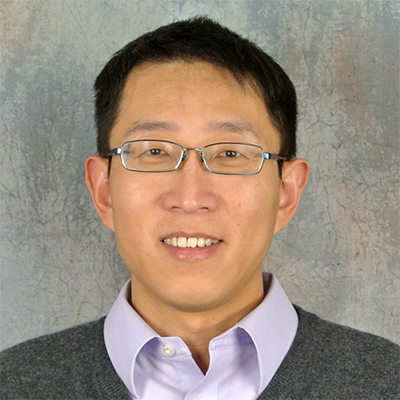
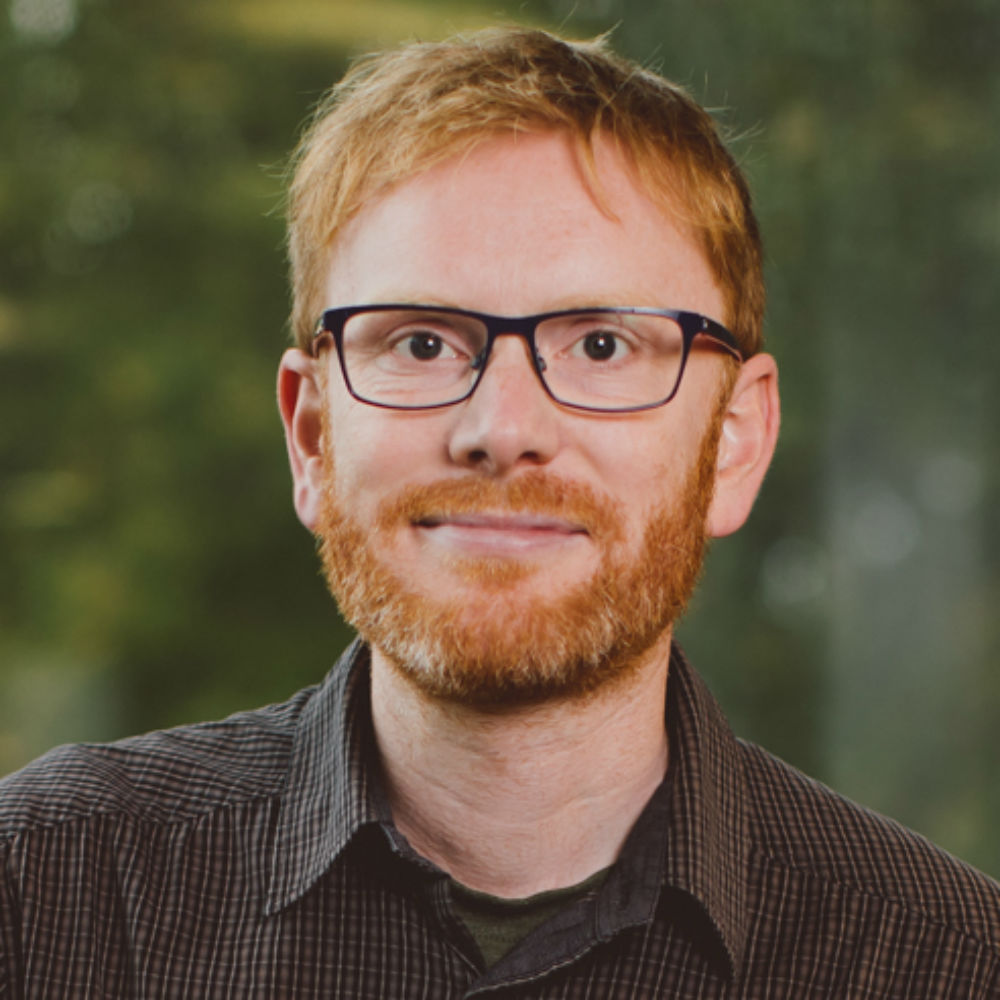
Ali Khosravi is an Assistant Professor in the Department of Civil and Environmental Engineering at Auburn University, specializing in bioinspired geotechnics and geomechanics. His work integrates advanced materials science, remote sensing, and computational modeling to address challenges in infrastructure resilience, climate change impacts, and sustainable geotechnical systems. He holds a Ph.D. from the University of Colorado Boulder and degrees from Sharif University of Technology. Research focuses include: Thermo-hydro-mechanical processes in soils and fractured rocks Soil-structure interaction for seismic and environmental applications Robotics-inspired probes for subsurface exploration Permafrost degradation under climate change Energy geosystems and geothermal applications Recent projects involve collaborating with the National Center for Additive Manufacturing Excellence (NCAME) to develop underground installation robots, assessing Arctic permafrost stability with multi-disciplinary teams, and using InSAR remote sensing to monitor infrastructure like levees and highways. His research bridges geotechnical engineering with emerging technologies like machine learning and bioinspired design. Grants and collaborations include Auburn Engineering’s Kiemyung University travel grant for international research partnerships. His lab focuses on innovative solutions for geohazards, energy efficiency, and smart infrastructure systems.
Emily Kang is a Professor in the Department of Mathematical Sciences at the University of Cincinnati, where she leads the Group on Data Analytics and Decision Sciences (GDADS). Her research develops statistical methodologies for spatial and spatio-temporal data, with applications in environmental science, climate modeling, and remote sensing. Kang specializes in hierarchical Bayesian models, data assimilation techniques, and scalable algorithms for large environmental datasets. Her work includes developing the EcoPro framework for ecological projections using Earth system models and remote sensing data, creating statistical downscaling methods for climate variables, and designing visualization tools for global environmental data on multi-resolution grids. Kang received the American Statistical Association's ENVR Early Investigator Award for contributions to environmental statistics. Current projects focus on neighborhood-scale extreme heat projections, coral reef habitability under climate change, and recursive co-kriging models for multi-fidelity spatial data. Her research advances uncertainty quantification in remote sensing products and climate impact assessments.
Professor Ben Bennett serves as Deputy Director and Professor of International Trade and Marketing Economics at the University of Greenwich's Natural Resources Institute, where he also holds the position of Director of Research and Knowledge Exchange. With over 30 years at NRI, his work spans agricultural value chains and trade economics across 40+ countries, focusing on tropical commodities like cereals, legumes, horticulture, and non-timber forestry products. His research explores the intersection of market economics and conservation, specializing in value chain optimization for novel agricultural products and wild-harvested resources. Bennett has led multinational evaluations and supported trade negotiations for SADC, COMESA, and SACU regions, with emphasis on standards development and capacity building. Recent publications demonstrate consistent focus on agrifood system resilience, post-harvest loss reduction, and nutrition intervention models in low-income countries. His work integrates field evaluations of storage technologies, business model analysis for food fortification, and trade policy impacts on sectoral development.
Sally Horn is a Professor in the Department of Physical Geography at the University of Tennessee, Knoxville. Her research focuses on Quaternary environments, biogeography, and human-environment interactions during the Pleistocene and Holocene epochs. She directs the University of Tennessee’s Initiative for Quaternary Paleoclimate Research, emphasizing global environmental change and its impacts on modern ecosystems. Her work integrates field studies in Costa Rica, Mexico, and the Caribbean with advanced analytical techniques like isotope geochemistry and sediment micromorphology. Dr. Horn holds a Ph.D. from the University of California, Berkeley. Her research has addressed topics such as fire history, prehistoric agriculture, and climate-driven vegetation shifts. Major projects include reconstructing Holocene precipitation variability in tropical regions and assessing the effects of pre-Columbian land use on ecosystems. She collaborates with international teams to study mountain ecosystems, glacial chronology, and paleoflood records in the Tennessee River basin. Her contributions span academic advising, experiential learning programs for community college transfers, and public engagement through initiatives like the 'Mic Nite' presentation series. She has published extensively on diatom ecology, paleoclimatic proxies, and the application of geochronological methods to environmental history.
Dr. Jun Yan is a Professor in the Department of Statistics at the University of Connecticut. His research spans network analytics, spatial extremes, survival analysis, and statistical computing with applications in public health, finance, and environmental science. His core research interests include: network modeling and analysis, spatial statistics for climate extremes, survival analysis methodologies, statistical computing frameworks, and applications in interdisciplinary domains including sports analytics. Dr. Yan has developed significant statistical methodologies for network analysis, climate change detection, financial modeling, and health analytics. His recent publications demonstrate innovation in modeling complex network structures, analyzing climate extremes, developing computational approaches for massive datasets, and creating specialized statistical methods for health and finance applications. He maintains active collaborations across disciplines and contributes to open-source statistical software. Honors include: Guggenheim Fellowship, multiple Fromm Foundation commissions, and Barlow Endowment recognition.
Audris Mockus is the Ericsson-Harlan D. Mills Chair Professor in the Min H. Kao Department of Electrical Engineering and Computer Science at the University of Tennessee, Knoxville. He holds a PhD in Statistics from Carnegie Mellon University and has extensive experience in software engineering research, particularly in Digital Archaeology and Open Source Software analysis. His work focuses on understanding developer behavior, software evolution, and global software development challenges. Education: PhD in Statistics, Carnegie Mellon University, 1994 MS in Applied Mathematics, Moscow Institute of Physics and Technology, 1991 BS in Applied Mathematics, Moscow Institute of Physics and Technology, 1988 Research Interests: Mockus specializes in recovering and analyzing digital traces of software development to study developer behavior, software quality, and project dynamics. His research includes quantifying open-source supply chains, measuring developer expertise, and improving software defect prediction. He has pioneered methods for analyzing version control systems and global software teams. Awards and Grants: Recipient of multiple best paper awards at ICSE, FSE, and other conferences. Lead PI on NSF grants totaling over $2M for projects like the World of Code (WoC) infrastructure and forensic image curation. Patents in data visualization and software defect prediction. Advising and Labs: Mockus has advised PhD students on topics like npm ecosystem analysis and forensic image clustering. His research group collaborates with institutions like the National Institute of Justice on projects like Image Cloud Platform for forensic data curation.
Antonio Alves Meira Neto is an Assistant Professor in the Department of Civil and Environmental Engineering at Colorado State University. His research focuses on hydrologic processes across spatial and temporal scales, integrating field observations, modeling, and remote sensing. He leads the Hydrologic Processes Lab , established in 2024, which examines water movement in ecosystems, climate interactions, and human-water systems. Ph.D. (2019) - University of Arizona, Hydrology M.Sc. (2013) - University of São Paulo, Hydraulic and Sanitary Engineering B.Sc. (2011) - Federal University of Bahia, Civil Engineering His work employs hydrogeophysics, tracer experiments, and empirical analysis to study catchment-scale hydrology, ecohydrology, and socio-hydrology in arid regions. Recent publications highlight water security in Brazil, groundwater dynamics, and climate impacts on streamflow. Contact: ameira@colostate.edu
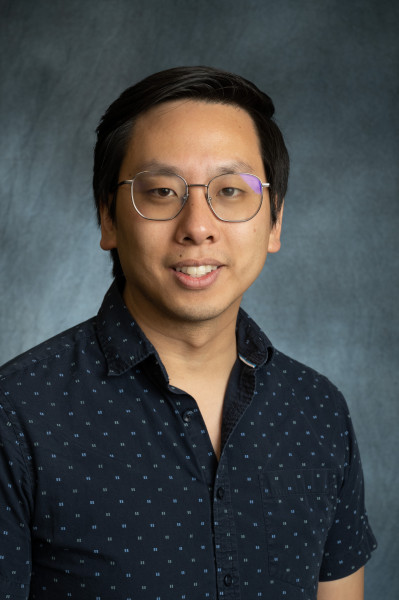
Andrew Du is an Assistant Professor in the Department of Anthropology and Geography at Colorado State University, within the College of Liberal Arts. His research focuses on the ecology of ancient hominins and the biases in the fossil record affecting paleoecological interpretations. He employs quantitative methods to analyze fossil assemblages and infer hominin spatiotemporal distributions. Education: Ph.D. and M.Phil. in Hominid Paleobiology, The George Washington University B.S. in Evolutionary Anthropology, Rutgers University Research Interests: Paleoanthropology, human evolution, paleoecology, macroecology, macroevolution, taphonomy, Plio-Pleistocene eastern Africa, and quantitative methods. Current projects include studying time-averaging effects in fossil assemblages, large mammal diversity in the Omo-Turkana Basin, and modeling hominin distributions. Teaching & Labs: Teaches courses on human origins, evolution, and data analysis. Maintains a lab with clear cultural norms and mentorship expectations outlined in accessible documents. Active in developing graduate-level R tutorials for statistical methods.
Sebastian Diehl is a Professor at Umeå University's Department of Ecology, Environment and Geoscience. His research focuses on mathematical modeling of aquatic ecosystem dynamics, with particular emphasis on consumer-resource interactions and climate change impacts on northern lake ecosystems. Current affiliations: Umeå University (Department of Ecology, Environment and Geoscience) Previous affiliations: Ludwig-Maximilians-Universität München (Professor of Aquatic Ecology) Academic background: Biology undergrad from University of Göttingen, PhD in Animal Ecology from Umeå University (1994) Research interests center around aquatic ecosystem dynamics in response to environmental change, including: Climate change effects on lake ecosystems (temperature and terrestrial nutrient inputs) Mathematical modeling of consumer-resource interactions Benthic-pelagic coupling in nutrient and energy flows Phytoplankton-zooplankton dynamics under environmental stressors Trophic interactions in stream and lake systems Stoichiometric constraints on ecosystem function His recent publications (2025-2020) demonstrate an integrated approach combining mathematical modeling with experimental validation through field studies and lab experiments, focusing particularly on: Climate-induced regime shifts in lake ecosystems Stoichiometric mismatch in warming systems Functional response modeling Vertical niche partitioning in plankton Resource acquisition trade-offs Browning impacts on primary producers Administrative roles include: Final examiner for PhD education Chair of Umeå Marine Science Centre advisory council Steering group member of Integrated Science Lab (IceLab)
Alcino Azevedo is an Associate Professor of Finance at Aston Business School, University of Aston. He serves as Research Director of the Economics, Finance and Entrepreneurship Department. Previously, he held roles at Alliance Manchester Business School and Hull University Business School, where he led the MSc Financial Management program. His academic background includes a PhD in Investments under Uncertainty and Competition from the University of Manchester (2009), an MSc in Finance from Universidade Católica Portuguesa, and an Engineering degree from Universidade do Minho. He combines academic rigor with industry experience from roles in manufacturing management. His research focuses on real options analysis, strategic investment timing under uncertainty, and risk management in financial markets. He has published in top journals like the Journal of Financial Economics and European Journal of Operational Research , and frequently presents at conferences such as the Financial Management Association and Real Options conferences. His work addresses topics like voluntary delisting strategies, wind farm location optimization, and derivatives effectiveness in firm value creation. He is also active in reviewing for high-impact journals including the RAND Journal of Economics and Journal of Economic Dynamics and Control . Teaching responsibilities include modules on Advanced Corporate Finance and Derivatives. He actively supervises PhD students in real options, risk management, and corporate finance. His research extends to energy economics, corporate governance impacts on hedging decisions, and policy analysis for renewable energy investments.
Dr. Eoin O'Gorman is a Senior Lecturer in the School of Life Sciences at the University of Essex. His research investigates the impacts of global change across multiple levels of ecological organisation, from individual metabolism to ecosystem processes, with a particular focus on food web dynamics and body size as a functional trait. BSc, University College Cork (2004) PhD, University College Cork (2009) Current research projects include: Warming effects on trophic interactions Anthropogenic stressors in marine and freshwater systems Body size scaling in ecological networks Food web stability under climate change Recent work demonstrates how warming alters plankton body-size distributions (2025), simplifies freshwater food webs through multiple stressors (2025), and reduces trophic diversity in high-latitude ecosystems (2024). His studies span marine, freshwater, and terrestrial habitats, seeking universal responses to environmental change. Current grants include: 2024 WebDNA: Food web reconstruction through environmental DNA analysis (Leverhulme Trust) 2023 Predicting Impacts of Global Environmental Change on Ecological Networks (NERC) 2022 ORBIT: Offshore Renewables and Benthic Communities (NERC) Supervises PhD candidates studying: Zelin Chen: Offshore structures' impacts on North Sea biodiversity Patrick Eskuche Keith: Southern Ocean food web dynamics Anamika Poyil: Environmental biology of marine communities
Katherine Klink is an Associate Professor in the Department of Geography, Environment & Society at the University of Minnesota. Her research focuses on urban climatology, wind energy systems, and climate variability. She holds a B.S. in Atmospheric Science from the University of Wisconsin-Milwaukee (1982), followed by an M.S. (1987) and Ph.D. in Climatology from the University of Delaware (1992). Her career has centered on understanding wind patterns, urban climate dynamics, and agricultural-climate interactions. Dr. Klink’s research emphasizes practical applications such as urban heat mitigation via green infrastructure and optimizing wind energy systems. She has explored extreme wind events, climate impacts on crop productivity (e.g., barley and oats), and the relationship between snow cover and urban heat islands in Minneapolis. Her work bridges climatology with societal needs, including renewable energy potential and climate adaptation strategies. Her publications span over three decades, addressing topics from synoptic-scale wind drivers to distributed wind energy systems in North Dakota. While no formal awards or grants are listed, her extensive academic output reflects sustained contributions to environmental and climatic studies. Courses and professional activities remain closed sections in her profile.
Dr. Cheryl Barnes is an Assistant Professor in Marine Fisheries at Oregon State University, affiliated with the Coastal Oregon Marine Experiment Station and the Department of Fisheries, Wildlife, and Conservation Sciences. She leads the Integrated Marine Fisheries Lab focusing on management-relevant research of groundfish populations. Education includes: PhD in Fisheries from University of Alaska Fairbanks MS in Marine Science from Moss Landing Marine Laboratories BS in Biology from San Diego State University Her research investigates population and community dynamics of North Pacific groundfish, emphasizing biogeographic effects on life history traits, food web interactions, and climate change impacts. She develops scientific products to inform stock assessments and ecosystem-based fisheries management through field sampling, laboratory research, and statistical modeling. Research employs collaborative approaches with agency scientists, resource managers, and fishery stakeholders. Current projects examine spatial ecology, climate vulnerability, and statistical tool development for fisheries management. Dr. Barnes mentors graduate students including Madison Bargas (MS) studying black rockfish life history and Peri Gerson (MS) modeling prey availability. She serves as Oregon's representative on the Pacific Fishery Management Council's Scientific and Statistical Committee.
Joel E. Cohen is the Abby Rockefeller Mauzé Professor at The Rockefeller University, where he leads the Laboratory of Populations. With over five decades of research experience, Cohen has pioneered innovative mathematical approaches to study biological populations and variability. His work bridges mathematics, biology, and environmental science, fundamentally changing how scientists understand population dynamics and the significance of biological variability. Dr. Cohen's research focuses on developing new mathematical tools to address population problems in demography, epidemiology, and ecology. He has made seminal contributions to the understanding of heavy-tailed distributions that describe extreme events like hurricanes and disease outbreaks, challenging traditional statistical approaches. His laboratory has conducted groundbreaking research on the spatial distribution of human populations in relation to geophysical factors, with unexpected practical applications ranging from soap formulation to semiconductor manufacturing. Cohen has also developed mathematical models for Chagas disease control in rural Argentina and created algorithms to predict international migration patterns. Analysis of Cohen's recent publications reveals a sustained focus on Taylor's law of fluctuation scaling, population dynamics, and ecological statistics. His work consistently demonstrates how abstract mathematical concepts can transform our understanding of biological systems, from cellular processes to global population trends. The research spans theoretical mathematics to practical applications in disease control, conservation biology, and environmental management. Olivia Schieffelin Nordberg Prize for excellence in writing in the population sciences (March 1997) Gheorghe Lazar Prize of Romanian Academy (December 2000) As director of the Laboratory of Populations, Cohen has led research on human population growth, infectious diseases, food webs, and international migration. His methods for assessing the uncertainty of population projections have been applied in court cases for predicting future claimants of asbestos-related diseases. Cohen's laboratory has collaborated with the United Nations Population Division on migration studies and developed mathematical models that account for more than half of the variability in annual migration numbers among 229 countries. Current research directions include understanding how demographic, economic, and cultural changes interact with Earth's physical, chemical, and biological environments. The Laboratory of Populations employs a multidisciplinary approach that combines mathematical modeling, statistical analysis, and field studies to address complex population issues. Their work exemplifies how basic quantitative research on populations frequently yields unexpected practical applications, demonstrating the profound connections between theoretical mathematics and real-world challenges in public health, environmental science, and resource management.
Robert Brodman is a Visiting Professor in the Department of Biology at Scripps College. His research focuses on biodiversity conservation, amphibian ecology, and ecological impacts of environmental stressors. He has conducted extensive field surveys across Indiana and other regions, investigating species distribution, population dynamics, and ecosystem health. Key research areas include amphibian population studies, biodiversity surveys in natural and urban landscapes, and the effects of climate change, pesticides, and hurricanes on wildlife. His work emphasizes practical conservation strategies, policy analysis, and interdisciplinary approaches to global change monitoring. Publications highlight his contributions to understanding amphibian behavior, wetland ecosystem dynamics, and the integration of cutting-edge methods for ecological research. He has collaborated on projects such as biodiversity surveys in state forests, urban parks, and agricultural landscapes, contributing to both academic knowledge and applied conservation efforts. Dr. Brodman is affiliated with The Claremont Colleges and actively engages with organizations like the Red-Tail Land Conservancy and Indiana Forest Alliance. His research underscores the importance of natural history data and long-term monitoring for effective conservation planning.