Dr Michael Wang is Senior Lecturer in Sustainable Operations & Supply Chain Management and Course Director for MSc Logistics & Supply Chain Management at Kingston University. His research explores human-centered operations, supply chain digitalization, and sustainability, with recent work addressing Industry 5.0, logistics resilience, and low-carbon transitions. Research Trends: Recent publications emphasize the intersection of human factors and technology in supply chains, with consistent focus on sustainability metrics and risk mitigation. Articles frequently analyze how workforce engagement, digital tools, and agile methodologies enhance operational resilience amid disruptions like extreme weather and geopolitical shifts. Professional Credentials: Chartered Member (CILT) in UK/AU/NZ/UAE Fellow of Higher Education Academy Member of Royal Society NZ
Mahyar Masoudi is Assistant Professor in the Department of Geography at Memorial University of Newfoundland, where he directs the Urban Ecology & Analytics Lab. He holds adjunct appointments at University of Waterloo's School of Planning and is affiliated with Nanyang Technological University's Resilient and Inclusive Cities Lab. His research examines how spatial patterns of urban elements influence environmental performance and human well-being. Education includes: PhD from National University of Singapore (2018), MSc from Universiti Teknologi Malaysia (2012), BSc from University of Guilan (2009), and postdoctoral work at Waterloo and NUS. Research integrates urban ecology , geographic information science , and environmental justice to study urban landscapes as social-ecological-technological systems. Key interests include urban heat mitigation, ecosystem services, and equitable access to environmental benefits using remote sensing, spatial statistics, and machine learning. Publications focus on urban thermal environments, ecosystem service modeling, and landscape pattern analysis. Recent work examines cooling efficiency of green spaces across Asian megacities and develops computational tools like the NCS2020 R package for ecosystem service assessment. No scientific awards documented. Leads the Urban Ecology & Analytics Lab developing geospatial methods to enhance urban sustainability and equity.
Raphael Ayambire is an Assistant Professor in the Department of City Planning at the University of Manitoba's Faculty of Architecture. He holds a PhD in Planning from the University of Waterloo and a BSc (Hons) in Development Planning from Kwame Nkrumah University of Science and Technology, Kumasi. His research focuses on environmental sustainability linked to social equity, addressing urbanization challenges through scenario planning, climate resilience, and governance frameworks in sub-Saharan Africa and Canada. Key research areas include integrating social equity into scenario planning, equitable climate mitigation strategies, and environmental governance in working landscapes. He has conducted extensive studies on urban sprawl containment in Ghana, neoliberal impacts on Accra's slums, and adaptive conservation management in Canadian biodiversity hotspots. Recent work explores sister city partnerships for sustainable development, street vending policy challenges, and decarbonization pathways in African cities. His publications span urban planning, environmental policy, and development studies, emphasizing participatory approaches and policy evaluation. Ayambire has contributed to case studies in Saskatchewan's working landscapes and Ghana's urban-agriculture land use dynamics. His research bridges theoretical frameworks with practical governance solutions, advocating for inclusive urban futures.
Lazaros Filippidis is a Senior Lecturer in Evacuation Modelling at the University of Greenwich's School of Computing and Mathematical Sciences , part of the Faculty of Engineering and Science . He joined the institution in 1996 and is a core member of the Fire Safety Engineering Group . His work focuses on advancing EXODUS evacuation models and understanding human behavior during emergencies. Education: Holds a BSc (Hons) and MSc, though specific institutions are not detailed in the provided text. Research Interests: Specializes in human behavior in emergencies , adaptive decision-making , and large-scale evacuation trials . His projects include EU-funded initiatives such as SAFEGUARD , IN-PREP , and GETAWAY , addressing aviation, maritime, and urban evacuation challenges. He has pioneered methodologies for collecting human performance data and validating evacuation models. Publications & Awards: Authored/co-authored over 100 publications, including influential works on signage effectiveness, ship evacuation, and wildfire response. Recognized with the Jack Bono Engineering Communications Award (2008) and two Hodgson Prizes (1998, 2002) for exceptional contributions to fire safety engineering. Advising & Grants: Led major EU projects involving collaboration with industrial partners, managing tight schedules and delivering impactful outputs. Advised on the Horizon 2020 FIRE-IN project. Organized annual Principles and Practice of Evacuation Modelling courses and developed e-learning platforms for international audiences. Labs & Teams: Integral to the Fire Safety Engineering Group, contributing to software development (e.g., airEXODUS , urbanEXODUS ) and live trial protocols for evacuation scenarios. His work bridges academic research with real-world crisis management strategies.
Prof. David Etkin is a Professor of Disaster and Emergency Management at York University's School of Administrative Studies. He holds a M.Sc. and B.Sc. from York University and a B.Ed. from the University of Toronto. His career includes 28 years at Environment Canada (1977-2005), roles as weather forecaster, meteorology instructor, and applied researcher in Arctic and climate studies. He led the Canadian National Assessment of Natural Hazards and served as Past President of the Canadian Risk and Hazards Network. Research focuses on disaster risk assessment, disaster ethics, climate change adaptation, and systemic risk analysis. Key contributions include frameworks for ethical emergency management, interdisciplinary disaster theory, and climatological hazard analysis. Over 90 publications include two textbooks and edited volumes on natural hazards and emergency management. His work bridges meteorology, policy, and ethics, addressing global challenges like climate change impacts on disaster vulnerability. Active in international collaborations, including IPCC contributions and North American environmental initiatives. Current research emphasizes institutional ethics in crisis decision-making and systemic risk evaluation.
Åsa Berglund is an Associate Professor in the Department of Ecology, Environment and Geoscience at Umeå University, where she serves as program director for the bachelor’s program in Environmental Science with sustainability profile. Her research and teaching focus on ecotoxicology, particularly the effects of metal contamination on ecosystems and wildlife. Research Qualifications: Docent Educational Qualifications: Recognised university teacher Her primary research lies in ecotoxicology, with a special focus on metal-contaminated environments and their effects on biota. She investigates the transport of metals from aquatic to terrestrial environments, mediated by aquatic insects, and the subsequent impacts on bird populations. Additionally, she studies the long-term effects of mining and the recovery of ecosystems in mining-impacted areas, employing a holistic approach that combines paleolimnological, ecological, and ecotoxicological tools. By analyzing lake sediment records, she monitors historic mining impacts and assesses environmental effects through benthic communities and long-term bird population records. Her recent publications (2015-2023) predominantly focus on the effects of metal contamination, particularly lead and zinc, on ecosystems. Key themes include the bioaccumulation of metals in birds and small mammals, the role of aquatic-terrestrial linkages in contaminant transfer, and the recovery of ecosystems after reduced industrial emissions. Her work often employs field studies, mesocosm experiments, and long-term monitoring, with a strong emphasis on northern Sweden’s mining-affected regions. As program director for the Environmental Science bachelor’s program, she oversees a transdisciplinary curriculum aimed at solving global environmental and sustainability challenges. Her research is supported by projects such as “Cross-ecosystem boundary effects of metal contamination” (2016-2021) and “Transport of contaminants across ecosystem boundaries” (2016-2021), indicating active grant funding for her work on metal contamination and ecosystem boundaries. She is an active member of multiple research groups at Umeå University, including Freshwater Ecology, Paleolimnology, and Terrestrial Ecology. These groups facilitate interdisciplinary collaboration on projects examining the impacts of contaminants across ecosystem boundaries and the recovery of ecosystems from historical mining activities.
Charlotte Freudenberg is a Researcher at the Department of Foresight of the Fraunhofer Institute for Systems and Innovation Research (ISI), working in the business units Foresight for Policy and Administration & Foresight for Business and Industry Associations. She is pursuing a doctorate at the Université Paris-Est's Faculty of Economics and Management, focusing on participatory methods for European sustainability transitions. Her research emphasizes innovative governance through participatory processes, engaging experts and stakeholders. Freudenberg holds degrees in social sciences and international politics from Humboldt University of Berlin and the University of Vienna, complemented by studies in Strategic Leadership towards Sustainability at Blekinge University of Technology, Sweden. Her work focuses on strategic foresight projects for clients like the European Commission, European Environment Agency, and European Union Agency for Asylum. Her research interests include participatory methods for vision development, scenario planning, and policy options for sustainability transitions. She has contributed to high-impact studies on Europe's future societal resilience, housing consumption patterns, and post-pandemic consumer behavior. Freudenberg's projects address critical areas such as transformative resilience in polycrisis contexts, bioeconomy strategies, and future infectious disease threats. She actively moderates participatory workshops to design science-based policies and strategies.
Pia Manz is a Researcher at the Department of Energy Technologies and Energy Systems at Fraunhofer ISI since 2017, focusing on energy system transformation pathways with an emphasis on district heating, excess heat utilization, and GIS-based modeling. She holds a PhD from Utrecht University (2024) on 'Towards climate-neutral district heating in the EU,' awarded for her dissertation exploring decarbonization strategies for heating systems. Her educational background includes a Bachelor's in Renewable Energy Technology and Systems Engineering from Nordhausen University of Applied Sciences, complemented by international experience at the University of Dundee, Scotland. During her studies, she gained hands-on research experience as a research assistant at Nordhausen's Institute for Renewable Energy Technology. Manz's research bridges technical analysis and policy design, addressing challenges such as cost-effective integration of renewable and excess heat into district heating systems, hydrogen infrastructure needs in decarbonized energy systems, and spatial analysis of heat potentials. Her work frequently employs geographic information systems (GIS) to model demand sectors and assess policy instruments. Her publication trends show a consistent focus on EU-wide decarbonization pathways, with contributions to studies like 'Achieving climate neutrality in district heating' (2025) and 'Hydrogen Infrastructure in the Future CO2-Neutral European Energy System' (2025). She collaborates extensively with institutions like Utrecht University and the German state of Baden-Württemberg on energy transition scenarios and congestion management strategies. Key contributions include developing the FORECAST model for bottom-up industry sector analysis and pioneering georeferenced databases for industrial excess heat potentials. Her interdisciplinary approach integrates technical, economic, and policy dimensions to advance climate-neutral energy systems.
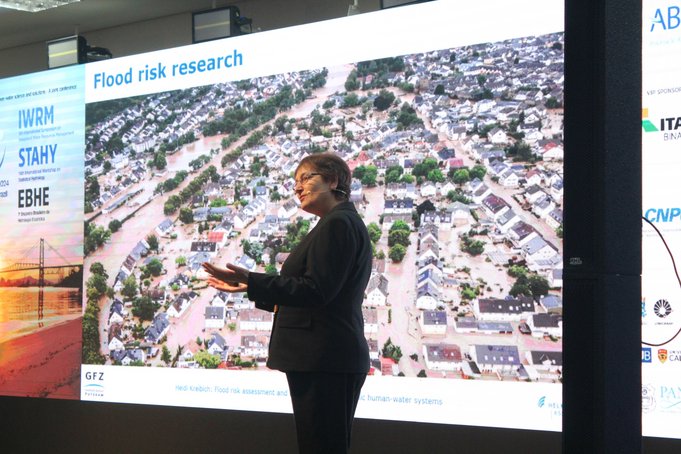
PD Dr. Heidi Kreibich is a Group Leader in the 'Flood Risk and Climate Adaptation' working group at GFZ's Section 4.4 Hydrology and a Senior Lecturer (Privatdozentin) at Humboldt-Universität zu Berlin's Geography Department. Her research focuses on flood risk assessment, vulnerability analysis, and socio-hydrological interactions. She holds leadership roles in EGU's Natural Hazards Division and IAHS's Human-Water Feedbacks Commission. Education includes a PhD from Philipps-University of Marburg (1998-2002) and a Habilitation in Flood Damage Analysis from Humboldt-Universität (2015). Awards include the 2024 Volker Medal for contributions to flood risk management and hydrological science. Key projects include EXTREME-ADAPT (Helmholtz-funded adaptation quantification) and FloodChat (AI-driven flood risk analysis). She co-developed the BT-FLEMO flood loss model and leads global socio-hydrological paired event studies. Grants include funding from BMBF and Helmholtz for flood prediction and multi-risk assessment. Her work bridges science and policy, emphasizing impact-based forecasting and disaster resilience. She chairs international initiatives like Panta Rhei's decade on hydrological change and advises IPCC AR6 on climate impacts.
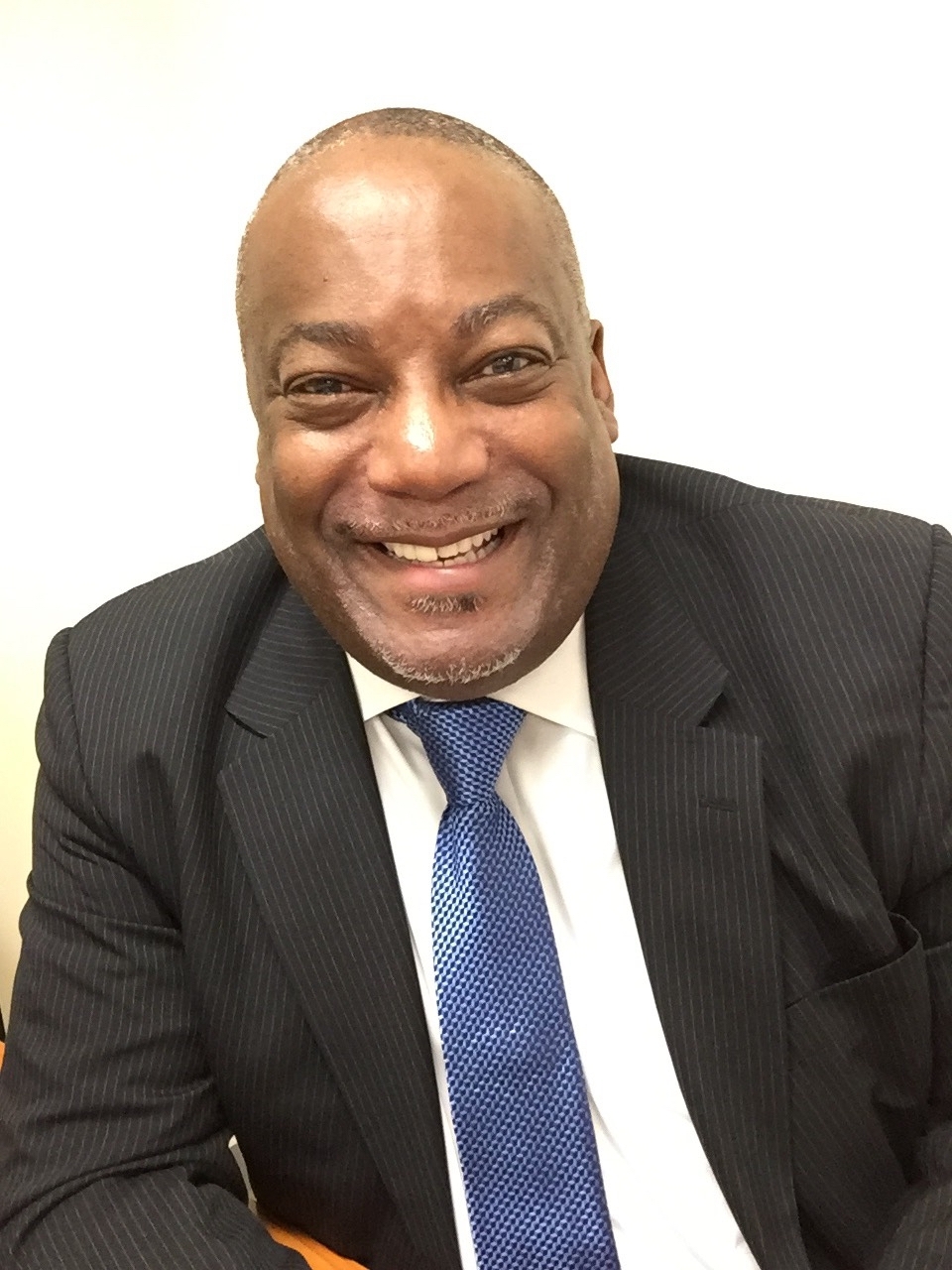
Bernard A. Jones is an Associate Professor in the Division of Criminal Justice, Legal Studies, and Homeland Security at St. John’s University’s College of Professional Studies. He holds a D.Sc. in Civil Security Leadership from New Jersey City University and advanced degrees in Emergency Management and Management Information Systems. With over 20 years of professional experience, he specializes in business continuity, disaster recovery, and emergency management. Dr. Jones’ research focuses on organizational resilience, disaster preparedness, and mitigating racial disparities in disaster response. He emphasizes global case studies, particularly in regions prone to severe weather events, to enhance organizational resilience frameworks. His teaching spans courses like Disaster Management, Emergency Planning, and Critical Infrastructure Protection. His recent publications address pandemic impacts on education and innovative business continuity strategies during major disasters. He actively contributes to shaping policy frameworks for enhanced community and organizational resilience, advocating for a culture of preparedness through education and adaptive practices. Contact: Rosati Hall Staten Island 203 | 718-390-4176
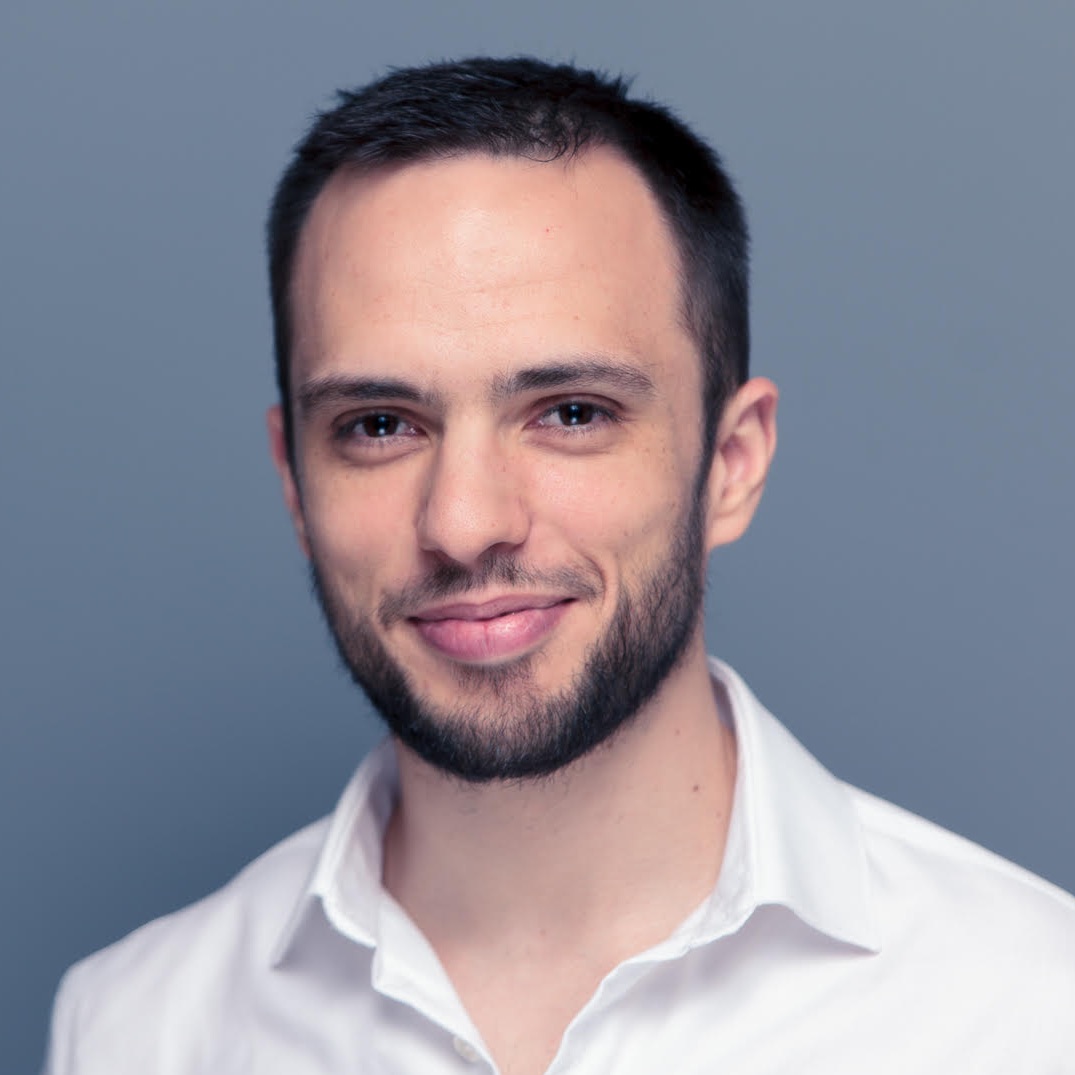
Dr. Alexandre Violle is a sociologist specializing in the intersections of science and technology studies, economic sociology, and political sociology. He is currently coordinating the "Mapping Controversies" course at Sciences Po's School of Management and Innovation and has a research affiliation with the Center for the Study of Social Movements at the School for Advanced Studies in the Social Sciences (EHESS). Previously, he completed his PhD at the Center for the Sociology of Innovation (CSI) of PSL-Mines Paris University and conducted postdoctoral research funded by the Institut Francilien Recherche Innovation Société (IFRIS). His academic journey includes: Doctorate in sociology of science and technology from École des Mines de Paris Postdoctoral research at Centre d'étude des mouvements sociaux of École des Hautes Etudes en Sciences Sociales (2021-2023) PhD research at Center for the Sociology of Innovation (CSI) of PSL-Mines Paris University Dr. Violle's research examines how expertise drawing on economic or financial knowledge transforms public action in France and Europe across various sectors. His work spans the sociology of science and technology, economic sociology, and political sociology, with particular focus on: Social studies of science: knowledge production processes, controversies, science policy Political sociology of public action: instrumentation of public action, regulation, state and European action recomposition, energy and economic policies Economic/finance sociology: valuation, green finance, theories of money and currency, the role of economic expertise in shaping public action His current research focuses on the "Anticipation: the futures of French subsoil use" (ANTICIP) project, a five-year initiative examining how different actors conceptualize and plan for the future use of subsoil resources in France. This work builds on his previous research on the European Banking Union and climate stress testing in financial systems, revealing consistent patterns in how technical instruments shape governance approaches to complex societal challenges. Dr. Violle's scholarly contributions have been recognized through numerous publications in prestigious journals. His research has explored topics including: The political dimensions of financial supervision in the European context The material politics of climate stress tests in Europe The territorialization of industry during energy transitions Scaling imperatives in technological innovation Critical mineral supply chains and environmental governance As an educator, Dr. Violle has supervised numerous master's students through their thesis work and has been instrumental in developing innovative pedagogical approaches. He has coordinated the "Mapping Controversies" course at Sciences Po for several years, guiding students through complex analyses of science-society interactions. His teaching spans multiple institutions including École des Mines, IEP de Paris, and Sciences Po, demonstrating his commitment to bridging theoretical knowledge with practical application in understanding contemporary societal challenges. Dr. Violle is actively involved in collaborative research initiatives, currently working with teams from Ecole des Mines de Paris, IMT Mines Alès, and Bureau de Recherches Géologiques et Minières (BRGM) on the subsoil resources project. His interdisciplinary approach bridges sociology, political science, and economic analysis to address contemporary challenges in governance and public policy, with particular relevance to the energy transition and financial regulation in the European context.
Juan Matute is a Lecturer in Urban Planning and Deputy Director of the UCLA Institute of Transportation Studies at the UCLA Luskin School of Public Affairs. His expertise spans transportation planning, environmental assessment, and urban sustainability. He leads strategic transit planning initiatives for California and advises on climate action plans for Southern California communities. Education: M.B.A. and M.A. in Urban Planning from UCLA, B.A. in International Relations from Pomona College. Research Focus: Public transit finance, new mobility technologies, parking infrastructure, and transportation governance. Recent work includes quantifying Los Angeles County’s parking supply, assessing environmental impacts of transit systems, and evaluating cost-effectiveness of California’s High-Speed Rail. Teaching and Leadership: Teaches graduate courses on transportation policy and environmental assessment. Oversees operations, research, and student programs at the Institute of Transportation Studies. Grants and Projects: Managed UCLA’s role in two state-level transit plans and multiple climate action plans. Collaborates with interdisciplinary teams on transportation-finance modeling and equity-focused urban planning.
Dr. Joseph McMahon serves as a Postdoctoral Research Fellow at the School of the Environment within the Faculty of Science at The University of Queensland. His research is primarily focused on environmental water management, sediment processes, and ecosystem services within Australian river systems, with particular emphasis on the Great Barrier Reef catchments. His work bridges academic research and practical environmental policy applications. Dr. McMahon completed his Doctor of Philosophy in Geomorphology and Regolith and Landscape Evolution at Griffith University. His educational background provides the foundation for his current research in river systems, sediment transport, and landscape evolution processes. Dr. McMahon's research interests center on water quality management, sediment dynamics in river systems, and ecosystem service valuation. His work investigates how vegetation, sediment connectivity, and ecosystem restoration affect riverbank erosion and water quality, particularly in subtropical Australian environments. He applies advanced techniques including deep learning models for environmental monitoring and has made significant contributions to understanding water quality offsetting schemes. His research has practical implications for managing the Great Barrier Reef catchments and developing sustainable water policies. Analysis of his recent publications shows a strong focus on water quality offsetting mechanisms, particularly in the context of the Great Barrier Reef catchments. His research integrates geomorphological principles with environmental policy development, using both field studies and computational modeling approaches. A notable trend is his increasing focus on predictive modeling for future environmental scenarios, as evidenced by his 2025 review of water quality offsetting policies and his 2023 work estimating demand for water quality offsets by 2050. Dr. McMahon is available for supervision of research students, indicating his active role in academic mentoring. While specific grant information isn't detailed in the provided materials, his extensive publication record across multiple high-impact journals suggests successful research funding. His collaborative approach is evident through numerous co-authorships across different institutions. Though specific laboratory or research team affiliations aren't explicitly stated in the provided text, Dr. McMahon's work appears to be connected to broader research initiatives at The University of Queensland's School of the Environment focused on catchment management and Great Barrier Reef protection. His research contributes significantly to the university's environmental science capabilities, particularly in the areas of water quality management and sediment processes.
Subhrajit Guhathakurta is the Harry West Professor in the School of City & Regional Planning at Georgia Institute of Technology and Director of the MSUA Program and Center for Urban Resilience and Analytics (CURA). He previously served as Chair of the School (2018–2021) and held roles at Arizona State University, including Associate Director of the School of Geographical Sciences and Urban Planning and founding faculty member of the School of Sustainability. His expertise spans Geographic Information Science, urban resilience, and sustainable planning. Research focuses include urban modeling, transportation equity, and the integration of technology in resilient urban systems. He has authored 6 books and over 75 scientific papers, including works like Visualizing Sustainable Planning and The Routledge Handbook of International Planning Education . Awards include the Mercator Professorship from the German National Science Foundation for research on unstructured data visualization. Leadership roles include editorial stints at Journal of Planning Education and Research and Journal of the American Planning Association . He has held visiting appointments at institutions worldwide, including TU Kaiserslautern, University College London, and Tongji University. His work emphasizes interdisciplinary approaches to urban challenges, combining spatial analytics with policy development. Key Labs/Initiatives: CURA, Urban Modeling and Simulation Lab Grants & Collaborations: Extensive funding for urban resilience projects and sustainability initiatives
Dr. Jill Johnson is a Lecturer in Statistics at The University of Sheffield's School of Mathematics and Statistics. She holds a PhD in Statistics (Newcastle University, 2010), with a thesis on 'Modelling Dependence in Extreme Environmental Events'. Prior to academia, she worked as a research statistician at the UK Food and Environment Research Agency. Her research focuses on uncertainty quantification in climate models, surrogate modeling (emulation), and model-observation comparison. She has contributed to studies of aerosol processes, cloud dynamics, and climate system modeling using statistical methods. Notable work includes constraint of aerosol radiative forcing and analysis of climate model structural inconsistencies. Her research integrates data from simulations, satellites, and ground-based observations to address high-dimensional uncertainties in environmental systems. Education: PhD in Statistics (Newcastle University, 2010) Previous roles: Research Associate at University of Leeds (2012–2021) Research groups: Institute for Climate and Atmospheric Science, University of Leeds Her work emphasizes statistical methodologies to improve climate model accuracy, particularly in aerosol-cloud interactions and environmental risk analysis. Key contributions include emulator-based approaches for complex climate models and constraint of uncertain parameters using observational data. Publications span climate modeling, atmospheric science, and statistical emulation, with a focus on reducing uncertainties in climate projections and aerosol effects. Collaborations involve institutions like the University of Leeds, NASA, and international climate research networks.