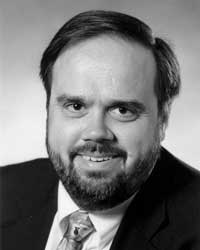
Martin T. Wells is the Charles A. Alexander Professor of Statistical Sciences at Cornell University, with joint appointments in the Department of Statistical Science, Department of Biological Statistics and Computational Biology, Department of Social Statistics, and as Professor of Clinical Epidemiology and Health Services Research at Weill Medical School. He serves as Editor-in-Chief of the ASA-SIAM Book Series and Co-Editor of the Journal of Empirical Legal Studies. Cornell University, Ithaca, NY Weill Cornell Medical College Research Interests span applied and theoretical statistics, Bayesian methods, biostatistics, clinical epidemiology, and computational biology. His work bridges disciplines like finance, legal studies, and health services research. Article Trends highlight advancements in Bayesian modeling, quantum cognition machine learning, tensor analysis, and misclassification correction, with applications in genomics, finance, and public health. Fellow of the American Statistical Association Fellow of the Royal Statistical Society Contributions include developing statistical software (e.g., rTensor), methodological innovations in clinical trials, and empirical legal studies on civil rights and the death penalty.
Professor Hendrik Vollmer is a faculty member in the Accounting Group at Warwick Business School , University of Warwick, since 2020. He previously served as Head of the Accounting Division at the University of Leicester (2015–2020) and worked at Bielefeld University in Germany for 16 years. His research bridges accounting, sociology, and environmental studies, focusing on accounting as a social practice and its role in addressing ecological challenges. Senior Fellow of the Higher Education Academy Associate Editor of European Accounting Review Member of editorial boards for Zeitschrift für Soziologie, Accounting, Organizations and Society, and Social and Environmental Accountability Journal Active in sustainability accounting research and education Contributor to interdisciplinary accounting literature Recent publications explore accounting's role in climate change mitigation, public value creation, and the spatialization of worth. His teaching modules include Accounting for Sustainability, People, Planet and Financial Accounting: Theory and Context .
Lucas Chancel is an Associate Professor of Economics at Sciences Po, affiliated with the Centre for Research on Social Inequalities (CRIS) and the Department of Economics. He is Co-Director of the World Inequality Lab at the Paris School of Economics (PSE), a Research Fellow at the Institute for Sustainable Development and International Relations (IDDRI), and Senior Advisor at the European Tax Observatory. He has held visiting positions at the London School of Economics (2021) and Harvard Kennedy School (2022). His research focuses on global income and wealth inequality , climate change , and tax policy , with a particular interest in the interplay between ecological transitions and social justice. He uses tax data, household surveys, and national accounts to analyze inequality trends across countries and over time. His recent publications span high-impact journals such as Nature Climate Change , Nature Sustainability , and the American Economic Journal: Applied Economics . Leading reports like the World Inequality Report (2018, 2022) and Climate Inequality Report (2023) reflect his role in shaping global discourse on inequality and sustainability. His work increasingly explores carbon inequality, wealth taxation, and climate finance, especially for the Global South. Selection of best books in economics – Financial Times (for 'Unsustainable Inequalities') Selection of best science books – Nature (for 'Unsustainable Inequalities') He supervises PhD students including Eulalie Saïsset, Philipp Bothe, and Yannic Rehm. His research is supported by collaborations with institutions like PSE, IDDRI, and the European Tax Observatory. He regularly contributes to public debate through op-eds in Le Monde and Time , and participates in international forums such as the World Economic Forum.
Professor Scott Sisson is Director of the UNSW Data Science Hub (uDASH) and Professor of Statistics and Data Science at the University of New South Wales, School of Mathematics and Statistics. His research focuses on computational statistics, particularly solving 'intractable' statistical problems through Bayesian methods, big data techniques, simulation algorithms, and extreme value theory with environmental applications. Education includes a PhD in Statistics from Bristol University (2002), MSc in Environmental Statistics from Lancaster University (1997), and BSc in Mathematics and Statistics from Lancaster University (1996). Research interests span: Bayesian statistics and uncertainty quantification Big data analytics and scalable algorithms Machine learning integration with statistical methods Extreme value modeling for climate/environment Computational techniques for intractable problems Recent publications (2022-2025) demonstrate strong emphasis on Bayesian computation, spatiotemporal modeling, and interdisciplinary applications in materials science, oncology, quantum computing, transportation policy, and ecology. Methodological innovations include likelihood-free inference, modular Bayesian analyses, and symbolic data modeling. Awards and honors: 2020 Service Award (Statistical Society of Australia) 2017 ARC Future Fellowship 2015 G. N. Alexander Medal (Engineers Australia) 2011 Moran Medal (Australian Academy of Science) 2010 J.G. Russell Award (Australian Academy of Science) 2010 Queen Elizabeth II Research Fellowship As Director of uDASH, he leads data science initiatives across UNSW. He maintains sustained ARC funding and supervises students in computational statistics, Bayesian methods, extreme value theory, and machine learning. Professional service includes editorial roles for Statistics and Computing and past presidency of Statistical Society of Australia.
Stephen Billings is an Associate Professor of Finance at the Leeds School of Business, University of Colorado Boulder, where he holds the Global Real Estate Capital Markets Chair position. He serves as the faculty director of the MS in Real Estate program and research director for the CU Real Estate Center. His work spans multiple research centers including the Center for Research on Consumer Financial Decision Making and the Michael A. Klump Center for Real Estate. Billings received his PhD in Economics from the University of Colorado, a MS in urban planning from the University of North Carolina, and a BS in economics from Georgetown University. Prior to joining CU Boulder in 2016, he was faculty at the University of North Carolina Charlotte with appointments in both economics and public policy, where he also served as faculty director for the real estate center. His research focuses on the intersection of housing, schools, neighborhoods and crime, addressing critical policy issues including the impact of public investment in light-rail transit on neighborhoods, school segregation's influence on academic achievement and crime, neighborhood gentrification causes, lead-based paint in low-income housing, and the effects of sea level rise and natural disasters on neighborhood sorting and household finances. Billings employs sophisticated analysis of large micro-datasets with studies based on data and policies in Charlotte, NC and Denver, CO. His work connects urban economics with public policy, demonstrating how neighborhood environments shape individual outcomes across multiple dimensions. Billings' recent publication record demonstrates a consistent focus on neighborhood effects, school choice impacts, crime economics, and housing market dynamics. His work frequently examines the intersection of race, housing, and economic outcomes, with particular attention to policy implications. He has developed innovative methodological approaches to studying residential amenities and neighborhood spillovers, with increasing attention to climate change impacts on housing markets. His research appears in top journals including The Quarterly Journal of Economics, American Economic Review: Insights, and Journal of Urban Economics. As an educator, Billings teaches undergraduate and masters classes in real estate finance and economics, as well as doctoral and masters level courses on cost-benefit analysis and statistical methods. He has extensive consulting experience conducting economic impact studies, including assessments of North Carolina's public higher education system, affordable housing needs in Colorado communities, and the economic effects of marijuana legalization on property markets. His practical policy work complements his academic research, creating a bridge between theoretical insights and real-world applications. Billings leads significant research initiatives through the CU Real Estate Center, where he directs studies examining the impact of business improvement districts and other urban development policies. His work bridges academic research with practical policy applications, making substantial contributions to our understanding of how housing, education, and neighborhood environments shape individual outcomes and community development. His December 2023 memo on the HUD Officer Next Door Program exemplifies his engagement with current housing policy issues.
Terrence Chapman is a Professor of Government at the University of Texas at Austin, affiliated with the Robert S. Strauss Center for International Security and Law, Center for European Studies, and Clements Center on History Strategy, and Statecraft. His research focuses on international organizations, conflict resolution, and political economy frameworks. Key research areas include: International institutional legitimacy Global regulatory regimes Public opinion in international affairs Conflict management mechanisms Formal modeling of diplomatic interactions Recent scholarly trends reveal expertise in climate governance negotiations, digital surveillance politics, and regulatory effectiveness. His work spans theoretical modeling and empirical analysis of international collaboration dynamics. Scientific recognition includes: 2011-2012 APSA Conflict Processes Section Book Award Teaching portfolio covers: Science Fiction and Politics International Organization and Law Research Methods in International Politics Previously served as associate/senior editor for International Studies Quarterly .
Chendi Zhang is a Professor of Finance at the University of Exeter Business School. He serves as the founding Director of the Exeter Sustainable Finance Centre and Director/Treasurer of the Global Research Alliance for Sustainable Finance and Investment. Previously, he was Associate Dean for Research & Impact (2021-2025) and Director of Research for Finance and Accounting (leading REF2021 submission). He holds affiliations with the Global Systems Institute and Environment and Sustainability Institute, contributing to UN Sustainable Development Goals including Climate Action and Responsible Consumption. Education PhD in Financial Economics from Tilburg University MRes in Finance from Tilburg University MSc in Economics from Tilburg University BSc in International Finance from Shanghai Jiao Tong University Research Focus Professor Zhang's research explores sustainable investing, corporate finance, and behavioral finance with emphasis on ESG integration, climate risk, and stakeholder governance. His work examines how environmental/social factors influence financial markets, corporate decision-making, and asset pricing through empirical and theoretical frameworks. Recent studies analyze biodiversity's financial impact, carbon pricing mechanisms, income inequality disclosures, and ESG resilience during crises (e.g., COVID-19, Ukraine conflict). His research identifies market inefficiencies related to climate sensitivity, gambling sentiment, and dividend policies while exploring corporate governance in state-owned enterprises. Funding and Recognition Research funded by UKRI Natural Environment Research Council, British Academy, BNY Mellon, Royal Bank of Canada, and World Bank. Work featured in The Economist , Wall Street Journal , and Forbes . Articles published in top journals including Management Science and Journal of Financial Economics , cited over 10,000 times. Professional Service Vice Chair of Research Committee for Chartered Association of Business Schools. External examiner for Imperial College London. Previous appointments at University of Cambridge, University of Warwick, University of Sheffield, and Tilburg University.
Marc-Antoine Dilhac serves as Associate Professor in the Department of Philosophy at the University of Montreal's Faculty of Arts and Sciences, where he also directs governance and international collaboration initiatives. He holds leadership roles as Scientific Director of Algora Lab and leads the Ethics and Politics research axis at the Centre de recherche en éthique (CRÉ). His academic affiliations extend to the Centre d'études et de recherches internationales (CÉRIUM) and the Canada Research Chair in Public Ethics and Political Theory (2014-2019). Education: PhD in Philosophy and Political Science, University of Paris I: Panthéon-Sorbonne (2009) Master 2 in Philosophy and Political Science, University of Paris I: Panthéon-Sorbonne (2003) Agrégation in Philosophy, University of Paris I: Panthéon-Sorbonne (2002) Dilhac's research spans ethics, political philosophy, and AI governance, with particular focus on democratic tolerance, multiculturalism, and the ethical implications of artificial intelligence. His work bridges theoretical political philosophy with practical applications in AI policy development, sustainable finance, and democratic institutions. He has contributed significantly to UNESCO's Recommendation on the Ethics of Artificial Intelligence and leads initiatives examining AI's impact on French-speaking culture and democratic values. His recent publications reveal a clear trajectory from foundational work on tolerance and justice theory toward contemporary AI ethics challenges. The thematic evolution shows increasing engagement with practical governance frameworks, particularly in finance and education sectors, while maintaining strong philosophical grounding in democratic theory and institutional design. Key Awards and Recognition: Canada Research Chair in Public Ethics and Political Theory (2014-2019) Banting Postdoctoral Fellowship (2011) Contributor to UNESCO's Recommendation on AI Ethics (2021) Dilhac has supervised over 15 graduate students across philosophy, political science, and interdisciplinary AI ethics programs. His research is supported by multiple grants from FRQSC, FRQNT, SSHRC, and MITACS, totaling over $2 million CAD. Current projects include the Generative AI Ethics Framework for Educational Technology (2024-2025) and the Sustainable Finance AI Tools project examining ESG/DEI disclosure analysis. He co-founded and leads the CORDÉ research group on corruption and democracy, and directs Algora Lab's work on AI governance. His upcoming February 2025 panel at Université Laval will address AI and Francophone cultural perspectives ahead of the Paris AI Action Summit.
Sarah E. Light is the Mitchell J. Blutt and Margo Krody Blutt Presidential Professor and Professor of Legal Studies & Business Ethics at the University of Pennsylvania's Wharton School. She serves as Faculty Co-Director of Wharton’s Climate Center and holds primary appointments in the Legal Studies & Business Ethics department. Her educational background includes a JD from Yale Law School (2000), an M. Phil in Politics from Oxford University as a Rhodes Scholar (1997), and an AB in Social Studies, Magna Cum Laude, from Harvard University (1995). Professor Light's research examines the intersection of environmental law, corporate sustainability, and business innovation. Her work addresses how corporate law structures function as environmental law, private environmental governance through business actions (including carbon fees and financial sector decisions), and First Amendment implications of regulating greenwashing. She employs interdisciplinary approaches connecting legal doctrine with business strategy and environmental science. Her publications reveal strong trends in private environmental governance mechanisms, climate risk management in financial systems, and the evolving regulatory landscape for corporate sustainability claims. Recent work focuses on greenwashing regulation, banking sector climate action, and non-extractive corporate relationships with public lands. Penn Fellows Program (2023-2024) Multiple Wharton Teaching Excellence Awards (2018-2021) ARCS Emerging Sustainability Scholar Award (2018) Haub Environmental Law Distinguished Junior Scholar (2015) Top 20 Article in Environmental Law & Policy Annual Review (2020) Professor Light has advised numerous student groups and projects, particularly through experiential courses like 'Wharton in the Wild' where she leads field-based environmental management education. Her grant activities include leadership roles at the Wharton Climate Center and Penn Program on Regulation, with research supported by interdisciplinary initiatives focused on climate governance and business innovation. She maintains active pro bono mediation work with federal courts and community organizations. As Faculty Co-Director of the Wharton Climate Center, she leads interdisciplinary research initiatives connecting business strategy with climate solutions, fostering collaboration between academia, industry, and policymakers through conferences, publications, and executive education programs.
Professor Khaled Hussainey is a Professor of Accounting at Bangor Business School, appointed in April 2024. He previously held academic roles at Portsmouth, Plymouth, Stirling, Manchester, and Ain Shams Universities. With over 25 years of teaching experience, his research focuses on corporate narrative reporting, XBRL, and sustainability. He has published over 200 peer-reviewed articles and secured grants from ESRC, Qatar National Research Foundation, and others. His qualifications include a Ph.D. in Accounting & Finance from the University of Manchester (2004), an M.Sc. from the University of Birmingham (2000), and a B.Com. from Ain Shams University (1994). He has supervised 56 PhD and 7 DBA theses. Research interests include corporate governance, earnings management, Islamic accounting, and big data. He serves as Co-Editor of the Journal of Financial Reporting and Accounting and Editor of the International Journal of Emerging Markets . His work has been recognized in Stanford University's Top 2% Researchers list (2023). Grants include £60,000 from ESRC (2005), $120,000 from Qatar NFR (2014), and £48,412 from the British Council (2019). He has held visiting professorships at King Khalid University, Tunis University, and others. He actively participates in international conferences and serves as an external assessor for promotions and research funds globally. His recent articles address sustainability reporting, FinTech disclosure, and climate governance. He emphasizes interdisciplinary research linking accounting practices with technological and environmental trends.
Dr Anandadeep Mandal is an Associate Professor in Finance and the Scotcoin Distinguished Chair of Digital Finance at the University of Birmingham , within the Birmingham Business School and the Department of Finance . He is the founding director of the MSc Financial Technology programme and the Programme Director for the MBA (Distance Learning), demonstrating significant leadership in academic program development. Education: PhD in Probability Distribution Fitting, Cranfield University (2016) MRes in Management Science, Cranfield University (2012) MSc in Finance and Investments, Durham University (2008) Bachelor’s in Electronics Engineering Research Interests: Dr Mandal’s interdisciplinary research lies at the intersection of mathematical modelling, artificial intelligence, finance, and digital innovation . His work focuses on AI-enabled investment strategies , blockchain for financial transparency , ESG performance measurement , and the development of the Sustainable Efficiency Index (SEI) . He also pioneers AI applications in digital education , including a patent-pending platform for automated grading of multi-modal student submissions using ensemble AI methods. Publication Trends: His recent scholarly output spans high-impact journals and conferences, reflecting a strong focus on digital finance , climate and social media analytics , cryptocurrency regulation , and AI in financial forecasting . His work combines advanced data science techniques with real-world policy and financial applications, particularly in sustainability and public health. Scientific Awards: No specific awards are mentioned in the provided text. Advising and Grants: Dr Mandal has secured over £2 million in research funding from sources including UKRI, UoB QR Funding, and industry partners. While specific students are not listed, his role as programme director and research leader suggests active mentorship. His research has direct policy impact through collaborations with the NHS Trusts , NIHR , and the UK Government . Labs, Teams, and Impact: Dr Mandal leads a research agenda that bridges academia and public policy. His work extends beyond the university through public engagement at science festivals, outreach for young learners, and expert contributions to UK Parliamentary consultations on AI, sustainability, and financial innovation. He is a key figure in advancing digital finance education and research at the University of Birmingham.
Andrew Green serves as Professor and Metcalf Chair in Environmental Law at the University of Toronto Faculty of Law, where he teaches environmental law, climate change law, administrative law, natural resources law, judicial decision-making, and international trade. His scholarly contributions span multiple legal domains with particular emphasis on the intersection of environmental regulation and administrative governance. Green's research interests encompass Environmental Law , Administrative Law , Climate Change Policy , Judicial Decision-Making , and International Trade Law . His empirical approach to legal scholarship has produced significant insights into how judges make decisions, particularly in administrative contexts, and how trade rules interact with domestic environmental regulations. His work often bridges theoretical legal analysis with practical policy implications. His recent publications reveal a strong focus on Canadian climate policy implementation, judicial behavior in high courts, and the evolving standards of review in administrative law. The research demonstrates increasing interdisciplinary integration, incorporating machine learning approaches to analyze judicial decisions and examining the systemic challenges in environmental governance. His scholarship consistently addresses the tension between regulatory effectiveness and legal accountability. Metcalf Chair in Environmental Law Past co-President of the Society for Empirical Legal Studies Past President of the Canadian Law and Economics Association Former Associate Dean at the Faculty of Law Chair of the University of Toronto Academic Appeals Committee (2009-2018) Before joining the Faculty of Law, Green practiced environmental law in Toronto for six years, handling both litigation (including prosecutions, administrative appeals, and civil actions) and transactional work. His practical experience informs his scholarly work on regulatory design and implementation. His research has influenced policy discussions on climate change, securities regulation, and administrative law reform in Canada.
Michael O. Wood is an Associate Professor in the School of Environment, Enterprise and Development (SEED) at the University of Waterloo and currently serves as the Associate Dean of Work-Integrated Learning in the Faculty of Environment. He holds a Ph.D. in Strategy and Sustainability from the Ivey Business School at Western University, an M.A. in Environmental Studies in Sustainability Management from Western University, and a B.A. in Science from the University of Guelph. Ph.D. in Strategy and Sustainability, Ivey Business School, Western University M.A. in Environmental Studies in Sustainability Management, Western University B.A. in Science, University of Guelph Dr. Wood's research focuses on organizational responses to sustainability challenges through the lenses of space, time, scale, and social license to operate. His work spans industries like insurance, mining, carbon management, waste management, and global security, with a particular emphasis on the Blue Economy and climate change. He has contributed to frameworks for water risk assessment, sustainable packaging practices, and the role of governance in sustainability-financial performance linkages. His recent publications address transdisciplinary tools for water risk management, workforce practices' impact on sustainability, ETS policy effects, and disaster response patterns in multinational corporations. While no scientific awards are explicitly mentioned, his work has been published in journals such as the International Journal of Disaster Risk Reduction and Economic Systems Research . Dr. Wood teaches courses like Introduction to Environment and Business and Environment and Business Project , and he collaborates with researchers like Sandhu, Weber, and Bansal on sustainability-related projects. His studies often incorporate mixed-methods analysis and policy reviews for sustainable resource management in Ontario and Canada.
Richard Hornbeck is the V. Duane Rath Professor of Economics at the University of Chicago Booth School of Business. He is an economic historian and applied-micro economist whose research focuses on the historical development of the American economy, examining why some places and people have become wealthier while others have remained poorer. Hornbeck is a research associate at the National Bureau of Economic Research, affiliated with programs on the Development of the American Economy, Development Economics, and Environmental and Energy Economics. Hornbeck's research spans multiple critical areas of economic history, with particular emphasis on slavery and emancipation economics, environmental history (especially the Dust Bowl migration), gender dynamics in 19th-century manufacturing, railroad development, and agricultural economics related to the Ogallala Aquifer. His work frequently utilizes newly digitized historical data to provide fresh insights into longstanding economic questions, connecting historical events to contemporary economic issues of wealth distribution and regional disparities. His publication record shows strong trends in American economic development research, with recent work focusing on the economic impacts of emancipation, historical manufacturing patterns by gender, and urban economic development. Many of his papers have been published as lead articles in top journals including the Journal of Political Economy, American Economic Review, and Review of Economics and Statistics. Hornbeck has received several prestigious honors including the Alfred P. Sloan Fellowship in 2014 and selection for the 2009 Review of Economic Studies Tour. His NBER affiliations demonstrate his standing in multiple subfields of economics research. Prior to joining Chicago Booth in 2015, Hornbeck was the Dunwalke Associate Professor of American History in the Economics Department at Harvard University. He received his PhD in economics from MIT in 2009 and a bachelor's degree in economics from the University of Chicago in 2004. His teaching includes courses on applied microeconomics in economic history and business in historical perspective, with course schedules extending through 2026.
Mykola Oleksiyovych Zhuravel serves as a Senior Lecturer at Zaporizhia Polytechnic National University within the Department of Occupational Safety and Environmental Protection, part of the Faculty of Construction, Architecture and Design. With over 37 years of service since 1987, he has established himself as a dedicated educator and researcher in occupational safety, civil defense, and environmental protection fields. His research interests span occupational safety, civil defense, environmental safety, life safety, industrial safety, ergonomics, and risk management. Zhuravel's scholarly work consistently addresses practical safety concerns in Ukrainian industrial and educational settings, with a particular focus on regional environmental challenges in Zaporizhzhia. His publications demonstrate a progression from foundational safety principles to contemporary concerns like ecological energy security and digital workplace safety. Analysis of his 15 most recent publications reveals a strong emphasis on practical applications of safety science, with recurring themes in environmental protection, workplace hazard mitigation, and emergency preparedness. His work bridges theoretical safety frameworks with practical implementation strategies, particularly relevant to Ukrainian industrial contexts. Zhuravel maintains active professional development, with numerous certifications through 2024 in occupational safety, civil defense, and academic integrity. He is an associated member of the European Community for Occupational Safety and Health (EUOP register number 13823000211, registered June 12, 2023). As an educator, he teaches multiple safety-related disciplines including Safety of Life of a Specialist with Basics of Labor Protection, Protection of Human Living Environment and Occupational Safety, and Civil Protection and Occupational Safety in Industry. His teaching approach integrates theoretical knowledge with practical safety applications relevant to Ukrainian industrial contexts.