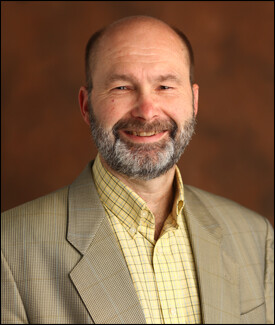
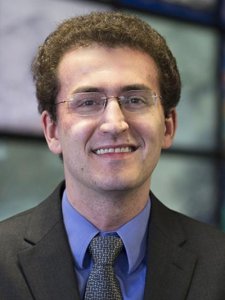
Shan Yu is an Assistant Professor in the Department of Statistics at the University of Virginia. His research focuses on developing statistical and machine learning methods for large-scale, complex data, with applications in neuroimaging, genomics, spatial epidemiology, and health disparities. He employs advanced techniques including non/semi-parametric regression, functional data analysis, and distributed learning while emphasizing data privacy. Yu received his Ph.D. in Statistics from Iowa State University (2020), advised by Professors Lily Wang and Dan Nettleton, following a B.S. from the University of Science and Technology of China. His work bridges statistical methodology and real-world problems, addressing challenges in environmental science (e.g., nitrogen dioxide inequalities), public health (e.g., pandemic forecasting), and computational biology (e.g., genotype-environment interactions). He collaborates on tools like the GgAM R package for generalized geoadditive models and contributes to open-source projects such as fFLM for functional linear regression. Key research trends include spatially varying coefficient models, fusion learning for heterogeneous data, and integration of satellite data with environmental health studies. His publications span journals in statistics, epidemiology, and environmental science, reflecting interdisciplinary impact.
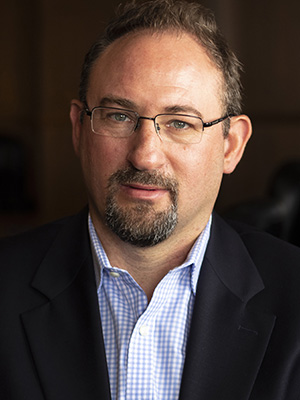
Douglas H Fisher is an Associate Professor of Computer Science and Computer Engineering at Vanderbilt University's School of Engineering. His research focuses on artificial intelligence, particularly machine learning, and computational sustainability. He holds a Ph.D., M.S., and B.S. in Computer Science from the University of California - Irvine. His work bridges AI with societal challenges, emphasizing sustainability, education technology, and cognitive modeling. Notable areas include integrating sustainability into computing curricula, leveraging AI for peer review systems (pReview), and exploring bias mitigation in neural networks. He has contributed to foundational machine learning techniques, such as rule induction for medical data analysis and decision tree optimization. Fisher's research spans interdisciplinary applications: from geospatial water resource modeling to MOOCs' social incentives. His educational contributions include blended learning frameworks and open educational resources advocacy. He has authored over 100 publications across AI, sustainability, and education, reflecting a commitment to both technical innovation and societal impact.
Dr Marie Aronsson-Storrier is a Lecturer in Law at University College Cork (UCC), Ireland, specializing in international law and disaster risk reduction. Previously, she held positions at the University of Reading, focusing on Global Law and Disasters. She holds a PhD in International Law from the University of Melbourne (2017), and her research explores international law's role in addressing disaster risk creation, human rights, and marginalized groups' inclusion in legal processes. Education: PhD in International Law, University of Melbourne (2017); Monash University LLB (Hons) and BA in Political Science. Research Interests: International lawmaking, disaster risk creation, human rights, use of force, global security, and the Anthropocene's legal implications. She currently examines how international law contributes to disaster risk mitigation and accountability mechanisms. Grants: Recipient of €91,170 from the Irish Research Council for the 'Home in Crisis' project (2025–2027), and €13,123 from Enterprise Ireland for ERC proposal development (2023–2025). Teaching: Coordinates and lectures on Principles of Public International Law, Contemporary Issues of International Law, and Law of the Sea for the 2024–2025 academic year. Also teaches Humanitarianism and the Law, and International Criminal Law. Publications: Authored/co-edited major works including The Cambridge Handbook of Disaster Risk Reduction and International Law (2019), Defining Disaster: Disciplines and Domains (2022), and Research Handbook on Disasters and International Law (2nd ed., 2024). Her monograph Publicity in International Lawmaking (2020) critiques covert operations' impact on legal frameworks. Labs/Teams: Active in UCC's School of Law research groups focusing on international law and disaster governance.
Eduardo Gildin is a Professor of Petroleum Engineering and Associate Department Head for Graduate Studies at Texas A&M University's College of Engineering. He holds the L.F. Peterson '36 Professorship and directs the university's graduate studies in petroleum engineering. His research focuses on reservoir modeling, control optimization, model reduction techniques, and CO2 sequestration. Gildin has pioneered data-driven approaches for reservoir simulation, integrating machine learning and physics-based models to enhance efficiency and accuracy. Education: Ph.D. in Aerospace Engineering, University of Texas at Austin (2006) M.S. in Mechanical Engineering, University of São Paulo, Brazil (1998) B.S. in Mechanical Engineering, Faculdade de Engenharia Industrial, Brazil (1995) Research Interests: Model reduction of large-scale dynamical systems Control and optimization of reservoir operations CO2 storage and geological carbon sequestration Machine learning applications in reservoir engineering and drilling automation Geomechanics and compaction damage evaluation Key Awards: 2020: William O. and Montine P. Head Memorial Research Award 2017-2018: Dean of Engineering Excellence Award 2013-2019: Energi Simulation Chair in Robust Reduced Complexity Modeling 2021: Distinguished Membership in Society of Petroleum Engineers Grants and Advising: Gildin has secured major funding for projects on reservoir simulation, drilling automation, and CO2 storage. He advises graduate students on topics such as surrogate modeling and reinforcement learning applications in petroleum systems. His lab collaborates with industry partners to translate research into practical tools for reservoir management and subsurface operations. Labs and Teams: He leads the Reservoir Simulation and Control Lab, focusing on advanced computational methods for reservoir optimization. His team develops open-source drilling models and collaborates globally on projects like the DREAMS (Drilling and Extraction Automated System) initiative.
Bradley Moore is a Professor at the University of California San Diego (UCSD), holding dual appointments in the Scripps Institution of Oceanography (Center for Marine Biotechnology and Biomedicine) and the Skaggs School of Pharmacy and Pharmaceutical Sciences . His research focuses on marine chemical biology, natural products chemistry, microbial genomics, and environmental toxicology. He earned a B.S. from the University of Hawaii, a Ph.D. from the University of Washington, and completed postdoctoral training at the University of Zurich. His work spans marine drug discovery, toxin mechanisms, and microbial metabolomics. Notable contributions include elucidating biosynthetic pathways for anticancer agents like salinosporamide A and studying the ecological roles of marine natural products. He actively investigates marine microbiome-driven processes, including coral genome conservation and harmful algal bloom dynamics. Recent publications highlight advancements in genome assembly (e.g., Corallium rubrum), enzymatic mechanisms (diiron oxidases), and toxin prediction models. His lab integrates bioinformatics, synthetic biology, and field studies to address environmental and biomedical challenges. Dr. Moore collaborates across disciplines to advance marine biotechnology and has contributed to initiatives like molecular forecasting of domoic acid blooms. His research emphasizes translating marine natural products into therapeutics while addressing ecological impacts of climate change and pollution.
Dr. Tobias Grafke is Associate Professor of Mathematics at the University of Warwick, specializing in applied and computational mathematics. His research develops tools to analyze stochastic systems in fluid dynamics, climate science, and active matter. Current projects focus on predicting rare events like AMOC collapse and turbulence proliferation using large deviation theory and numerical methods. Recent articles (2023-2025) investigate noise-induced climate tipping points, rogue wave mechanics, and scalable algorithms for stochastic PDEs. Grants include an EPSRC New Investigator Award (2020) and NSF/EPSRC joint funding. Teaches MA3J4 (Mathematical Modelling with PDE) and MA2K4 (Numerical Methods).
Professor Sergei Petrovskii is a Chair in Applied Mathematics at the University of Leicester's School of Computing and Mathematical Sciences. His research focuses on mathematical ecology, ecological modeling, and complex systems analysis, with a particular emphasis on climate change impacts, oxygen depletion in oceans, and ecological catastrophes. He has published over 150 peer-reviewed papers and four books, including influential work on global anoxia and mass extinction dynamics. As Editor-in-Chief of Ecological Complexity (2011–2021) and Section Editor-in-Chief of Mathematics ' Mathematical Biology section since 2020, he has significantly shaped interdisciplinary research agendas. His research interests span modeling ecological transients, population dynamics, and invasive species spread. Key contributions include frameworks for landscape decision-making, stochastic models of protest dynamics, and the MPDE conference series he founded. Despite no explicit mention of awards, his editorial roles and prolific publishing underscore his academic influence. His work integrates mathematical modeling with real-world challenges, addressing issues like oxygen minimum zones and the socioeconomic dimensions of climate change. Publications highlight his exploration of transient dynamics, regime shifts, and ecological responses to environmental change. His interdisciplinary approach bridges ecology, epidemiology, and social systems, evidenced by studies on protest dynamics and pandemic modeling. While no lab names are explicitly stated, his research often involves collaborative projects like the Landscape Decisions initiative and MPDE conferences.
Fredrik Rask Dalby is a Tenure Track Assistant Professor at the Department of Biological and Chemical Engineering, Aarhus University, affiliated with AU Engineering. His research focuses on mitigating greenhouse gas emissions from livestock farming, particularly methane and ammonia from manure management. Dalby leads multiple interdisciplinary projects including N-LIFE (2025-2028), STOREMIS (2024-2027), and PIGMET (2023-2026), addressing methane emission modeling in pig facilities and manure storage systems. His expertise spans environmental engineering, agricultural sustainability, and biogas technologies. Current projects explore surfactant treatments for methane reduction, ventilation control in manure tanks, and GHG emission quantification frameworks. Dalby collaborates with institutions like DCA - National Food & Agriculture Center, contributing to policy-relevant studies under EU directives. He holds a PhD (likely in environmental engineering) and has published extensively on manure management, ammonia mitigation, and climate-smart agriculture. His work combines computational modeling with field experiments to develop practical solutions for reducing livestock sector emissions.
Dr. Helen Cai is a Senior Lecturer in International Business and Circular Economy at Middlesex University Business School, where she serves as Programme Leader for the BA International Business Administration and BA Business Management (Top-Up). She also leads the Doctor of Business Administration (DBA) programme delivered in China through a partnership with United Business Institutions (UBI). Additionally, she holds a Full Visiting Professorship at Jiaxing University, China. Her academic leadership extends to editorial roles as Senior Editor of Cogent Business and Management and member of the editorial board of the Journal of World Business . She is Vice President of Marketing for the International Case Study Research Association (ICRA). Dr. Cai’s research focuses on international business, sustainability, green innovation, and corporate environmental governance. She employs advanced methodologies such as fuzzy-set qualitative comparative analysis (fsQCA), econometrics, and scientometric analysis. Her work addresses critical issues including green supply chains, carbon emissions, foreign direct investment, and institutional influences on innovation. The 15 most recent publications highlight a strong trend toward environmental sustainability, circular economy, and data-driven policy analysis. Her recent work spans blockchain in green supply chains, AI in rehabilitation, carbon governance, land use, and migration policy, demonstrating interdisciplinary breadth and policy relevance. Bronze award, The First National Collegiate Olympiad Mathematical Mirror Competition (2022) Honourable Mention, Interdisciplinary Contest in Modelling (2022) First Prize, Asia and Pacific Mathematical Contest in Modelling (2021) Third Prize, THE International Case Competition (2021) Dr. Cai has extensive supervisory experience, currently guiding multiple PhD candidates and having chaired over 30 DBA viva panels. She has supervised over 60 BA, 150 MSc, and 75 MBA dissertations. She has participated in 72 PhD/DBA committees in roles including external examiner, internal examiner, and panel chair. Her grants and funding are not explicitly mentioned, but her research output and editorial roles suggest sustained scholarly engagement. She leads research teams focused on circular economy and international business, and her future work is likely to expand into AI-driven sustainability analytics, cross-border green innovation, and climate governance. Her prior industry experience as a Senior Economist at China’s Central Bank enriches her applied research perspective.
Dr. Qiteng Hong is a Reader in the Department of Electronic and Electrical Engineering at the University of Strathclyde, Faculty of Engineering. He holds a BEng (Hons) and PhD from the same institution and is a leading researcher in power system protection and control for renewable-dominated grids. He is Deputy Director of the MSc in Electrical Power and Energy Systems and a member of the Steering Committee for the Joint MSc with Hong Kong University of Science and Technology (HKUST). BEng (Hons), Electronic and Electrical Engineering, University of Strathclyde, 2011 (Top Graduate of the Year) PhD, Electrical Engineering, University of Strathclyde, 2015 (fully funded by National Grid) His research focuses on novel solutions for monitoring, protection, and control of future power systems, particularly those with high renewable penetration. Key areas include wide-area monitoring using synchronized measurements, protection of converter-dominated systems, fast frequency response in low-inertia networks, and digital twin-based real-time control. His work contributes to UN Sustainable Development Goals in clean energy and climate action. Dr. Hong has published over 110 research outputs, including 59 journal articles. His recent publications (2025) emphasize fault detection and arc suppression in active distribution networks using advanced converter topologies and signal processing techniques. Themes include traveling wave analysis, Hough transform, synthetic zero-sequence signals, and machine learning for frequency prediction, reflecting a strong trend toward intelligent, data-driven power system protection. Gold Medal, 49th International Exhibition of Inventions Geneva (2024) IET Best Paper Award (DPSP APAC 2025) Best Paper Award, IEEE APAP (2019) Principal’s Award Runner Up, University of Strathclyde (2024) Students' Choice Award (2021) British Renewable Energy Awards – 'Highly commended' (2018) IET Prize for Academic Excellence (2011) John Moyes Lessells Scholarship (2013) Shortlisted for Best Innovation Award, Scottish Renewables (2018) Dr. Hong has led or participated in over 50 research and KE projects, securing £11M in funding (PI on £2.26M). He leads a team of 10 researchers, including 5 PhD students, and has developed the LGMVP platform—the UK’s first online tool of its kind. He serves on the University Senate, is a guest editor for 5 journal special issues (Co-Guest Editor-in-Chief for a special issue on zero-carbon power systems), and has delivered teaching across 9 modules. He has been PI or Co-I on major projects such as SETTLE-INSIGHT (NIA), Shell-iCase, and NGET SIF ALPHA. He leads an active research group focused on smart grid protection and digital twin technologies. He is the main developer of four prototype software tools and mentors a team of PhD students and research associates. His lab collaborates with industry partners like SSE, National Grid, and Shell, and he is a key figure in international initiatives through IEEE and CIGRE.
Dr Natalia Falagan Sama is a Senior Lecturer in Food Science and Technology at Cranfield University, affiliated with the Plant Science Laboratory within the Centre for Soil, Agrifood and Biosciences. Her work focuses on reducing food waste and improving food security through innovative postharvest strategies for fruits and vegetables. University: Cranfield University School: Centre for Soil, Agrifood and Biosciences Department: Plant Science Laboratory Academic Rank: Senior Lecturer Dr Falagan Sama's research centers on understanding the biological mechanisms of ripening and senescence in fresh produce and developing sustainable technologies to extend shelf life. Her expertise spans food quality, food safety, controlled and modified atmosphere storage, and urban agriculture. She investigates how stress responses in crops can be harnessed to maintain nutritional quality and reduce losses across the supply chain. Her work integrates plant physiology, food engineering, and sustainable systems thinking. Her recent publications highlight a strong focus on postharvest biology, sustainable packaging, cold chain optimization, and the role of urban agriculture in food security. Trends in her research show increasing emphasis on climate resilience, net-zero food systems, and the societal impacts of food production, particularly during crises like the COVID-19 pandemic. She frequently publishes in high-impact journals such as Postharvest Biology and Technology , Journal of the Science of Food and Agriculture , and Frontiers in Plant Science . Top 50 Women in Engineering: Engineering Heroes award (2021) Medal from the Royal Academy of Engineering (Spain) (2022) Best Research Supervisor at Cranfield University (2023) Dr Falagan Sama advises on major research projects funded by BBSRC, GCRF, ESRC, and NERC, including initiatives on avocado waste reduction in Mexico and the Rurban Revolution for resilient UK food systems. She collaborates with clients such as the World Bank, Johnson Matthey, and the Department of International Trade. As a STEM ambassador, she leads the Postharvest Technology module for MSc students and is a Fellow of the Higher Education Academy. She contributes to policy through advisory roles in the Food Standards Agency, the Cool Coalition, and the African Centre of Excellence for Sustainable Cooling and Cold Chain. She is actively involved in research teams focusing on sustainable food systems, cold chain innovation, and urban agriculture resilience. Her labs and projects emphasize interdisciplinary collaboration, integrating plant science, engineering, and social science to address global food challenges.
Sabine Seidel is a full Professor at the Institute of Crop Production, Department of Agrarwissenschaften, University of Natural Resources and Life Sciences, Vienna (BOKU). Her research integrates plant modeling, sustainable agriculture, and digital farming to enhance climate-resilient and resource-efficient crop systems. Her research interests focus on the development and testing of innovative, diverse (organic) cultivation systems, particularly mixed cropping and intercropping. She investigates ecosystem services such as yield and greenhouse gas emissions through measurements and modeling. Her work emphasizes the interactions between genotype, environment, and management (G×E×M), especially concerning water, nitrogen, and root dynamics. She also explores root growth responses to nutrient deficiency and drought stress, and leads initiatives in digital farming, including AI tools for pollinator detection and digital twin development in agriculture. Analysis of her recent publications (2024–2025) reveals a strong trend in interdisciplinary research combining field experiments with advanced modeling. Her work spans agroecosystem modeling, intercropping systems (especially wheat and faba bean), soil-crop interactions, and the application of AI and machine learning in agriculture. She frequently contributes to multi-model studies and calibration protocols, emphasizing model accuracy and validation. Her research is highly collaborative, involving teams across Germany and Austria. Root:shoot ratio under conservation tillage Phenotypic plasticity in winter wheat Resource acquisition in intercropping Digital crop growth simulation using GANs Soil carbon sequestration and organic matter dynamics She has been actively involved in the PhenoRob Cluster of Excellence as a junior research group leader (2020–2025), focusing on optimizing plant mixtures through field experiments and modeling. Prior to this, she conducted postdoctoral research on subsoil management at the University of Bonn. Her work bridges ecology, plant science, soil science, and digital technologies. She earned her doctorate on plant modeling and irrigation from the Technical University of Dresden and studied agricultural sciences at the Technical University of Munich. She is based in Vienna and maintains an active presence in knowledge transfer, with media contributions in print and online outlets discussing sustainable farming practices.
Thomas Ertl is a Professor at the University of Natural Resources and Life Sciences, Vienna (BOKU), leading the Institute of Sanitary Engineering and Water Pollution Control. His research focuses on urban water systems, emphasizing sustainable drainage, climate change adaptation, and nature-based solutions. He has coordinated 55 projects, including international initiatives in Albania and Austria, addressing stormwater management, wastewater heat recovery, and sewer infrastructure resilience. Key Projects : Analysing re-activated watercourses for urban resilience (2024–2028) Resilient rainwater management in Austria (2024–2028) Assessing pollutant emissions in Albania (2024–2027) Research Themes : Building Information Modeling (BIM) in wastewater systems Uncertainty analysis under climate change Stormwater pollution and heat island mitigation Awards : 2018: Goldene Ehrennadel des ÖWAV 1993: Best student award at AGIT 93 His recent publications highlight multidisciplinary approaches to wastewater energy recovery, spatial compatibility of nature-based solutions, and prioritization of stormwater management sites. He has supervised numerous theses and contributed to media discussions on urban climate resilience, including articles in Austrian outlets like futurezone.at and Der Kurier.
Sandy Nadeau is an Associate Professor and Vice-Dean at the University of Sherbrooke's Faculty of Education, specializing in school-family-community collaboration, educational resilience, and inclusive practices for vulnerable populations. Her academic journey includes a Postdoctoral Fellowship in Psychopedagogy from Université Laval (2018), a PhD in Education from Université de Sherbrooke (2018), a Master's in Educational Sciences (2011), and a Bachelor's in Preschool and Primary Education (2009). Her research focuses on school resilience among socioeconomically disadvantaged students, family-school collaboration in diverse contexts, and understanding student engagement through family-school-community interactions. She examines how family environment factors and classroom climate influence school dropout risks, with particular attention to inclusive education practices and teacher-student relationships. Nadeau's recent publications analyze teacher attitudes toward behavioral difficulties, parental engagement strategies in disadvantaged communities, and student narratives of resilience. Her work demonstrates consistent focus on practical applications for educational settings, particularly in supporting vulnerable student populations through collaborative approaches. Audet-Allard Prize (2021) from the Canadian Society for the Study of Education Charles Bujold Prize (2018) from Université Laval Multiple Faculty of Education Excellence Mentions (2011-2013) Thesis Jury Excellence Recognition (2018) She has secured substantial research funding from SSHRC, FRQSC, and Quebec government programs, totaling over $1.5 million since 2012. Her current projects include optimizing teacher education programs, studying parental involvement in primary education, and developing family literacy resources for rural communities. Nadeau actively collaborates with school boards and community organizations through the PÉRISCOPE research network, focusing on practical interventions for educational success in vulnerable contexts.
Steven Greybush is an Associate Professor in the Department of Meteorology and Atmospheric Science at Pennsylvania State University, College of Earth and Mineral Sciences. He is based in University Park, PA, and his research bridges atmospheric science, climate modeling, and interdisciplinary applications. He leads and contributes to major research initiatives involving AI-enhanced weather forecasting, planetary meteorology, and climate impacts on water and health systems. His research interests include Atmospheric Science , Climate Modeling , Data Assimilation , Planetary Meteorology (especially Mars) , Lake-Effect Snowbands , Tropical Cyclones , and Climate-Health Interactions . His work applies advanced techniques such as the Ensemble Kalman Filter (EnKF), Local Ensemble Transform Kalman Filter (LETKF), and AI-driven models to improve predictions of weather and climate phenomena. His recent publications (2021–2025) reveal a strong trend in integrating satellite and radar data into numerical models, enhancing forecasts of convection, hurricanes, and snowstorms. He also explores Martian atmospheric dynamics and the impact of climate variability on public health in Africa. His work is supported by major grants from NASA and NSF, including a $1.23 million NASA grant to improve AI satellite weather forecasting and an NSF grant for AI-powered weather pattern understanding. $1.23 million NASA grant for AI satellite weather forecasting NSF grant for AI-powered weather pattern understanding Penn State part of $6.6M consortium to improve weather forecasting Reducing Uncertainty in River System Forecasts to Maximize Nuclear and Hydro Generation Greybush collaborates with interdisciplinary teams and participates in field campaigns such as IMPACTS (Investigation of Microphysics and Precipitation for Atlantic Coast-Threatening Snowstorms). He advises or co-advises graduate students and researchers, though specific advisees are not listed. His work is published in top journals including Journal of Geophysical Research , Monthly Weather Review , JAMA Network Open , and PNAS .