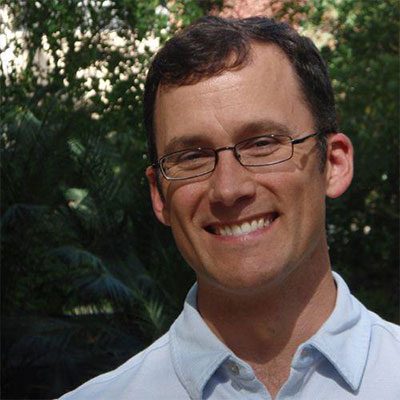
James O Lloyd-Smith is a Professor in the departments of Ecology and Evolutionary Biology and Computational Medicine at the University of California, Los Angeles (UCLA). His research focuses on understanding the ecological and evolutionary drivers of infectious diseases, with a particular emphasis on zoonotic pathogens and viral transmission dynamics. Key areas of investigation include the spillover of pathogens from wildlife to humans, environmental stability of viruses, and the application of mathematical models to inform public health strategies. His work spans disciplines such as epidemiology, computational biology, and wildlife health, with notable contributions to studies of influenza, leptospirosis, and monkeypox. He has pioneered methods to predict pathogen spread using mechanistic models and has explored the impact of climate, human behavior, and environmental factors on disease emergence. Notable projects include analyzing the stability of SARS-CoV-2 in different environments, investigating the role of childhood immune imprinting in influenza susceptibility, and developing frameworks to assess risks of viral spillover from bats. His research integrates field data with computational approaches to address global health challenges.
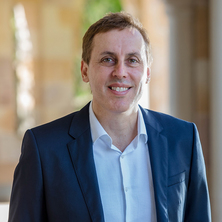
Matthew Hornsey is a Professor and ARC Laureate Fellow at the University of Queensland's School of Business. He leads the Net Zero Observatory, a multidisciplinary team advancing rapid decarbonization strategies. His research focuses on the rejection of scientific consensus (e.g., climate change skepticism), intergroup relations, and conspiracy theories. He has secured over 20 grants, including an ARC Laureate Fellowship, to explore these themes. Education : Bachelor (Honours) of Arts, University of Queensland Doctor of Philosophy, University of Queensland Research Interests : Psychology of science rejection (climate skepticism, vaccine hesitancy) Intergroup conflict and prejudice reduction Motivations behind belief in conspiracy theories Strategies for pro-environmental behavior change Grants & Awards : ARC Australian Laureate Fellowship (2024–2029) ARC Discovery Projects on conspiracy theories and accent-based discrimination UQ grants on trust breaches in nonprofits and climate communication Supervision : Available for PhD supervision in climate communication, science rejection, and intergroup relations. Current projects include public perceptions of climate protests and applying intelligence techniques to business problems. Labs & Teams : Leads the Net Zero Observatory and collaborates with the Centre for Research in Social Psychology (CRiSP).
Prof. Helge Stein is a Professor in the Department of Chemistry at the Technical University of Munich (TUM), leading the Professorship for Digital Catalysis. He holds a doctorate in mechanical engineering from Ruhr University Bochum (summa cum laude) and conducted postdoctoral research at Caltech before joining TUM in 2023. His research focuses on accelerating materials discovery and optimization through digital tools like machine learning, robotics, and data management, with applications in catalysis and battery systems. Stein has pioneered the development of Materials Acceleration Platforms (MAPs) to streamline experimental and computational workflows globally. Education: Bachelor/Master in Physics, Georg August University of Göttingen (2008–2013) Doctorate in Mechanical Engineering, Ruhr University Bochum (2017, summa cum laude) Postdoc, California Institute of Technology (2017–2020) Tenure-track Professor, Karlsruhe Institute of Technology (2020–2023) Research Interests: Integration of robotics and AI in materials research High-throughput experimentation for battery and catalysis systems Data-driven approaches to nonlinear material-behavior analysis Development of decentralized Materials Acceleration Platforms (MAPs) Key Awards: ACS Engineering Au Rising Star (2023) Kit Innovation Award (2023) Masao Horiba Award (2021) Eickhoff Prize (2018) Teaching: Leads courses on high-throughput methods, data management in chemistry, and digital catalysis seminars. Collaborates with interdisciplinary teams across TUM's School of Natural Sciences and the Munich Institute of Robotics and Machine Intelligence. Labs/Teams: Directs research groups focused on automated electrochemistry, materials robotics, and AI-driven battery design, with partnerships spanning academia and industry for global MAP implementations.
Syukuro Manabe is a renowned climate scientist and Senior Meteorologist at Princeton University's Program in Atmospheric and Oceanic Sciences. He is a Nobel laureate (2021) for pioneering global climate modeling. Affiliated with the Geophysical Fluid Dynamics Laboratory (GFDL), his work laid foundations for understanding climate change mechanisms. Education: B.A., M.A., and D.Sc. in Meteorology from the University of Tokyo (1953-1959). Career highlights include developing the first global climate model (1960s) and demonstrating CO2's role in global warming. Collaborations include Kirk Bryan on coupled ocean-atmosphere models and later work on transient climate responses. Research focuses on climate system interactions, numerical modeling, and paleoclimate studies. Awards include the Nobel Prize, Crafoord Prize, and Blue Planet Prize. His models remain foundational for modern climate research, predicting temperature and hydrological changes linked to greenhouse gases.
Prof. Penny Kyburz is a Professor and Associate Director (Engagement & Impact) at the School of Computing, Australian National University. She leads the GameFlow Lab and teaches Game Development, focusing on AI, human-AI interaction, and game design. Her work bridges academia and industry, with 20+ award-winning games including four BAFTA nominations. She holds a PhD, B.InfoTech(Hons), G.C.Ed.(Higher Ed.), and G.C.Acad.Prac. Education: Ph.D. B.InfoTech(Hons) Graduate Certificate in Education (Higher Education) Graduate Certificate in Academic Practice Research Interests: Video games, game design, and player experience AI and human-AI collaboration Virtual Reality and Mixed Reality applications Technology policy and digital rights Educational games and accessibility Awards: 4 BAFTA nominations for game contributions High critic scores for usability-tested AAA games Grants/Projects: IDEATE (2024–2028) MEC23: Advanced Biometrics (2023) C2 Sociotechnical Collaboration (2022–2024) Role-Based Deception in Games (2020–2021) Her GameFlow model and book on emergence in games are foundational in player experience research. She advocates for diversity in tech and has advised on digital rights in the Senate.
Kirsty Owen is a Senior Lecturer in Crop Nematology at the School of Agriculture and Environmental Science and a Senior Research Fellow at the Centre for Crop Health, University of Southern Queensland. Her expertise focuses on managing root-lesion nematodes in grain crops, with a research emphasis on biotic constraints in farming systems, interactions between soil-borne pathogens, and arbuscular mycorrhizal fungi. She holds a BScAg (1994), MScAg (1996), and PhD (1999), all from Sydney. Education: BScAg, University of Sydney, 1994 MScAg, University of Sydney, 1996 PhD, University of Sydney, 1999 Her research explores interactions between nematodes, soil-borne diseases, and beneficial fungi, aiming to enhance crop resilience. Teaching includes plant physiology, biology, food security, and emerging agricultural technologies. She has supervised over a dozen graduate students, including key projects on root-lesion nematode resistance in wheat and mung bean, and soil legacy effects of invasive species. Current projects address smoke taint mitigation in wine regions and genetic resistance in crops. Publications span nematode management strategies, crop rotation impacts, and advanced detection technologies. Notable contributions include optimizing NDVI for wheat tolerance assessment and systematic reviews of mycorrhizal-nematode interactions. Professional affiliations include the Australasian Plant Pathology Society and the Australasian Association of Nematologists.
Paul Zhou is a Senior Lecturer in the Department of Management at Monash University. He holds a PhD in Supply Chain and Operations Management from Hong Kong Polytechnic University (2018), a Master’s in Electronic Commerce from the University of Hong Kong, and a Bachelor’s in Global Supply Chain Management from Hong Kong Polytechnic University. His research focuses on Sustainable Operations Management, Global Supply Chain Networks, and applications of Big Data Analytics/Machine Learning in business operations. He has led projects such as 'Supply Chain Governance Solutions for the Gig Economy' (2025-2028) and 'Machine Learning for Civil Construction Safety' (2019-2022). His work has been featured in top journals like Production and Operations Management and Journal of Operations Management . Notable achievements include the 2017 IACMR Presidential Award for his study on environmental incidents’ market impacts. Zhou’s research explores sustainable supply chain practices, DEI commitments’ market effects, and geopolitical influences on global operations. He serves as Oceania Co-Editor for Journal of Supply Chain Management and reviewer for multiple journals including Production and Operations Management .
Professor Gerd Masselink is a leading authority on coastal geomorphology at the University of Plymouth, specifically in the School of Biological and Marine Sciences. He heads the Coastal Processes Research Group (CPRG), the largest such group in the UK, specializing in extreme storm impacts, climate change adaptation, and coastal management. His work spans global research, including coral reef islands, sediment dynamics, and beach hazard mitigation. He holds a PhD from Sydney University and has over 25 years of field and numerical modeling expertise, with 150+ publications (h-index 68). Current projects include the EA-funded 'Making Space for Sand' and UKRI's ARISE project on atoll resilience. He co-founded CMAR consultancy and authored textbooks like Introduction to Coastal Processes and Geomorphology . Research focuses on extreme storms' coastal effects, including erosion, flooding, and dune dynamics. He supervises 25+ PhD students and collaborates internationally on rip current forecasting, sediment budgets, and climate adaptation strategies. His work informs coastal policy and safety, such as RNLI beach hazard research and UK National Marine Park initiatives.
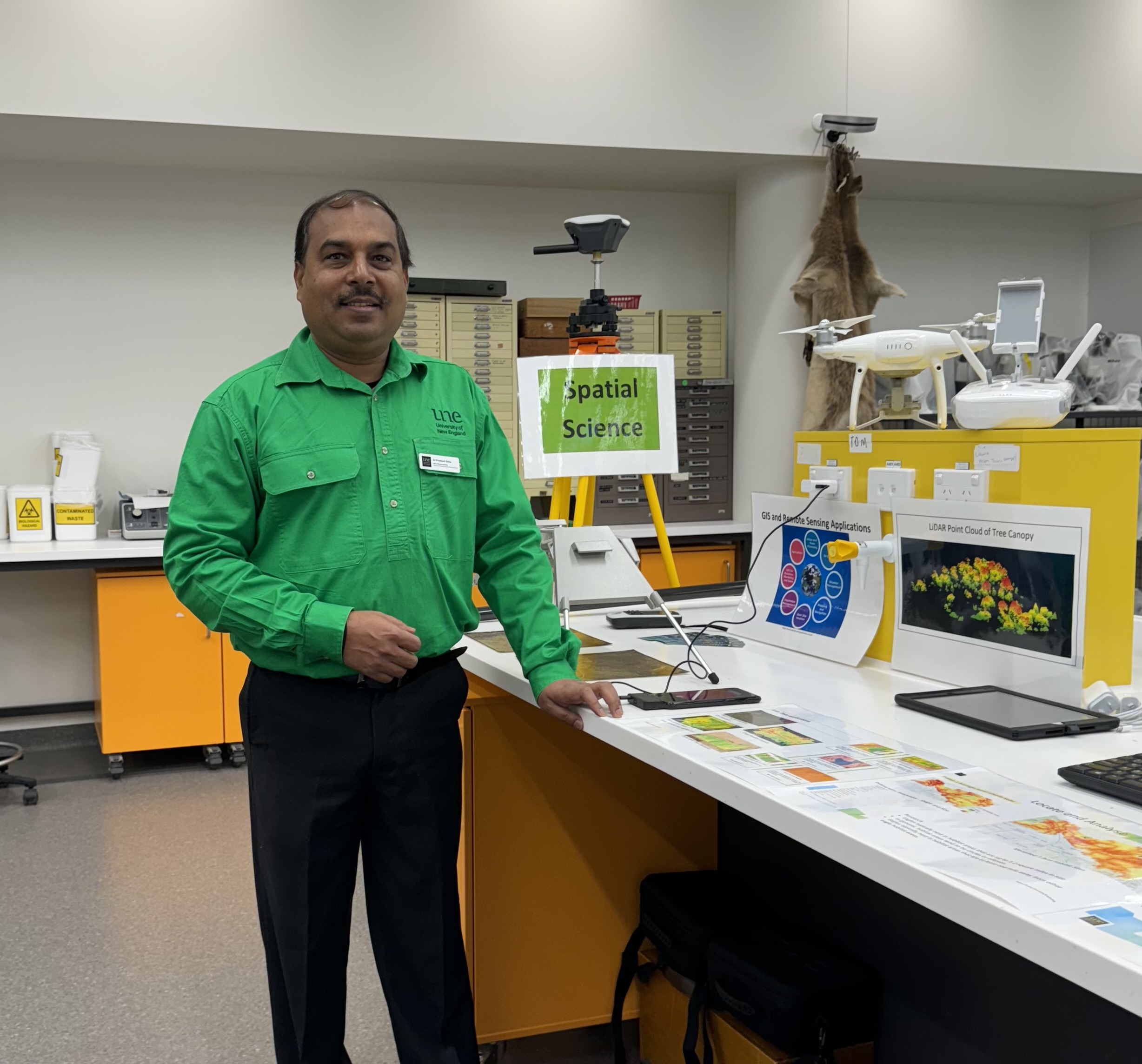
Dr. Priyakant Sinha is a Senior Lecturer in Spatial Science at the University of New England's School of Environmental and Rural Science, with over 20 years of research experience in remote sensing and geospatial science. He specializes in applying remote sensing technologies to agriculture, environmental monitoring, and natural resource management. His research focuses on: Advanced agricultural remote sensing and precision agriculture Time-series crop monitoring and yield prediction UAV/Drone-based 3D imaging for farm management Vegetation species mapping and change detection Hyperspectral and LiDAR data analysis Dr. Sinha teaches courses in GIS, spatial analysis, precision agriculture, and remote sensing applications. He has successfully supervised multiple PhD students in areas ranging from flood hazard mapping to drought monitoring using earth observation data. Technical expertise includes advanced digital image processing, GIS analysis and modeling, and specialized software including ENVI, ArcGIS, QGIS, and Pix4D. He develops innovative methods for temporal change analysis using machine learning and Google Earth Engine.
Dr. S. Madeh Piryonesi is an Assistant Professor in the Department of Civil Engineering at Toronto Metropolitan University. Her research focuses on data analytics, infrastructure asset management, construction management, and climate-resilient infrastructure. She holds a PhD from the University of Toronto (2019), an MEng from the University of Tehran (2014), and a BSc from the University of Tehran (2012). Education PhD, University of Toronto, 2019 MEng, University of Tehran, 2014 BSc, University of Tehran, 2012 Her research interests include leveraging machine learning for infrastructure resilience, optimizing construction processes, and predictive modeling of pavement conditions. She has received notable awards such as the CSCE/CRC Best Paper Award (2019) and First Place in the LTPP Data Analysis Contest (2018). Awards CSCE/CRC Best Paper Award, 2019 First Place in LTPP Data Analysis, 2018 CNAM Best Presentation Award (3rd Place), 2019 CNAM Best Presentation Award (3rd Place), 2018 She teaches courses such as CVL742 (Project Management) and CVL320 (Strength of Materials). Her work combines data-driven methodologies with practical engineering challenges to enhance infrastructure sustainability and decision-making.
Ravi Seshadri is an Associate Professor in the Transport Division at the Department of Technology, Management and Economics, Technical University of Denmark (DTU). His research focuses on designing equitable, efficient, and sustainable mobility solutions with a focus on fiscal instruments like congestion pricing and tradable permits, as well as emerging mobility modes such as shared and demand-responsive transit. He employs methods from transportation network equilibria, dynamic traffic assignment, and agent-based simulation. His research interests span transportation economics, urban planning, and intelligent transportation systems. Key areas include evaluating the impacts of automated mobility-on-demand systems, optimizing tolling strategies using predictive control and reinforcement learning, and integrating multi-modal transportation networks through game-theoretical frameworks. His work emphasizes real-world applications in urban freight systems, e-commerce logistics, and sustainable urban mobility policies. Recent projects include studying congestion pricing schemes via agent-based microsimulation, analyzing behavioral responses to decarbonization policies, and developing frameworks for tradable credit systems with peer-to-peer trading. He has contributed to both theoretical advancements (e.g., robust traffic assignment models) and applied tools like the SimMobility simulation platform. Ravi's research demonstrates a strong focus on bridging transportation engineering with policy analysis, using cutting-edge computational methods to address complex urban mobility challenges. His work spans academic publications, industry collaborations, and policy consultations to advance sustainable transportation systems.
Donato Romano serves as Associate Professor at The BioRobotics Institute of Scuola Superiore Sant'Anna, Italy, where he coordinates the Bio-Robotic Ecosystems Lab and co-founded the spin-off company HUBILIFE srl. His interdisciplinary work bridges robotics, biology, and AI to develop biohybrid systems for biodiversity preservation, sustainable environmental management, and life support in extreme scenarios including space exploration. With over 90 publications and an H-index of 27 (Scopus, March 2025), he has established significant academic leadership through editorial roles across 12+ international journals. Romano's educational foundation includes advanced degrees with honors: an M.Sc. in Agriculture Science and Technologies (2014) and a PhD in BioRobotics (2018), both from Scuola Superiore Sant'Anna. His academic journey includes visiting scholar positions at Khalifa University and substantial industry-academia collaboration through HUBILIFE srl, which commercializes bioinspired devices for human daily life improvement. His research program focuses on bioinspired and biomimetic robotics with particular emphasis on animal-robot interaction, biohybrid systems, and natural intelligence. Key projects address critical global challenges: SENSORBEES develops biohybrid environmental surveillance for ecological monitoring; REGOLIFE investigates lunar soil-terrestrial organism interactions for space agriculture; and OCEAN ROBOCTO explores marine ecosystem solutions. This work demonstrates a strategic progression from fundamental behavioral studies toward applied ecological and extraterrestrial systems. Analysis of his recent publications reveals strong trends in AI-driven behavioral analysis, with deep learning increasingly applied to entomological studies and pest management. The research spans agricultural applications (precision monitoring traps, larval detection systems), ecological conservation (biodiversity surveillance), and extreme-environment adaptation (lunar regolith studies). A distinctive feature is the consistent integration of biohybrid approaches where living organisms and robotic systems create synergistic capabilities exceeding either component alone. Romano's scientific recognition includes election as Junior Fellow of the Italian Academy of Engineering and Technology (2025), the Lucani fuori dal Comune award (2024), and multiple best-thesis prizes. His editorial leadership spans high-impact journals including IEEE Transactions on Medical Robotics and Bionics and Pest Management Science, where he serves as Associate Editor. As principal investigator, Romano coordinates major international projects totaling over €15M in funding: HORIZON-EIC's SENSORBEES (2024-2029), ASI's REGOLIFE (2024-2027), National Geographic's OCEAN ROBOCTO (2024-2026), and PRIN's COSMIC (2023-2025). His teaching portfolio includes PhD courses in Biosystems for Biorobotics and M.Sc. instruction in Bionics Engineering at Scuola Superiore Sant'Anna and University of Pisa. The Bio-Robotic Ecosystems Lab under Romano's direction pioneers biohybrid technologies where living organisms and robotic systems create integrated solutions. Current initiatives include SENSORBEES' environmental monitoring swarms, REGOLIFE's moonworm colonization systems, and HUBILIFE's commercial vector-control devices. The lab maintains active collaborations with space agencies, agricultural institutes, and conservation organizations, positioning biohybrid systems as next-generation tools for planetary-scale challenges.
René Veenstra is a Professor in the Department of Sociology/ICS at the University of Groningen, Netherlands. His research focuses on bullying, peer relationships, mental health, and social development in children and adolescents. He has contributed to the UN Sustainable Development Goals, particularly those related to mental health and child welfare. He is a member of the Koninklijke Hollandsche Maatschappij der Wetenschappen (KHMW) and has received awards for his work on prosocial relationships, romantic relationships, and social networks in youth. His research emphasizes the importance of peer influence in interventions, classroom environments, and anti-bullying programs like KiVa and GRIPP. He has led collaborative projects across multiple countries. Contributed to datasets such as KiVa Anti-Bullying Program (Waves 1-5), PRIMS, and SNARE. Engaged in public lectures and workshops addressing bullying prevention strategies and the role of social networks in behavioral development. His work also explores the impact of fatherhood on reoffending post-prison and examines how social norms shape adolescent behavior in schools. Has supervised 24 academic works and actively participates in peer-review activities. Collaborates with international researchers and institutions. He is involved in the 'GUTS' team science project to predict societal trajectories in adolescence and young adulthood.
Simon Neill is a Professor in Physical Oceanography at Bangor University’s School of Ocean Sciences, specializing in marine renewable energy, particularly tidal and wave energy resource characterization. He leads the MSc in Marine Renewable Energy and chairs IEC Technical Specification 62600-201 on tidal energy assessment. His research spans energy resource optimization, environmental impacts, and coastal management. He has secured £multi-million grants, including the £708k NERC-funded Southeast Asia Plastics project and the £7M European Regional Development Fund Smart Efficient Energy Centre. Education: PhD in Estuarine Physics (University of Strathclyde), BEng in Civil Engineering (University of Dundee), PGCertHE (Bangor University). Research Interests: Wave-tidal interactions, marine energy grid integration, sediment dynamics, microplastic dispersal, and climate change adaptation. He is lead sediment scientist at FORCE (Fundy Ocean Research Center for Energy) and contributes to the editorial board of Renewable Energy. Grants & Projects: NERC SEAmap: Marine Plastic Pollution Mitigation (2020-2023) European Regional Development Fund SEEC (£7M, 2019-2023) INTERREG ECOSTRUCTURE: Climate-Resilient Coastal Infrastructure (£3.5M, 2017-2020) Teaching: Module organizer for Marine Renewable Energy (MSc), Ocean Modelling (Undergraduate), and RV Prince Madog cruise. External examiner for Plymouth University’s MSc Marine Renewable Energy (2018-2022). Advising: Supervises PhD students researching underwater noise impacts, remote sensing for energy resources, microplastic dispersal, and estuarine energy modeling. Labs/Teams: Collaborates with FORCE, IEC, and industry partners like Repetitive Energy Ltd and Extra Mussel. Leads multi-institutional projects on estuarine dynamics and plastic pollution.
Jeffrey Doser is an Assistant Professor in the Department of Forestry and Environmental Resources at North Carolina State University (NC State), within the College of Natural Resources. His research focuses on ecological modeling, species distribution analysis, spatial statistics, and biodiversity monitoring. He specializes in developing R software tools for ecological data analysis, such as the spAbundance and spOccupancy packages. His work emphasizes improving statistical methods for occupancy models, integrating acoustic and survey data, and addressing environmental challenges like invasive species and climate change impacts on ecosystems. Key research themes include species-environment interactions, spatially varying coefficients in ecological models, and functional reproducibility in scientific coding. His recent studies address topics such as American chestnut restoration, wild bee community dynamics, and early detection of invasive aquatic species. Doser collaborates on interdisciplinary projects involving forest inventory, avian soundscapes, and long-term ecological monitoring. His publications (2020–2025) highlight methodological advancements in species distribution modeling, occupancy frameworks for multi-season data, and applications of Bayesian approaches. He advocates for rigorous statistical practices and reproducible research in ecology.