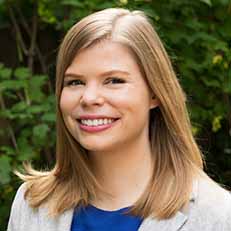
Danielle M. Wenner is an Associate Professor of Philosophy at Carnegie Mellon University and Associate Director of the Center for Ethics & Policy. She holds an Affiliate Faculty position at the University of Pittsburgh Center for Bioethics and Health Law. Her work critically examines structural injustice , power dynamics in global economics and health research contexts. PhD in Philosophy from Rice University (2011) Clinical Ethics Fellowship at Cleveland Clinic (2013) Mellon Postdoctoral Fellow at CMU (2013-2015) Key research areas include: Structural Analysis in moral/political philosophy Non-Ideal Theory applications Health Research Ethics for vulnerable populations Global Health Governance and equity frameworks Recent publications address topics in: Exploitation debates and theoretical frameworks Critiques of flawed policy reviews AI governance ethics University institutional betrayals Notable awards: Greenwall Faculty Scholar in Bioethics (2019-2022) Mellon Postdoctoral Fellowship for humanities She actively serves on: HIV Vaccine Trials Network Efficacy Trials Working Group HIV Prevention Trials Network Ethics Working Group NIH CONNECTS Program DSMB ACTIV4 Platform DSMB
Roles & Affiliations: Dr. Emanuele Bevacqua is an Emmy Noether Group Leader and Deputy Head of the Compound Environmental Risks department at the Helmholtz Centre for Environmental Research (UFZ) in Leipzig, Germany. He leads research on compound climate extremes using advanced climate models and interdisciplinary approaches. Education: PhD in Physics (Climate Science) from the University of Graz (2018), MSc in Physics (Geophysics/Astrophysics) from the University of Calabria (2014), and BSc in Physics from the University of Calabria (2012). Research Focus: Investigates compound weather and climate extremes (e.g., floods, droughts, wildfires) in a changing climate. Uses large ensemble climate models, impact models (hydrological/renewable energy), and observational data to assess risks and societal/environmental impacts. Key areas include extreme event attribution, climate variability drivers, and uncertainties in future projections. Grants & Funding: Principal Investigator of the Emmy Noether Programme-funded ADVICE project (€1.5M, 2024–2029) and co-PI of SEESAW (€500k, 2025–2027). Previously led the COST Action DAMOCLES (€600k, 2018–2022). Labs/Teams: Heads the Compound Climate Extremes group and contributes to interdisciplinary teams like the Computational Hydrosystems and Environmental Informatics groups. Collaborates with global institutions on projects such as the European Drought Observatory and renewable energy resilience initiatives.
Dr. Krestina Amon is a Senior Lecturer at the University of Sydney's Faculty of Health Sciences within the Biomedical Informatics and Digital Health (BIDH) department. She is a core member of the Cyberpsychology Research Group (CRG), focusing on digital health innovations, social media's role in health and education, and technology-based interventions for mental health. Her work spans child/adolescent mental health, serious games for healthcare training, and social media's impact on professional and peer interactions. Dr. Amon holds a PhD and a First Class Honors degree in Behavioural Health Science, alongside a Senior Fellowship from the Higher Education Academy (SFHEA). Her teaching includes coordinating the units BIDH3008 Digital Health in Practice and BIDH5000 Digital Health Innovation and Implementation . Her research emphasizes: Technology-driven mental health programs for youth Social media platforms for healthcare professional collaboration Impact of biofeedback games on ADHD symptom management Digital recruitment strategies in health studies Awards include the 2024 SEMCAN Good Mentor Award and 2013 Faculty Dean’s Citation for Teaching Excellence. Current projects investigate healthcare professionals' use of online platforms for peer education and interprofessional learning, alongside Pacific Island adolescents' digital health literacy. Her work bridges clinical practice, technology development, and educational innovation. Notable contributions include the Kids Helpline Circles social network platform for mental health support and studies on YouTube/Instagram content analysis for health communication.
Rafael Bohn Reckziegel is a Research Fellow at the Faculty of Science and Technology , focusing on remote sensing of riparian vegetation and environmental research. His work integrates terrestrial LiDAR and UAV-LS technologies to analyze woody vegetation structure and ecosystem services. Education : PhD in Structural and Functional Analysis of Trees (University of Freiburg, 2023), Master in European Forestry (University of Eastern Finland, 2018), Bachelor in Forest Engineering (Universidade Federal de Santa Maria, 2015). Research Interests include: Non-destructive biomass assessment Carbon stock quantification Agroforestry windbreak systems 3D vegetation phenotyping Hydrological and pedological interactions UN Sustainable Development Goals (SDG 13, 15, 2) Publication Trends show a focus on agroforestry applications in Southern Africa and Brazil, LiDAR-based structural analysis of woody plants, and carbon/water dynamics in integrated systems. Notable collaborations include J. P. Sheppard , S. Hassler , and E. Rochelmeyer . Labs & Teams involve international agroforestry research networks and remote sensing technology development groups. His work aligns with climate resilience studies and sustainable land-use practices.
Prof. Dr. Helmut Küchenhoff is a Professor of Statistics at the Ludwig Maximilian University of Munich (LMU), affiliated with the Institute of Statistics within the Faculty of Mathematics, Computer Science and Statistics. He previously served as Head of the Statistical Consulting Laboratory at LMU from 1997 to 2024. His academic career includes a habilitation in Statistics (1996) and roles as an acting C3 Professor at the University of Augsburg. He holds a doctorate from LMU and has conducted research stays at institutions like Texas A&M University and KU Leuven. Education: Studied Mathematics at TU Munich (1977–1980), earned a Diploma in Mathematics from the University of Zurich (1982), and completed postgraduate training in econometrics and statistics at LMU. Early career included roles at the GSF Institute for Medical Informatics and the LMU Chair of Econometrics. Research focuses on statistical methodologies applied to epidemiology (COVID-19 vaccine efficacy, infection dynamics), climate science (high-resolution climate modeling, bias correction), genetics (longitudinal trait analysis, genetic interactions), and education (PISA survey methodologies). He leads the CODAG (Covid-19 Data Analysis Group) as spokesperson, addressing pandemic data challenges. His work bridges statistical theory with practical applications in health, environment, and social sciences. Key projects include the Tirschenreuth County SARS-CoV-2 seroprevalence study, age-period-cohort analyses of travel behavior, and the KoCo-Impf serological cohort for healthcare workers. His statistical contributions span multivariate correction techniques, generalized additive models, and hybrid modeling approaches for complex data systems. Labs/Teams: Maintains the Statistical Consulting Laboratory and collaborates with interdisciplinary groups on pandemic response, climate impact assessments, and genetic epidemiology. Ongoing work emphasizes longitudinal health data analysis and methodological advancements in large-scale surveys.
Mallory L. Barnes serves as an Assistant Professor at Indiana University's Paul H. O'Neill School of Public and Environmental Affairs, specializing in quantitative ecological data analysis across spatial and temporal scales since joining in 2019. Her academic foundation includes a Ph.D. in watershed management and ecohydrology (University of Arizona, 2018), an M.S. in natural resources and environmental management (University of Hawaii at Manoa, 2013), and a B.S. in Zoology (University of Wisconsin-Madison, 2009). Her research integrates environmental informatics, remote sensing, and ecohydrology to scale biophysical processes from leaf to global levels and daily to decadal timescales. This work advances predictions of vegetation responses to climate change with critical implications for water resources, agricultural systems, and biodiversity conservation through sophisticated spatial analysis and data management frameworks. Recent publications demonstrate interdisciplinary innovation across earth system science, with emphasis on critical zone dynamics, dryland ecosystem monitoring via chlorophyll fluorescence, hyperspectral detection of photosynthetic metabolism, and climate-vegetation interactions in semiarid regions. Scientific recognition includes: Billings Award from the Ecological Society of America (2018) William G. McGinnies Graduate Scholarship in Arid Land Studies (2017) Her professional trajectory includes prior experience as a biological sciences technician at the USDA Southwest Watershed Research Center, informing her current research on environmental change prediction. No current advising or grant details are specified in source materials. Research operations appear integrated within the O'Neill School's environmental science infrastructure without dedicated lab/team documentation.
Almabrok Essa is an Assistant Professor in the Department of Mathematics, Computer Science, and Data Science at John Carroll University. His research focuses on advanced machine learning techniques applied to medical imaging, computer vision, and signal processing. He holds a faculty position at Dolan Science Center E207 and can be reached via email at aessa@jcu.edu. His work bridges theoretical computer science with practical applications in healthcare, environmental monitoring, and security systems. Research interests include deep learning architectures for medical diagnostics (e.g., chest X-ray analysis and skin lesion segmentation), steganography for secure image transmission, and remote sensing technologies for geospatial analysis. He has pioneered methods like Multibit LSB matching for data hiding and developed frameworks like COVID-CLNet for pandemic response. His contributions span over 20 peer-reviewed articles from 2015 to 2025, showcasing innovations in face recognition algorithms, brain signal analysis, and environmental pattern recognition. Notable applied projects include real-time heart/respiration monitoring systems and automated machinery threat detection for infrastructure protection. His research demonstrates strong interdisciplinary potential, combining computational methods with domains like biomedical engineering, environmental science, and cybersecurity.
Gavin Taylor is a Professor of Computer Science at the United States Naval Academy (USNA), where he chairs the development of the new Data Science major. His research focuses on Machine Learning, including neural network vulnerabilities, reinforcement learning for IoT devices, and adversarial machine learning. He is currently on sabbatical as a Visiting Professor at the Norwegian OpenAI Lab (NTNU), collaborating with institutions like the University of Maryland and NTNU. Professor Taylor has been recognized with the 2022 Class of 1951 Civilian Faculty Teaching Excellence Award, emphasizing his commitment to education. He teaches courses such as SD312: Machine Learning and has developed curricula across Data Science, Cyber Operations, and Operations Research. His sabbatical work in Norway involves advancing AI research through interdisciplinary collaborations. His research trends emphasize practical AI applications—such as autonomous IoT systems—and ethical concerns like adversarial attacks and data poisoning. He actively seeks partnerships to engage students in real-world data science projects through the new major, scheduled to graduate its first class in 2025.
Jason LaRoche is a PhD candidate in Sustainable Design at the Industrial Design Engineering Department of Delft University of Technology. He is also Director of Innovative Health at Johnson & Johnson Innovative Medicines, focusing on environmental sustainability in clinical research. His work includes leading global initiatives to integrate sustainability into clinical trial operations. He holds over 19 years of pharmaceutical industry experience, 15 of which with Johnson & Johnson, where he drives transformative projects shaping clinical trial innovation. Research interests center on predicting greenhouse gas emissions of clinical trials and applying circular business models to digital health solutions. Recent publications address climate footprints of clinical trials and digital sustainability policies. He collaborates widely across academia and industry to advance sustainable practices in healthcare.
Nadir Alvarez is a Full Professor at the Department of Ecology and Evolution, University of Lausanne (UNIL). He holds a Master's in Evolutionary Biology (University of Montpellier) and a joint PhD from the Universities of Montpellier and Neuchâtel. His research focuses on evolutionary mechanisms underlying ecological diversification and species adaptation, particularly through genomic and museomics approaches analyzing historical/ancient DNA. He has held roles including Chief Curator at the Geneva Natural History Museum and Director of the Naturéum in Vaud. His work combines population genomics, environmental DNA (eDNA), and museum specimen analysis to study biodiversity dynamics. Key contributions include developing methods for capturing nuclear environmental DNA and exploring genetic responses to climate change. He serves as Director of the Naturéum, emphasizing applied conservation through genomic insights. Education & Career 2001: Master's, University of Montpellier 2004: PhD, Universities of Montpellier and Neuchâtel 2010–2017: Assistant Professorships at UNIL and University of Neuchâtel 2024–Present: Full Professor, UNIL Research Interests Museomics and ancient DNA analysis Ecological and evolutionary responses to environmental changes Population genomics of plants and insects Conservation genomics for biodiversity management Recent Article Trends Recent work emphasizes genomic approaches in biodiversity monitoring, combining eDNA and museum specimens to study population dynamics and adaptation. Topics include glacial refugia effects on megafauna, postglacial radiations in whitefish, and genetic strategies for conserving endangered species like Phengaris butterflies. As Director of the Naturéum, he bridges academic research with public engagement in natural sciences, promoting applied conservation through genomic insights.
Ivan Lukovic is a Professor at the Faculty of Technical Sciences, University of Novi Sad, specializing in database systems, information systems, and conceptual modeling. His research spans over two decades with consistent publication output, demonstrating expertise in domain-specific languages, business process modeling, and data science education. His educational background isn't explicitly detailed in the provided sources, but his extensive publication record and editorial roles suggest advanced academic training in computer science. His research primarily focuses on database systems, information modeling, and applications of these technologies in various domains including education and industry. Lukovic's research interests center around database systems, conceptual modeling, and domain-specific languages. His work demonstrates particular expertise in form-based modeling approaches, integrity constraints, and model-driven development methodologies. He has made significant contributions to the understanding of business application modeling, production process modeling in Industry 4.0 contexts, and educational approaches in computer science. His recent publications show a strong focus on practical applications of database and information systems research, particularly in the areas of production process modeling, educational technologies, and data integration. The articles demonstrate increasing sophistication in methodology and application scope, with recent work addressing contemporary challenges in AI-powered literature review assistance and explainable AI methods. Lukovic has served as guest editor for multiple journal issues, including special editions on computer science applications in management and sustainability, and explainable AI methods. His editorial work reflects recognition of his expertise by the academic community. His collaborative work spans numerous projects with colleagues at the University of Novi Sad and international partners. He has contributed to educational initiatives in data science, particularly through the development of academic study programs at his institution. His work on students' preferences in computer science education indicates active engagement with educational research and curriculum development. Lukovic's research has practical applications in industry settings, particularly in manufacturing and business process domains. His recent work on production process modeling for Industry 4.0 demonstrates how his theoretical research translates into real-world applications that address contemporary industrial challenges.
Anna Fensel is a Full Professor in Artificial Intelligence and Data Science at Wageningen University, Netherlands. Previously held positions include Associate Professor at Wageningen University and Senior Researcher roles at STI Innsbruck, FTW Vienna, University of Surrey, and DERI Innsbruck. Habilitation and Doctoral Degrees in Computer Science (University of Innsbruck, 2018/2006) Diploma in Mathematics and Computer Science (Novosibirsk State University, Russia, 2003) Her research spans Knowledge Graphs, Semantic Web, GDPR Compliance, IoT Data Governance, and FAIR Data Principles . Current projects include EU Horizon SoilWise, with past work on H2020 OntoCommons, smashHit, and Eurostars WordLiftNG. Recent publications focus on: Automated compliance verification using SHACL Privacy-aware IoT data sharing GDPR implementation frameworks Knowledge graph applications in healthcare and climate analysis Professional roles: Editorial Board Member - Engineering Applications of Artificial Intelligence (Elsevier) Associate Editor - Frontiers in Energy Efficiency Advisory Board - SEMANTiCS conference series
Niels Batjes is a leading researcher at ISRIC - World Soil Information , specializing in soil data standardization, digital soil mapping, and carbon sequestration modeling. His work focuses on creating harmonized global soil databases like WoSIS and SoilGrids to support climate mitigation and environmental conservation. Key Research Areas : Soil Organic Carbon, Digital Soil Mapping, Pedotransfer Functions, Measurement Error Analysis Projects : Development of soil databases with quantified uncertainties, HoliSoils initiative for European forest soils Recent publications highlight his contributions to global soil water retention modeling, interoperable soil data exchange frameworks, and machine learning applications for carbon stock assessment. He plays a central role in international soil data infrastructure development.
Pablo Allendes is a Lecturer/Researcher in Corporate Governance & Leadership at the Faculty of Business and Economics (FBE), specializing in Development Finance and Financial Inclusion. His research focuses on microfinance, open banking, and social investing across Sub-Saharan Africa and South Asia. Education: Master in Law from Vrije Universiteit Amsterdam (2018), J.D. (Juris Doctor) from Universidad de los Andes (2011). Professional Experience: Compliance roles at Rabobank, legal advisory at Citco Group, and product development at Oikocredit International. Research interests include leveraging technology for financial inclusion, climate-resilient agriculture financing, and circular economy strategies. His work bridges legal frameworks with sustainable development goals, particularly in emerging markets. Key Awards: 2016 IBA Young Lawyers' Scholarship. Recent Activities: Supervised student theses on CSRD compliance and digital lending, organized conferences on international law and sustainable development.
Assoc. Prof. Radostin Vazov is an Associate Professor at the Department of Statistics and Econometrics, Faculty of Economics and Business Administration, Sofia University 'St. Kliment Ohridski'. He is the creator and head of the master's program 'Insurance and Social Risk Management' and a co-founder of VUZF University, a leading private institution in Bulgaria. He oversees international collaborations, including joint programs with the University of Sheffield and partnerships with financial institutions. His expertise spans insurance innovation, entrepreneurship development, and sustainable economic strategies. He leads PhD programs attracting international students and focuses on integrating technology and policy into economic systems. Education details are not explicitly provided, but his academic roles imply advanced qualifications in economics and statistics. His research interests emphasize risk management, blockchain applications, healthcare disaster preparedness, and digital economy frameworks. He actively publishes on topics such as energy security, robotics market growth, and post-pandemic socio-economic recovery. Prof. Vazov collaborates with industries to develop practical programs, including master's courses with banks and insurance companies. He has pioneered entrepreneurship programs yielding successful startups. While no specific awards are mentioned, his contributions to academic-industry partnerships and program development are significant. He is involved in managing international activities and curriculum innovation at both Sofia University and VUZF.

.jpg)