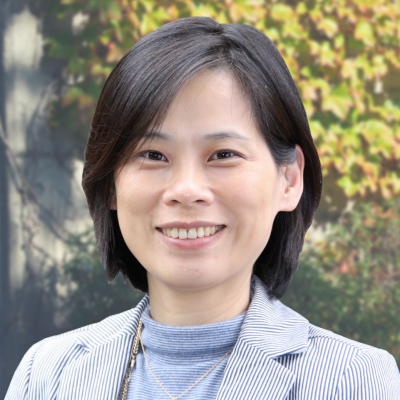
Katie Berns is a Postdoctoral Researcher at Aalto University's Department of Design within the School of Arts, Design and Architecture. She contributes to the NODUS Research Group with primary focus on human-computer interaction and sustainable technology solutions. Current affiliation: Aalto University Academic position: Researcher Research group: NODUS Contact: katie.berns@aalto.fi Research Focus: Berns bridges technology innovation with environmental sustainability through three key areas: AI and data science applications for climate policy Design of configurable technologies for community initiatives Human-computer interaction in domestic sustainability contexts Her recent publications demonstrate collaboration across multidisciplinary teams investigating climate policy dashboards, utopian design frameworks, and activist food-sharing technologies. While no formal awards are documented, her work emphasizes societal impact and participatory design approaches.
Kirsten Wiens is an Assistant Professor at Temple University’s College of Public Health, Department of Epidemiology and Biostatistics. As an infectious disease epidemiologist, her work bridges seroepidemiology, spatial analysis, and disease modeling to address gaps in traditional surveillance systems. She leads the Wiens Lab , which focuses on understanding unobserved infections in cholera and diarrheal diseases, particularly how mild/asymptomatic cases and healthcare access barriers impact transmission dynamics. Education: PhD in Immunology from New York University School of Medicine, postdoctoral research at University of Washington (IHME) and Johns Hopkins Bloomberg School of Public Health. Her research addresses critical public health challenges, including Estimating true cholera burden via serological and transmission models Mapping diarrheal disease hotspots using geostatistical methods Quantifying care-seeking behavior disparities in low-resource settings Informing vaccine campaigns through enhanced surveillance Recent publications (2021–2025) span high-resolution mapping, seroepidemiology for SARS-CoV-2, and household transmission studies. Collaborations include institutions in Bangladesh, the Democratic Republic of the Congo, and South Sudan, with methodologies applied globally through the Global Burden of Disease (GBD) and Local Burden of Disease (LBD) frameworks. Lab Members: The Wiens Lab includes research associates, assistants, and alumni such as Daniel Costello (MPH) and Ashlynn Solomon (Clinical Research Coordinator). Students are encouraged to engage in coding (primarily R), reproducible science via GitHub, and ethical AI use for research.
Fabian Hofmann is a Lecturer and doctoral researcher in Technology and Governance (TaG) at the Department of Humanities, Social and Political Sciences at ETH Zurich. His work bridges urban studies, digital governance, and peacebuilding through an interdisciplinary lens. His educational background includes a Master's degree in International Relations and Political Science from the Geneva Graduate Institute, where his thesis "Sousveilling the Smart City" was funded by the Genfer Asien-Gesellschaft and awarded the Prix Arditi 2024 for the best Master's thesis in International Relations. Hofmann's research examines the complex relationship between digital technologies and urban peacebuilding, focusing on three key areas: (1) socio-material practices driving the digital upgrading of urban security infrastructures, (2) risk externalization in digitalized international relations through ethical frameworks, and (3) resistance repertoires deployed by urban residents against negative impacts of smartification. His SNF-funded doctoral project "Securing Urban Peace" conducts a comparative analysis of smart city infrastructures in three post-conflict contexts: Northern Ireland, South Africa, and Sri Lanka, using multi-sited ethnography that combines discourse analysis, visual and participatory methods. His recent publications reveal a strong focus on the ethical dimensions of PeaceTech, urban surveillance, and digital sovereignty, with notable contributions in International Affairs and proceedings from the International Studies Association. His work consistently explores how technological solutions intersect with social power dynamics in urban security contexts. Hofmann has received significant recognition for his work, including: Prix Arditi 2024 for International Relations Special commendation from IHEID International Relations/Political Science Department (2023) Competitive field research grant from Association Genève Asie (2023) Before joining ETH Zurich, Hofmann worked as a Junior Researcher in the SNF Ambizione Project "An apomediated peace?" with the Centre on Conflict, Development and Peacebuilding, served civil service at swisspeace, and contributed to research at the Edgelands Institute. He currently serves as Communications Officer for the Journal of International Relations and Development and is a Junior Organiser of "DoingIPS Switzerland," fostering critical interdisciplinary exchange among scholars of international political sociology. His professional memberships include the Swiss Association for the Studies of Science, Technology and Society (STS-CH), European International Studies Association (EISA), and Schweizerische Vereinigung für Politische Wissenschaft (SVPW).
Dr Isabella Bovolo is an Assistant Professor in the Department of Geography at Durham University, specializing in tropical hydro-climatology and ecosystem services. She leads research on the impacts of climate change and deforestation in the Guiana Shield region, with a focus on coupled human-natural systems and flood risk management in urban/semi-urban environments. 2015-Present: Assistant Professor, Durham University World Bank-affiliated flood risk specialist (2013 onwards) Former Fellow of the Institute of Hazard, Risk & Resilience Her research integrates hydrology, climate modeling, and community engagement, particularly in Guyana and Suriname. Key projects include mangrove rehabilitation and Rupununi Savannah wetlands analysis. Recent publications analyze regional climate patterns, deforestation impacts, and hydrological modeling in tropical and Mediterranean regions. She has served on the Environmental Research Letters review board (2006-2021). Over $3.8M grant from Global Environment Facility (2008-2013) Extensive EU-funded project collaboration
Huei-Ping Huang is an Associate Professor at Arizona State University (ASU) in the Department of Aerospace and Mechanical Engineering within the School for Engineering of Matter, Transport and Energy. His research focuses on geophysical and environmental fluid dynamics, numerical simulations of atmospheric and oceanic flows, Earth system remote sensing, and climate change, aiming to improve regional-to-global climate and environmental predictions. Education: Ph.D., University of Illinois at Urbana-Champaign, 1997 M.S., National Taiwan University, 1989 B.S., National Central University, Taiwan, 1987 Huang’s research integrates computational modeling and fluid dynamics to study large-scale environmental systems. He leverages remote sensing data and numerical simulations to address climate change impacts, urbanization effects on desert environments, and drought predictability. His work spans interdisciplinary collaborations in sustainability and Earth system science. Research grants include NSF funding for multiscale urban atmosphere modeling (2009–2014), NASA support for desert urbanization studies (2012–2016), DOE projects on climate regime transitions (2010–2013), and collaborations with Columbia University on drought dynamics (2008–2013). He also contributed to visualization tools for spatio-temporal fluid dynamics (NSF 2009–2010). Teaching experience includes graduate courses in partial differential equations (MAE 502), computational fluid dynamics (MAE 460/560), and geophysical fluid dynamics (MAE 578). He mentors thesis and dissertation work (MAE 599/799) and teaches honors projects (MAE 493). Additional affiliations include the ASU Water Institute and the Global Futures Scientists and Scholars program, where he serves as a Senior Global Futures Scientist.
Michael Sawada is a Full Professor at the University of Ottawa in the Department of Geography, Environment and Geomatics . With a career spanning decades, his work bridges geomatics, health geography, and machine learning applications in spatial analysis. Ph.D. in Geography (2001) M.A. in Geography (1996) B.A. (Hon.) in Geography with concentration in Philosophy (1994) His research focuses on geospatial methodologies for addressing complex environmental and public health issues, including: Health disparities and disease distribution Machine learning for remote sensing and land use analysis Natural hazard risk assessment and mitigation Urban healthscapes and climate change impacts Recent publications highlight his innovative integration of deep learning with geospatial datasets , including analysis of neighbourhood-level Lyme disease risks and neural network-enhanced lichen cover mapping . His work also explores income polarization patterns in Canadian metropolitan areas and health service utilization trends. Professor Sawada supervises graduate students including Krutiben Mehta , Sarah Gebert , Zhewen Luo , Raziyeh Ramezani , and Amirreza Farshchin . He teaches advanced geomatics courses like GEG 6102 - Advanced Geomatics , emphasizing digital earth technologies and spatial information systems.
Irene Koronaki is a Professor at the National Technical University of Athens , affiliated with the School of Mechanical Engineering and the Thermal Engineering Section . She serves as Director of the Laboratory of Applied Thermodynamics, Cooling Technology & Refrigerated Vehicles since 2022 and has held academic roles at NTUA since 1999. Her research focuses include thermodynamics, heat pumps, energy efficiency, and renewable energy systems. Diploma in Mechanical Engineering, NTUA (1996) PhD in Thermal Engineering, NTUA (2000) Postdoctoral Researcher, NTUA (2002) Her research spans thermodynamics of cooling cycles, heat pumps, power cycles, energy saving in buildings, and thermal energy storage. She has pioneered work in nanofluids, solar cooling, and CO2 absorption systems. Her publications and projects reflect expertise in Stirling engines, hybrid solar collectors, and building energy optimization. Her recent articles highlight advancements in superfluid thermodynamics, solar PV/T systems, and medical robotics. Awards include the Edward F. Obert Award (2022) and leadership of the 2021 ASHRAE Student Design Competition winning team. She serves on ASME and ASHRAE committees and co-authored educational materials for refrigeration and energy inspection standards.
Annisa Puspa Kirana is a Ph.D. candidate and researcher at the Department of Geo-information Processing (ITC-GIP), Faculty of Geo-Information Science and Earth Observation (ITC), University of Twente. She is a Lecturer in the Department of Information Technology at State Polytechnic of Malang, currently on study leave to focus on her Ph.D. research. Her work integrates Artificial Intelligence , Computer Vision , and Geospatial Analytics to analyze satellite/aerial imagery for Climate Change Mitigation , Disaster Monitoring , and Resource Management . PhD in Geo-Information Science @ University of Twente (Netherlands) Master of Computer Science @ IPB University (Indonesia) Her research emphasizes Deep Learning applications in Earth Observation, including Vision-Language Models and Agentic AI for multimodal data analysis. She collaborates with interdisciplinary teams , government agencies , and industry partners . Selected Publications Trends: Focus on AI agents , LLMs , VLMs , and Vision Transformers for geospatial and environmental applications Technical tutorials on Streamlit , TalkToEBM , and LangChain integration Conceptual breakdowns of agentic vs. agent-based systems , interpretability in AI , and prompt engineering Scientific Awards: LPDP Awardee (Indonesian Endowment Fund for Education) Microsoft Certified Educator She actively mentors students in AI/geospatial fields and advocates for open-source science and ethical AI practices in environmental decision-making. Her work bridges academic research and practical policy tools .
Dr.-Ing. Reinhold Lehneis is a Scientist and Group Leader at the Department of Microbial Biotechnology, Helmholtz Centre for Environmental Research (UFZ), Leipzig, Germany. His work focuses on Energy system analysis for renewable electricity supply in electrobiorefineries Spatiotemporal modeling of renewable energy production Climate change impacts on wind and solar power generation Developing simulation tools like ReSTEP (Renewable Spatial-Temporal Electricity Production) models His research integrates environmental biotechnology with energy transition strategies, emphasizing Biomass power plants Wind and photovoltaic systems Run-of-river hydropower Municipal contributions to Germany’s energy goals Selected publications demonstrate expertise in High-resolution energy modeling Climate-adapted renewable systems Spatial equity in energy deployment and have appeared in journals like Energies , Renewable Energy , and Resources .
Amery Wu serves as Associate Professor and ECPS Graduate Advisor for Admissions and Scholarship at the University of British Columbia's Faculty of Education, specifically within the Department of Educational and Counselling Psychology, and Special Education. Based in Scarfe Library Block 287, Dr. Wu specializes in advanced quantitative methods for educational and psychological measurement. Dr. Wu's research focuses on applied statistical modeling in educational contexts, with particular expertise in test item performance analysis , globalization of testing through internet platforms , and longitudinal assessment methodologies . Their scholarly work bridges psychometrics with practical educational applications, examining how test design impacts diverse learner populations across international contexts. Key methodological contributions include innovations in mixed-effects modeling, differential item functioning analysis, and validation frameworks for complex assessment systems. Recent publications demonstrate a clear trajectory toward integrating response process data with performance outcomes , particularly through Bayesian modeling and advanced visualization techniques for online assessments. The research consistently addresses measurement challenges in high-stakes contexts including immigration language testing (CELPIP), health literacy instruments, and inclusive classroom models. Dr. Wu's work emphasizes the ecological validity of assessments within their sociocultural contexts. Teaching responsibilities include core methodology courses: EPSE 423 (Assessment of Classroom Learning), EPSE 481 (Introduction to Research in Education), EPSE 482 (Statistics for Educational Research), EPSE 483 (Reading Educational Research), and advanced graduate courses EPSE 592 (Experimental Designs) and EPSE 596 (Correlational Analysis). As Graduate Advisor for Admissions and Scholarship, Dr. Wu shapes the quantitative training of future educational researchers.
Mathias Kirchner is a Researcher at the University of Natural Resources and Life Sciences, Vienna (BOKU), affiliated with the wZGWN Centre for Global Change and Sustainability. Currently on parental part-time status (available Mondays and Wednesdays), he contributes to teaching and research in climate change economics, with a focus on policy-relevant modeling for Austrian sustainability transitions. His research spans : Climate Change Economics (CO2 pricing, decarbonization pathways) Environmental Policy (land use, stakeholder integration) Social Equity (distributional impacts, poverty assessments) Integrated Assessment Modeling (system dynamics, multi-model approaches) Work emphasizes Austrian contexts while addressing global challenges like SDG implementation and climate justice. Recent publications (2022-2025) reveal three dominant trends : (1) Economic modeling of carbon taxation with focus on revenue recycling and triple dividends, (2) Social equity analyses of decarbonization in housing/mobility sectors, and (3) Stakeholder-driven methodologies for SDG pathway validation. Key subfields include distributional impacts across income groups, land-use change under climate scenarios, and causal loop diagram applications. Dr. Kirchner operates within the wZGWN Centre for Global Change and Sustainability , an interdisciplinary hub at BOKU addressing climate adaptation, resource management, and policy coherence through integrated modeling approaches that bridge natural and social sciences.
Megan Matthews is an Assistant Professor in the School of Integrative Biology at the University of Illinois Urbana-Champaign, where she conducts research at the intersection of plant biology and computational modeling to address agricultural challenges under climate change. Her research focuses on enhancing photosynthetic efficiency, engineering plant-microbe symbioses, and optimizing crop growth through multiscale modeling approaches. Key interests include thermal tolerance in photosynthesis, metabolic modeling of nitrogen fixation, lignin biosynthesis for bioenergy, and predictive decision support systems for sustainable agriculture. She employs genome-scale modeling, CRISPR editing, and multi-omics integration to develop climate-resilient crops. Analysis of her recent publications reveals a strong emphasis on systems-level perspectives for improving crop yields, with significant contributions to photosynthetic engineering, symbiotic relationships in legumes, and biomass optimization on marginal lands. Her work consistently bridges computational biology and practical agricultural applications to enhance food security and sustainability.
Kees Lokman is an Associate Professor and Chair of Landscape Architecture at the University of British Columbia (UBC) School of Architecture and Landscape Architecture. His research addresses design challenges related to sea level rise adaptation, water/food shortages, and energy transitions, with a focus on community values. He directs the UBC Coastal Adaptation Lab and leads the transdisciplinary project Living with Water , funded by the Pacific Institute for Climate Solutions. Education: MDesS, Harvard Graduate School of Design MSc, Wageningen University BSc, Wageningen University His work intersects coastal adaptation, urban ecology, and climate-resilient design, emphasizing collaboration with Indigenous communities and governmental stakeholders. Research outcomes have been published in journals like Journal of Landscape Architecture and Landscape Research . Scientific Trends: Recent articles explore fluid geographies, flood-resilient landscapes, and integrating Indigenous knowledge into coastal adaptation. Key subfields include design frameworks for uncertainty, GIS-based risk visualization, and urban metabolism applications. Awards & Funding: CELA 2019 Excellence in Research and Creative Work Award (Junior Level) Natural Resources Canada Social Sciences and Humanities Research Council Creative Industries Fund NL Hampton New Faculty Grant Professional Practice: He has practiced at Piet Oudolf’s office in the Netherlands and Terry Guen Design Associates in Chicago, and founded Parallax Landscape . His lab collaborates with Squamish and Tsleil-Waututh First Nations on coastal flooding solutions.
Dr. Karolina Fieber is a researcher affiliated with Newcastle University , specializing in remote sensing, photogrammetry, and LiDAR data processing. Her work spans interdisciplinary applications in glaciology, cultural heritage analysis, and environmental monitoring. Research Interests : Remote Sensing : Glacier dynamics in the Antarctic Peninsula using stereo imagery. Cultural Heritage : 4D reconstruction and visualization of historical sites like Hadrian’s Wall. Environmental Monitoring : Canopy Height Profile (CHP) methodology for vegetation analysis in orchards and forests. Publications : Her recent work (2013–2018) focuses on LiDAR applications for glaciology, vegetation metrics, and low-cost landslide monitoring systems. Key subfields include waveform processing, 3D modeling, and sensitivity analysis for ecological and geological studies.
Professor Paul Blackwell is a faculty member at the University of Sheffield within the School of Mathematical and Physical Sciences . His academic work focuses on Bayesian statistics , statistical ecology , and inference for stochastic processes , applied to disciplines including environmental science, archaeology, and marine biology. His recent research involves animal movement modeling using continuous-time Bayesian frameworks , radiocarbon calibration for archaeological dating, and ecological uncertainty quantification . Publications span Bayesian computation , habitat selection , and ecosystem dynamics , with applications in reindeer behavior , coral reef resilience , and fisheries management . He contributes to Bayesian methodology for ecological and environmental modeling , integrating stochastic processes with real-world data . His projects often involve interdisciplinary collaboration, particularly with marine and climate scientists .