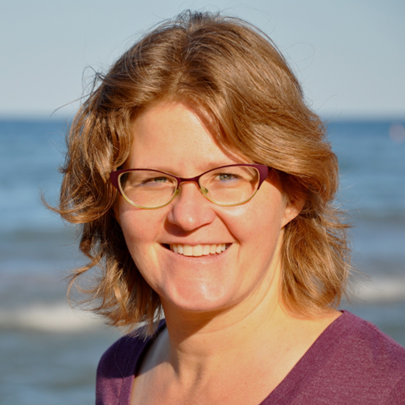
Jennifer Kaiser is an Associate Professor at Georgia Institute of Technology, affiliated with the School of Civil and Environmental Engineering and Earth and Atmospheric Sciences . Her research focuses on air pollutant formation, particularly volatile organic compounds (VOCs), and their impacts on air quality and climate. Endowed Position: Greene Early Career Professor (2024) Key Projects: Emissions from agriculture/oil-gas, biosphere-atmosphere interactions, satellite data validation Tools: CMAQ modeling, TROPOMI satellite analysis, low-cost sensor networks Her work spans instrument development to global chemistry-transport modeling, with recent emphasis on satellite-based monitoring and health risk assessment. She leads the Kaiser Group , which investigates VOC dynamics in urban and wildfire-affected regions. Scientific Awards: NOAA Grant (2021) Greene Early Career Professor (2024) Contact: jennifer.kaiser@ce.gatech.edu | Office: Ford Environmental Science & Technology Building, Room 3224
Dr Megan Evans is a Senior Lecturer in Public Sector Management at the School of Business, UNSW Canberra. She is an interdisciplinary social scientist focusing on environmental laws, policies, and tools, particularly in biodiversity and carbon offsetting frameworks. Education: PhD in environmental policy (Australian National University), BSc (Ecology) and BA (Mathematics) from The University of Queensland Her research drives policy impact in carbon offset integrity , biodiversity conservation , and environmental markets , including contributions to the Australian Government’s Biodiversity Offset Policy and the Queensland Land Restoration Fund . Her recent work examines biodiversity credits, carbon-negative technologies, and policy implementation challenges in human-induced regeneration projects. Key awards: Young Tall Poppy Award (2021) UQ Faculty of Science Rising Star Award (2018) ARC CEED scholarships (2014, 2017) She supervises five PhD students and has completed supervision of Dr Toiaba Binta Taher (PhD, with Professor Catherine Althaus). Her grants include an ARC DECRA Fellowship (2020–2023) and funding from the Department of Agriculture, Water and the Environment. Contact: megan.evans@unsw.edu.au
Andrew Gettelman is a distinguished climate scientist at Pacific Northwest National Laboratory whose research spans atmospheric sciences, climatology, and climate modeling. With a D-index of 91 and over 32,652 citations across 343 publications, he ranks 422nd globally and 194th nationally in Environmental Sciences. His research interests focus on fundamental climate processes including cloud microphysics, aerosol-cloud interactions, stratospheric dynamics, and climate model development. Gettelman has made significant contributions to understanding Arctic climate feedbacks, particularly how clouds respond to sea ice loss, and has advanced the representation of aerosols in climate models through his work on the Community Atmosphere Model (CAM). Analysis of his publication trends reveals a consistent focus on improving climate model representations of atmospheric processes, with recent work emphasizing climate sensitivity in the Community Earth System Model (CESM2) and bounding global aerosol radiative forcing. His research bridges fundamental atmospheric science with practical applications for understanding climate change. Among his recognitions, Gettelman has been named to the World's Best Scientists 2025 list. His highly cited works include foundational papers on cloud microphysics schemes and aerosol representation in climate models. Gettelman maintains extensive collaborative networks, frequently working with researchers from the National Center for Atmospheric Research, University of Colorado Boulder, and other leading climate institutions. His research has been instrumental in advancing climate modeling capabilities used in major international climate assessments.
Dr. Charles Rougé is a Senior Lecturer in Water Resilience at the Department of Civil and Structural Engineering, School of Mechanical, Aerospace and Civil Engineering, University of Sheffield. He holds an MSc and PhD, and his career spans top institutions in France, the US, Canada, and the UK. 2018–present: University of Sheffield (Lecturer → Senior Lecturer) 2023–2026: Principal Investigator, EPSRC-funded project on water-energy systems under climate change and energy transition Research Focus: Modelling complex water resource systems to enhance resilience against climate change, with a growing emphasis on water-energy nexus challenges. His work integrates hydrology, power systems engineering, economics, and decision theory. Key Trends: 15 most recent articles span climate-perturbed hydrological models, water-energy system coupling, socio-hydrology applications, and transboundary water governance. Many showcase interdisciplinary approaches to water infrastructure flexibility and uncertainty quantification. Scientific Awards: 2019 Quentin Martin Best Practice Award (JWRPM) 2015 Editor's Citation for Excellence (WRR) Grants: EPSRC grant (UKRI) for 'Flexible design and operation of water resource systems' (2023–2026) Team Leadership: Leads the 'Water resilience' research group at Sheffield, mentoring early-career researchers in water system sustainability and low-carbon energy transition.
Dominik Roeser is a Professor and Associate Dean of Research Forests & Community Outreach at the University of British Columbia's Faculty of Forestry, Department of Forest Resources Management. With over 21 years of experience in forest research and innovation, he has built a comprehensive forest operations research program since joining UBC in 2018, following his tenure as Senior Director at FPInnovations where he managed multidisciplinary teams focused on improving forest sector competitiveness and wildfire management solutions in Western Canada. Professor Roeser's research interests center on sustainable forest management and the bioeconomy, with specific expertise in forest bioproduction, supply chain design, steep slope harvesting, and biomass operations. His work through the Forest Action Lab applies diverse research methods including productivity studies, field trials, and modeling to address sustainability challenges across different operational environments. His research portfolio spans sustainable forest biomass utilization, harvesting in difficult terrain, innovative forest planning tools, operational productivity, carbon management, and community sustainability impacts from reforestation. His publication record shows a strong focus on practical applications of forest science, with recent work emphasizing wildfire management, remote sensing technologies for precision forestry, biomass energy systems, and the socio-ecological dimensions of forest management. His research increasingly integrates advanced technologies like LiDAR and drone-based systems with traditional forest operations to address contemporary challenges in sustainable forest management. Roeser has received the Recognition Award from the Canadian Forest Service (2017) for his contributions to forest science and innovation. His work demonstrates significant impact on both academic understanding and practical implementation of sustainable forest operations across North America and Europe. As an educator, Professor Roeser teaches several key courses including FOPR 264 Introduction to Forest Operations, FOPR 362 Harvesting systems and forest access, FOPR 464 Operational planning and management, and FRST 452 Coastal field school. He considers educating the next generation of forestry professionals one of his passions, bridging theoretical knowledge with practical industry applications. The Forest Action Lab, led by Professor Roeser, represents a multidisciplinary research hub applying diverse methodologies to address forestry stakeholders' needs across British Columbia, Canada, and globally. The lab's work connects academic research with industry implementation, focusing on practical solutions for sustainable forest utilization in varied operational environments.
Professor Sir Peter Barnes is a leading figure in respiratory science at Imperial College London's National Heart and Lung Institute (NHLI) . As Professor of Thoracic Medicine , his work focuses on Asthma, COPD, and cellular senescence in lung disease , with over four decades of contributions to understanding inflammatory pathways and therapeutic innovations. Research Interests Mechanisms of chronic airway inflammation in Asthma and COPD Cellular senescence in lung aging and disease progression MicroRNA transfer via extracellular vesicles in COPD pathogenesis Targeted drug delivery for respiratory conditions Global health implications of lung disease Recent Publications highlight trends in: MicroRNA regulation of senescence and inflammation Extracellular vesicle dynamics in lung disease Biologics and corticosteroid efficacy in respiratory conditions Environmental factors influencing COPD and asthma Scientific Recognition Knighthood (2023) for services to respiratory science Fellow of the Royal Society (FRS) and Academy of Medical Sciences (FMedSci) Collaborative Leadership at NHLI has mentored numerous postdocs and researchers. His work intersects with global initiatives like GOLD (Global Initiative for COPD) , influencing clinical guidelines and public health policy.
Lilyan Fulginiti is a Roy Frederick Professor of Agricultural Economics at the University of Nebraska-Lincoln. Her work focuses on agricultural productivity, climate change impacts, irrigation policies, and sustainable resource management, particularly in regions like the Ogallala Aquifer and South America. Research areas include agricultural economics, environmental economics, and climate policy. Her recent publications address gene-edited crops, carbon farming, and productivity disparities linked to trade and climate. Her scholarly output spans topics such as irrigation efficiency, biofuel economics, and conflict impacts on agriculture, reflecting a commitment to integrating economic theory with pressing environmental challenges. While no specific awards or student advisement details are listed, her extensive publication record underscores her contributions to advancing sustainable agricultural practices and policy analysis.
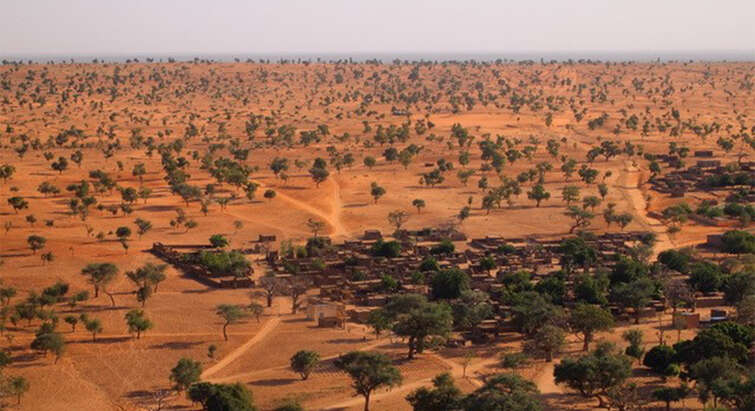
Ankit Kariryaa is a Tenure Track Assistant Professor at the Department of Computer Science and Department of Geosciences and Natural Resource Management , University of Copenhagen. His work bridges Machine Learning and Environmental Informatics , focusing on remote sensing, geospatial analysis, and ecological modeling. University of Copenhagen, Denmark Machine Learning Section, Department of Computer Science Geography, Land, Environment and Society, Department of Geosciences Kariryaa specializes in applying deep learning and computer vision to environmental challenges. His research includes: Automated tree detection and biomass estimation via satellite imagery Multi-modal geospatial representation learning Monitoring farmland tree decline and carbon sequestration potential Agroforestry system mapping using AI Developing AI tools for climate policy and sustainability Recent work trends show a focus on quantum-inspired machine learning , environmental monitoring , and cross-cultural AI applications . His 15 most recent publications span topics in remote sensing , ecological modeling , and AI ethics , with methods ranging from neural networks to tensor-based learning. He collaborates across disciplines, notably with researchers in ecology , climate science , and quantum computing . His outreach includes seminars on AI in agroforestry and ecosystem management , while his team contributes to global tree resource databases like TreeSense.
Aana Marie Vigen is an Associate Professor of Christian Social Ethics at Loyola University Chicago, specializing in interdisciplinary approaches to healthcare and medical ethics. Her work bridges sociology, anthropology, ethnography, and theology, with a focus on racial-ethnic and socio-economic disparities in health and healthcare. She actively engages in teaching at both undergraduate and graduate levels and contributes to academic discourse through publications and collaborations. Bachelor of Arts in Spanish, Religion, and Hispanic Studies from St. Olaf College Masters in Theology and Ethics from the Graduate Theological Union and Pacific Lutheran Theological Seminary Doctorate in Social and Theological Ethics from Union Theological Seminary, New York City Dr. Vigen’s research explores the intersection of human and ecological health, particularly in the context of climate change, as well as feminist ethics, white anti-racism, and theological anthropology. Her recent publications address prenatal genetic testing, reproductive justice, and the role of Christian ethics in confronting systemic health inequities. She employs ethnographic methods to engage with marginalized voices and contemporary bioethical challenges. Dr. Vigen co-edited Ethnography as Christian Theology and Ethics (2011) and contributed to interdisciplinary anthologies on bioethics, gender, and religious authority. Her work emphasizes the integration of theological reflection with empirical research to address issues like racial disparities in healthcare and ethical implications of genetic counseling. She is a member of the Society of Christian Ethics (SCE) and the American Academy of Religion (AAR) and served on the national ELCA Genetics Taskforce from 2008–2011.
Jasper Brinkerink is a Lecturer in Entrepreneurship and Innovation at the University of Edinburgh Business School. He also holds a research affiliation with the Centre for Family Business Management at the Free University of Bozen-Bolzano. His work focuses on entrepreneurial decision-making in family firms, new ventures, and privately-owned businesses. Lecturer at University of Edinburgh Research Affiliate at Free University of Bozen-Bolzano Teaching experience at Maastricht University Research Interests : Family business sustainability across generations Entrepreneurial capital in family firm contexts Research credibility and methodological practices Innovation and sustainability in SMEs Publication Trends : His work spans family business dynamics (2016-2024), research integrity (2021-2022), and sustainability in SMEs (2024). Key subfields include identity elasticity, P-hacking, absorptive capacity, and institutional reliance. Teaching Responsibilities : Course Organizer for "Doing Research for Business" (CMSE11538) Course Organizer for "Family Business Management" (CMSE11579) Course Organizer for "The Entrepreneurial Manager" (BUST10115) Research seminar organizer for Entrepreneurship and Innovation group
Professor Peter Smith is a Chair in Plant & Soil Science at the University of Aberdeen within the School of Biological Sciences . He obtained his PhD in 1991 and has held academic positions since 2001, including Senior Lecturer (2001), Reader (2003), and Professor of Soils & Global Change (2005). His work focuses on modelling greenhouse gas mitigation , bioenergy systems , and global food security . Fellowships: Royal Society (FRS), Royal Society of Edinburgh (FRSE), European Academy of Sciences (FEurASc), Indian National Science Academy (FNA) Leadership: Co-leader of the Environmental Modelling Group , Science Director at Scotland's Climate Change Centre of Expertise His research spans soil carbon dynamics , greenhouse gas removal technologies , and climate-agriculture interactions , with over 900 publications. Articles highlight work on bioenergy crops , soil monitoring frameworks , and global food system resilience . Funding includes major grants from NERC , EU , and UK government for projects like GHG Europe, DEVIL, and VERIFY. He serves as Editor for Global Change Biology and Global Change Biology Bioenergy .
Helmholtz Centre for Environmental ResearchGermany
Sandrine Maljean-Dubois is a Researcher at Aix-Marseille Université and Deputy Scientific Director of the CNRS Section 36 (INSHS). Her expertise lies in public law, with a focus on environmental and climate governance. She has organized numerous international colloquia on topics such as ocean law, climate litigation, and biodiversity protection. Her research addresses the intersection of international law, ecological urgency, and institutional accountability. She supervises doctoral students exploring climate policy, marine governance, and environmental justice. Key activities include co-organizing events like 'Gouverner la société internationale par les chiffres' (2025) and 'Le rôle des juridictions internationales dans la protection du climat' (2024). Her work bridges legal frameworks with scientific challenges, emphasizing interdisciplinary approaches to global environmental crises.
Dr. Edoardo Bertone is a Senior Lecturer at Griffith University's School of Engineering and Built Environment - Architecture and Design. He holds a PhD in Water Resources Engineering from Griffith University and Bachelor/Master degrees in Civil Engineering from the Polytechnic University of Turin. His research focuses on data-driven modeling, Bayesian Networks, and System Dynamics applied to water resources management, climate change adaptation, and the water-energy nexus. He is affiliated with Griffith's Cities Research Institute and Australian Rivers Institute, collaborating on projects with water utilities, governments, and private entities. Dr. Bertone has received awards such as the 2024 PVC Science Excellence in Teaching and the JSPS Fellowship (2022). He supervises doctoral and master's students in areas like water quality management and climate change impacts. Education: PhD in Engineering (Griffith University, 2015); MEng and BEng in Civil Engineering (Polytechnic University of Turin, 2009-2011). Research Interests: Water quality modeling, drinking water optimization, data-driven prediction, climate change adaptation, and sustainable development goals. He leads over 25 funded research projects, including initiatives on reservoir water quality management in Thailand, real-time nutrient monitoring, and cyanobacteria bloom modeling. Dr. Bertone’s work integrates advanced sensors, machine learning, and Bayesian networks to address environmental challenges. Awards: Listing includes PVC Excellence Awards (2024, 2017), JSPS Fellowship, and recognition as a Rising Star in Queensland Science (2015). Grants & Supervision: Principal supervisor for 10+ doctoral candidates and collaborator on projects funded by Seqwater, CSIRO, and the Ian Potter Foundation. Key grants include $745k for biofertilizer combatting eutrophication and $269k for coagulation optimization models. Dr. Bertone’s contributions extend to urban sustainability, co-editing the book *SeaCities: Urban Tactics for Sea-Level Rise* and developing frameworks for integrating SDGs into architectural education.
University of Illinois Urbana-ChampaignUnited States
Moses Okumu is an Assistant Professor at the School of Social Work and affiliated with the Center for African Studies at the University of Illinois. His research focuses on the intersection of mental health, digital health interventions, and humanitarian challenges affecting refugee youth in Uganda, particularly in urban slums like Kampala. Key research areas: mental health promotion, climate change impacts on refugee populations, eHealth literacy, and sexual/reproductive health. Collaborates on topics like social-ecological vulnerability, virtual reality therapeutic tools, and resource scarcity in humanitarian settings. His work includes qualitative studies, randomized controlled trials, and thematic analyses addressing health disparities in displaced communities. Media contributions highlight condom use trends among refugee teens and digital mental health solutions.
University of Illinois Urbana-ChampaignUnited States
Peter Christensen is an Adjunct Associate Professor in the Department of Agricultural and Consumer Economics at the University of Illinois. His research focuses on climate policy, energy efficiency, and environmental economics, with a particular emphasis on applying machine learning and economic modeling to address challenges such as decarbonization, climate adaptation, and environmental crises. His recent work includes studies on energy efficiency program effectiveness, transport pricing under climate extremes, and the economic impacts of environmental disasters like the Flint water crisis. He has published in top journals such as Journal of Public Economics , Nature , and American Economic Journal: Economic Policy . Christensen’s research often bridges theoretical models with real-world policy applications, aiming to inform decision-making in climate and environmental policy domains.