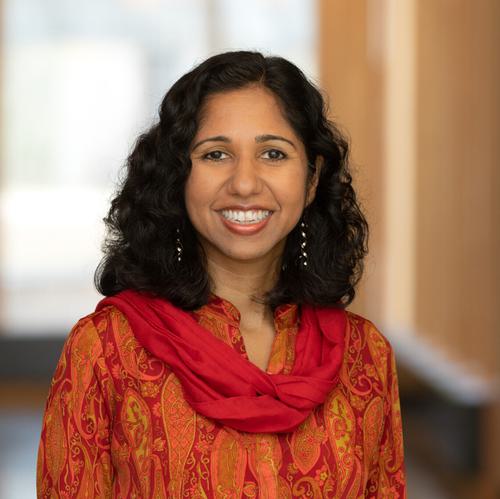
Dr. Herminia Janet Rivera Rodriguez is an Associate Professor at Nova Southeastern University’s Abraham S. Fischler College of Education & School of Criminal Justice. She specializes in the Department of Education, focusing on culturally relevant pedagogy and STEM integration in early childhood and elementary classrooms. Ph.D. in Teaching and Learning: Rethinking Early Childhood and Elementary Education from The Ohio State University M.A. in Childhood Education from University of Puerto Rico B.A. in Early Childhood Education K-3 from University of Puerto Rico Her research emphasizes culturally relevant pedagogy, aiming to create inclusive educational environments for young learners, and exploring STEM applications in early childhood settings. She has actively presented at local, national, and international conferences on early childhood education topics. With over 20 years of experience in teacher education, Dr. Rivera Rodriguez teaches in early childhood and elementary education programs at the college level. Her work bridges pedagogical theory with practical implementation in diverse classrooms.
Katrina Liu is an Associate Professor in the Department of Teaching and Learning at the University of Nevada, Las Vegas College of Education. Her research focuses on equity-oriented teacher education, critical reflection for transformative learning, digital equity, and critical counter-narratives as research methodologies. Education: Ph.D. in Curriculum and Instruction, University of Wisconsin-Madison (2011) Ph.D. minor in Educational Leadership and Policy Analysis Graduated from Beijing Normal University Her scholarship explores critical reflection frameworks, teacher diversity gaps, and leveraging technology like augmented reality and virtual supervision to enhance equity in urban, rural, and international contexts. She is author of the book Critical Reflection for Transformative Learning (2020, Springer). Grants: She has secured federal and state grants, including two Department of Education Fulbright Group Projects Abroad awards for international teacher development (2013 PI, 2017 Co-PI), an NSF Noyce Grant on STEM teacher education (2023–2028, Co-PI), and a Wisconsin outreach grant on next-generation learning models (2013, Co-PI). Professional Service: She serves as Secretary of the Division K Teaching and Teacher Educating (2023–2025) and Member-at-Large of the SIG Executive Committee (2022–2025) at the American Educational Research Association.
Jennifer Birkeland is an Associate Professor and Director of Graduate Studies in the Landscape Architecture department at the College of Agriculture and Life Sciences , Cornell University. As a licensed landscape architect in New York and LEED-accredited professional, she co-founded the multidisciplinary design practice op-AL in Brooklyn, New York, which explores the interplay between landscape and architecture. Education : Master of Landscape Architecture, Harvard University Graduate School of Design; Bachelor of Science in Landscape Architecture, California Polytechnic State University, Pomona. Research Focus : Her work investigates themes like opticality , synthetic natures , and figure-ground relationships , challenging conventional subject-object dynamics in design. She explores micro-infrastructures , kinetic culture , and perceptual reversibility in projects spanning urban design to domestic landscapes. Publications highlight innovations in virtual classrooms , urban hydrogen energy systems , and high-density food production . Scientific Awards : American Academy in Rome Prize (2018), Mark Hampton Award in Design (2018), Center for Teaching Innovation Grant at Cornell (2019), CSI Research Fellow at Landscape Architecture Foundation (2021). Teaching : Courses include LA 5020 Theory and Composition II Studio , LA 5060 Graphic Communication II , and LA 6940 Landscape Elements .
Anna-Lena Ljusberg is an Associate Professor and Senior Lecturer at the Department of Child and Youth Studies , Stockholm University . Her work focuses on systematic quality development in school-age educare, teacher education programs, and children's agency in educational settings. Role : Associate Professor & Senior Lecturer Workplace : Department of Child and Youth Studies, Stockholm University Contact : anna-lena.ljusberg@buv.su.se | +46 8-120 765 59 | Room 410, Svante Arrhenius väg 21A Research interests include: systematized quality work in after-school programs, children's perspectives in extended education, pedagogical approaches to ADHD, gender dynamics in childcare, and curriculum development for school-age educare. She applies socio-cultural frameworks and ethnographic methods to analyze classroom organization, remedial education, and teacher-child interactions. Key projects: National evaluation of Norwegian school-age educare (2018) with NTNU Social Research Framework Plan implementation evaluation for Swedish municipalities Child-centered quality development through needs inventories (2018-2021) Publications span teacher training programs, classroom structure, play facilitation models, and ethical considerations in special education research. Her work connects Swedish policy documents with international extended education frameworks.
Maria Teresa Abad Soriano is affiliated with the Universitat Politècnica de Catalunya (UPC), specifically within the Faculty of Computer Science (FIB), Department of Computer Sciences. She is a researcher in the GPLN - Natural Language Processing Group and the TALP Research Center, contributing to both educational technologies and computational linguistics. Her work spans decades, showing sustained academic engagement. Her research interests focus on educational technology, higher education internationalization, computer-supported collaborative learning, distance learning systems, knowledge representation, and academic mentorship . These are reflected in her long-term involvement in projects related to e-learning platforms, tutoring systems, and institutional development in computing education. The analysis of her recent publications (2019–2024) reveals a strong trend towards the internationalization of higher education in computing, with detailed studies on mobility, academic policies, and institutional impact. Earlier works (1990s–2000s) center on algorithmic education, groupware modeling, and intelligent tutoring systems, showcasing a career that evolved from technical AI and educational software to broader educational policy and management. She has contributed to competitive R&D+i projects such as OPENMT and SKATeR, and has co-authored technical reports, conference papers, and indexed journal articles. Her collaborations include key figures like Nuria Castell, Juan Antonio Pastor, and Maria Felisa Verdejo. Scientific Awards: No scientific awards were mentioned in the provided text. She has supervised or contributed to the Doctoral Program in Business Administration and Management, and her technical and educational outputs suggest an advisory role in research, though specific students are not listed. She has participated in multiple competitive research projects funded under Spain’s National Research Plans, indicating success in grant acquisition. Her work with open datasets and technical documentation supports open science and institutional transparency. She is actively involved in research groups such as GPLN and TALP, which focus on natural language processing and language technologies, contributing to both theoretical and applied advancements in the field.
Julius Kristjan Bjørnsson is a researcher at the University of Oslo , affiliated with the Department of Teacher Education and School Research . His work focuses on psychometrics , educational assessment , and the psychological aspects of learning , with a particular emphasis on national testing and international comparative studies . He contributes to large-scale assessments like PISA , TALIS , and ICILS .
Susan McDonough is an Assistant Professor in the School of Education at Dominican University with 14 years of direct classroom teaching experience and over a decade mentoring teacher candidates in PreK-12 grade classrooms. Her educational background includes: PhD in Curriculum and Design from the University of Illinois MEd in Curriculum and Instruction from the University of Illinois BS from Illinois State University Dr. McDonough is passionately committed to democratic teaching that empowers students through inclusive and participatory educational practices. Her research bridges moral philosophy and classroom practice, particularly examining Iris Murdoch's concept of attention and its application to teaching. She investigates how democratic principles can be integrated into everyday classroom settings to foster civic engagement, social justice awareness, and student voice in the learning process. Her scholarly trajectory shows a clear progression from theoretical philosophical explorations of moral vision in education (2000) to practical applications of democratic practices in community and classroom contexts (2021). Her work consistently emphasizes the ethical dimensions of teaching and learning, with a particular focus on how educators can create inclusive environments that honor student perspectives. Her scientific recognition includes: CASS Excellence in Teaching Award from Dominican University (2020) Dr. McDonough has actively mentored teacher candidates for over ten years while presenting her research at major conferences including the American Educational Research Association (2023) and the Critical Questions in Education Conference. Her presentations on democratic teaching practices, inclusive education for teachers of color, and deliberative democracy in elementary classrooms demonstrate her commitment to translating theoretical frameworks into practical classroom applications that empower both teachers and students. Her collaborative research with Benchik-Osborne and Porfilio suggests active engagement with research teams focused on democratic education and liberal arts integration, particularly examining how these approaches can be implemented effectively in diverse educational settings including Minority-Serving Institutions.
Professor Petra Wieler is a distinguished academic at the Freie Universität Berlin, where she serves as C4-Professor for Primary School Education/Learning Area German in the Department of Education and Psychology. Her academic career spans over four decades, with significant contributions to German didactics, literacy development, and children's media reception. Her research interests focus on reading and media socialization, linguistic enculturation, literary learning, and teaching research, with particular emphasis on multilingual education contexts. Professor Wieler's work bridges theoretical frameworks with practical classroom applications, examining how children interact with literature and media across different linguistic and cultural contexts. Her extensive publication record reveals consistent research trajectories centered on picture book reception, literacy development in multilingual children, family literacy practices, and the intersection of media and narrative construction. The publications demonstrate increasing attention to multilingual contexts and digital media influences on children's literacy development over time. Professor Wieler actively supervises graduate students through her Master's thesis colloquia and maintains an active research agenda through projects like the Nightingale Berlin mentorship program for children with migration backgrounds. She has developed numerous courses on multilingualism in early childhood education, literacy development, and children's literature. Her laboratory work centers around the 'Medienrezeption und Narration' research project examining how elementary school children process book and media stories through conversation and storytelling, conducted at the intersection of language acquisition research, psychological reception studies, and educational methodology.
Patrik Voštinár is an Assistant Professor at the Department of Computer Science , Faculty of Natural Sciences , Matej Bel University . Holding a PhD in Applied Computer Science from the same university (2014-2017), he teaches courses in Programming , Discrete Mathematics , Web Technologies , and Android Programming . As department head and study advisor, he actively shapes academic programs and student experiences. Matej Bel University (2017-present) Department of Computer Science Faculty of Natural Sciences His research focuses on computer science education and educational technology , with particular emphasis on: VR/AR applications in teaching Game-based learning environments Microcontroller programming pedagogy Mobile application development education Physical computing tools for K-12 Adaptive learning interfaces His work with MakeCode , micro:bit , and EEG-controlled games demonstrates innovative approaches to programming education. He has received multiple eLearning competition awards for educational courseware development. Heart on the palm (Project of the year 2019) 2nd price in eLearning competition (2023) for Discrete Mathematics course Price of České společnosti pro systémovou integraci (2023) for Web Technologies 1st price in eLearning competition (2023) for Geometry Didactics Voštinár actively contributes to academic communities through: Membership in DIDINFO conference program (since 2017) Editorial Board member of Elementary Mathematics Education Journal Organizing workshops for primary/secondary students Popularizing informatics through extracurricular programs
Associate Professor Jill Duncan serves as the University Chair for Equity, Diversity, and Inclusion (EDI) at the University of Newcastle's School of Education. With a career spanning academia, public service, and non-profit leadership, she champions inclusive education and social capital development for deaf/hard-of-hearing (DHH) individuals. Qualifications: PhD (University of Western Australia), Master of Educational Management (UWA), Master of Education (University of Cincinnati), Bachelor of Science (University of Cincinnati). Jill's research focuses on equity, diversity, and inclusion in education, social capital for DHH adolescents, and inclusive education for students with disabilities. Her work bridges policy and practice, emphasizing family engagement, teacher training, and technology integration. Recent publications analyze curriculum effectiveness for students with severe intellectual disabilities, UDL in higher education, and deaf role models' impact. Articles highlight trends in deaf education , communication assessment , and technology-enabled inclusion . Scientific Awards : Medal of the Order of Australia (2025), University of Newcastle Excellence Awards (2020), International Professional of the Year in Deaf Education (1998). Jill supervises PhD students on topics like deaf role models, curriculum inclusion, and AAC systems. She has secured $296,872 in grants, including projects on school autonomy, social capital, and teacher training. Her collaborations span Australia, UK, Canada, and Taiwan.
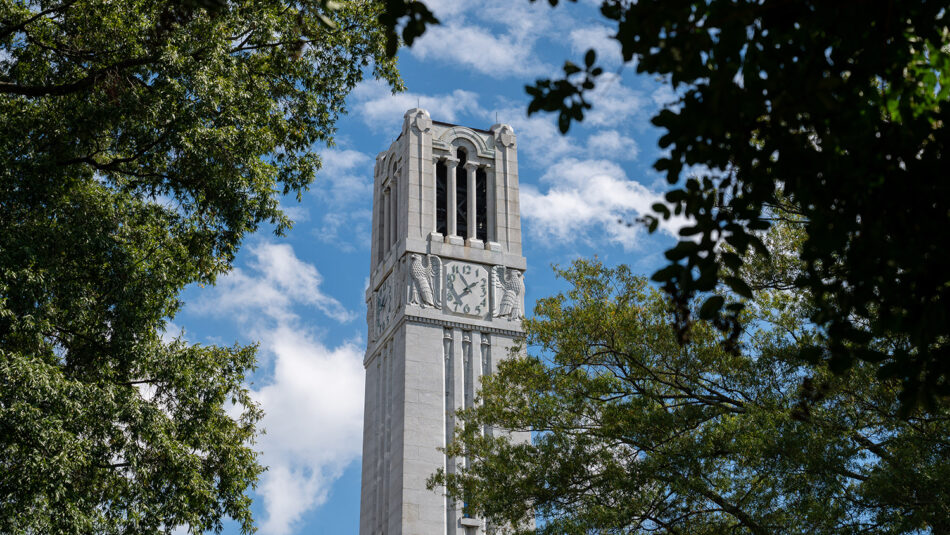
Dr. Joey Huang is an Assistant Professor of Learning, Design, & Technology in the Department of Teacher Education and Learning Sciences at North Carolina State University's College of Education. She is affiliated with the Digital Transformation of Education cluster through the Chancellor's Faculty Excellence Program. Her work bridges educational psychology and computing to create innovative learning environments that promote equity and collaboration in STEM education. Dr. Huang's research focuses on computational thinking, educational technology design, and broadening participation in STEM among underrepresented groups. She explores how hands-on, interdisciplinary activities—such as fiber crafts, robotics, and creative coding—can deepen students' understanding of computational concepts. Through NSF-funded projects like ReCrafting Computer Science, she integrates tangible crafts with computational thinking to create more inclusive pathways into computer science education. Her methodological approach combines both qualitative and quantitative methods to investigate collaborative learning, identity formation, and equity in technology-rich educational contexts. Dr. Huang's publication record shows a clear trajectory toward creating personalized, interactive learning experiences for K-12 and undergraduate students. Her recent work emphasizes virtual and augmented reality learning environments, gender-inclusive maker education, and AI-enhanced educational technologies. She has made significant contributions to understanding how learners co-design with AI in STEAM contexts and how interdisciplinary collaboration serves as a core skill in modern education. ACM CHI Honorable Mention AERA's Best Student Paper Best Paper Nomination for CSCL 2024 NSF CAREER Award recipient Dr. Huang has advised numerous research projects and collaborated extensively with colleagues across disciplines. Her work with the Friday Institute and Belk Center demonstrates her commitment to translating research into practical educational applications. She actively participates in professional development initiatives to help K-12 teachers integrate digital technologies into their classrooms, supporting NC State's mission of preparing educators for 21st-century classrooms.
Prof. Dr. Harry Kullmann is a Professor at Paderborn University’s Faculty of Arts and Humanities , leading the Research Group on Inclusion-related School Development and Teaching . His work focuses on Special Needs Education , Inclusion , and School Development , particularly through metrics like school well-being and cultural education. Education: PhD in Educational Sciences (University of Duisburg-Essen, 2009, magna cum laude ), Master’s and Bachelor’s in Biology and Chemistry (University of Bonn, 2001; University of Glasgow, 1999). His research interests span: School development with a focus on inclusion quality indicators Cultural education’s role in inclusive settings, especially through performing arts/theatre Teacher professionalism and multi-professional cooperation across educational phases Recent publications highlight global inclusion efficacy , cross-national comparisons of teacher attitudes, and longitudinal studies on student well-being in inclusive classrooms. Awards include Doctoral Fellowships from the Studienstiftung des deutschen Volkes and DFG. He has reviewed for journals like European Journal of Special Needs Education and led funded projects from ministries in Baden-Württemberg , Niedersachsen , and the Swiss National Science Foundation . His teaching includes courses on inclusive education and school development.
Dr. Friederike Wolf serves as an Academic Employee and Deputy Head of the Department of Technology at the University of Education Schwäbisch Gmünd since September 2024, working part-time. Holding a PhD in Technology Education (magna cum laude, 2020), she actively contributes to teacher training and research while maintaining secondary school teaching duties at Realschule Schenkensee since 2021. Her academic qualifications include: First state exam in Geography, Technology, and Ethics (2016) from Pädagogische Hochschule Ludwigsburg First state exam in Physics (2017) from Pädagogische Hochschule Ludwigsburg PhD in Technology Education (2020, magna cum laude) from Pädagogische Hochschule Heidelberg and Ludwigsburg Wolf's research centers on technology education with specialized focus on student conceptions in electrical engineering and building technology, teacher competence assessment, and situated learning approaches. She investigates pre-instructional conceptions and develops methodological frameworks for technology teaching, particularly through out-of-school learning environments. Her work emphasizes diagnostic tools for identifying learner misconceptions and enhancing pedagogical content knowledge. Analysis of her 14 publications (2016-2025) reveals consistent empirical research on technology teacher education, featuring longitudinal assessment of teacher competencies using vignette-based instruments. Key thematic clusters include diagnostic methodology for electrical engineering concepts (batteries, thermal insulation), contextual learning strategies, and competence development during school practicums. Her work demonstrates strong interdisciplinary connections between educational psychology, subject didactics, and practical teacher training. No scientific awards are documented in the provided information. While actively supervising teacher trainees during school practicums, no formal PhD/Master's student advisement is indicated. Her research has been supported through the FuN-Kollegs EKoL initiative, though specific grant details aren't provided. Wolf maintains significant involvement with the FuN-Kollegs EKoL (Effective Competence Diagnosis in Teacher Education), a multi-university research consortium across Baden-Württemberg focusing on longitudinal assessment of teacher competencies through innovative vignette methodologies.
Linnéa K. Jermstad is a Senior Lecturer and Section Head for GLU Teacher Education in Pedagogy at NLA University College in Oslo, Norway. Her academic work focuses on educational theory, digital competence, and innovative pedagogical approaches in teacher education and early childhood settings. She actively contributes to research on digital learning environments, qualitative methodologies, and the integration of AI in educational contexts. Her educational background includes extensive PhD-level coursework: Science and Research Ethics (5 ECTS, USN, 2025) Hermeneutics and Humanistic Research (5 ECTS, OsloMet, 2025) Educational Science, Policy, and Digital Technologies (5 ECTS, OsloMet, 2025) Research Ethics PhD course (5 ECTS, OsloMet, 2024) Qualitative Methods PhD course (5 ECTS, OsloMet, 2023) University Pedagogy (10 ECTS, 2023) AI Ethics, Responsible Use, and Creativity (University of Michigan, 2025) Jermstad's research spans digital competence in education, qualitative research methodologies, educational leadership, and pedagogical innovation. She particularly examines how digital technologies transform teaching and learning environments, with recent focus on AI implications for teacher education. Her work integrates theoretical perspectives with practical applications in early childhood education and teacher training contexts, exploring themes of engagement, creativity, and the balance between tradition and technological development. Her recent publications (2023-2025) reveal a strong emphasis on digital learning environments and AI integration in education. She investigates how screens function as classrooms, strategies for maintaining student engagement in digital settings, and the implications of AI tools like ChatGPT for teacher professionalism. Her research often employs qualitative methodologies and glocal theoretical frameworks, addressing practical challenges while contributing to theoretical development in educational fields. She actively supervises master's theses in pedagogy for primary teacher education and provides educational guidance. Jermstad leads or participates in multiple externally funded projects including MishMash (NOK 200 million), EU Teacher Academy (NOK 17.2 million), and several smaller initiatives focused on student-active learning methods and university-school collaboration. She has presented her research at numerous national and international conferences and participated in media discussions with Norway's Prime Minister regarding national screen guidelines for children.
Mala Radhakrishnan is an Assistant Professor in the Department of Chemistry at Wellesley College. Her work bridges computational biophysical chemistry, drug design, and interdisciplinary education, with a focus on molecular recognition and electrostatic interactions in biological systems. Harvard BA in Chemistry/Physics, MIT PhD in Physical Chemistry Collaborates with Prof. Don Elmore on antimicrobial peptides and macromolecular crowding Develops case-based molecular modeling activities for high school students Her research spans computational modeling of: Drug-target interactions in chronic myeloid leukemia Promiscuous inhibitor design to combat HIV-1 drug resistance Electrostatics in crowded cellular environments Creative pedagogical approaches combining poetry and chemistry She leads the Radhakrishnan Lab, which develops computational tools for molecular design and studies fundamental principles of biomolecular recognition. Her work has been published in Biochemistry and Molecular Biology Education and Physical Chemistry Chemical Physics , with recent projects examining: Antimicrobial peptide variants using computational methods Effects of cellular crowding on binding energetics Integration of creative writing in STEM education Radhakrishnan teaches introductory chemistry, computational chemistry, and physical chemistry courses, emphasizing numeracy and computational literacy. She authored the educational poetry collection Atomic Romances, Molecular Dances , which creatively teaches chemical concepts.