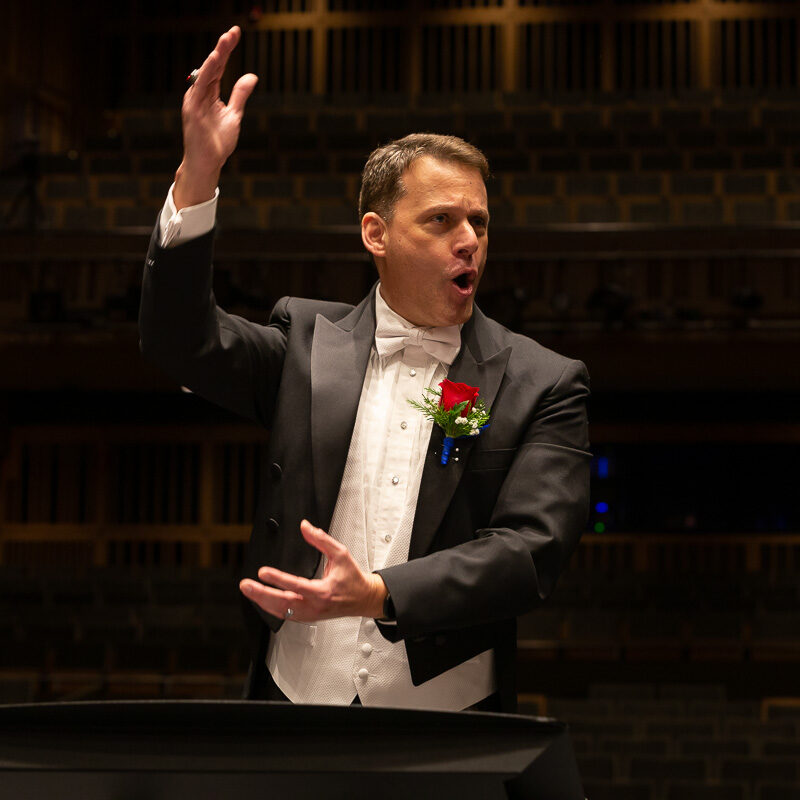
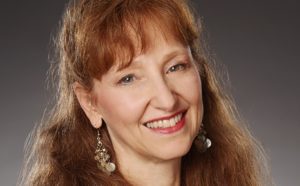
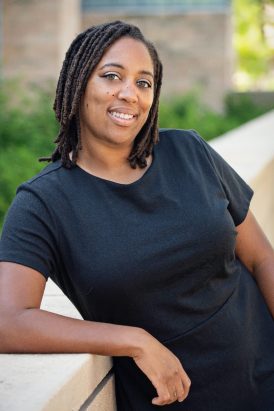
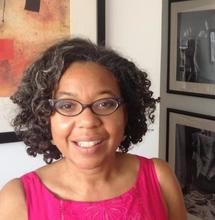
Cynthia Donnell serves as an Associate Professor of Voice and Lyric Diction in the Department of Music at Virginia Commonwealth University. Her educational background includes: Master of Music (M.M.) from the University of North Carolina at Greensboro Bachelor of Music Education from the University of North Carolina at Greensboro As a mezzo-soprano, Professor Donnell maintains an active performance career spanning recital, opera, choral, oratorio, and orchestral repertoire. Her expertise centers on vocal technique, linguistic precision in singing, and classical interpretation across diverse musical traditions. She has performed with major ensembles including the North Carolina Symphony, Richmond Symphony, Virginia Opera, and St. Paul Chamber Orchestra. Her professional recognition includes winning the Seventh International Sterling Staff Competition, which facilitated over 25 solo recitals nationwide. She actively contributes to music education through leadership in the National Association of Teachers of Singing (NATS), having served as officer and board member for the Virginia Chapter.
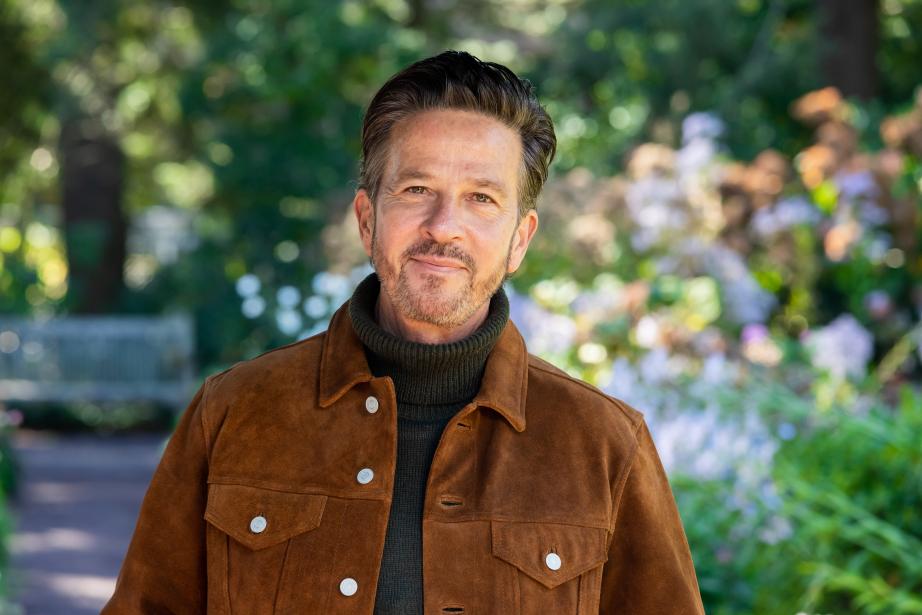
Steven Rings serves as Associate Professor in the Department of Music and Director of Professional Development at the University of Chicago. His scholarship centers on popular music analysis, vocal studies, and transformational theory frameworks, with significant contributions to understanding Bob Dylan's work and Black experimental music traditions. Education: PhD in Music, Yale University (2006) Rings' research explores the intersection of musical cognition, cultural context, and performance practice. His work bridges theoretical musicology with vernacular traditions, examining vocal expression across genres from Dylan's protest songs to Albert Ayler's free jazz. Current projects investigate tonal hearing models and the relationship between song structures and recorded performances. His publications reveal consistent focus on analytical frameworks for popular music, particularly transformational approaches to vocal delivery and historical performance practices. Rings frequently connects technical music theory with broader cultural narratives, especially regarding racial identity in experimental music. Scientific Awards: 2014 Outstanding Publication Award (SMT Popular Music Interest Group) Society for Music Theory Award for 'Tonality and Transformation' Society for Music Theory Award for 'Oxford Handbook of Critical Concepts in Music Theory' Rings secured Mellon Foundation funding for a collaborative project with Wilco drummer Glenn Kotche, reimagining musical categories of voice and groove. He chairs the University of Chicago Society of Fellows and co-founded City Elementary, a therapeutic school in Hyde Park. His teaching spans undergraduate theory courses, graduate seminars on Black experimental music, and College Core musical interpretation classes. Additional roles include series editor for Oxford Studies in Music Theory and former Professor of Guitar at Portugal's Conservatório Regional de Angra do Heroísmo, where he performed extensively as a classical guitarist prior to his music theory career.
Rita Aiello is an Adjunct Associate Professor in the Department of Psychology at New York University's College of Arts & Science. Her research focuses on the cognitive and perceptual processes involved in musical listening, with particular emphasis on neuroaesthetics, music learning, and memory. She holds an Ed.D. from Columbia University and has held faculty positions at institutions including the Juilliard School and the Manhattan School of Music. Her work bridges music theory, cognitive science, and education, with a lifelong background as a classical pianist. Education: Columbia University (Ed.D.), Manhattan School of Music (M.M., B.M.), Conservatorio San Pietro a Maiella (Diploma in Music Theory) Certifications: Kodály and Orff Methods Her research explores how musical training influences cerebral dominance, the relationship between mental representations and emotional responses to music, and the cognitive underpinnings of musical memory. She has published widely on topics ranging from musical expectation to pedagogical strategies for memorization. Recent work investigates evolutionary perspectives on singing and the psychological mechanisms behind musical communication. Publications reflect interdisciplinary engagement with music's structural rules, metaphorical dimensions, and its role in human cognition. While no specific grants or awards are listed, her extensive international teaching experience includes visiting roles at institutions in Rome and Lugano, Switzerland, and an honorary appointment at Columbia University's Teachers College.
Ian Quinn is the Allen Forte Professor of Music Theory and Director of Graduate Studies (DGS) at Yale University, within the Department of Music in the College of Arts and Science. He holds a B.A. from Columbia University (1993), M.A. and Ph.D. from the Eastman School of Music (1998, 2004). Prior to Yale, he taught at the University of Chicago and University of Oregon, and was a CASBS Residential Fellow at Stanford (2008-09). His research focuses on tonal harmony, corpus studies, music cognition, and the intersections of mathematics and computation in music theory. He edited the Journal of Music Theory (2004–2011) and co-organized the 2009 Society for Mathematics and Computation in Music conference. He leads the Yale-New Haven Regular Singing (YNHRS) shape-note singing group and serves on editorial boards for Journal of Mathematics and Music and the Northeast Music Cognition Group (NEMCOG). Quinn’s work has earned awards from the Society for Music Theory, including the Emerging Scholar Award (2004) and Outstanding Publication Award (2006/2007). His research spans analytical frameworks for harmonic function, corpus-based studies of tonal systems, and empirical investigations of music perception. He has advised over 15 doctoral students, many now in academic and industry roles. Key collaborations include co-authoring the Oxford Handbook of Corpus Studies in Music (2023) and developing the Yale-Classical Archives Corpus. His work bridges theoretical, computational, and historical approaches to music analysis, with contributions to Science , Music Theory Spectrum , and Perspectives of New Music .
Lynn Helding serves as Professor of Practice in Voice and Vocal Pedagogy at the University of Southern California's Thornton School of Music, where she also coordinates the Vocology & Voice Pedagogy program. She is a distinguished author, most notably of The Musician's Mind: Teaching, Learning and Performance in the Age of Brain Science , and was appointed Editor-in-Chief of the Journal of Singing in 2023. With decades of experience as both a performer and pedagogue, Helding bridges the gap between voice science and artistic practice, advocating for cognitive science as the "Third Pillar of Voice Science" alongside physiology and acoustics. Helding's educational background includes: Master's Degree in Vocal Pedagogy with Distinction from Westminster Choir College of Rider University (2005) Artist Diploma from Indiana University (1988), where she was the first singer ever accepted into this prestigious program Completion of the Summer Vocology Institute at the National Center for Voice and Speech Helding's research focuses on the application of cognitive science to voice pedagogy, with particular emphasis on motor learning theory and expertise studies from social psychology. She pioneered the concept of cognitive science as the "Third Pillar of Voice Science," arguing that understanding the brain's role is essential for effective voice teaching. Her work challenges traditional approaches by emphasizing the "how" of teaching over the "what," advocating for science-informed (rather than science-based) pedagogy that respects both scientific findings and artistic tradition. Helding's research has significant implications for addressing performance anxiety, optimizing practice methods, and developing more effective teaching strategies that account for how musicians actually learn. Her scholarly contributions demonstrate a consistent focus on bridging cognitive science with practical voice teaching. Rather than treating voice science as purely technical knowledge, Helding examines how this information can be effectively communicated to students, recognizing that the delivery method is as important as the content itself. This approach has led to innovative frameworks for evidence-based voice pedagogy that consider both physiological realities and cognitive processing limitations. Helding's significant recognition includes: Lifetime Achievement Award from the Contemporary Commercial Music (CCM) Vocal Pedagogy Institute at Shenandoah University (2020) Van L. Lawrence Fellowship, jointly awarded by the Voice Foundation and the National Association of Teachers of Singing Foundation (2005) Induction into the prestigious American Academy of Teachers of Singing (2022) Recognition as a "legendary figure in the field of voice pedagogy" As an educator, Helding maintains a thriving studio with private clients including members of the Los Angeles Opera and Los Angeles Master Chorale. Her USC Thornton voice students have earned fellowships to prestigious programs including the Aspen and Tanglewood Music Festivals. She has presented masterclasses described as "life-altering" at major voice conferences throughout the United States, Europe, and Australia. Helding previously served twenty-two years as Associate Professor of Voice and Director of Performance Studies at Dickinson College, and four years as voice faculty at Vanderbilt University's Blair School of Music. Helding is actively involved with the USC Voice Center at Keck Medicine of USC as a team member, where she applies her vocology expertise to help singers with functional vocal issues and those recovering from voice surgery. She is a co-founder of the NATS Science-Informed Voice Pedagogy Institute and frequently collaborates with voice scientists and medical professionals to advance the field of vocology.
Owen Cramer is the Moses Clement Gile Professor of Classics at Colorado College, where he has been a faculty member since 1965. He revived the Classics program after a decade-long hiatus and contributed to curriculum development in multiple disciplines. His academic background includes a PhD from the University of Texas, an undergraduate degree from Oberlin College, and early studies at the University of Chicago. Education: PhD in Classics (University of Texas), BA (Oberlin College), faculty child at University of Chicago His research interests center on Homer and oral poetry, with publications in Homeric studies. Over time, his scholarship expanded into European and American literature and history. He co-founded the Comparative Literature program, co-teaching introductory courses and advanced seminars. He also engaged with the Romance Languages and Spanish Departments. Outside academia, Cramer sings tenor in the CC Choir and has a family with four sons and eight grandchildren. His career has bridged classical studies with broader literary and historical inquiries.
Thomas Almli is a Full Professor and current Music Program Chair at Bellevue College, where he has led choral music activities since 2002. He directs the award-winning Celebration Jazz Singers and BC Chamber Singers, and teaches Music Theory, History of Jazz, and History of Rock and Roll. His research and teaching focus on science-based voice pedagogy across classical, contemporary commercial music (CCM), musical theater, and jazz genres. He maintains an active academic and private voice studio, emphasizing vocal health and performance excellence. Almli is also the Director of the Federal Way Chorale and is regularly engaged as a clinician, adjudicator, arranger, and composer. He is an active member of several professional organizations including ACDA, WMEA, NAfME, NCCO, JEN, and NATS. Selected Awards: Tacoma Arts Commission Outstanding Educator Bellevue Arts Commission Excellence Award Bellevue College Pillar of the Foundation Award Performance awards and invitations from ACDA, NWACDA, IAJE, and JEN He advises students in vocal performance and choral leadership and has significantly contributed to music education at both the collegiate and community levels. His work bridges academic rigor with artistic excellence, supported by ongoing professional engagement and performance. Almli is part of the College of Arts and Humanities at Bellevue College and leads initiatives in choral and vocal jazz performance, contributing to a vibrant music program with strong community ties.
Martha Elliott is a Lecturer in Voice at Princeton University's Music Department since 1985. She has performed globally with ensembles like Continuum and the Princeton University Orchestra, and her teaching focuses on vocal performance practices from Baroque to contemporary music. A.B. cum laude, Princeton University (1982) M.M., Juilliard School (1984) Fellowship at Aspen Music School (1983) Fellowship at Tanglewood Music Festival (1984) Oberlin Baroque Performance Institute (1987) Her research interests include historical performance practice , Baroque singing , and mindfulness in vocal pedagogy . She has also explored menopause and vocal health , with publications on the topic. Her publications, including two books, emphasize Baroque music and historical vocal techniques . Academic keywords span musicology , early music , and vocal education . Martha Elliott has received recognition including a Grammy nomination for her performance in 2005 and critical acclaim for her books in Early Music America and Classical Singer Magazine . She has taught generations of vocal students, many of whom pursued professional careers in musical theatre, opera, and graduate programs. Her courses at Princeton include German Lieder , Baroque Vocal Chamber Music , and musical theatre .
Karen Flint serves as an Adjunct Professor of Harpsichord at the University of Delaware’s School of Music, part of the College of Arts & Sciences. She is the founder and artistic director of Brandywine Baroque, Delaware’s leading early music ensemble, and established the Dumont Concerts—a festival showcasing harpsichord performances on antique instruments. Flint also created the recording label Plectra Music, which focuses on Baroque repertoire performed on period instruments. Her work includes acclaimed series like Le Clavecin Français and notable albums such as Les Pièces de Clavessin and Corelli Violin Sonatas . Her professional engagements include performances with the Delaware Symphony Orchestra, Baltimore Chamber Orchestra, and UD Chamber Orchestra. Brandywine Baroque’s annual concert series spans locations in Pennsylvania and Delaware, with guest appearances at major venues like the Boston Early Music Festival and Winterthur Museum. Flint’s recordings frequently highlight French Baroque composers and explore underappreciated works, demonstrating her commitment to historical performance practices. Flint’s contributions extend beyond performance to include educational outreach through the University of Delaware and community programs such as the Delaware Youth Wind Ensemble. Her discography reflects a dedication to preserving and revitalizing early music traditions, with projects ranging from Handel’s duets to Telemann’s lesser-known works. She remains an influential figure in the revival of 17th- and 18th-century music through both performance and scholarship.
Kira Thurman is an Associate Professor of History, German Studies, and Musicology (School of Music, Theatre, and Dance) at the University of Michigan. She holds a PhD in History from the University of Rochester with a minor in Musicology from the Eastman School of Music. Her research bridges musicology, cultural history, and African Diaspora studies, focusing on the intersections of music, national identity, and race in Central Europe. Thurman's work has been widely recognized, including seven major awards for her book Singing Like Germans: Black Musicians in the Land of Bach, Beethoven, and Brahms . Her current research project, Pop after Empire , explores post-WWII European popular music and its reliance on Black European artists amid global cultural shifts. She is also co-founder of the public history initiative Black Central Europe . Affiliations: Germanic Languages & Literature, School of Music, Theatre, and Dance Fields of Study: Modern Central Europe, Black studies, nationalism, transnationalism Thurman has published in top journals such as the American Historical Review and Journal of the American Musicological Society , and her public scholarship appears in The New York Times and The New Yorker . She teaches courses like The Origins of Nazism and advises doctoral candidates.
Daphne A. Brooks is William R. Kenan, Jr. Professor of African American Studies, American Studies, Women’s, Gender, and Sexuality Studies, and Music at Yale University, where she contributes to interdisciplinary scholarship at the highest level. Her academic home is in the Faculty of Arts and Sciences, with primary affiliation in the Department of African American Studies. Her research centers on Black feminist theory, sound and music studies, African American performance, and popular culture. Brooks examines how race, gender, and sonic expression intersect in cultural production, especially through the lens of Black women’s intellectual and artistic labor. Her work bridges academic scholarship and public engagement, appearing in peer-reviewed journals and major outlets like The New York Times , The Nation , and Pitchfork . The 15 most recent publications reflect a deep commitment to Black feminist sound, cultural history, and critical listening. Her articles and books analyze figures such as Nina Simone, Prince, Aretha Franklin, Zora Neale Hurston, and Toni Morrison, revealing how music functions as a site of resistance, identity, and revolution. Themes include sonic archives, Black female vocality, genre disruption, and the intellectual life of popular music. Her work has been recognized with numerous awards, including: Errol Hill Award (ASTR) Museum of African American History Stone Book Award (2021) Before Columbus Foundation American Book Award (2022) ASTR Barnard Hewitt Award (2022) Rock and Roll Hall of Fame Ralph J. Gleason Music Book Award (2022) ASCAP Deems Taylor/Virgil Thomson Award (2021) PROSE Award in Music & the Performing Arts (2022) Brooks has advised and mentored emerging scholars through her role as co-editor of the 33 1/3 Sound series and as co-founder of Yale’s Black Sound & the Archive Working Group. She curated the international conference Blackstar Rising & The Purple Reign , which will result in an edited volume. While specific grant details are not mentioned, her book projects with FSG and Duke University Press indicate major scholarly support and institutional backing. She co-founded and co-directs the Black Sound & the Archive Working Group at Yale, a humanities initiative exploring sonic archives and Black cultural memory. This collaborative space fosters interdisciplinary research on sound, race, and history, positioning her as a leader in emerging fields of Black sound studies.
Christopher Arneson serves as Professor and Director of Voice Pedagogy at Westminster Choir College of Rider University, teaching Voice Pedagogy, Literature, and Speech for the Actor. He holds concurrent faculty appointments at Princeton University (since 2016) and Rutgers University's Mason Gross School of the Arts. His primary academic affiliation is with Rider's Department of Performance Studies. His educational credentials include: Bachelor of Music in Opera from Binghamton University Master of Music in Opera from Binghamton University Post-graduate studies at Cornell University Doctor of Music from Mason Gross School of the Arts at Rutgers University Dr. Arneson's research centers on voice pedagogy, vocology, and scientific approaches to vocal instruction. His work integrates performance practice with clinical voice science, emphasizing developmental strategies for singers across genres. Key focus areas include vocal health maintenance, repertoire selection methodology, and genre-specific techniques for classical and music theater performance. He actively bridges academic research with practical studio application through publications and professional development programs. His publication trajectory from 2013-2024 reveals a systematic evolution from foundational singing principles to specialized genre applications. Early works established pedagogical frameworks for vocal development, while recent publications address nuanced challenges in music theater voice production. The 2024 Oxford Handbook contribution represents culmination of his evidence-based approach to voice teaching across diverse vocal styles and student populations. Professional recognition includes: Designation as Master Teacher for the NATS Teaching Intern Program 2021 Faculty Research Fellowship for music theater voice pedagogy scholarship Dr. Arneson has cultivated a distinguished mentoring legacy with students advancing to top-tier graduate programs (Cincinnati, Eastman, Yale) and young artist programs (Santa Fe Opera, Metropolitan Opera). His administrative leadership encompasses chairing the 2014 NATS National Conference, serving on the Fulbright U.S. Student Program Screening Committee for Voice, and editorial board service for the NATS Journal of Singing. He has secured research funding including the 2021 faculty fellowship supporting his music theater voice pedagogy book. He co-directed the CoOPERAtive Program (Westminster's young artist initiative) and the Actors Studio MFA Voice and Speech department. His clinical collaborations include vocology internships at Mt. Sinai's Grabscheid Voice Center and St. Luke's-Roosevelt's Vox Humana Laboratory, where he partners with medical professionals on voice disorder remediation and vocal health protocols.
James D. Reich is an Associate Professor in the Department of Philosophy and Religious Studies at Pace University, part of the Dyson College of Arts and Sciences. His academic work bridges religious studies, philosophy, and literature, with a focus on pre-modern South Asia, particularly medieval Kashmir. He has previously taught at NYU, Barnard College, The New School, and Harvard University. PhD, Harvard University, 2016 MTS, Harvard Divinity School, 2009 BA, Vassar College, 2005 Reich’s research centers on the intersections of aesthetics, theology, and literary theory in Sanskrit intellectual traditions. He has a particular interest in how poetry communicates emotion, the role of language and expertise, and the philosophical underpinnings of religious practice. His work also extends to contemporary religious life, especially within diasporic Hindu communities in New York. He is currently researching the history of gemstones and gemstone experts in South Asia, as well as the representation of song and singing in Sanskrit literature. His recent publications include articles in Indo-Iranian Journal , Journal of Indian Philosophy , and Journal of the American Oriental Society , as well as public essays in Boston Review and The Revealer . His 2021 book, To Savor the Meaning: The Theology of Literary Emotions in Medieval Kashmir (Oxford University Press), is a major scholarly contribution that examines the theological dimensions of literary aesthetics through the works of Anandavardhana, Abhinavagupta, and Mahimabhatta. The articles and essays reflect a consistent engagement with themes of emotion, transmission of knowledge, divine play, and the cultural significance of literary and religious forms across historical and contemporary settings. Reich is also an active translator of Sanskrit texts, including selections from Buddhabhaṭṭa’s gemological manual and Subandhu’s Vāsavadattā . His translations appear in journals such as Circumference and Caesura . He has co-authored ethnographic research on Guyanese Hindu communities in Queens, NY, exploring themes of double diaspora, identity, and intergenerational continuity. This work reflects his commitment to public scholarship and interdisciplinary inquiry. Reich teaches courses such as Indian Philosophy, Eastern Religious Thought, Buddhism, and senior seminars in philosophy and religious studies. He has supervised independent studies on topics like Buddhist art on the Silk Road and offers private Sanskrit instruction in New York City.
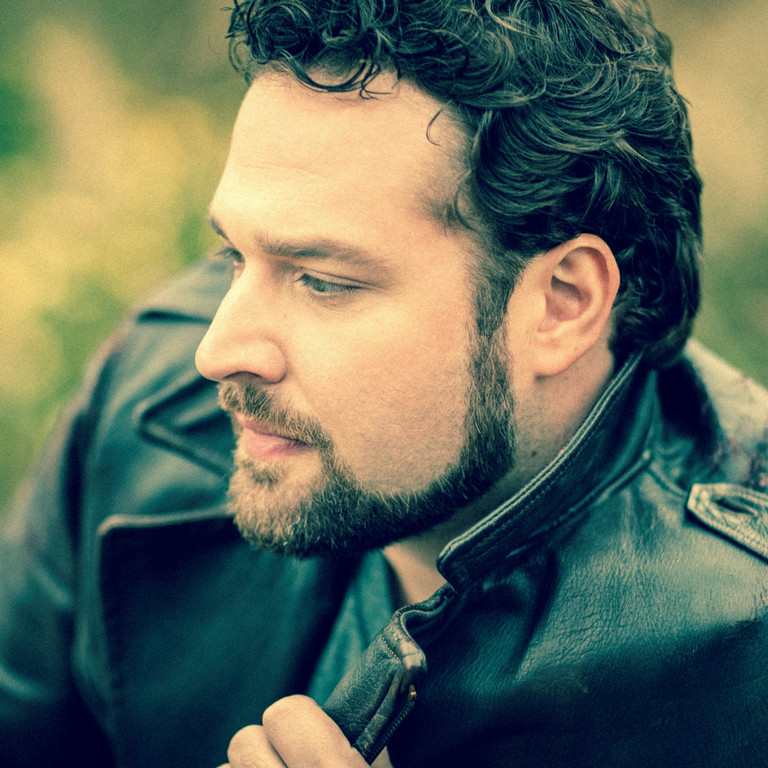
Tenor Bryan Hymel serves as Associate Professor of Music in Voice at Indiana University's Jacobs School of Music, where he bridges academic pedagogy with an internationally acclaimed operatic career. His performances span premier opera houses globally including the Metropolitan Opera, Royal Opera House, and Opéra National de Paris, specializing in dramatic French and Italian repertoire. His educational credentials include: Master of Music in Vocal Pedagogy from Westminster Choir College, Rider University (2023) Bachelor of Music in Voice Performance from Loyola University New Orleans (2003) Hymel's scholarly focus centers on historical performance practices of 19th-century French grand opera and vocal technique evolution. He is particularly renowned for interpretations of Énée in Berlioz's Les Troyens , Don José in Bizet's Carmen , and Arnold in Rossini's Guillaume Tell , with research emphasizing dramatic tenor roles and vocal characterization in historically significant works. His distinguished honors include: Metropolitan Opera’s Beverly Sills Artist Award (2012) Olivier Award for Outstanding Achievement in Opera (2013) Georges Thill Prize by Académie Nationale du Disque Lyrique ECHO Klassik Newcomer of the Year Award As a faculty mentor at Indiana University, Hymel trains emerging vocalists using insights from his active performance career, integrating stage experience into pedagogical practice. His Warner Classics recordings, particularly the album Héroïque which reached #3 on Billboard Classical charts, serve as scholarly resources for vocal interpretation and repertoire preservation.
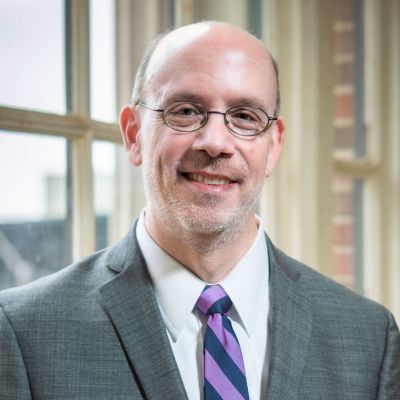
Jeffrey Sposato is the Department Chair and Professor of Music History at Wayne State University since 2024. Previously, he served as Director of the School of Music and Interim Associate Dean for Faculty Affairs at the University of Illinois Urbana-Champaign, and held positions at the Moores School of Music (University of Houston) and University of Pittsburgh at Greensburg. His research focuses on Baroque, Classical, and Romantic music , sacred music , choral traditions , opera , and concert history . Specializes in Leipzig's musical evolution Expert in Mendelssohn reception studies Active in historical performance recreation Recipient of ACLS/Mellon and Fulbright grants Dr. Sposato's publications include two major Oxford monographs and contributions to leading journals. He has curated performance projects focused on 18th-19th century sacred music, including the 500th anniversary Lutheran Reformation mass in Leipzig. His awards include the Choice Outstanding Academic Title and Royal Philharmonic Society finalist recognition. His research integrates Historical musicology Performance practice Music criticism analysis Choral tradition documentation Composer biographical studies Interdisciplinary cultural research .