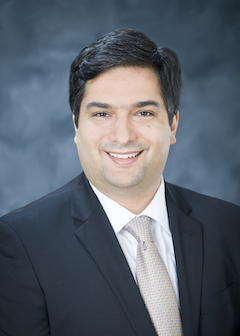
Dr. Amin Amirlatifi is an Associate Professor and Cleveland Endowed Professor at the Swalm School of Chemical Engineering, Mississippi State University. He serves as Associate Director of the PATENT Lab. His research focuses on geomechanics, quantum computing applications, CO2 sequestration, predictive maintenance, and big data analytics. He has industry experience in reservoir engineering and numerical simulation. Education: Ph.D., Missouri University of Science and Technology, 2013 M.Sc., University of Petroleum Technology, 2005 M.Eng., University of Calgary, 2005 B.Sc., University of Petroleum Technology, 2003 Research Interests: Geomechanics, Quantum Computing, Carbon Capture and Storage, Enhanced Oil Recovery, Big Data Analytics, Hydraulic Fracturing, and Energy Storage Solutions. His work bridges engineering challenges with advanced computational methods. Labs/Teams: Leads the PATENT Lab, focusing on innovation in energy and environmental systems. Collaborates on machinery fault prediction, CO2 sequestration, and quantum computing applications. Grants/Advising: Active in securing grants for geomechanical and CO2 storage projects. Advises on interdisciplinary topics at the intersection of AI and engineering systems.
Seyed Soheil Mansouri is an Associate Professor at the Department of Chemical and Biochemical Engineering, Technical University of Denmark. He holds a PhD (2016) and MSc (2013) from DTU. His expertise spans process design, bioprocess engineering, and quantum computing applications in chemical systems. He leads the KT Consortium PROSYS - Process and Systems Engineering Centre. Research focuses on sustainable biomanufacturing, data-driven modeling, and quantum computing for process optimization. Key areas include photobioreactor design, machine learning in biosystems, and hybrid quantum-classical algorithms. He has supervised 14 PhD projects and co-authored 182 publications. Awards include Best Contributed Paper (2018), Best Oral Presentation (2015), and multiple best presentation awards. Active in organizing workshops on quantum computing and biorefineries. Advises on modular manufacturing, bio-succinic acid production, and AI-driven process systems. Develops digital twin technologies for bio-manufacturing and promotes open innovation. His work aligns with UN Sustainable Development Goals, emphasizing education and sustainable industrial practices. Current projects explore quantum computing in bioprocesses and modular vaccine production units.
Wes Bethel is an Associate Professor in the Department of Computer Science at San Francisco State University. His research focuses on quantum computing, machine learning applications in scientific modeling, and high-performance computing frameworks such as the SENSEI in situ visualization system. He leads efforts in optimizing quantum algorithms, real-time fusion energy modeling, and scalable data processing for large-scale simulations. Key research themes include quantum protocols for polynomial computation, GPU-based quantum circuit simulation, and machine learning-driven approaches to plasma physics and radio frequency (RF) heating analysis. His work bridges theoretical advancements with practical implementations in energy science and computational infrastructure. Recent projects emphasize accelerating RF modeling using AI surrogates, improving in situ visualization frameworks for heterogeneous architectures, and addressing challenges in classical-quantum system integration. Contributions span both methodological innovations and applied solutions for fusion energy research and distributed computing environments. No scientific awards are listed in the provided materials. Advising and grants information is not explicitly detailed here, though his publications indicate collaborative involvement in DOE-funded projects and fusion energy initiatives. He contributes to open-source tools like SENSEI and WarpVisIt, supporting community-driven advancements in scientific computing. Research labs and teams associated with his work likely include computational science groups focused on quantum computing, plasma physics modeling, and high-performance data management at San Francisco State University and collaborating institutions.
Dr. Daniel Huang is an Assistant Professor in the Department of Computer Science at San Francisco State University. His research focuses on quantum computing, probabilistic programming, machine learning, and theoretical computer science. He explores interdisciplinary areas such as hybrid classical-quantum systems, Gaussian process optimization, and computational chemistry modeling. His work bridges algorithmic design with practical applications, including quantum circuit simulation and molecular geometry optimization. Dr. Huang’s recent publications highlight advancements in GPU-based quantum computing, gradient-constrained neural networks, and probabilistic programming languages like Push. He emphasizes the integration of physical priors into machine learning models and explores disruptive technologies like quantum visualization tools. His research often involves collaborative projects, as seen in works on meta-Gaussian processes and data-parallel inference algorithms. His academic contributions span over a decade, with notable papers in probabilistic program semantics, logic in linear spaces, and compiler optimizations for probabilistic models. Though no awards or grants are explicitly listed, his active publication record reflects sustained scholarly engagement. Contact: danehuang@sfsu.edu , Thornton Hall 906.
Prof. Xiangyi "X" Meng is an Assistant Professor at Rensselaer Polytechnic Institute's Department of Physics, Applied Physics, and Astronomy. His academic journey includes a B.S. in microelectronics from Peking University and a Ph.D. in physics from Boston University under Prof. Eugene Stanley. He held postdoctoral positions at Northeastern University's Center for Complex Network Research with Prof. Albert-László Barabási and as a Research Associate at Northwestern University with Prof. István Kovács. RPI (2025-present): Assistant Professor Northeastern University (2021-2023): Postdoc Northwestern University (2023-2024): Research Associate His research spans quantum networks, network science, and interdisciplinary applications, with key contributions in: Quantum communication protocols Concurrence percolation theory Quantum field theory applications Computational social science Power grid resilience modeling Multi-community epidemic spreading Prof. Meng has published over 20 papers in top journals like Physical Review Letters, PNAS, and Nature Communications, focusing on quantum advantage in network connectivity, entanglement distribution, and nonlinear network dynamics. His work has been featured in Physics World and Phys.org media outlets. As an educator, he teaches Physics II and Introductory Quantum Mechanics . His team develops quantum-inspired machine learning architectures like entanglement-structured LSTM networks. Current research explores nonconvex entanglement measures and hypergraph immersion techniques for quantum network optimization.
Mohamed Mahgoub is an Associate Professor at the School of Applied Engineering and Technology, New Jersey Institute of Technology (NJIT), specializing in civil engineering, seismic design, and sustainable construction. He holds a Ph.D. in Civil Engineering from Carleton University (2004), an M.S. from McMaster University (1997), and a B.S. from Al-Azhar University (1990). His career includes over seven years as a lead bridge engineer at Alfred Benesch & Company and extensive experience with the Michigan Department of Transportation (MDOT) in bridge rehabilitation and design. Education: Ph.D., Carleton University (2004) M.S., McMaster University (1997) B.S., Al-Azhar University (1990) Mahgoub's research focuses on seismic engineering, concrete technology, and environmental sustainability. His recent work explores machine learning applications for concrete strength prediction, passive housing in extreme climates, and soil erosion dynamics in semi-arid regions. Publications highlight innovative seismic data processing techniques, sustainable construction materials, and urban energy efficiency strategies. Scientific Awards: No awards listed in available data
Brent Ward is a Professor in the Department of Earth Sciences at Simon Fraser University and serves as Co-director of the Centre for Natural Hazards Research. His academic career is deeply rooted in Quaternary geology with a focus on understanding glacial history and paleoenvironmental changes in western North America. Ward received his B.Sc. (Hons.) in 1986 and Ph.D. in 1993, both from the University of Alberta. His educational background provided the foundation for his specialization in field-based Quaternary geology. Dr. Ward is a classical, field-based Quaternary geologist whose research interests span sedimentology, stratigraphy, paleoenvironmental reconstructions, surficial mapping, drift prospecting, and landslides. His current research primarily focuses on resolving aspects of the stratigraphy of the Cordilleran Ice Sheet and associated paleoenvironmental reconstructions. This interdisciplinary work requires collaborations with researchers across various fields and combines stratigraphic studies with plant and insect macrofossil and palynological analysis to reconstruct paleoenvironments and paleoclimate. A particularly innovative aspect of his research involves work on raised sea caves—the only such work being done in North America—which provides direct information to solve questions of glacial history and past fauna and climate. His research has significant implications for understanding potential human coastal migrations during the Late Wisconsinan period. Analysis of Ward's recent publications reveals a strong focus on Cordilleran Ice Sheet history, landslide mechanics, and glacial sedimentology. His work bridges traditional field geology with modern analytical techniques including cosmogenic nuclide dating, LiDAR analysis, and geospatial modeling. The research spans multiple geographic areas including British Columbia, Yukon, and the Canadian Arctic, addressing both fundamental scientific questions and practical applications in mineral exploration and hazard assessment. The Westerman Award for Outstanding Achievement in Geoscience EGBC (2023) APEG Fellowship APEGBC (2013) Engineers Canada Fellowship Engineers Canada (2009) Victor Milligan Paper Award Canadian Geotechnical Society (2010) Barlow Memorial Medal Canadian Institute for Mining, Metallurgy and Petroleum (2009) Ward actively supervises graduate students, with recent projects examining the glacial history of the Ruby Range in southwest Yukon and the effects of deglacial meltwater processes on kimberlite indicator mineral concentrations. His research has secured significant funding for field investigations and laboratory analyses, supporting both fundamental research and practical applications in natural hazard assessment and mineral exploration. He has developed strong collaborative relationships with government geological surveys, industry partners, and international research teams. As Co-director of the Centre for Natural Hazards Research, Ward leads interdisciplinary teams investigating geological hazards including landslides, glacial lake outburst floods, and seismic risks. His work integrates field observations with numerical modeling to improve hazard assessment and risk management in mountainous terrain. The Centre maintains strong connections with emergency management agencies and industry partners to ensure research findings translate into practical risk reduction strategies.
Richard Evitts is a Professor and Undergraduate Chair in the Department of Chemical and Biological Engineering at the University of Saskatchewan . His research spans corrosion engineering, fuel cell technology, and heat/mass transfer in granular media. Education: B.E., B.Sc., Ph.D., P.Eng. Contact: Room 2B37 Engineering Building, 57 Campus Drive, Saskatoon, SK S7N 5A9; richard.evitts@usask.ca Research Interests: Evitts specializes in localized corrosion , particle technology , and torrefaction , with additional focus on protective film dynamics , heat/moisture transfer in granular systems , and fuel cell electrochemistry . Article Trends: His publications emphasize corrosion mechanisms in industrial settings, torrefaction severity metrics for biomass, and thermal/hydraulic modeling of granular fertilizers. Recent work includes bio-batteries, desiccant coatings, and potash crystallization studies.
Luis Velasco is a Full Professor at the Polytechnic University of Catalonia (UPC) , affiliated with the Computer Architecture Department and the Optical Communications Group . His work focuses on advanced optical networking, quantum communication security, AI-driven network control, and 6G infrastructure. He leads research initiatives such as the OCATA digital twin framework for optical networks and SEASON for sustainable high-capacity optical systems. Research Interests: Optical communications and multiband transmission AI-based network control planes and autonomous systems Quantum key distribution and optical security 6G and B5G network architectures Digital twins for network performance optimization Recent Work Trends: His articles emphasize real-time network operation, zero-touch optical networking, and hybrid quantum-classical security solutions. Key themes include autonomous flow routing, multi-domain service provisioning, and AI-enhanced telemetry for network monitoring. Advising/Grants: No formal advisees listed. Active in EU-funded projects like UNICO 5G TIMING and OCATA. Labs/Teams: Core member of the Optical Communications Group , collaborating on projects involving quantum-enabled networks, digital twin simulation, and 6G infrastructure.
Jörg Main is a full Professor at the University of Stuttgart , leading the research group at the Institute for Theoretical Physics I . His work bridges condensed-matter theory, quantum optics, and nonlinear dynamics, with a strong emphasis on Rydberg excitons in cuprous oxide and the foundations of non-Hermitian quantum systems. Research Interests: Exciton Physics & Semiconductor Spectroscopy: Extensive studies of Rydberg excitons in cuprous oxide, including quantum-defect theory, oscillator strengths, and fine-structure effects. Quantum Chaos & Semiclassical Methods: Application of periodic-orbit theory and phase-space analysis to understand complex spectra and classical-quantum correspondence. Non-Hermitian & PT-Symmetric Systems: Investigation of exceptional points, resonance phenomena, and gain-loss balanced potentials in Bose-Einstein condensates and photonic structures. Machine Learning in Physics: Development of Gaussian-process and neural-network approaches for predicting quantum dynamics and locating exceptional points in high-dimensional spectra. Recent Publication Trends: Over the last two years, Prof. Main has published prolifically on cuprous oxide excitons, unveiling new quantum-well phenomena, resonance linewidth behavior, and semiclassical descriptions. A parallel thrust leverages machine-learning techniques to analyze complex spectra and time-dependent systems, demonstrating an innovative blend of theoretical physics and data science. Laboratory & Group: Professor Main heads the Theory Group at the Institute for Theoretical Physics I, fostering an environment for advanced analytical and computational research in quantum many-body physics.
Jefferson Stafusa E. Portela is a Professor in the Department of Theoretical Physics III at the University of Wuerzburg, Germany, with an Adjunct Professor position at the Technological Federal University of Parana in Brazil since 2014. His office is located in Building M1, Room 2.010 at the university campus. He has maintained research affiliations with prestigious institutions including the Max Planck Institute for the Physics of Complex Systems and Fraunhofer ITWM. His educational background includes a Doctorate (D.Sc.) in Physics from the University of Sao Paulo, Brazil (2003-2008), featuring a research visit to the University of Texas at Austin in 2006, and a B.Sc. in Physics from the Federal University at Parana, Brazil (1999-2002). Professor Stafusa's research centers on Nonlinear Dynamics and Statistical Physics , with significant contributions to chaotic systems theory and plasma physics applications. His work bridges theoretical frameworks with computational methods to investigate complex phenomena including transient chaos, transport barriers in magnetic confinement systems, and critical behavior in statistical models. He has developed novel approaches to understanding chaotic billiards and leaking systems, with applications extending to fusion energy research through tokamak physics. His publication record demonstrates consistent contributions to high-impact journals, with several papers receiving notable recognition including an editor's choice in Europhysics Letters (2015), an editor's suggestion in Physical Review Letters (2013), and a cover feature in Reviews of Modern Physics (2013). His recent work shows increasing focus on quantum materials and critical phenomena while maintaining strong connections to fundamental nonlinear dynamics. Editor's Choice: "Chaotic Explosions" in Europhysics Letters (2015) Editor's Suggestion: "Chaotic Systems with Absorption" in Physical Review Letters (2013) Cover Feature: "Leaking Chaotic Systems" in Reviews of Modern Physics (2013) Professor Stafusa teaches advanced courses in theoretical physics including Theoretical Electrodynamics, Dualities between Gauge and Gravitation Theories, Quantum Gravity, and String Theory. His research group participates in the Würzburg Seminar on Quantum Field Theory and Gravity and maintains international collaborations across Germany, Brazil, and the United States. While specific student advising information isn't detailed in available materials, his active publication record suggests ongoing mentorship of doctoral and postdoctoral researchers. As part of the Theoretical Physics III research group, he contributes to investigations in quantum field theory, gravity dualities, and statistical physics far from equilibrium. The department's research software development supports computational approaches to quantum materials and complex systems analysis, reflecting Professor Stafusa's interdisciplinary methodology.
Hadi Khalilia is a researcher affiliated with Palestine Technical University-Kadoorie (PTUK) since 2015, where he participates in various academic communities and councils. He is currently pursuing a PhD in Information Engineering and Computer Science at the University of Trento , supervised by Prof. Fausto Giunchiglia, after earning his MSc. in Computer Science from AlQuds University (2015) and BSc. in Computer Science with Honors from Arab American University-Palestine (AAUP) (2008). Research Interests: Language diversity, lexical-semantic resources, natural language processing, crowdsourcing, and language computing. Awards: Certificate of Distinction for Outstanding University Research (2019). Article Trends: His work spans computational linguistics (e.g., Arabic WordNet, lexical diversity), educational analytics (student performance prediction), and classical mechanics (coupled pendulum/oscillator systems). Recent publications focus on multilingual lexicon enrichment, semantic gaps in kinship terminology, and web archiving for Palestinian digital heritage.
Lincoln D. Carr is a Professor in the Department of Physics at the Colorado School of Mines, where he investigates fundamental questions at the quantum-classical boundary, novel quantum computing paradigms beyond standard models, and interdisciplinary STEM education approaches. His work bridges theoretical physics with real-world problem-solving for global challenges like energy systems and political stability. His research spans critical domains: Quantum Information Science and Engineering Complexity Sciences and Emergent Phenomena Condensed Matter and Atomic Molecular Optical Physics Applied Mathematics and Computational Science Science Policy and Diplomacy Initiatives Humanities-STEM Integration Frameworks Analysis of his 2023-2025 publications reveals dominant themes in fractional quantum mechanics (Schrödinger/Ising models), Goldilocks quantum cellular automata, multiscale quantum media, and quantum optimization via oscillating fields. His numerical work achieves unprecedented precision in modeling anomalous transport, while his quantum education leadership drives national workforce development strategies. No specific scientific awards are documented in the source material. As a core faculty member, Carr mentors graduate students in quantum information and complexity science, though individual advisees aren't listed. His national workshop leadership indicates active grant involvement in quantum education infrastructure. He spearheads national quantum education policy through workshops establishing centers for quantum workforce development, demonstrating commitment to science diplomacy and interdisciplinary training frameworks that connect quantum physics with societal challenges.
Walter O. Krawec is an Associate Professor of Computer Science at the University of Connecticut. His research focuses on quantum cryptography and quantum information theory, particularly exploring quantum resources in cryptographic applications and entropic uncertainty relations. He advises students at all levels and leads a research group with active projects in quantum key distribution (QKD), quantum networks, and secure microgrids. Research Interests: - Quantum Cryptography and Quantum Key Distribution (QKD) - Entropic Uncertainty Relations - Quantum Network Security and Protocols - High-Dimensional Quantum Systems - Semi-Quantum Communication Protocols - Quantum Sampling and Resource Analysis Key Research Trends in Articles: His work spans theoretical security proofs for QKD protocols, practical implementations in satellite and hybrid networks, and applications to power grid security. Recent efforts emphasize optimizing key rates, mitigating quantum noise, and developing protocols compatible with NISQ devices. Scientific Awards: None explicitly listed in provided texts. Advising & Grants: - Advised over 15 students (PhD, MS, Undergraduate) since 2016. - Involved in NSF grants like 'CAREER: Hybrid Approaches to Quantum Cryptography' and 'CIF: Small: Secure Quantum Communication with Limited Resources.' - Developed open-source software tools for QKD protocol analysis and simulation. Labs/Teams: Collaborates with interdisciplinary teams on quantum networks, including work with JPMorgan Chase's Future Lab and power grid security initiatives.
Renuka Rajapakse, PhD, is an Associate Teaching Professor in the Department of Physics at the University of Massachusetts Dartmouth. She holds a PhD from the University of Connecticut and a BSc from the University of Peradeniya, Sri Lanka. Her research focuses on quantum optics, quantum computation, and computational physics. She has received a $231,213 research award from the Office of Naval Research for work on quantum computing and control in noisy environments. Education: 2011: PhD in Physics, University of Connecticut 2005: MS in Physics, University of Connecticut 1999: BSc in Physics, University of Peradeniya, Sri Lanka Research interests include quantum systems analysis, atomic and molecular physics, and the application of computational methods to quantum phenomena. Her publications explore topics like two-dimensional atomic lattices and Josephson oscillations, reflecting her expertise in theoretical and applied quantum mechanics. Teaching responsibilities include courses such as Classical Physics II, Mathematical Physics I, and Undergraduate Research. She advises students in physics and mentors research projects.





/prod01/production-cdn-pxl/media/umassdartmouth/profiles/engineering/RAJAPAKSE-26a.jpg)