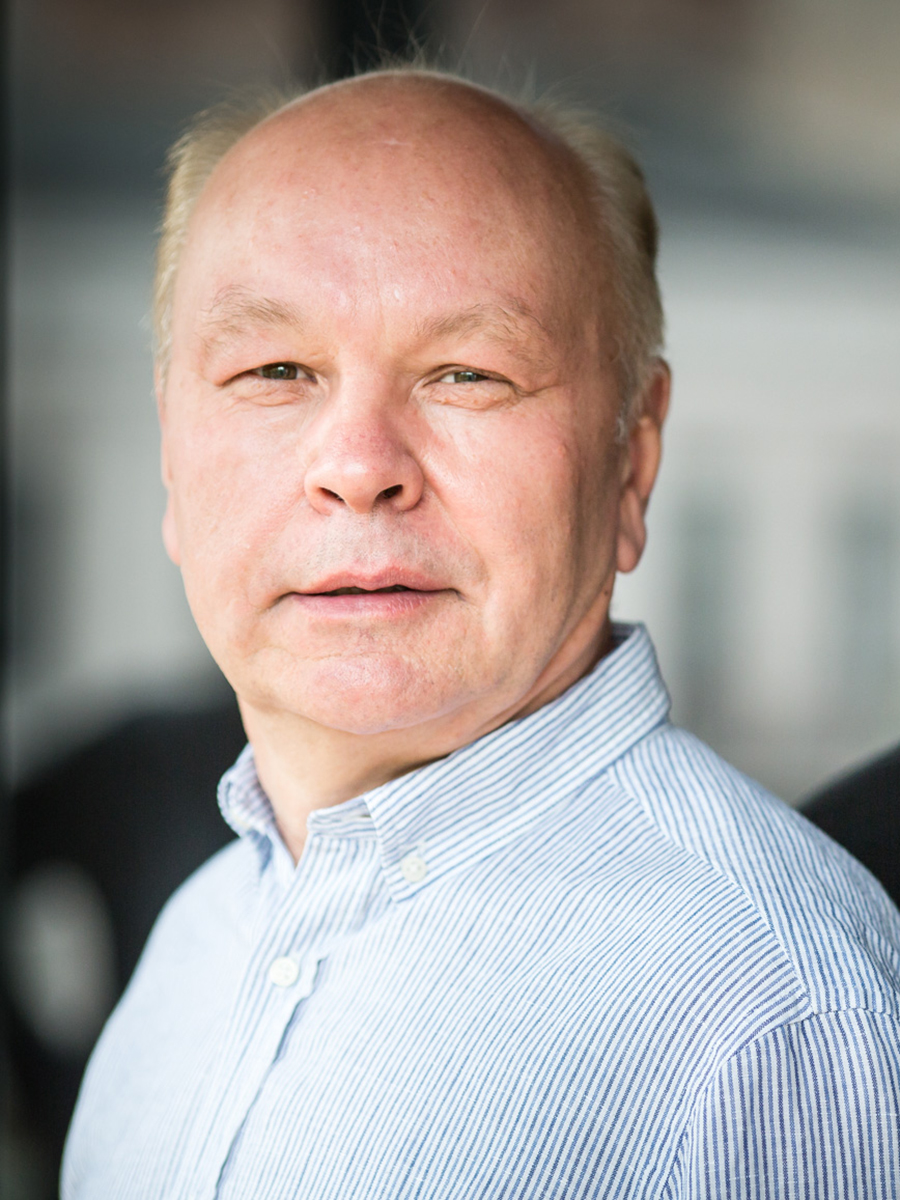
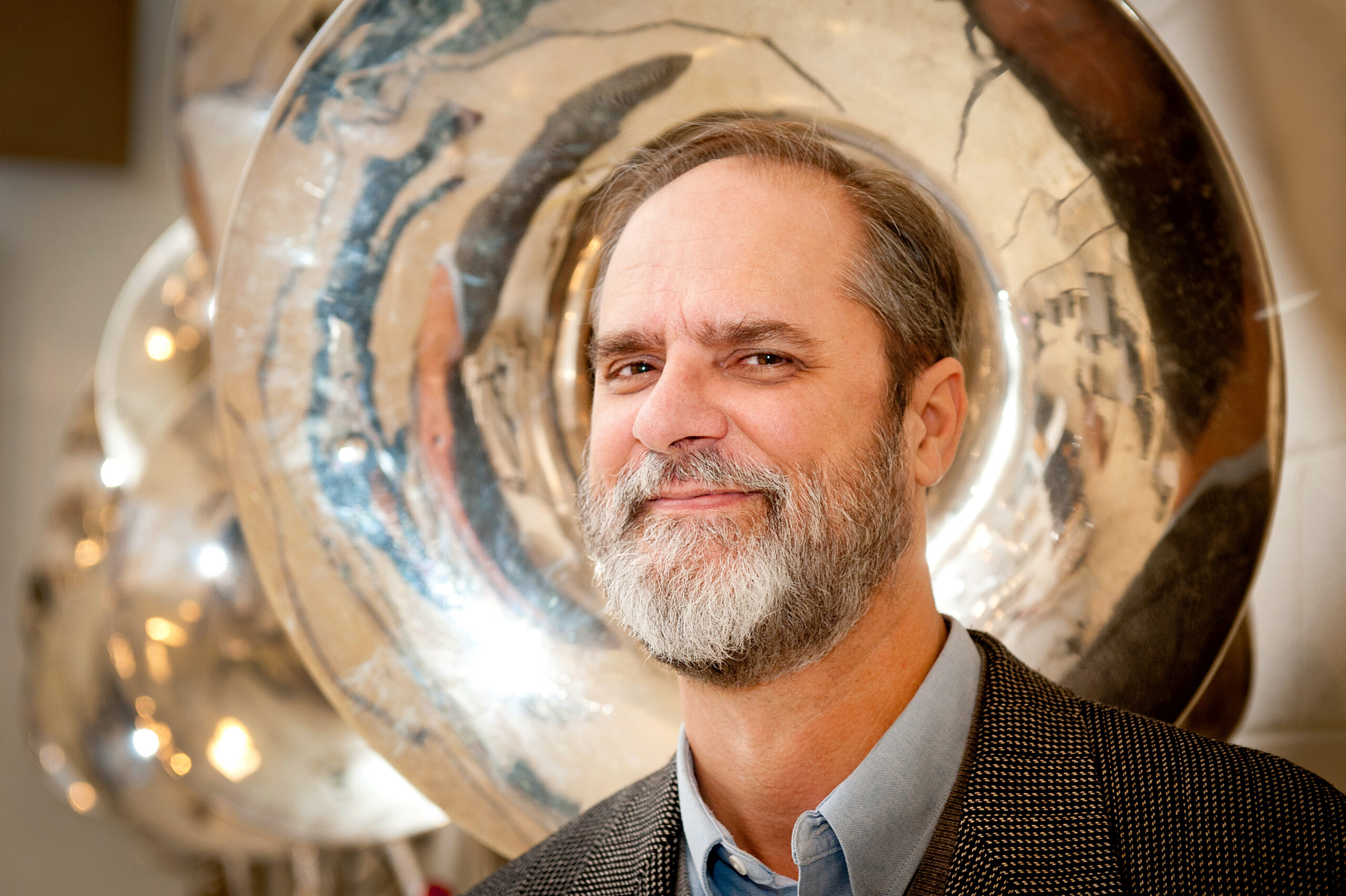
Jonathan Nangle is a Lecturer in Music Technology and Electro-Acoustic Composition at the Royal Irish Academy of Music. His work spans acoustic/electro-acoustic composition, live electronics, installations, and improvisation. Educated at Trinity College Dublin under Donnacha Dennehy, Rob Canning, and later privately with Kevin Volans, his music has been performed by ensembles like RTÉ National Symphony Orchestra and Crash Ensemble. Research interests include spatial music, interactive installations, and hybrid acoustic/digital forms. Notable works include Pause (Ergodos, 2017), Iridescent Cobalt Glow (2015), and our headlights blew softly... which earned a 2009 Rostrum commendation. Awards include dual Irish Rostrum representations (2009/2011) and the 2007 AIC/Music 21 Prize. Recordings span solo piano works to ensemble commissions, often integrating innovative electronic elements. His work has been broadcast internationally and choreographed for stage/film. Current roles include academic teaching and ongoing creative exploration at the intersection of technology and traditional composition.
Professor Sławomir Kaczorowski, Ph.D., has been a faculty member at the Grażyna and Kiejstut Bacewicz Academy of Music in Łódź since 1981, where he teaches composition and served as Head of the Department of Composition from 2011 to 2021. He previously held significant leadership roles including Vice-Rector for Artistic and Teaching Affairs (1999-2005) and Vice-Dean of the Faculty of Composition, Music Theory, Music Education and Rhythmics (1996-1999). His educational background includes diplomas in music theory (1981) and composition under Professor Bronisław Kazimierz Przybylski (1981) from the State Higher School of Music in Łódź. Awarded the title of professor by the President of Poland in 2002, he remains an active academic leader currently serving as chairman of the Art Section of the Polish Accreditation Commission. Kaczorowski specializes in contemporary composition with emphasis on instrumental works, chamber music, and choral compositions. His research interests manifest in diverse output featuring piano, accordion, and mixed ensembles, with notable focus on tango-inspired forms and liturgical reinterpretations. He pioneered the MUSICA MODERNA sessions promoting new music through biannual concerts and lectures. Analysis of his 15 most recent compositions reveals consistent exploration of Polish contemporary classical traditions with strong emphasis on instrumental timbre, cross-genre fusion (particularly tango elements), and innovative approaches to sacred music forms. His works demonstrate technical mastery across diverse ensembles from solo piano to full orchestral settings. Silver Medal for Merit to Culture – Gloria Artis (2021) Numerous national composition competition awards Jury membership at international competitions including the T. Baird Young Composers' Competition (Warsaw 2018) and National Association of Composers USA competitions (2017-2018) Professor Kaczorowski has mentored award-winning composers including Grzegorz Duchnowski and Tomasz Szczepanik. His institutional leadership includes directing the Grażyna Bacewicz International Composition Competition (2012, 2015, 2019) and serving as president of the Łódź Branch of the Polish Composers' Union until 2022. He maintains active artistic engagement through premieres across Europe, China, and the United States. His creative work is organized through departmental initiatives including the Department of Composition's performance series and collaboration with the Artur Rubinstein Łódź Philharmonic. Current activities focus on expanding Polish contemporary music's international presence through competitions and cross-border artistic exchanges.
Professor Adam Gorb is a renowned composer and academic, serving as Professor of Composition and former Head of the School of Composition at the Royal Northern College of Music (RNCM) from 2000 to 2023. He holds a PhD in Composition from the University of Birmingham (2013), alongside degrees from Cambridge University (BA 1980) and the Royal Academy of Music (RAM, MMus with Principal’s Prize 1993). His research and creative output focuses on orchestral, operatic, and wind ensemble composition. Notable works include operas Anya 17 (2012) and The Path to Heaven (2018), which explore themes like human trafficking and the Holocaust. His wind ensemble pieces, such as Towards Nirvana and Farewell , have won British Composer Awards and are performed globally. Awards include three British Composer Awards and a House of Commons accolade for Anya 17 . He advises PhD students in composition while maintaining international collaborations, including recent projects in Romania, Australia, and the USA. His music is frequently recorded and performed worldwide, with CDs such as 24 Preludes (2022) and Dancing in the Ghetto (2016) showcasing his diverse output. Teaching roles include undergraduate and postgraduate composition at the RNCM, alongside guest lectures at institutions globally. His current projects include commissions for the Royal Academy of Music and interdisciplinary work with Parkinson’s patients.
Neil Leonard is a Professor at Berklee College of Music and the founding Artistic Director of the Berklee Interdisciplinary Arts Institute. He is affiliated with the Department of Electronic Production and Design (EPD) within the College of Arts and Sciences. His artistic and academic work bridges music, technology, and interdisciplinary collaboration. Ph.D. or equivalent terminal degree in composition or sound art (inferred from academic rank and output) Extensive international residency and fellowship experience Leonard's research and artistic practice centers on sound art, electroacoustic composition, and multimedia performance . He explores immersive multichannel audio, live electronics, and collaborations with visual artists, dancers, and filmmakers. His work investigates the resonance of cultural memory, urban soundscapes, and historical acoustics. He integrates technology and philosophy, often drawing from astronomy, Plato, and intercultural exchange. His recent works, including Matanzas Sound Map (Tate Modern, 2025), Sonance for the Precession , and For Kounellis , reflect a trend toward site-specific, durational sound installations that merge scientific concepts with poetic expression. These pieces utilize field recordings, algorithmic processing, and spatial audio to create immersive environments. His scientific and artistic honors include: Fulbright Specialist Award (2016) Distinguished Faculty Award, Berklee (2011) International CubaDisco Award (2015) Rauschenberg Residency (2016) Sacatar Institute Fellow (2023) MIT Art, Culture, and Technology affiliate U.S. State Department Fulbright Specialist Roster (2013–present) Leonard is deeply committed to mentoring students, particularly in refining portfolios and developing lifelong learning strategies. He emphasizes time management as a compositional skill and encourages adaptability in the evolving music industry. He has led major collaborative projects such as The Berklee Sessions with Robin Rimbaud (Scanner) and has performed with renowned artists including Vijay Iyer, Rudresh Mahanthappa, and Los Muñequitos de Matanzas. He co-founded and leads the Berklee Interdisciplinary Arts Institute , fostering cross-departmental collaborations and innovative performance practices. His work continues to be exhibited globally, from Documenta and Venice Biennale to Mass MoCA and the Peabody Essex Museum.
Rodney Waschka II is a Professor and Director of Arts Studies at North Carolina State University's College of Humanities and Social Sciences. He also directs the Arts NOW Series, presenting contemporary arts events. His expertise spans music composition, algorithmic processes, and electronic music. Waschka's works are globally recognized, with recordings across international labels. His operas like Saint Ambrose and Sappho's Breath showcase interdisciplinary collaboration. Recent works include A Note for Joe Alexander (2024) and In Memoria di Linda Garzoli Cardosi (premiering 2025). His research explores genetic algorithms in music composition and dynamical systems as compositional tools. Education: Doctor of Musical Arts in Computer Music/Media from the University of North Texas. Awards and recognitions include features in Computer Music Journal , Musical Opinion , and international festivals. He actively commissions new works and has performed across Europe, North America, and Australia. The Arts NOW Series, under his leadership, connects contemporary art forms with academic disciplines like mathematics, politics, and climate science. Notable collaborations include the Aizuri Quartet and filmmaker projects like Boris Karloff: The Man Behind the Monster (2022).
Laurie San Martin is a Professor of Music at the University of California, Davis, serving as department chair and undergraduate advisor for music majors with last names N-Z. She holds a PhD in Theory and Composition from Brandeis University and a B.A. in Music from UC Davis (1991). Her primary roles include teaching composition, music theory, and recital preparation, while maintaining active involvement in compositional research and performance activities. Research & Creative Work: San Martin specializes in contemporary concert music for chamber ensembles, orchestra, and chorus. Her compositions explore intersections of texture and line, often incorporating experimental techniques and cross-cultural influences. Notable works include Witches (2018), a chamber-choral piece with lyrics by Lucy Corin; Night Owls (2024), a Barlow Endowment-commissioned work for Ensemble Ari; and Elective Affinities (2013), blending Korean gayageum with string quartet. She frequently collaborates with ensembles like Earplay, Left Coast Chamber Ensemble, and Volti. Performed internationally in Europe, South America, and Asia Recipient of prestigious awards including the Guggenheim Fellowship (2016), Andrew Imbrie Award (2018), and Barlow Endowment commissions Teaching & Mentorship: As an advisor, she supports music majors while mentoring emerging composers through programs like the Pacific Chamber Orchestra's Dream American workshop. Her pedagogical focus includes fostering creativity and technical mastery in composition students. Recent Activities: In 2023, she served as guest faculty at the Cortona Sessions in Italy, where her works Octurnal , Miniatures , and Conveyer Belt Dreaming were performed. Ongoing projects include a 2025 residency at the São Paulo Contemporary Composers Festival and a new work for the Empyrean Ensemble. Awards & Recognition: Her accolades reflect her impact on contemporary music, including the League of Composers-ISCM Fellowship and ASCAP Morton Gould Young Composer Awards. She has held residencies at prestigious institutions like the MacDowell Colony and Yaddo.
Martin Robertson is a renowned saxophone professor at the Royal College of Music (RCM) and the Guildhall School of Music and Drama. He graduated from the RCM in 1984 with studies in saxophone and clarinet under Stephen Trier and John McCaw, winning the Boosey and Hawkes Music Prize. His career spans international solo performances with orchestras like the Berlin, Los Angeles, and London Philharmonics, collaborating with conductors such as Simon Rattle and Vladimir Jurowski. Robertson is celebrated for his fusion of classical, jazz, and world music, particularly through collaborations with composers Mark-Anthony Turnage and George Fenton. His work includes Turnage’s Blood on the Floor and Fenton’s orchestral scores for films like Earth and Planet Earth . Robertson’s academic roles include leading the Woodwind department at RCM since 1994 and teaching at Guildhall since 2012. His research interests emphasize cross-genre exploration, using instruments like the duduk and taragato to bridge cultural musical traditions. He has premiered works such as Turnage’s About Water (2007) and Anna Nicole (2011), an opera exploring tragic biography through modern musical language. His performances include high-profile events like the BBC Proms and collaborations with ensembles such as the Delta Saxophone Quartet, which he joined in 2009. Robertson’s film credits span major projects, including Shakespeare in Love , Billy Elliott , and King Arthur . Beyond the concert stage, he advocates for contemporary saxophone repertoire through academic and ensemble work, fostering innovation in woodwind performance. Robertson’s awards include the Boosey and Hawkes Prize (1984), and his recordings, such as Poirot Variants (2010) and Tony Banks’ Six (2012), highlight his versatility across genres. His teaching integrates jazz improvisation, classical technique, and contemporary experimentation, shaping a new generation of woodwind musicians.
David Riley is a Professor and Director of Piano Accompanying and Chamber Music at the University of Oregon School of Music and Dance since 2004. He specializes in Keyboard Performance , Piano Accompanying , and Chamber Music collaboration. Education: Doctorate (DMA) from Eastman School of Music Master's from Cleveland Institute of Music Bachelor's from Ithaca College His research and performance focus includes: Contemporary Collaborative Techniques Historical Chamber Repertoire Keyboard-Pedagogy Innovation Performance highlights: Merkin Hall with New York Philharmonic Chamber Players Carnegie Hall recitals Oregon Bach Festival collaborations International tours in Germany, Canada, and France Award recognitions: 2008 Canadian Independent Music Awards 'Favorite Classical CD' 2007 Silver Wave Film Festival 'Best Music' 2004 East Coast Music Award 'Best Classical Recording' He actively mentors graduate students in Collaborative Piano and provides graduate assistantships in studio accompanying and opera. The Eugene location offers unique access to coastal environments, hiking, and skiing alongside academic pursuits.
Julian Smiles is a Senior Lecturer in Cello at the Sydney Conservatorium of Music, part of the University of Sydney. He holds prestigious roles in Australian classical music, including former Principal Cello of the Australian Chamber Orchestra and frequent guest principal with the Sydney Symphony Orchestra. He is a core member of the Australia Ensemble (UNSW) and co-founder of the internationally acclaimed Goldner String Quartet. His performances span soloist engagements with major orchestras, chamber music festivals, and premieres of Australian contemporary works. Ensembles: Goldner String Quartet, Australia Ensemble UNSW Performance Venues: Sydney Opera House, Melbourne Recital Centre, Townsville Civic Theatre Repertoire Focus: Classical chamber works, Australian compositions, and international contemporary pieces Research interests include chamber music interpretation, performance practice, and pedagogy rooted in his studies with Nelson Cooke and Janos Starker. He regularly collaborates with composers like Mark Isaacs and Carl Vine, premiering new works. Teaching emphasizes linking technical mastery with artistic expression through historical and contemporary repertoire. Recent performances include the 30th anniversary season of the Goldner Quartet at Sydney Conservatorium, Hyperion Records releases, and international tours to New Zealand and India. His 2024 recording Bird Spirit Dreaming explores Australian musical identity through contemporary compositions. Grants and collaborations involve Musica Viva Australia, Huntington Estate Music Festival, and the Australian World Orchestra. His pedagogical work includes masterclasses at Four Winds Festival and mentoring emerging chamber musicians. Labs/Teams: Goldner String Quartet (30-year partnership), Australia Ensemble UNSW (since 1991), Sydney Conservatorium Cello Studio.
Mara Gibson is an Associate Professor of Composition at Louisiana State University (LSU) School of Music, where she serves as area coordinator with tenure. Originally from Charlottesville, VA, Dr. Gibson completed her Ph.D. at SUNY Buffalo after graduating from Bennington College. She has also studied at London College of Music, L'École des Beaux-Arts in Fontainebleau, France, and the International Music Institute at Darmstadt, Germany. Dr. Gibson's creative work spans contemporary composition with emphasis on cross-disciplinary collaborations. Her music has been described as "shocking, gripping and thought-provoking... conjuring a flurry of emotions" (PARMA Recordings). She is a regular collaborator with choreographers, visual artists, writers, and filmmakers, with notable projects including the ArtSounds initiative which ran for 11 years at UMKC. Her recent compositions demonstrate consistent innovation in technique and interdisciplinary approaches. Works like Escher Keys (2021), a bassoon concerto inspired by M.C. Escher, and Galetea's Dream (2021/23), a staged song cycle, showcase her ability to merge visual art concepts with musical expression. Her compositions often draw inspiration from poetry, visual arts, and natural phenomena, resulting in works that are both technically sophisticated and emotionally resonant. Dr. Gibson has received numerous prestigious awards including: LSU Provost Fund for Innovation in Research ($7,500 for "The Devil's Dream" opera, 2024) GRAMMY nomination eligibility for "Unseen World" album (2024) ATLAS grant through Louisiana Board of Regents ($32,000 for bassoon concerto project, 2021) MacDowell Colony Fellowship (2016) Virginia Center for the Arts residency (2015) Yale University Distinguished Music Educator Award (2015) As an educator, Dr. Gibson has significantly expanded the composition program at LSU, more than doubling its size since her arrival. She founded the Constantinides New Music Ensemble, which debuted at Carnegie Hall in April 2022. Previously, at UMKC Conservatory of Music and Dance, she coordinated undergraduate composition and tripled enrollment in the program. She is currently working on her first opera, "The Devil's Dream," based on Lee Smith's novel and inspired by the country music powerhouse Carter family.
Marc Benamou is a Professor of Music and Director of the Javanese gamelan ensemble at Earlham College, located in Richmond, Indiana. He holds a Ph.D. from the University of Michigan, alongside degrees from Oberlin College and Université de Paris X. His research focuses on ethnomusicology, with primary specialization in Javanese gamelan music and Peruvian saxophone orchestras. He has conducted fieldwork in Indonesia, Peru, and France, and his work explores aesthetics, musical meaning, and cross-cultural comparisons. Recent projects include a National Endowment for the Humanities-funded initiative to transcribe and analyze Javanese gamelan lyrics from cassette recordings. Benamou’s teaching emphasizes global musical traditions beyond the Western canon, including courses on African, Japanese, and South American musics. He speaks French, Indonesian, and Spanish fluently, and has presented his research internationally in countries like Argentina, Italy, and Israel. His interdisciplinary interests span music and food, gender studies in music, and the intersection of musicology and linguistics. He has collaborated with institutions such as the Institut Seni Indonesia in Surakarta and participated in faculty research initiatives in Japan and the U.S. Benamou’s career combines academic rigor with artistic practice, having performed as a singer of Javanese music and a classical trumpet player. His dedication to Earlham’s liberal arts mission is evident in his emphasis on student-centered learning and fostering cross-cultural connections among students. He has mentored students like Yasmine Lee and Tinisha Newland in research on African-American classical musicians, blending scholarly inquiry with community engagement.
Matthew Styles is a Senior Lecturer in Saxophone Studies at the Western Australian Academy of Performing Arts (WAAPA), Edith Cowan University. He serves as Coordinator of Honours (Music) and is a postgraduate supervisor with extensive experience in musician injury research through collaboration with sports science specialists. As a faculty member, he teaches research preparation courses, creative projects, and woodwind workshops across undergraduate and postgraduate levels. Matthew holds a Doctor of Musical Arts from the University of Western Australia (2008), a Bachelor of Music with Second Class Honours from the same institution, and two Certificate IV qualifications in Training and Assessment (2013 and 2023). His academic journey includes studies at the Royal College of Music, London, and mentorship under renowned saxophonists including Bob Berg, Martin Robertson, Dr. Kyle Horch, Dr. Otis Murphy, and Dr. Eugene Rousseau. His research interests center on cross-genre pedagogy and performance, specifically bridging classical and jazz traditions for classical musicians, and developing injury mitigation strategies for saxophonists through multi-disciplinary approaches with sports science. With over 30 years of professional experience as a saxophonist across jazz, classical, funk, and avant-garde genres, Styles brings practical insight to his academic work. His research outputs demonstrate consistent productivity with publications spanning from 2009 to 2025, showing particular focus on saxophone health, performance techniques, and cross-genre exploration. The publications reveal a trajectory from performance-focused outputs toward increasingly research-intensive work examining health, pedagogy, and interdisciplinary approaches. 2004 Churchill Fellowship HenriSelmerParis Artist D'Addario Artist JLV Sound Ambassador Dr. Styles actively supervises doctoral and master's students, currently serving as Principal Supervisor for three PhD candidates and Associate Supervisor for one PhD candidate. His completed supervision portfolio includes four PhD students as Principal Supervisor and five as Associate Supervisor across diverse musical topics. He has secured research funding including an ECU Early Career Researcher Grant ($23,560) for his project 'Saxology: recasting third stream music for the saxophone' (2014-2015). As director of 'The Phone Co.', he leads performance initiatives that integrate his research interests with practical application. His professional activities extend to membership in the Australian Society for Performing Arts Healthcare (since 2012), Performing Arts Medical Association (since 2015), and Western Australian Music (since 2022), where he serves as a conference reviewer, demonstrating his commitment to advancing knowledge in performing arts healthcare and music education.
Aris Argiris is a Professor at the University of the Arts in Berlin, Faculty of Performing Arts, where he has been teaching since 2016. Born in Athens, he is a distinguished baritone opera singer with an international career spanning major opera houses across Europe, North America, and Asia. His educational background includes studies in marketing and languages, saxophone and music theory, as well as singing with Kostas Paskalis, Frangiscos Voutsinos, and Despoina Kalafati in Athens. In 1999, he received the Maria Callas scholarship and continued his vocal studies in the master class of Prof. Daphne Evangelatos at the University of Music and Theater in Munich. As a performer, Argiris has appeared at prestigious venues including the Royal Opera House Covent Garden, Arena di Verona, Semperoper Dresden, and Theatre de la Monnaie. His repertoire spans dramatic Italian and German works including roles such as Wotan in Wagner's Ring cycle, Scarpia in Tosca, Rigoletto, Amonasro in Aida, and Escamillo in Carmen (which he performed in the first 3D opera film). His notable awards include: Maria Callas scholarship in Athens (1999) International Singing Competition of the Chamber Opera Schloss Rheinsberg winner (2002) Best Young Artist of Greece by the Greek Association of Music and Theatre Critics (2007) Professor Argiris maintains an active performance schedule alongside his teaching responsibilities, with engagements planned through 2026 at major opera houses including Staatstheater Darmstadt, Landestheater Linz, and Tiroler Landestheater Innsbruck. He has worked with renowned conductors such as Zubin Mehta, Christian Thielemann, and Kurt Masur and continues to be a significant figure in both the performance and educational aspects of opera.
Dr. Seth Custer serves as Professor and Department Head in the Department of Music Theory, Composition, and Technology at Bob Jones University's School of Fine Arts and Communication, where he has taught since 2009. His educational background includes: PhD in Music from the University of Iowa (2009) Master of Music in Composition from Central Michigan University (2006) Bachelor of Music in Performance from the University of North Dakota (2004) Dr. Custer's creative scholarship focuses on contemporary classical composition for diverse ensembles including concert band, symphony orchestra, and saxophone quartet. His pedagogical expertise spans music theory, orchestration, and form analysis, reflected in his development of advanced coursework and private instruction. He maintains active professional engagement through memberships in the College Music Society, American Composers Forum, Christian Fellowship of Art Music Composers, and National Federation of Music Clubs. His teaching portfolio encompasses core theory courses (Theory III-IV, Eighteenth-Century Counterpoint), Form & Analysis, and specialized private composition instruction for majors and non-majors.
John Supko is an Associate Professor of Music and Theater Studies at Duke University's Trinity College of Arts & Sciences. He also serves as Core Faculty in Innovation & Entrepreneurship and previously held roles like Interim Director of the PhD Program in Computational Media, Arts & Culture. Educated at Indiana University (B.Mus., 2002), Princeton University (M.F.A., 2005; Ph.D., 2009), he specializes in generative music that blends human creativity with algorithmic processes. His research explores intersections of chance, traditional notation, and real-time score generation. Notable projects include s_traits (a generative environment based on Bill Seaman’s text) and USINE (a 24-hour work combining ensemble and algorithmic electronics). His work has been hailed as 'spellbindingly beautiful' and 'hypnotic' for its fusion of sound, text, and technology. Recent artistic works include Time Becomes Again (2024) and Crossed Shadows (2024), emphasizing algorithmic innovation. Awards include the Hunt Family Publication Award (2013) and the Leo Kaplan Award (2008). Teaching spans composition, generative media, and arts entrepreneurship, reflecting his commitment to interdisciplinary creativity. Supko’s collaborations extend to computational media and experimental performance, with works exhibited globally. His lab focuses on using technology to disrupt conventional musical frameworks, advocating for 'exuberant rule-breaking' in artistic exploration.