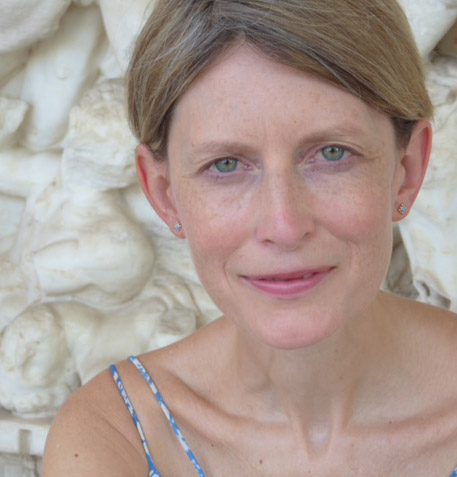
Rebecca Herissone is Professor of Musicology at the University of Manchester and a leading scholar in early modern English music. She co-edits the peer-reviewed journal Music & Letters and serves on editorial boards for the Purcell Society, Musica Britannica, and the Complete Works of John Eccles. Her research focuses on seventeenth-century creativity, material culture, and the ontological dimensions of music notation. Key research areas: Early Modern Music, Creativity, Source Study, Notation, Reception Major awards: Diana McVeagh Prize (2015), Westrup Prize (2007) Her recent work includes digital humanities projects on music preservation and critical editions of Purcell's operas. She has pioneered interdisciplinary approaches connecting musicology with drama, art, and literature, and currently leads research on Purcell's posthumous reception in the eighteenth and nineteenth centuries. Her teaching spans music historiography, performance practices, and advanced source analysis.
John Holmes is Professor of Victorian Literature and Culture at the University of Birmingham, affiliated with the Birmingham Institute of Forest Research (BIFoR). His work bridges literary studies and scientific inquiry, focusing on interdisciplinary connections from 1800 to the present through extensive collaborations with institutions like the Royal Society and major natural history museums across Europe. His academic credentials include a D.Phil. in English Literature from Oxford (2001), an M.A. in Renaissance Studies from Queen Mary and Westfield College, London (1997), and a B.A. in English Language and Literature from Oxford (1994). D.Phil. English Literature, University of Oxford, 2001 M.A. Renaissance Studies, Queen Mary and Westfield College, University of London, 1997 B.A. English Language and Literature, University of Oxford, 1994 Professor Holmes specializes in literature-science intersections, particularly Victorian and modern poetry, Pre-Raphaelite studies, and natural history museums. His current research examines arts architecture within museum spaces and mythic literature's dialogue with evolutionary science. He has authored foundational works on Darwinism in poetry and Pre-Raphaelite scientific engagements while directing major collaborative projects with scientific institutions. Recent publications reveal consistent exploration of poetic form within scientific contexts, with growing emphasis on digital humanities applications and environmental education. His 2023-2024 outputs demonstrate expanded interdisciplinary scope, integrating virtual reality tools for forest education and deepening analysis of myth-science intersections in canonical poetic works. His distinguished honors include: AHRC Collaborative Doctoral Award (2011) British Society for Literature and Science Book Prize (2018) Chair of the British Society for Literature and Science (2012) Honorary Associate of Oxford University Museum of Natural History (2016) President of the Commission on Science and Literature (2023) Professor Holmes leads significant research initiatives including the AHRC-funded Interdisciplinary Forest Education project (2024) and the long-term 'Building the Book of Nature' study (2015-2023). As an active PhD supervisor, he mentors students in literature-science intersections while maintaining robust public engagement through museum collaborations, media appearances, and educational outreach programs that translate academic research for broader audiences. He directs BIFoR-affiliated initiatives connecting literary scholarship with forest research, partnering with natural history museums in Oxford, London, Berlin, and Vienna to develop interdisciplinary frameworks examining how literary traditions shape environmental understanding and scientific communication.
Professor Matthew Treherne is a leading scholar in Italian literature at the University of Leeds, where he holds the position of Professor of Italian Literature in the School of Languages, Cultures and Societies within the Faculty of Arts, Humanities and Cultures. He currently serves as Pro-Dean for Research and Innovation, and co-directs the Leeds Centre for Dante Studies. His research bridges medieval and Renaissance literature with contemporary issues such as finance, ecology, and technology. PhD in Italian Literature, University of Cambridge (2007) Diploma in Management Studies, Judge Business School, University of Cambridge (2000) M.Phil in European Literature (Distinction), University of Cambridge (1999) BA in Modern and Medieval Languages (First-class), University of Cambridge (1997) Matthew Treherne's research focuses on Dante and late-medieval religious culture, with a strong emphasis on the liturgical imagination and theological discourse in poetry. He explores how Dante’s work can inform modern debates on the ecological crisis, financialisation, and time. His interdisciplinary approach integrates theology, philosophy, and cultural studies. He leads the project The Cultural Life of Money and Finance , which investigates how the humanities can shape financial futures. His recent publications include Dante’s ‘Commedia’ and the Liturgical Imagination and co-edited volumes on Dante’s theology. His recent scholarly articles and chapters show a consistent engagement with Dante’s theological and poetic structures, Tasso’s religious poetry, and the role of art and liturgy in early modern culture. Themes such as sacramentality, time, vision, and interdisciplinarity recur across his work, reflecting a deep commitment to understanding literature as a living, ethically engaged practice. University Teaching Fellowship Developmental University Teaching Fellowship Faculty of Arts Development Teaching Prize Treherne has supervised numerous PhD students and fosters research-led teaching, notably through projects like Discover Dante and the Leeds Dante Podcast . He has led major research initiatives, including the AHRC-funded Dante and Late Medieval Florence , and collaborates widely across disciplines and institutions. He is also active in public engagement, contributing to BBC Radio 4’s In Our Time and curating podcast series such as Conversations on Dante and Arts and Humanities Futures . He co-leads the Cultural Life of Money and Finance project with Invisible Flock, blending humanities research with creative practice.
Professor Steven J Reid is a leading scholar in Early Modern Scottish History and Culture at the University of Glasgow , where he has held a professorship since at least 2023. His work bridges intellectual, political, and religious history from c.1450 to c.1650, with a focus on James VI and Mary Queen of Scots . A prolific editor and author, he contributes to major academic series and institutions like the Hunterian Art Gallery. Research Interests Intellectual, political, and religious history of Scotland Jacobean Scotland and Renaissance/Reformation dynamics Latin literature and its cultural role Andrew Melville's educational reforms Key Publications The Early Life of James VI (2023) on royal minority Co-edited volume on The Afterlife of Mary Queen of Scots (2024) Studies in Neo-Latin poetry and educational history Contributions to Oxford Handbook of Calvin and Calvinism (2021) Projects & Grants Co-investigator on RSE-funded Mary Queen of Scots memorialization project AHRC support for Bridging the Continental Divide (2012-2015) Leverhulme Trust international network participant Fulbright Scholars Award at Yale Divinity School (2012) Teaching History 1A: Scotland’s Millennium Special Subject: The Reign of James VI (1578-1603) Module: The Life and Afterlife of Mary, Queen of Scots
Rosa Andujar is a Senior Lecturer in Liberal Arts at King's College London, where she is affiliated with both the Department of Liberal Arts and the Department of Classics within the Faculty of Arts & Humanities. She serves as Editor of the American Journal of Philology and holds positions on the editorial boards of Brazilian journals Nuntius Antiquus and PhaoS - Revista de Estudos Clássicos. Dr. Andujar was elected to the Program Committee of the Society for Classical Studies for a three-year term (2022-2025), serving as Vice President for Program and Chair from 2023-2025. Her research focuses on two complementary areas: Ancient Greek tragedy, particularly the tragic chorus and its performance capabilities Global receptions of Greek drama, with special emphasis on Latin America and the Caribbean Dr. Andujar's work examines how engagements with Graeco-Roman antiquity intersect with questions of gender, race, class, and national identity. She has particular expertise in Cuban adaptations of Greek tragedy and Latinx receptions of classical drama, exploring how these cultural encounters create new narratives that challenge traditional understandings of classical reception. Her research has been recognized with prestigious awards including the 2020 London Hellenic Prize for 'The Greek Trilogy of Luis Alfaro' and the 2022 AJP Best Article Prize. She has secured significant research funding from the Loeb Classical Library Foundation, British Academy, A. G. Leventis Foundation, Harvard Center for Hellenic Studies, Andrew W. Mellon Foundation, and Fundación BBVA. Dr. Andujar's current research projects include 'The Cambridge Companion to Classics and Race' (edited volume), 'La Puerta Electra/The Electra Door' (critical bilingual anthology of Cuban rewritings), and 'Tragedy and Revolución' (monograph on Greek drama in Caribbean cultural history), supported by recent fellowships from the Loeb Classical Library Foundation and British Academy. She is actively involved in academic service as Editor of the American Journal of Philology, co-editor of the 'Classics and the Postcolonial' book series for Routledge, and Advisory Board member of 'Hesperides: Classics in the Luso-Hispanic World.' Her external examining work for the University of Birmingham (2018-2023) demonstrates her commitment to academic standards across institutions.
Professor Alberto Rigolio is a scholar of Classics and Ancient History at Durham University, specializing in the Eastern Mediterranean during the Roman and Late Antique periods. He focuses on Syriac literature, Greco-Roman intellectual traditions, and the reception of classical texts in early Christian and Islamic contexts. Rigolio holds a D.Phil. from Oxford University and has held prestigious fellowships at Harvard, Princeton, and All Souls College, Oxford. He serves as Chair of the Board of Examiners at Durham and is a Fellow of the Higher Education Academy. His research explores the transformation of classical dialogue forms in late antiquity, the transmission of Greek texts into Syriac and Arabic, and the cultural intersections between Greco-Roman, Christian, and Islamic traditions. Key works include Christians in Conversation (Oxford UP, 2019), which examines late antique dialogue literature, and a forthcoming book on the emergence of Syriac literature supported by British Academy and Princeton IAS fellowships. Education: BA/Milan, D.Phil./Oxford, Postdoctoral Fellowships at Harvard and Princeton Affiliations: Institute of Medieval and Early Modern Studies, Durham Rigolio's articles analyze Syriac translations of Aristotelian works, Plutarch, and Themistius, revealing how Greco-Roman thought was adapted to meet religious and cultural needs. His projects include studies on Syriac rhetoric, the Roman household in late antique conflicts, and para-biblical narratives. He supervises postdoctoral researchers and PhD students on topics ranging from Syriac literary culture to late antique religious identity. Awards: British Academy Mid-Career Fellowship (2024), All Souls College Visiting Fellowship (2024) Grants: Leverhulme Trust, British Academy, American Philosophical Society He directs research labs examining Syriac intellectual culture and co-ordinates interdisciplinary projects on late antique translation movements. Rigolio is actively involved in public outreach, offering talks on Roman religion, Palmyrene military identity, and the Graeco-Syro-Arabic textual tradition.
Dr. Deirdre Serjeantson is an Undergraduate Tutor and Fellow at Sidney Sussex College, University of Cambridge. Her research focuses on Renaissance literature, translation studies, and the cultural intersections of early modern Ireland and England. Her work explores the interplay between Petrarchism and Protestant theology in sonnet sequences, the history of the book, and the adaptation of classical and biblical motifs in early modern writing. She has published extensively on topics such as Anne Lock's A Meditation of a Penitent Sinner , Richard Verstegan's symbolic use of Babylon, and the influence of Scottish reformation poetry on English verse. Her recent articles analyze the religious and national identities embedded in sixteenth- and seventeenth-century texts, with a particular interest in gender, authorship, and cross-cultural transmission. She can be contacted at tutors@sid.cam.ac.uk or dcs40@cam.ac.uk .
Professor Alberto Rigolio is a leading scholar of Classics and Ancient History at Durham University, specializing in the cultural and intellectual history of the Eastern Mediterranean during the Roman and late antique periods. He holds a D.Phil. from Oxford University and has held prestigious fellowships at Harvard Dumbarton Oaks, Princeton Society of Fellows, and All Souls College Oxford. His research focuses on Syriac literature, Greco-Syro-Arabic translation movements, and religious debates in late antiquity. Rigolio has published extensively, including his award-winning monograph Christians in Conversation (2019), and currently leads projects supported by the British Academy and the Institute for Advanced Study. He supervises PhD students across multiple institutions and mentors postdoctoral researchers like Dr. Karl Heiner Dahm and Dr. Mara Nicosia. His work bridges classical antiquity with early Christian and Islamic intellectual traditions, emphasizing literary and educational exchanges in late antique societies. Educations: D.Phil., University of Oxford (2014) MPhil/BA, University of Milan and Oxford Research Interests: Syriac literary emergence, Greek-Syriac-Arabic translation networks, late antique dialogues, early Christian theology, and the cultural history of the Roman Near East. Rigolio's current projects investigate how Syriac became a major literary language and its role in transmitting Graeco-Roman thought to early medieval cultures. Grants & Awards: British Academy Mid-Career Fellowship (2024) All Souls College Visiting Fellowship (2024) Princeton IAS Membership (2023) Advising & Mentoring: Supervised 9 PhD students, including Cédrik Michel (Lancaster University Lecturer) and Lila Knight (awarded 2024). Mentors postdoctoral scholars in areas like Syriac rhetoric and late antique religious conflict. Labs/Teams: Leads interdisciplinary research groups at Durham and collaborates with institutions like the Institute for Advanced Study, focusing on textual analysis and cultural history.
Dr Rachel Foxley is an Associate Professor in the Department of History at the University of Reading, serving as Director of Postgraduate Studies in History. Her research focuses on early modern British political thought, particularly the English Revolution, Leveller movement, and classical influences on modern politics. She has authored books like The Levellers: Radical Political Thought in the English Revolution (2016) and co-edited Brill's Companion to the Legacy of Greek Political Thought (2024). Her work explores themes such as republicanism, citizenship, and the intersection of classical antiquity with early modern political developments. Her research has addressed figures like John Milton, James Harrington, and John Lilburne, analyzing their contributions to democratic and republican ideals. Notable projects include the Astor100 initiative, celebrating Nancy Astor’s legacy in women’s politics. She frequently publishes in journals such as Classical Receptions Journal and History of Political Thought , contributing to debates on sovereignty, rhetoric in revolutionary pamphlets, and the historical context of Magna Carta. Dr. Foxley’s scholarship bridges intellectual history with political theory, emphasizing how classical models (e.g., Sparta, Rome) shaped English republican thought. Her work highlights the innovative yet rooted nature of 17th-century political ideas, challenging traditional narratives of revolutionary thought.
Isobel Hurst is a Lecturer in the Department of English and Creative Writing at Goldsmiths, University of London. Her research specializes in Classical Reception Studies, focusing on the interplay between Greek and Roman literature and 19th-century women's writing. Academic qualifications: D.Phil. (2003), M.Phil. in English Studies (2000), BA in Classics and English (1995) - all from the University of Oxford Her research explores how women writers like Elizabeth Barrett Browning and George Eliot creatively engaged with classical texts to challenge gender norms and societal constraints, particularly through reworkings of Homeric and Virgilian themes. She examines intersections between domesticity and epic traditions, feminist reinterpretations of mythology, and the role of classical education in women's authorship. Recent publications analyze Louise Glück's mythic poetry, Victorian epic traditions, and transatlantic classical dialogues. She supervises PhD students working on topics including Sapphic poetics, prophetic figures in literature, and epic subversions in contemporary forms. Isobel contributes to academic discourse through her involvement with the Decadence Research Centre and Centre for Comparative Literature, bridging classical traditions with modern literary innovations through both teaching and research.
Andrew Fear is a Lecturer in Classics at the University of Manchester's Dept of Classics and Ancient History. His research focuses on Roman and Visigothic Spain, Early Christianity, the Roman Army, Roman Britain, and Alexander the Great's legacy. He has published extensively on ancient military history, religious practices, and socio-cultural dynamics in the Roman world. His notable works include analyses of Macedonian Empire strategies, medieval Spanish religious texts, and the psychological impacts of Roman military service. Fear's 2022 book on Mithras explores rituals and deity worship in the classical world, while his 2021 chapter examines the symbolic use of animals in Roman arenas. He has supervised 8 academic projects, though specific student names are not listed. No scientific awards are explicitly mentioned in the provided materials. His expertise also extends to topics like 'Romanisation' processes and Tacitus' works, reflecting a deep engagement with both primary sources and interdisciplinary methodologies.
Dr. Hester Lees-Jeffries is a University Associate Professor at the University of Cambridge and Fellow of St Catharine's College, where she serves as Director of Studies in English. She earned her BA and MA (Hons.) from the University of Canterbury, New Zealand, before completing her PhD at Cambridge as a Commonwealth Scholar. Her academic career includes a Research Fellowship at Magdalene College (2003-2006) and ongoing fellowship at St Catharine's since 2006. Her research focuses on Shakespeare and early modern literature, with particular expertise in performance studies, visual culture, and material textuality. She investigates topics including Renaissance textiles, costume semiotics, garden symbolism, and material objects in literature. Her interdisciplinary approach connects literary analysis with cultural history and performance theory. Lees-Jeffries maintains an active publication record with scholarly works spanning Shakespearean criticism, material culture studies, and Renaissance literature. Her research demonstrates consistent focus on textual materiality, performance interpretation, and interdisciplinary methodologies bridging literary analysis with visual and material culture. Her forthcoming publications include monographs on textile symbolism in Shakespeare and an introduction to Shakespeare's histories. Honors and Awards: Commonwealth Scholarship Research Fellowship, Magdalene College (2003-2006) Fellowship, St Catharine's College (since 2006) She coordinates exhibitions for the Centre for Material Texts and regularly contributes to Shakespeare Survey as London theater reviewer. Her innovative #SlowShakespeare projects provide daily literary analysis of Shakespeare's plays through social media platforms.
Caroline Vout is Professor of Classics at the University of Cambridge, holding a Fellowship at Christ's College where she serves as Director of Studies for Prelims and Part 1A in Classics. She directs the Museum of Classical Archaeology (MOCA) and co-directs Cambridge Visual Culture. From 2019-2024, she held the Byvanck Chair of Classical Archaeology/Art History at Leiden University. Born in Durham, Vout completed her undergraduate studies at Newnham College, Cambridge, followed by an MA at the Courtauld Institute of Art in London, then returned to Newnham for her PhD. Before joining Cambridge in 2006, she taught at London, Bristol, and Nottingham Universities. Vout is a cultural historian and art historian specializing in the Roman imperial period and its reception. Her research explores power dynamics in classical art, erotic representation, and how antiquity has been reinterpreted through history. She examines how classical visual culture functions as both historical evidence and living cultural force, with particular expertise in body representation and political dimensions of reception. Her publication history reveals deep engagement with classical material across centuries - from detailed artifact studies (Peplos Kore, Discobolus) to broad cultural analyses. Recent work connects antiquity with modern contexts including the Olympic Games and Victorian reinterpretations, showing consistent interest in how classical art remains dynamically relevant. As Director of Studies at Christ's College, Vout mentors undergraduate Classics students while her MOCA leadership bridges academic research and public engagement. Her curatorial work, including the upcoming 'Paris 1924: the Art of the Olympics' exhibition with Chris Young, demonstrates commitment to making classical art accessible through innovative programming and digital initiatives like MOCA's video series. Vout's interdisciplinary approach through Cambridge Visual Culture and her editorial roles (Omnibus, Sculpture Journal advisory board) reflect her position at the intersection of traditional classical scholarship and contemporary visual studies, connecting ancient artifacts with modern cultural discourse.
Ilaria L. E. Ramelli is a distinguished scholar specializing in ancient philosophy, early Christianity, and the intersection of Greek philosophical traditions with Christian theological development. She holds multiple prestigious academic appointments including Distinguished Professor at Angelicum (US) Graduate School, Senior Fellow at Princeton University, Fellow at Durham University, Honorary Member of Cambridge University's Centre for the Study of Platonism, and has maintained a continuous affiliation with Sacred Heart University since 1998. Her educational background includes two MAs (Classics with Specialisation in Early Christianity and Philosophy with Historical Specialisation), a PhD in Classics and Early Christianity (2000), a further Doctorate (honoris causa), and a postdoctorate in Late Antiquity and Religion. She has also completed Habilitations to Full Professor / Ordinarius / W3 in History of Philosophy, Classics, and Ancient Greek Language and Literature. Her scholarly credentials are further enhanced by her status as a Fellow of the Royal Historical Society (FRHistS). Professor Ramelli's research focuses on the intricate relationships between ancient Greek philosophical traditions (particularly Platonism and Neoplatonism) and early Christian thought. She specializes in figures such as Origen of Alexandria and Gregory of Nyssa, examining how philosophical concepts were transformed and integrated into theological frameworks. Her work consistently explores themes of dialectic methodology, metaphysical concepts, and the development of doctrinal formulations in early Christianity. She has demonstrated particular expertise in tracing the reception of Greek philosophical ideas within Patristic literature and examining how philosophical concepts were adapted to Christian theological contexts. Analysis of her recent publications reveals a sustained scholarly trajectory examining the relationship between ancient Greek dialectic methods and early Christian theological development. Her work consistently centers on how figures like Origen synthesized Greek philosophical traditions with Christian doctrine, particularly focusing on concepts like apokatastasis (universal restoration), the relationship between Father and Son, and the adaptation of philosophical methodology to theological exegesis. Her scholarship demonstrates remarkable breadth across philosophical schools while maintaining rigorous philological attention to textual evidence. Fellow of the Royal Historical Society (FRHistS) Professor Ramelli has established herself as a leading authority in the field of ancient philosophy and Patristics through her extensive publication record (147 publications documented) and editorial work on significant scholarly volumes. Her research demonstrates sustained engagement with major philosophical questions through careful examination of primary sources across Greek, Latin, and early Christian traditions. She has contributed significantly to our understanding of how philosophical concepts migrated across intellectual traditions and how early Christian thinkers engaged critically with philosophical frameworks while developing their theological systems.
Ruth Padel is a Visiting Professor of Poetry at King's College London, acclaimed poet, and author. Her work bridges classical scholarship, conservation science, and literary creativity. Education: D.Phil in Classics from University of Oxford (Greek tragedy and medicine). Research: Poetry composition, Darwinian studies, conservation narratives, and classical reception in contemporary culture. Current projects explore Beethoven/Schubert biographies in verse and migration ecology. Awards & Leadership: First Prize in National Poetry Competition; chaired judging panels for T.S. Eliot Prize and Forward Prize. Fellow of Royal Society of Literature and Zoological Society of London. Public Engagement: Frequent broadcaster (BBC Radio 3/4); international festival appearances including Jaipur Literature Festival and Edinburgh Festival.



.jpg)