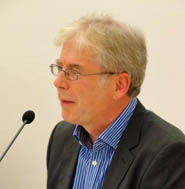
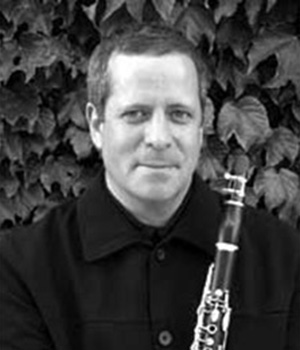
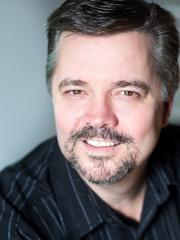
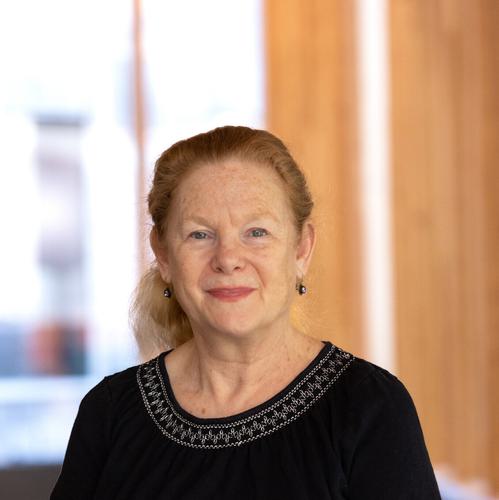
Harry White is a Professor of Music at University College Dublin (UCD), serving as Head of Department from 1993-2005. He holds academic positions such as visiting professorships in Canada, Croatia, Germany, and the UK. Educated at UCD, University of Toronto, and Trinity College Dublin, he specializes in cultural history of Irish music, Austrian baroque music, and Anglo-American musicology. His awards include the Harrison Medal (2014) and Royal Irish Academy membership (2006). Research focuses on music’s role in Irish cultural identity, European baroque traditions, and historiographical methods. Notable works include The Keeper's Recital (1998) and co-editing The Encyclopaedia of Music in Ireland (2013). Recent engagements include delivering the Alfred S. Hook Memorial Lecture (2022) and receiving a Festschrift in 2018. Education: BMus (UCD), MA (Toronto), PhD (Trinity College Dublin) Awards: Harrison Medal, MRIA, Honorary Fellowships (R.I.A.M., Croatian Musicological Society) Editorial Roles: General editor of Irish Musical Studies , advisory editor for New Grove Dictionary and Journal of the Royal Musical Association
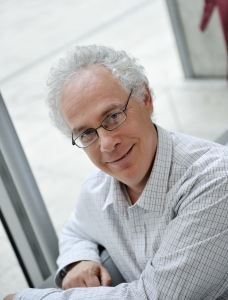
Professor Adam Gorb is a renowned composer and academic, serving as Professor of Composition and former Head of the School of Composition at the Royal Northern College of Music (RNCM) from 2000 to 2023. He holds a PhD in Composition from the University of Birmingham (2013), alongside degrees from Cambridge University (BA 1980) and the Royal Academy of Music (RAM, MMus with Principal’s Prize 1993). His research and creative output focuses on orchestral, operatic, and wind ensemble composition. Notable works include operas Anya 17 (2012) and The Path to Heaven (2018), which explore themes like human trafficking and the Holocaust. His wind ensemble pieces, such as Towards Nirvana and Farewell , have won British Composer Awards and are performed globally. Awards include three British Composer Awards and a House of Commons accolade for Anya 17 . He advises PhD students in composition while maintaining international collaborations, including recent projects in Romania, Australia, and the USA. His music is frequently recorded and performed worldwide, with CDs such as 24 Preludes (2022) and Dancing in the Ghetto (2016) showcasing his diverse output. Teaching roles include undergraduate and postgraduate composition at the RNCM, alongside guest lectures at institutions globally. His current projects include commissions for the Royal Academy of Music and interdisciplinary work with Parkinson’s patients.
David J. Levin is a Professor at the University of Chicago, holding affiliations in Germanic Studies, Cinema & Media Studies, Theater & Performance Studies, and the College. With a PhD from UC Berkeley (1992), he has taught at UChicago since 1998 and served as Senior Advisor to the Provost for Arts (2018-2023). He previously held a Visiting Professorship at the University of Oslo (2014-2019) and founded the Gray Center for Arts and Inquiry (2011-2016). PhD in Germanic Studies, UC Berkeley (1992) Teaching at UChicago since 1998 Visiting Professor, University of Oslo (2014-2019) Founding Director, Gray Center for Arts and Inquiry (2011-2016) His research spans Opera Studies, Theater and Performance, Cinema, and Dance, focusing on the interpretive and political dimensions of staging. He explores Wagner’s dramaturgy, digital reproducibility in opera, and the interplay between immersion and critique. His current book projects examine Wagner’s pedagogical politics and opera’s digital transformation. The articles he has published reflect a deep engagement with operatic and cinematic modernism, the ethics of adaptation, and the role of the dramaturg in interdisciplinary performance. His work bridges German literature, musicology, and critical theory. Levin’s editorial and collaborative roles include Executive Editor of The Opera Quarterly (2005-2015), dramaturg positions with German and U.S. opera houses, and collaborations with choreographers like William Forsythe and Saar Magal.
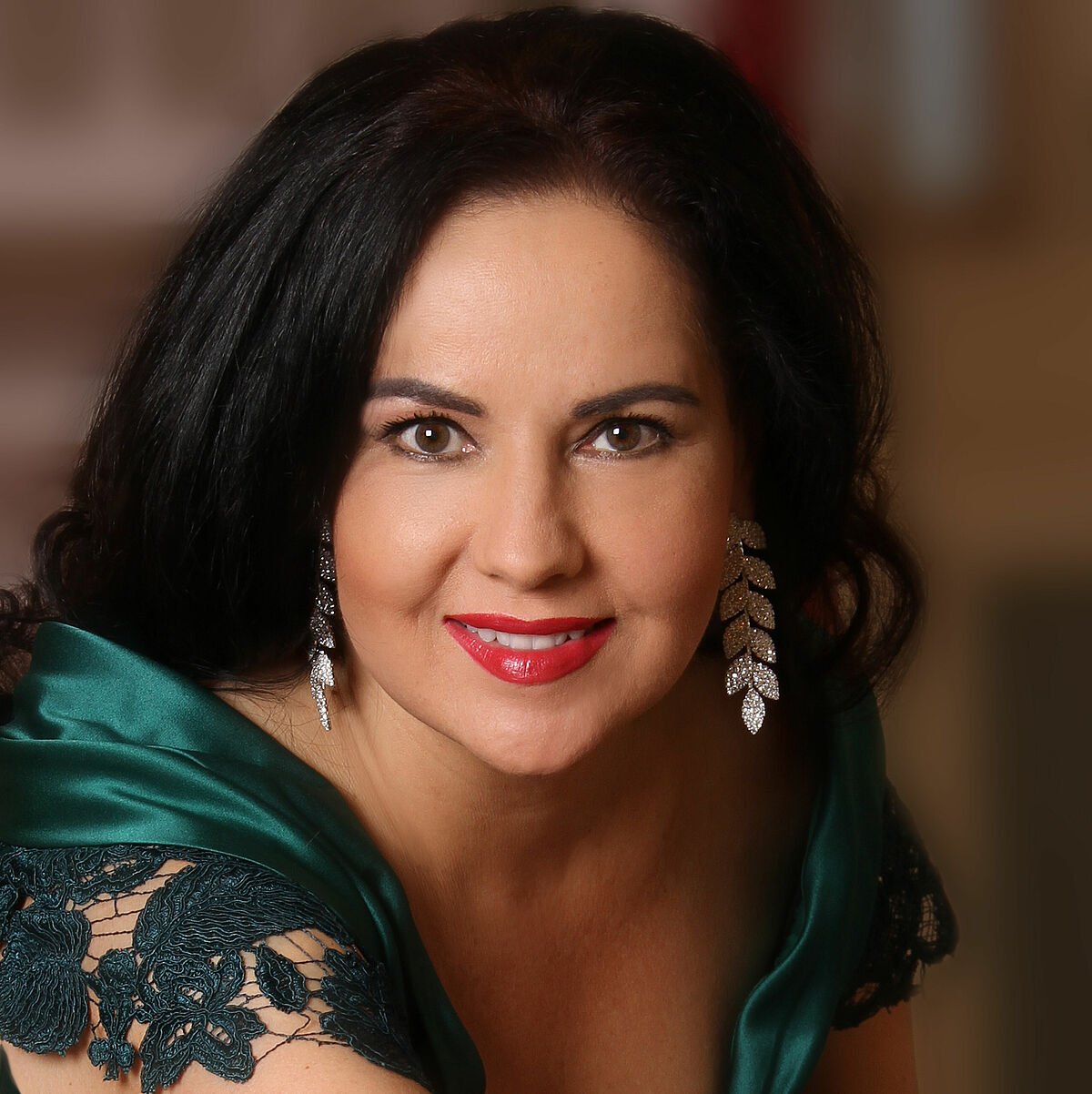
Hermine May is a Romanian-born mezzo-soprano and faculty member at the University of Music and Drama in Rostock since 2020. She has established herself internationally through performances in dramatic opera repertoire, notably portraying roles like Carmen, Amneris, and Ortrud at prestigious venues such as La Scala di Milano and opera houses in Copenhagen and Shanghai. Her artistic collaborations include work with renowned conductors like Zubin Mehta, Raffael Frühbeck de Burgos, and Teodor Currentzis. She has achieved significant success on the concert platform, performing works by Mahler, Verdi, Brahms, and Wagner. Specializes in dramatic mezzo-soprano roles Active in international opera and concert stages Teaches vocal performance at the university level Collaborated with major orchestras and conductors
Donnacha M. Dennehy is a Professor of Music at Princeton University and Director of the Princeton Sound Kitchen. Previously a tenured lecturer at Trinity College Dublin, he was appointed a Global Scholar at Princeton University in Autumn 2012 and joined the music faculty in 2014. Dennehy founded Crash Ensemble, Ireland's renowned new music group, in 1997 after returning to Ireland from studies in the USA, France, and Holland. Dennehy's research interests focus on contemporary composition with particular emphasis on opera, experimental music theatre, overtone series exploration, and ensemble music. His work bridges traditional composition with innovative approaches to sound and performance, often incorporating elements of Irish musical tradition within contemporary frameworks. He has developed a distinctive compositional voice that has earned him international recognition. His compositions have been performed at major festivals and venues worldwide including the Edinburgh International Festival, Royal Opera House London, Carnegie Hall New York, The Barbican London, and many others. Dennehy's work shows consistent exploration of narrative structures within contemporary classical music, with a particular interest in collaborations across artistic disciplines including theatre, visual arts, and literature. Scientific Awards: Elected to Aosdána (Ireland's Academy of Creative Artists), 2005 Fulbright Scholarship Irish Times Theatre Award for best opera (for The Last Hotel), 2015 International Rostrum of Composers 'recommended' for Crane, 2010 Dennehy has received numerous commissions from prestigious organizations including Carnegie Hall, Wigmore Hall, Metropolitan Museum of Art, BBC, and RTE National Symphony Orchestra. His collaborations extend to renowned artists including Dawn Upshaw, Kronos Quartet, and writers Colm Tóibín and Enda Walsh. As Director of Princeton Sound Kitchen, he leads an ensemble dedicated to innovative contemporary music performance and creation. Dennehy's work with Crash Ensemble has been particularly influential in the new music scene, with their 2011 Nonesuch release of his music, Grá agus Bás, named by NPR as one of its '50 favorite albums' of 2011. His teaching at Princeton includes courses in composition, instrumentation, and music theory through performance.
Dimitri Scarlato serves as Area Leader in Masters Programmes in Composition for Screen and Doctoral Supervisor at the Royal College of Music's Faculty of Composition. Holding a Doctorate in Composition from the RCM (2014) alongside prior studies at Guildhall School of Music & Drama (2004) and Rome's Conservatorio di Musica S.Cecilia, he maintains active roles in academic leadership and doctoral supervision while continuing professional creative work. His research spans film composition, opera, and contemporary classical music with specialized focus on screen-based media. Key interests include soundtrack production techniques, cross-cultural narrative scoring, and innovative vocal composition for modern contexts. His work integrates academic rigor with industry practice through film scores, operatic productions, and multimedia performances that bridge traditional and contemporary forms. Scarlato's recent creative output demonstrates consistent thematic development in audiovisual storytelling, with increasing sophistication in emotional resonance and cultural contextualization across film and opera formats. His projects frequently explore Italian cinematic traditions while incorporating international perspectives from collaborations at venues like Berlinale Talent Campus and Royal Opera House. 2nd Prize, Opera Harmony Digital Opera Festival (2020) for 'A Life Reset' Award for Soundtrack to Short Film 'Intolerance' (2021) RCM Rising Star Selection (2010) As Doctoral Supervisor, Scarlato guides emerging composers through rigorous academic and creative development, emphasizing practical industry integration. His professional engagements include conducting premieres of contemporary operas across Europe and high-profile collaborations such as coaching Sir Michael Caine for the film 'Youth' (2015). Current projects focus on expanding composition techniques for digital media platforms while maintaining strong connections to traditional performance venues.
Steven D. Zohn is the Laura H. Carnell Professor at Temple University’s Boyer College of Music and Dance. He holds a PhD and MA in musicology from Cornell University and an AB in music from Vassar College. As a leading Telemann scholar, his research spans intersections of style and genre, print culture, reception history, domestic music-making, historical performance practices, and music as intellectual property. PhD, Musicology, Cornell University MA, Musicology, Cornell University AB, Music, Vassar College Zohn’s research emphasizes Telemann’s instrumental works, sacred vocal music, and cultural contexts, as well as Bach family studies and Enlightenment-era salon culture. His publications include influential books like Music for a Mixed Taste and Telemann Studies , alongside critical editions and articles in Journal of the American Musicological Society and Oxford Handbooks Online . In 2022, he received the Georg Philipp Telemann Award from Magdeburg for his contributions to Telemann research. Other accolades include the Noah Greenberg Award and the William H. Scheide Prize. He co-edits the Bach Perspectives series and serves on editorial boards, including Telemann’s Musikalische Werke . Zohn also performs on historical flutes with ensembles like Night Music and Philadelphia Bach Collegium, with recordings on Acis, Avie, and Chandos labels. His courses explore domestic musicking, Bach’s cantatas, and unaccompanied instrumental works.
Isidora Miranda serves as an Assistant Professor of the Practice in Musicology and Ethnomusicology at Vanderbilt University's Blair School of Music. Her scholarly work centers on the history of music and theater in the Philippines during the early twentieth century, with particular attention to cultural nationalism and the construction of racial and gendered identities through performance under U.S. colonial rule. Her academic credentials include a Bachelor of Music from the University of the Philippines, a Master of Music in violin performance and musicology from Western Illinois University, and a Ph.D. in Musicology from the University of Wisconsin-Madison. Dr. Miranda's research interests are deeply rooted in Musicology and Ethnomusicology , with specialized focus on Philippine music history , colonial-era theater , and gender studies . She examines how performance practices, especially the Tagalog zarzuela, became sites of cultural resistance and identity formation. Her interdisciplinary approach bridges historical musicology, postcolonial theory, and Southeast Asian studies. Analysis of her recent publications reveals a consistent trajectory in Southeast Asian music scholarship, particularly Philippine theater and opera of the early 1900s. Her work on figures like Atang de la Rama and the zarzuela genre has significantly contributed to understanding the interplay of art, politics, and identity in colonial contexts. Her distinguished record of scholarly recognition includes: American Musicological Society's resident fellowship at the Newberry Library Mellon Research Fellowship on Original Sources by the Council for Library and Information Resources 2022 American Council of Learned Societies Fellowship Dr. Miranda has secured substantial research funding through these competitive fellowships, which have enabled her archival work and book project on Tagalog zarzuela. Beyond academia, she maintains an active performance career as a violinist with ensembles spanning classical, klezmer, and Brazilian forró traditions, reflecting her commitment to embodied musical knowledge. Though not leading a formal research laboratory, her collaborative projects with musical groups and her integration of performance practice into scholarship exemplify a holistic approach to music studies.
Associate Professor Antony Moulis is a faculty member at the University of Queensland's School of Architecture, Design and Planning, where he also serves as Deputy Head of School. He holds a Bachelor of Design Studies and a Bachelor degree from UQ. His research focuses on productive cities, urban retrofit, and global architectural knowledge transfer, with notable contributions to books like House, Precinct, Territory (2023) and Le Corbusier in the Antipodes (2021). He collaborates with industry on projects addressing micro-urban resilience, energy transitions, and cross-cultural architectural exchanges. Research interests include urban infill housing strategies, architectural techniques from the 20th to 21st century, and the global influence of figures like Le Corbusier. He led UQ's participation in the Water Sensitive Cities CRC, focusing on green infrastructure and urban intensification. Awards include the 2025 Architecture Australia Prize for Unbuilt Work and multiple Queensland Architecture Awards for collaborative designs like the Blue Bower and One Room Tower. His work spans academic and professional journals, with over 50 articles and 4 books. He has supervised numerous research projects and contributed to exhibitions at venues like the Seoul Biennale. Moulis is a past President of the Society of Architectural Historians, Australia and New Zealand (SAHANZ), and actively engages in architectural historiography and design pedagogy.
Todd Levy is an Adjunct Professor of Clarinet in the Music Department at the University of Wisconsin-Milwaukee. He is a renowned performer with principal clarinet roles in the Milwaukee Symphony Orchestra (MSO), The Santa Fe Opera Orchestra, and frequent collaborations with major orchestras including The Chicago Symphony Orchestra and The Philadelphia Orchestra. A three-time Grammy Award winner, Levy has performed at prestigious venues like Carnegie Hall and the Mostly Mozart Festival, and has worked with conductors such as James Levine, Christoph Eschenbach, and Seiji Ozawa. Education: MM & BM in Clarinet from The Juilliard School His research interests focus on advanced clarinet performance techniques, contemporary repertoire interpretation, and chamber music collaboration. He has premiered works by composers including John Harbison and Joan Tower, and his recordings span labels like Deutsche Grammophon and Avie Records. Levy also co-directs Chamber Music Milwaukee and is a Vandoren/Selmer artist. His discography includes major works like the Brahms Clarinet Sonatas and The Clarinet Collection series. Notable collaborations include performances with the Guarneri Quartet, Juilliard Quartet, and violinist Pinchas Zukerman. Awards: 3× Grammy Awards, Naumburg Award (Aspen Wind Quintet) Teaching focuses on clarinet pedagogy and ensemble performance, with over 20 recorded chamber music CDs to his credit. Active in both academic and professional musical communities, he combines performance excellence with educational outreach.
Dr. Shaun Brown is the Director of Performance and Voice Performance Fellow at The University of Queensland's School of Music, within the Faculty of Humanities, Arts and Social Sciences. He holds a Doctor of Musical Arts from the University of North Texas and a Master's from UQ. His career spans over three decades with Opera Queensland, where he has performed in over 50 productions, including Don Giovanni, Carmen, and Così fan Tutte. Internationally, he has collaborated with institutions like Opéra de Lyon and the Center for Contemporary Opera in New York. His research focuses on vocal performance practices, particularly Erich Korngold's early Lieder. Notable performances include roles in Britten’s War Requiem, Bach’s St Matthew Passion, and Handel’s Messiah. Recent engagements include OQ’s Festival of Outback Opera productions and recitals with Brisbane Music Festival. He actively participates in workshops, masterclasses, and community arts initiatives. Education: Doctor of Musical Arts, University of North Texas Masters (Coursework), The University of Queensland Research interests emphasize historical vocal performance techniques, interpretation of 20th-century Lieder, and contemporary opera. His 2016 thesis on Korngold’s works highlights interdisciplinary approaches to vocal pedagogy and musical analysis. Though no explicit awards are listed, his critical acclaim and long-term institutional contributions reflect professional recognition. He oversees performance training at UQ, mentoring emerging artists through Opera Queensland’s Young Artist program. Collaborations include Brisbane Chorale, Queensland Youth Orchestras, and festivals like Jimbour’s Outback Opera. Key venues include Queensland Performing Arts Centre, Lyric Theatre, and St John's Cathedral, showcasing his versatility across operatic, concert, and recital formats.
Aimee Bender serves as a Distinguished Professor of English at the University of Southern California within the Dornsife College of Letters, Arts and Sciences, Department of English. Her position reflects significant contributions to literary arts and creative writing education. Education: M.F.A. in Fiction, University of California, Irvine (1998) B.A. in Literature/Creative Writing, UC San Diego (1991) Bender's research centers on contemporary fiction with emphasis on surrealism, magical realism, and experimental narrative forms. She explores the reinvention of fairy tales across classic and modern contexts while examining diverse short-form structures including short stories, novellas, and short-shorts. Her work critically investigates writing processes and the pedagogical dynamics of creative writing workshops, positioning her at the forefront of innovative literary expression. Her publications from 1998-2020 consistently merge reality with fantastical elements, revealing psychological depth through unconventional narrative techniques. Bender's work demonstrates evolving mastery in using symbolic transformations to explore family dynamics, emotional perception, and human relationships. This trajectory establishes her as a pivotal figure in advancing contemporary American fiction through genre-blending approaches that challenge conventional storytelling boundaries. Scientific Awards: USC Distinguished Professor (2017) Judge for Mid-American Review story contest (2006-2007) PEN West Mentor of the Year for Emerging Writers Program (2006-2007) Pushcart Prize (2005-2006) Bender actively mentors emerging writers as evidenced by her PEN West award, while her interdisciplinary collaborations extend to commission-based creative projects. Her opera libretto workshop with composer John B Hedges at Curtis Institute and science-inspired radio story for "Studio 360" demonstrate cross-disciplinary engagement, though specific grant funding details remain unmentioned in source materials. These ventures highlight her commitment to expanding literary expression through diverse media platforms. No laboratory or formal research team affiliations are documented in the available information.
Rhonda S. Hackworth is an Associate Professor of Music Education at the University of Mississippi, where she serves as Head of Music Education and Graduate Program Coordinator. She holds a Ph.D. in Music Education from the University of Missouri-Kansas City Conservatory of Music and an M.M. in Vocal Performance. Current role: Associate Professor of Music Education Key responsibilities: Graduate Program Coordinator, thesis/dissertation director Previous institutions: Rutgers University, Syracuse University, University of Missouri-Kansas City Research Interests Dr. Hackworth specializes in vocal health for music educators and students, with a secondary focus on music perception. Her work examines vocal hygiene practices, the impact of teaching experience on vocal health, and musical tension in Debussy’s compositions. She has published extensively in journals like the Journal of Research in Music Education and International Journal of Music Education , and her research spans both empirical studies and literature reviews. Publications Trends Her scholarship bridges music education and vocal health, particularly addressing how pedagogical practices affect vocal wellness. Subfields include behavioral intervention strategies, multilingual text analysis in vocal works, and choral participation models. Professional Engagement Dr. Hackworth presents research at international and national conferences, with presentations in Greece, China, and Italy. She also performs as an alto soloist in concert, opera, and musical theater settings.
Christof Weiß is a Professor for Computational Humanities at the CAIDAS / Institute of Computer Science, Julius-Maximilians-Universität Würzburg (JMU), Germany. He serves as Head of the DFG-funded Emmy Noether group on Computational Analysis of Music Audio Recordings: A Cross-Version Approach. His academic journey includes previous positions as Visiting Researcher at University Télécom Paris (2021), Visiting Lecturer at Karlsruhe University of Music (2020, 2021), and Research Assistant at International Audio Laboratories Erlangen (2015-2022) and Fraunhofer Institute for Digital Media Technology (2012-2015). His educational background encompasses a PhD in Media Technology from University of Technology Ilmenau (2017), Concert Diploma in Composition from Würzburg University of Music (2012), Physics Diploma from University of Würzburg (2012), and Music Diploma in Composition from Würzburg University of Music (2011). This unique combination of technical and artistic training forms the foundation of his interdisciplinary research approach. Weiß's research operates at the critical intersection of computer science and musicology, developing novel computational methods for analyzing musical structures in audio recordings. His work bridges technical audio processing with musicological insights, creating methodologies for tonal analysis, key estimation, and cross-version comparison of musical performances. His approach combines deep learning techniques with music theory to extract meaningful patterns from large music corpora, enabling new forms of musicological corpus studies that were previously impossible. His recent publications reveal a clear research trajectory toward integrating advanced machine learning with fundamental musicological questions. The consistent theme across his work involves analyzing classical music structures through computational lenses, with particular emphasis on cross-version consistency in performances, tonal complexity measurement, and developing datasets that support computational musicology. His publications span both highly technical audio processing journals and musicology-focused venues, demonstrating his commitment to bridging these disciplines. Best paper award at the 4th conference on Computational Humanities Research (CHR), 2023 KlarText award for science communication of the Klaus Tschira Foundation, 2018 2nd prize at Festival Pablo Casals composition competition, Prades (France), 2013 Youth Cultural Advancement Award (Kulturförderpreis) of the city of Amberg, Germany, 2011 As principal investigator of the DFG Emmy Noether group, Weiß leads a multidisciplinary research team investigating computational analysis of music audio recordings through a cross-version approach. His research has secured significant funding including the prestigious Emmy Noether program, supporting doctoral and postdoctoral researchers working on various aspects of music information retrieval and computational humanities. His collaborative network spans institutions across Europe, including University Télécom Paris, Queen Mary University of London, and multiple German research centers. Weiß leads the Computational Humanities research group at CAIDAS, which focuses on developing computational methodologies for music analysis with particular emphasis on classical repertoire. The lab creates specialized datasets (including the Wagner Ring Dataset and Schubert Winterreise Dataset), develops algorithms for structural music analysis, and applies these tools to address musicological questions that require computational scale and precision. Their work bridges the gap between technical audio processing capabilities and humanities research questions, creating new pathways for understanding musical structure and evolution.
Claire Fontijn is the Phyllis Henderson Carey Professor of Music at Wellesley College. Her research and teaching focus on Early Music , Women Composers , and J.S. Bach , with a particular emphasis on medieval to baroque periods. Education: B.A. from Oberlin College, Certificate from Royal Conservatory of The Hague, and Ph.D. from Duke University. Her scholarly work explores the contributions of women composers like Hildegard of Bingen, Barbara Strozzi, and Fanny Hensel, alongside historical performance practices and the synthesis of image, text, and notation in medieval music. Recent publications analyze solmization puns and chorales from the Seicento Venice and Romantic periods. Fontijn’s research has been supported by prestigious organizations including the American Musicological Society , the Andrew W. Mellon Foundation , and the National Endowment for the Humanities . She teaches courses such as Italian Popular Song and the Calderwood Seminar in Public Writing: The Power of Music , which trains students to communicate music scholarship to non-specialist audiences. Scientific Awards : Nicolas Slonimsky Award for Classical Music Biography (2007) Fontijn’s collaborations with Susan Parisi and her editorship of Uncovering Music of Early European Women highlight her dedication to expanding the canon of music history. Grants from the Gladys Krieble Delmas Foundation and the Institute for Citizens & Scholars further enable her interdisciplinary work.