Dr Cristóbal Garibay-Petersen serves as a Fellow in European Philosophy within the European Institute at the London School of Economics and Political Science (LSE). His academic profile centers on rigorous engagement with European philosophical traditions and metaphysical frameworks. His research expertise spans Transcendental Idealism , German Idealism , and 19th-20th Century Continental Philosophy , with specialized focus on Kant's metaphysics of time and ontologies of idealism. Broader intellectual pursuits include the historical evolution of reason and conceptual systems across philosophical eras. Teaching responsibilities predominantly cover logic and metaphysics of Modernity , reflecting his methodological grounding in systematic philosophical analysis. His scholarly work bridges classical German idealism with contemporary European thought. Professional engagement occurs through LSE's European Institute, a hub for interdisciplinary research on European integration, politics, and intellectual history. His academic identity is defined by deep textual analysis and conceptual reconstruction within philosophical traditions.
Yi Ding is an Assistant Professor in the Elmore Family School of Electrical and Computer Engineering at Purdue University, where they lead the STYLE (Sustainable computing Systems and LEarning) Lab. Dr. Ding joined Purdue in August 2023 after completing a postdoctoral fellowship at MIT CSAIL as an NSF Computing Innovation Fellow, mentored by Michael Carbin. During their postdoc, they also held a visiting position at Meta Infra Data Center to improve server maintenance efficiency in hyperscale datacenters. They received their Ph.D. in Computer Science from the University of Chicago, advised by Henry Hoffmann. Dr. Ding's research focuses on computer systems, computer architecture, and AI/ML, with strong emphasis on applications in sustainability and healthcare. Their work spans sustainable computing, including energy efficiency in datacenters and LLM serving, as well as healthcare applications such as mental health prediction and EEG analysis. Their recent publications demonstrate a strong trend toward addressing environmental impacts of computing, particularly in datacenters and AI systems, while also exploring innovative healthcare applications. Their research bridges systems, sustainability, and health domains, creating novel solutions for pressing societal challenges. Dr. Ding has received notable recognition including the Seed Funding for High-Impact Review Papers (2024), the Meta Research Award (2021), and was selected as a Computing Innovation Fellow by CRA/CCC (2020). Seed Funding for High-Impact Review Papers (2024) with Inez Hua 1st Place in Research Talk in CoE at Fall 2024 Undergrad Research Expo (awarded to Gavin Fortwendel) 2020 Computing Innovation Fellow by CRA/CCC Meta Research Award on Statistics for Improving Insights, Models, and Decisions (2021) Dr. Ding is actively recruiting self-motivated Ph.D. students interested in AI/ML systems research. They have secured funding for undergraduate research projects through DUIRI, focusing on sustainable AI computing and energy use in training autonomous vehicles. Their lab collaborates with various institutions including MIT, Meta, and interdisciplinary partners at Purdue. The STYLE Lab under Dr. Ding's leadership is actively engaged in multiple research initiatives addressing sustainable computing and healthcare applications, with strong industry connections and funding support from both internal university sources and external partners.
Julio Parra-Martinez is a Permanent Professor at the Institut des Hautes Études Scientifiques (IHES) since 2024. Originally from Spain, he completed his undergraduate studies at the University of Valencia, followed by a MASt in Applied Mathematics from the University of Cambridge in 2015, and a PhD in Physics from UCLA in 2020. Prior to joining IHES, he was a Sherman Fairchild Prize Postdoctoral Fellow at Caltech for three years and an Assistant Professor at the University of British Columbia for one year. His educational background includes: Undergraduate: University of Valencia, Spain MASt in Applied Mathematics: University of Cambridge (2015) PhD in Physics: University of California Los Angeles (2020) Parra-Martinez is a theoretical physicist specializing in quantum field theory, scattering amplitudes, gravitation, effective field theories, and string theory. His recent work focuses on importing techniques from particle physics to classical general relativity, with applications to gravitational-wave and black-hole physics. He has made significant contributions to understanding how scattering amplitude techniques, originally developed for particle colliders, can be applied to gravitational systems. His research bridges the gap between quantum field theory and classical gravity, particularly in the context of binary black hole systems and gravitational wave emission. His publication record shows a consistent focus on using scattering amplitude methods to tackle problems in gravitational physics. Over the past five years, he has published extensively on post-Minkowskian expansions, gravitational waveforms, soft theorems, and connections between quantum field theory and classical gravity. His work often involves collaborations with leading researchers in the field and demonstrates how techniques from particle physics can be adapted to gravitational systems, particularly in the context of extreme mass ratio binaries and gravitational wave physics. Among his notable scientific achievements are: Mayhew Prize (2015) Fulbright Fellowship (2015-2020) Sherman Fairchild Prize Postdoctoral Fellowship Parra-Martinez is actively involved in the theoretical physics community, with numerous upcoming seminars, talks, and lectures scheduled through 2026 at institutions worldwide including ICTP Trieste, Universidade de Sao Paulo, University of Southampton, and others. His research program continues to explore the connections between particle physics techniques and gravitational physics, with particular emphasis on gravitational wave astronomy and black hole physics.
O.J. (Oliver) Moore is a Professor and Chair of Chinese Language & Culture at the University of Groningen's Faculty of Arts. His expertise spans Art History of China, early/modern Chinese history, archaeology, and material culture. He holds a PhD from Cambridge University and has held roles at Leiden University, the British Museum, and Kyoto University. His research integrates historical, technical, and aesthetic aspects of Chinese art and culture, with a focus on photography, printing systems, and classical texts. Education: Studied Chinese at London University (SOAS) and Fudan University (Shanghai), PhD at Cambridge on Tang Dynasty civil service recruitment rituals. Teaching includes modern Chinese language, East Asian art/media, and thesis writing. He supervises PhD projects on Chinese art collecting in the Netherlands and collaborates internationally on courses like 'Chinese Gardens in Europe.' Key publications: Photography in China: Science, Commerce and Communication (2022), translations of Tang-era texts, and studies on Tang art and archaeology. Research emphasizes demystifying Chinese culture through translation and cross-disciplinary approaches. Past roles include Curator at the Netherlands Museum of Ethnology and Visiting Professor at Kyoto University.
Sandip Tiwari is the Charles N. Mellowes Professor in Engineering at Cornell University, leading the School of Applied and Engineering Physics. He holds a B.Tech in Electrical Engineering from IIT Kanpur (1976), M.Eng from Rochester Institute of Technology (1977), and a Ph.D. in Electrical Engineering from Cornell (1980). His research bridges semiconductor electronics/optics and nanotechnology, emphasizing cross-scale integration of devices and systems. He directs the U.S. National Nanotechnology Infrastructure Network (NNIN) and has held visiting roles at Stanford, Harvard, Columbia, and the University of Paris-Sud. Notable honors include the IEEE Cledo Brunetti Award, APS Fellowship, and IIT Kanpur's Distinguished Alumnus Award. Education: IIT Kanpur (B.Tech), Rochester Polytechnic Institute (M.Eng), Cornell (Ph.D.) Affiliations: NNIN Director, IEEE Transactions on Nanotechnology (founding editor), multiple visiting professorships Research focuses on nanoscale device physics, quantum phenomena in electronics, and societal applications of nanotechnology. His work integrates engineering principles with physical sciences to address challenges in scalable electronic systems and MEMs. Awards highlight his contributions to semiconductor physics and nanotechnology, including recognition from IEEE, APS, and IIT Kanpur. He also promotes global scientific collaboration through education initiatives and NNIN.
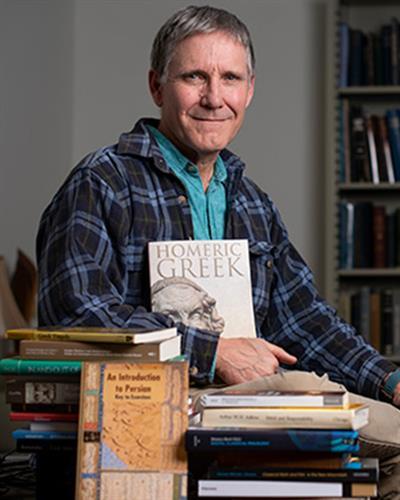
Gregory Crane is Professor of Classical Studies and Computer Science at Tufts University, where he holds the Winnick Family Chair in Technology and Entrepreneurship and serves as Chair of the Classical Studies Department. He also maintains a professorship in the School of Engineering's Computer Science department. Previously, he was Alexander von Humboldt Professor of Digital Humanities at Leipzig University in Germany from 2013-2019. PhD in Classical Philology, Harvard University (1985) BA in Classics, Harvard University (1979) Crane's research bridges traditional classical scholarship with digital technology. His work in classical studies focuses on ancient Greek authors, particularly Thucydides, with two major books published on the subject. Simultaneously, he has been a pioneer in digital humanities, beginning work on digital tools for classics as a graduate student in 1982. He is the Editor-in-Chief of the Perseus Project, which he has directed since 1985, developing morphological analysis systems and overseeing the project's evolution through multiple generations of digital library technology. His recent publications demonstrate a strong trend toward integrating artificial intelligence with classical language studies, developing next-generation digital libraries, and exploring new methods for engaging with classical texts in the digital age. Crane's work increasingly focuses on making ancient languages more accessible through technology, with research spanning digital philology, language learning tools, and corpus-based approaches to historical languages. Winnick Family Chair in Technology and Entrepreneurship Alexander von Humboldt Professor of Digital Humanities Crane has secured substantial research funding from major organizations including the National Endowment for the Humanities, the Andrew W. Mellon Foundation, the National Science Foundation, and Google. His current and recent projects include "Reinventing the study of ancient languages" and "Beyond Translation -- new possibilities for reading in a digital age." He has advised numerous students through senior honors theses and directed dissertation research in Classical Studies at Tufts University. Crane leads the Perseus Digital Library research program, which has evolved through multiple generations of technology to become a leading resource for classical studies. His work has established critical infrastructure for digital classics, including named entity identification systems and morphological analysis tools that have shaped the field of digital humanities.
Christophe VIGNAT is a Professor at CentraleSupélec, affiliated with the Laboratoire des Signaux et Systèmes (L2S). His research focuses on number theory, special functions, probability, and their applications in signal processing and control systems. He has held visiting professorships at École Polytechnique Fédérale de Lausanne (EPFL) and Tulane University. VIGNAT's work bridges pure mathematics and applied fields, with notable contributions to Bernoulli/Euler polynomials, multiple zeta values, and probabilistic methods in number theory. His recent publications explore topics like partition functions, theta functions, and Ramanujan-type identities. He has delivered talks at international conferences and collaborates widely with researchers in mathematics and physics. Research Interests: Number theory, special functions (Bessel, orthogonal polynomials), probability theory, signal processing, control systems, analytic combinatorics, and their interconnections. His work often employs symbolic computation and probabilistic approaches to uncover identities and structures in mathematical analysis. Publications Trends: Recent articles emphasize partition theory, zeta functions, and integrals related to classical polynomials. His collaborations highlight interdisciplinary efforts between pure mathematics and applied sciences. Over 150 refereed papers and conference contributions demonstrate his prolific output across diverse mathematical domains. Education: While specific academic history isn’t detailed, his roles and publications suggest advanced training in mathematics and engineering, typical for a full professor in systems and control.
Michael Knap is an Associate Professor of Collective Quantum Dynamics at the Technical University of Munich (TUM), within the Department of Physics at the TUM School of Natural Sciences. His research group focuses on condensed matter theory, quantum many-body systems, and quantum simulation. Knap holds office in room 5101.01.037 at James-Franck-Str. 1, 85748 Garching b. München, and can be reached at michael.knap@ph.tum.de or +49 (89) 289 - 53777. Prof. Knap's research delves into the rich physics of quantum many-body systems, particularly exploring non-equilibrium dynamics and transport phenomena in ultracold quantum gases, interacting light-matter systems, and correlated quantum materials. His work spans multiple subfields including topological phases of matter, quantum simulation with trapped ions, fracton physics, and quantum computation. He develops novel numerical approaches based on quantum information theory and utilizes artificial intelligence and machine learning to tackle challenging problems in condensed matter physics. His group's research connects fundamental theoretical questions with experimental implementations in quantum simulators. The analysis of Prof. Knap's recent publications (2023-2025) reveals a strong focus on topological quantum matter, quantum simulation, and emergent phenomena in constrained quantum systems. His work frequently bridges condensed matter theory with quantum information science, as evidenced by publications on fracton hydrodynamics, higher-form symmetries, and quantum error correction. There's a clear progression toward increasingly complex quantum systems and connections to experimental implementations on quantum processors. His research shows significant interdisciplinary reach, connecting condensed matter physics with quantum computing and quantum information theory. ERC Consolidator Grant (2025) ERC Starting Grant (2019) Supervisory Award, TUM Department of Physics (2018) Promotio sub auspiciis Praesidentis rei publicae, Austria (2013) Prof. Knap has established a robust research program supported by prestigious European Research Council grants. His group actively collaborates with both theoretical and experimental groups worldwide, particularly in the quantum simulation community. He has supervised numerous students through Master's Seminars on Collective Quantum Dynamics covering topics like quantum simulation with trapped ions and theoretical quantum computation. His research has received significant attention, with several publications featured as Editors' suggestions and Research Highlights in leading journals. The Collective Quantum Dynamics group maintains strong connections with experimental quantum simulation efforts, particularly in the areas of ultracold atoms and trapped ion systems. Knap's theoretical work often provides frameworks for interpreting experimental results in quantum simulators, creating a productive feedback loop between theory and experiment. His group participates in collaborative research networks focused on advancing quantum simulation capabilities and understanding fundamental aspects of quantum many-body physics.
Debdeep Jena is the David E. Burr Professor of Engineering at Cornell University, holding appointments in the Departments of Electrical and Computer Engineering and Materials Science and Engineering, and serving as a field member in Applied and Engineering Physics. He joined Cornell in 2015 after twelve years on the faculty at the University of Notre Dame. Professor Jena's research focuses on the quantum physics of semiconductors and electronic/photonic devices based on quantized semiconductor structures. His work spans Nitrides, Oxides, and 2D Materials, with applications in energy-efficient transistors, LEDs, RF and power electronics, and quantum computation. His group explores the fundamental limits of computation, memory, and communications by exploiting new physics in semiconductor devices, particularly investigating ultrahigh-speed GaN and AlN transistors, ultra-wide bandgap semiconductors for power electronics, deep-UV LEDs and lasers, and novel materials for quantum computing. His recent publications demonstrate a consistent trajectory toward integrating semiconductors with superconductors, ferroelectrics, and magnets to create hybrid quantum systems. This research direction aims to overcome classical device limits while dramatically improving energy efficiency across computing, communications, and power management applications from the chip to the grid level. Art Gossard MBE Innovator Award, North American Conference on Molecular Beam Epitaxy (NAMBE) 2024 Intel Outstanding Researcher Award 2020 David Burr Chair Professor of Engineering 2020 Fellow, American Physical Society 2016 MBE Young Scientist Award 2014 IBM Faculty Award 2012 Professor Jena leads a $34 million research center focused on energy-efficient semiconductor materials and technologies. His research group actively engages in materials synthesis using Molecular Beam Epitaxy (MBE) while collaborating with theoretical physicists to develop comprehensive understanding of electron transport, light-matter interactions, and correlated electron physics. In 2022, he published the textbook 'Quantum Physics of Semiconductor Materials and Devices' through Oxford University Press, which has become a top seller in solid-state physics and electromagnetism categories. The Jena research group operates at the intersection of multiple advanced materials systems, maintaining expertise in Nitride Electronics, Oxide Electronics, UV Lasers/Photonics, 2D Materials, Ultrapolar/Ferro Semiconductors, and Super/Semi Electronics. Their work spans fundamental materials science to device engineering, with strong connections to energy systems, advanced materials processing, and quantum information science applications.
Kirsten Emilie Moselund is a Full Professor of Electrical and Microengineering at École Polytechnique Fédérale de Lausanne (EPFL) and Head of the Laboratory of Nano and Quantum Technologies (LNQ) at Paul Scherrer Institut (PSI) since 2022. She bridges quantum and classical technologies through interdisciplinary research collaborations across the ETH domain. Her leadership spans multiple groups in quantum computing and nanotechnology, including the ETHZ-PSI Quantum Computing Hub. Education: M.Sc. in Engineering (2003) and Ph.D. in Microelectronics (2008), both from EPFL and Technical University of Denmark (DTU) Her research focuses on semiconductor device innovation, including low-power electronics , cryogenic electronics , and integrated photonics , with an emphasis on III-V on silicon monolithic integration for hybrid quantum-classical systems. Key subfields include topological devices , nanophotonics , and neuromorphic computing . Recent publications highlight advancements in III-V photonic integration , nanoscale lasers , and optoelectronic device physics , reflecting her expertise in bridging materials science with quantum engineering. Notably, her work on hybrid photonic-plasmonic nanolasers earned an ERC Starting Grant . As an academic leader, Moselund has directed multiple Ph.D. theses and contributed to over 100 publications with 25 patents filed. She serves on technical committees for major conferences like IEDM and participates in European and Swiss research initiatives. Labs & Teams: Lead the LNQ laboratory at PSI with six research groups Professional Memberships: Wissenschaftliche Beirat of IHP Microelectronics, Kuratorium IMS Chips
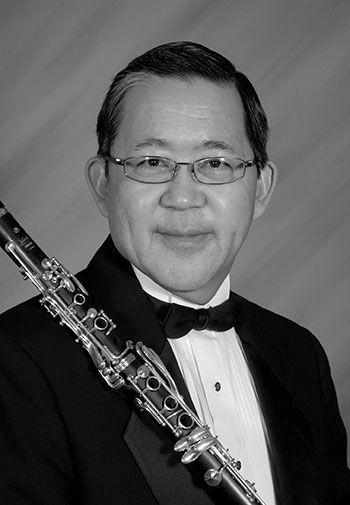
Miles M. Ishigaki serves as Professor of Music in the Department of Music within California State University, Fresno's College of Arts and Humanities. He has taught applied clarinet, chamber music, music theory, and music appreciation at Fresno State since 1987 while directing the university clarinet choir. From 1989-2017, he held the position of state chair for the National Association of College Wind and Percussion Instructors, demonstrating sustained institutional commitment. His academic credentials include: Doctor of Musical Arts in Performance, University of Oklahoma (1988) Doctoral study in Music Performance, University of Arizona (1981-1982) Master of Music in Performance, Colorado State University (1981) Dual Bachelor's degrees: Music Education and Music Performance, University of Northern Colorado (1978) Dr. Ishigaki's research centers on the dialectic between intuition and analytical understanding in musical performance, particularly regarding clarinet repertoire. His seminal work documents interpretive approaches of legendary clarinetists including Larry Combs, Stanley Hasty, and Leon Russianoff, focusing on Stravinsky's Three Pieces for Solo Clarinet. His collaborative research with Dr. Michael Rogers bridges music theory and performance practice, revealing how structural analysis informs expressive execution. This scholarly trajectory consistently examines the cognitive and technical dimensions of artistic mastery. His publications from 1988-2017 reveal evolving emphases from symposium documentation and performance analysis toward technology integration in music education, culminating in the 2017 Music Fundamentals ebook. Collectively, his work establishes clarinet pedagogy as both scientific discipline and artistic practice, with growing attention to digital learning environments while maintaining core focus on interpretive authenticity. His recognitions include: 2013 Provost's Teaching Award in Technology for innovative digital pedagogy 2006 Honorary Alumnus distinction from University of Northern Colorado Dr. Ishigaki has mentored exceptional students who have earned Fulbright Scholarships, McNair Doctoral grants, and participation in national honor ensembles. His studio consistently produces competition winners while he maintains active performance engagements with regional orchestras and international venues. Beyond academia, he serves as COO of I&M, Inc., applying sustainable technology principles to water and energy systems, demonstrating interdisciplinary impact beyond music. As founder of both the West Coast Clarinet Congress and Fresno State Faculty Clarinet Quartet, he cultivates professional communities while maintaining Yamaha Artist status. His community outreach through organizations like the Japanese American Citizen's League and Valley Children's Hospital reflects deep civic engagement alongside scholarly pursuits.
Olivier Pfister is a Professor in the Department of Physics at the University of Virginia , with courtesy appointments in Electrical and Computer Engineering (2022–). His research focuses on experimental quantum optics and quantum information , particularly leveraging optical frequency combs to develop scalable quantum computing platforms. The Quantum Fields and Quantum Information (QFQI) group , which he leads, has pioneered techniques for generating multipartite entanglement in continuous-variable systems, achieving cluster-state entanglement in 60+ qumodes (with potential scaling to thousands). Collaborations span institutions like NIST, University of Sydney, CUNY, and Jefferson Laboratory, with applications in quantum simulation , non-Gaussian state characterization , and hybrid quantum technologies . Key contributions include the 2013 APS Fellowship for groundbreaking work on quantum frequency combs, NSF Distinguished Research Awards , and patents in quantum photonic devices. His group’s NSF-funded research (e.g., QLCI Preliminary Proposal, $3.2M; RAISE-EquIP, $750K) explores fault-tolerant quantum computing, machine learning integration, and microresonator-based entanglement. Pfister’s scientific awards include the 2013 UVA Distinguished Research Career Award and the 1996 JILA Clever Idea Contest Second Prize . His students and postdocs (e.g., Amr Hossameldin , Miller Eaton , Rajveer Nehra ) have published extensively on quantum tomography, cluster states, and photonic detector design. Pfister also serves on advisory and planning committees at UVA, emphasizing interdisciplinary collaboration across physics , engineering , and quantum information .
Zhiqiang Yu serves as an Associate Professor in the Department of Modern Languages and Comparative Literature at Baruch College's Weissman School of Arts and Sciences, City University of New York. With over two decades of teaching experience, he has established himself as a dedicated educator specializing in Chinese language, cinema, and civilization courses. Education: Ph.D. in Chinese, University of Washington M.A. in Asian Civilization, University of Iowa B.A. in Chinese Literature, Fudan University (Shanghai) Professor Yu's research focuses on innovative approaches to Chinese language pedagogy, with particular interest in applying economic principles and artificial intelligence to language teaching. His work bridges traditional linguistic scholarship with modern educational technology, examining how efficiency, resource allocation, and technological advancements can enhance language learning outcomes. His research spans Chinese linguistics, dialectology, cinema studies, and cultural elements in language teaching. His publication record reveals a consistent trajectory toward optimizing language instruction through systematic analysis. Recent work increasingly focuses on AI applications in language education and the economic framework of pedagogical efficiency. His scholarship demonstrates a progression from traditional linguistic analysis toward innovative teaching methodologies that incorporate modern technological and theoretical frameworks. Scientific Awards: Award of Excellent Academic Research Reviewer from Journal of International Chinese Education (2016) Graduate Teaching Fellowship from University of Washington (1993) Graduate Teaching Fellowship from University of Iowa (1989) Graduate Research Fellowship from University of Iowa (1988) Student Excellency Award from Fudan University (1984) Professor Yu has served extensively on departmental committees including as Department Assessment Coordinator and Secretary of the Asian and Asian-American Studies Committee. He has organized numerous academic events featuring prominent Chinese cultural figures and has contributed to developing Chinese language curriculum resources including online placement tests. His professional service extends to editorial work for CUNY publications and Chinese language training for the New York Police Academy. He maintains active involvement with multiple professional organizations including the American Name Society, American Oriental Society, American Society of Geolinguistics, Association for Asian Studies, and Chinese Language Teachers Association, frequently presenting at international conferences on Chinese language pedagogy.
Crystal Noel is an Assistant Professor at Duke University in the Pratt School of Engineering and Trinity College of Arts & Sciences , with appointments in both the Department of Electrical and Computer Engineering and Physics since 2022. She is also a Member of the Duke Quantum Center since 2024. Ph.D. in Electrical and Computer Engineering from University of California, Berkeley (2019) B.S. in Massachusetts Institute of Technology (2013) Her research focuses on quantum computing and simulation with trapped ions , integrated photonics for scalable trapped ion systems , and electric-field noise from surfaces . Recent work includes developing non-invasive mid-circuit measurement techniques, sympathetic cooling for ion chains, and cross-platform quantum state comparison. She has secured significant grants from National Science Foundation , Rochester Institute of Technology , and Defense Advanced Research Projects Agency for quantum co-design and networking projects. Her lab ( Noel Lab ) explores scalable quantum computing architectures and surface noise mitigation. She teaches courses ranging from foundational Fields and Waves: Fundamentals of Information Propagation to advanced topics in Quantum Engineering with Atoms and Advanced Topics in Electrical and Computer Engineering .
David M Feldshuh is a Professor in Performing and Media Arts at Cornell University with over 40 years of service, uniquely combining a board-certified emergency medicine physician career with theater artistry. As founding Artistic Director of the Schwartz Center for the Performing Arts, he leads a resident company of professional actors collaborating with students across Cornell. His education spans Dartmouth College (B.A. Philosophy, Phi Beta Kappa, cum laude), London Academy of Music and Dramatic Arts, and dual Ph.D. (Theatre) and M.D. (Medicine) from the University of Minnesota, followed by Emergency Medicine residency at Hennepin County Medical Center and board certification. Feldshuh’s research centers on theater as a vehicle for social change, particularly at the arts-healthcare intersection. He pioneers creativity training methodologies derived from Zen meditation, Gestalt Therapy, and martial arts to enhance professional presence. His work examines ethical dilemmas in medical practice through performance, with emphasis on cultural bias mitigation and historical trauma processing. His creative output reveals consistent focus on social justice narratives, evolving from historical adaptations like Antigone to contemporary explorations of systemic inequity. Recent works demonstrate increasing formal innovation through multi-role performance structures and transmedia storytelling approaches that bridge academic and public engagement. Major honors include: Pulitzer Prize Finalist and 5 Emmy Awards for Miss Evers' Boys Cornell’s Stephen H. Weiss Presidential Fellowship (highest teaching honor) Distinguished Service Award from Tuskegee University’s National Bioethics Center AMA “Freddy” Award for medical film excellence CINE Golden Eagle for documentary work Feldshuh mentors through honors tutorials and developed the globally adopted eCornell course Acting in Public , teaching 1,600+ students across 15 countries. His Schwartz Center leadership established institutional grant frameworks supporting large-scale productions like Bernstein’s Mass with 138 performers. Current initiatives include leadership workshops for Cornell Tech and corporate clients, extending his presence-training methodology beyond academia. He maintains active creative practice through the Schwartz Center’s resident company, directing major productions while integrating medical ethics into performance pedagogy. His stadium announcing role at Cornell commencements for 20+ years exemplifies his commitment to institutional community engagement.