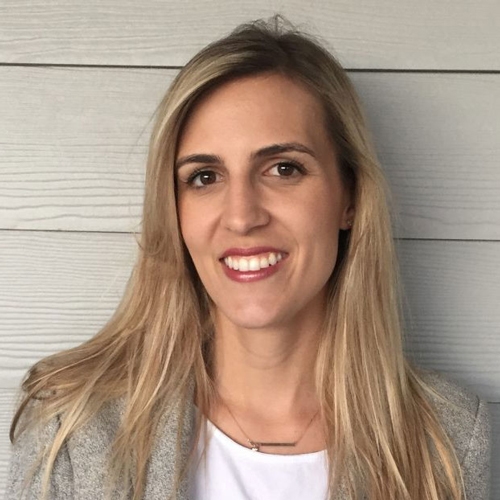
Illya V. Hicks is a Professor in the Computational and Applied Mathematics Department at Rice University. He holds a PhD from Rice University (2000) and a BS from Texas State University (1995). His research focuses on combinatorial optimization, integer programming, graph theory, and matroid theory, with applications in social networks, cancer treatment, and network design. He has advised numerous doctoral, post-doctoral, and masters students. Education: PhD and MA in Computational and Applied Mathematics, Rice University, 2000 BS in Mathematics, Texas State University, 1995 Research Interests: Utilizing graph decomposition techniques to solve NP-complete problems, including branch decompositions and matroid circuit problems. Applications include sensor network design, healthcare logistics, and algorithmic graph theory. Awards: Recognized with the 2015 Presidential Mentoring Award (Rice University), 2010 Forum Moving Spirit Award (INFORMS), and the 2005 Optimization Prize for Young Researchers. Grants and Projects: Includes NSF-funded research on branch decomposition techniques, submodular optimization, and healthcare service distribution. Active in promoting minority participation in operations research through travel grants and mentoring initiatives. Labs/Teams: Engaged in collaborative research on graph algorithms, combinatorial optimization, and interdisciplinary applications in healthcare and engineering.
Virginia Leavell serves as Assistant Professor in Organisational Theory and Information Systems at Cambridge Judge Business School, University of Cambridge. Her research investigates how organisations anticipate technological change through digital prediction systems, AI, and infrastructure transformation, drawing on her decade-long background in political organising for non-profits and labour groups across the US and Thailand. Her academic credentials include: BA in Interdisciplinary Studies, Georgetown University MA in Sociology, University of California Santa Barbara PhD in Technology Management, University of California Santa Barbara Leavell's scholarly work centers on organisational anticipation of technological futures, employing ethnographic and social network analysis methods to examine digital transformation in critical infrastructure contexts. She explores how predictive technologies reshape organisational structures and actions before technological change fully materializes, with particular focus on water systems, urban planning, and labor industries where digital twins and simulation technologies create new governance challenges. Analysis of her 2017-2024 publications reveals consistent examination of prediction performativity across sectors, demonstrating how digital models influence physical realities in infrastructure management. Her research trajectory shows increasing emphasis on sociomaterial dimensions of anticipatory organising, with recent work interrogating the equalization of human and technological agency in digital transformation processes. No scientific awards were specified in source materials. Leavell actively contributes to the Organisational Theory and Information Systems subject group at Cambridge Judge Business School, which engages cross-disciplinary leadership themes. Information regarding student advising and research grants remains unspecified in available documentation.
Jeremy Hahn is an Assistant Professor at the Massachusetts Institute of Technology (MIT), affiliated with the Department of Mathematics within the School of Science. His research focuses on Algebraic Topology, particularly structured ring spectra, chromatic homotopy theory, and equivariant homotopy theory. Supported by grants from the Sloan Foundation and the National Science Foundation (DMS-1803273), his work has contributed to foundational advances in topological K-theory, algebraic K-theory, and manifold topology. Education details are not explicitly listed, though past teaching roles at Harvard University suggest prior academic training. His research interests span topics including: Structured ring spectra constructions (e.g., truncated Brown-Peterson spectra) Chromatic redshift phenomena and algebraic K-theory Equivariant orientations and C_p actions Applications of homotopy theory to manifold classification Notable recent work includes counterexamples to Ravenel's telescope conjecture, advancements in motivic filtrations of topological cyclic homology, and the construction of multiplicative structures on classical spectra. Collaborations with researchers such as Robert Burklund, Dylan Wilson, and Allen Yuan reflect his active engagement in the global topology research community. Teaching includes advanced courses like Algebraic Topology I (18.905) and past roles as a teaching assistant for Linear Algebra (18.06) and multivariable calculus at MIT. His research has been supported by multiple NSF grants and the Sloan Fellowship, indicating sustained academic excellence and leadership in the field.
Prof. Harry Hyungryul Baik is a Tenured Associate Professor at KAIST's Department of Mathematical Sciences since 2017. He holds a PhD from Cornell University (2014) and a B.S. from KAIST (2009), advised by William Thurston, John Hubbard, and Dylan Thurston. His research focuses on geometric topology, geometric group theory, and low-dimensional topology, with notable contributions to mapping class groups, Kleinian groups, and Teichmüller theory. Education: PhD in Mathematics (Cornell, 2014), B.S. in Mathematics (KAIST, 2009). Key research areas include asymptotic translation lengths, laminar groups, and circular orders of groups. He co-leads the KAIST-KIAS joint research group 2K-GATE as Director, emphasizing collaboration between topologists. Research highlights: Characterization of Fuchsian groups via laminations, unsmoothability of mapping class group actions on 1-manifolds, and exponential torsion growth in random 3-manifolds. His work bridges topology with dynamical systems and geometric group theory, often involving collaborations with institutions like KIAS and MPIM. Awards include the Sangsan Prize (2018), Young-KAST membership (2020–2023), and multiple grants from Samsung and POSCO. He advises 7 PhD students and has mentored 15+ alumni, many of whom hold postdoc positions globally. His lab actively hosts conferences like the KAIST Geometric Topology Fair. Labs/Teams: Director of 2K-GATE (KAIST-KIAS), core member of the KAIST Topology Research Group, collaborator with international networks including the Harvard-MIT-Princeton topology axis.
Daniel Adelman is the Charles I. Clough, Jr. Professor of Operations Management at the University of Chicago Booth School of Business. He joined the faculty in 1997 after completing his PhD in industrial engineering and operations research at Georgia Tech. Adelman is a leading expert in Business Analytics and Management Analytics, helping companies deploy data and decision analysis to build world-class strategic and tactical management capabilities. Adelman received his PhD in industrial engineering and operations research in 1997, along with a bachelor's degree in industrial engineering and a master's degree in operations research, all from the School of Industrial and Systems Engineering at the Georgia Institute of Technology. Daniel Adelman's research focuses on applying analytical models to solve complex business problems across multiple industries. He has worked with firms from diverse sectors including internet services, chemical distribution, airlines, third party logistics, fiber-optics manufacturing, semiconductor manufacturing, oil, and healthcare. His research integrates real-world data with analytical models to bring structure and discipline to decision and control processes, enabling firms to achieve higher profits with lower risk. Adelman's recent work has concentrated heavily on healthcare analytics, where he leads the Healthcare Analytics Laboratory at Chicago Booth. This lab works with teams of doctoral and MBA students on projects with major healthcare institutions to optimize clinical, operational, and financial outcomes. His research spans foundational operations research including approximate dynamic programming, inventory theory/supply chain management, and revenue management/pricing optimization, as well as examining the linkage between operational performance metrics and financial performance of firms. Adelman's publications show a clear trend toward increasing focus on healthcare applications while maintaining strong theoretical foundations in operations research. His earlier work focused more on general operations management problems like inventory control and supply chain optimization, while his recent publications demonstrate a strategic shift toward healthcare analytics, particularly examining surgical team dynamics, hospital performance metrics, and resource allocation during public health emergencies like the COVID-19 pandemic. George B. Dantzig Prize (1998) for the best dissertation in operations research and management sciences that is innovative and relevant to practice Adelman regularly advises doctoral and MBA students through the Healthcare Analytics Laboratory at Chicago Booth. He has served as Associate Editor for Management Science, currently serves as Associate Editor for Manufacturing and Service Operations Management, and is the Area Editor for Operations and Supply Chain at Operations Research. His industry collaborations include significant projects with Akamai on internet pricing, with GE Global Research Labs on the electricity smart grid, with BP on gasoline supply contract portfolio optimization, and with Symantec on software release planning. Adelman leads the Healthcare Analytics Laboratory at Chicago Booth, which brings together interdisciplinary teams of doctoral and MBA students to work on a portfolio of projects with major healthcare institutions. The lab focuses on optimizing clinical, operational, and financial outcomes through advanced analytics and decision modeling.
Xiaoming Liu is the Anil K. and Nandita Jain Endowed Professor of Engineering and MSU Foundation Professor in the Department of Computer Science and Engineering at Michigan State University . Holding a Ph.D. from Carnegie Mellon University (2004), he leads cutting-edge research in computer vision and machine learning. Research Interests : Computer Vision Pattern Recognition Image and Video Processing Machine Learning Medical Image Analysis Multimedia Retrieval Recent Research Trends : Focus on 3D object detection and depth estimation Development of robust biometric recognition systems Integration of radar-camera fusion for autonomous systems Advancements in self-supervised and multimodal learning Exploration of adversarial AI security Creation of interpretable forgery detection frameworks Teaching : Spring 2013: CSE891-006 Computer Vision Seminar Fall 2012-2015: CSE803 Computer Vision Spring 2014-2017: CSE 471 Media Processing and Multimedia Contact Information : Email: liuxm@cse.msu.edu Office: EB 3137, Michigan State University Phone: +1 (517) 355-2359
Sam Friedman is an Assistant Professor in the Department of Sociology at the London School of Economics and Political Science (LSE). His research focuses on social mobility, social class, elites, and cultural distinction. He co-authored the influential book Born to Rule , examining the transformation of the British elite over 120 years using biographical data and interviews. Friedman also explores the 'class ceiling' in professional and managerial occupations, revealing persistent class-based pay disparities. His work bridges sociology with cultural analysis, addressing how elites construct their identities and legitimize their status through 'ordinary' narratives. He directs the MSc in Inequalities and Social Science at LSE and teaches courses on class, culture, and meritocracy. Friedman has been recognized with prestigious awards, including the 2018 European Academy of Sociology Best Article Award and the 2016 ASA Inequality, Poverty and Mobility Section Best Article Award. Notable contributions include analyzing the role of private schools in elite recruitment, the gendered experiences of upward mobility, and the impact of inherited wealth ('the bank of mum and dad'). His interdisciplinary approach combines historical analysis, statistical data, and ethnographic insights to understand systemic social inequalities.
Paul Larson is a Professor of Mathematics at Miami University. His research focuses on set theory, topology, and model theory, with particular expertise in forcing axioms, descriptive set theory, and infinitary logic. He holds a Ph.D. in Mathematics from the University of California, Berkeley. His work bridges foundational mathematical logic with applications in topology and combinatorics. Key contributions include studies on canonical models under fragments of the Axiom of Choice, polar forcings, and cardinal characteristics. Larson has collaborated extensively with leading researchers such as Saharon Shelah and Jindřich Zapletal. His publications span prestigious journals like the Annals of Pure and Applied Logic and Transactions of the American Mathematical Society. Beyond research, he contributes to the academic community through editorial work and expository writings on historical developments in determinacy theory. Education: Ph.D., Mathematics, University of California, Berkeley Research interests emphasize foundational questions in set theory with applications to topology and model theory. His recent work explores advanced forcing techniques, square principles in Pmax extensions, and combinatorial properties of cardinal invariants. Publications reflect interdisciplinary engagement, including crystal structure prediction in high-pressure chemistry and operator theory in functional analysis. Despite an extensive publication record, no specific scientific awards are documented here. His advising and grant activities remain unspecified in the provided texts. Collaborations span international institutions, reflecting his role as a central figure in contemporary set theory research.
Maurizio Dallocchio is a Full Professor of Corporate Finance at Bocconi University and SDA Bocconi School of Management. He served as Dean of SDA Bocconi (2003–2007) and has held leadership roles in academic and professional institutions, including Chair of the Audit Committee of the European Investment Bank (EIB). His research focuses on corporate valuation, mergers & acquisitions (M&A), and sustainable finance. Dallocchio founded DGPA & Co., a corporate finance consultancy, and advises public and private entities globally. He has taught at leading institutions like London Business School and NYU Stern School of Business. Educational Background: Ph.D. in Business Administration, Bocconi University Advanced studies at London Business School and New York University Stern School of Business Research Interests: Prof. Dallocchio’s work emphasizes corporate restructuring, ESG integration in finance, and strategic valuation methodologies . Recent studies explore environmental performance in emerging markets and the resilience of conglomerates during economic crises. He advocates for sustainable investment strategies that balance financial returns with societal impact. Professional Engagements: Board member roles at Klepierre Management, General Finance, and Podravska Banka Past Director of the Master in Corporate Finance program at SDA Bocconi Labs/Teams: Leads research initiatives at Bocconi’s Corporate Finance and Real Estate Department, collaborating with global institutions on projects involving corporate governance, M&A analytics, and sustainable development.
Sean Foley is a Professor of Applied Finance at Macquarie University, specializing in Fintech, Cryptocurrencies, Trading, and Market Design. He leads the Decentralized Assets division at the Digital Finance Cooperative Research Centre (DFCRC), bridging academia, industry, and government. His research focuses on blockchain applications like automated market makers, DeFi protocols, and stablecoins. Education: PhD in Finance from the University of Sydney (2014), focusing on 'The Impact of Regulation on Market Quality'. Research Interests: Decentralized finance (DeFi) systems Cryptocurrency market dynamics and regulation Market microstructure and liquidity provision Energy market crises and policy Regulatory frameworks for financial markets Key Projects: Leading the DFCRC's Industrial PhD Scholarships (2021–2031), mentoring students like Arvind Rangarajan and Juuso Artturi Itkonen. Research on Australia's National Electricity Market (NEM) suspension and energy policy. Awards: Best Paper Award at the Cryptocurrency Conference (2019) Philip Brown Prize for Best Australian Paper (2021) Exceptional Research Prize (2019) Advising & Grants: Supervised over 10 PhD students through DFCRC scholarships. Secured $181 million for the Digital Finance CRC. Lead applicant in the Gunns Ltd shareholder class action. Labs/Teams: Head of Decentralized Assets at DFCRC, collaborating on policy and technology. Co-researcher on 'Electricity Markets in Crisis' and cryptocurrency illicit use studies.
Kelly Arnold is an Associate Professor in the Department of Biomedical Engineering at the University of Michigan. Her research integrates systems engineering principles with immunology to investigate variability in immune responses across infection, vaccination, and injury, with a focus on computational modeling and clinical translation. Research Focus Systems-level immune response modeling Vaccination and antibody functionality Vaginal microbiome-host interactions Chronic lung disease progression Computational serology and proteomics Recent Work Her 2025 studies examine SARS-CoV-2 vaccination responses in cancer patients and computational frameworks for vaginal probiotics. Earlier works (2024-2007) span COPD progression, lupus fibrosis, HIV susceptibility, and tissue engineering for fertility preservation. Methodologies include proteomic profiling, network modeling, and microfluidic systems.
Noah Nathan is an Associate Professor of Political Science at Massachusetts Institute of Technology , with faculty affiliation at MIT’s Global Diversity Lab . He previously taught at the University of Michigan and earned his PhD in Government from Harvard University (2016) . Research Interests: Political economy of development Comparative political behavior Urban politics State-building Distributive politics and clientelism Political parties African political systems Article Trends: His recent work integrates urban built environments into political behavior analysis, with empirical studies across African cities. Key themes include state-building legacies in inequality, clientelist electoral systems, and architectural impacts on political engagement. Earlier work (2013-2020) focused on ethnic politics, leadership dynamics, and institutional design. Scientific Awards: 2024 William Riker Award for Best Book in Political Economy 2024 African Politics Conference Group Best Book Award 2023 Foreign Affairs Best Books recognition 2015 Heinz I. Eulau Award (APSR) 2024 Political Ties Best Paper Award (APSA) Advising & Grants: He has advised multiple published studies in top journals and secured research funding for field experiments in Ghana. Current work explores vernacular architecture’s political impact and state capture mechanisms. Labs & Teams: Affiliated with MIT’s Global Diversity Lab and collaborative networks across African politics research institutions.
Mary Pattillo serves as the Harold Washington Professor of Sociology and Chair of the Department of Black Studies at Northwestern University's Weinberg College of Arts and Sciences, with additional affiliation at the Institute for Policy Research. Her work centers on Chicago's urban landscape as a critical site for examining systemic racism and inequality. Her academic foundation includes a PhD in Sociology from the University of Chicago (1997) and a BA in Urban Studies from Columbia University (1991), establishing her expertise in urban analysis and racial dynamics. Pattillo's research agenda prioritizes race and ethnicity, urban sociology, and inequality through the lens of Black communities, with particular focus on housing, criminal legal systems, and the Black middle class. Her ethnographic approach reveals how spatial dynamics shape life outcomes, as demonstrated in her influential books Black Picket Fences (1999) and Black on the Block (2007), which introduced the pivotal "middlemen/middlewomen" framework for understanding professional Black roles in mediating inequality. Current work advances the "Black Advantage Vision" paradigm to reframe racial inequality research. Her publication trajectory shows deepening engagement with structural racism across multiple domains: from early neighborhood ethnographies to contemporary analyses of monetary sanctions and placemaking. This evolution reflects an interdisciplinary expansion into criminology, policy studies, and cultural sociology while maintaining core commitments to urban inequality and Black community resilience. Major recognitions include: Election to the American Academy of Arts and Sciences (2020) Robert E. Park Award for Best Book (2008) Oliver Cromwell Cox Best Book Award (2000) Fulbright Scholar designation (2019-2020) Weinberg College Community Building Award (2018) Outstanding Academic Book Award (2000) Pattillo actively mentors students through courses like Urban Ethnography and Sociology of Housing while leading significant research initiatives on school choice and criminal legal sanctions. Her community impact extends through board service at the W.T. Grant Foundation and Chicago Appleseed Center, plus founding Urban Prep Academies. Current projects examining Black safety in Chicago demonstrate her sustained commitment to community-engaged scholarship addressing urgent urban challenges.
Dr. Katerina Marcoulides is an Associate Professor in the Quantitative and Psychometric Methods Program at the University of Minnesota's Department of Psychology. She is affiliated with the Minnesota Population Center and serves as Co-Chair of the Structural Equation Modeling Special Interest Group (SEM SIG) for the American Educational Research Association. Her research focuses on advanced data mining and modeling techniques for complex longitudinal data, particularly applied to developmental processes in economically disadvantaged immigrant children. She holds a PhD in Quantitative Psychology from Arizona State University, an MA from UC Davis, and a BA from UC Santa Barbara. Education: PhD: Quantitative Psychology, Arizona State University MA: Quantitative Psychology, University of California, Davis BA: Psychology (minor in Education), University of California, Santa Barbara Research Interests: Dr. Marcoulides develops and applies statistical methods such as structural equation modeling (SEM), Bayesian synthesis, and data fusion to study developmental and educational processes. Her work emphasizes longitudinal data analysis, item response theory, and multilevel modeling. Recent projects include NIH-funded research on parenting, marginalization, and well-being during the pandemic. Awards: APS Rising Star Award (2021) NIH Grant Award Teaching & Collaboration: She teaches courses on SEM, multilevel modeling, and data analysis at the University of Minnesota. Previously at the University of Florida, she contributed to workshops on educational data mining and served as an APA Advanced Training Institute presenter. Her interdisciplinary collaborations span population studies, health inequities, and workforce research. Labs & Groups: She leads the Data Analytics and Visualization Lab and actively participates in the Minnesota Population Center, integrating computational and statistical innovations with real-world applications.
Raquel Fernández is Full Professor of Computational Linguistics and Dialogue Systems at the University of Amsterdam, where she leads the Dialogue Modelling Group at the Institute for Logic, Language & Computation (ILLC). As Vice-Director for Research at ILLC and a Fellow of the ELLIS Society, she bridges computational linguistics, cognitive science, and artificial intelligence through her research on language use in multimodal and conversational contexts. PhD in Computational Linguistics from King's College London Prior research positions at University of Potsdam and Stanford University's CSLI Her work explores how cognitive constraints, social interaction, and perception shape language use, with a focus on: Visually-grounded language processing Multimodal dialogue modeling Model uncertainty and calibration Language grounding in multimodal data Language learning and semantic change Dialogue reference resolution Recent publications analyze multimodal reasoning limitations, cross-lingual knowledge consistency, and uncertainty modeling in dialogue systems. She has received multiple accolades including an ERC Consolidator Grant , NWO VENI/VIDI/Aspasia fellowships , and EMNLP/GenBench awards . Outstanding Paper Award (EMNLP 2023) Best Data Award (GenBench Workshop 2023) ELLIS Society Fellow ERC Consolidator Grant #819455 recipient NWO VENI/VIDI/Aspasia awardee As a leader in academic service, she serves on the SIGDAT Executive Committee and chairs multiple conference committees. Her lab develops models for multimodal dialogue, visual storytelling, and grounded language understanding.