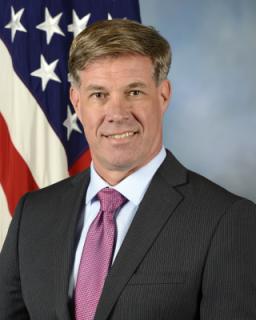
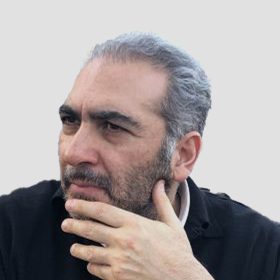
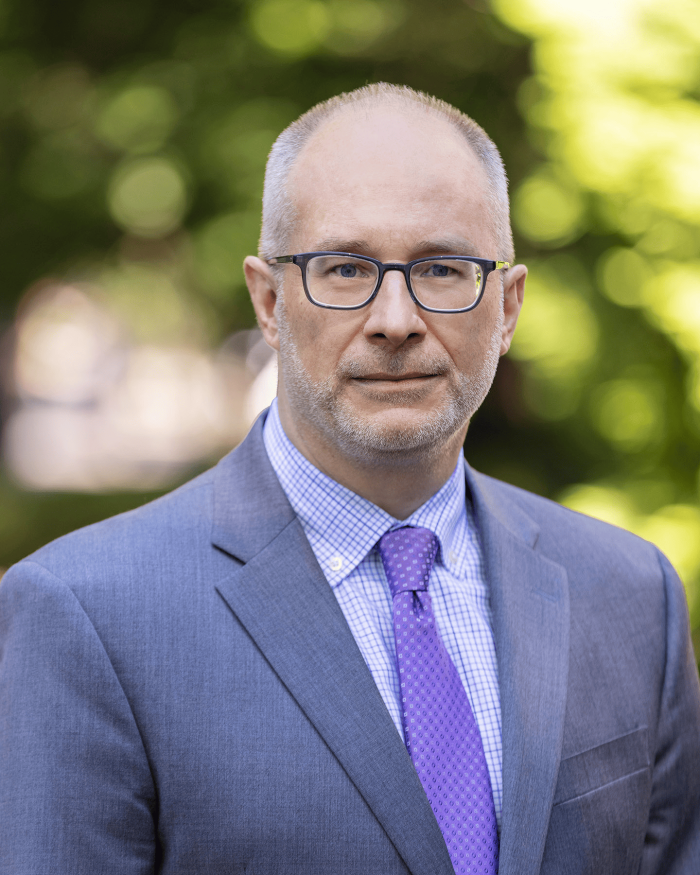
Joseph Felter is a Research Fellow at the Hoover Institution (Stanford University) and the William J. Perry Fellow at the Center for International Security and Cooperation. His career bridges academia, military service, and policy advising, with expertise in counterinsurgency, national security, and US-China relations. He coauthored the influential book Small Wars, Big Data: The Information Revolution and Modern Conflict (2018) and developed the Hacking for Defense curriculum to connect military needs with Silicon Valley innovation. Military Background: Former US Army Special Forces officer with combat deployments in Panama, Iraq, and Afghanistan. Served as commander of the COMISAF Counterinsurgency Advisory and Assistance Team. Academic Roles: Assistant Professor at West Point’s Department of Social Sciences, Adjunct Associate Professor at Columbia University’s School for International and Public Affairs, and current codirector of Stanford’s Empirical Studies of Conflict Project. Research Focus: Politically motivated violence, economic development in conflict zones, and defense innovation. His work appears in top journals like American Economic Review and Journal of Conflict Resolution . Policy Engagement: Key advisor on US defense strategy (2017–2019) and founder of BMNT, a Silicon Valley defense technology incubator. Currently serves on Spirit of America’s board. Scientific Awards: Recognized as a William J. Perry Fellow and US Army War College Fellow. His empirical conflict research informs both academic and policy debates.
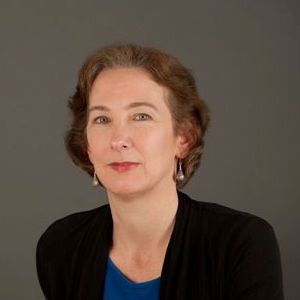
Elisabeth Jean Wood is a Professor of Political Science at Yale University and holds a concurrent professorship at the Santa Fe Institute. Her research focuses on political violence, particularly sexual violence during war, civil war dynamics, and social movements. She is renowned for her work on insurgent transitions in South Africa and El Salvador, as well as her analysis of variation in wartime sexual violence. Wood has authored influential books including Forging Democracy from Below (2000) and Insurgent Collective Action and Civil War in El Salvador (2003). Her recent work examines the Myanmar military's sexual violence against the Rohingya, emphasizing ideological motivations and institutional frameworks. Wood teaches courses on comparative politics, political violence, and qualitative research methods at Yale. She serves on editorial boards for Politics and Society , American Political Science Review , and the Contentious Politics series. Her research emphasizes ethical fieldwork practices and transparency in qualitative studies, addressing challenges in conflict zones. Her work bridges theoretical contributions with policy implications for understanding and preventing conflict-related atrocities.
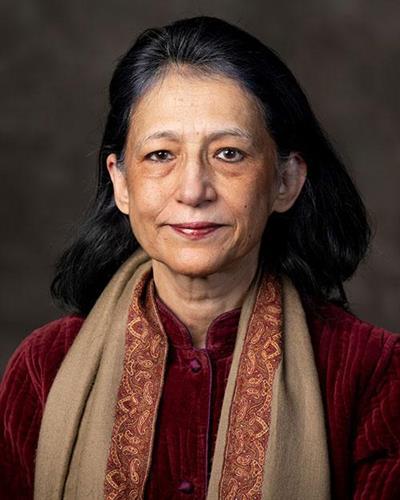
Kevin M. Kruse is Professor of History at Princeton University and Director of Undergraduate Studies. Specializing in 20th-century U.S. political, social, and urban history, his research examines conflicts over race, rights, and religion. Kruse earned his B.A. from UNC Chapel Hill and Ph.D. from Cornell University, joining Princeton after positions at the University of Virginia. His scholarship explores the civil rights movement, religious nationalism, suburbanization, and modern conservatism. Recent books analyze the corporate invention of Christian America and historical myths in American political discourse. Current projects include studies of civil rights lawyer John Doar and 'law and order' politics in New York City. Honored as a Guggenheim Fellow and Smithsonian Innovator, Kruse has received the Francis B. Simkins Award and Best Book in Urban Politics award. He teaches courses on civil rights, suburban history, and modern U.S. politics, and advises graduate students in 20th-century U.S. history. Kruse frequently engages public discourse through media appearances and collaborative projects with documentary filmmakers.
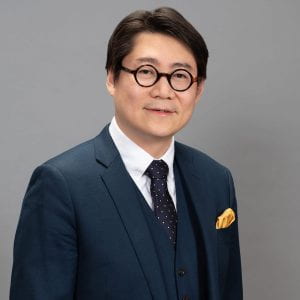
Professor Shoon Murray is a distinguished faculty member at American University's School of International Service, specializing in American foreign policy and civil-military relations. Holding a PhD in political science from Yale University, she teaches foundational courses including Analysis of US Foreign Policy (SISU-230) and Foreign Policy: Theory and Decision Making (SIS-689). Education: PhD in Political Science, Yale University Research Focus: Dr. Murray's scholarship critically examines war powers, decision-making theory, and the interplay between public opinion, media, and foreign policy formation. Her work analyzes how political leaders navigate security crises, congressional-authority tensions in military actions, and institutional shifts in diplomatic practices amid global power diffusion. She investigates enduring phenomena like the “rally ‘round the flag’” effect while documenting the post-9/11 militarization of U.S. strategic approaches. Publication Trends: Recent research centers on the evolution of the 2001 AUMF, combatant commanders' diplomatic roles, and State Department-DoD institutional competition. Her scholarship reveals how military actors increasingly shape foreign policy narratives while traditional diplomatic channels erode, with implications for democratic accountability and strategic coherence in counterterrorism operations.
Rod Andrew Jr. is a Professor and Alumni Master Teacher in the Department of History at Clemson University, affiliated with the College of Arts and Humanities. He retired as a Colonel in the U.S. Marine Corps Reserve and previously served as Officer-in-Charge of the Field History Branch at the U.S. Marine Corps History Division. His research focuses on U.S. Military History, the American South, and cultural history, with notable works on Southern figures like Wade Hampton and Andrew Pickens. Education: Ph.D., University of Georgia (1997) M.A., Clemson University (1993) B.A., University of North Carolina (1987) Research Interests: Combines Southern history with military and cultural analysis, emphasizing leadership, institutional crises, and regional identity. Current projects include a forthcoming book on post-WWII Marine Corps challenges. His work bridges military strategy, political dynamics, and cultural narratives. Recognition: Mary Lawton Hodges Prize in Southern Studies (2009) Harry M. Ward Book Award (for Andrew Pickens biography) His teaching spans courses on the American South, military history, and World War II. He actively collaborates with military history institutions, contributing to official historical documentation and analysis.
Ayesha Jalal is a distinguished Professor of History at Tufts University's School of Arts and Sciences and holds a joint appointment at The Fletcher School of Law and Diplomacy. She currently serves as the Mary Richardson Professor and directs the Center for South Asian and Indian Ocean Studies. With a career spanning over three decades, Professor Jalal has established herself as a leading scholar in South Asian history, particularly focusing on Pakistan studies, the partition of India, and Muslim political thought in the region. Professor Jalal's academic journey began with a double major in History and Political Science from Wellesley College in 1978. She then pursued doctoral studies at the University of Cambridge, earning her PhD in History in 1983. Her early career included prestigious fellowships at Trinity College, Cambridge (1980-84), the Centre of South Asian Studies (1984-87), the Woodrow Wilson Center for International Scholars (1985-86), and the Harvard Academy for International and Area Studies (1988-90). Professor Jalal's research primarily centers on South Asian history with special emphasis on Pakistan, the partition of India, and Muslim political thought. Her work explores the complex interplay between religious identity, nationalism, and state formation in the region. She has made significant contributions to understanding democratic development in Pakistan, sectarian dynamics in South Asia, and the historical connections between the Indian subcontinent and the wider Indian Ocean world. Her recent scholarship has focused on 'Oceanic Islam,' examining transregional Muslim networks and universalist aspirations that transcended colonial boundaries. Professor Jalal's extensive publication record demonstrates a consistent focus on South Asian political history, with particular attention to Pakistan's formation and development. Her recent works show a progression from studies of partition and state formation toward broader examinations of Muslim intellectual history and transregional connections. The 2020-2024 publications reveal a sophisticated engagement with themes of democratic erosion, sectarianism, and the historical roots of contemporary political challenges in South Asia, while also exploring more cultural and religious dimensions through works on Muslim enlightened thought and oceanic connections. Patrus Bukhari Award for the best English language book, The Pity of Partition , Academy of Letters, Government of Pakistan (2015) Britannica Book of the Year recognition (2015) MacArthur Fellowship (1998-2003) As an educator, Professor Jalal has mentored numerous graduate students through thesis supervision and directed research projects. Her teaching portfolio includes courses on Modern South Asia, Contemporary South Asia, Islam and the West, and specialized seminars on South Asian history. She has taught at several prestigious institutions including the University of Wisconsin-Madison, Columbia University, and Harvard University before joining Tufts in 1999. In her role as Director of the Center for South Asian and Indian Ocean Studies, she has fostered interdisciplinary research and provided guidance to emerging scholars in the field. Professor Jalal directs the Center for South Asian and Indian Ocean Studies at Tufts University, which serves as a hub for interdisciplinary research on South Asia and its connections to the wider Indian Ocean world. The center facilitates collaborative projects, hosts visiting scholars, and organizes events that bridge historical, political, and cultural perspectives on the region. Under her leadership, the center has become a prominent institution for South Asian studies, promoting dialogue between academic research and contemporary policy issues.
Yuhua Wang serves as the Ford Foundation Professor of Modern China Studies within Harvard University's Faculty of Arts and Sciences, Department of Government. His scholarly work establishes him as a leading authority on Chinese political development, state capacity, and historical institutional analysis across imperial and contemporary contexts. His academic foundation includes: B.A. from Peking University Ph.D. from the University of Michigan Professor Wang's research program integrates comparative politics with Chinese studies through core interests in bureaucracy , institutions , judiciary and public law , political economy & development , political geography , and state-society relations . He employs a methodological triad of historical , qualitative , and quantitative approaches to analyze China's political evolution. His work uniquely bridges macro-historical patterns with contemporary governance challenges, particularly examining how historical legacies shape modern state capacity and institutional resilience in authoritarian contexts. Analysis of his publication trajectory reveals consistent focus on state development mechanisms, with increasing sophistication in comparative historical methodology. Recent work demonstrates expanded geographic scope beyond China while maintaining analytical depth in imperial political economy. His research shows growing integration of cross-national datasets with deep historical case studies, reflecting broader trends in political science toward mixed-method designs for complex institutional analysis. His distinguished recognition includes: 2023 Lubbert Best Book Award in Comparative Politics from the American Political Science Association for The Rise and Fall of Imperial China Harvard College Professor appointment (2025) Professor Wang maintains active research leadership through extensive publication in premier journals including American Political Science Review and Comparative Political Studies , with significant contributions to theoretical frameworks like State-in-Society 2.0. His work generates substantial policy-relevant insights on corruption, judicial review, and urban governance in China. As a core faculty member in Harvard's Government Department, he contributes to the university's intellectual ecosystem through cross-disciplinary collaboration and participation in research initiatives focused on Asian political development, though specific lab affiliations are not documented in available sources.
Terrence Chapman is a Professor of Government at the University of Texas at Austin, affiliated with the Robert S. Strauss Center for International Security and Law, Center for European Studies, and Clements Center on History Strategy, and Statecraft. His research focuses on international organizations, conflict resolution, and political economy frameworks. Key research areas include: International institutional legitimacy Global regulatory regimes Public opinion in international affairs Conflict management mechanisms Formal modeling of diplomatic interactions Recent scholarly trends reveal expertise in climate governance negotiations, digital surveillance politics, and regulatory effectiveness. His work spans theoretical modeling and empirical analysis of international collaboration dynamics. Scientific recognition includes: 2011-2012 APSA Conflict Processes Section Book Award Teaching portfolio covers: Science Fiction and Politics International Organization and Law Research Methods in International Politics Previously served as associate/senior editor for International Studies Quarterly .
Jason Brownlee is a Professor in the College of Liberal Arts at the University of Texas at Austin. His research focuses on comparative politics, democracy, and authoritarianism, with a regional emphasis on the Middle East and Southeast Asia. Ph.D., Princeton University Contact: brownlee@austin.utexas.edu Research Interests : Brownlee investigates the persistence of authoritarian regimes, the political economy of repression, and the impact of foreign intervention on domestic politics. His work often analyzes Egypt, Iran, Malaysia, and the Philippines. Key Publications : Authoritarianism in an Age of Democratization (Cambridge, 2007) Democracy Prevention: The Politics of the U.S.-Egyptian Alliance (Cambridge, 2012) The Arab Spring: Pathways of Repression and Reform (Oxford, 2012, co-authored with Tarek Masoud and Andrew Reynolds) Teaching : Brownlee offers courses such as "War/Freedom in South Asia/Middle East" and "Issues & Policies in American Government," delivered both in-person and online.
Dr. Miemie Winn Byrd is an Adjunct Professor at the Daniel K. Inouye Asia-Pacific Center for Security Studies (DKI APCSS), where she researches, teaches, and publishes on security dynamics in Myanmar/Burma & Southeast Asia, economics & security linkages, and organizational development. A retired US Army Lieutenant Colonel with 28 years of distinguished service, she brings extensive experience from military, private sector, and nonprofit organizations to her academic work. Dr. Byrd earned her educational credentials from prestigious institutions: Bachelor of Arts in Economics and Accounting from Claremont McKenna College Master of Business Administration with emphasis in Asia-Pacific Economics and Business from University of Hawaii Doctorate in Education Leadership from the University of Southern California Her research focuses on the complex interplay between security, economics, and social development in Southeast Asia, with particular expertise in Myanmar's political and security landscape. Dr. Byrd examines how civil-military operations, women's roles, and educational approaches impact socioeconomic development and security outcomes in the region. She investigates the strategic implications of Myanmar's internal conflicts for broader Indo-Pacific security dynamics, and analyzes how private sector engagement can contribute to poverty alleviation and stability. Dr. Byrd serves on multiple advisory boards that extend her influence in policy and research: Board of Governors of the Keck Center for International and Strategic Studies at Claremont McKenna College Regional Advisory Committee for Knowledge for Democracy Myanmar Initiative of the Asia Regional Office, International Development Research Centre The Oxford-Thanakha International based in Chiang Mai, Thailand Myanmar Policy Institute based in Washington, D.C. Her military career included significant roles such as Deputy Economic Advisor and Civil-Military Operations Plans Officer at U.S. Pacific Command, where she supported Operations Enduring Freedom. She served as a linguist and cultural advisor for U.S. delegations at the Association of Southeast Asian Nations Regional Forum and during POW/MIA recovery negotiations in Myanmar. Her civilian career spans 16 years in auditing, accounting, and financial management with multinational corporations.
University of California, Los AngelesUnited States
M. Rahim Shayegan is a prominent scholar in Iranian and Near Eastern studies, specializing in Old and Middle Iranian philology, Achaemenid-Sasanian history, and Greco-Roman-Iranian cultural interactions. He holds a PhD from Harvard University and has conducted postdoctoral research at the University of Göttingen and Sorbonne. His work bridges philology, epigraphy, and historical analysis to explore ancient political ideologies, religious traditions, and cross-cultural exchanges. Education: PhD, Iranian Philology & Ancient History, Harvard University MA, Iranian Philology, Sorbonne University BA, Philosophy & Comparative Philology, University of Cologne Research Interests: Iranian epigraphy and royal inscriptions Political dynamics of pre-Islamic Iranian empires Greco-Roman and Iranian cultural dialogues Zoroastrianism and ancient Near Eastern religions His publications include seminal works like Arsacids and Sasanians: Political Ideology in Post-Hellenistic Persia (2011) and Cyrus the Great: Life and Lore (2019). He has held prestigious fellowships at the Guggenheim Foundation and is a member of the Austrian Academy of Sciences. Awards: Ehsan Yarshater Book Award (2012) Academia Europaea Membership (2019–) Courses Taught: Achaemenid Civilization Sasanian History Old Persian Cuneiform Zoroastrianism and Ancient Religions
Greg Grandin is the Peter V. and C. Vann Woodward Professor of History at Yale University, where he has been affiliated since returning from New York University after nineteen years. His work focuses on Latin American and U.S. history, with an emphasis on empires, colonialism, indigenous peoples, and social-political dynamics. He has authored seven books, including award-winning titles such as The Blood of Guatemala , The Empire of Necessity (winner of the Bancroft and Beveridge awards), and The End of the Myth (Pulitzer Prize winner). Grandin is a member of prestigious academic societies like the American Academy of Arts and Sciences and contributes to journals like The Nation and London Review of Books . His research explores the interplay between U.S. interventions and Latin American resistance, reshaping understandings of hemispheric relations. Recent publications include America, América (2025), a sweeping re-evaluation of North and South American histories. His academic awards include the Pulitzer Prize, Bancroft Award, and multiple fellowships. Grandin’s work often bridges scholarly and public engagement, reflected in his editorial roles and media appearances. He has co-edited volumes like The Guatemala Reader and his writings address contemporary political issues through historical lenses.
Alexander B. Downes is a Professor of Political Science and International Affairs at The George Washington University, serving as Director of the Institute for Security and Conflict Studies within the Elliott School of International Affairs. He holds a Ph.D. in Political Science from the University of Chicago. His research focuses on international security with expertise in civilian victimization during war, foreign-imposed regime change, military effectiveness, coercion, nuclear weapons, and civil war. He has authored two influential books: Targeting Civilians in War (2008) and Catastrophic Success: Why Foreign-Imposed Regime Change Goes Wrong (2021). Downes has received major recognition including the Joseph Lepgold Prize (2008), Emerging Scholar Award (2016), Michael E. Brown Research Prize (2022), and Harry Harding Teaching Prize (2020). His work has been funded by the Department of Defense Minerva Initiative, Carnegie Corporation, and others. He has held fellowships at Harvard's Belfer Center and Stanford's CISAC. Teaching responsibilities include courses on international security, modern warfare theory, and coercion strategies. His research emphasizes policy-relevant analysis of global security challenges, combining historical case studies with contemporary strategic dilemmas.
Odd Arne Westad is the Elihu Professor of History at Yale University, specializing in modern international and global history with a focus on East Asia since the 18th century. He previously held positions at Harvard University and the London School of Economics. His research bridges Cold War studies, empire/colonialism, and China's economic reforms. Education: BA in History, Philosophy, and Modern Languages (University of Oslo) Graduate Degree in US/International History (University of North Carolina at Chapel Hill) Research Interests: Global Cold War dynamics and post-colonial transformations China’s international history and imperial trajectories Economic reforms in late 20th century China and their global impact Key Publications: The Cold War: A World History (2017) Restless Empire: China and the World Since 1750 (2012) The Global Cold War (2007) Awards: Fellow of the British Academy Fellow of multiple national academies Professional Activities: Active in global history networks, advising doctoral students on Cold War and Asian history. Teaches courses on empire, decolonization, and modern East Asia.
William C. Wohlforth is a Professor of Government and Daniel Webster Professor at Dartmouth College's Government Department since 2000. His work focuses on international relations theory, international security, and U.S. foreign policy with particular emphasis on great power politics and grand strategy. Education: B.A. in International Relations from Beloit College; M.A., M.Phil., and Ph.D. in Political Science from Yale University. Research interests include Cold War history, U.S.-Russian relations, NATO dynamics, and strategic security studies. He has authored nine books and over 60 articles, with recent work exploring multipolarity myths and great power subversion tactics. Current initiatives include the Initiative for Global Security at the Dickey Center. He advises policy institutions like the National Intelligence Council, contributing to reports such as Global Trends 2030. Served as editor-in-chief of Security Studies and holds fellowships at Stanford's CISAC and Hoover Institution. Teaches courses on international politics, Russian foreign policy, and leadership grand strategy.