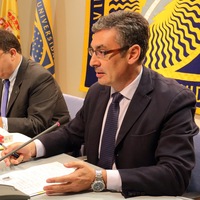
Bernardo Jesús Periñán Gómez, currently a Professor of Private Law at Universidad Pablo de Olavide (Seville, Spain) , specializes in Roman Law and its reception into modern legal systems. He leads the research group From the European Common Law to Civil Law and has established research stations at institutions like Harvard and Pavia. His work bridges historical jurisprudence with contemporary legal challenges, particularly in pandemic-related obligations and urban liability frameworks. Education: Doctorate in Roman Law from Universidad de Sevilla (1997) focusing on the Senatus Consultum Macedonianum. Research: Explores Roman legal structures, comparative law, and globalization's impact on individual juridical capacity. Publications: Over 40 articles and monographs in journals like Revista Internacional de Derecho Romano and Boletín Mexicano de Derecho Comparado , emphasizing doctrinal continuity and adaptation. Awards & Roles: Serves on international scientific committees, directs doctoral theses, and contributes to editorial boards including Persona Collection at Comares Publishing.
Andrea Jamardo Lorenzo is an Assistant Professor at the University of León , affiliated with the School of Law and working within the Department of Public Law . Her research focuses on Procedural Law , with particular emphasis on Chain of Custody mechanisms, Technology in Law , and Legal Education innovations. Education : PhD in Law from the University of León (2023), thesis titled La cadena de custodia: análisis sistemático , supervised by Dr. Piedad González Granda. Her research explores the legal configuration and technological evolution of chain of custody systems in both national and European contexts. She investigates how digital evidence handling , AI applications , and cybersecurity protocols impact judicial integrity and procedural guarantees. Recent work also addresses pedagogical methods like flipped classrooms and role-playing in legal education. Analysis of her publications reveals trends in criminal procedure reforms , comparative chain of custody models (Spain vs. US), and ethical implications of legal technology . While no scientific awards are documented, her work contributes to debates on judicial efficiency , fundamental rights , and data protection in criminal contexts.
Dr. Jose R Juan Sanchez is a full Professor at the Faculty of Law, Universitat de València, specializing in Procedural Law within the Institute of Criminology and Criminal Science (ICCP). He serves in the Administrative Department and leads the NCPJ New conflicts and judicial process research group. Doctorate in Law (1997) from Universitat de València Thesis: Autonomous Communities as Parties in Civil Proceedings Supervised by Dr. Manuel Ortells Ramos His research focuses on procedural law, judicial management, and legal reforms. He investigates tribunal jurisdiction, victim rights, and data protection in criminal proceedings. Recent work includes Photovoice analysis of pandemic healthcare systems and efficiency in Spanish criminal justice. Key article trends span judicial reforms (2015-2024), victim rights in EU legal frameworks (2020-2023), digital justice systems (2016-2017), and social justice in legal education (2022-2023). His work bridges law, criminology, and policy analysis. Current affiliations: Universitat de València, ICCP Institute Research group: NCPJ New conflicts and judicial process
Maria Elena Cobas Cobiella is an Associate Professor in the Department of Civil Law at the Faculty of Law, University of Valencia. Her academic work is deeply rooted in civil and private law, with significant contributions to inheritance, family, mediation, and European private law. She is an active member of two research groups: the GPF Research Group on Person and Family and the GEDPED Study Group on European Private and Digital Law. Research Interests: Her research spans civil law, succession law, bio-law, legal mediation, reproductive rights, and legal education. She has explored the legal implications of posthumous reproduction, European succession instruments, Cuban property law, and innovative teaching methods such as concept mapping and cooperative learning in legal education. Her work often bridges doctrinal analysis with practical and ethical considerations. The trends in her scholarly publications from 2001 to 2017 reflect a sustained focus on succession law and legal modernization, with increasing attention to European harmonization, digital law, and interdisciplinary issues in bio-law. Her articles also reveal a strong commitment to pedagogical innovation and comparative legal analysis, particularly between Spanish and U.S. legal systems. Scientific Contributions: PhD from the University of Valencia (2001) on testamentary executorship. Active researcher in European private and digital law. Prolific author on mediation, inheritance, and legal education. Advising and Grants: While no specific grants are listed, she has supervised PhD research, as evidenced by her role as advisor to Dr. Lorenzo Prats Albentosa’s thesis. She actively contributes to academic discourse through publications and research group leadership. Her work in legal education suggests involvement in curriculum development and pedagogical projects. Labs and Teams: She collaborates with the GPF Research Group on Person and Family and the GEDPED Study Group on European Private and Digital Law, indicating active participation in team-based legal research focused on contemporary civil law challenges.
Luis Maria Garrote de Marcos is a Professor in the Department of Hydraulics, Energy and Environment at the Technical University of Madrid (UPM). His professional career spans over two decades, with primary research areas focused on hydroinformatics, water resources management, and sustainable civil infrastructure. He has been a Principal Investigator since 2008 and is a member of the R&D+i Center for Smart and Sustainable Civil Infrastructure (CIVILis) since 2024. Research Interests: Aquatic Science, Water Science and Technology, Civil and Structural Engineering, Energy Systems, Environmental Science, Geosciences, and Policy/Planning domains. Affiliations: Technical University of Madrid (since 2002), Hydroinformatics and Water Management research group (since 2008), and CIVILis (since 2024).
Esther Aldave Monreal is an Assistant Professor at the Public University of Navarre , affiliated with the Department of Humanities and Education . Her work centers on Contemporary History , focusing on Historical Memory , Political Violence , Gender Studies , and Social Conflict . Research Interests include analyzing violence during Spain’s political transitions (19th-21st centuries), particularly in Navarre, with projects like the Documentary Fund on Historical Memory . Her publications explore themes such as Francoist repression , gender roles during the Second Republic , and urban violence , often using interdisciplinary approaches combining historical analysis and social theory . Scientific Awards include a predoctoral grant from UPNA (2015–2019). She has participated in 21 Congresses , organized events like the UPNA Seminar on Violence in an era of social changes (2017), and contributed to editorial committees. Her Grants include a project on Social Control and Security Institutions in Spain (2022–2025, PID2021-123504NB-I00) and a research agreement with the Parliament of Navarre (2023–2027, €75,000).
Julia Ammerman Yebra is an Assistant Professor at the Department of Common Law within the Faculty of Law at the University of Seville. She holds a Doctorate from the University of Santiago de Compostela (2020) with a thesis titled "The right to one's voice as a right to personality" , supervised by Dra. María Paz García Rubio and Dr. Marta Otero Crespo. Her research focuses on intersections of civil law, family law, data protection, and AI ethics. Key interests include privacy rights in digital contexts (e.g., voice biometrics, metaverse regulation), legal frameworks for emerging technologies (AI/voice assistants), and gender perspectives in legal systems. She has pioneered projects linking legal education with journalism and digital literacy. Her recent work addresses legislative modernization of civil codes, consent mechanisms in digital contracts, and protections for minors' privacy rights (sharenting). She critiques judicial systems' gender biases, particularly regarding maternal rights and family law. Publications span 2025-2012, covering topics like the right to voice in AI contracts, metaverse privacy, and legal responses to pandemics. Her work bridges theoretical legal analysis with practical applications in education and technology governance.
Jose Ismael Crespo Martinez is a distinguished Professor of Political Science at the University of Murcia, Spain, where he serves as Director of the Department of Political Science and Administration within the Faculty of Law. His academic career spans over two decades with significant contributions to political science, particularly focusing on Latin American politics and electoral processes. He leads the Political Analysis Group and directs MásPoderLocal, a digital magazine dedicated to political communication and electoral behavior in Spain and Latin America. Dr. Crespo earned his PhD in Political Science from Complutense University of Madrid in 1995 with a thesis on Uruguayan political relations. His educational background established the foundation for his expertise in comparative politics and electoral systems across Latin America. He has maintained strong academic ties with institutions throughout the region, contributing to his comprehensive understanding of political dynamics in both Spanish and Latin American contexts. Crespo's research interests center on political communication, electoral behavior, and campaign strategies, with particular emphasis on Latin American political systems. His work examines how political messages are crafted and received in different cultural contexts, the evolution of campaign techniques in the digital age, and the relationship between media strategies and voter decision-making. He has pioneered research on crisis communication within public administration, especially during the pandemic period, analyzing how governments communicate effectively during emergencies. His scholarly output shows a clear trajectory from foundational studies on Latin American electoral systems toward contemporary analyses of digital political communication. The recent publications demonstrate increasing focus on crisis communication, permanent campaigning in the digital era, and the evolving relationship between citizens and political institutions. His work bridges theoretical political science with practical campaign management, making significant contributions to both academic understanding and real-world political practice. Among his notable recognitions are: Comendador of the Order of the Southern Cross Order with plate of the Civil Order of Alfonso X, the Wise Honorary Professor designations from multiple universities Special acknowledgments from Peruvian and Argentine universities Throughout his career, Crespo has secured significant research funding and directed numerous projects examining electoral processes across Latin America. He has served as a consultant for governments and institutions in Spain, Argentina, Brazil, Costa Rica, Mexico, Peru, Uruguay, and Venezuela. His leadership extends to directing the Spanish Agency for Quality Assessment and University Accreditation (2002-2004) and serving as Director General of Universities for the Spanish government (2000). As president of ALICE (Latin American Association of Electoral Campaign Researchers) since 2012, he has fostered international collaboration among political scientists. Crespo leads the Political Analysis Group at the University of Murcia and oversees the MásPoderLocal initiative, which serves as a hub for research on municipal political communication. His work connects academic research with practical political consulting, creating a dynamic environment where theory informs practice and real-world challenges drive new research directions. The integration of his academic, governmental, and consulting experiences creates a unique perspective on political processes across the Iberian and Latin American spheres.
Santiago Álvarez González is a Professor at the University of Santiago de Compostela, affiliated with the Faculty of Law and the Department of Common Law. He holds a Doctorate from the University of Oviedo, focusing on Private International Law, specifically filiation systems in Switzerland and Spain. His research emphasizes European Union Law , Private International Law , and Family Law , with a focus on succession, parental responsibility, and LGBTQ+ rights in cross-border contexts. His work critiques ECJ jurisprudence and explores EU regulatory proposals while analyzing compatibility between Spanish interregional law and EU frameworks. His recent publications address jurisdictional competence for succession waivers, ECJ rulings on child custody, and the recognition of same-sex parenthood across EU member states. He critiques administrative resolutions in succession cases and advocates for clearer legal frameworks. His analyses often highlight the tension between EU law and national constitutional obligations. Notable contributions include critical assessments of EU Regulation 650/2012 on successions, the legal challenges of surrogacy, and the role of public policy in international law. His work bridges theoretical legal scholarship with practical judicial outcomes, emphasizing legal certainty and coherence in multicultural legal systems.
Mireia Artigot Golobardes is an Associate Professor of Civil Law at the Faculty of Law, Pompeu Fabra University, where she holds a Ramón y Cajal research fellowship. She is admitted to the bar in both New York and Barcelona and previously clerked for Hon. Edwin H. Stern at the New Jersey Appellate Division. Her interdisciplinary research examines private law through economic lenses, with specializations in contract law, consumer protection, and digital market regulation. Education: JSD & LLM, Cornell Law School Law Degree & BA Economics, Pompeu Fabra University BA Music, Conservatory of Barcelona Research Focus: Her work investigates algorithmic decision-making in consumer transactions, AI's impact on fundamental rights, sustainability in contract law, and regulatory frameworks for digital markets. She leads significant projects including: JuLIA (Justice, Fundamental Rights and AI) - EU-funded judicial training program AlgorithmLaw - Examining algorithmic transparency in legal norms iConsumers - Studying digital market impacts on consumer rights Publications: Her scholarly output demonstrates consistent focus on law-economics-technology intersections. Recent works examine algorithmic personalization in consumer contracts (2022), sustainability challenges in market regulation (2024), and limitations of data protection frameworks (2021). The publications show progressive engagement with emerging digital law challenges. Awards & Honors: Ramón y Cajal Research Fellowship (Spain's prestigious research award) Professional Activities: She maintains international connections through visiting professorships at Brooklyn Law School, University of Kassel, University of Trento, and research visits to NYU and University of Western Cape. She serves as Teaching Fellow for the Europaeum Program at Oxford University and is affiliated with UPF's Center for Studies in AI and Natural Intelligence.
Jorge Manuel Rodríguez Almenar is a faculty member at the University of Valencia, affiliated with the Faculty of Law, where he serves in the Department of Civil Law. He holds the academic rank of Titular de Escuela Universitaria, equivalent to Associate Professor, and is actively engaged in teaching and research. His research centers on the intersection of law, sacred art, and religious history, with a particular focus on Christian relics such as the Shroud of Turin, the Sudarium of Oviedo, and the Holy Chalice of Valencia. His work employs interdisciplinary methodologies combining art history, forensic analysis, and theological inquiry. Sacred Art Eucharistic Theology Sacred Architecture Historical Art Analysis Religious Relics Interdisciplinary Studies of Faith and Science His publications reveal a consistent scholarly engagement with the historical, artistic, and scientific dimensions of Christian relics. He explores how faith and reason intersect in the study of sacred objects, often analyzing their cultural, theological, and forensic significance. His work bridges legal scholarship with religious and artistic studies, contributing to a deeper understanding of religious heritage within civil and canonical frameworks. Notable scientific contributions include comparative studies of the Sudarium of Oviedo and the Shroud of Turin, analyses of the Holy Chalice of Valencia, and comprehensive historical-artistic investigations into the Shroud. While no formal awards are listed, his publications demonstrate scholarly recognition in niche interdisciplinary domains. He has not listed any students or formal advising roles, nor has he mentioned grants or research teams. However, his academic profile suggests independent and collaborative research in religious and legal studies. His work continues to contribute to academic and ecclesiastical discussions on the authenticity and significance of Christian relics.
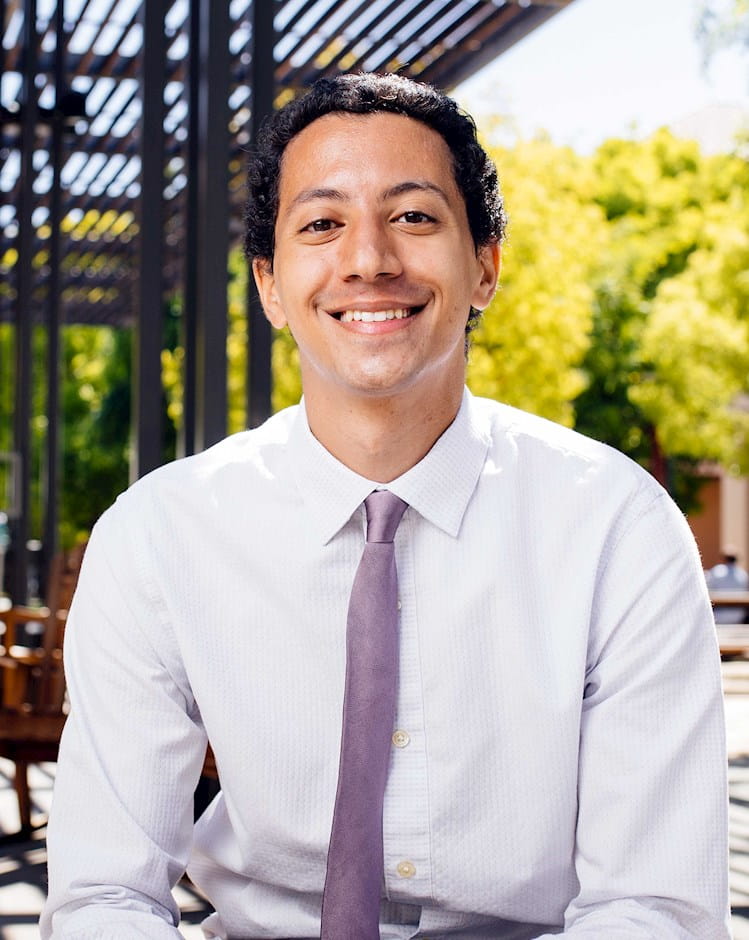
Andrew Leon Hanna is an Adjunct Assistant Professor of Management at the University of Chicago Booth School of Business, where he teaches the "Global Social Entrepreneurship Lab." A first-generation Egyptian-American born and raised in Jacksonville, Florida, Professor Hanna is also an award-winning entrepreneur, lawyer, and author with significant contributions to social entrepreneurship and refugee studies. Professor Hanna's educational background includes: MBA with honors as an Arjay Miller Scholar at Stanford Graduate School of Business (Knight-Hennessy Scholar, Siebel Scholar) J.D. with honors from Harvard Law School (Harvard Law Review editor, Irving Oberman Memorial Prize recipient) A.B. with highest distinction from Duke University (Robertson Scholar, Senior Class President, Terry Sanford Leadership Award recipient) Professor Hanna's research focuses on entrepreneurship, particularly social entrepreneurship and the intersection of business with human and civil rights. His work examines how refugee and immigrant entrepreneurs create economic opportunities in challenging circumstances, with a special emphasis on women entrepreneurs in refugee camps. He explores how social ventures can provide access to capital, distribution opportunities, product investment, and design support for undersupported small-business entrepreneurs. His research bridges academic theory with practical application through his own social ventures. Professor Hanna's publications reveal a strong focus on refugee entrepreneurship, social impact, and inclusive economic development. His work spans academic, policy, and practical domains, connecting scholarly research with real-world implementation through social ventures like Mona and DreamxAmerica. The interdisciplinary nature of his research integrates business strategy, human rights law, and social innovation. Professor Hanna has received numerous prestigious awards for his work: Financial Times Best Book of the Year (2022) for "25 Million Sparks" Financial Times & McKinsey Bracken Bower Prize (2018) Forbes 30 Under 30 List recognition Chicago Emmy® Award nomination for DreamxAmerica documentary Recognition on Fast Company's World Changing Ideas List As an educator and practitioner, Professor Hanna has advised numerous social ventures and initiatives. He co-founded Mona, an inclusive fintech marketplace connecting underbanked small businesses to over $1 million in affordable loans and grants, and DreamxAmerica, which uses storytelling to highlight immigrant and refugee entrepreneurs. His grant-funded work includes support from Stanford's Center for Social Innovation and Alpine Social Ventures. Beyond his academic role, he has advised senior officials at the White House and U.S. Department of Veterans Affairs and served in the U.S. Department of Justice. Professor Hanna leads the Global Social Entrepreneurship Lab at Chicago Booth and is actively involved with his social ventures Mona and DreamxAmerica. Through Mona, he has created a global social venture that provides undersupported small-business entrepreneurs with access to capital, distribution opportunities, product investment, and design support. His work connects academic research with practical implementation in the social entrepreneurship space.
Nuria Ginés Castellet is an Associate Professor at the Department of Law, Esade Law School, specializing in Civil Law and Disability Rights. Her work focuses on legal capacity, contractual rights, and protections for minors and people with disabilities under Spanish and Catalan civil law. Active research areas include disability legislation, human rights, and conflict management. Recent projects address undue influence in contracts and legal paradigms for intellectual disability. She has contributed to 55 scientific publications and leads interdisciplinary collaborations with institutions like AGAUR (Agència de Gestió d'Ajuts Universitaris i de Recerca). Her 2024-2025 articles analyze contractual capacity in Catalan and Spanish legal frameworks, emphasizing modernization and subjective rights.
Gabriel Marín Raigal is an Associate Professor in the Department of Civil Law at the University of Alicante, affiliated with the Copyright Working Group. He teaches undergraduate and graduate courses, including the Master's Degree in Intellectual Property (Magister Lucentinvs), and has directed 3 undergraduate/master's theses in the last 5 years. A qualified lawyer and member of the Alicante Bar Association, he specializes in intellectual property law and has worked with international firms like Marks & Clerk and Clarke, Modet & Co since 2001. Bachelor's degree in Law from the University of Alicante (1993) Master's degree in Intellectual Property and New Technologies from the University of Alicante (Magister Lucentinvs) University Expert in European Communities and European Union Law His research focuses on intellectual property, copyright, and the intersection of civil law with new technologies. Despite extensive teaching experience, the data shows no recent publications or research outputs in the last 5 years. Professional memberships include the Literary and Artistic Association for the Defense of Copyright (ALADDA). He speaks Spanish, fluent English, and French.
Carmen Jordá Sanz is a Professor and Director of the Department of Criminology and Security at Universidad Camilo José Cela (UCJC) since 2020, where she has been teaching since 2017. She also serves as Head of the Intelligence and Foresight Office at Prosegur. A distinguished expert in her field, she was named one of Spain's 40 best foresight experts by Forbes magazine. Dr. Jordá holds a PhD in Law, Government, and Public Policy from Universidad Autónoma de Madrid (UAM), where she also earned dual degrees in Law and Psychology. Her research focuses on the intersection of criminology, cybersecurity, and social sciences. Key areas include organized crime, business crimes, digital evidence, biometric systems, and the societal impact of technology. She has led significant research on gender-based violence indicators through animal abuse, facial recognition technology biases, and dark web investigations. Her work demonstrates how social sciences and humanities are crucial for addressing technological challenges, as she argues in her influential article 'Fuzzys vs. Techies?' Dr. Jordá's publication record shows consistent scholarly output across criminology, cybersecurity, and social sciences. Her recent work examines cutting-edge issues like algorithmic security for peacebuilding, connected vehicle cybersecurity, and wildlife trafficking networks. She has developed a distinctive approach that bridges technical security solutions with social science perspectives, emphasizing that 'technology made by and for humans needs precisely humanity' at its center. Listed among the 40 best foresight experts in Spain by Forbes CCS-S certification from Agencia de Certificaciones de Ciberseguridad Accredited as 'Profesora Contratada Doctora' through PEP by ANECA As an active media commentator, Dr. Jordá has contributed to major publications including El País, El Economista, Forbes Colombia, and The Objective. Her expertise spans both academic research and practical security applications, with significant work for the Civil Guard's Center for Analysis and Forecasting, European Commission research projects, and Red.es (Secretary of State for Digitalization and Artificial Intelligence). She has been instrumental in developing frameworks that integrate social science perspectives into technological security solutions, arguing that the best human firewall in cybersecurity is training and awareness developed with input from education and communication experts.