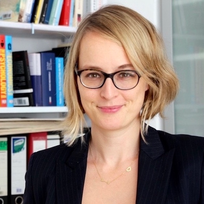
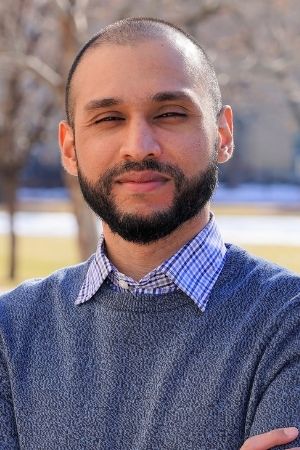
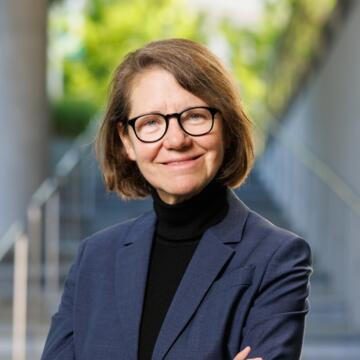
Joseph Ajefu is an Associate Professor of Development Economics at the University of Bradford's Department of Peace Studies and International Development (PSID), within the School of Social Sciences and Faculty of Mgmt, Law & Social Sciences. He is also a Research Associate at the Centre for Social Development in Africa (CSDA), University of Johannesburg. Previously, he held academic roles at institutions like Northumbria University, SOAS, and the University of Witwatersrand. He leads the MSc Sustainable Development and MA International Development Management programs at Bradford. He holds an MSc in Development Economics from the University of Birmingham (UK) and a PhD from the University of Leicester (UK). His research focuses on applied economics, with emphasis on development economics, health economics, and financial economics. Recent studies examine how climate change, violent conflict, inheritance rights, and religious reforms influence household well-being in low-and-middle-income countries. His work has been published in journals like the Journal of Population Economics and European Journal of Development Research . Teaching areas include development theories, econometrics, conflict dynamics, and governance in Africa. He has contributed to over 30 peer-reviewed articles and policy analyses, exploring topics such as mobile money impacts, remittances, social transfers, and shocks in Sub-Saharan Africa. His professional activities include consultancy, research collaborations, and policy engagement. Notable contributions include studies on the mitigating effects of land tenure security on food insecurity and the causal links between women’s schooling and contraceptive use in Nigeria.
Hanna Schwander is a Full Professor and Chair of Political Sociology and Social Policy at Humboldt University of Berlin. She leads the Einstein Research Unit ‘Coping with Affective Polarization’ and directs the Berlin Polarization Monitor, a large-scale panel study tracking polarization dynamics. Her research intersects comparative politics, political sociology, and political economy, focusing on welfare state transformations, labor market inequality, and climate policy. Previously, she held professorships at the Hertie School of Governance and the University of Zurich, with prior roles at institutions like the European University Institute and University of Oxford. Education includes a PhD from the University of Zurich (2012) and a Licentiate in Political Science from the same institution (2008). Research projects include exploring the political feasibility of climate policies, the rise of Green parties, and the role of Universal Basic Income. She has been funded by the Einstein Foundation and the Berlin University Alliance. Key research areas include affective polarization, distributive politics, and the societal impacts of economic inequality. Her work examines how structural challenges like climate change and welfare reforms influence political processes. Teaching focuses on comparative political economy, party politics, and inequality studies.
Bente Halkier is a Professor in Sociology at the University of Copenhagen's Department of Sociology, part of the Faculty of Social Sciences. Her work focuses on consumption practices, food politics, and qualitative methodologies. She has held academic roles since 1993, including leadership roles in research groups and centers. PhD in Social Sciences from Roskilde University (1998) Professorships at Roskilde University (2011–2016) and University of Copenhagen (2016–present) Her research explores how everyday practices like food consumption intersect with broader societal issues. Key areas include: Contestation over food safety and dietary advice Convenience food dynamics and sustainability Interactions between media, science, and consumer behavior Her recent projects include studies on socioeconomic disparities in dietary health and the role of food practices in climate change mitigation. She has led multiple grants, including the Proper Food under Economic Constraints project (2018–2021). Bente has authored over 30 academic books and journal articles, edited volumes on consumption studies, and served on editorial boards for journals like Cultural Sociology and Journal of Consumer Culture . She frequently collaborates internationally, including with institutions in the UK, Sweden, and Norway.
Amy Foerster is a Professor and Department Co-Chairperson in the Department of Sociology and Anthropology at Dyson College of Arts and Sciences, Pace University, New York City. She is actively engaged in research, teaching, and academic leadership, with a focus on urban sociology, immigration, race and ethnicity, and popular culture. Education: PhD, Cornell University MA, Cornell University BS, University of California, Riverside Her research explores the intersections of migration, urban life, and social justice, with a comparative focus on the United States and Europe. She investigates how marginalized communities, particularly immigrants, assert their rights to the city amid increasing surveillance, criminalization, and housing insecurity. Her work critically engages with themes of sanctuary cities, mutual aid, pandemic politics, and transnational solidarity movements. The recent articles demonstrate a strong trend in urban social justice, particularly centered on housing rights, migrant mobilizations, and the impact of crises on civic inclusion. Her scholarship bridges sociology, urban studies, and human rights, often employing comparative and transnational frameworks. Scientific Awards and Honors: Fulbright U.S. Scholar Award to Belgium (2021) Visiting Research Fellow, Brussels Centre for Urban Studies (2019) Population Studies Center workshop participation, Michigan Institute for Social Research (2015) Fulbright German Studies Seminar, German Fulbright Commission (2011) Innovation in Teaching Award, Pforzheimer Center for Faculty Development (2008) Amy Foerster has been recognized for both her scholarly contributions and teaching excellence. She has received competitive research fellowships and grants that support international collaboration and fieldwork. While no formal advising list is provided, her leadership as Department Co-Chair and extensive course offerings suggest active mentorship of students. She has taught foundational and advanced courses in sociology, including Urban Sociology, Race and Ethnicity, Social Research Methods, and topics on popular culture and social change. Her research is closely tied to urban activism and civil society engagement, particularly in New York City and Brussels. She collaborates with urban studies centers and participates in international research networks such as IMISCOE and the Urban Affairs Association, reflecting a strong commitment to public sociology and community-based scholarship.
Manuela Nilsson is a Professor in Peace and Development Studies at Linnaeus University's Department of Social Studies (Faculty of Social Sciences). Her work focuses on conflict transformation, post-conflict peacebuilding, and the security-development nexus. She has conducted extensive research in Colombia, Nicaragua, and other Latin American countries, with a particular emphasis on police reform, land restitution, and civil-military cooperation in post-conflict scenarios. Education: Trained in conflict transformation by the United Nations and Organization of American States. Over 17 years of fieldwork experience in Latin America, including involvement in Nicaragua's post-war reconstruction. Current research centers on Colombia's peacebuilding processes, including the role of Swedish police training programs and civilian-military collaboration. Research Projects: Includes 'Peacebuilding Amidst Ongoing Violence,' collaboration with Universidad Javeriana (Colombia), and analysis of security policies in Angola and Nicaragua. Her work explores challenges in implementing peace agreements and strengthening local ownership of reconciliation processes. Publications: Over 20 peer-reviewed articles and book chapters on peacebuilding strategies, security-sector reform, and conflict resolution. Authored the book Cultural Diplomacy and Foreign Policy: German-American Relations, 1955-1968 (1996) and contributed to edited volumes on Latin American globalization responses and relational peace practices. Collaborations: Active in international research networks such as the European Migration and Integration Network (EMIN). Supervises doctoral students and leads interdisciplinary projects analyzing violence reduction and sustainable peace mechanisms.
Lendel Narine serves as an Extension Associate Professor within the Youth Programs Department at Utah State University Extension, based at the Logan Campus. His role centers on evaluation and reporting for statewide extension initiatives, focusing on evidence-based program development and impact assessment across Utah's diverse communities through rigorous methodological frameworks. Dr. Narine's educational foundation includes: PhD in Agricultural Education and Communication, University of Florida (2018) MS (M.Phil.) in Agricultural Economics, The University of the West Indies (2013) BS in Agribusiness Management, The University of the West Indies (2010) His research specializes in quantitative evaluation methodologies including competency modeling, outcome metrics, and cost-benefit analysis, with growing emphasis on behavior change mechanisms and diversity-integration frameworks. He applies the Ranked Discrepancy Model extensively for needs assessment in agricultural and youth programming contexts. Analysis of his 2024-2025 publications reveals three dominant research trajectories: food/financial security programming in Utah communities, innovative evaluation frameworks for extension services, and workforce development through emerging technologies like AI. These works consistently employ advanced statistical methods to address critical issues including climate adaptation and health disparities. His award portfolio features 13 major honors including: Distinguished Team Award (2023) Susan Barkman Award for Research and Evaluation (2023) Outstanding Article of the Year (2020) Visionary Leader Award (2020) Best Research Poster (2019) Early Career Service (2021) New Specialist Award (2022) Excellence in 4-H Citizenship Programming (2023) Communication Award: Educational Publication (2022) Florence Hall Award (2022) Innovative Program (2022) Don Dean Felker Financial Management Award (2023) Excellence in Workforce Development Programming (2023) Dr. Narine advises graduate students through ongoing mentorship since 2019 and has evaluated USU Extension's internal funding mechanisms including the mini-grant program. His grant leadership spans civil rights compliance initiatives and Western regional evaluation capacity building projects addressing organizational advancement and diversity metrics. He actively directs multiple extension teams including the Climate Adaptation Intern Program, CORE Professional Development, and Civil Rights Compliance initiatives, while contributing to multi-state collaborations on leadership development and generative AI applications in extension education through the Western Extension region.
Corinne Wallace is an Adjunct Assistant Professor in the Department of Civil Engineering at McMaster University , with research expertise at the intersection of water security, climate change, public health, and gender equity. Her work spans both technical engineering analysis and community-engaged studies, particularly focusing on marginalized populations in Canada, East Africa, and South America. Dr. Wallace's research interests include: Water-Health Nexus Climate Change Impacts on Disease Gender Equity in Water Access Indigenous Water Governance Mosquito-Borne Disease Modeling Rainwater Harvesting Systems Her publication trends show increasing focus on climate-health interactions (2025), gender-water linkages (2024), and machine learning applications for water quality analysis (2025). She employs mixed-methods approaches and works closely with First Nations communities and international development organizations. Dr. Wallace utilizes art-science communication strategies like the Virtual Water Gallery to transform water and climate knowledge dissemination. Her recent work explores EDI (Equity, Diversity, Inclusion) implementation in large research networks and conceptual frameworks for climate-water equity.
Paul Cooke is the Centenary Chair in World Cinemas at the University of Leeds, affiliated with the School of Languages, Cultures and Societies. He holds a PhD in German Studies from the University of Birmingham and has extensive experience in German Cinema, GDR Studies, and participatory video methodologies. His academic career spans roles such as Pro-Dean for Research and Innovation and acting Dean of the Faculty of Arts. Research focuses on participatory arts in public health (e.g., CE4AMR for antimicrobial resistance) and mental health (Project CREATE). He has led global initiatives like Changing the Story (post-conflict civil society) and CARAN (Nepal antibiotic resistance). Films include Roebourne , Operación Berlín , and Ek Notun Probhat , earning awards at international festivals. He directs the Centre for World Cinemas and Digital Cultures and collaborates across disciplines, including with NGOs and policymakers. Key contributions include theorizing participatory film’s role in health advocacy and heritage studies through projects like Voicing Hidden Histories .
Julie A. Nice is the Herbst Foundation Professor of Law at the University of San Francisco School of Law, where she has been a full-time faculty member since 2009. She previously held the Delaney Professor of Law position at the University of Denver and has served as a visiting professor at the University of Michigan and University of Connecticut law schools, as well as a clinical teaching fellow at Northwestern University School of Law. Education: JD, Northwestern University BS, Northwestern University Her research focuses on constitutional law, poverty law, and sexuality law, with particular emphasis on LGBTQ+ rights, reproductive justice, and economic equality. She is the lead author of the textbook Poverty Law: Theory and Practice and has published extensively on equal protection, dignity, and the constitutional treatment of marginalized groups. Her scholarship critically examines the judiciary's role in perpetuating inequality, especially in relation to poverty and gender. Her recent publications reflect a consistent engagement with constitutional theory, civil rights, and social justice. Key themes across her work include the intersection of equality and liberty, the deconstitutionalization of poverty law, and the evolving jurisprudence of same-sex marriage and reproductive rights. Her articles have appeared in leading journals such as Fordham Urban Law Journal , Cornell Law Review , and University of Illinois Law Review . Scientific Awards and Distinctions: Distinguished Professor of the Year, USF Law (2010, 2011, 2012, 2017, 2019, 2020) Professor of the Year for Teaching Excellence, University of Denver (1993, 1994, 1996, 1998, 2005) USF Gender Justice Award (2013) University of Denver 'Law Star' Teaching Award (2008) University Master Educator Award (2003) University Scholar/Teacher of the Year (1999) Professor Nice is widely recognized for her excellence in teaching, having been featured in What the Best Law Teachers Do (Harvard University Press, 2013) as one of the nation's top-25 law teachers. She has received 15 teaching and scholarship awards throughout her career. She began her professional journey as a public interest litigator at the Legal Assistance Foundation of Chicago, grounding her academic work in real-world legal advocacy. She has not received any formal grants mentioned in the text, but her sustained scholarly output and leadership in legal education reflect significant institutional and professional support. She is affiliated with academic networks such as SSRN and contributes to national discourse on poverty, equality, and constitutional rights. While no formal lab or research team is mentioned, her collaborative publications and editorial inclusions suggest active engagement with interdisciplinary legal communities.
Petra Lindfors is a Professor of Psychology, specializing in work and organizational psychology, at the Department of Psychology, Stockholm University. She has held this position since December 2013 and is actively involved in multiple research projects focusing on stress, health, and well-being across various contexts including workplaces, educational settings, and home environments. Her academic journey began with her thesis defense in 2002, which focused on stress, health, and well-being among teleworking women and men as part of the Boundless Work project. She was accepted as an associate professor in psychology at the Faculty of Social Sciences, Stockholm University, in September 2006, and was hired as a lecturer at the Department of Psychology in July 2007. Throughout her career, she has maintained active research collaborations at both the Department of Psychology and the Centre for Health Equity Studies (CHESS) at Stockholm University/Karolinska Institutet. Lindfors' research interests span multiple dimensions of work and organizational psychology. Her primary focus is on self-reported and objective aspects of stress, health, and well-being among adults and young people across various contexts. She has developed significant expertise in workplace interventions related to harmful substance use, work-life balance, gender differences in work environments, and mental health promotion. Her work often examines how organizational structures and policies affect individual health outcomes, with particular attention to vulnerable populations and gender differences. Analysis of her recent publications reveals strong thematic consistency centered on occupational health psychology. Her research employs both variable-oriented and person-oriented approaches to examine job insecurity, work-home interference, stress responses, and health outcomes. A notable trend is her increasing focus on methodological innovation, particularly in studying workplace interventions and mental health among young adults. Her work bridges theoretical organizational psychology with practical workplace applications, often resulting in concrete recommendations for employers and policymakers. Two-year post-doc scholarship from the Anna Ahlström and Ellen Terserus Foundation (2005) Associate editor for the Nordic Journal of Working Life Studies (since 2021) Member of the Quality Council for the Swedish Work Environment Authority (2019-2022) As an academic supervisor, Lindfors has mentored an impressive number of doctoral students, with completions spanning from 2008 to the projected 2025 graduation of Anna S Tanimoto. She has served as main supervisor for numerous successful academics who have gone on to professorial positions, including Ulrica von Thiele Schwarz at Mälardalen University College. Her supervisory approach appears comprehensive, extending beyond thesis completion to postdoctoral mentorship and career development. Regarding research funding, she has secured significant grants from AFA Försäkring for projects examining organizational interventions for health-promoting work, and has been involved with Stockholm Stress Center, a FORTE-financed interdisciplinary research center. Her work demonstrates sustained success in attracting competitive research funding across multiple domains of occupational health. Lindfors leads the research group 'Harmful use in the workplace – prevention and intervention,' which addresses critical issues related to alcohol, drug, and gambling problems in professional settings. She has also been instrumental in shaping the Department of Psychology's strategic direction, serving as chairman of the board of the Stockholm University Department of Psychology (SUPK) from 2016-2024 and currently as a regular member of the Department's board for 2024-2026. Her collaborative approach is evident in her involvement with multiple interdisciplinary projects, including those examining natural environments, cognitive abilities in military contexts, and school environments' impact on youth mental health.
Dr. Gabriela Debrunner is a Lecturer and senior researcher at ETH Zurich's Department of Civil, Environmental and Geomatic Engineering, affiliated with the Chair of Spatial Development and Urban Policy (SPUR). Her work focuses on urban governance, socio-economic inequalities, and sustainable urban densification. She holds a PhD in geography from the University of Bern and advanced training in urban management and teaching. Educational Background: PhD in Geography (University of Bern) Certificate of Advanced Studies (CAS) in Urban Management (University of Zurich) Federal teaching diploma for high school level II (Bern University of Applied Sciences) Research Interests: Her research explores four core areas: urban densification governance, socio-environmental sustainability in housing, strategic land policy, and collaborative planning methods. She emphasizes how urban policies can reduce inequalities through strategic use of planning instruments. Recent work highlights the political dimensions of densification, including land valuation negotiations and tenant rights comparisons across Europe. Key Projects: Leading the SNSF-funded 'Densifying Switzerland' project Co-leading the 'Dense and Green Cities' initiative under Future Cities Lab European Horizon project 'ReHousIn' (9 partner universities) Awards & Recognition: 2021 Faculty Prize for Best Doctoral Thesis in Environmental Sciences (University of Bern) Advisory & Grants: Maintains an independent advisory role in spatial development mandates since 2022. Her work bridges academia and practice through collaborations with municipal offices (e.g., Zurich Metropolitan Area, Winterthur) and non-profits like the Swiss Association of Mountainous and Rural Areas (SAB). Professional Affiliations: Member of Association for European Schools of Planning (AESOP) Member of Planning, Law, and Property Rights (PLPR)
Peter Hepburn is an Assistant Professor of Sociology at Rutgers University-Newark and the Associate Director of the Eviction Lab at Princeton University . He holds a PhD in Sociology and Demography from the University of California, Berkeley (2018). His research focuses on how work, criminal justice, and housing institutions perpetuate inequality, with emphasis on eviction dynamics, parental work schedules, and criminal justice exposure. He employs quantitative methods to analyze disparities in employment, childcare, and housing instability. Key research areas include: Eviction patterns & consequences in urban and suburban contexts Racial/gender disparities in eviction rates Cumulative risks of criminal justice involvement Policy responses to housing crises (e.g., pandemic eviction moratoria) His work has been published in top journals like Social Forces , Sociology of Education , and Proceedings of the National Academy of Sciences . He collaborates closely with the Eviction Lab to produce actionable policy analyses and public-facing summaries of his findings. Notable contributions include: Quantifying eviction's impact on children's education Mapping eviction filing trends during the 2020 pandemic Documenting disparities in sub-felony criminal justice exposure Advocating for federal tenant protections through evidence-based research His interdisciplinary approach bridges sociology, demography, and public policy, with a focus on leveraging nontraditional data sources to understand modern social challenges.
Peter Halewood is a Professor in the Department of Law and Business at Toronto Metropolitan University's Ted Rogers School of Management. His extensive career includes previous positions as Professor of Law at Albany Law School (2001-2018), where he held the Gov. George E. Pataki Distinguished Professorship (2018-2020). He has been a visiting professor at Osgoode Hall Law School and University of Paris X, and a visiting scholar at University of Rome Tre Faculty of Law. His professional background includes litigation work in Toronto, clerkship at the Court of Appeal for Ontario, and consultancy for international organizations including the International Development Law Organization. Education LLM, Columbia University (1993) LLB, University of British Columbia (1990) MA, McGill University (1987) BA, University of Toronto (1985) Research Focus Halewood's scholarship intersects legal theory with social justice, examining how law perpetuates or challenges systemic inequalities. His work spans international economic law, human rights frameworks, food security policy, and the racial dynamics of legal institutions. He actively investigates how neoliberal policies impact academic freedom, campus activism, and educational equity, with recent work focusing on anti-subordination norms within university structures. Publication Trends His articles demonstrate evolving focus from foundational property law and commodification studies (2008-2011) toward critical examinations of racial justice in voting rights and citizenship (2012-2015). Recent scholarship (2016-2020) addresses campus activism, free speech debates, and the intersection of trade law with human rights. Methodologically, he employs critical race theory, political economy analysis, and comparative legal frameworks across jurisdictions. Honors & Awards Gov. George E. Pataki Distinguished Professorship (Albany Law School, 2018-2020) Professional Leadership Halewood has chaired the AALS Section on International Human Rights and serves on the Executive Committee of the AALS Section on Law in the Americas. He has directed transnational academic programs including the Tulane-Albany summer program at McGill Faculty of Law and developed USAID-funded training on trade law and economic rights for professionals in Kenya, Uganda, and Mozambique. He remains admitted to practice law in New York State.
Prof. Dr. Holger Schoneville is a Professor of Theory and Methods of Social Work at the Institute of Social Work and Social Policy, Faculty of Education, University of Duisburg-Essen since May 2024. Previously held positions include Junior Professor of Social Pedagogy at the University of Hamburg's Faculty of Education. His academic career spans multiple prestigious institutions including TU Dortmund, Wuppertal University, Zurich University, and Columbia University in New York. Research focuses on poverty, social exclusion, welfare state transformations, and qualitative methodologies. Extensive teaching collaborations across European universities, including interdisciplinary projects on migration, social work theory, and comparative social systems. Key research contributions analyze the rise of charity economies and their impact on social citizenship, with particular attention to shame dynamics in welfare contexts. His work bridges theoretical frameworks with empirical studies on marginalized populations' lived experiences. Publications highlight critical analyses of food banks, institutional violence in social work, and the interplay between subjectivity and systemic structures. Active in policy dialogues on social justice, frequently engaging with civil society organizations and governmental bodies.
Dr. John Wilson is a Professor at the University of Southern California (USC), holding academic positions across multiple schools including Dornsife College of Letters, Arts and Sciences; Viterbi School of Engineering; Keck School of Medicine; and USC School of Architecture. He is the founding Director of the Spatial Sciences Institute and leads interdisciplinary research in spatial analytics, GIScience, and environmental health. His work integrates Geographic Information Systems (GIS), remote sensing, and spatial modeling to address challenges in community health, sustainability, and urban resilience. Dr. Wilson holds a PhD in Geography from the University of Toronto and advanced degrees from the University of Canterbury. His research emphasizes geodesign, digital terrain modeling, and the application of spatial technologies to public health and environmental science. He directs the Wilson Map Lab, which develops tools for healthier communities and resilient landscapes using BIM, GPS, and remote sensing technologies. His publications span GIScience, environmental health, and spatial data science, with over 130 articles and book chapters. Notable works include Environmental Applications of Digital Terrain Modeling and an upcoming book on spatial data science. He serves as Editor-in-Chief of Transactions in GIS and leads multiple research initiatives, including the Southern California Environmental Health Sciences Center and the Center for Knowledge-Powered Interdisciplinary Data Science. Recent research focuses on mobility patterns, PM2.5 exposure during pregnancy, and spatial equity in healthcare access. He has secured grants for sustainability solutions and collaborates internationally, including with the Chinese Academy of Sciences in Beijing.