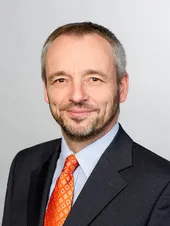
Dr. Paul Fisher is an Adjunct Senior Fellow at the School of Civil Engineering, University of Queensland. His research focuses on coral reef ecology, thermal stress responses, and environmental engineering, with a strong emphasis on understanding coral-algal symbiosis under climate change impacts. PhD in Marine Sciences from the University of Queensland (2006) Research themes include coral bleaching mechanisms, antioxidant enzyme dynamics, sediment transport in coastal systems, and marine pollution monitoring. His work integrates field observations and experimental studies to address environmental and hydraulic challenges. Selected recent publications explore topics such as lake modeling for microbial risk assessment, suspended sediment monitoring during floods, and antioxidant responses in Symbiodinium. He collaborates extensively with marine and environmental scientists across Australia and the Pacific. His email contact is p.fisher@uq.edu.au.
Daryl Thomas is a Professor in the Department of Computer Science at Southwestern Adventist University. With over 30 years of service, his expertise spans Robotics, Intelligent Systems, and Sensor Networks. Education: Ph.D. in Computer Science, Louisiana State University (1994) B.S. in Psychology, Louisiana State University (1976) Dr. Thomas's research focuses on Robotics and Intelligent Systems , particularly in applications like smart wheelchairs, autonomous robots, and sensor networks. His work includes fault-tolerant architectures and sensor fusion methodologies. His publications from 1987-1994 reflect interdisciplinary contributions, ranging from Concrete Construction to Distributed Sensor Networks . While affiliated with LSU's RRL, he explored autonomous mobile robots and later applied his expertise to assistive technologies. Memberships: Association for Computing Machinery (ACM) Institute for Electrical and Electronic Engineering (IEEE) Rehabilitation Engineering Society of North America (RESNA, former) Construction Specifications Institute (CSI, former) He teaches a wide range of courses including Software Engineering , Operating Systems , and Discrete Structures , alongside graduate-level Management Information Systems .
Daniel Cantero is an Associate Professor in the Department of Structural Engineering at the Norwegian University of Science and Technology (NTNU). He leads research initiatives in structural health monitoring, bridge dynamics, and vehicle-infrastructure interaction, with significant contributions to concrete bridge analysis and railway infrastructure diagnostics. His work bridges computational modeling with practical engineering solutions. PhD in Bridge Dynamics (University College Dublin, 2010) Postdoctoral Fellowships at Plaxis BV, Trinity College Dublin, and Royal Institute of Technology (KTH) His research focuses on structural health monitoring, bridge dynamics under moving loads, and signal processing for infrastructure diagnostics. Recent work explores federated learning for population-based monitoring, 3D vehicle modeling, and corrosion effects in post-tensioned bridges. Current publications highlight advancements in: Railway bridge condition monitoring using train responses Machine learning for damage assessment Wavelet analysis in soil-structure interaction Finite element tools for vehicle-bridge interaction Probabilistic models for structural diagnostics As course coordinator for TKT4220 - Concrete Structures 2 and instructor in multiple structural engineering courses, he mentors PhD students like Muhammad Zohaib Sarwar. He contributes to NTNU's Concrete Group and participates in international Marie-Curie projects.
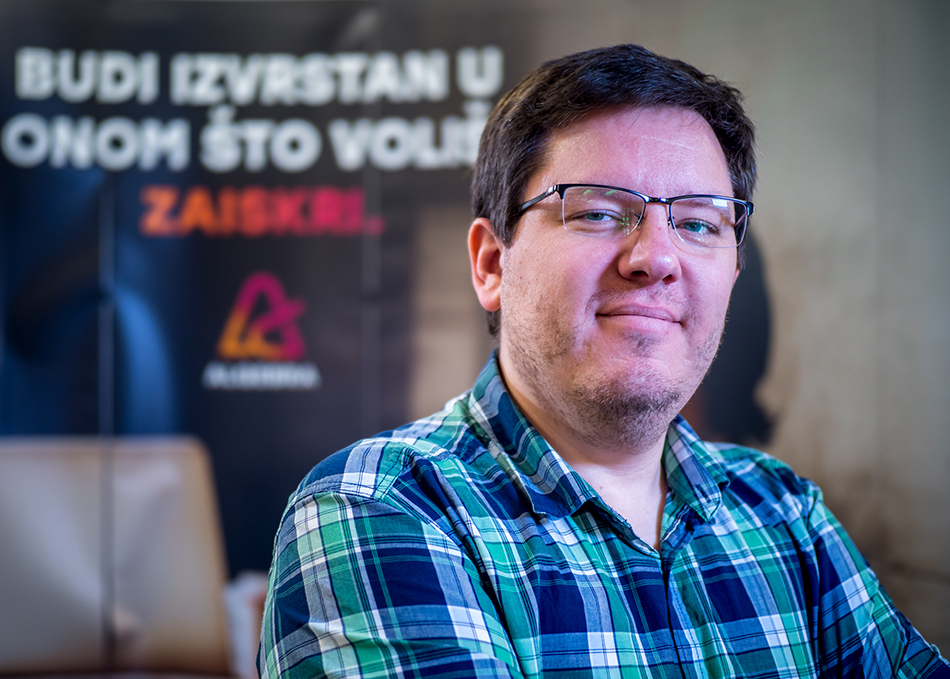
Domagoj Ružak is a Lecturer at the Department of General Studies, Algebra University, with a decade of experience in teaching, curriculum development, and educational materials authorship. Despite earning his B.S. in Civil Engineering from the University of Zagreb in 2012, he transitioned to computer science and has focused on this field since. Education: B.S. in Civil Engineering, University of Zagreb (2012) Research Interests span core aspects of computer science, emphasizing practical applications aligned with Algebra University's programs such as Data Science , Software Engineering , and Cybersecurity . His pedagogical work intersects with Digital Marketing and Curriculum Development , reflecting his role in shaping academic content.
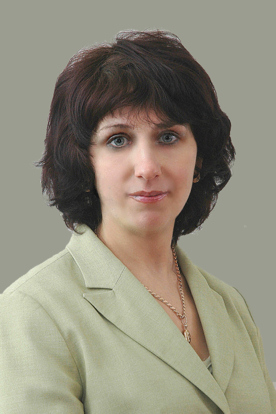
Marko Šimac is a Senior Lecturer at the College of Applied Computing, Algebra University, specializing in project management and risk analytics. He graduated from the Faculty of Civil Engineering in Zagreb (2002) and has combined practical consulting experience with academic teaching since 2003. Certified IPMA Project Manager (2006) Certified PMP (Project Management Professional) by PMI (2015) Active in professional associations and international conferences His research focuses on project risk management , integrating IT solutions and communication tools for proactive problem-solving in multidisciplinary environments. He teaches the course "Project Risk Management" and contributes to professional literature in project management.
Hermann Schichl is an Associate Professor at the University of Vienna , affiliated with the Faculty of Mathematics and Department of Mathematics. His work spans mathematical modeling, global optimization, and numerical analysis.
Robert Weisman is a Part Time Professor at the University of Ottawa's Faculty of Engineering and serves as President of the ISACA Ottawa-Gatineau Chapter (2010–present). He holds a PhD in e-Business (Digital Transformation and Innovation) from the University of Ottawa (2019) and has decades of academic and professional experience in engineering and applied sciences. PhD (e-Business, Digital Transformation and Innovation) , University of Ottawa (2019) MSc (Computer Science, Knowledge-Based Systems) , Royal Military College of Canada (1992) Certificate (Informatique) , Universite Laval (1988) PLSC (Land Forces Command and Staff) , Canadian Land Forces Command and Staff College (1983) BEng (Civil Engineering) , Royal Military College of Canada (1976) His research spans Digital Transformation in Government, Enterprise Architecture, and Artificial Intelligence, with additional focus on Smart Cities, Public Management, and Disaster Mitigation. He integrates Communication and Information Technologies with Expert Systems, Knowledge Management, and Policy Analysis, while maintaining ties to Armed Forces and Natural Sciences and Engineering. He teaches courses such as SEG 4300 - Special Topics - Software Engineering , GNG 5123 - Enterprise Architecture , SEG 4170 Enterprise Architecture Modeling , and DTI6997 - Graduate Project . His professional profile is further detailed at his LinkedIn page .
Wolfgang Wall is a full Professor and founding Director of the Institute for Computational Mechanics at the Technical University of Munich (TUM). Born near Salzburg (Austria), he studied at the University of Innsbruck and received his PhD from the University of Stuttgart. He is a co-founder of AdCo Engineering GW GmbH and Ebenbuild GmbH, and currently serves as Rector of the International Centre for Mechanical Sciences (CISM) in Udine, Italy. A member of both the Austrian and Bavarian Academies of Sciences, he has received numerous prestigious awards including the O.C. Zienkiewicz Award and ERC Advanced Grant. 1983: Matura, Höhere Technische Bundeslehranstalt Salzburg (with distinction) 1991: Dipl.-Ing. degree from University of Innsbruck (with distinction) 1999: Dr.-Ing. (summa cum laude) from University of Stuttgart His research focuses on application-motivated fundamental research in computational mechanics, spanning coupled multifield/multiscale problems (fluid-structure interaction, contact dynamics, electro-chemo-mechano-thermo interaction) and applications in energy storage systems (all-solid-state batteries), additive manufacturing, and computational biophysics/biomedical engineering (patient-specific respiratory/cardiac modeling, cancer nanomedicine, musculoskeletal systems). His group develops advanced computational methods, software frameworks, and physics-based models for high-performance computing. Recent emphasis includes uncertainty quantification, inverse analysis, and machine learning integration. The 15 most recent publications reveal trends in computational mechanics (8/15 articles), biomedical engineering (5/15), and energy storage/additive manufacturing (7/15). Notable themes include novel finite element frameworks for multiphysics problems, Bayesian calibration methods for biological systems, and multiscale modeling of nanomedicine and battery materials. 1986-1988: Excellency in Studying Awards (~ top 1%) 1991: Best graduation ever in Civil Engineering at Innsbruck University 1994: European Academic Software Award 2000: Fritz-Peter-Müller Award, University of Karlsruhe 2000: Rotary Award for doctoral thesis, Stuttgart 2005: Golden Teaching Awards (TUM students) 2008: Fellow Award of the International Association of Computational Mechanics 2011: Chuo University Guest Professorship Award 2012: IACM Computational Mechanics Award 2013: Heinz Maier-Leibnitz Medal 2016: Prandtl Medal (ECCOMAS) 2018: EUROMECH Fellows Award 2021: ERC Advanced Grant 2022: JSCES Grand Prize 2024: O.C. Zienkiewicz Award (IACM) As a dedicated educator, he teaches courses ranging from foundational engineering mechanics (1000+ students) to specialized graduate topics like discontinuous Galerkin methods and biomedical applications. His leadership extends to founding the Munich School of Engineering (2010-2012), establishing the Center for Computational Biomedical Engineering (2012), and serving on multiple editorial boards (IJNME, CMAME, IJNMBE) and scientific councils.
Vira Ivanivna Shmyrko is an Associate Professor at Zaporizhzhia Polytechnic National University with over 30 years of academic experience since 1991. She holds a Candidate of Technical Sciences degree and specializes in two distinct yet complementary fields: materials science for gas turbine engineering and psychophysiological safety. Zaporizhzhia Machine-Building Institute named after V.Ya. Chubar (1990), Engineering and Physics faculty Candidate's thesis in Materials Science (2001): "Evaluation and prediction of corrosion-mechanical and strength properties of materials of working blades under conditions of aggressive influence of gas turbine fuel" Her research spans two primary domains with increasing integration in recent years. Initially focused on materials science for gas turbine components, her work examined corrosion-mechanical properties and durability prediction of turbine blades under aggressive conditions. Since approximately 2015, her research has expanded significantly into occupational safety, psychophysiological safety, and emergency situation management, with particular emphasis on educational settings and wartime conditions. Her recent publications (2023-2025) demonstrate a sophisticated integration of these domains, especially in assessing psycho-emotional states of university students in frontline regions as a tool for labor protection. Her publication record shows consistent scholarly output with 30 scientific works including 2 patents. The most recent articles (2023-2025) reveal a strong focus on wartime safety challenges, particularly the psycho-emotional conditions of students in conflict zones, while maintaining her technical expertise in gas turbine materials. This dual focus reflects her ability to address both technical engineering challenges and human factors in safety management. Chest Sign "For Impeccable Work" III degree from Zaporizhzhia Polytechnic University (2020) Associated Member of the European Community for Occupational Safety and Health (ESOSH), registration No. 13823000217 (June 16, 2023) Professor Shmyrko actively contributes to academic development through participation in international scientific and pedagogical internships, including the VI International Scientific Congress "Society of Ambient Intelligence" (2023) and the International Scientific and Practical Conference "Business Ecosystems: Sustainable Development 2025" (February 2025). She teaches "Safety of life of a specialist with the basics of labor protection" and "Labor Protection in the Industry," connecting theoretical knowledge with practical safety applications. Her recent professional development includes specialized training in legislative acts on labor protection, occupational hygiene, first aid, electrical safety, and fire safety (March 2024). Based in classroom 22a at Zaporizhzhia Polytechnic National University (Zhukovsky Street, 64), Professor Shmyrko maintains an active research program that bridges traditional engineering materials science with contemporary psychosocial safety challenges, particularly relevant in Ukraine's current context.
Dr.-Ing. Martin Heinrich is a researcher at the Institute of Mechanics and Fluid Dynamics within the Faculty of Mechanical, Process and Energy Engineering at Technical University Bergakademie Freiberg . His work focuses on numerical flow simulation and computational fluid dynamics. Education: Diploma in Mechanical Engineering (2011), TU Bergakademie Freiberg (grade: 1.3) Doctorate in Mechanical Engineering (2016), TU Bergakademie Freiberg (summa cum laude) Martin Heinrich's research spans numerical simulation of multiphase flows , atomization of molten metals and water jets , and surface structuring using laser beams . He has conducted research stays at the University of Toronto (2019, 2017) and Amirkabir University of Technology (2018). His 15 most recent publications (2013–2025) include work on air sampling in closed environments , fluid-structure interaction , CFD software development , and laser-induced surface structuring , with a focus on computational methods like OpenFOAM and ANSYS CFX. Key awards: Summa cum laude doctorate in Mechanical Engineering (2016) He has collaborated with researchers such as Prof. Rüdiger Schwarze , Prof. Kinnor Chattopadhyay , and Dr. Hossein Khaleghi . His work includes grants for multi-scale modeling and fluid dynamics software tools .
Mykola Oleksiyovych Danylyuk is an Associate Professor and Head of the Department of Economics of the Fuel and Energy Sector at Ivano-Frankivsk National Technical University of Oil and Gas, with over 30 years of academic service. A Doctor of Economic Sciences since 1999, he specializes in energy economics and holds leadership roles including chairman of the Faculty of Economics and Management's scientific council. His educational background includes: Graduation from Snyatyn secondary school (1965) Engineer-economist degree from Ivano-Frankivsk Institute of Oil and Gas (1970) Candidate of Economic Sciences dissertation on oil refining quality improvement (1981) Doctor of Economic Sciences on new economic relations in oil/gas (1999) Professor Danylyuk's research centers on oil and gas economics, focusing on market transformations, enterprise efficiency analysis, resource rent systems, and industrial organization. His work bridges theoretical frameworks with practical industry applications through over 100 publications including four monographs and five textbooks, influencing Ukraine's energy policy and enterprise management practices. His contributions are recognized through prestigious awards: Excellent Education Worker of Ukraine badge Regional administration and council certificates Industry accolades from Ukrgazvydobuvannya International recognition from German Civil Servants Academy He has mentored two PhD candidates and led critical research projects including market transformation strategies for Ukraine's oil/gas complex, efficiency analysis frameworks for JSC 'Ukrnafta', and differentiated rent payment systems. As a full member of the Ukrainian Oil and Gas Academy since 1997, he actively shapes academic discourse through editorial board memberships and the SOPRS cost-distribution software (author's certificate No. 1940, 1999). Through his dual leadership as department head and scientific council chairman, he drives research initiatives and academic development within the Faculty of Economics and Management, maintaining strong ties with regional energy enterprises and governmental bodies.
Aram Hassan is an Associate Professor in the Department of Engineering at the American University of Iraq, Sulaimani. With expertise in civil and structural engineering, he contributes to academia and industry through research on advanced materials and infrastructure systems. Ph.D. in Civil and Structural Engineering, University of Liverpool M.Eng. in Civil and Structural Engineering, University of Liverpool His research focuses on UHPFRC for bridge applications , shear capacity of high-strength fibre-reinforced concrete , and nonlinear finite element modeling of cementitious materials. He utilizes software tools like Abaqus, Ansys, and Midas to analyze complex structural behaviors. Aram has extensive experience as a Bridge Engineer in the UK, specializing in highways infrastructure design and management. His work bridges practical engineering challenges with computational modeling, advancing sustainable infrastructure solutions.
Guillermo Martínez-López is a Researcher at the Chair of Statics and Dynamics, Technical University of Munich (TUM), since 2024, previously working at the Chair of Statics (2020-2024). His research focuses on computational structural mechanics with applications in wind engineering and civil infrastructure design. He holds a Master of Science (2017-2019) and Bachelor of Science (2013-2017) in Civil Engineering from Universitat Politècnica de València, with study periods at RWTH Aachen (2016-2017) and KTH Royal Institute of Technology (2018-2019). His research spans Wind Engineering , Structural Optimization , and Computational Mechanics , addressing critical challenges in long-span bridge aerodynamics and membrane structure design. Key contributions include flutter mitigation strategies for cable-supported bridges and standardized pressure mapping for membrane roof canopies, emphasizing computational efficiency through forced-motion simulation optimization. Analysis of his 2019-2024 publications reveals a concentrated focus on wind-structure interaction problems, with increasing emphasis on standardization methodologies for membrane structures and computational cost reduction in aerodynamic simulations. His work bridges theoretical computational mechanics with practical civil engineering applications. His scientific recognition includes: La Caixa Foundation Research Fellowship (2020-2022) DAAD Research Fellowship (2020) He actively contributes to third-party funded projects including CoDA, MistralWind, WINSENT, and FlexWing, focusing on wind engineering applications and structural optimization. As an instructor in Wind Engineering courses at TUM, he integrates research into teaching while collaborating within Prof. Wüchner's research group on advanced computational methods. His work is embedded within TUM's computational mechanics ecosystem, contributing to software development (Kratos Multiphysics) and participating in interdisciplinary teams addressing wind effects on civil structures through projects like Digitaler Baukasten.
Mirsad Hadzikadic is a Professor at the University of North Carolina at Charlotte in the Department of Software and Information Systems , and Founding Director of the Complex Systems Institute (2009–present). He has served in leadership roles including Founding Dean of the College of Computing and Informatics (2000–2008) and Founding Executive Director of the Data Science Initiative (2015–2019). His work spans interdisciplinary collaborations in healthcare, economics, and policy modeling. Education Ph.D. in Computer Science, Southern Methodist University (1987) MS and BS in Computer Science, University of Banja Luka (1981, 1977) MPA in Government, Harvard University (2009) His research focuses on Complex Adaptive Systems , Agent-Based Modeling , and Data Analytics , with applications in Health Informatics , Behavioral Economics , and Network Science . Publications demonstrate methodological innovations in Deep Learning (2018–2020), Medical Informatics (2009–2012), and Evolutionary Dynamics (2015–2018). Recent work applies Bayesian Deep Learning to healthcare data uncertainty and Distance-Based Deep Learning to radiation treatment planning. Scientific Awards include North Carolina Technology Association Lifetime Achievement Award (2008) Dr. Richard Neel (Blue Diamond) Award for Information Technology (2005) He has contributed to interdisciplinary education through co-developing courses in eScience, Financial Services Informatics, and graduate-level Complex Systems. Leadership roles extend to establishing research centers like the Charlotte Visualization Center via industry partnerships and shaping policy through the Journal on Policy and Complex Systems .
Owen Waygood is a Full Professor in the Department of Civil, Geological and Mining Engineering at Polytechnique Montréal. He holds a PhD in Transportation Behavior from Kyoto University (2009), an MA in Biomimicry from the University of Toronto (2005), and dual BSc degrees in Mechanical Engineering and Computer Science from the University of Saskatchewan (2001). His research spans transportation engineering, sustainable mobility, and the intersection of urban environments with social, environmental, and economic impacts on travel behavior. PhD in Transportation Behavior and Urban Management, Kyoto University, 2009 MA in Biomimicry, University of Toronto, 2005 BA in Computer Science and BE in Mechanical Engineering, University of Saskatchewan, 2001 Waygood’s work focuses on transport and well-being, traffic hazard assessment tools, sustainable development in transportation, and children’s mobility. He has developed machine learning techniques for traffic danger evaluation, studied carbon dioxide information framing in transport decisions, and analyzed pedestrian safety at urban intersections. His research often integrates public health, environmental psychology, and urban design. Recent publications examine autonomous taxi adoption, pedestrian risk factors, and household greenhouse gas emissions. He collaborates with institutions like CIRRELT and CIRODD, and has supervised 10 graduate students. Media engagements highlight his expertise in Montreal’s infrastructure challenges, including REM metro reliability, winter cycling adoption, and car ownership trends. He co-developed a hazard assessment tool for Montreal intersections and contributed to pandemic-era mobility studies. Owen leads projects like the Road Safety Research Network (RRSR) and participates in the Interdisciplinary Research Center for Operationalization of Sustainable Development (CIRODD) . His supervision includes studies on traffic danger analysis, park accessibility, and machine learning optimization. He has been featured in 98.5 FM, La Presse, CBC, and Le Devoir for insights on child pedestrian safety, sustainable transport, and urban planning.