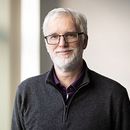
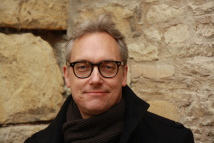
Albrecht Fuess is a Professor of Islamic Studies at Philipps University of Marburg since 2010, specializing in Middle Eastern History (13th–17th centuries), Mamluk socio-cultural dynamics, and contemporary European Islamic discourses. His research spans historical continuity in Ottoman-Mamluk-Safavid interactions, Islamic youth cultures, and Mediterranean geopolitics. Research Focus: Medieval Islamic history, Transottomanica mobility studies, Islam in Europe, and cultural integration of Muslim migrants. Awards: Le Studium Fellowship (2007–2009) at Université de Tours. His publications emphasize military-economy interplay, legitimacy through religious narratives, and resource management in empires, with a focus on Mamluk and Ottoman transformations. He has advised on doctoral projects covering topics like Islamic welfare, Arabic ʾAmālī literature, and Cypriot-Ottoman relations. Leadership: Co-coordinator of Transottomanica (DFG-SPP 1981), member of ANR and DAAD committees, and liaison professor for the German National Academic Foundation. Editorial Roles: Co-editor of 'Transottomanica' and 'Muslim Worlds' series, and advisory board member for journals in Cairo, Paris, and Leuven.
Mahmoud Abdallah is a Researcher at the Center for Islamic Theology , University of Tübingen, where he has worked since 2020. His career includes roles as Senior Scientist at the University of Innsbruck (2019–2020), Project Leader at ZITh (2016–2019), and Post-Doc researcher (2013–2018). He also held guest lectures at Marmara University (2017) and served as an Arabic Editor (2012–2013). Education : PhD in Comparative Linguistics (2012, Heinrich Heine University Düsseldorf), Master’s summa cum laude (2002, University of Minia), State Examination (1998, Al-Azhar University). Research Interests focus on Islamic Theology , Pastoral Care , Interreligious Dialogue , and Religious Institutions in Pluralistic Societies . He explores hermeneutics in Islamic counseling, Ḥisba in public order, and Umma dynamics in multicultural contexts. Recent Publications (2014–2022) analyze Qur’anic ambiguity , interfaith education , religious responses to crises (e.g., pandemic pastoral care), and Islamic social ethics . Key themes include Abrahamic unity , contextual theology , and religious hermeneutics . Scientific Awards : Master’s degree with summa cum laude distinction (University of Minia, 2002). Advising & Projects : Co-editor of Grundlagen muslimischer Seelsorge (2020) and Theologie des Zusammenlebens series (2017–2022). Led the 2016 project Scientific Education and Social Responsibility (Baden-Württemberg Ministry). Currently working on books about Prophetic Hermeneutics (2023) and Religious Transformations in Crisis (2022). Committee Memberships : Member of the German Islam Conference (since 2018), Scientific Advisory Boards at Zukunftsforum Islam e.V. (since 2017), and the DAVO (German Working Group on the Middle East, since 2009).
Professor Martin Heimgartner is an Adjunct Professor of Church History at the Martin Luther University Halle-Wittenberg's Faculty of Theology, where he has served as a private lecturer since 2007 and as adjunct professor since 2014. He also works as a research associate at the Theological Seminary of the University of Zurich since 2009. His academic career spans multiple institutions including the Universities of Zurich and Basel where he completed his doctoral and habilitation work. Heimgartner's research focuses on Syriac Christianity, particularly the works of the East Syrian Patriarch Timotheus I (780-823), Christian-Muslim relations in early Islam, philosophy and theology of Syrian Christians, John Chrysostom, Greek and Syrian florilegia literature, and 2nd century Christian apologists. His scholarly work demonstrates deep engagement with primary sources through critical editions and translations of Syriac texts. His publication record shows consistent scholarly output with emphasis on Timotheus I's writings, with multiple monographs published through prestigious series like Corpus Scriptorum Christianorum Orientalium (CSCO). His work bridges historical theology, textual criticism, and interreligious studies, particularly examining early Christian-Muslim dialogue. The articles reveal a progression from textual editions toward more thematic studies on theological concepts like Trinitarian doctrine in interreligious contexts. His scholarly contributions include numerous encyclopedia entries in major reference works such as Religion in Geschichte und Gegenwart (RGG) and Der Neue Pauly, covering figures from early Christianity. He has also collaborated on editorial projects including a volume on Apollinarius. Notably, Heimgartner maintains a dual scholarly identity, combining theological research with musicology. His musicological editions, particularly for Cecilia Bartoli's Malibran project, demonstrate expertise in historical musical works from the 19th century, showing his interdisciplinary approach to historical scholarship across different cultural domains.
Prof. Dr. Gert Pickel is a Professor of Sociology of Religion and Church at the Institute for Practical Theology, Faculty of Theology, Leipzig University. His roles include deputy spokesperson for the Competence Center for Right-Wing Extremism and Democracy Research, member of the Center for the Study of Religion, and advisory board member for the Academy of World Religions in Hamburg and the Hannah Arendt Institute at Dresden University of Technology. He heads the "Racism in Institutions" project network and co-directs the Leipzig branch of the Research Institute for Social Cohesion. Research focuses on sociology of religion , democracy , and political culture Current projects: German-Swiss study on religious/political collective identities, modern populism in Europe (East Germany), racism in institutions Research Interests span comparative sociology of religion (secularization, pluralization), political sociology (social capital, populism, radicalism), and integration of migrants in Germany. He explores how religion interacts with politics, addressing issues like euthanasia, abortion, and gender identities through empirical, theory-driven methodologies. Teaching covers religion in Germany/Europe, secularization processes, religion-politics dynamics, group-based prejudices, and intercultural comparisons. Courses are interdisciplinary (social sciences, humanities) with field trips to Central/Eastern Europe. Scientific Awards : No awards explicitly mentioned in the text. Grants and Projects : DFG-funded "Multiple Bible Uses in Late Modern Society" (2021-2024) BMBF-funded "Social Polarization and Radicalization" (2020-2024) EU-funded Jean-Monnet Centre (2020-2024) "InRa-Study" (2021-2024) on institutional racism Labs and Teams : Member of Research Academy Leipzig; co-leader of the Leipzig branch of the Research Institute for Social Cohesion; contributor to the Leibniz WissenschaftsCampus Eastern Europe–Global Area.
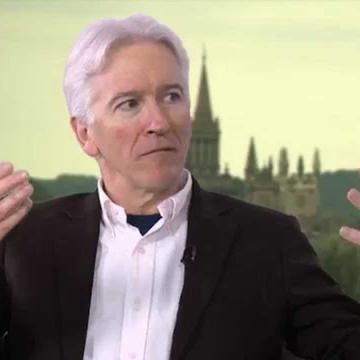
Eugene Rogan is Professor of Modern Middle Eastern History at the University of Oxford and a Fellow of St Antony's College, where he also serves as Director of the Middle East Centre. He is affiliated with the Faculty of Asian and Middle Eastern Studies, a leading center for area studies in the UK. His research focuses on the modern history of the Arab world, particularly during the 18th to 20th centuries. Key areas include the Arab provinces of the Ottoman Empire, the First World War in the Middle East, and the 1948 Palestine War. His current project re-examines the 1860 massacres in Damascus as a case of sectarian conflict and state reconstruction. Rogan’s publications have significantly shaped the historiography of the modern Middle East. His recent books, such as The Arabs: A History and The Fall of the Ottomans , reflect a consistent engagement with themes of empire, resistance, and national identity. The articles and books listed demonstrate a strong emphasis on military, political, and social transformations in the region, with recurring attention to colonialism, state formation, and collective memory. Fellow of the British Academy (2017) He teaches undergraduate and postgraduate courses, including The Middle East in the Age of Empire, 1830–1971 and The History of the Middle East, 1860–1970 . While no students or grants are explicitly listed, his leadership of the Middle East Centre indicates active mentorship and research direction. He is involved in public-facing scholarship, regularly participating in lectures and media engagements. Rogan leads the Middle East Centre at St Antony's College, a hub for interdisciplinary research, conferences, and publications on the region. The center fosters collaboration among scholars, policymakers, and public intellectuals, amplifying the impact of his academic work.
Professor Heiko Beyer holds a chair position at the Department of Sociology IV within the Faculty of Arts and Humanities and Social Sciences at Heinrich Heine University Düsseldorf. His academic work spans multiple domains of contemporary sociological inquiry with particular emphasis on prejudice studies, political sociology, and the sociology of religion. Beyer maintains an active research profile with numerous publications in leading sociological journals and serves as principal investigator for several major research projects funded by prestigious German research institutions. Professor Beyer's research interests form a cohesive body of work examining various dimensions of social prejudice and political attitudes. His scholarship demonstrates particular expertise in antisemitism studies, where he has developed innovative methodological approaches to measuring contemporary manifestations of anti-Jewish sentiment. His work also explores anti-Americanism as a comparative framework for understanding prejudice, examining the "elective affinities" between different forms of resentment. Additional research areas include the sociology of social movements, the intersection of religion and politics in Europe, and human rights implementation in diverse social contexts. Beyer's methodological approach combines quantitative survey research with qualitative analysis, often employing experimental designs to uncover the social context dependence of prejudicial attitudes. An analysis of Professor Beyer's recent publications reveals a clear trajectory toward increasingly sophisticated examinations of antisemitism in contemporary Germany. His work has evolved from theoretical examinations of antisemitism's historical development to nuanced empirical studies capturing its current manifestations across different social milieus. A distinctive feature of his recent scholarship is the examination of how global events, particularly conflicts in the Middle East, create "spaces of opportunity" for antisemitic expressions. He has also pioneered research on the relationship between political Islam and Jewish experiences in Germany, producing some of the first systematic studies on how radical Islamic ideologies impact Jewish life. His methodological contributions include developing new antisemitism scales and employing factorial survey experiments to measure latent attitudes. Professor Beyer currently leads three major research projects: "Antisemitism in the General Population of North Rhine-Westphalia" (funded by the State of North Rhine-Westphalia, 2022-2024), "Social Contexts of Equality Practices" (a Heisenberg project funded by the German Research Foundation, 2019-2024), and "The Impact of Radical Islam on Jewish Life in Germany" (funded by the Federal Ministry of Education and Research, 2020-2024). These projects collectively represent significant contributions to understanding prejudice, human rights implementation, and minority experiences in contemporary German society. His research often involves collaboration with interdisciplinary teams and has practical implications for educational programs combating antisemitism and promoting social equality.
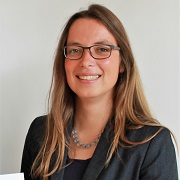
Prof. Dr. Clarissa Vierke is a specialist in Swahili Language and Literature at the University of Bayreuth , with a focus on literary connections across the Indian Ocean and African continent. She was awarded the German National Merit Foundation scholarship during her studies in African Languages, Social Anthropology, and Literatures in African Languages at Bayreuth and Leiden. Academic Degrees : Doctorate in African Studies (2010, Bayreuth), Studies in African Studies (1999-2005, Bayreuth/Leiden) Her research spans historical Swahili manuscripts (18th-19th century), contemporary poetry (hiphop, newspaper poetry), and aesthetic practices that examine how poetic form shapes lifeworlds. She leads the project Poetry as Aesthetic Practice (Madagascar/Tanzania) and contributes to manuscript studies and decolonial aesthetics . Recent publications include co-edited volumes on African Artistic Practices (2024), Decolonial Aesthetics (2023), and Travelling Texts (2020). She serves on editorial boards for journals like Matatu and Swahili Forum . Scientific Awards : Wissenschaftspreis (University of Bayreuth, 2012), Heinz-Maier-Leibnitz-Prize (DFG, 2012) Prof. Vierke is Chairperson of the Afrophone Caucus of the African Literature Association (2015–present) and organizes the annual Swahili Colloquium . Her work bridges precolonial and contemporary Swahili traditions, emphasizing textual mobility and multilingual contexts .
Professor Eva Haverkamp-Rott holds the Chair of Medieval Jewish History and Culture at Ludwig-Maximilians-Universität München (LMU Munich) since 2009. Her work uniquely bridges Medieval History and Jewish Studies, focusing on Jewish life in Europe from the 4th to 16th centuries, with geographic emphasis on the Holy Roman Empire, Italy, France, England, and the Byzantine Empire. PhD in Medieval History (University of Konstanz, 1999) Master in Jewish Studies and Medieval/Modern History (University of Cologne, 1994) Her research explores Jewish-Christian-Muslim interactions, medieval economic systems, numismatics, and the historiography of Jewish persecution during the Crusades. She specializes in analyzing Hebrew chronicles and Latin texts to reconstruct interfaith dynamics. Her recent publications focus on global medieval history, Jewish tombstone symbolism, and economic exchanges between religious groups. She has contributed significantly to understanding Jewish roles in medieval coinage and trade. 2020: Prize for Good Teaching (Bavarian Ministry of Science and Arts) 2006: The Historical Book Prize for 'Hebrew Accounts of the Persecution of the Jews during the First Crusade' 2005: Jon Gillum Teaching Award, Radcliffe Institute Fellowship 2004: Ryskamp Research Fellowship, NEH Fellowship 2000: District of Konstanz Prize for promotion of young scientists Professor Haverkamp-Rott has led interdisciplinary projects like the Regensburg archaeological excavations and co-edited cultural guides. Her work emphasizes contextualizing Jewish experiences within broader European historical frameworks.
PD Dr. Birgit Bräuchler is a Professor at the Faculty of Social and Cultural Anthropology at Goethe University Frankfurt. Her research focuses on media and cyberanthropology, conflict and peace studies, cultural rights, and the revival of traditions in Southeast Asia, particularly Indonesia and the Moluccas. Research Focus : Media anthropology, cyberanthropology, conflict resolution, cultural rights, and local-peacebuilding practices in Indonesia. Current Projects : Indigenous media in conflict transformation, cultural peacebuilding in Maluku, and citizenship dynamics in democratising Indonesia. Recent Publications analyze the intersection of digital media, cultural practices, and conflict dynamics. Her work explores the role of tradition in post-conflict reconciliation, legal pluralism, and mobility's impact on identity. She has contributed to debates on theoretical frameworks in peacebuilding and the challenges of decoupling cultural revival from political agendas. Email : birgit.braeuchler@anthro.ku.dk
Detlef Pollack is a Senior Professor and Chair of Sociology of Religion at the Institute for Sociology, University of Münster. He has held this position since August 2022, following a distinguished academic career that includes serving as Professor of Sociology of Religion at the Westphalian Wilhelms University Münster from 2008 to 2022, and as Professor of Comparative Cultural Sociology at the Viadrina European University Frankfurt (Oder) from 1995 to 2008. Pollack has been a member of the board of the Excellence Cluster "Religion and Politics" at the University of Münster since 2023 and previously served as its deputy speaker (2019-2021) and speaker (2015-2018). Pollack's academic background includes a habilitation from Bielefeld University (1994) in Sociology, a doctorate in Sociology of Religion (summa cum laude) from Leipzig University (1984), and theological studies at Leipzig University (1976-1981). His academic journey reflects a deep engagement with both theological and sociological perspectives on religion. Professor Pollack's research focuses on religious change in Western and Eastern Europe and the USA, political culture in Eastern and Central Europe, GDR research, systems theory, and differentiation theory. His work bridges historical analysis with contemporary sociological theory, particularly examining how religious institutions and practices adapt to modern social structures. He has made significant contributions to understanding secularization processes, religious pluralism, and the relationship between religion and modernity. Pollack's extensive publication record demonstrates consistent engagement with major debates in the sociology of religion. His recent work explores religious responses to global crises, religious fundamentalism, and the complex relationship between religion, politics, and national identity in contemporary Europe. His research often employs comparative methodologies, examining religious phenomena across different cultural and national contexts. Among his notable achievements are the Karl-Polányi-Preis from the Hungarian Sociological Society (2018), his fellowship at the Lichtenberg-Kolleg in Göttingen (2011), and his Max Weber Chair at New York University (2003). He has also been recognized with fellowships at Princeton University (1993) and the Wissenschaftskolleg Berlin (1996). Pollack actively contributes to academic discourse through his leadership roles in professional organizations, including the International Society for the Sociology of Religion (since 1995) and the Sociology of Religion section of the German Sociological Association (since 1994). His teaching portfolio includes seminars on postcolonial theory, Western modernity in times of global crisis, religious fundamentalism, secularization, and the relationship between religion and politics in Russia, Germany, and the USA.
Wolfram Drews is a Professor of Medieval History specializing in early and high middle ages, with a focus on transcultural history at Westfälische Wilhelms-Universität Münster since March 2011. He is actively involved in the Cluster of Excellence as both a Principal Investigator and member of the Board of Directors. His research spans multiple fields including cultural history of politics, world and global history, and strategies of integration between Christian and Islamic societies in the medieval period. His academic background includes: Habilitation at the University of Cologne (2007) PhD from Freie Universität Berlin (2000) MA in History, Jewish Studies and Theology from Freie Universität Berlin (1998) MA (Diploma) in English and Spanish from Humboldt-Universität Berlin (1991) Drews' research primarily explores the complex interrelationships between Christian, Jewish, and Islamic societies during the medieval period, with particular emphasis on Spain. His work examines how political power was constructed and maintained across cultural boundaries, how religious identities were negotiated, and how knowledge systems interacted across the Mediterranean world. He has developed innovative approaches to transcultural history that move beyond traditional national and religious frameworks to examine the fluid interactions between different medieval societies. His scholarship reveals how medieval societies constantly redefined their boundaries through processes of entanglement, conflict, and coexistence. His recent publications demonstrate a consistent focus on religious interactions, political legitimacy, and cultural entanglements in medieval Spain and the broader Mediterranean world. Drews frequently examines how religious communities negotiated their identities and political positions within pluralistic societies, with particular attention to Jewish communities in Christian and Islamic contexts. His work shows increasing engagement with global and comparative frameworks for understanding medieval political and religious dynamics. Drews has received significant recognition for his scholarly contributions: Member of Academia Europaea (2018) Dumbarton Oaks Fellowship (2012) Friedrich-Meinecke-Preis (2001) DAAD Scholarship (1994) TEMPUS Scholarship (1991) As an academic leader, Drews serves as executive director of the Institute of Early Medieval Studies and editor of the journal "Frühmittelalterliche Studien." He has supervised doctoral students including Franziska Kleybolte (2022) and Nadeem Khan (2017), focusing on topics related to religious minorities and political structures in medieval Spain. His leadership extends to various research initiatives including the Excellence Cluster "Religion und Politik" and the research group "Xenokratie vor Ort." Drews leads significant research projects including "Discourses of Purity and Purification in Medieval Spain" and previously directed "Monarchical Rule and Religious Community-Building" until 2018. His work is situated within several theoretical frameworks examining differentiation, conflict, ambiguity, decision-making, and migration within medieval transcultural contexts.
Mouez Khalfaoui is Professor of Islamic Law at the Center for Islamic Theology at the University of Tübingen, where he has served since 2014. He previously held the position of Junior Professor for Islamic Law (2012-2014) and served as Deputy Director of the Center for Islamic Theology from 2021-2023. His administrative roles include Head of the Examination Board, Member of the Study Commission, and Member of the Center Council. Dr. Khalfaoui earned his Doctorate in Islamic Studies from the University of Erfurt in 2008 and completed his State Examination in Islamic Studies and Arabic Studies at Manouba University of Tunis, Tunisia in 1998. Prior to his academic career, he served in the Kuwaiti Embassy in Berlin (2010-2012) and worked as an Academic lecturer for Islamic and Arabic studies at the Free University of Berlin (2009-2012). His research focuses on Islamic law, normative theory and history, Islamic theology, minority rights, Islamic education, and social ethics with particular emphasis on Islam in European contexts. Dr. Khalfaoui has led major research projects including comparative studies of work ethics across Abrahamic religions, Islamic Law and Ethics from a European perspective, Islamic family law in Europe, and the normativity of the Quran in contemporary contexts. His work addresses critical issues such as Muslim minority rights, the role of women in Islam, Islamic family law in Europe, Sharia and secular law, and Islamic work ethics in global contexts. Analysis of his recent publications reveals a consistent focus on the intersection of Islamic legal tradition with contemporary European contexts, particularly examining how Muslim minorities navigate religious obligations within secular legal frameworks. His work demonstrates a methodological approach combining historical, sociological, philosophical, legal and theological perspectives to address current challenges facing Muslim communities in Europe. Dr. Khalfaoui has been awarded research funding for projects including the comparative study of work ethics across Abrahamic religions and research on Islamic family law in Europe. His work has been supported by institutions including the Akademie für Islam in Wissenschaft und Gesellschaft (AIWG) and the Deutsche Forschungsgemeinschaft (DFG), with a recent May 2024 application for research on 'The primacy of what is right in a plural and multi-religious society'. He supervises the interdisciplinary post-doc research group 'Religion and Rationality − Faith and Reason in the Life and Thought of Muslims, Christians and Jews in the Context of Plural Societies' and serves as consultant and reviewer for European foundations including DAAD, Humboldt Foundation, and Porticus Foundation. Dr. Khalfaoui is actively involved in academic organizations as co-founder of the German International Society for Theological Studies (DIGITS), founding member of the Berlin Institute for Public Theology, and founding member of the Tübingen School of Education.
Prof. Dr. Alexandra Cuffel is a leading scholar in medieval and early modern interreligious encounters, currently serving as Professor of Jewish Religion in Past and Present Times at Ruhr University Bochum's Center for Religious Studies and Director of the Käte Hamburger Kolleg 'Dynamics in the History of Religions'. Her research spans Jewish, Christian, and Muslim relations in the medieval Mediterranean and beyond, with particular expertise in religious polemics, gender studies, and environmental crises in premodern societies. Ph.D. in Medieval History, New York University (2002) M.Phil. in Medieval History, University of Cambridge (1990) B.A. in Medieval Studies, Indiana University (1988) Her recent work examines cross-religious festivals, medical theories, and environmental attitudes in premodern Afro-Eurasia, culminating in the 2024 monograph Shared Saints and Festivals among Jews, Christians, and Muslims in the Medieval Mediterranean and the forthcoming Religious Encounter and Environmental Crises . She also co-authors studies on Jewish warrior traditions and the Ten Lost Tribes with Prof. Adam Knobler. Dr. Cuffel's publications demonstrate deep engagement with sensory religious practices, bodily fluids in polemics, and apocalyptic narratives. She has held prestigious fellowships from ACLS, Harvard Divinity School, and Hebrew University, and currently leads the 'JewsEast' and 'The Ten Lost Tribes' projects at Ruhr University. ACLS Fellowship (2007) Harvard Divinity School Fellowship (2006) Dorot Foundation Fellowship (1996) Her research continues to reshape understanding of religious entanglement through material culture, ritual practices, and environmental challenges in premodern contexts.
Professor Antje Roggenkamp serves as Professor of Practical Theology with a focus on Religious Education at the Protestant Theological Faculty of the University of Münster. She chairs the Seminar for Practical Theology and Religious Education, where she leads groundbreaking research on religious education, praxeology, and material culture in religious contexts. Her scholarly work bridges historical analysis with contemporary educational challenges in increasingly pluralistic societies. Professor Roggenkamp's educational foundation includes studies in Protestant theology, Romance studies, education, and psychology across multiple institutions including the University of Münster, the Sorbonne (Paris 4), and the Georg-August University of Göttingen. She completed her doctoral research on 'The Protestant André Gide and the Bible' (1987-1991) and her Habilitation on 'Religionspädagogik als Praktische Theologie. Zur Entstehung der Religionspädagogik in Kaiserreich und Weimarer Republik' (2000), establishing her expertise in the historical development of religious education as an academic discipline. Her research interests span multiple interconnected domains: material religion studies examining how physical objects and spaces shape religious understanding; praxeological approaches to practical theology investigating religious practices in everyday contexts; theologizing with children and young people focusing on religious concept development; transnational religious education comparing German and French approaches to secularism; and religious cooperative didactics addressing stereotypes and prejudices in interfaith learning. Her scholarship consistently connects theoretical frameworks with practical educational applications, particularly in contexts of religious diversity. Professor Roggenkamp's recent publications reveal a clear trajectory toward material religion studies, with increasing emphasis on how artifacts mediate religious experiences and learning processes. Her work demonstrates sophisticated integration of historical analysis with contemporary educational challenges, particularly through innovative approaches like 'Digitorials' for theological reflection. She examines positional awareness and power dynamics in interreligious contexts, addressing how educators can navigate complex identity formations in religious learning environments. Scientific Society for Theology ISREV (International Seminar on Religious Education and Values) European Academy of Religion Society for Scientific Religious Education Working Group for Empirical Religious Research Professor Roggenkamp currently leads several significant research initiatives including the DFG-funded network 'Gegenstände religiöser Bildung und Praxis – Funktion und Gebrauch von materiellen Objekten und Artefakten in exemplarischen Räumen' (2021-2026), which brings together scholars from multiple disciplines to explore how material culture contributes to religious education processes. She also directs 'Interreligiöses Lernen an der Evangelischen Gesamtschule Gelsenkirchen' (2021-2023) and the 'Ökumenisch-Interreligiöse Forscherwerkstatt' (since 2017), both focused on developing practical frameworks for religious education across faith traditions. Her upcoming participation in the European Academy of Religion conference in Vienna (July 2025) demonstrates her ongoing scholarly engagement across international contexts.
Sylvie Avakian is a Lecturer in Systematic Theology at the Faculty of Protestant Theology, University of Tübingen , since April 2019. She was ordained to the pastoral ministry in the Evangelical Church of Württemberg in 2021 and completed her habilitation at Tübingen University (2018-19) with the thesis Being Toward Death: Heidegger and the Orthodox Theology of the East . Her academic journey includes a Doctorate in Theology (2011) from Heidelberg University, a Master in Theology (2007), and a Bachelor in Theology and Christian Education (1998) from the Near East School of Theology (NEST), Beirut. Education: Doctorate (2011), University of Heidelberg Master (2007), Near East School of Theology Bachelor (1998), Near East School of Theology Her research focuses on Systematic Theology, Interreligious Dialogue, Eastern Orthodox Thought, Intercultural Theology, Secular Christianity, and Post-structuralism , with a particular interest in Christian-Muslim Dialogue and the Philosophy of Christian Education . Her recent publications explore themes like Heidegger’s existential philosophy in relation to Orthodox theology, divine hospitality , and theology of the Other in Middle Eastern contexts. She has taught courses ranging from Introduction to Systematic Theology to Eastern Orthodox Theology and Spirituality , reflecting her interdisciplinary approach. Key scientific recognitions include the Teach@Tübingen scholarship (2018-19) under Tübingen’s Excellence Strategy and the Bread for the World scholarship (2011) during her dissertation work. Her sermons and lectures (e.g., The Spirit of God: The Love That Burns Within Us , 2025) demonstrate her engagement with practical theology and spiritual reflection.