Alexandra Frankmann is a Lecturer at the Music and Arts University of the City of Vienna (MUK), affiliated with the Faculty of Performing Arts since 2000. She is a seasoned director and choreographer with over three decades of experience, having worked at renowned institutions such as the Bühne Baden, Landestheater Linz, and Berliner Kammerspielen. Her expertise lies in musical theater, operetta revival, and choreography, particularly renowned for reviving lesser-known operettas like Die große Sünderin (Künneke) and Die Bajadere (Kálmán). Frankmann graduated with distinction from the Studio Theater an der Wien and the London Arts Educational School. Her career highlights include directing acclaimed productions such as Can Can , Viktor/Viktoria , and the European premiere of In the Heights . She is also a supervisor in MUK’s doctoral program, focusing on artistic-scholarly research in theater and music. Her work emphasizes revitalizing classical operettas while maintaining contemporary relevance, blending performance art with historical preservation. Though no specific grants or awards are listed, her contributions to theater and education are significant within the field.
Oriane Maubert is a PhD candidate at Montpellier 3 Paul-Valéry University and a full-time Lecturer at Sorbonne Nouvelle University Paris 3. She specializes in Theater Studies through her role at the Institute of Theater Studies and is affiliated with the RIRRA21 laboratory, focusing on Romanticism to 21st-century reality representation. PhD in Theater Studies (2013-present) Master 2 Research (2013) Licence in Theater Studies (2011) Her research bridges puppetry and contemporary dance , analyzing gestural reactivation through intermedial collaborations. Keywords: dance, puppet, gesture, corporeality, intermediality, contemporary stagecraft, object-body dynamics. Recent publications explore themes like: Choreographic puppet-body interactions Gender through historical lenses Interdisciplinary methodologies Spectator training frameworks She received scholarships from the International Puppet Institute and RIRRA21 for global conference participation. As an educator, she teaches: Dramaturgy and spectator analysis (Paris 3) Theater-video intersections (Paris 3) Interdisciplinary puppetry-dance studies (Paris 8) She co-edits the Manip journal and directs the Action Parallèle platform for doctoral researchers.
Professor David Cross is Professor of Visual Arts at Deakin University within the Faculty of Arts and Education/School of Communication and Creative Arts. Based at Melbourne Burwood Campus, he maintains an active studio practice alongside his academic responsibilities, with his professional website providing further insight into his artistic work. David Cross's research interests focus on visual arts, particularly public art, performance, installation, video, curation, and theories of subjectivity. His practice extends across multiple media including inflatable structures to negotiate interpersonal exchange, examining themes of risk, pleasure, and participation. He has performed internationally at live art festivals in Poland and Croatia and represented New Zealand at the 2011 Prague Quadrennial. His recent publications demonstrate a strong focus on public art practice, curatorial methods, and contemporary art theory. The articles reveal consistent engagement with site-specific interventions in public spaces, environmental contexts, and community engagement. Cross frequently explores the relationship between art and infrastructure, particularly in water treatment facilities and coastal environments. His work shows a commitment to collaborative practices and international contexts, with projects spanning Australia, New Zealand, Europe, and Asia. Cross co-founded the Public Art Commission (PAC) research initiative at Deakin University in 2017 with Cameron Bishop, which has developed numerous significant projects including Treatment series (2015-2023), Venetian Blind (2019), Six Moments in Kingston (2019), and Front Beach Back Beach (2022). He currently serves as Research Leader of the Public Exchange Bureau at Deakin. Cross has extensive supervision experience with 8 current doctoral candidates and 1 current masters student, plus 15 completed doctoral candidates. His grant history shows consistent funding for public art projects from various councils and organizations including Wyndham City Council, Mornington Peninsula Shire Council, and Creative Victoria. As an active member of the academic community, Cross serves as Treasurer for the Deans of Design and Creative Arts, Australia, and as a Board Member for NETS (National Exhibition Touring Scheme), Victoria. His professional practice bridges academic research, artistic creation, and community engagement through numerous public art commissions and curatorial projects.
Dr. hab. Klaudia Carlos-Machej is a Professor and has served as Dean of the Faculty of Dance at the Chopin Academy of Music in Warsaw (UMFC) since 2019. She holds dual doctorates as Doctor of Humanities and Doctor of Musical Arts, and is an accomplished dancer and choreographer specializing in Polish national dances. Her academic foundation includes a degree in ballet pedagogy from UMFC (1995), postgraduate studies in journalism at Adam Mickiewicz University in Poznań (2001), and Postgraduate Studies in Cultural Management at the Polish Academy of Sciences (2017). As a lecturer at UMFC since 1995, she served as Vice-Dean of the Faculty of Choral Conducting, Music Education, Church Music, Rhythm and Dance from 2012-2019 before becoming Dean. Professor Carlos-Machej's research focuses on dance education, Polish national dances, and the historical relationship between music and dance. Her work explores dance as cultural heritage, particularly during Poland's partition era, examining how traditional forms like polonaise, krakowiak, kujawiak, and oberek functioned as expressions of national identity. She has documented the influence of Russian classical dance traditions on Polish ballet education and investigated the philosophical dimensions of dance in antiquity. Her publications from 2014-2024 demonstrate consistent scholarly output, with her most recent work examining the relationship between dance and music during Poland's loss of statehood (1795-1918). She has also edited significant dance publications including comprehensive guides to Polish dances. As an educator and administrator, she has been conceptually responsible for the Polish Dance Forum since 2014, an important periodic event at UMFC that serves as a platform for dance scholarship and performance in Poland. Her professional background includes extensive performance experience as a dancer with the T. Sygietyński State Folk Song and Dance Ensemble 'Mazowsze' (1990-1995) and as a mime dancer and dance teacher at the Warsaw Chamber Opera (1996-2011), where she performed solo parts in numerous productions including works by Mozart, Telemann, Monteverdi, and Tchaikovsky. Additionally, Professor Carlos-Machej has maintained a parallel career in media since 1994 as a journalist and TV presenter across multiple Polish networks, creating programs that promote dance and music, including the Baletownik series on TVP Kultura featuring prominent Polish dancers.
Manuel R. Cuellar is an Associate Professor of Spanish Literature at The George Washington University, specializing in Mexican literary and cultural studies with emphases on race, gender, sexuality, and performance. He holds a Ph.D. in Hispanic Languages and Literatures from UC Berkeley and combines ethnographic fieldwork with archival research on Nahuatl language and culture. His book *Choreographing Mexico* (2022) examines dance’s role in national identity formation (1910–1940). Dr. Cuellar is affiliated with the Women’s, Gender, and Sexuality Studies Program and the Cisneros Hispanic Leadership Institute. He co-founded DC’s Corazón Folklórico Dance Company, merging academic research with community-engaged performance. His teaching spans Latin American literature, queer studies, and transnational migrations. Research interests include Indigenous knowledge systems, Afro-Mexican cultural production, and interdisciplinary methodologies. Podcast appearances like *Imagine Otherwise* highlight his work on dance as community-building and queer embodiment.
Craig Leonard is a Professor at Nova Scotia College of Art and Design (NSCAD), serving as Director of the MFA Program (Jan. 1–June 30, 2025). His work spans artist publications, sound art, performance, and sculpture, with exhibitions at venues like Central Art Garage (Ottawa), Darling Green (New York), and Double Happiness (Toronto). His research interests focus on interdisciplinary art practices, blending conceptual frameworks with material exploration. Notable publications include Uncommon Sense: Aesthetics after Marcuse (MIT Press, 2022) and curated projects like NSCAD Printed Matter at the NY Art Book Fair (2017–2019). Leonard has received awards such as the 2012 Canada Council for the Arts International Residency Grant and was long-listed for the Sobey Art Award (2008). He has held residencies globally, including at MASS MoCA (2018) and Acme Studios (London, 2012). His curatorial work includes co-curating Velcro Gallery (Halifax, 2012) and Friends of Freiheit (North Adams, 2012). He serves on the Board of Turret Arts Space since 2014 and was a past Board member of the Khyber (2008–2018). Leonard’s artistic output includes solo exhibitions such as Libros Libres (Curtidas Art Space, Barcelona, 2025) and group shows like Blank. Raw. Illegible... (Leopold–Hoesch–Museum, Germany, 2023). His sound projects include collaborations with musicians like Tim Crofts and Jerry Granelli.
Jesse Hinson is a Teaching Professor and Undergraduate Coordinator in the Department of Theatre at Northeastern University's College of Arts, Media and Design. A certified stunt choreographer with the Society of American Fight Directors, he specializes in stage combat and theatrical intimacy, blending his expertise in Brazilian Jiu Jitsu and Wado Ryu karate into safe, impactful performance practices. His career spans acting and teaching roles across Boston’s theater ecosystem. Education : BA in Theatre (Oglethorpe University), MFA in Acting (Brandeis University) Research Focus : Hinson’s work centers on Stage Combat and Intimacy Choreography , with additional emphasis on Shakespearean performance , improvisation , and movement training . He bridges martial arts discipline with theatrical storytelling. Awards : 2023 CAMD High Impact Teacher 2025 Elliot Norton Award Nominee for Excellence in Sound Design (for Romeo and Juliet ) Teaching & Guest Roles : Courses include Acting 1–3, Stage Combat, Improvisation, and Introduction to Theatre. He has guest-taught at Boston University, The Boston Conservatory, and Harvard University’s MXAT Program. Professional Affiliations : Member of Actors’ Equity Association, Resident Acting Company member at Actors’ Shakespeare Project, and certified by the Society of American Fight Directors. Collaborates with Theatrical Intimacy Education for choreography standards.
Aleesa D. Tucker-Parks is a Lecturer of Dance at the School of Performing Arts, DeSales University. A certified dance teacher from New Jersey, she holds a Bachelor of Arts from Stockton University, a Master of Science in Higher Education from Purdue University, and a Doctorate in Educational Leadership from Saint Peter’s University. Education Bachelor of Arts (Stockton University) Master of Science in Higher Education (Purdue University) Doctorate in Educational Leadership (Saint Peter’s University) Research & Practice Her work centers on choreographic studies and dance education, with a focus on Hip-Hop and Jazz genres. She has presented choreographic projects at institutions such as the American College Dance Association, Stockton University, and Temple University. Awards Temple University Education Award Professional Roles As founder of three K-12 dance programs and former head dance team coach/choreographer for the Arena Football League, she combines academic and applied dance expertise.
Madison Mainwaring serves as Assistant Professor of French and Francophone Studies at the University of Notre Dame, specializing in nineteenth-century literature and cultural history across France and North Africa through the lens of performance studies and feminist theory. Education: Ph.D., Yale University M.F.A., Warren Wilson College M.A., École des Hautes Études en Sciences Sociales B.A., Middlebury College Her research interrogates how minority groups appropriate performance for self-representation, challenging cultural hierarchies and methodological orthodoxies. Current projects include Reclaiming the Silences of Dance: Women and Ballet in Nineteenth-Century France , which analyzes female experiences at the Paris Opera through administrative archives and performance artifacts, and Choreographing Empire: Dance and the Maghreb , a transnational study of gender, race, and citizenship in the Afro-European diaspora. Her work consistently centers women's agency in artistic expression and historical narrative construction. Recent publications (2022-2024) reveal thematic continuity in ballet history, gender representation, and transnational cultural exchange, spanning from 19th-century France to contemporary hip-hop. These works demonstrate methodological innovation through interdisciplinary archive analysis and bridge academic scholarship with public discourse via contributions to major media outlets. Scientific Awards: Naomi Schor Award from Nineteenth-Century French Studies Larry Schehr Memorial Award from Nineteenth-Century French Studies MacDowell Fellowship Mary Isabel Sibley Fellowship of Phi Beta Kappa Chateaubriand Fellowship of the French Embassy Marguerite Peyre Prize from Yale University Her research has been supported by prestigious fellowships including the Chateaubriand and MacDowell programs, while her public scholarship in The Atlantic , The New York Times , and France 24 extends academic insights to broader audiences through analyses of figures like Britney Spears and Catherine Deneuve. A collective biography of French New Wave actresses is currently under contract with Public Affairs and Bloomsbury Continuum. No information regarding laboratory facilities, research teams, or student advising was documented in the provided sources.
Jill Bargonetti is a Professor of Biological Sciences at Hunter College, City University of New York, where she holds the Hesselbach Professorship. She serves as Professor and past chair of the Molecular, Cellular, and Developmental Biology subprogram of the Ph.D. Program in Biology at The CUNY Graduate Center, and directs the NSF-funded NYRaMP.org post-baccalaureate program. Since 1994, she has led the Bargonetti Lab at Hunter College, conducting groundbreaking research in cancer biology. Dr. Bargonetti earned her B.A. at SUNY College at Purchase, followed by M.S. and Ph.D. degrees from New York University. She completed postdoctoral work at Columbia University (1990-1994). Her research focuses on signal transduction pathways converging on the tumor suppressor p53, particularly studying mutant p53 (mtp53), MDM2, and MDMX molecular pathways in breast cancer. She investigates p53-independent cell death pathways using human cancer cell line models, xenograft models, and C. elegans nematode models. Her innovative work includes developing the 'Choreographing Genomics' course that teaches genome information flow through post-modern dance movement and choreography, reflecting her background as a professional dancer. Her recent publications reveal strong trends in targeting mutant p53 pathways, particularly the mtp53-PARP-MCM axis, and exploring MDM2/MDMX roles in breast cancer metastasis. Her research spans molecular mechanisms of cancer, DNA repair pathways, and developing novel therapeutic approaches for treatment-resistant cancers, with significant emphasis on triple-negative breast cancer. Presidential Early Career Award for Scientists and Engineers (from President Bill Clinton) New York City Mayor's Award for Excellence in Science and Technology New York Voice Award Kathy Keeton Mountain Top Award from the NAACP Outstanding Woman Scientist Award from Association for Women in Science NYU and SUNY Purchase Outstanding Alumnae Achievement Awards Bronx High School of Science Hall of Fame Profiled by Working Mother as a 'Stellar Mom' Dr. Bargonetti has secured substantial research funding from the National Institutes of Health, National Science Foundation, Breast Cancer Research Foundation, METAvivor, American Cancer Society, and Department of Defense. She previously served on the NIH Tumor Cell Biology study section grant review panel (2012-2018). Her laboratory actively mentors undergraduate students through the Introduction to Experimental Biology course, with research opportunities in cancer biology and C. elegans genetics. The Bargonetti Lab continues to investigate mutant p53 pathways and develop novel approaches to target treatment-resistant breast cancer subtypes.
Alice Aterianus-Owanga is an Assistant Professor in Anthropology at the University of Neuchâtel's Institute of Ethnology. Her work focuses on cultural practices in postcolonial societies, particularly through music and dance in Gabon, Senegal, and South Africa. She leads FNS-funded research on digital music scenes in Central Africa and collaborates on journal editorial boards and academic collections. Current projects: FNS Division 1 grant (2024-2028) Past fellowships: Marie Skłodowska-Curie (2021-2023), SNSF Ambizione (2017-2020) Her research spans three primary domains: Music and politics in Gabon's rap scenes Transnational Senegalese dance circuits between Europe and Africa Afro-Latin dance and racial/gender boundaries in Cape Town Scientific contributions include: Académie Charles Cros 'Coup de coeur' Prize (2018) Co-editor of the 'Ethnoscope' academic collection Director of four ethnographic documentaries She supervises PhD students in collaborative ethnographic approaches to African cultural production and teaches across bachelor's and master's programs in ethnology and ethnomusicology.
Thaddeus Davis serves as an Associate Professor in the Department of African American Studies at the McCausland College of Arts and Sciences, University of South Carolina, and is Co-Director of Wideman Davis Dance. His career bridges academic scholarship with professional dance performance and choreography, emphasizing social justice through artistic practice. His educational background includes: Bachelor of Fine Arts from Butler University (1993) Master of Fine Arts from Hollins University/ADF (2011) Professor Davis's research investigates intersections of gender, class, race, and technology through an African American lens, manifesting in choreography, film, and writing. His recent work shifts from traditional proscenium stages to environmentally immersive public space performances, challenging historical exclusions in theater spaces and fostering communal audience engagement. This approach directly confronts how historically white venues have marginalized Black audiences, using spatial politics to build meaningful connections. His creative output from 2009-2021 reveals consistent thematic evolution toward democratizing dance access. Early works like Balance (2009) focused on physical metaphors, while recent projects such as Migratuse Ataraxia integrate technology and public space activation, reflecting growing emphasis on audience immersion and social equity in performance contexts. His accolades include: Cultural Envoy to Portugal, U.S. State Department (2007) Dance Magazine’s “25 to Watch” (2002) New York Times Top Ten Dance Highlights (2002) Butler University’s “50 Under 50” (2004) Professor Davis has mentored dancers through teaching appointments at over 20 institutions including The Juilliard School, University of Iowa, and Dance Theatre of Harlem, supported by grants like the U.S. State Department’s Cultural Envoy program. He actively shapes dance policy through service on Dance/USA’s Board of Trustees and Kid’s Dance Outreach. As Co-Director of Wideman Davis Dance, he leads innovative collaborations exploring architectural space as performance medium. The company’s environmentally immersive productions transform public spaces into communal events, directly challenging conventional theater politics while building bridges with historically excluded audiences through shared artistic experiences.
Diane Borsato is an Associate Professor in the Department of Studio Art at the University of Guelph’s School of Fine Art and Music. She holds a BFA from York University, an MFA from Concordia University, and an MA in Performance Studies from New York University’s Tisch School of the Arts. Her interdisciplinary practice merges art, ecology, and social engagement, focusing on themes like food systems, environmental learning, and human-nature interactions. Research & Teaching Borsato coordinates the Experimental Studio program, teaching courses on art and everyday life, including Food and Art, Walking, and LIVE ART. Her work explores interventionist practices, performance, and participatory projects, often collaborating with dancers, naturalists, and community groups. Notable projects include Orchard (a public art initiative planting rare fruit trees), Outdoor School (a book and series of environmental workshops), and Your Temper, My Weather (a durational beekeeper performance). Exhibitions & Awards Her work has been exhibited globally, including the Art Gallery of Ontario, Vancouver Art Gallery, and institutions in France, Germany, and Japan. She received the Victor Martyn-Lynch Staunton Award (2012) and two Sobey Art Prize nominations. Recent projects include Mushrooming: The Joy of the Quiet Hunt (2022), a book blending fungal biology with art, and Falconers (2021), a video exploring raptor movement with dancers. Community Projects Borsato’s Swimming with Mathematicians (2018) brought artists and scientists together in glacial waters, while Cloud Party (2017) transformed museum tours into meteorological learning experiences. She also leads initiatives like ALL THE NAMES FOR EVERYTHING (2017), decolonizing nature education through Indigenous and scientific perspectives. Labs & Collaborations Her Walking Studio (2012–present) is a mobile field lab for outdoor research. Projects like Outdoor School and collaborations with institutions like the Banff Centre highlight her commitment to site-responsive practices and interdisciplinary dialogue.
Colleen Barnes is an Assistant Professor of Dance – Ballet and Area Chair at the University of Akron’s School of Dance, Theatre, and Arts Administration. She teaches and choreographs while overseeing ballet programs. Her professional background includes roles at the Joffrey Ballet School since 2009 as faculty and Artistic Director of Joffrey South and Joffrey Colorado summer intensives. She collaborated with New Jersey City University to develop a BFA program meeting NASD standards. Her research explores ballet’s historical exclusion, particularly colonial influences on 19th-century ballet. She presented at the Dance Studies Association (Malta, 2018) and CORPS de Ballet (Florida State University, 2019). Barnes danced with the Dayton Ballet, Ballet Pensacola, and Dance Now! Miami, alongside freelance work with David Holmes. She holds a BFA from the University of Cincinnati’s College-Conservatory of Music and an MFA from the University of Utah. Her teaching philosophy emphasizes student autonomy and joy through ballet practice. While no specific publications are listed, her scholarly work centers on decolonizing ballet pedagogy and historical critique. She remains active in arts administration and curriculum innovation.
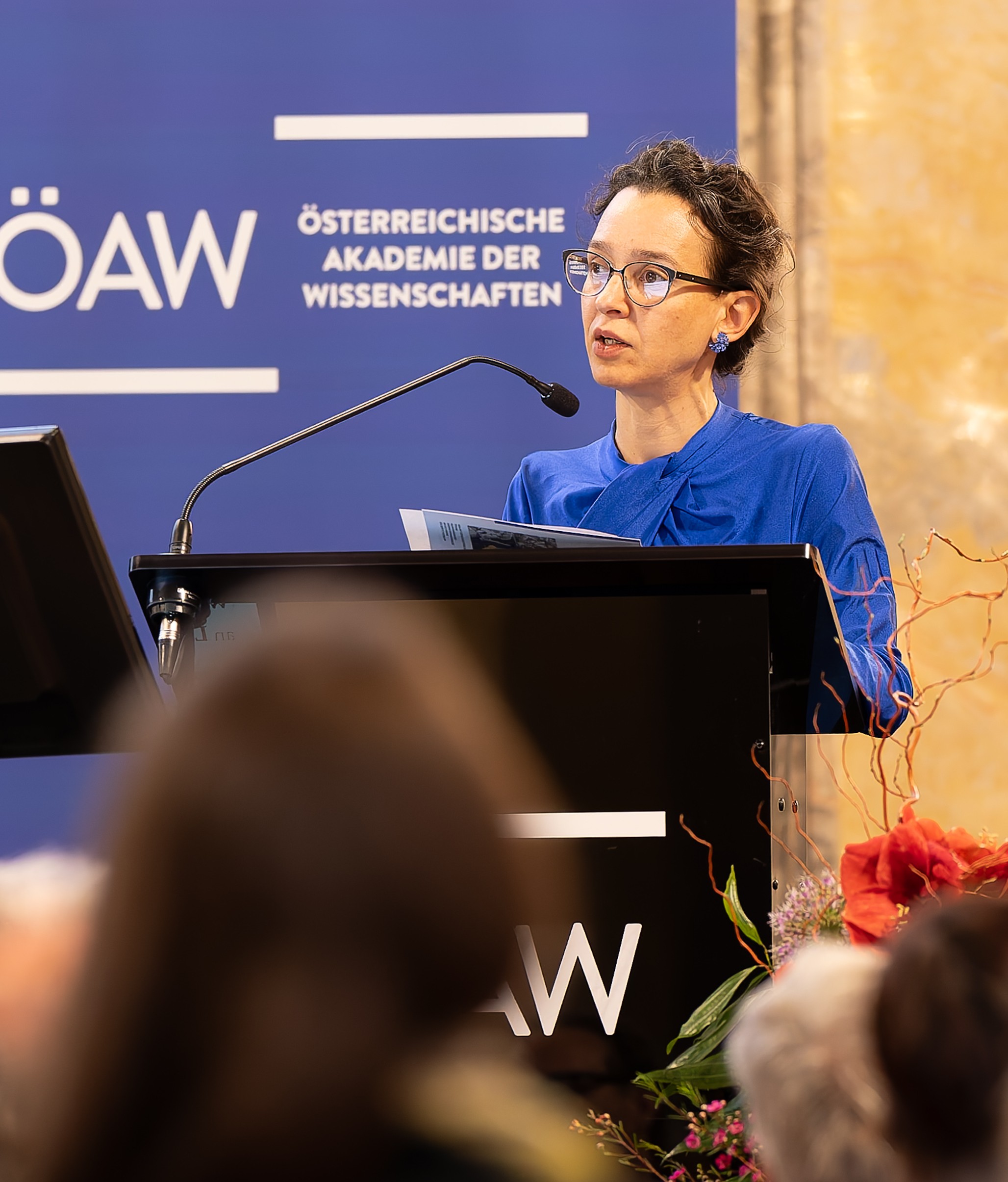
Laura Gianvittorio-Ungar is a postdoctoral researcher at the Austrian Academy of Sciences, specializing in Ancient Legal History and Papyrology . Her work bridges Greek and Roman culture with interdisciplinary approaches to performance, dance, and narrative. Education : Doctorate in Philosophy of Language (University of Palermo/Humboldt University of Berlin); Habilitation in Classical Philology (University of Vienna). Academic Roles : Researcher at Universities of Salzburg, Eichstätt-Ingolstadt, Nottingham, and Heidelberg; Project Manager at the Austrian Archaeological Institute since 2021. Her research focuses on theater forms , genre discourses , and dance in antiquity , exploring how bodily expression shaped tragic and narrative art. She has led FWF projects (Hertha Firnberg and Elise Richter programs) since 2012. Recent publications highlight her expertise in choreonarratives , Senecan tragedy , and fragmentary texts . Key themes include the interplay of movement and storytelling in Greco-Roman contexts. She has edited volumes such as Choreonarratives (Brill) and Choreutika (Fabrizio Serra), contributing to debates on ancient performance and interdisciplinary methodologies . Her work intersects with FWF grants and collaborations across Europe, emphasizing the revival of classical themes in modern scholarship and performance.