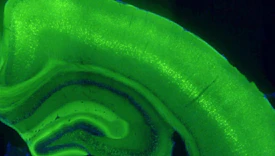
Jessica Cardin is an Associate Professor in the Department of Neurobiology at Yale University. She previously conducted postdoctoral research at the University of Pennsylvania and MIT's McGovern Institute. Her research explores: Functional flexibility in cortical circuits Neural mechanisms of perception and behavior Autism-related disruptions using mouse models Her publications focus on spatiotemporal neural coordination and developmental circuitry, with recent work in Nature Neuroscience and Journal of Neuroscience . Awards include: 2024 SFARI Pilot Award (CDKL5 deficiency disorder) 2018 SFARI Research Award (autism circuit impairments) 2013 SFARI Pilot Award (GABA interneurons in autism) She leads the Cardin Laboratory, investigating cortical dysfunction in neurodevelopmental disorders.
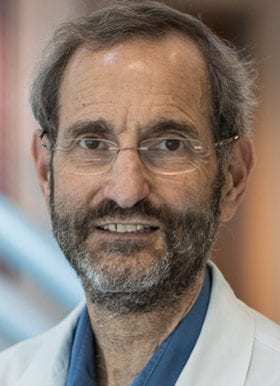
Christopher Patrick Smith, M.D., M.B.A., M.S.S., is an Associate Professor in the Department of Urology at Baylor College of Medicine in Houston, Texas. He maintains dual roles as an academic urologist and Colonel in the U.S. Army Reserve, with deployments supporting Operation Enduring Freedom. Education B.S. - George Washington University M.D. - Northwestern University Medical School MBA - University of Pittsburgh Graduate Certificate - U.S. Army War College Urology Fellowship - University of Pittsburgh Residency & Internship - Baylor College of Medicine Research Focus Dr. Smith's research examines neuro-urological disorders including bladder overactivity, voiding dysfunction, and incontinence mechanisms. His pioneering work focuses on botulinum toxin applications, purinergic signaling pathways, and diabetic bladder plasticity. Clinical investigations emphasize optimizing therapies for refractory urological conditions through randomized trials and evidence-based reviews. Publications Analysis Recent publications (2010-2013) demonstrate consistent focus on neurogenic bladder pathophysiology, botulinum toxin mechanisms, and clinical management of lower urinary tract symptoms. Predominant themes include purinergic receptor modulation, spinal injury adaptations, and evidence-based treatment guidelines for urological conditions. Awards and Honors Rising Star in Urology Award (2008-2013) Paul Zimskind Best Young Investigator Award (2006) VA Career Development Award (2008-2011) Two AUA Annual Meeting Best Poster Awards (2008, 2011) AFUD Scholar (2000-2002) Apple Award for Excellence (2008) Clinical Leadership Dr. Smith leads clinical trials for novel BPH and overactive bladder treatments while developing specialized protocols for urinary retention management in austere environments. His military experience informs innovative field urology techniques.
Joel S. Perlmutter, MD serves as the Elliot H. Stein Family Chair in Neurology at Barnes-Jewish Hospital and holds professorships in Neurology, Radiology, Neuroscience, Physical Therapy, and Occupational Therapy at Washington University School of Medicine. He leads the Section of Movement Disorders within the Department of Neurology and is affiliated with the Roy and Diana Vagelos Division of Biology & Biomedical Sciences, Institute of Clinical and Translational Sciences, and Hope Center for Neurological Disorders. Dr. Perlmutter's research focuses on the pathophysiology, etiology, and treatment of movement disorders including Parkinson disease, dystonia, Tourette's syndrome, essential tremor, and Huntington's disease. His laboratory investigates basal ganglia physiology and pharmacology through innovative approaches combining PET imaging of regional cerebral blood flow, cognitive testing, and quantified movement measures. Key research areas include mechanisms of deep brain stimulation, dementia in Parkinson disease, development of neuroprotective drugs, biomarker validation using nonhuman primate models, and creation of biorepositories for movement disorder research. His extensive publication record (486 research outputs with 27,390 citations) demonstrates leadership in movement disorder research, particularly in Parkinson's disease (100% research focus), PET imaging (39%), Huntington's disease (32%), dystonia (31%), and deep brain stimulation (20%). Recent work emphasizes novel PET radiotracer development, gait analysis across Parkinson's subtypes, and psychiatric comorbidities in movement disorders. Scientific Recognition Top Doctors® designation NIH-funded $3 million grant for tracking neuroinflammation in Parkinson's disease Jansky/Bander Family Fund ($1.1 million over five years) supporting movement disorders fellowships and research Dr. Perlmutter actively mentors PhD/MSTP students and leads the NeuroClinical Research Unit, which supports patient-oriented studies through the Brain, Behavior and Performance Unit of the CTSA. His laboratory maintains active collaborations across multiple institutions and has developed critical resources including animal models of dystonia and advanced PET/MRI methodologies for objective disease measurement.
Dr. Fabio Simoes is an Assistant Professor in Cancer Research within the Clinical and Experimental Medicine department at Brighton and Sussex Medical School (BSMS), part of the University of Sussex. With over a decade of experience in disease modeling and molecular biology, he leads a research laboratory focused on acute myeloid leukaemia (AML) and the bone marrow microenvironment. Dr. Simoes completed his PhD at BSMS in 2017, following earlier degrees including an MSc in Neuroscience from King's College London and a BSc in Biomedical Sciences from Queen Mary University of London. His research journey began with motor neuron disease studies, progressed through osteoarthritis research, and has now focused on hematological malignancies. His current research examines how AML cells remodel the bone marrow microenvironment to promote disease progression and therapy resistance. By employing in vitro co-culture systems, RNA sequencing, and translational in vivo models, his work aims to identify novel therapeutic targets such as CD44 and Focal Adhesion Kinase to overcome cell adhesion-mediated drug resistance. Analysis of his recent publications reveals a strong focus on tumor microenvironment interactions, computational modeling of blood cancers, and translational approaches to improve treatment outcomes. Dr. Simoes currently holds an active research grant from the SUSSEX CANCER FUND FOR TREATMENT AND RESEARCH (2024-2028) focused on characterizing and targeting chemo-resistant AML cells. His laboratory team includes researchers like Sophie Vause and Aleksandra, who joined in late 2024. As an educator, Dr. Simoes serves as an Academic Skills Tutor, delivers Molecular Cell Biology tutorials, and has designed advanced neuroscience workshops for postgraduate students. He supervises multiple research projects and holds Associate Fellowship of the Higher Education Academy. His laboratory, accessible through www.simoes.science, represents a growing research group dedicated to advancing our understanding of AML biology and developing novel therapeutic approaches that target the tumor microenvironment.
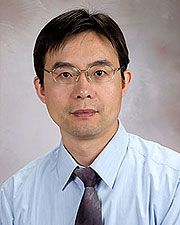
Gang Zhang, MD, PhD, is an Associate Professor in the Department of Neuromuscular Disorders - Research at The University of Texas Health Science Center at Houston. His affiliations include postdoctoral training at Johns Hopkins University and residency at The Second Hospital of Hebei Medical University in China. Dr. Zhang's research centers on neuromuscular pathophysiology, with emphasis on anti-ganglioside antibody-mediated neuropathies, nerve regeneration mechanisms, and therapeutic interventions. Key areas include: Antibody-induced neuronal cytotoxicity RhoA signaling in neurite outgrowth inhibition Erythropoietin-enhanced nerve repair In vitro and in vivo neuropathy modeling His 15 most recent publications (2004-2025) reveal a consistent focus on neuroimmunology and molecular neuroscience. Trends include therapeutic strategies for immune neuropathies, neural repair mechanisms, and the role of autoantibodies in synaptic dysfunction. No awards or active student advisees were listed. No dedicated lab or team details were provided.
Dr. J. Josh Lawrence is a Professor in the Department of Pharmacology and Neuroscience at Texas Tech University Health Sciences Center School of Medicine. His research program focuses on understanding the molecular and cellular mechanisms underlying Alzheimer's disease, with particular emphasis on nutrient-gene interactions and their impact on brain health. Dr. Lawrence's research interests span nutrigenomics, cellular and synaptic physiology of Alzheimer's disease, the role of excitation/inhibition balance in disease states, hippocampal learning and memory circuitry, GABAergic inhibition, cell type specificity of neuromodulation, antioxidant depletion over lifespan, neuroinflammation, and the effects of diet on healthy aging. His work uniquely bridges basic neuroscience with translational applications for neurodegenerative disorders. His recent publications reveal a strong focus on the connections between vitamin metabolism and neurodegeneration, with particular attention to how vitamin A and D homeostasis disruption contributes to Alzheimer's pathogenesis. Dr. Lawrence employs innovative multidisciplinary approaches combining behavioral neuroscience, single-cell transcriptomics, and circuit analysis to uncover novel therapeutic targets. NIH R01 Grant AG071859-01A1 ($1,872,220; 2022-2026): Transcriptional Dysfunction in Dentate Gyrus Cell Types NIH R01 Grant AG073826-01A1 ($3,158,615; 2022-2027): Hippocampal Dentate Gyrus in Aging and Alzheimer's Disease Dr. Lawrence actively mentors graduate students and collaborates with researchers across disciplines to advance understanding of neurodegenerative mechanisms and develop novel interventions for cognitive decline. His lab employs cutting-edge techniques in molecular neuroscience, bioinformatics, and behavioral assessment to address critical questions in Alzheimer's research.
Paulo Jorge da Silva Correia de Sá is a Full Professor of Pharmacology and Neurosciences at the Abel Salazar Institute of Biomedical Sciences (ICBAS), University of Porto, where he serves as Department Director of Immunophysiology and Pharmacology and Vice-Chairman of the Scientific Board. He is also President of the Portuguese Society for Pharmacology and leads the Laboratory of Pharmacology and Neurobiology. Abel Salazar Institute of Biomedical Sciences (ICBAS), University of Porto (current) Portuguese Society for Pharmacology (President since 2013) Unit for Multidisciplinary Investigation in Biomedicine (UMIB) (President 2004-2014) Portuguese Pharmacopeia Commission, INFARMED (member since 2000) Professor Correia-de-Sá's research primarily focuses on purinergic signaling mechanisms, particularly adenosine and ATP receptor functions across multiple physiological systems. His work spans urinary bladder function, cardiovascular pharmacology, bone regeneration, and neuropharmacology. He investigates how purinergic pathways can be targeted for therapeutic interventions in conditions such as lower urinary tract dysfunction, bone aging, and cardiovascular disorders. His laboratory employs a multidisciplinary approach combining molecular, cellular, and physiological techniques to study purinergic signaling across different organ systems, with strong translational potential. His recent publication analysis reveals a consistent focus on purinergic mechanisms across multiple organ systems, with particular emphasis on urinary bladder function, cardiovascular regulation, and neurological applications. The research demonstrates strong translational potential, moving from basic mechanisms to pre-clinical validation in several areas. PFIZER Prize for Young Researchers (1990) UCB Prize in Pharmacology (1996) EPHAR Poster Award at World Congress of Pharmacology (2014) Multiple best poster and oral communication awards at international conferences Dr. Sousa Sampaio Prize for Merit in Andrology (2012) Professor Correia-de-Sá actively supervises multiple PhD students and has completed 17 PhD and 54 MSc supervisions. He leads the Center for Drug Discovery and Innovative Medicines (MedInUP) at the University of Porto, which receives substantial funding from FCT. His laboratory maintains strong collaborations with clinical departments and industry partners, particularly BIAL, facilitating the translation of basic research findings into potential therapeutic applications. The lab culture emphasizes both independent research development and collaborative teamwork, with regular opportunities for students to present at national and international conferences.
Daryl L. Davies, PhD, is Professor of Clinical Pharmacy and Associate Dean for Undergraduate Education at the University of Southern California School of Pharmacy. He oversees undergraduate programs including the Trojan Admission Pre-Pharmacy (TAP) initiative and directs the SC-ACE research program for high school students. His primary appointment is in the Titus Family Department of Clinical Pharmacy. Research Focus Dr. Davies leads interdisciplinary research targeting alcohol use disorders and neurodegenerative diseases. His laboratory investigates: Purinergic receptor mechanisms in alcohol intake regulation Novel therapeutics like ivermectin and dihydromyricetin for addiction Neuroimmune interactions in alcoholism-neurodegeneration comorbidity Gut-brain axis modulation via sodium butyrate High-throughput drug discovery approaches Publication Trends Recent articles (2019-2025) demonstrate three dominant themes: Preclinical validation of anti-alcohol compounds targeting P2X4 receptors and neuroinflammation Pharmaceutical technology innovations for CNS drug delivery Educational research on adaptive curricula in pharmacy training Neuropharmacology accounts for 80% of publications, with consistent focus on translational rodent models. Grants & Leadership Active funding includes: NIH R01AA022448 ($3.2M, 2016-2021): Purinergic regulation of alcohol intake AgeneBio subcontract: GABA-A α5 modulators for cognitive impairment He directs the Alcohol and Brain Research Laboratory and co-leads the USC Addiction Science Institute, collaborating with 15+ investigators across pharmacology, chemistry, and neuroscience.
Beth A. Habecker is a Professor in the Department of Integrative Biosciences at Oregon Health & Science University School of Medicine, where she leads a research laboratory focused on autonomic neuroscience and cardiac neurophysiology. With a PhD in Pharmacology from the University of Washington (1992) and postdoctoral training at Case Western Reserve University and the National Institute for Neurological Disorders and Stroke, she has established herself as a leading researcher in sympathetic neuron-cardiac interactions. Her educational background includes a B.A. from Spring Arbor University (1987) and a Ph.D. in Pharmacology from the University of Washington (1992). Her postdoctoral training in Neuroscience was conducted with Dr. Story Landis at Case Western Reserve University and the National Institute for Neurological Disorders and Stroke. Dr. Habecker's research focuses on autonomic neuron plasticity, particularly sympathetic neuron-target interactions after injury, with special emphasis on myocardial infarction and the resulting changes in cardiac nerves. Her laboratory has made significant contributions to understanding mechanisms involved in axon degeneration, sprouting/regeneration, and alterations in neurotransmitter and peptide production following cardiac injury. Her work has successfully connected these neural changes to altered arrhythmia susceptibility and cardiac function, establishing important links between neural remodeling and clinical outcomes in heart disease. Her research spans multiple disciplines including neurocardiology, cardiovascular physiology, and molecular neuroscience, with particular attention to how sympathetic remodeling affects cardiac function and patient symptoms. Analysis of her recent publications (2021-2025) reveals a consistent focus on sympathetic nervous system remodeling in cardiac disease, with particular emphasis on myocardial infarction, hypertension, and heart failure. Her work bridges basic neuroscience with clinical cardiology, examining both structural and functional changes in cardiac innervation. The research employs diverse methodologies including calcium imaging, proteomics, electrophysiology, and animal models, with increasing attention to sex differences and clinical symptom clusters in heart failure patients. Her collaborative network spans multiple institutions and includes strong partnerships with clinical researchers studying heart failure outcomes. Molecular mechanisms of sympathetic remodeling after cardiac injury Neural contributions to arrhythmia susceptibility Cardiac innervation patterns in disease states Sex differences in autonomic responses Clinical correlations between neural changes and patient symptoms Dr. Habecker maintains active collaborations with clinical researchers studying heart failure outcomes, particularly examining how sympathetic dysfunction relates to symptoms like fatigue and physical frailty. Her laboratory work provides essential mechanistic insights that inform clinical understanding of cardiac autonomic regulation in disease states. While specific grant details aren't provided in the text, her extensive publication record in high-impact journals suggests substantial research funding supporting her laboratory's work. Her research laboratory focuses on sympathetic neuron-cardiac interactions, particularly examining structural and functional changes in cardiac innervation following myocardial infarction and other cardiac injuries. The lab employs a range of techniques from molecular biology to electrophysiology and imaging to understand how neural remodeling contributes to cardiac dysfunction and arrhythmias.
Kirill Martemyanov is a distinguished Professor at the University of Minnesota leading the Martemyanov Laboratory, with extensive research focused on G protein coupled receptor (GPCR) signaling pathways and their critical roles in neuronal systems. His work spans neuroscience, pharmacology, and vision research, with particular emphasis on understanding GPCR signaling in basal ganglia and retinal function. Dr. Martemyanov's research interests center on the fundamental principles regulating GPCR signaling, with specific focus on basal ganglia where G proteins mediate reward behavior and movement coordination, and in the retina where G protein signaling systems enable visual processing. His laboratory investigates Regulator of G protein Signaling (RGS) proteins, which promote G protein inactivation and serve as central control points in GPCR signaling cascades. His multidisciplinary approach combines proteomics, enzyme kinetics, cell culture studies, and behavioral characterization of genetic mouse models. Analysis of his recent publications reveals a strong focus on neurodevelopmental disorders, opioid signaling mechanisms, visual processing, and structural characterization of GPCRs. His work demonstrates consistent innovation in understanding G protein pathways, with increasing emphasis on therapeutic applications for movement disorders, vision pathologies, and addiction. John J. Abel Award 2018 ASPET Cogan Award 2014 McKnight Land-Grant Professorship 2008 European Academy Prize in Biology 1998 Dr. Martemyanov serves as Principal Investigator on multiple NIH-funded grants focusing on GPCR signaling in neuronal systems, opioid receptor mechanisms, and retinal biology. His laboratory employs cutting-edge techniques including cryo-EM, in vivo protein labeling, and genetic mouse models to investigate fundamental signaling mechanisms with therapeutic implications. Current research directions include discovery of novel G protein regulators, protein-protein interactions, and feedback mechanisms in signaling pathways. The Martemyanov Laboratory operates at the intersection of neuroscience and pharmacology, investigating how GPCR signaling pathways influence critical biological processes from cellular reception to synaptic transmission. The lab's research has significant implications for understanding and treating neurological disorders including Parkinson's disease, Huntington's disease, Tourette syndrome, tardive dyskinesia, and various ocular pathologies.