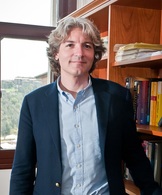
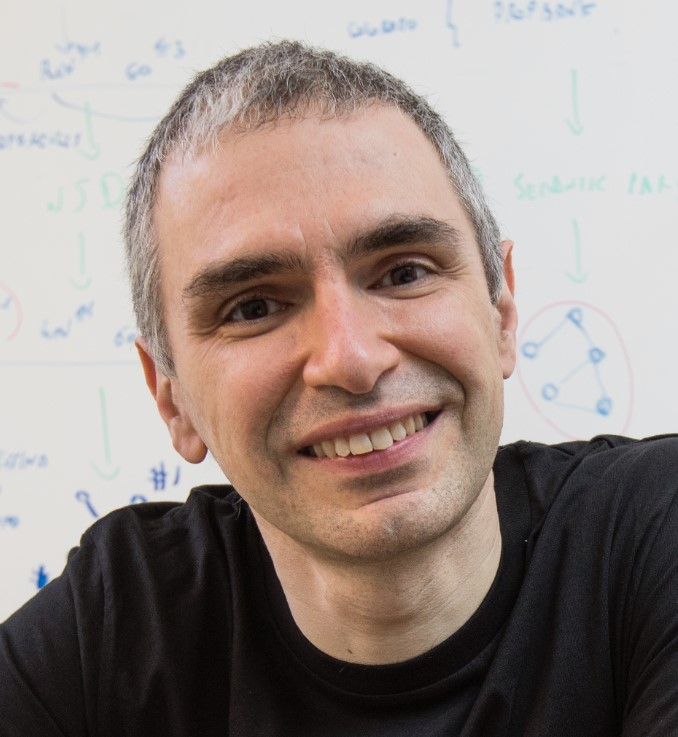
Teo Chung Piaw is the Stephen Riady Professor and Executive Director of the Institute of Operations Research and Analytics (IORA) at the National University of Singapore (NUS). He holds a PhD in Operations Research from MIT (1996) and has held academic positions including Head of Department and Acting Deputy Dean at NUS Business School. His research focuses on optimization under uncertainty, supply chain management, and combinatorial optimization. He serves as a department editor for Management Science and has led strategic initiatives in Singapore's Smart Nation Program. Teo's educational journey includes a Bachelor of Science (Honors) in Mathematics from NUS (1990). His corporate experience spans roles at Unilever, Hewlett Packard, and PSA International. He has received prestigious awards including the NUS Faculty Outstanding Researcher Award (2003, 2006) and has been a Fellow of the Singapore-MIT Alliance Program. His research addresses operational challenges in smart cities, healthcare scheduling, and supply chain resilience. Notable contributions include work on appointment scheduling under patient no-show behavior, disruption risk mitigation in supply chains, and flexible production network design. He has authored over 100 publications and serves on editorial boards of leading journals like Operations Research and Management Science .
Felipe Csaszar is a Professor of Strategy and Chair of the Strategy Department at the University of Michigan's Ross School of Business. His research focuses on decision structures' impact on innovation, financial performance, and social outcomes, with particular attention to cognitive frameworks, organizational processes, and AI's role in decision-making. He holds a PhD and MA from the Wharton School, University of Pennsylvania. Education: PhD in Strategy, University of Pennsylvania (2009) MA in Strategy, University of Pennsylvania (2007) Research Interests: Strategic decision-making under AI integration Cognitive and structural drivers of innovation Organizational decision processes and design Formal modeling and empirical strategy research Editorial Roles: Senior Editor, Strategy Science and Management Science Former Editor, Organization Science Co-editor, Handbook of AI and Strategy Professional Experience: Prior role: Assistant Professor at INSEAD Previous career: CEO of an internet startup and Head of Research at an asset management firm Labs/Teams: Leading the Strategy Science division at INFORMS Co-chair of the SMS Behavioral Strategy division
Stefanos Zenios is Professor at Stanford Graduate School of Business with dual appointments in Entrepreneurship and Operations, Information & Technology . He directs Stanford GSB’s Center for Entrepreneurial Studies and co-directs the Doerr School of Sustainability ’s Program in Ecopreneurship. His Startup Garage course has launched companies like DoorDash while alumni have raised over $3B in venture capital. He co-authored the foundational Biodesign textbook and previously served as Editor-in-Chief of Operations Research . PhD, MIT Operations Research (1996) MA, University of Cambridge (1996) BA, University of Cambridge (1992) Research Focus Dr. Zenios’ work bridges operations research and innovation management , with significant contributions to: Healthcare operations : Administrative cost reduction, organ allocation optimization, and clinical workflow improvements Entrepreneurship : Venture creation frameworks and experiential education Ecopreneurship : Sustainable business model innovation His Precedents Thinking framework (HBR 2025) has gained global recognition for solving systemic inefficiencies. Current research includes the biennial Search Fund Study with Peter Kelly. Scientific Recognition INFORMS Fellow Multiple Best Paper Awards, INFORMS CAREER Award, National Science Foundation (2000) Dhirubhai Ambani Faculty Fellow (2017–2020) George E. Nicholson Award (1997) He has received extensive media coverage in Fast Company , Time Magazine , and Stanford Business . His research has been featured in over 150 press mentions including JAMA , Harvard Business Review , and Health Affairs .
Flavio Vasconcellos Comim is a Full Professor at IQS School of Management in Barcelona, Spain, holding the Chair of Ethics and Christian Thought (intercenter). His research focuses on the intersections of Sustainability, Economics, and Ethics. Fields of Interest : Human Development, Capability Approach, Social Exclusion, Regional Development, AI Ethics, Poverty Stigma (Aporophobia), Sustainable Development, Social Welfare, Justice, and Happiness. Recent research includes publications on youth HDI in Spain (2025), AI bias against the poor (2024), and critiques of Sen's social choice theory (2024). He leads projects like Big data applied to the study of aporophobia and Population Medicine and Sustainable Development collaborations with China. His academic output spans journals like Regional Studies , AI and Society , and Cambridge Journal of Regions, Economy and Society , with keywords spanning Economics, Machine Learning, Human Development, and Social Justice. No formal students or awards are listed in available records.
Dr. Max Kwiek is an Associate Professor in the Department of Economics at the University of Southampton and serves as Deputy Head of School (Education). His research focuses on applied microeconomic theory, political economy, committee design, and auctions. He teaches microeconomics modules, including principles, game theory, and advanced topics. His research interests include voting systems, game theory applications, and experimental economics. Key projects involve analyzing voting mechanisms, intermediary communication, and conclave dynamics. He has supervised PhD student Yanchi Zhang and led a project funded by the British Academy on experimental investigations of conclaves. Externally, he is a committee member of the Virtual Seminars in Economic Theory and Poleconuk Webinars. His work bridges theoretical models with real-world applications in political and economic decision-making processes.
Steven I-Jy Chien serves as Professor and Director of the Transportation Program within the Department of Civil and Environmental Engineering at the New Jersey Institute of Technology (NJIT). His career spans academia, government, and industry with significant contributions to transportation engineering research and practice. His educational credentials include: Ph.D. in Civil and Environmental Engineering from University of Maryland-College Park (1995) M.S. in Civil and Environmental Engineering from University of Maryland-College Park (1991) B.S. in Civil Engineering from Tamkang University (1983) Professor Chien's research focuses on transportation system resilience, sustainable transit operations, and advanced traffic modeling. His work addresses critical challenges in urban rail networks, demand-responsive transit services, and energy-efficient transportation systems. He employs sophisticated computational methods including genetic algorithms, machine learning, and Bayesian approaches to solve complex transportation problems involving network vulnerability, passenger behavior, and infrastructure optimization under uncertainty. Analysis of his recent publications reveals strong emphasis on transportation resilience against cascading failures, sustainable operations for electric transit systems, and pandemic-responsive aviation scheduling. His research spans diverse geographic contexts including major Chinese metropolitan areas and U.S. transportation networks, demonstrating global applicability of his methodologies. His professional recognition includes: 2024 Keynote Speaker at Union-Tech Lecture, National Taiwan Ocean University 2022 Keynote Speaker at International Conference of Chinese Institute of Transportation 2022 Best Poster Award from New Jersey Department of Transportation Professor Chien has secured research funding from federal agencies including the Federal Highway Administration (FHWA) where he contributed to CORSIM traffic simulation software development. His industry experience with China Engineering Consultants Inc. and Information Dynamic Inc. informs his practical approach to transportation challenges. As Transportation Program Director, he oversees curriculum development and industry partnerships that prepare students for transportation sector careers. He maintains active collaboration with transportation agencies globally, particularly through his leadership in the Transportation Program at NJIT which serves as a hub for innovation in urban mobility solutions.
Andrew Postlewaite is the Harry P. Kamen Professor of Economics and Professor of Finance at the University of Pennsylvania's School of Arts and Sciences. He holds dual roles in the Department of Economics and the Ronald O. Perelman Center for Political Science and Economics. As a distinguished academic, he is a member of the American Academy of Arts and Sciences and serves as a director at the National Bureau of Economic Research (NBER). Additionally, he is the founding editor of the American Economic Journal: Microeconomics and a research associate at Penn's Population Studies Center and Institute for Law and Economics. Postlewaite's research focuses on game theory, behavioral economics, and social norms, with contributions to mechanism design, repeated games, and intergenerational transmission of preferences. His work bridges theoretical foundations with applied economic analysis, particularly in areas like consumer behavior, decision-making, and institutional design. He has held visiting positions at institutions including Caltech, Harvard, and Stanford, reflecting his academic prominence. His scholarly contributions include pioneering studies on future-oriented decision-making, interdependent valuations in markets, and equilibrium concepts in repeated games. Recent publications explore topics such as the impact of local media accessibility in the digital age and the welfare implications of consumption fluctuations. His editorial leadership at journals like Econometrica and International Economic Review underscores his influence in shaping economic discourse. Awarded prestigious fellowships and editorial roles, Postlewaite's career exemplifies a blend of rigorous theoretical research and practical applications in economics. His current research trends emphasize behavioral insights and the methodological underpinnings of economic models, reflecting a commitment to advancing both theory and real-world relevance.
Leigh Oakes is Professor of French and Linguistics in the Department of Modern Languages and Cultures within the School of Languages, Linguistics and Film at Queen Mary University of London. He has held progressive academic positions at the institution since 2000, advancing from Lecturer to his current professorship. His international academic background includes a PhD from the University of Melbourne and research at Stockholm University's Centre for Research on Bilingualism. His educational qualifications include a PhD (2001) and BA (Hons) (1996), both from the University of Melbourne. Oakes specializes in language policy and planning, with particular focus on language and national identity in France, Quebec, and Sweden. His research has expanded into linguistic justice debates in political theory, advocating for normative and interdisciplinary approaches to language policy. Oakes' publication trends reveal a consistent focus on ethical dimensions of language policy, with increasing emphasis on pluricentric justice and linguistic integration since 2016. His work bridges sociolinguistics and political philosophy, demonstrating strong interdisciplinary connections between language attitudes, national identity construction, and policy implementation across Francophone contexts. The 2018 co-authored monograph 'Normative Language Policy' represents a significant theoretical contribution to the field. 2008 Pierre Savard Prize for 'Language, Citizenship and Identity in Quebec' Leverhulme Trust Research Project Grant for 'The Ethics of Linguistic Integration' project Co-editor-in-chief of Sociolinguistica: European Journal of Sociolinguistics Co-editor of Multilingual Matters book series Member of editorial boards for Language Policy and Modern Languages Open Oakes actively supervises PhD candidates in sociolinguistic topics, with current research focusing on linguistic integration in Quebec and adaptation among mobile French speakers. His major Leverhulme-funded project 'The Ethics of Linguistic Integration' examines moral implications of language requirements for immigrants across England, Quebec, and Wales. He serves on several international academic committees including the Association internationale des études québécoises and the British Association of Canadian Studies. He leads the interdisciplinary 'Ethics of Linguistic Integration' research team, which combines expertise from applied linguistics, sociolinguistics, and political theory to investigate language integration policies. His work connects with broader university initiatives through Queen Mary's research highways in social justice and global challenges.
Joe Kable, PhD, serves as the Baird Term Associate Professor of Psychology at the University of Pennsylvania, where his research investigates the neurophysiological basis of human decision-making through integrative approaches from experimental economics, cognitive neuroscience, and judgment psychology. His laboratory specializes in fMRI studies examining how subjective value representations guide choices involving immediate versus delayed rewards. Education: B.S. in Chemistry, Emory University PhD in Neuroscience, University of Pennsylvania Dr. Kable's research program centers on neural mechanisms of temporal discounting, risk assessment, and individual differences in choice behavior. His work demonstrates how socioeconomic status, aging, and clinical conditions modulate decision processes, with particular emphasis on hippocampal-prefrontal interactions during value computation. Recent studies reveal how time perception alterations affect neural activity in reward circuits and how social factors influence trust decisions across the lifespan. Analysis of his 15 most recent publications shows a strong methodological focus on fMRI and lesion studies, with growing clinical translation in depression, addiction, and dementia. Key thematic trends include the neural encoding of effort costs in social contexts, structural brain markers for impulsivity, and the dissociable roles of frontal subregions in persistence behaviors. His work consistently bridges basic decision neuroscience with real-world applications in mental health. Scientific Awards: No scientific awards mentioned in source material Dr. Kable leads an active research laboratory at Penn but the source text provides no details about graduate student advising or specific grant funding. His publications indicate collaboration with clinical researchers at the Penn Memory Center, particularly in aging-related decision studies. The laboratory employs multimodal neuroimaging techniques including resting-state fMRI, TMS, and lesion mapping to investigate decision circuits, with recent work extending to computational modeling of value representation and social cognition mechanisms.
Alp Atakan Overview Alp Atakan is a Professor and Head of School in the School of Economics and Finance at Queen Mary University of London. He holds a PhD from Columbia University and previously served as an Assistant Professor at Northwestern University and Associate Professor at Koç University. His research focuses on Microeconomic Theory, Game Theory, Auction Design, and Information Economics. Key contributions include studies on reputation dynamics, search markets, and information aggregation in auctions. Education PhD in Economics (with distinction), Columbia University, 2003 MA in Economics, Columbia University, 2000 MBA, Columbia University, 1997 BS in Economics, University of Pennsylvania, 1993 Research & Grants Recipient of an ERC Consolidator Grant (2016–2021) for 'Market Selection, Frictions, and the Information Content of Prices'. Notable research includes work on bargaining dynamics, price discovery mechanisms, and the role of information asymmetry in auctions. He has published in top journals like Econometrica , Journal of Economic Theory , and American Economic Review . Teaching spans MBA/EMBA courses on managerial economics and microeconomic theory, alongside advanced graduate courses in game theory and dynamic programming. Grants & Projects ERC Consolidator Grant: Market Selection & Price Information (€1,089,000) Tubitak Grants: Sequential Debate (2014–2015) and Auctions & Information (2012–2014) His work bridges theoretical economics with practical market design, emphasizing strategic interactions in decentralized systems.
Jose Apesteguia is an ICREA Research Professor at the Department of Economics and Business, Universitat Pompeu Fabra, Barcelona, Spain. His research focuses on behavioral economics, decision theory, experimental economics, and game theory, with particular emphasis on topics such as behavioral heterogeneity, rationality measures, stochastic choice models, and social preferences. Apesteguia has collaborated extensively with scholars like Miguel A. Ballester and Jörg Oechssler, producing influential work on topics ranging from imitation dynamics to the impact of language on moral decisions. His research integrates theoretical frameworks with experimental methods, exploring how individuals make decisions under uncertainty, time preferences, and social contexts. Key contributions include the development of measures of rationality and welfare, as well as analyses of behavioral adaptation and the role of information in competitive environments. His work frequently bridges economic theory with empirical validation, addressing real-world issues such as rule compliance in public institutions and team performance in organizations. Apesteguia’s publications span top journals including the American Economic Journal: Microeconomics , Journal of Economic Theory , and Econometrica . He teaches advanced courses on bounded rationality and behavioral decision theory at the undergraduate and graduate levels. His research has been applied to fields like finance (e.g., copy trading behavior) and public policy (e.g., promoting compliance in libraries).
Jean C. Oi serves as the William Haas Professor of Chinese Politics in Stanford University's Department of Political Science and holds multiple leadership positions including Senior Fellow at the Freeman Spogli Institute for International Studies, Director of the China Program, and Lee Shau Kee Director of the Stanford Center at Peking University. Professor Oi earned her PhD from the University of Michigan and previously taught at Lehigh University and Harvard University before joining Stanford in 1997. Her research centers on comparative politics with specialized expertise in Chinese political economy and reform processes in transitional systems. She has made seminal contributions to understanding rural politics in China, introducing the influential concept of 'local state corporatism' to describe China's development model in her award-winning book Rural China Takes Off (1999). Her current research examines China's Belt and Road Initiative, fiscal politics and central-local relations, and structural change in China. Professor Oi maintains an active publication record with works spanning four decades, including her most recent 2025 article 'A Perfect Storm: Fiscal Discipline, COVID, and Local Government Debt in China' which analyzes how pandemic-era policies exposed China's fiscal vulnerabilities. Choice Outstanding Academic Title (1999) for Rural China Takes Off Professor Oi leads significant collaborative research initiatives, including directing the Stanford China Program at the Walter H. Shorenstein Asia-Pacific Research Center. Her fieldwork with Chinese scholars has examined rural community organization, public goods provision, and fiscal pressures from rapid urbanization, culminating in works like Challenges in the Process of China's Urbanization (2017).
Roberto Navigli is a Full Professor in the Department of Computer, Control and Management Engineering at Sapienza University of Rome, where he leads the Sapienza NLP Group. He has held academic positions at Sapienza since 2007, progressing from Researcher to Associate Professor, and now Full Professor. Navigli is internationally recognized for his groundbreaking work in multilingual natural language processing and computational semantics. His research spans multiple areas within Natural Language Processing, with a particular focus on multilinguality , lexical semantics (Word Sense Disambiguation and induction), sentence-level semantics (Semantic Role Labeling and Semantic Parsing), and Large Language Models . As the leader of the Minerva LLM project, he pioneered the development of the first pretrained LLM in Italian. His creation of BabelNet, the largest multilingual encyclopedic computational dictionary covering 271 languages and about 14 million concepts, represents a landmark achievement in computational linguistics. Professor Navigli's recent publications demonstrate a strong focus on advancing multilingual capabilities of language models, addressing challenges in semantic understanding across languages, and developing robust evaluation frameworks. His work on Italian LLM optimization, lexical ambiguity in machine translation, and cross-lingual safety gaps reflects his commitment to building more accurate and reliable language technologies that work effectively across diverse linguistic contexts. AAAI Fellow (2025) EurAI Fellow (2024) ELLIS Fellow (2024) ACL Fellow (2023) Outstanding Paper Awards at ACL 2024, ACL 2023, and NAACL 2021 Best Resource Paper Award at ACL 2022 Prominent Paper Awards from the Artificial Intelligence Journal (2023, 2017) META Prize 2015 for BabelNet Professor Navigli has successfully secured substantial research funding, including two prestigious ERC Grants (MultiJEDI ERC Starting Grant 2010-2016 and MOUSSE ERC Consolidator Grant 2017-2023, totaling around 3 million euros), PI of PRIN 2017 and PRIN 2020 projects (overall 1.4 million euros), and a Google Focused Research Award (around 300k$). He has mentored over 30 PhD students, many of whom have gone on to successful careers in academia and industry. His leadership extends to major international conferences, serving as General Chair of ACL 2025 and Program Co-Chair of ACL-IJCNLP 2021. As the director of the Sapienza NLP Group and co-leader of the Transversal Project on Large Language/Multimodal Models in the FAIR (Future Artificial Intelligence Research) project, Professor Navigli oversees a vibrant research ecosystem focused on advancing the state-of-the-art in natural language understanding across languages. His spinoff company, Babelscape, translates academic research into practical applications for industry.
Kevin Manaugh is an Associate Professor at McGill University, specializing in Urban Planning with a focus on sustainable transportation and spatial justice. His research examines how decision-making processes in urban development balance environmental, economic, and social equity goals, particularly through transport systems. He holds a PhD in Urban Planning from McGill University (2013). His key research interests include integrating social equity into land use policies, analyzing accessibility impacts on socioeconomically diverse populations, and studying behavior change related to sustainable transportation. Current projects explore equitable transit accessibility, responses to local mobility policies, and health/well-being effects of sustainable transport choices. Manaugh has published extensively on transportation equity, urban form analysis, and GIS applications. His work bridges theoretical frameworks with practical policy implementation, emphasizing participatory approaches to urban planning. Notable contributions include studies on pandemic street reallocation equity and cycling infrastructure prioritization strategies. His research has been supported by interdisciplinary collaborations and applied to Canadian urban contexts. Despite prolific output, Manaugh maintains an active engagement with public discourse on urban mobility challenges and equitable urban futures.
Christopher J. Palmer is an Associate Professor of Finance at the MIT Sloan School of Management, specializing in financial decision-making, credit markets, and policy interventions. His research focuses on how individuals and institutions respond to economic upheavals in areas like bankruptcy, retirement savings, and real estate. He holds a PhD in Economics from MIT and a BA in Economics and Mathematics from Brigham Young University. Palmer’s work has been published in top journals such as the American Economic Review , Journal of Finance , and Review of Financial Studies . He explores topics including racial disparities in bankruptcy outcomes, consumer payment behavior, and the effects of quantitative easing. His research is supported by affiliations with the National Bureau of Economic Research (NBER) and the Jameel Poverty Action Lab (J-PAL). Key honors include the 2022 Jamieson Prize and the 2019 Society for Financial Studies Best Paper Award. Palmer has contributed to public debates on policy issues like rent control and retirement savings through media outlets such as The New York Times , Bloomberg , and Vox .