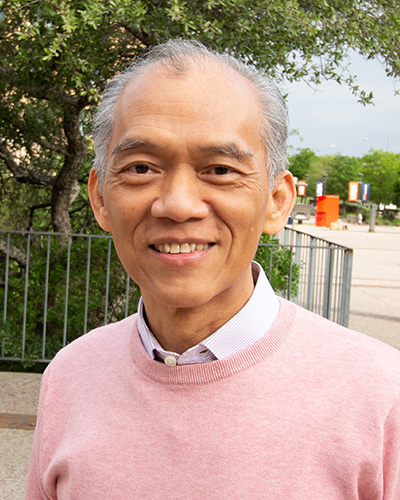
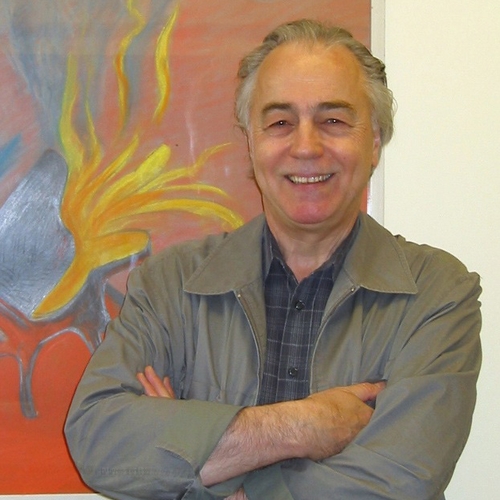
Lisa Gilman is a Professor of Folklore and English at George Mason University, and the outgoing Editor-in-Chief of the Journal of American Folklore . Her research focuses on refugee arts initiatives, intangible cultural heritage, and the intersections of performance, gender, and politics in global contexts. She has conducted extensive fieldwork in Malawi, Turkey, France, and the U.S., emphasizing marginalized communities. Her academic journey includes a PhD in Folklore from Indiana University, followed by roles at the University of Oregon and Mzuzu University (Malawi). Key awards include the Fulbright Teaching/Research Award and Rippey Innovative Teaching Award. She produced the documentary Grounds for Resistance , exploring anti-war activism among U.S. veterans. Her current project, the Dzaleka Art Project , collaborates with refugees in Malawi to document cultural creativity and advocate for visibility. This work has been featured in the Wilson Center and Smithsonian publications. Gilman teaches courses on public humanities, ethnographic fieldwork, and digital storytelling, integrating community engagement with academic rigor. Her publications span topics from African expressive culture to UNESCO policy impacts, with notable books including My Music, My War and co-edited volumes like Africa Every Day . Grants include funding from the Woodrow Wilson Center and the National Endowment for the Arts.
Nathan Martin is an Associate Professor of Music Theory at the University of Michigan, School of Music, Theatre & Dance. He joined in 2015 after postdoctoral fellowships at Columbia, Harvard, Katholieke Universiteit Leuven, Hochschule für Musik Freiburg, and Yale. He holds a PhD from McGill University’s Schulich School of Music (2009). His research focuses on the history of music theory and musical form analysis, particularly the works of Jean-Philippe Rameau and their reception among Enlightenment thinkers like Jean-Jacques Rousseau. He integrates intellectual history with practical analytical methods, emphasizing both contextual and emic perspectives. Recent interests include adapting empirical social science and linguistics methods to study musical form. Key publications include articles on Rameau’s harmonic concepts, Rousseau’s musical writings, and global music theory history. His 2014 article on Rameau’s supposition/suspension theories earned the Society for Music Theory’s Outstanding Publication Award. He co-edited Formal Functions in Perspective (2015) and served as co-editor of Music Theory & Analysis until 2019. Professional highlights include the Edward T. Cone Membership at the Institute for Advanced Study (2018–2019) and a 2023 visiting researcher role at the Max Planck Institute for Empirical Aesthetics. His work bridges historical analysis with contemporary empirical approaches, fostering interdisciplinary dialogue in music theory.
Jianjing Kuang is an Associate Professor of Linguistics at the University of Pennsylvania, affiliated with the School of Arts and Sciences. As Director of the Penn Phonetics Laboratory, they lead research in phonetics, laboratory phonology, and tonal language studies. Kuang holds a Ph.D. from UCLA (2013) and specializes in the interplay between production and perception in speech, particularly focusing on tonal systems, prosody, and cross-linguistic fieldwork. Their work integrates behavioral experiments, corpus studies, and computational modeling to explore phonological contrasts, voice quality, and sound change. Key affiliations include MindCORE and the Center for East Asian Studies. Research interests include multidimensional cues in tone processing, glottal articulations, mapping production-perception relationships, and prosodic sentence processing. Kuang has conducted fieldwork on languages such as Yi, Q’anjob’al, and Mandarin. Their studies address topics like tonal splitting in Yi, cue-changing in Korean stops, and prosodic patterns in Mayan languages. Recent work explores voice quality’s role in pitch perception and prosodic boundary detection. Awards and grants are not explicitly listed, but Kuang’s extensive publications (over 50 peer-reviewed papers) reflect sustained academic impact. They advise graduate students in phonetics and phonology, with active collaborations in computational linguistics and speech technology. The Penn Phonetics Laboratory, under Kuang’s direction, emphasizes interdisciplinary research bridging experimental and theoretical phonetics.
Ksana Blank is a Senior Lecturer at Princeton University’s Department of Slavic Languages and Literatures. She coordinates the Russian Language Program and directs the Princeton-in-Petersburg Program, fostering academic exchange and interdisciplinary research. With a PhD in Russian Literature (Columbia University, 1997) and a BA in French Philology (St. Petersburg State University, 1979), her academic career spans over two decades at Princeton, preceded by teaching roles at Hunter College and Middlebury College Russian Summer School. Education: PhD, Russian Literature, Columbia University (1997) BA, French Philology, St. Petersburg State University (1979) Her research centers on Russian literature, emphasizing stylistic analysis and interdisciplinary connections with music, visual arts, folklore, and religious philosophy. Notable works include studies on Dostoevsky’s dialectics, Gogol’s The Nose , and the interplay between Russian modernism and Western art movements. She has authored multiple books and articles, many translated into Russian, and has published in academic journals across Russia, Europe, and China. Recent publications explore Dostoevsky’s paradoxes, Gogol’s linguistic innovation, and the intersection of Russian literature with music (Shostakovich), art (Malevich), and philosophy. Her 2023 book Парадоксы классики expands traditional interpretations of classic works through interdisciplinary lenses, while her 2021 The Nose guide deciphers Gogol’s wordplay and its narrative function. Earlier works address Tolstoy’s spiritual crisis and Bakhtinian dialogism in Russian literary theory. While no scientific awards are listed, her contributions to pedagogy include advanced Russian language courses and graduate-level Tolstoy studies. She currently works on Leo Tolstoy’s The Prisoner of the Caucasus and teaches courses on Russian literature, spirituality, and translation.
Paul Taele is an Instructional Assistant Professor and Deputy Lab Director in the Sketch Recognition Lab at Texas A&M University's Department of Computer Science & Engineering. He holds a Ph.D. (2019), M.S. (2010), and dual B.S. degrees in Computer Science and Mathematics from the University of Texas at Austin (2006). His research focuses on sketch recognition, haptics, and intelligent interfaces for education and accessibility, with notable work in mid-air gesture recognition, educational sketching tools, and assistive technologies for disabilities. He has contributed to projects like Kanji Workbook , Hashigo , and HaptiMoto , and has published over 50 peer-reviewed articles across venues like CHI, IUI, and AAAI. Taele has received awards including the NSF Student Travel Grant (2014) and Ford Foundation Honorable Mention (2015). He teaches courses in capstone design, programming, and sketch recognition, and mentors students across all academic levels through strict eligibility criteria for research collaborations. Education : Ph.D. Computer Science, Texas A&M University (2019) M.S. Computer Science, Texas A&M University (2010) B.S. Computer Science & Mathematics, University of Texas at Austin (2006) Concentration in Mandarin Chinese, National Chengchi University (2007) Research Interests : Taele's work bridges HCI and AI to create accessible educational interfaces. His projects emphasize: Sketch Recognition : Developing algorithms for mid-air gestures, children's developmental assessments, and language learning Accessibility : Haptic systems for visually impaired learners and algebra education Educational Tech : Intelligent tutoring systems for music, math, and East Asian languages Awards & Grants : EAAI-20 Travel Grant (2020) Ford Foundation Dissertation Honorable Mention (2015) NSF East Asia-Pacific Summer Institutes (2013, 2012) Royce E. Wisenbaker Fellowship (2009) Lab & Teams : Director of the Sketch Recognition Lab (SRL) and collaborator with global institutions like Singapore Management University and National Taiwan University. Active in organizing workshops like SketchRec at IUI conferences.
University of California, Los AngelesUnited States
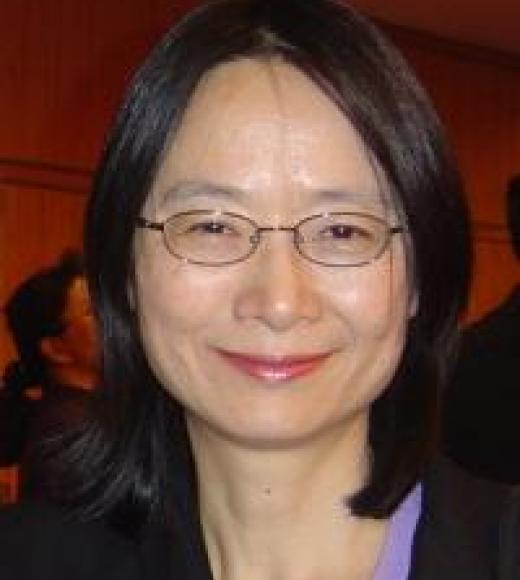
Helen Rees is Professor of Ethnomusicology at UCLA and Director of the World Music Center, specializing in Chinese musical traditions with emphasis on southwest China's ethnic minorities, ritual practices, and intellectual property frameworks within intangible cultural heritage policies. Her academic foundation includes: B.A. in Chinese, Oxford University, 1987 M.A. in Chinese, Oxford University, 1991 Ph.D. in Music, University of Pittsburgh, 1994 Diploma in flute teaching, Royal College of Music, London Diploma in baroque flute performance, Trinity College, London Diploma in recorder teaching and performance, Trinity College, London Rees's research integrates fieldwork from southwest China and Shanghai to examine tourism's impact on musical traditions, organology (instrument studies), and transnational transmission of Asian musics. Recent scholarship critically engages East Asia's intangible cultural heritage policies and material culture frameworks, reflecting deep interdisciplinary connections between musicology, anthropology, and legal studies. Her publication trajectory reveals consistent focus on Naxi musical traditions and evolving methodological approaches—from historical analysis in Echoes of History (2000) to contemporary multimedia projects like the award-winning documentary Playing the Flute in Shanghai (2021) and the cross-cultural edited volume Instrumental Lives (2024), demonstrating expanding scope from regional studies to pan-Asian material culture networks. Through the World Music Center, Rees bridges academic research and public engagement by facilitating international cultural exchanges at venues including the Smithsonian Folklife Festival, while maintaining active performance practice in Chinese flutes and recorder as integral to her scholarly methodology.
Naomi Rogers, Ph.D. (She/Her) is Professor of the History of Medicine in the Section of the History of Medicine and the Program in the History of Science and Medicine at Yale University. She holds courtesy appointments in the History Department and the Women's, Gender and Sexuality Studies Program, and serves on Yale's Dean's Advisory Council for LGBTQI Affairs. Professor Rogers teaches undergraduate, graduate, and medical students, regularly lecturing on the history of AIDS, reproduction, health economics, eugenics, nutrition, disability, and health activism. Professor Rogers' educational background includes: PhD in History from University of Pennsylvania (1986) MA from University of Pennsylvania (1986) BA in Music from Melbourne University (1980) BA with Honors from Melbourne University (1979) Her research focuses on 20th and 21st century history of medicine with emphasis on health inequities and social justice. Professor Rogers' historical interests span gender and health, disease and public health, disability studies, feminism, alternative medicine, health policy, and health activism. Her work critically examines the intersection of medical practices with social movements, particularly how marginalized communities have challenged medical orthodoxy throughout American history. She has published extensively in journals such as American Journal of Public Health, Bulletin of the History of Medicine, Journal of Medical Humanities, Radical History Review, Social History of Medicine, and Women and Health. Professor Rogers' recent scholarship demonstrates a consistent focus on the historical dimensions of contemporary health issues, particularly vaccine politics, abortion history, and community health activism. Her publications reveal patterns of resistance to medical authority, the role of race and gender in shaping health outcomes, and the historical roots of current health justice movements. Her work bridges academic history with public engagement, as evidenced by her frequent media commentary on COVID-19 and other health issues in outlets including BBC Radio, CNN, Huffington Post, National Public Radio, New York Times, Wall Street Journal, and Washington Post. Among her notable recognitions: AAHN's Lavinia L. Dock Award for Exemplary Historical Research for 'Polio Wars: Sister Kenny and the Golden Age of American Medicine' (2014) Presenter of the AAHM's Garrison Lecture: 'Radical Visions of American Medicine: Politics and Activism in the History of Medicine' (2017) Professor Rogers has been actively involved in academic leadership and mentoring. She has served as Director of Graduate Studies for the 2022-23 academic year, Chair of the Women's Faculty Forum, and Liaison to the Committee on Status of Women in Medicine. Her service extends to editorial boards including the Journal of the History of Medicine and Allied Sciences since 2018. She has also contributed to public understanding of medicine through consultations for documentaries including 'The Polio Crusade' (PBS), 'On the Basis of Sex' (Focus Features), and 'War on Science' (in process). Currently, Professor Rogers serves on the Medical School's OBGYN 'Dobbs' Sessions Planning Committee, which has organized webinars for the Yale community, and was co-organizer of the history-themed session 'Rooted in History: Abortion, Law and American Health Care.' She is working on her book project 'Health Radicalism and the Humanization of American Medicine' (under contract with Oxford), examining critics of medical orthodoxy since 1945 including civil rights, consumer, and feminist activists. She also conducts ongoing research on antisemitism in American medicine in the decades before and after World War II.
Jennifer C. Hsieh is an Assistant Professor of Anthropology at the University of Michigan, affiliated with the Lieberthal-Rogel Center for Chinese Studies. Her research investigates sensory practices in institutional and technological settings, focusing on urban East Asia. She holds a PhD from Stanford University (2017), MA from Columbia University (2009), and BA from Harvard College (2007, magna cum laude). Her interdisciplinary work combines ethnography, history, and experimental methods (e.g., audio recordings, GIS) to explore multisensory social configurations. Her current book project, From Festival to Decibel: Making Noise in Urban Taiwan , examines how noise becomes a regulatory object entangled with citizenship and geopolitical belonging. She has held fellowships at institutions including the Max Planck Institute for the History of Science and Harvard’s Fairbank Center. Research interests include sensory studies, science/technology studies, urban environments, and East Asian cultural politics. She founded the Sensory & Technology Lab to explore creative anthropological methods, hosting events like the Voices of the Rainforest cinema concert with Steven Feld. Awards: SSRC International Dissertation Fellowship, Wenner-Gren Fieldwork Award Teaching: Courses on sound, music, and noise; emphasizes experimental methods and sensory ethnography. Lab: Sensory & Technology Lab fosters collaborative research in film, music, and media.
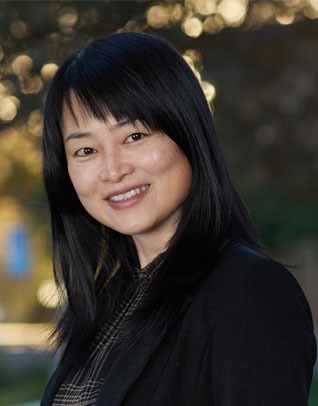
Xiaomei Chen is a Professor of Chinese Literature at the University of California, Davis, affiliated with the Comparative Literature, Performance Studies, Cultural Studies, and CATS (Cinematic and Technological Studies) programs. Her research focuses on modern Chinese literature, theater, cultural studies, and performance studies, with a particular emphasis on revolutionary propaganda, postsocialist cultural reconfigurations, and diasporic narratives. Education: She holds a Ph.D. in Comparative Literature from Indiana University, an M.A. in English Literature from Brigham Young University, and a B.A. in English (equivalent) from Beijing Institute of Foreign Languages. Research Interests : Modern Chinese literature and drama Revolutionary theater and propaganda Women’s literature and feminist critique Cross-cultural performance and comparative literature Postsocialist cultural studies Publications include seminal works such as Staging Chinese Revolution: Theater, Film and the Afterlives of Propaganda (2016), Occidentalism: A Theory of Counter-discourse in Post-Mao China (1995), and edited volumes on modern Chinese drama and cultural studies. Her articles critically examine themes like revolutionary narratives, diasporic identities, and the intersection of theater with political discourse. She has taught courses on modern Chinese literature, film, and drama in English translation, emphasizing cultural analysis and transnational perspectives. Her work bridges historical and contemporary studies, offering insights into China’s evolving cultural landscape.
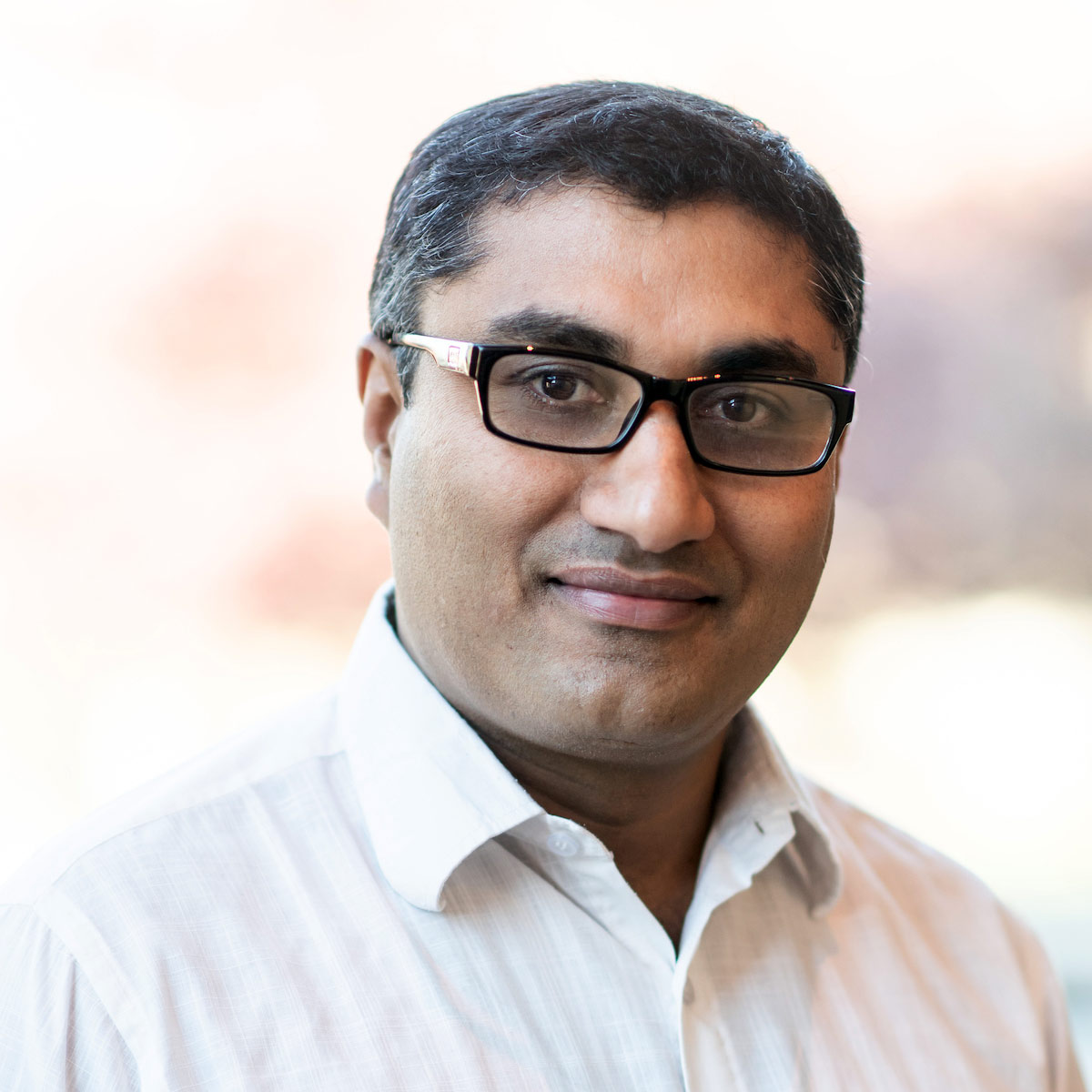
Bal Krishna Sharma is Associate Professor of Applied Linguistics at the University of Idaho's College of Letters, Arts and Social Sciences, with affiliate status at the Habib Institute for Asian Studies. His scholarship examines language globalization across education, tourism, and digital media contexts. Education credentials: Ph.D. in Second Language Studies, University of Hawaii at Manoa (2016) M.A. in Second Language Studies, University of Hawaii at Manoa (2011) M.Ed. in English Education, Tribhuvan University (2004) B.Ed. in English Education, Tribhuvan University (2001) Research explores: Neoliberal influences on language education Intercultural communication in tourism Translingual practices in digital spaces Multilingual policy in South Asia Recent publications analyze linguistic landscapes in pandemic communication, multilingual STEM education, and social media discourse in Nepal. His work integrates sociolinguistic theory with critical analysis of globalization. Teaches courses including Sociolinguistics, Intercultural Communication, and History of the English Language.
Sijia Yao is an Assistant Professor of Chinese Language and Culture at Soka University of America. She holds a Ph.D. in Comparative Literature from Purdue University. Her research focuses on comparative and Sinophone literature/media studies, love/affect studies, critical theory, and post-socialism. Yao teaches courses such as CHI 401 (Cultural History of China) and Learning Cluster 200 (Sinophone Cinema). Her scholarship includes the book *Cosmopolitan Love: Utopian Vision in D.H. Lawrence and Eileen Chang* (2023) and peer-reviewed articles analyzing Chinese literature, film, and cultural phenomena. Yao has received grants for Chinese language education research and teaching excellence awards at the University of Nebraska-Lincoln. She has reviewed works in Sinophone studies, including Lily Wong’s *Transpacific Attachments*.
Huali Yuan is an Instructor at Dharma Realm Buddhist University (DRBU) since 2015, holding a Ph.D. in environmental engineering. Her academic focus lies at the intersection of liberal arts education and traditional Chinese studies. She teaches courses in Chinese language, science, and Chinese Classics I-III. Education: Ph.D. in Environmental Engineering Her research interests deeply explore Buddhist texts such as the Avatamsaka Sutra and Surangama Sutra, alongside Chinese classical literature like the Yijing (Book of Changes). Recently, she has developed a fascination with the philosophical and aesthetic dimensions of the Yijing. Beyond academia, she enjoys nature, cooking, and music.
James A. Millward is a Professor of Inter-societal History at Georgetown University's Edmund A. Walsh School of Foreign Service and Department of History. He holds a Ph.D. in History from Stanford University (1993), an MA from the School of Oriental and African Studies (University of London, 1985), and a BA in East Asian Languages and Civilizations from Harvard (1983). Millward specializes in Qing imperial history, the Silk Road, Xinjiang studies, and cross-cultural musical exchanges across Eurasia. Research Interests: His work critically examines Sinicization narratives, the Qing tribute system, and the impact of colonial historiography on contemporary China's ethnic policies. He also explores musical instrument diffusion along the Silk Road, comparing lutes like the pipa and oud. Publications: Notable works include Eurasian Crossroads: A History of Xinjiang (2007, 2021), The Silk Road: A Very Short Introduction (2013), and chapters in edited volumes analyzing Qing multiculturalism and cultural assimilation frameworks. Academic Leadership: As former president of the Central Eurasian Studies Society (2010) and contributor to the International Studies Association award-winning Culture and Order in World Politics (2019), Millward bridges historical analysis with modern political discourse. Media Engagement: A frequent contributor to The New York Times , Washington Post , and international media, he provides expert commentary on Xinjiang, Uyghur issues, and China-West relations. His current projects include a study of lute cultural exchange and the book Decolonizing History in China , challenging exceptionalist narratives in mainland historiography.
Wing Chung Ng is Professor and Department Chair in the History Department at the University of Texas at San Antonio (UTSA), within the College of Liberal and Fine Arts. A cultural and social historian specializing in Chinese migration and traditional Chinese opera, he teaches courses on Chinese and Japanese history as well as the Chinese diaspora. Dr. Ng's research focuses on Modern China, East Asia, and Migration History, with particular expertise in Chinese diaspora communities and Cantonese opera preservation. His scholarly work examines how Chinese communities maintain cultural identity while adapting to new environments across the Pacific, analyzing the interplay between traditional cultural practices and modern social transformations. His publication record reveals a consistent scholarly trajectory examining Chinese cultural transmission across borders. Recent works include analyses of Kunqu opera in the 21st century and historical soundscapes of Sino-Western encounters, building on his foundational research on Cantonese opera and Chinese communities in North America. His interdisciplinary approach spans cultural history, migration studies, and Asian American studies. Dr. Ng has received significant scholarly recognition: Fulbright Scholar (2012) from the United States Department of State Faculty Research Award (2004) from the National Endowment for the Humanities National Humanities Center Fellow (1996) His research has been supported by substantial grants including $5,000 for 'Connecting Worlds: Master Wong Toa's Trans-Pacific Life and Career 1914-2015' (2020-2021) and $40,000 for 'Local Theater, Transnational Arena: A New Social History of Cantonese Opera, 1860-1945' (2004-2005). He was previously a Commonwealth Scholar at UBC and has received support from the Chiang Ching-kuo Foundation and NEH. Most recently, he served as a Fulbright Scholar at Hong Kong Baptist University. Currently, Dr. Ng is working on a centennial biography of Master Wong Toa (1914-2015) to study his life and music across early 20th century South China, Cold War Hong Kong, post-exclusion era Chinatown Vancouver, multicultural Canada, and the age of China's rise.
Guerino Mazzola is a Professor of Creativity, Improvisation, and Mathematical Music Theory at the School of Music, University of Minnesota. His academic career includes a PhD in Mathematics from Zurich University and postdoctoral work at Paris-Sud and Rome. He has been a key figure in developing mathematical music theory since 1980, authoring influential books such as The Topos of Music (2002) and Cool Math for Hot Music (2016). Education: PhD in Mathematics (Zurich University), Habilitation in Algebraic Geometry (1980), and Computational Sciences (1993). Research Interests: Mathematical foundations of music, gesture theory, performance analysis, computational musicology, and interdisciplinary creativity. Notable contributions include the Rubato software for performance analysis and the development of gesture theory applied to free jazz. He has received awards such as the Mexican Mathematical Society Medal (2000) and has been a visiting professor at prestigious institutions like the École Normale Supérieure in Paris. Teaching spans advanced courses on gesture theory, performance science, and music informatics, with a focus on bridging mathematical rigor and artistic creativity.