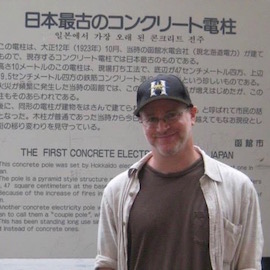
Harry Miller is a faculty member in the Department of History at the University of South Alabama since 2002. He holds a Ph.D. from Columbia University and specializes in Ming and Qing dynasty history, East Asian intellectual history, and cultural narratives. B.A., Wesleyan University (1988) M.A., Columbia University Ph.D., Columbia University (2001) His research focuses on state-gentry dynamics, dynastic transitions, and the interplay between historical interpretation and literary expression in early modern China. He has authored books on Ming-Qing political conflicts and translated classical Chinese texts, while currently crafting a historical novel set in 17th-century China. Publications reflect expertise in Ming-Qing intellectual history, factional politics, and cross-cultural narratives. He oversees the USA in Japan study abroad program and teaches courses spanning Asian civilization, film, and specialized seminars on China, Japan, and democratic transitions.
Dr. Juliane Proelss serves as Associate Professor of Finance and Jacques Ménard-BMO Professor in Capital Markets at Concordia University's John Molson School of Business. Her research spans corporate finance, sustainable finance, AI applications in financial markets, and cryptocurrency systems, with expertise in alternative investments, risk management, and Chinese capital markets. She earned her doctorate from the European Business School (EBS), a postgraduate commerce diploma from Lincoln University (New Zealand), and business administration studies at Katholische Universität Eichstaett-Ingolstadt. Prior academic roles include professor of business administration at Trier University of Applied Sciences, following industry experience in Santander Consumer Finance's Risk Management Department. Her publication record features high-impact work in the Journal of Corporate Finance, Strategic Management Journal, and European Financial Management. Recent research demonstrates increasing focus on ESG integration in digital assets, SPAC market dynamics, and AI-driven financial innovation, while maintaining strong contributions to cryptocurrency analysis and sustainable finance frameworks. Dr. Proelss has secured competitive funding including CAD 74,674 from SSHRC (2025-2028) as principal investigator for digital asset pricing research, CAD 148,500 from Autorité des Marchés Financiers (2016-2019) for corporate fraud studies, and CAD 47,126 from FRQ-SC for China innovation research. She co-founded the annual AI in Finance Conference and serves as Associate Editor for the Journal of Sustainable Finance & Investment, actively bridging academic research with industry applications in emerging finance domains.
Mesut Hakkı Caşın is a distinguished Professor at Yeditepe University's Faculty of Law, Department of Public Law and Department of International Law. He also holds positions at Istinye University's Faculty of Economics, Administrative and Social Sciences, Department of International Relations, and Özyeğin University's Faculty of Law. With a career spanning over three decades, Professor Caşın has established himself as a leading expert in international relations, international law, Turkish foreign policy, and security studies. Professor Caşın received his education at prestigious Turkish institutions: PhD (1988-1994) from Istanbul University, Institute of Social Sciences, with a thesis on "International security strategies and disarmament in the contemporary world" Master's Degree (1983-1986) from Gazi University, Faculty of Law, Department of Public Law, with a thesis on "Approach to Expropriation Law in the light of new regulations in the legislation" Undergraduate degree (1977-1983) from Istanbul University, Faculty of Law Professor Caşın's research focuses on the complex intersections of international relations, law, and security. His work spans historical analyses of global conflicts, contemporary geopolitical challenges, and forward-looking assessments of emerging security threats. He has made significant contributions to understanding Turkish foreign policy, Russian politics, energy security, and the evolving nature of warfare in the 21st century. His research is characterized by its interdisciplinary approach, combining historical perspective with policy-relevant analysis. His recent publications reveal a keen interest in contemporary security challenges, including the Russia-Ukraine war, nuclear proliferation, artificial intelligence in warfare, space militarization, and hybrid warfare tactics. Professor Caşın has also maintained a strong focus on regional issues, particularly concerning the Mediterranean, Black Sea, and Middle Eastern security dynamics. His work often bridges historical analysis with current policy challenges, providing valuable context for understanding today's geopolitical landscape. Professor Caşın has supervised over 60 master's theses and 8 doctoral dissertations on topics ranging from Turkish foreign policy to Russian geopolitical strategies, energy security, and international law. His students have pursued research on diverse subjects including NATO's evolution, Chinese foreign policy, Middle Eastern conflicts, and maritime security issues. He has also been involved in NATO Advanced Research projects on critical energy infrastructure protection and strategic military partnerships.
Allison R. Miller is Associate Professor of Art History at Southwestern University, where she specializes in early Chinese art and archaeology. Her work bridges visual culture, political history, and materiality, with a focus on bronzes, court art, and the intellectual contexts of artistic production in ancient China. Education: Ph.D., Harvard University, 2011 B.A., University of Chicago, 2003 Research Interests: Her scholarly work centers on the intersection of form, materiality, and political meaning in early Chinese art. She investigates how visual forms—from bronzes to tombs—reflect and shape political ideologies, imperial identity, and aesthetic values. Her research spans narrative art, color history, and the archaeology of early imperial China , with a particular focus on the Han dynasty. Miller's publications explore the polychromy of ancient bronzes , the symbolism of jade in imperial policy , and the architectural rhetoric of imperial tombs , revealing how art was used as a tool of governance and identity formation. Recent Scholarly Activity: In 2025, she delivered multiple invited lectures in China and Germany, including presentations on animal representation in Han bronzes and the rediscovery of early Chinese polychrome sculptures. These talks reflect her ongoing commitment to international scholarly exchange and the dissemination of her research. Teaching: She teaches a wide range of courses, including Arts of China , Ancient Chinese Art & Civilization , Landscape & Environment in Chinese Art , and Theory and Methods of Art History , among others. Her pedagogy emphasizes interdisciplinary inquiry and critical engagement with both visual and textual sources.
Professor Kate Lacey is a leading academic in media history and theory at the University of Sussex’s School of Media, Arts and Humanities. She also serves as Director of the AHRC DTP Consortium CHASE, a doctoral training partnership across 8 UK institutions. PhD in German History, University of Liverpool (1992) BA in European Studies (German & Politics), Queen Mary University of London (1987) Her research focuses on: Historical and theoretical intersections of media, politics, and communication Evolution of mediated listening in public spheres across the 20th and 21st centuries Radio histories and vernacular modernism in broadcasting Gender politics in media history and audience studies Sound studies and auditory capital in cultural analysis Media archaeology and ethical listening practices Recent publications explore radio’s role in cosmopolitan intimacy, slow media ethics, and mediated memory. Her work traces listening as active political engagement rather than passive reception, emphasizing its auditory roots in communication theory. Scientific awards include: DAAD studentships for German research (1985-86, 1990-91) Teaching & supervision highlights: Convenes undergraduate module Media, Memory and History Previously taught Media, Public Sphere , Gender and Representation , and European Cinema Supervises doctoral projects on Chinese radio history, feminist movements, and social media governance
Robert J. Weiner is Professor of International Business, Public Policy and Public Administration, and International Affairs at George Washington University School of Business. He serves as Director of the Master of Science in International Business (MSIB) program and Faculty Director of the Center for International Business Education and Research (CIBER). He holds affiliate appointments at the Elliott School of International Affairs' Institute for International Economic Policy, Institute for Middle East Studies, Institute for Security and Conflict Studies, and Sigur Center for Asian Studies. His educational background includes a Ph.D. (1986), M.A. (1982), and B.A. (1979) from Harvard University. Prior to academia, he worked as an energy and environment consultant at ICF Inc. Professor Weiner's research centers on energy security and petroleum markets, with specific focus areas including: Resource nationalism and political risk in energy sectors Oil market turbulence and speculation dynamics State-owned enterprises and sovereign wealth funds Corruption in energy trade (notably UN Oil-for-Food Program) US-China competition for oil resources Foreign investment in petroleum industries His publication portfolio spans top journals including Journal of International Business Studies, Strategic Management Journal, and Accounting, Organizations and Society. His scientific recognition includes: Tucker and Dean's Scholarships for research excellence Gilbert White Fellowship at Resources for the Future Research awards from NSF, Québec government, and Columbia Center Professor Weiner maintains significant policy engagement through congressional testimony (U.S. House Small Business Subcommittee 2011, UK Treasury Select Committee 2008), UN advisory roles (UNCTAD Eminent Person on Commodities 2003), and extensive consulting for major oil companies (Amoco, Mobil, Phillips, Texaco), exchanges (NYMEX, IPE), and international institutions (World Bank, U.S. DOE). He has directed the International Business Department (2001-2005, 2013-2016) and Elliott School's MA in International Trade and Investment Policy (2016-2018). His institutional leadership extends to CIBER (Center for International Business Education and Research) and multiple Elliott School research institutes, where he contributes to energy policy analysis and international business education through study abroad programs and executive education initiatives.
Yumiko Ishihama is a Professor at Waseda University's School of Education, specializing in the history of Tibet, Mongolia, and the Qing dynasty, with a focus on Buddhist political thought and Tibetan Buddhism. She earned her PhD in Literature from Waseda University and has led numerous JSPS-funded research projects. Her work extensively utilizes Tibetan, Mongolian, and Manchu sources to explore the intersections of religion and politics in Inner Asia. She is an active member of the Society for Inner Asian History, Mongolian Studies Association, and Tibetan Studies Association. In addition to her academic roles, she maintains an educational website on Tibetan culture and has had personal encounters with the 14th Dalai Lama, which significantly influenced her scholarly direction. Education: PhD in Literature, Waseda University Research Interests: Ishihama's research centers on the historical relationships between Tibet, Mongolia, and the Qing dynasty, with a particular emphasis on how Tibetan Buddhism influenced political structures and ideologies. She examines primary sources in Tibetan, Mongolian, and Manchu to reconstruct the religious and political narratives of Inner Asia. Her work sheds light on the concept of 'Buddhist government' (chos srid) and how it was shared and implemented across Tibetan, Mongol, and Manchu polities. Recent Articles and Trends: Her recent publications focus on the rituals and political symbolism of the Dalai Lama and Jebtsundampa incarnations, the role of Mongol princes in bridging Tibetan and Mongolian Buddhist worlds, and the intricate diplomatic relationships during the Qing dynasty. These works highlight her expertise in analyzing ceremonial practices, political expressions in religious texts, and cross-cultural exchanges in Inner Asia. Research Projects and Grants: Grant-in-Aid for Scientific Research on Tibetan Buddhist interactions under Russian rule (2017–2020) Comprehensive studies on Tibet and Mongolia during nation-building periods (2014–2017) Medieval Tibetan church history and biographies of Tsongkhapa (2004–2005) Basic research on Buddhist terminology in Sanskrit, Tibetan, Mongolian, and Chinese (2000–2001) Teaching and Seminars: She offers a wide range of courses in Asian history, Tibetan history, and social education content studies at both undergraduate and graduate levels. Her seminars are known for their depth and use of primary sources, encouraging students to engage with historical texts in their original languages.
Virginia Anderson is Associate Professor of Theater at Connecticut College, where she joined the faculty in 2013 and was promoted to Associate Professor in 2019. She serves as Public Health Pathway Coordinator and Interim Director of the Holleran Center for Community Action and Public Policy, demonstrating her commitment to bridging theater with social issues. B.A., Carleton College M.A., Stanford University M.A., Goldsmiths College, University of London Ph.D., Tufts University Anderson's research centers on theater's response to social crises, particularly the AIDS epidemic. Her work examines how Broadway and theater more broadly have documented, responded to, and shaped public understanding of HIV/AIDS. She approaches theater as a vital tool for social change, connecting performance to broader public health and social justice issues. Her scholarship reveals how theater serves as both historical record and catalyst for social transformation, with particular attention to musical theater's role in representing marginalized communities. Her publications demonstrate consistent scholarly productivity from 2009 through 2023, with recent work focusing on contemporary representations of the AIDS epidemic, technology in theater, and activist musicals. Anderson's articles reveal a trajectory from historical analysis of AIDS representation to examining how theater documents contemporary crises like the pandemic. Helen Mulvey Faculty Award for Fostering Student Achievement Larry Kessler Scholar, AIDS Action Committee In the Spirit of Carleton Award for social justice work National HIV Prevention Sponsored Fellow Outstanding Foster Parent Award Anderson actively mentors students through courses like Theater of the AIDS Epidemic and her first-year seminar Performing Public Health. Her grant work includes the Mellon School of Theater and Performance Research Fellowship at Harvard University. As a scholar-artist, she directs productions that connect with her research interests, including Falsettos, Detroit, and The Cradle Will Rock. She has brought the AIDS Memorial Quilt to Connecticut College three times to provide students with direct engagement with this important history.
Professor Samson Yuen serves as an Associate Professor in the Department of Government and International Studies within the Faculty of Arts and Social Sciences at Hong Kong Baptist University, where he actively engages in research and teaching on political systems in Greater China. His institutional affiliation includes the Academy of Geography, Sociology and International Studies under the Faculty of Arts and Social Sciences, and he maintains professional communication in Cantonese, Putonghua, and English through his official university email samsonyuen@hkbu.edu.hk. His scholarly focus spans four interconnected domains critical to contemporary Asian political analysis: China Studies: Comprehensive examination of China's political evolution, policy frameworks, and socio-economic transformations HK Politics & Governance: In-depth analysis of Hong Kong's unique administrative system, constitutional challenges, and evolving autonomy Political Science & International Relations: Theoretical and empirical investigations into global political dynamics with regional specialization Social Movement: Systematic study of collective action, protest dynamics, and civil society development in Chinese contexts These research strands demonstrate his commitment to understanding political transitions and governance complexities across Greater China through rigorous interdisciplinary methodologies.
Shogo Suzuki is a Senior Lecturer in the Department of Politics at the University of Manchester, with a Visiting Professorship at EASt during 2017-2018. His research centers on: Chinese and Japanese foreign policy Sino-Japanese relations Geo-strategic rivalries in North East Asia Non-proliferation in East Asian security Publications appear in top-tier journals including European Journal of International Relations , Millennium , The Pacific Review , Pacific Affairs , and Journal of Contemporary China . He authored Civilization and Empire: China and Japan’s Encounter with European International Society and co-edited International Orders in the Early Modern World: Before the Rise of the West (Routledge).
Julia Bader is an Associate Professor at the Department of Political Science within the Faculty of Social and Behavioural Sciences at the University of Amsterdam (UvA) and affiliated with the Amsterdam Institute for Social Science Research (AISSR). She serves as co-director of the Political Economy and Transnational Governance research group and is actively engaged with the External Democracy Promotion (EDP) Network and the International Diffusion and Cooperation of Authoritarian Regimes (IDCAR) network. Dr. Bader holds a Master of Arts in Politics and Management from the University of Konstanz and a PhD in Political Science from the University of Heidelberg. Prior to joining UvA in 2012, she worked as a research fellow at the German Institute of Development and Sustainability (IDOS) in Bonn. Her research focuses on the intersection of international relations and comparative regime studies, specifically examining China's foreign relations with authoritarian regimes. She investigates how China targets specific actors in autocracies versus democracies, how the non-interference policy translates into support for autocratic leaders, and China's influence on authoritarianism diffusion globally. Dr. Bader is currently researching the international network of the Chinese Communist Party and soft power dynamics in authoritarian contexts. Her seminal work "China's Foreign Relations and the Survival of Autocracies" (2015) analyzes China's bilateral relations with Burma, Cambodia, and Mongolia, revealing that while China shows preference for economic cooperation with autocracies, only specific forms of engagement increase autocratic survival prospects. Her research demonstrates how China exploits secretive decision-making in autocracies to secure resources and strategic advantages. Member of External Democracy Promotion (EDP) Network Member of International Diffusion and Cooperation of Authoritarian Regimes (IDCAR) Former external partner of "Undermining Hegemony" project (US, China, Russia, and International Public Goods) Associate Fellow at German Development Institute (DIE) Dr. Bader's scholarship bridges political science, international relations, and Asian studies, providing critical insights into authoritarian resilience and great power politics in the contemporary international system.
Dr. Felix Wemheuer is a Professor of Modern China Studies at the University of Cologne since April 2014, specializing in 20th-century Chinese social history and political transformations. He earned his Magister in East Asian Politics and Chinese from Ruhr University Bochum (2004), a PhD from the University of Vienna (2006), and completed his habilitation there in 2013. Previously, he was a visiting scholar at Harvard University's Fairbank Center (2008–2010) and studied at Renmin University in Beijing (2000–2002). His research examines rural China, class/gender dynamics, ethnic minorities, and legacies of the Mao era. Current projects include rebel groups in Shandong's Cultural Revolution and a global history of China's 1978 Reform and Opening. His work intersects social history, political economy, and memory studies, with a focus on how Maoist policies continue to shape contemporary China. Publications reveal sustained focus on famines, Cultural Revolution politics, and China's global rise. Recent works analyze peasant resistance, Sino-Soviet ideological conflicts, and economic reforms. Article keywords frequently include Maoist China , Labor History , and Socialist Transition , with subfields spanning peasant-state relations, global Marxism, and economic liberalization. Engagements include a YouTube channel ( Studying Maoist China ) featuring interviews with scholars, media commentaries on China's pandemic response, and edited volumes like Die Zukunft mit China denken (2023). He teaches courses on modern China, global Maoism, and China's political economy.
Dr. Sharon Strover is the Philip G. Warner Regents Professor at the University of Texas at Austin, holding a dual affiliation in the School of Journalism and Media and the Department of Radio-Television-Film. Her research focuses on telecommunications policy, digital inequality, artificial intelligence ethics, and rural broadband strategies. She co-directs the Technology and Information Policy Institute, a hub for interdisciplinary policy research. Strover earned her degrees in communication studies, with a career spanning over three decades. She has held visiting scholar positions at institutions worldwide, including the Chinese University of Hong Kong and Stockholm University. Her work is supported by grants from the USDA, FCC, European Union, and tech companies like Google and Facebook. Her research examines how technology shapes communities—particularly rural areas—through studies on broadband's economic impact, disinformation strategies, and public library roles in digital inclusion. Key themes include bridging the digital divide, ethical AI governance, and the interplay between technology and social capital. Strover teaches courses on communication law, technology's cultural impacts, and AI ethics. Her recent publications analyze local surveillance policies, smart city frameworks, and the role of libraries in mitigating digital inequities. She collaborates internationally, contributing policy insights to governments and NGOs.
Erik Mueggler is the Katherine Verdery Collegiate Professor of Anthropology at the University of Michigan, affiliated with the Center for Chinese Studies and the Interdepartmental Doctoral Program in Anthropology and History. His work focuses on cultural anthropology in China, particularly among minority groups like the Yi and Naxi nationalities, exploring themes such as death rituals, botanical exploration, and socialist histories. He holds a PhD from The Johns Hopkins University and has been recognized with prestigious awards including the MacArthur Foundation Fellowship and the Julian Steward Award. Education includes a BA from Cornell University, MA and PhD from Johns Hopkins, and additional studies in Chinese, Yi dialects, and Tibetan. His research spans over two decades in Yunnan and Sichuan provinces, examining topics like the ritualization of death, botanical expeditions, and the intersection of state policies with indigenous practices. His key publications include The Paper Road (2011) on botanical exploration and The Age of Wild Ghosts (2001) on Yi community history. Recent research explores textuality, kinship, and the natural history of ice in Southwest China. He has held fellowships at Stanford’s Center for Advanced Study and the British Academy. Grants & Awards: Over 20 fellowships including National Science Foundation support for documenting endangered languages, and multiple University of Michigan grants. Service: Served on editorial boards (e.g., Comparative Studies in Society and History ), university committees, and external evaluations (e.g., UNESCO heritage projects). Labs/Teams: Engaged in fieldwork collaborations with communities in Yunnan/Sichuan and archival research in Edinburgh/Kew.
Rob Voigt Assistant Professor of Linguistics and courtesy faculty in Computer Science at Northwestern University, affiliated with the Institute for Policy Research and Cognitive Science Program. Specializes in computational linguistics, focusing on natural language processing (NLP) applied to social science questions including policing, mental health, and immigration. Director of the Linguistic Mechanisms Lab, exploring how language reflects and shapes societal structures. Education PhD in Linguistics (2019), Stanford University Postdoctoral Scholar (2019-2020), Stanford University M.A. in East Asian Studies (2013), Stanford University B.A. in Chinese (2008), Vassar College Research Interests Combines computational methods with sociolinguistics to study: Police-community interaction through body-worn camera data Linguistic markers of procedural justice and racial disparities Language in marginalized communities and social movements LLM applications to clinical language analysis (autism spectrum disorders) Historical discourse analysis of immigration policies Recent Work Recent projects include analyzing 140 years of political immigration rhetoric (PNAS 2022), evaluating officer communication training via bodycam NLP (PNAS Nexus 2024), and developing stereotype analysis pipelines (EMNLP 2024). Active in policy-relevant research through grants on police training (NIJ) and mental health language analysis (NIH). Awards & Recognition Holds Cozzarelli Prize (2017) for groundbreaking policing research and Cialdini Prize for field methods innovation. Recipient of interdisciplinary fellowships from Stanford and NIH grants totaling $8M+. Teaching Current courses include Text Processing for Linguists . Known for ungrading pedagogy emphasizing intrinsic motivation and collaborative learning. Develops open-access computational linguistics curricula using Unix/Python. Labs & Collaborations Linguistic Mechanisms Lab focuses on socially responsible NLP. Collaborates with criminologists, cognitive scientists, and sociologists on projects like the Media Accountability Project (racial disparities in gun violence reporting).