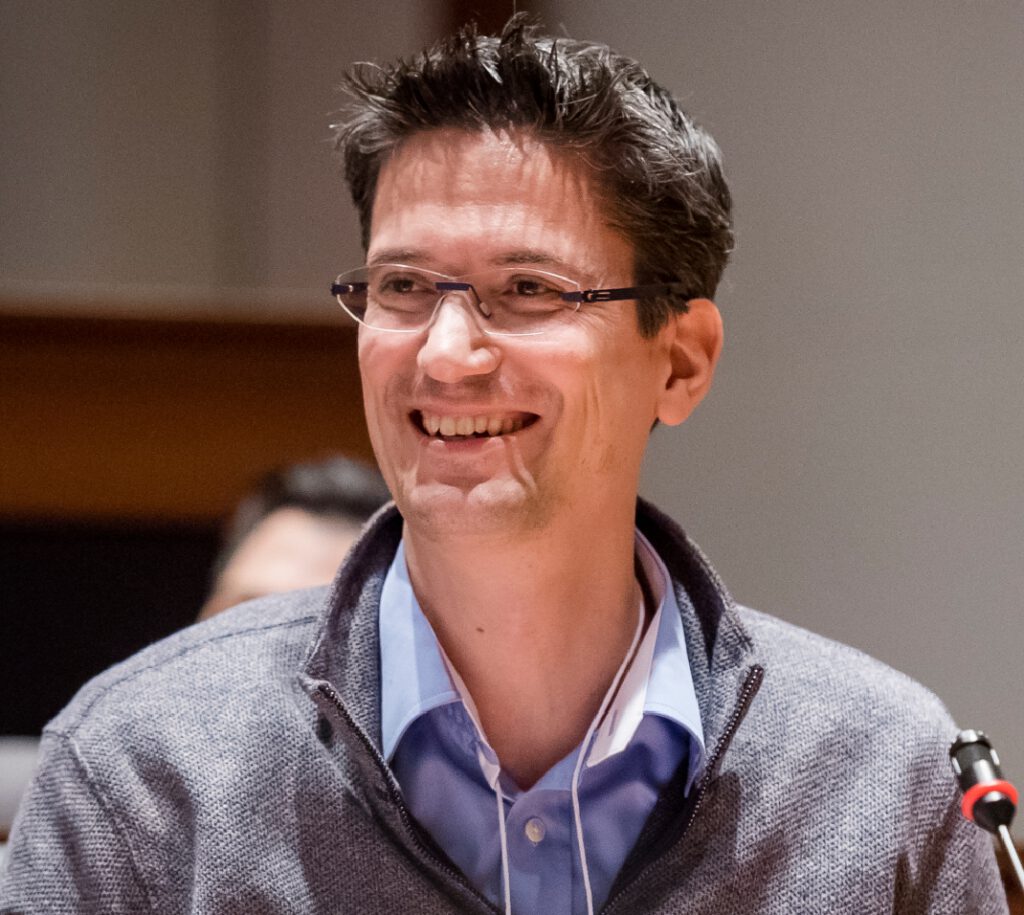
Professor Max Deeg is a leading scholar in Buddhist Studies at Cardiff University , holding a personal chair since 2009. With a career spanning institutions in Germany, Austria, and the UK, his research focuses on transcultural Buddhist history from India to East Asia, Chinese Buddhist travelogues , and interreligious encounters in medieval China. He has held visiting positions at universities in Japan, Nepal, the US, and Germany, and currently directs the Centre for the History of Religion in Asia (CHRA) . PhD from University of Würzburg (1990) Dr. phil. habil. in Religious Studies (1998) Full Professor at University of Vienna (2002-2006) His research explores Buddhist narratives as tools for constructing religious identity, foundation myths in trans-Himalayan contexts, and terminology evolution in Chinese Buddhist translations. Recent publications analyze Indian Buddhist monasticism through Chinese sources and religious concepts like xin (trust) across Buddhist, Manichaean, and Christian traditions. Awarded the KHK Visiting Research Fellowship (2016) and a DAAD Scholarship (1986-87) , Prof Deeg contributes to editorial boards of major journals. He supervises PhD students and teaches Buddhist Studies , Life of the Buddha , and Chinese Buddhist Texts .
Prof. Dr. Barbara Mittler is Professor of Sinology at Heidelberg University and founding co-director of the Heidelberg Centre for Transcultural Studies (CATS) and the Cluster of Excellence 'Asia and Europe in a Global Context.' Her research explores Chinese cultural policy, print media, musicology, visual culture, and transcultural studies. Mittler's scholarly contributions include groundbreaking work on Cultural Revolution culture, early Chinese print media (particularly women's magazines), and the transcultural flows of cultural production. Her current projects examine Mao as a global icon and comparative studies of Asian 'fathers of the nation.' Her publication record demonstrates consistent focus on cultural transmission mechanisms, with recent research developing transcultural frameworks for understanding cultural exchange and historical analysis. Publications reflect an interdisciplinary approach combining visual analysis, media studies, and historical methodology. Mittler has received numerous honors including the Fairbank Prize, Heinz-Maier-Leibnitz Prize, and memberships in the Leopoldina and Heidelberg Academy of Sciences. She leads major initiatives like the China-Schul-Akademie developing educational materials about China for German schools.
Mei Mei Rado is an Assistant Professor at Bard Graduate Center, specializing in textile and dress history with a focus on China and France (18th–20th centuries). Her work connects global networks to local cultural systems through material analysis and cross-cultural interpretation. Education: PhD, Bard Graduate Center MA, University of Chicago BA, Nanjing University Research Interests: She explores intercultural textile exchanges, particularly European-Chinese interactions, rococo style diffusion, and Qing court arts. Her forthcoming book The Empire’s New Cloth (Yale, 2025) examines European textiles in Qing imperial contexts. Publications: Recent works include analyses of 18th-century French drapery, Qing cosmopolitanism through Japanese screens, and lamé textiles in modern fashion. Her research spans material culture, cross-cultural aesthetics, and historical networks. Curatorial Practice: Formerly Associate Curator at LACMA, she pioneered modern Chinese fashion collections. Collaborations with European/American institutions continue through her current projects on Edo-period textiles and light in fashion history.
Max Planck Institute for the History of ScienceGermany
Dagmar Schäfer is a leading historian of science and technology, serving as Managing Director of the Max Planck Institute for the History of Science (MPIWG) and holding the Chair of China Studies and History of Technology at the University of Manchester (2011). She directs Department III: Artifacts, Action, Knowledge at MPIWG since 2013 and holds Honorary Professorships at Technische Universität Berlin (History of Science and Technology) and Freie Universität Berlin (China Studies). Her research spans the history of Chinese technology (Song-Ming dynasties), material culture, and knowledge systems, emphasizing artifacts' role in scientific diffusion. Doctorate (1996) and Habilitation (2005) in Sinology and History of Science Guest Professorships: Shanghai Jiao Tong University (2017), IAS Princeton (2019), European University Institute (2022) Her seminal work, The Crafting of the 10,000 Things (2011), explores 17th-century Chinese knowledge systems, earning the Pfizer and Levenson Prizes. Recent contributions focus on knowledge ownership (co-edited Ownership of Knowledge , MIT Press 2023) and plurilingual scholarship in Eurasia (co-edited Brill 2023). Her 2020 Leibniz Prize recognized her innovative approaches to global cultural studies. Publications analyze comparative technological paradigms, local knowledge in historical contexts, and transcultural artifact analysis. She is central to the Kn/Own/Able project challenging intellectual property norms in knowledge dissemination.
Axel Dreher is Professor of International and Development Politics at Heidelberg University’s Alfred-Weber-Institute for Economics. He is a leading scholar in political economy and development economics, with extensive affiliations including the German National Academy of Sciences Leopoldina, CEPR, CESifo, KOF, AidData, and EUDN. He serves as Editor of the Review of International Organizations and Co-Director of the Center for European Studies (CefES) at the University of Milan-Bicocca. Ruprecht-Karls-University Heidelberg (2011–Present) Georg-August University Göttingen (2008–2011) ETH Zurich (2005–2008) University of Konstanz (2004–2005) University of Exeter (2003–2004) University of Mannheim (2000–2003) His research centers on political economy , economic development , foreign aid , and globalization . He investigates how political institutions, leadership incentives, and geopolitical interests shape development outcomes and international financial flows. His work often employs empirical and geospatial methods to analyze aid allocation, corruption, migration, and the rise of emerging donors like China. The 15 most recent publications reflect a strong focus on China’s overseas development finance , regional favoritism , and the political determinants of aid . Keywords span political economy, development economics, and international relations, with subfields including Chinese foreign aid, geospatial analysis, governance, institutional quality, and South-South cooperation. His recent book Banking on Beijing and award-winning paper Wedded to Prosperity exemplify his cutting-edge contributions to understanding the political economy of development. Scientific awards include: 2023 Best Paper Award, Political Economy of Aid Society (PEAS) 2023 Best New Dataset Award, International Political Economy Society International Geneva (IG) Award 2020 Excellence in Refereeing Award, World Bank Economic Review (2019) 2010 KfW Excellence Award for policy-relevant research Multiple DFG and Swiss research grants Dreher has advised over 30 PhD students on topics ranging from aid effectiveness to political violence and migration. He has received major research grants from the German Research Foundation (DFG), Swiss Network for International Studies (SNIS), European Commission, and VolkswagenStiftung. His leadership roles include organizing the annual Political Economy of International Organizations conference series and serving on editorial boards of top journals such as World Development and Defence and Peace Economics . He is actively involved in academic labs and research networks including the Courant Research Center on Poverty and Equity at Göttingen, AidData at William & Mary, and the Center for European Studies (CefES). His current work continues to explore the intersection of politics, development, and globalization, particularly through georeferenced data and natural experiments.
Professor Dr. Prof. h.c. Thomas M.J. Möllers holds the Chair for Civil Law, Commercial Law, European Law, International Private Law and Comparative Law at the Faculty of Law, University of Augsburg. As a full professor, he leads research and teaching in multiple legal disciplines with a particular focus on German and European financial regulation, corporate law, and legal methodology. His work bridges traditional legal scholarship with contemporary challenges posed by digitalization and globalization. Professor Möllers' research interests span German and European Capital Markets law, German and European Company Law, Legal methods, Comparative Law, European Union Law, and Competition Law. His scholarly work demonstrates exceptional breadth, connecting doctrinal legal analysis with practical applications in evolving regulatory environments. He has made significant contributions to understanding the interface between national legal systems and EU regulation, particularly in financial markets. His recent publications reveal a strong focus on capital markets regulation, particularly regarding the Wirecard scandal and auditor liability, consumer protection in e-commerce, data protection across different legal systems, and the impact of AI on legal methodology. The trajectory of his work shows increasing engagement with comparative legal analysis between European, American, and Chinese legal systems, reflecting his growing international influence. TOP 1% Most Cited Books (2019-2023) - Legal Translations in China for his 'Legal Methodology' Honorary Professor at Central South University, Changsha, Hunan (2024) Professor Möllers has mentored numerous successful legal scholars who have gone on to academic and professional careers, including Dr. Liuhua Shen (now a professor at Jiangsu University), Dr. Maximilian Merwald, and Dr. Lisa Wolf. His research is supported by various grants, including DAAD funding for US exchange programs and participation in the Jean Monnet Centre of Excellence - INspiRE on consumer protection, capital markets, and competition law enforcement. He leads the Research Center of Innovation and Legal Studies between China and Europe (RICE) and is actively involved in the Caplaw initiative, which provides resources on European and national business law. His work connects legal scholarship with practical applications through podcasts, student research showcases, and collaborative projects across multiple legal systems.
Prof. Ann Heylen is a Professor at the Department of Taiwan Culture, Languages and Literature (TCLL) at National Taiwan Normal University (NTNU), Taipei, Taiwan since 2008. She also serves as Executive Director of the International Taiwan Studies Center at NTNU. Holding a Ph.D. in Chinese Studies (Sinology) from Catholic University Leuven (KULeuven), her research focuses on Taiwan’s historical narration, colonial periods (Dutch and Japanese), sociolinguistics, and digital humanities. Education: Ph.D. in Chinese Studies (Sinology), Catholic University Leuven (KULeuven), Belgium Research Interests: Prof. Heylen explores Taiwan’s historical discourse through digital newspaper corpora and language planning. Her work applies Einar Haugen’s sociolinguistic matrix model to analyze Taiwanese language standardization. She also investigates 17th-century European presence in East Asia, particularly Dutch-Taiwan relations, and uses ego-documents (diaries, oral histories) to study Taiwanese national identity. Publications: Her work bridges historical analysis and modern methodologies, with recent focus on digital humanities and colonial historiography. Affiliations: Founding board member of the European Association of Taiwan Studies (EATS) Editor-in-Chief of the East Asian Journal of Popular Culture (Intellect Books) Current Projects: Monograph on Formosa media narratives in Benelux newspapers (19th-20th centuries) and 400-year Dutch-Taiwan relations commemoration studies.
Prof. Joachim Kurtz is a Full Professor of Intellectual History at Heidelberg University’s Cluster of Excellence Asia and Europe in a Global Context since 2009. Previously, he held positions at Emory University (2003–2010) and the University of Erlangen-Nuremberg. He earned a Dr. phil. (summa cum laude) in Chinese Studies from Erlangen-Nuremberg (2003) and an M.A. in Chinese Studies, Political Sciences, and Philosophy from the Free University of Berlin (1997). His research focuses on Late Imperial Chinese intellectual history, transcultural exchanges between Europe, China, and Japan, and translation studies. Notable works include The Discovery of Chinese Logic (2011) and co-edited volumes on conceptual history and transcultural frames. He has organized conferences such as “Standards of Validity in Late Imperial China” (2013) and “Reading the Signs: Languages of Prognostication in Chinese History” (2013). Awarded grants include the HERA-funded “East Asian Uses of the European Past” (2016–2019) and DFG grants for projects on global concept histories. He is a Corresponding Member of the Hamburg Academy of Sciences (since 2015) and active in the Association for Asian Studies and European Association of Chinese Studies. His work bridges historical and transcultural studies, emphasizing knowledge circulation and conceptual transformation. Major contributions include analyzing Jesuit paratexts, Liang Qichao’s translation of Fichte, and the formation of modern Chinese academic disciplines.
Zhao Baisheng is a Professor and Chair of the Institute of World Literature at Peking University, where he also serves as Secretary General for Cross-Cultural Studies. During Summer Semester 2005, he was a Guest Professor at Johannes Gutenberg University Mainz, affiliated with the Department of English and Linguistics. His research focuses on cross-cultural dynamics, East-West interactions, and global literary frameworks. He led a seminar titled "Cross-culturalism – Toward a World Literature and Culture" , examining themes like immigration, colonization, and globalization through works by Defoe, Eliot, Hu Shi, and others. His lecture series explored topics such as Westernization in 20th-century China, the role of Marxism in Chinese contexts, and representations of China in media. Zhao’s academic contributions include Theory of Auto/Biography (2003), analyzing auto/biographical forms in cultural contexts. His work bridges literary theory with interdisciplinary cross-cultural studies.
Prof. Dr. Henning Klöter is Professor of Modern Chinese Languages and Literatures at Humboldt University of Berlin (HU Berlin) and serves as Dean of the Faculty of Culture, Language and Education. He is affiliated with the Institute of Asian and African Studies and the Department of East Asian Studies. He has been a faculty member since 2015 and leads significant research in sociolinguistics, language planning, and Sinophone studies. His educational background includes studies in Sinology, German Studies, and Linguistics at the University of Trier, Capital Normal University (Beijing), Leiden University, and National Taiwan University. He earned his doctorate from Leiden University in 2003 and completed his habilitation at Ruhr University Bochum in 2010. Henning Klöter's research focuses on multilingualism, language planning, the history of Chinese linguistics in Europe—especially missionary and colonial linguistics—historical sociolinguistics, Overseas Chinese communities, and Taiwan Studies, with regional interests spanning the PRC, Hong Kong, Macao, Singapore, the Philippines, and Taiwan. His work often explores the ideological and political dimensions of language standardization and visibility in public space. Since 2023, he has been Chief Editor of the Journal of Asian Pacific Communication. His recent scholarly output reveals a strong trend in historical and sociopolitical aspects of Chinese language use, particularly across Sinophone regions. Themes include language policy divergence between Taiwan and the PRC, linguistic landscape analysis in Taipei, missionary lexicography, and the evolution of Chinese linguistic standards. His publications bridge historical documentation with contemporary sociolinguistic theory, emphasizing pluricentricity and ideological influences on language. Chief Editor, Journal of Asian Pacific Communication (since 2023) Principal Investigator, ChinGram (Erasmus+ project) Principal Investigator, EMHo (DFG Weave project) He has not received any explicitly mentioned scientific awards in the provided texts. Prof. Klöter is actively engaged in major research initiatives and editorial leadership, contributing significantly to the academic understanding of language in Chinese-speaking societies. He is involved in the Mori-Ōgai Memorial and contributes to the academic community through research projects, publications, and institutional leadership. His work often intersects with cultural memory, colonial history, and linguistic identity in East Asia.
Max Planck Institute for the History of ScienceGermany
Stephanie Christmann-Budian is a researcher at the Max Planck Institute for the History of Science, working within the 'China in the Global System of Science' Research Group. She holds a PhD in Sinology and Cultural Studies from Free University Berlin, with research focusing on modern and contemporary Chinese science, technology and innovation policies. Her expertise spans globalization impacts, innovation system analysis, and comparative policy studies. Christmann-Budian investigates China's evolving position in global science through multi-method approaches combining sociology of science, innovation research, and political science. Current projects examine reforms in China's national science system within broader political and global contexts. Her work analyzes strategic developments in areas including artificial intelligence and green technologies. Publications demonstrate consistent focus on China's scientific transformation, particularly examining shifts from Western knowledge transfer to autonomous innovation systems. Recent articles explore private sector roles in R&D funding and transitions toward cashless societies. With over 12 years' practical experience in science policy analysis, Christmann-Budian has held positions at DFG, Fraunhofer ISI, Chinese Academy of Science, and other research organizations. She regularly contributes to science-policy dialogues through workshops and lectures on Sino-German scientific cooperation.
Professor Dr. Julia Schneider is Professor of Sinology at the University of Hamburg's Faculty of Humanities. Her research spans Chinese intellectual history, ethnicity studies, and empire theory, focusing on late imperial to Republican periods. She holds a joint PhD from Ghent University and Georg-August-University Göttingen (2013). Dr. Schneider investigates non-Chinese identities under imperial rule, censorship during the Qing Dynasty, and nationalist historiography. Her award-winning monograph examines Chinese discourses on nationalism and ethnicity during 1900s-1920s. She supervises doctoral students researching modern Chinese historiography, translation studies, and childhood history. Recent articles analyze Manchu-Chinese educational materials and postcolonial interpretations of Qing imperialism. She received multiple fellowships and awards for scholarly contributions.
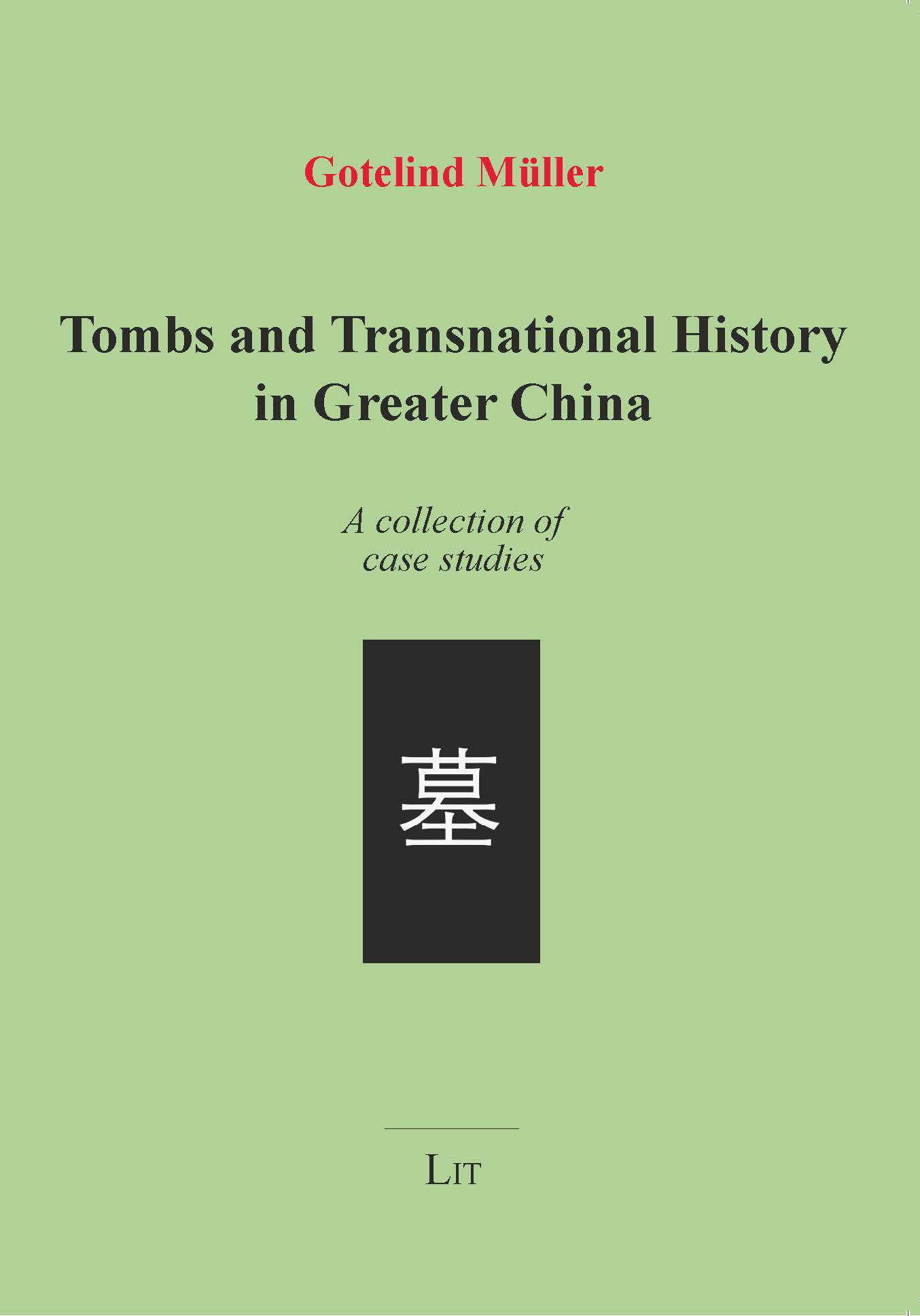
Prof. Gotelind Müller-Saini is a Full Professor of Sinology and Director of the Institute of Chinese Studies at the University of Heidelberg. She holds a PhD (1992) and Habilitation (2002) in Sinology, with additional studies in Russian, Tibetan, and classical languages. Her academic roles include Deputy Dean of the Faculty of Philosophy (2006-2012, 2018-2020) and Director of the Institute of Chinese Studies (2014-2015, 2019-2020). She has held guest professorships at Kyoto University, Beijing Normal University, and East China Normal University. Research Interests: Modern Chinese history, Sino-Japanese-Western cultural exchange, education/media studies, Buddhism/Christianity in modern China, anarchism, gender history, cultural brokers, Esperanto, and cultural heritage. Notable projects include studies on foreign cemeteries in China and the role of tombs in transnational history. Publications: Over 100 articles and books, including major works like *China, Kropotkin, and Anarchism* (2001), *Buddhism and Modernity* (1993), and *Tombs and Transnational History in Greater China* (2022). Maintains the *Representations of History in Chinese Film and Television* academic website. Grants/Awards: Recipient of the Dr. Meyer-Struckmann Foundation and German Academic Scholarship Foundation grants. Research supported by DAAD and Japanese state scholarships. Guest professorships at leading East Asian institutions. Labs/Teams: Leads research initiatives on cultural heritage, transnational history, and Sino-Western/Russian relations. Collaborates with international scholars on projects such as *Chinese Perceptions of Russia and the West* (2020).
Carmen Meinert holds the Chair for Central Asian Religions and serves as Deputy Director of the Center for Religious Studies (CERES) at Ruhr University Bochum. She is Principal Investigator of the ERC-funded BuddhistRoad project and coordinates the Climate and Culture publication series. Her academic foundation includes research and studies at universities in Bonn, Hamburg, Beijing, Chengdu, Vienna, and the Institute of Advanced Study in the Humanities, Essen. Research Focus: Meinert's scholarship centers on the transfer of Buddhism across Central Asia, with emphasis on Tantric rituals, manuscript traditions (Dunhuang/Kharakhoto), and religious syncretism. Key themes include: Medieval religious networks and sacred space formation Buddhist-Daoist/Tibetan-Chinese doctrinal exchanges Ritual adaptation and esoteric practices Buddhism's intersections with art, violence, and human rights Cultural dimensions of climate change Publications: Her extensive corpus examines Buddhist transmission along Silk Road networks, with recent works analyzing Tantric ritual texts, sacred geography under Tangut rule, and cross-cultural religious encounters. Publications demonstrate consistent focus on manuscript evidence and comparative frameworks. Awards & Fellowships: Käte Hamburger Kolleg Visiting Research Fellowship Research Leadership: Meinert directs multiple initiatives: ERC project BuddhistRoad (dynamics of religious transfer) CRC 1475 'Metaphors of Religion' Subproject A03 (ritual-textual networks) Climate and Culture publication series (6 volumes) She previously led projects on Dzogchen tradition development and rNying ma codification. Current work integrates Central Asian religious studies within global comparative frameworks.
Thomas Efferth is Full Professor and Director of the Institute of Pharmaceutical and Biomedical Sciences at Johannes Gutenberg University Mainz, Germany. He leads the Department of Pharmaceutical Biology, specializing in molecular pharmacology and drug discovery. His research spans cancer therapeutics, infectious diseases, and traditional Chinese medicine, with a strong focus on artemisinin and natural products. Education includes a PhD from the German Cancer Research Center (1990) and habilitation from RWTH Aachen University (1997). Professional positions include research leadership at the German Cancer Research Center (2005), associate professorship at Heidelberg University (2007), and his current role since 2009. Research interests integrate systems biology approaches with: Molecular mechanisms of anticancer drugs Bioinformatic pharmacology for personalized medicine Artemisinin repurposing for cancer/viral infections Toxicological profiling of natural products Publications demonstrate strong focus on phytomedicine, antiviral therapies, and cancer drug resistance. Awards and honors include: Qihuang International Award (2017) World Academy of Sciences membership (2018) Stanford Top 2% Scientist citation ranking (2020) Dr. Wilmar Schwabe Award (2006) Multiple honorary professorships in China/Hong Kong Editorial leadership includes Editor-in-Chief roles for Phytomedicine and board memberships in 20+ journals. Society roles feature vice-presidency of the Specialty Committee on Immunology of TCM and executive positions in IUPHAR and DPhG.