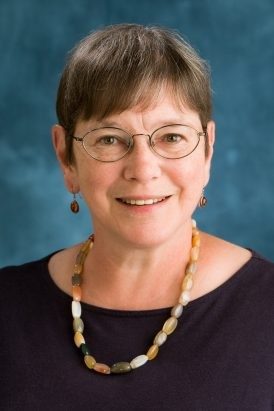
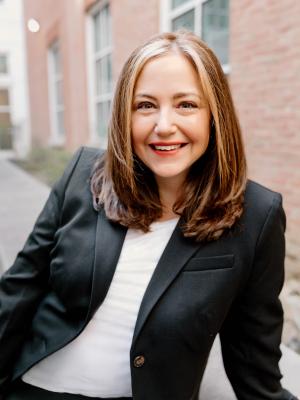
Giuseppa Compagno , Associate Professor at the University of Palermo (UNIPA), specializes in Psychological, Pedagogical, Physical Exercise and Training Sciences . Her teaching includes Special Education , Intercultural Didactics , and Game Teaching . Research Focus: Neuroeducation, inclusive methodologies, teacher training, and docimological tools. Key Projects: #UNOPERUNO (inclusion/jobs), SOSAC (accessibility), Mind in Mind Lab (assessment). Recent Publications highlight neurodidactic approaches to evaluation, intercultural teaching, and game-based learning for inclusivity. She emphasizes integrating Brain Gym and Habits of Mind into teacher competence frameworks.
Dr. Elaine Schmidt serves as a Research Fellow in the Department of Theoretical and Applied Linguistics within the Faculty of Modern and Medieval Languages and Linguistics at the University of Cambridge. She concurrently holds positions as Associate Investigator at the ARC Centre of Excellence in Cognition and its Disorders and Honorary Associate at Macquarie University, Sydney, conducting research through the Cambridge Processing and Acquisition of Language Lab (CamLAB). Her doctoral training was completed at the University of Cambridge under Dr. Brechtje Post, focusing on bilingual acquisition of prosody. This foundation led to postdoctoral work at Macquarie University's Child Language Lab with Distinguished Professor Katherine Demuth. Dr. Schmidt's research spans language acquisition, processing, psycholinguistics, neurolinguistics, phonetics/phonology, prosody, and speech perception. She investigates how prosodic cues operate in monolingual and bilingual contexts using EEG, eye-tracking, and behavioral methodologies, with particular emphasis on intonation's role in syntactic disambiguation and speech rhythm development. Her publication record reveals consistent focus on prosodic processing across populations, demonstrating how linguistic experience shapes perception of intonational contours and how subvocal prosody aids syntactic parsing. Key methodological approaches include multimodal measurement techniques applied to cross-linguistic comparisons between English varieties and bilingual acquisition contexts. No major scientific awards were documented in available sources. She has led multiple research projects including EEG/eye-tracking studies on subvocal prosody in sentence processing and syntactic disambiguation in children, plus investigations into categorical/gradient intonation processing and L2 acquisition of Australian English intonation. Collaborations span Macquarie University's Cognitive Science and Psychology departments. No student advising roles were specified. Dr. Schmidt maintains active affiliations with Cambridge's CamLAB and Macquarie University's Child Language Lab, supported by ARC Centre of Excellence funding for cognition and disorders research.
Dr. Daniel A. Abrams is a Clinical Associate Professor in the Department of Psychiatry and Behavioral Sciences at Stanford University. His research focuses on the neurobiological basis of social communication impairments in children with autism spectrum disorders (ASD), particularly how atypical reward attribution to social stimuli like voices and faces impacts development. He employs techniques such as functional MRI, psychophysics, and cognitive assessments to identify neural markers of social and memory deficits in ASD. Dr. Abrams received his Ph.D. in Auditory Cognitive Neuroscience from Northwestern University (2008) and a B.F.A. from the University of Arizona (1994). His work has been funded by NIH, NARSAD, and the National Organization for Hearing Research Foundation. He leads the Speech and Social Neuroscience Lab at Stanford Cognitive and Systems Neuroscience Laboratory. Scientific awards include the K01 Research Scientist Development Award (NIH/NIMH, 2014-2017), NARSAD grant (2019-2021), and a 2017 CHRI Pilot Early Career Award. His recent publications highlight neural circuitry in voice processing, memory impairments linked to hyperconnectivity, and efficacy of clinic-home-school collaborative interventions for autistic adolescents. Key research trends: Autism neurodevelopment, reward/salience circuit dysfunction, social communication biomarkers, voice prosody decoding, and memory plasticity. Dr. Abrams’ full description below details his academic trajectory, grants, student collaborations, and clinical trial leadership.
Dr. Barbara Flunger is an Assistant Professor at Utrecht University’s Faculty of Social and Behavioural Sciences , specializing in Educational Psychology . Her research focuses on improving student motivation and learning behavior through advanced statistical modeling and self-determination theory, particularly examining autonomy support, socioeconomic factors, and homework dynamics. She has led projects funded by the PhD Fund of Utrecht University and the Stimuleringsbeurs Rijksoverheid . Key Projects 2022–Present: Role of autonomy regulation in self-directed learning 2024–Present: 'Making homework work: Generating vlogs as learning strategy' Research Themes : Student motivation and self-determination theory Homework behavior and learning types Socioeconomic background impacts on education Collaborative learning environments Scientific Contributions : Developed classification systems for teacher motivational behaviors Advanced Bayesian and latent profile analyses in educational contexts Published extensively on autonomy support and homework interventions Teaching : Involved in Master’s programs for Educational Sciences, teaching research methods, assessment design, and integrative practical courses.
Lisa Boyce is a Professor and Executive Director of the DDE Center for Early Care and Education within the Department of Human Development and Family Studies at Utah State University. Her research focuses on early childhood development and intervention for at-risk populations through quantitative methodologies. Education Background: PhD in Family and Human Development, Utah State University (1999) M.Ed. in Psychological Services, Idaho State University (1992) BS in Psychology, Idaho State University (1991) Pre-Technical Biology, Ricks College (1989) Research Focus: Dr. Boyce investigates early language development, emergent literacy, and parent-child interactions, with emphasis on dual language learners and children in poverty. Her current projects include classroom bookmaking interventions for Head Start children, dissemination of the SHELLS curriculum for migrant families, evaluation of Ecuador's early education curriculum, and predictors of language development in bilingual children. She employs rigorous program evaluation frameworks to assess intervention efficacy. Publication Trends: Her recent work demonstrates consistent focus on practical, scalable interventions that strengthen parent-child language interactions. Key themes include adapting bookmaking/storytelling techniques for diverse populations, measuring longitudinal impacts on school readiness, and developing culturally responsive strategies for migrant families and dual language learners within Head Start frameworks. Awards & Honors: Solnit Fellow (Zero to Three, 2001) Research Assistant of the Year (College of Family Life & Family and Human Development Department, 1996) Research Scholars Grant Award (Head Start, 1996) Graduated with Honors (Idaho State University, 1991) Kasiska Foundation Scholarship (Idaho State University, 1990) Leadership Scholarship (Ricks College, 1987) Advising & Grants: Dr. Boyce has mentored 15+ graduate students in Human Development and Family Studies. Her grant portfolio includes SHELLS (Storytelling for Home Enrichment of Language and Literacy Skills), PEECSE (Promoting Effective Engagement, Communication, and Self-regulation with English language learners), and UTELL (Using Technology for Emergent Literacy and Language), all targeting early language development in vulnerable populations. Leadership: As Executive Director of the DDE Center for Early Care and Education, she oversees translational research connecting academic scholarship with community implementation in early childhood systems.
Céline Launay is a Lecturer at Université Toulouse - Jean Jaurès, affiliated with the Cognition, Languages, Ergonomics (CLLE) research unit. Her work focuses on forensic psychology, particularly the social regulation of memory in judicial contexts. She develops tools for testimony collection used by legal professionals and analyzes police interview techniques to understand eyewitness memory processes. Her research explores: Eyewitness testimony reliability and memory performance in legal settings Social psychology aspects of judicial processes and investigative interviewing Development of specialized protocols for interviewing vulnerable populations Application of cognitive psychology principles to forensic contexts Launay's publications demonstrate a consistent focus on improving testimony quality through cognitive psychology applications. Her work spans eyewitness memory protocols, police interview analysis, and testimony reliability assessment, with recent explorations into truth-telling mechanisms and specialized interview techniques for asylum seekers and gambling behavior studies. She collaborates extensively within Jacques Py's Lab and participates in multidisciplinary teams investigating psychology-law intersections. Her research contributes to the CLLE unit's work on cognition in complex situations and society-individual interactions.
Barbara A. Anderson is the Ronald A. Freedman Collegiate Professor of Sociology and Population Studies at the University of Michigan, affiliated with the College of Literature, Science, and the Arts (LSA). She holds dual roles as Professor of Sociology and Research Professor in the Population Studies Center. Her affiliations include the Center for Russian, East European, & Eurasian Studies (CREES), African Studies Center, and the Weiser Center for Europe and Eurasia. Anderson earned her Ph.D. in Sociology from Princeton University in 1974. Her research focuses on the interplay between social, economic, and demographic changes, with a particular emphasis on the Soviet Union/post-Soviet states, China, and South Africa. Key areas include historical demography, ethnic identity dynamics, and environmental perceptions. She has conducted extensive studies on infant and child survival, adult mortality trends, and the growing African middle class in South Africa. Her work often leverages high-quality data to address critical demographic questions in sub-Saharan Africa. Anderson’s publications span over four decades, addressing topics such as fertility patterns in Russia, environmental health in South Africa, and the unintended consequences of policies on population dynamics. Her book World Population Dynamics: An Introduction to Demography provides a comparative and historical framework for understanding demographic shifts. Her research bridges methodological rigor with interdisciplinary insights, contributing to global debates on inequality, development, and policy.
Dr. Ruth Bell is an Honorary Principal Research Fellow at University College London's Department of Epidemiology & Public Health. Her work focuses on cognitive and clinical research involving deaf populations, sign language processing, and neurodevelopmental conditions. She holds a PhD from the University of Nottingham (1978) and has contributed to over 50 academic publications. Her research integrates neuroscience, linguistics, and education, particularly examining how deaf children with autism process facial and emotional cues in British Sign Language. Key areas include cross-modal plasticity, motion perception in autism, and literacy development in pre-lingually deaf individuals. She has pioneered studies on facial expression recognition, cochlear implant outcomes, and the cognitive impacts of sign language acquisition. Bell's interdisciplinary approach bridges clinical practice and theoretical linguistics. She has collaborated on neuroimaging projects investigating brain activation patterns during speechreading and sign language processing. Her recent work explores developmental trajectories of social cognition in genetic syndromes like Williams syndrome. Her research has informed educational strategies for deaf children and advanced understanding of atypical neurodevelopment. Current projects include longitudinal studies on dyslexia across orthographic systems and the psychosocial aspects of hearing impairment interventions.
Johannes Lunneblad is a Professor at the Department of Education, Communication and Learning at the University of Gothenburg. His research focuses on institutional responses to youth vulnerability, particularly in socially disadvantaged urban areas, examining how schools, social services, and law enforcement interact with marginalized youth. Key themes include migration's impact on education, intercultural pedagogy, and the juridification of youth behavior in schools. Education Background: Not explicitly detailed in the text, but his academic role implies advanced qualifications in education/sociology. Teaching Interests: Courses on learning, culture, language, identity, and ethnography-focused methodologies. Research Interests: Lunneblad's work critically analyzes how institutions frame social problems and youth risk, with a focus on urban schools, migration, and community partnerships. He employs ethnographic methods to explore topics like school-police collaboration, gendered violence, and intercultural education policies. Publications Trends: His recent work emphasizes institutional collaboration challenges, juridical responses to youth violence, and the sociopolitical dimensions of school-community partnerships. Key themes include ethical dilemmas in social work, the categorization of 'risk youth,' and the interplay between policy and practice in disadvantaged areas. Awards: None explicitly listed in the provided text. Grants/Advising: No specific grants mentioned, but his research collaborations (e.g., with Jenny Bengtsson, Thomas Johansson) suggest involvement in funded projects. Advising details are absent. Labs/Teams: Engaged with interdisciplinary groups studying urban education, migration, and social policy at the University of Gothenburg.
Larry Nucci is a Professor in the School of Education at the University of California, Berkeley, specializing in moral and social development. He focuses on children’s judgments regarding personal privacy, societal contexts (including Latin America and Asia), and integrating moral education into teacher training. His work emphasizes moral reasoning assessment and social justice pedagogy. Education: Ph.D. in Psychology from University of California, Santa Cruz. Research interests include adolescent development, moral reasoning across cultures, and the interplay between personal autonomy and societal norms. He advocates for constructivist approaches to parenting and classroom management to foster moral autonomy. His recent work bridges moral philosophy with neuroscience, examining neural underpinnings of moral decisions. Awards include a Fulbright Fellowship and grants from major foundations such as Bechtel, Kellogg, and Templeton. He edits Human Development and serves on editorial boards of Cognitive Development and Journal for Research in Character Education . Teaching includes a course on social and emotional development for the Developmental Teacher Education program. His books include Nice is Not Enough and Education in the Moral Domain , translated into multiple languages. He collaborates internationally on moral education initiatives, particularly in China and Brazil.
Dr. Maithri Sivaraman is an Assistant Professor of Psychology and Education at Teachers College, Columbia University, which is part of Columbia University in New York City. She is affiliated with the Graduate School of Education, Health & Psychology and specializes in Applied Behavior Analysis. Dr. Sivaraman's educational background includes a PhD in Psychology from Ghent University in Belgium, an MSc in Psychology from the University of Madras in India, and a BTech in Mechanical Engineering from the National Institute of Technology, Tiruchirapalli, India. Her research interests span several important areas in psychology and education. She conducts research on generative verbal behavior , particularly focusing on naming behaviors and relational frame theory. She investigates children's socio-emotional development , especially social referencing skills in children with autism. Her work also emphasizes cultural adaptations for educational and behavioral interventions across diverse populations in India, Europe, and the United States. Dr. Sivaraman frequently adopts cross-disciplinary approaches to address complex questions in early childhood development and special education. Dr. Sivaraman's publication record demonstrates a consistent focus on behavior analysis applications for children with special needs, particularly autism. Her recent work (2023-2024) has centered on theoretical integration between Relational Frame Theory and Verbal Behavior Development Theory, perspective-taking in autistic individuals, and cultural adaptations of telehealth services. Earlier publications (2020-2022) focused on social referencing interventions, telehealth mask-wearing training during the pandemic, and ethnicity-matching in caregiver training. Her foundational work (2017-2019) explored vocal stereotypy, exclusion responding, and socialization techniques for children with autism. Dr. Sivaraman has received recognition through editorial appointments, currently serving as: Associate Editor for the Psychological Record Member of the Editorial Board of the Journal of Applied Behavior Analysis Treasurer for the Association for Science in Autism Treatment She has established the Tendrils Centre for Autism in Chennai, India, and serves as a consultant for multiple early intervention centers in India and Europe. Dr. Sivaraman also co-blogs on early childhood development for Psychology Today with Dr. Tricia Skoler.
Dr. Clara Rivera is a Lecturer in Language and Literacy at the University of Wollongong's School of Education, part of the Faculty of the Arts, Social Sciences and Humanities. She also serves as an Associate Investigator with the ARC Centre of Excellence for the Digital Child. Her research focuses on co-design methodologies involving children as active participants in digital technology development, emphasizing children's rights frameworks. Education: She holds a PhD from the University of Wollongong, where her doctoral work explored children's roles as co-designers and co-researchers in app development for preschoolers. This research earned the 2021 Beth Southwell Award and a Ray Debus Award nomination. Research Interests: Clara's work bridges Child-Computer Interaction (CCI) and early childhood education. Key themes include digital play contexts, participatory design with children, and evaluating digital technologies' impact on cognitive and psychosocial outcomes. Recent studies address digital footprint management and family perspectives on home technology use. Teaching & Leadership: She coordinates courses like Language and Learning and Early Childhood Contexts . Professional roles include convening the Children and Student Voice SIG for AARE and serving as NSW South Coast Local Council President for ALEA. Awards: Notable recognitions include the 2021 Beth Southwell Award for her thesis and multiple collaborative research publications addressing child-centered digital technologies. Labs/Teams: Active contributor to the ARC Centre of Excellence for the Digital Child, focusing on ethical digital technology design for children.
Andrea Chronis-Tuscano is the Joel & Kim Feller Endowed Professor at the University of Maryland, College of Behavioral & Social Sciences (BSOS). She holds a PhD in Clinical Psychology from SUNY Buffalo. Her research focuses on ADHD across the lifespan, parenting, and behavioral inhibition, with NIH-funded projects targeting interventions such as the TPAC and BEAMS trials. She directs the UMD SUCCEEDS College ADHD Clinic and has led large-scale studies like the Turtle Project. Chronis-Tuscano is a Fellow of the Association for Psychological Science and ABCT, serving on editorial boards and NIH review committees. Her work emphasizes community-informed designs and hybrid effectiveness-implementation research. Research interests include ADHD comorbidity with depression and substance use, maternal psychopathology, and early intervention for inhibited children. Key projects integrate telehealth, school-based mental health, and college student support. She has published extensively on ADHD mechanisms, parenting interventions, and neurobiological markers of anxiety. Awards include ADVANCE Professorship for BSOS and leadership in APA Division 53. NIH grants: TPAC, BEAMS, Turtle Project, and college student alcohol intervention Editorial roles: Journal of Consulting & Clinical Psychology and former JCCAP Associate Editor Service: NIMH SERV review committee and APA leadership
Teun Zuiderent-Jerak is a Full Professor at the Athena Institute, Faculty of Science at Vrije Universiteit Amsterdam. His role includes program director of the 2-year Research Master Global Health , where he designs courses like Global Health Interventions focusing on transdisciplinary approaches to healthcare challenges. His research bridges Situated Intervention theory and STS Making & Doing , emphasizing practical transformations in healthcare practices. Key areas include evidence-based practices, health equity in digital age, and inclusive technology development. He has received notable awards including the 2022 Amsterdamska Award for co-editing "Making & Doing: Activating STS through Knowledge Expression and Travel" , and the 2019 Teacher of the Year Award . His work spans global collaborations, such as projects with the Centre for Equity Studies in Delhi and the Doing eHealth Right initiative addressing digital inequities. Research interests include healthcare markets, knowledge standardization, and technology for social inclusion. Recent projects focus on "Inclusive Digital Care" , "Healthcare Accountability Practices" , and "Mental Health Support for Human Rights Defenders" . He actively contributes to academic societies like the Society for Social Studies of Science (4S) . Supervised over 10 PhD theses and led grants totaling €1M+ in funding. His teaching and research aim to integrate scholarly rigor with real-world impact, fostering "situated interventions" that challenge and improve healthcare systems globally.
Professor Penny Van Bergen is the Head of the School of Education at the University of Wollongong. She holds a PhD from UNSW Sydney and has held academic roles including Associate Dean of Learning and Teaching at Macquarie University. Her research focuses on memory development in children and adolescents, intergenerational reminiscing, and student-teacher relationships. She has received nine teaching awards between 2011 and 2018, including recognition from the Office of Learning and Teaching and the Australian Psychological Society. Currently supervising research on topics like adolescent reminiscing and student-teacher dynamics, she also leads two ARC-funded projects: one on aged care reminiscing programs and another on resilient capacities in emerging adults. Education: PhD (UNSW Sydney), BPsych (Hons 1) (UNSW Sydney) Key Research Areas: Memory Development, Educational Psychology, Student-Teacher Relationships Her recent articles analyze policy impacts on teacher education, LGBTQ+ school climates, and intergenerational learning. Grants include collaborations on reminiscing in aged care and male teacher shortages. She emphasizes undergraduate research opportunities and has pioneered programs like the Kia Tīmata Pai study on educator-child conversations.