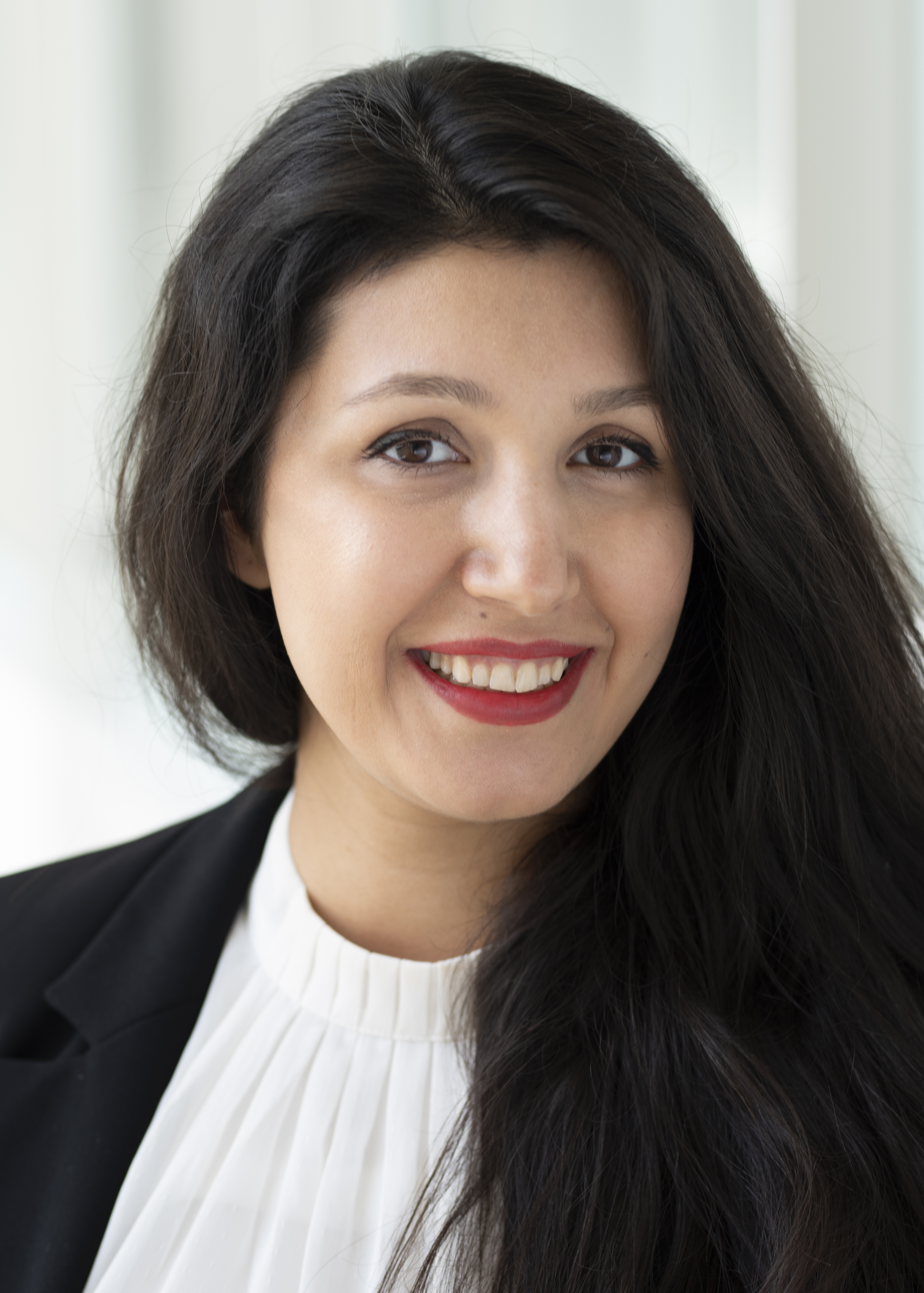
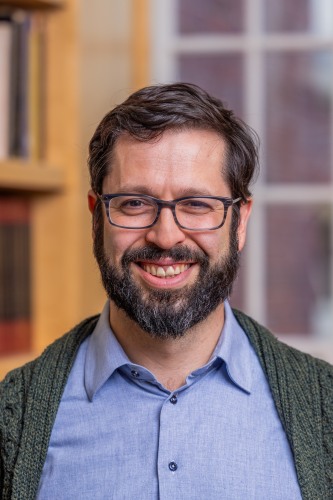
Berrak Sisman is an Assistant Professor in the Department of Electrical and Computer Engineering at Johns Hopkins University, affiliated with the Data Science and AI Institute and the Center for Language and Speech Processing (CLSP). She leads the Speech & Machine Learning Lab (SmILe Lab), focusing on AI-driven speech technologies. She received her PhD from the National University of Singapore in 2020 and was previously a tenure-track faculty member at the University of Texas at Dallas (2022–2024). Research Interests: Her work spans artificial intelligence, speech synthesis, voice conversion, emotion analysis in speech, medical speech applications, and secure speech technology. She develops neural models for expressive and adaptive speech processing. Publications: Her recent articles (2024–2025) emphasize speech emotion recognition, zero-shot prosody control, accent conversion, and disentangled representations in TTS, reflecting a focus on cross-modal learning, robustness, and real-world applications. Awards & Grants: NSF CAREER Award (2024) Amazon Faculty Research Award (2022) Singapore Ministry of Education Award (2021) A*STAR Singapore International Graduate Award (2016–2020) Leadership: She directs the SmILe Lab, recruiting PhD/Master’s students for projects in neural speech modeling. Her grants include NSF and Amazon funding for voice conversion and emotion synthesis research.
Dr. Thomas E. Doyle is an Associate Professor at the McMaster School of Biomedical Engineering and the Department of Electrical & Computer Engineering at McMaster University. His research focuses on biomedical signal processing, human-computer interfacing (HCI), and machine learning applications for healthcare augmentation, rehabilitation, and enhancement. He holds a Ph.D. from Western Ontario, Canada, and teaches courses like COMPENG 2DI4 (Logic Design). His work bridges cybernetics and clinical applications, emphasizing AI-driven solutions for medical diagnostics, patient monitoring, and space exploration. Education: B.E.Sc, B.Sc, M.E.Sc, Ph.D. from Western Ontario, Canada Recent Projects: Developed AI systems for remote healthcare diagnostics (2023) Collaborated with NASA on medical emergency simulators for deep space missions (2017–2023) Led ventilator development efforts for local hospitals during the pandemic (2020) His research interests span machine learning for mental health diagnostics, trust quantification in medical AI, and extended reality (XR) for medical training. He emphasizes interdisciplinary approaches, integrating computational methods with healthcare challenges. Recent publications highlight applications in pediatric emergency care, chronic pain management, and reliable medical device design. Dr. Doyle actively engages in educational initiatives, including first-year engineering pedagogy and experiential learning programs. He has received funding for projects such as the Educating the Engineer of 2025 (EtE-25) awards and contributes to initiatives like the Digital & Smart Systems and Health & Bio-innovation research clusters at McMaster.
Daniel Kreisman is an Associate Professor of Economics at Georgia State University and a faculty affiliate at the University of Milan. His research focuses on labor economics, education finance, and policy, particularly examining school funding, career and technical education (CTE), and student loan repayment systems. Kreisman founded the Career & Technical Education Policy Exchange (CTEx), a multi-state consortium under Georgia Policy Labs, which analyzes CTE policy impacts. He holds a Ph.D. in Public Policy from the University of Chicago and a B.A. in History and Philosophy from Tulane University. Prior to academia, he taught high school English in New Orleans. His education includes a PhD from the University of Chicago (Public Policy) and a BA from Tulane University (History and Philosophy). Research Interests: Educational Finance and School Funding Mechanisms CTE Program Design and Equity Student Loan Repayment Behaviors Labor Market Signaling and Economic Outcomes Public Policy Evaluation CTEx collaborations include state partners in Massachusetts, Michigan, Montana, Tennessee, Texas, Washington, and Atlanta, focusing on data-driven policy to enhance CTE programs. Advising & Grants: Kreisman’s work bridges academia and policy, with grants supporting research on CTE alignment, financial aid impacts, and loan repayment systems. His lab affiliations enable applied policy analysis. Labs/Teams: Director of CTEx and active member of Georgia Policy Labs, emphasizing evidence-based education policy.
Alis Oancea is Professor of Philosophy of Education and Research Policy at the University of Oxford's Department of Education, part of the Social Sciences Division. She holds additional roles including ESRC Centre for Global Higher Education Deputy Director and Social Sciences Division Advocate for Responsible Engagement. With dual doctoral degrees (DPhil from Oxford and PhD from Bucharest), she also received a Doctor Honoris Causa from University of the West Timisoara. Her research focuses on meta-research, research policy, and higher education governance. Key areas include research assessment frameworks, impact measurement, ethics, open knowledge practices, and teacher education. She co-edited the 2024 Handbook of Meta-Research and leads international studies on research cultures and policies. Education: DPhil (Oxford), PhD (Buc), DipLATHE (Oxford), Dhc (UWT) Roles: Director of Research (2016-20), REF2021 Coordinator, ESRC CGHE Deputy Director Leadership: Over 30 funded projects including the RKEEI initiative and BERA Observatory Her 150+ publications span research policy, impact evaluation, and education systems. Awards include FAcSS Fellowship and numerous international advisory roles across Europe and Norway. Advises on global education reforms and chairs panels for EU, UK, and Nordic research councils. Current doctoral supervision focuses on research policy, higher education systems, and teacher education innovations. Active in editorial roles for Oxford Review of Education and Review of Education .
Golnoosh Farnadi is an Assistant Professor at McGill University's School of Computer Science and an Adjunct Professor at the University of Montréal. She serves as a Visiting Faculty Researcher at Google, a Core Academic Member at MILA (Quebec Institute for Learning Algorithms), and holds a prestigious Canada CIFAR AI Chair. Farnadi co-directs McGill's Collaborative for AI & Society (McCAIS) and founded the EQUAL Lab (EQuity & EQuality Using AI and Learning algorithms), which focuses on advancing algorithmic fairness and responsible AI. Her educational background includes a Ph.D. in Computer Science from KU Leuven and Ghent University (2017), with postdoctoral research at the University of Montreal/MILA (2018-2020) and the University of California, Santa Cruz (2017-2018). During her doctoral studies, she was a visiting scholar at UCLA, University of Washington, Tsinghua University, and Microsoft Research. Dr. Farnadi's research centers on developing mathematical tools and algorithms for fairness-aware machine learning systems. Her work addresses bias and discrimination in AI decision-making across critical domains including healthcare, criminal justice, financial services, and social media. She has pioneered approaches to ensure fairness in deep learning models, particularly in sequential decision-making under uncertainty. Her research bridges theoretical foundations with practical applications, examining how AI systems can be designed to promote equity while maintaining performance. Analysis of her recent publications reveals a strong focus on practical implementations of fairness mechanisms across diverse AI applications. Her work spans technical domains from generative models and large language models to recommender systems and healthcare optimization. A unifying theme is the development of mathematically rigorous frameworks that balance performance with fairness considerations, with increasing attention to cultural diversity in multilingual AI systems and privacy-preserving fairness approaches. Google Scholar Award (2021) Facebook Research Award (2021) Rising Stars in AI Ethics (2021) Google Award for Inclusion Research (2023) WAI Responsible AI Leader of the Year Finalist (2023) 100 Brilliant Women in AI Ethics (2023) Canada CIFAR AI Chair Dr. Farnadi advises numerous doctoral and master's students across McGill University, University of Montréal, and MILA, with research focusing on fairness, privacy, and responsible AI. Her EQUAL Lab brings together researchers from computer science, social sciences, and policy domains to address systemic challenges in AI ethics. She has secured significant research funding from Google and other major organizations to support her work on fairness-aware AI systems, with applications spanning healthcare, social media safety, and public policy. The EQUAL Lab serves as a hub for interdisciplinary research on algorithmic fairness, bringing together computer scientists, social scientists, and policy experts. The lab's work spans theoretical foundations of fairness metrics, practical implementations in real-world systems, and policy recommendations for responsible AI deployment. Current projects include developing frameworks for fair kidney exchange programs, mitigating cultural stereotypes in multilingual language models, and creating privacy-preserving approaches for detecting online harms while protecting user data.
Nathaniel D. Daw serves as the Huo Professor in Computational and Theoretical Neuroscience and Professor of Neuroscience and Psychology at Princeton University, based at the Princeton Neuroscience Institute. His research integrates computational modeling with experimental neuroscience to investigate fundamental mechanisms of learning and decision-making. Daw's research focuses on computational and theoretical neuroscience, specializing in reinforcement learning, memory systems, and decision-making processes. He examines how neural circuits represent value, update beliefs through experience, and balance model-based versus model-free control strategies. His work frequently bridges theoretical frameworks with behavioral and neural data to explain phenomena ranging from habitual behavior to flexible cognitive control. Analysis of his 2025 publications reveals dominant themes in neural replay mechanisms, individual differences in learning trajectories, and clinical applications to eating disorders. His work increasingly incorporates large language models for psychological assessment while maintaining core focus on interpretable cognitive architectures and hierarchical planning. Daw maintains active research operations through the Princeton Neuroscience Institute, an interdisciplinary hub fostering collaboration between computational modelers, neuroscientists, and psychologists to advance understanding of neural mechanisms underlying cognition.
Mathias Funk is an Associate Professor in the Industrial Design department at Eindhoven University of Technology (TU/e), leading the Things Ecology lab. His research focuses on designing with data and systems behavior, particularly in IoT and medical technology contexts. He co-founded UXsuite GmbH and developed the OOCSI communication framework. With a PhD in Electrical Engineering from TU/e (2011), Funk has held academic roles since 2013, including postdoctoral positions in Electrical Engineering and Industrial Design. He teaches courses like 'Data-enabled design' and supervises projects on AI, data foundry, and OOCSI applications. His work bridges engineering and design, addressing sustainability and human values through systemic design approaches. Education: PhD in Electrical Engineering, TU/e (2011) Computer Science background from RWTH Aachen Postdoc at TU/e's Electrical Engineering and Industrial Design departments Research Interests: Data-driven design methodologies, IoT systems, medical technology innovation, sustainable design practices, and interactive systems for musical expression. Recent work emphasizes telemonitoring efficacy in heart failure care and federated learning applications. Awards: Best Paper Award (2014) Honorable Mention (2021) Grants/Projects: Leading initiatives like MEDICAID (medtech solutions), ACACIA (interpretable AI), and Data-Driven Servitizing in Professional Printing. Active in clinical workflow prototyping and cardiovascular disease detection projects. Lab Activities: Manages the Things Ecology lab, focusing on systemic design challenges in smart ecosystems. Collaborates internationally through spin-offs and visiting lectureships.
Michael S. Horn is a Professor at Northwestern University with a joint appointment in Computer Science and the Learning Sciences. He directs the Tangible Interaction Design and Learning (TIDAL) Lab and coordinates the Learning Sciences PhD Program. His work focuses on leveraging interactive technology to design innovative learning experiences, such as tangible programming languages (e.g., Tern) and music-coding platforms (e.g., TunePad). He holds a PhD from Tufts University and has collaborated with institutions like the California Academy of Sciences and the Museum of Science, Boston. Education: PhD in Computer Science, Tufts University MS in Computer Science, Tufts University BS in Computer Science, Brown University Research Interests: Dr. Horn explores how emerging technologies can create engaging learning environments. His projects include museum exhibits (e.g., DeepTree, Build-a-Tree), educational tools for computational literacy (e.g., TunePad, Strawbies), and collaborative design with educators. Recent work emphasizes integrating music and coding to foster computational thinking. Publications: His recent work addresses computational thinking in STEM education, AI-driven qualitative analysis, and hybrid music-coding practices. Themes include equitable participation, teacher professional development, and immersive AR/VR tools for learning. Awards: Recipient of the 2018 Edith Ackermann Award for innovative work in child-computer interaction. His research has led to commercial products like Osmo Coding and Kibo Robotics. Grants & Labs: Principal investigator on NSF grants (e.g., #1612619, #1451762) and collaborator with labs like the Center for Connected Learning (CCL) and the Collaborative Technology Laboratory (CollabLab).
Peter Gordon is an Associate Professor of Neuroscience and Education and Cognitive Science in Education at Teachers College, Columbia University. He directs the Language and Cognitive Neuroscience Lab and holds affiliations with Biobehavioral Sciences, Human Development, and other departments. His research focuses on language acquisition, developmental neuroscience, cross-cultural numerical cognition, and MRI-based studies of language processing. Dr. Gordon earned a B.A. (Hons) in Psychology from the University of Stirling (Scotland) and a Ph.D. in Psychology from MIT. His fieldwork includes extensive studies with the Piraha in Amazonia, Brazil, and the Kadiweu in Mato Grosso do Sul, Brazil. His research interests span infant event representations, behavioral genetics of language, and the interplay between language structure and cognitive development. Notable contributions include work on anumeric cultures and the linguistic relativity hypothesis. Publications highlight cross-cultural studies, morphological processing, and cognitive neuroscience of language. He has conducted influential research on numerical cognition in Amazonian cultures and the genetic influences on language acquisition. Contact: pg328@tc.columbia.edu | Office: 1152 Building 528 | Lab: [Link Provided].
Henrike K. Blumenfeld is an Associate Professor at San Diego State University (SDSU), affiliated with the School of Speech, Language and Hearing Sciences within the College of Health and Human Services. She serves as Director of the Bilingualism and Cognition Laboratory and holds joint faculty status in the SDSU/UCSD Joint Doctoral Program in Language and Communicative Disorders. Her primary research focuses on bilingualism, cognitive control, and language processing across the lifespan. Education: Ph.D., Communication Sciences and Disorders, Northwestern University (2001–2008) B.A., Linguistics, Bryn Mawr College (1997–2001) Research Interests: Bilingualism and cognitive aging Cross-linguistic effects in language comprehension Cognitive control mechanisms in bilingual speakers Neurobiological bases of bilingual language processing Assessment of multilingual populations Grants & Awards: She has secured funding from NIH/NIDCD, NSF, and SDSU grants totaling over $200,000. Notable awards include the 2022 CHHS YES Award for service, 2013 Undergraduate Professor of the Year, and multiple research travel grants. Labs/Teams: Directs the Bilingualism and Cognition Lab, collaborating with institutions like the Gary and Mary West Senior Wellness Center and Bangor University’s Centre for Research on Bilingualism.
Paul Taele is an Instructional Assistant Professor and Deputy Lab Director in the Sketch Recognition Lab at Texas A&M University's Department of Computer Science & Engineering. He holds a Ph.D. (2019), M.S. (2010), and dual B.S. degrees in Computer Science and Mathematics from the University of Texas at Austin (2006). His research focuses on sketch recognition, haptics, and intelligent interfaces for education and accessibility, with notable work in mid-air gesture recognition, educational sketching tools, and assistive technologies for disabilities. He has contributed to projects like Kanji Workbook , Hashigo , and HaptiMoto , and has published over 50 peer-reviewed articles across venues like CHI, IUI, and AAAI. Taele has received awards including the NSF Student Travel Grant (2014) and Ford Foundation Honorable Mention (2015). He teaches courses in capstone design, programming, and sketch recognition, and mentors students across all academic levels through strict eligibility criteria for research collaborations. Education : Ph.D. Computer Science, Texas A&M University (2019) M.S. Computer Science, Texas A&M University (2010) B.S. Computer Science & Mathematics, University of Texas at Austin (2006) Concentration in Mandarin Chinese, National Chengchi University (2007) Research Interests : Taele's work bridges HCI and AI to create accessible educational interfaces. His projects emphasize: Sketch Recognition : Developing algorithms for mid-air gestures, children's developmental assessments, and language learning Accessibility : Haptic systems for visually impaired learners and algebra education Educational Tech : Intelligent tutoring systems for music, math, and East Asian languages Awards & Grants : EAAI-20 Travel Grant (2020) Ford Foundation Dissertation Honorable Mention (2015) NSF East Asia-Pacific Summer Institutes (2013, 2012) Royce E. Wisenbaker Fellowship (2009) Lab & Teams : Director of the Sketch Recognition Lab (SRL) and collaborator with global institutions like Singapore Management University and National Taiwan University. Active in organizing workshops like SketchRec at IUI conferences.
Roman Feiman is the Thomas J. and Alice M. Tisch Assistant Professor of Cognitive, Linguistic, and Psychological Sciences and an Assistant Professor of Linguistics at Brown University. He directs the Brown Language and Thought Lab, focusing on how humans combine words into meaningful sentences and develop logical reasoning abilities. His research integrates methods from cognitive developmental psychology, psycholinguistics, and formal semantics. Feiman holds a PhD in Psychology from Harvard University (2015), followed by postdoctoral training at Harvard and UC San Diego. His work explores the cognitive systems underlying language and thought, including negation comprehension, quantifier scope, and the development of exact equality concepts. He teaches courses such as Language Processing in Humans and Machines and Logic in Language and Thought . His research interests span cognitive development, linguistic pragmatics, and the language of thought hypothesis. Notable findings include studies on children’s understanding of negation and how logical principles shape early language acquisition. Feiman has been recognized with the 2023 Henry Merritt Wriston Fellowship. His lab investigates topics like word referencing, semantic development, and the interplay between language and nonverbal reasoning. Recent work examines how neural networks might model human cognitive processes, bridging AI and psychological theory.
Pamela A. Morris-Perez is a Professor of Applied Psychology at the NYU Steinhardt School of Culture, Education, and Human Development and an Affiliated Professor at the NYU School of Global Public Health. She is an elected member of the National Academy of Education. Her research bridges developmental psychology, suicidology, education, and policy, with over $75M in research funding. She holds a BA from Columbia University and a PhD in Developmental Psychology from Cornell University. Her research focuses on early childhood interventions, adolescent suicide prevention (through ARCADIA), and policy impacts. Notable projects include a $5M IES-funded NYC Universal Pre-K initiative and a $10M NIH trial on parenting interventions. She has also led institutional roles as Vice Dean/Interim Dean of NYU Steinhardt, overseeing significant research growth and diversity initiatives. Research Themes: Suicidology, early childhood development, policy evaluation, pediatric health interventions. Key Projects: ARCADIA suicide prevention, NYC Pre-K expansion, pediatric primary care interventions. Her articles highlight interdisciplinary approaches to child development and policy, with recent work emphasizing adolescent mental health and pandemic impacts on early childhood programs. Awards include the National Academy of Education membership and a 2017 Best Paper Award. Leadership Achievements: 44% increase in research expenditures, tripling of faculty of color hires, pandemic response coordination. Grants & Funding: William T. Grant Foundation, NIMH, NIH, IES. Morris-Perez collaborates across academia and public agencies to translate research into scalable interventions, particularly in under-resourced communities.
Suzanne Stevenson is a Professor in the Department of Computer Science at the University of Toronto, affiliated with the Cognitive Science Research Community (CoRC). She holds a BS in Computer Science and Linguistics from William & Mary and MS/PhD in Computer Science from the University of Maryland. Before joining UofT in 2000, she was faculty at Rutgers University with joint appointments in Computer Science and Cognitive Science. Her research focuses on computational cognitive models of language acquisition and processing, integrating insights from linguistics, psycholinguistics, and machine learning. Key areas include semantic/syntactic learning from text, probabilistic computational models of word learning, and cross-situational learning. Notable awards include the NSERC University Faculty Award (2000) and NSF CAREER Award (1997). Her work bridges computational linguistics and cognitive science, emphasizing multidisciplinary approaches. Recent publications (2014–2018) explore topics like probabilistic perspective models in language production, bilingual word associations, and semantic search algorithms. She advises on computational linguistics and cognitive modeling, with grants supporting investigations into language acquisition dynamics and semantic networks. Active in teaching, she previously offered courses on computational linguistics and the computational lexicon. Her lab’s research themes include child language acquisition, ambiguity resolution, and computational modeling of linguistic phenomena.
Pardis Emami-Naeini is an Assistant Professor of Computer Science at Duke University, with joint appointments in the Sanford School of Public Policy and the Department of Electrical and Computer Engineering. She serves as the Director of the Duke Interdisciplinary Security, Privacy, and Interaction Research (InSPIre) lab and is a Duke Science and Technology Scholar. Her interdisciplinary work bridges computer science, public policy, and electrical engineering, with a focus on developing usable privacy and security solutions that empower individuals from diverse sociodemographic backgrounds. Dr. Emami-Naeini earned her Ph.D. in Computer Science from Carnegie Mellon University in 2020, followed by postdoctoral research at the University of Washington (2020-2022). Her research sits at the intersection of security, privacy, and human-computer interaction, with particular expertise in IoT security, technology-enabled abuse, reproductive health privacy, and smart city security. She has published extensively at flagship venues including IEEE S&P, CHI, CSCW, and SOUPS, with her work covered by major media outlets such as Wired and The Wall Street Journal. Her recent publications reveal a clear trajectory toward examining the human dimensions of security and privacy in emerging technologies, from LLM chatbots for mental health to social robots and period-tracking apps in the post-Roe v. Wade landscape. Her work consistently emphasizes the need for privacy-aware design that accounts for diverse user needs and contexts, particularly for vulnerable populations. Google Systems and ML Research Gift Award (2025) Google AI Research Scholar Program Award (2024) Top 5% Instructor in Duke Trinity College (2024) ORAU Ralph E. Powe Junior Faculty Enhancement Award (2023) Duke Science and Technology Scholar (2022) IEEE S&P paper highlighted in IEEE Security and Privacy Magazine (2021) CyLab Presidential Fellowship (2019) Dr. Emami-Naeini actively mentors several Ph.D. students including Jabari Kwesi, Jessie Cao, and Hiba Laabadli, as well as undergraduate and master's students. Her research has influenced key organizations including the National Institute of Standards and Technology (NIST), Consumer Reports, and the World Economic Forum in creating usable security and privacy labels for smart devices. She serves on numerous program committees including USENIX Security and CHI, and has participated in NSF grant review panels, demonstrating her growing leadership in the security and privacy community. Her InSPIre lab conducts user-centered research to uncover security and privacy needs of diverse stakeholders, with a particular focus on marginalized communities. The lab's work spans multiple domains including intimate partner violence, reproductive health, virtual reality, and smart cities, always with a strong emphasis on translating research findings into practical tools and policy recommendations.