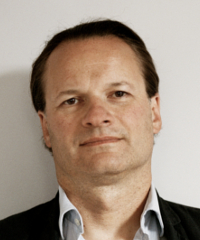
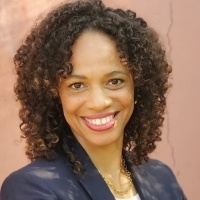
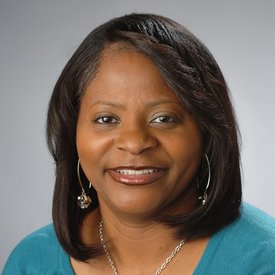
Colin Drummond, PhD, MBA is a Professor in the Department of Biomedical Engineering at both the Case School of Engineering and School of Medicine , where he also serves as Assistant Department Chair. His research focuses on simulation and applied informatics to enhance healthcare decision-making with translational applications in wearable technology and conversational agents for isolated patients. Doctorate in Biomedical Engineering (PhD) Master of Business Administration (MBA) Research interests span healthcare informatics , wearable analytics , and clinical decision support systems . Recent work explores: Physiological monitoring through wearable sensors Heart rate accuracy in consumer devices like Apple Watch Conversational agents for polypharmacy management Performance assessment in athletes and post-surgical rehabilitation
Natalie Johnson is an Associate Professor in Environmental and Occupational Health at the College of Veterinary Medicine, Texas A&M University. She chairs the Interdisciplinary Program in Toxicology and leads critical research on air pollution impacts on vulnerable populations. Education PhD in Toxicology, Texas A&M University College of Veterinary Medicine Postdoctoral Fellowship in Environmental Health Sciences, Johns Hopkins Bloomberg School of Public Health BS in Biology, Texas A&M University College of Science Her research focuses on inhalation toxicology , maternal exposure to pollutants , and gene-environment interactions . She directs the mobile responding to air pollution in disasters (mRAPiD van), a real-time chemical pollutant detection platform, and investigates emerging environmental chemicals in breast milk. Current projects include: Respiratory toxicology of inhaled pollutants Prenatal/pediatric air pollution exposure and immune development Development of green-engineered clays for toxin mitigation
Catherine Panter-Brick is the Bruce A. and Davi-Ellen Chabner Professor of Anthropology, Health, and Global Affairs at Yale University, with appointments at the Jackson School of Global Affairs and Department of Anthropology. She directs the Global Health Studies Multidisciplinary Academic Program and the Program on Conflict, Resilience, and Health, focusing on biocultural analyses of adversity, resilience, and peacebuilding. Key affiliations: Yale Institute for Global Health, Social and Behavioral Sciences, African Studies, South Asian Studies Her research examines: Health impacts of poverty, armed conflict, and social marginalization Intergenerational trauma and epigenetic signatures Refugee mental health and psychosocial interventions Gender roles in post-conflict recovery Systems-level approaches to peacebuilding Publications since 2022 demonstrate sustained focus on: Conflict-related stress biomarkers (cortisol, telomere length) Community-based mental health programs for refugees Cultural dimensions of resilience and wellbeing Humanitarian policy innovation and science diplomacy Scientific Recognition: Lucy Mair Medal (2011) for anthropological applications to poverty alleviation Keynote speaker at UN, WHO, and World Bank As Senior Editor of Social Science & Medicine 's Medical Anthropology section, she bridges academic research with policy implementation through fieldwork in Afghanistan, Syria, Jordan, and Brazil.
Paul D. Hastings is a Professor of Psychology at the University of California, Davis, and former Chair of Psychology and Interim Dean of the School of Education. He directs the Healthy Emotions, Relationships and Development Laboratory (HERD Lab) at the Center for Mind and Brain (CMB) and holds affiliations with the Center for Poverty Research and Institute for Global Nutrition. His educational background includes: Ph.D. in Applied Developmental Psychology, University of Toronto M.A. in Experimental Psychology, University of Toronto B.S. in Faculty of Science, McGill University Post-doctoral training, University of Waterloo Professor Hastings' research examines developmental trajectories of physiological, social, and emotional functioning from childhood to adulthood. He investigates how cultural/socioeconomic conditions (context), family/peer relationships (nurture), and biological systems (nature) interact to shape adaptive outcomes like empathy and social competence, as well as maladaptive outcomes including depression, anxiety, and aggression. His international work spans Bangladesh, Canada, Chile, Ghana, India, Jordan, and multiple U.S. states. Recent publications reveal strong trends in adolescent mental health, physiological regulation (particularly parasympathetic activity), and pandemic impacts. Key themes include suicidal behavior prediction through inflammatory markers, prosocial development linked to physiological regulation, cross-cultural parenting effects, and socioeconomic influences on developmental psychopathology. His scientific recognition includes: Fellow of the Association for Psychological Science UC Davis Distinguished Graduate and Postdoctoral Mentorship Award (2022) Professor Hastings has secured major grants from the National Science Foundation, National Institute of Mental Health, MacArthur Foundation, and Lego Foundation. He actively mentors graduate students and leads collaborative international research projects. His lab conducts fieldwork across diverse cultural contexts to examine how structural inequities impact neurobiological development and mental health outcomes. The HERD Lab, directed by Professor Hastings, integrates psychophysiological methods with developmental science to explore how biological and social systems interact in shaping emotional and relational development across the lifespan.
Melissa Hardesty is an Associate Professor and Director of the BSW Program in the Department of Social Work at Binghamton University, part of the College of Community and Public Affairs (CCPA). Her research focuses on gender, child welfare, parenting, and kinship, with a methodological emphasis on ethnography and qualitative research. She holds a PhD from the University of Chicago, an MSW from Indiana University Northwest, and a BS from Indiana University-Bloomington. Her work explores intersections of gender, digital representations, and state-mediated family structures. Notable projects include an ethnographic study of foster care and adoption agencies, a visual analysis of political selfies on Tumblr, and studies on Vietnamese sexual behavior and mental health. She collaborates with Binghamton University’s Sexualities Research Laboratory. Recent publications address college student communication around consent, digital identity politics, and systemic issues in child welfare. Her research bridges sociological theory with practical implications for policy and practice. Despite no explicitly mentioned awards, her contributions to social work methodology and critical studies of family dynamics are widely recognized in her field.
David Aly Redvaldsen is an Associate Professor at the University of Agder's Department of Sociology and Social Work. He specializes in historical studies focusing on eugenics, political movements, and education. His recent work includes A History of British Eugenics since 1865 (2024) and The Labour Party in Britain and Norway (2011). He holds a joint first prize in the 2014 Emile Lousse Prize for his article on British-Norwegian constitutional relations. Research Interests: Redvaldsen’s work bridges history, sociology, and political science. Key areas include the historical development of eugenics, Labour Party dynamics in Britain and Norway, social Darwinism, and the role of historical education in kindergartens. His interdisciplinary approach examines how scientific ideas intersect with political and social institutions. Publications: Over 30 peer-reviewed articles and two monographs. Recent topics include the teaching of history in Nordic kindergartens, the Labour Party’s engagement with social Darwinism during WWI, and comparative studies of Nordic eugenics movements. Awards: 2014 Emile Lousse Prize (joint winner) for 'Great Britain and the Norwegian Constitution of 1814'. Grants & Collaborations: Active in social studies didactics research groups. His work on Norwegian parliamentary history in textbooks (2021) highlights evolving national narratives. Current projects include studies on biotechnology ethics and the legacy of Herbert Brewer’s socialist eugenics advocacy. Labs/Teams: Member of the Social studies didactics and educational research group at UiA, focusing on curriculum development and interdisciplinary historical education.
Edward Harcourt is a Professor of Philosophy at the University of Oxford and a Fellow by Special Election at Keble College. He holds dual appointments in the Department of Philosophy and the Department of Psychiatry. His research focuses on ethics, moral psychology, and the intersections of philosophy with psychoanalysis and psychiatry. He earned his BPhil and DPhil from Oxford after an undergraduate degree in Philosophy and History at Trinity College, Cambridge. Key roles include leading the Wellcome ISSF project on mental health and the AHRC International Research Network on attachment theory and virtue. He directs the Oxford Summer Schools in Philosophy and Psychiatry and serves as Academic Director of the Royal Institute of Philosophy. His work bridges ethical theory, developmental psychology, and clinical practice, addressing topics like secure attachment, moral emotions, and the ethical dimensions of psychoanalysis. Publications span edited collections like Attachment and Character (2021) and articles in journals such as Journal of Medical Ethics and European Journal of Philosophy . His research emphasizes how human virtues and moral psychology intersect with psychological health and societal structures.
Donna Gallo is an Assistant Professor of Music Education at the University of Illinois Urbana-Champaign (UIUC), School of Music. She previously held faculty positions at Westminster Choir College, where she coordinated the Kodály Certification program, and taught K-6 general/choral music in Fairfax County Public Schools (VA) and Simsbury Public Schools (CT). Gallo’s academic background includes a Ph.D. from Northwestern University, an MME from Silver Lake College, a BME from Indiana University, and training at the Kodály Institute in Hungary, where she received the International Kodály Society Scholarship . Her research focuses on: Inservice teacher learning through collaborative professional development structures. Creative music-making and the integration of popular music practices in elementary education. Community partnerships as critical experiences for preservice teacher training. Quantitative research methodologies in music education. Educational equity through culturally responsive teaching and service learning. Teaching strategies for neurodivergent and physically divergent students. Gallo has secured grants for professional development programs and community partnerships with local music educators and school districts. Notably, she collaborated with the School of Music and College of Engineering on a UIUC grant to address systemic racism and social injustice. She has published in leading journals such as the Journal of Research in Music Education , Music Education Research , and International Journal of Music Education , and authored book chapters in The Routledge Companion to Creativities in Music Education and Toward Equity in School Music . Scientific Awards: International Kodály Society Scholarship (Kodály Institute, Hungary). In advising and grants, Gallo emphasizes culturally responsive teaching and first-year teacher support through service learning. Her work bridges music education with interdisciplinary initiatives, leveraging technology and partnerships to drive equity-focused innovation. She is actively involved in editorial roles, including past editor of AOSA Echo (2012–2016) and current editorial board member of the Music Educators Journal . Her collaborations span the UIUC School of Music and College of Engineering, as well as local schools and community artist mentors. Gallo’s efforts aim to transform music education through inclusive curricula, technology integration, and systemic change.
Graham Pullin is a Professor of Design and Disability at the University of Dundee, specializing in prosthetic devices, augmentative communication, and user-centered design. His research focuses on disability futures, healthcare quality improvement, and socio-technical systems in rehabilitation. He leads interdisciplinary projects such as 'Imagining Technologies for Disability Futures' and 'Co-Design and a Sense of Ownership in Rehabilitation Services.' Roles: Investigator on multiple research grants, mentor in improvement studies, and advocate for disability-led design. Affiliations: Collaborates with institutions like the University of Leeds, Exeter, and Sheffield, and engages with the V&A Dundee for public exhibitions. His work aligns with UN Sustainable Development Goals, emphasizing accessibility and inclusion. Key achievements include commendations for research and public engagement projects, such as the Herald Higher Education Awards and Stephen Fry Awards. Publications explore topics like prosthetic hand design, AAC futures, and systematic reviews of participatory research methods. He actively participates in conferences, workshops, and media engagements to disseminate his findings and promote inclusive design practices.
Dr Alasdair B R Stewart is a Lecturer in Social and Public Policy at the University of Glasgow's School of Social and Political Sciences. He holds dual roles as a Research Fellow and Data Lead at the GCRF Centre for Sustainable, Healthy and Learning Cities and Neighbourhoods (SHLC), and Co-Investigator for a Health Foundation-funded project examining welfare conditionality's impact on mental health. His research focuses on how large-scale social processes shape inequality, with particular attention to homelessness, welfare systems, and open-source research tools like PythiaQDA. Affiliations: GCRF SHLC, University of Glasgow's School of Social and Political Sciences Education: Not explicitly stated in provided text Stewart’s work bridges post-philosophical sociology with empirical research, critiquing proprietary qualitative analysis software and advocating for open science. His projects frequently address the intersection of welfare policies, mental health, and social security. He co-developed PythiaQDA, an open-source QDA tool designed to democratize qualitative research. His recent articles analyze Universal Credit's impact on mental health claimants, punitive welfare sanctions, and EU migrant welfare rights. Key findings emphasize systemic invalidation of mental health struggles within welfare systems and the need for policy reforms. Grants & Funding: Health Foundation, GCRF, Joseph Rowntree Foundation Supervision: Advises student Faith Ougham Stewart is actively involved in the Theory Reading Group at the University of Glasgow, exploring themes like 'The Body and Emotions' through transdisciplinary lenses. He also maintains blogs ( Constellations ) for open academic discourse.
Larissa Samuelson is a Professor in the School of Psychology at the University of East Anglia, specializing in developmental cognitive science with a focus on early word and category learning. She holds administrative roles including Director of Research (2018–present). Her research integrates neural network models with empirical studies to understand how children process information and learn language. Education: BS (Honors) in Psychology, Indiana University (1993) PhD in Psychology & Cognitive Science, Indiana University (2000) Research Interests: Cognitive development in early childhood Word learning mechanisms and neural models Executive function development Cross-cultural language processing Awards: American Psychological Association Distinguished Scientific Award (2010) European Research Council Grant (2025–2031) Recipient of Leverhulme Trust funding (2025–2029) Projects: System of shape representations in cognition Neural process theory of vocabulary variability Language processing in deaf individuals Lab & Teams: Leads the Developmental Dynamics Laboratory , focusing on precision science of word learning and ensuring equitable early language potential for toddlers.
Yvette C. Latunde is a Professor of Organizational Leadership at the University of La Verne's LaFetra College of Education. She previously served as Director of the Center for Educational Equity and Intercultural Research (CEEIR). Her work focuses on equity-centered leadership, family-school-community partnerships, and leveraging Black family resources to support student success. Latunde is a leading voice in culturally responsive education, having authored influential books like Equitable by Design and Research in Parental Involvement . Her research interests include inclusion, transformative leadership, neurodiversity, and dismantling inequities through culturally proficient frameworks. Latunde has published extensively on African American family engagement, dual capacity-building models, and faith-based interventions in education. She co-founded the Black Parent Advisory Councils to strengthen community-school ties. Latunde's scholarship emphasizes hospitality theory in school inclusion and values-based leadership practices for marginalized groups. Her work bridges academic research with practical strategies for educators, policymakers, and community leaders. She holds a Doctorate in Education (EdD) and has over two decades of experience in K-12 and higher education settings. Her advisory roles include serving on the Lewis Center for Entrepreneurship Advisory Board. Latunde’s research has been featured in Frontiers in Education , Journal of Negro Education , and Journal of Multicultural Education , reflecting her interdisciplinary approach to social justice in education.
Anita L Lightburn is an Associate Teaching Professor in the Department of Communication Sciences and Disorders at Syracuse University's College of Arts & Sciences. She serves as a clinical supervisor at the Gebbie Speech-Language-Hearing Clinic. Her expertise focuses on communication disorders in children, particularly bilingualism, multicultural issues in speech-language pathology, and fluency disorders. She holds TESOL certification and has contributed to programs addressing BIPOC graduate student success. Education: M.S., Speech-Language Pathology, Syracuse University (1991) B.S., Communication Sciences & Disorders, Syracuse University (1990) Research Interests: Clinical and research efforts emphasize culturally responsive practices for children with communication disorders, including autism spectrum disorder and stuttering. Recent work addresses Hispanic family experiences and multicultural program development in academia. Recent Contributions: Published in Research in Developmental Disabilities and Teaching and Learning in Communication Sciences and Disorders . Presented at ASHA and NBASLH conferences on BIPOC student support programs and stuttering interventions. Service & Leadership: Coordinator of Speaking Orange Fluency Summer Camp for children who stutter Committee member for Student Diversity & Success in CSD Panelist for WISE Women of Color in STEM and DePaul University's Black History Month Labs/Teams: Active in the Gebbie Speech-Language-Hearing Clinic and the Speaking Orange Fluency Program.
Professor Mark Petticrew is Professor of Public Health Evaluation at the London School of Hygiene & Tropical Medicine (LSHTM), where he is based in the Faculty of Public Health and Policy within the Public Health - Environments and Society department. He serves as Director of the NIHR Public Health Policy Research Unit and is an active member of the Commercial Determinants Research Group (CDRG) at LSHTM, which conducts research on the products and strategies of tobacco, alcohol, gambling, food, opioid and other industries. His work is also affiliated with the Centre for Evaluation and the Centre for Maternal Adolescent Reproductive & Child Health. Professor Petticrew's research primarily focuses on the Commercial Determinants of Health (CDOH), examining how corporate practices influence public health outcomes and policy. His work explores evidence-based policymaking approaches and public health evaluation methodologies, with particular emphasis on how unhealthy commodity industries shape scientific research and policy development. He investigates industry tactics including misinformation campaigns, marketing strategies, and political influence operations that affect population health. His research often employs systems perspectives to understand the complex interactions between commercial interests and public health outcomes. His extensive publication record demonstrates a strong focus on analyzing industry influence across multiple sectors. Recent work examines alcohol industry marketing tactics, tobacco industry narratives around e-cigarettes, gambling industry practices, and food industry strategies. He has developed frameworks for understanding corporate political activity and has contributed to methodological approaches for evaluating complex public health interventions. His research frequently appears in high-impact public health journals and informs policy development at national and international levels. Professor Petticrew has secured significant research funding from major organizations including the National Institute for Health Research (NIHR), UK Research and Innovation (UKRI), Wellcome Trust, and Medical Research Council. His current projects include "Countermarketing against the products and activities of unhealthy commodity industries: effectiveness mechanisms and inequalities" and the "NIHR PRP Public Health Research Policy Unit 2024-2029." He has led or contributed to numerous completed research grants examining population interventions, complex interventions, mental health, and policy research units. As Director of the NIHR Public Health Policy Research Unit, Professor Petticrew plays a key leadership role in translating research into policy. He has contributed to important policy discussions around alcohol marketing restrictions, as evidenced by his co-authorship of the influential 2024 BMJ Global Health commentary "Normative value of 'best buys' and the case of bans on alcohol marketing," which argued for comprehensive bans on alcohol marketing as an effective public health intervention. His work supports evidence-based policymaking in contested areas where commercial interests may conflict with public health goals.
Dr. Fiona Morrison is a Lecturer in Childhood Studies and Programme Director of the BA Childhood Practice at the University of Edinburgh's Moray House School of Education and Sport. She holds a PhD in Social Policy and MSc in Childhood Studies from the University of Edinburgh and a BA in Community Learning and Development from the University of Dundee. Dr. Morrison specializes in children’s human rights with a socio-legal focus, particularly addressing domestic abuse and participatory methodologies. Her research bridges academia and policy, influencing national and international frameworks. She leads projects funded by the Royal Society of Edinburgh and ESRC, collaborating with organizations like Children’s Parliament and the Children and Young People’s Commissioner Scotland. Dr. Morrison co-leads the CAHSS Childhood and Youth research theme and chairs ethics leadership for the Children and Young People Thematic Hub. Her work emphasizes ethical research practices, policy advocacy, and child participation in legal and social contexts. Education: PhD Social Policy, University of Edinburgh MSc Childhood Studies, University of Edinburgh BA Community Learning and Development, University of Dundee Research Interests: Children’s rights accountability, domestic abuse, participatory research methods, socio-legal frameworks, and policy implementation. Key Roles: Member, Children and Young People Thematic Hub Leadership Group Co-lead, CAHSS Childhood and Youth Research Theme Core member, Observatory of Children’s Human Rights Scotland Grants: Includes RSE Personal Fellowship, ESRC grants, and Legal Empowerment Fund projects. Her teaching focuses on the BA Childhood Practice program, and she supervises PhD students exploring children’s rights in domestic abuse and policy contexts. Dr. Morrison’s publications span children’s rights under pandemic conditions, legal frameworks, and participatory methodologies, reflecting her commitment to translating research into tangible societal impact.